Hi, where are you from?

My photo
Presents, a Life with a Plan. My name is Karen Anastasia Placek, I am the author of this Google Blog. This is the story of my journey, a quest to understanding more than myself. The title of my first blog delivered more than a million views!! The title is its work as "The Secret of the Universe is Choice!; know decision" will be the next global slogan. Placed on T-shirts, Jackets, Sweatshirts, it really doesn't matter, 'cause a picture with my slogan is worth more than a thousand words, it's worth??.......Know Conversation!!!

Saturday, August 1, 2026

Title: Words This votive plaque, equated word the Volume plaque: Words Equated word Up the Lamp


Mustang
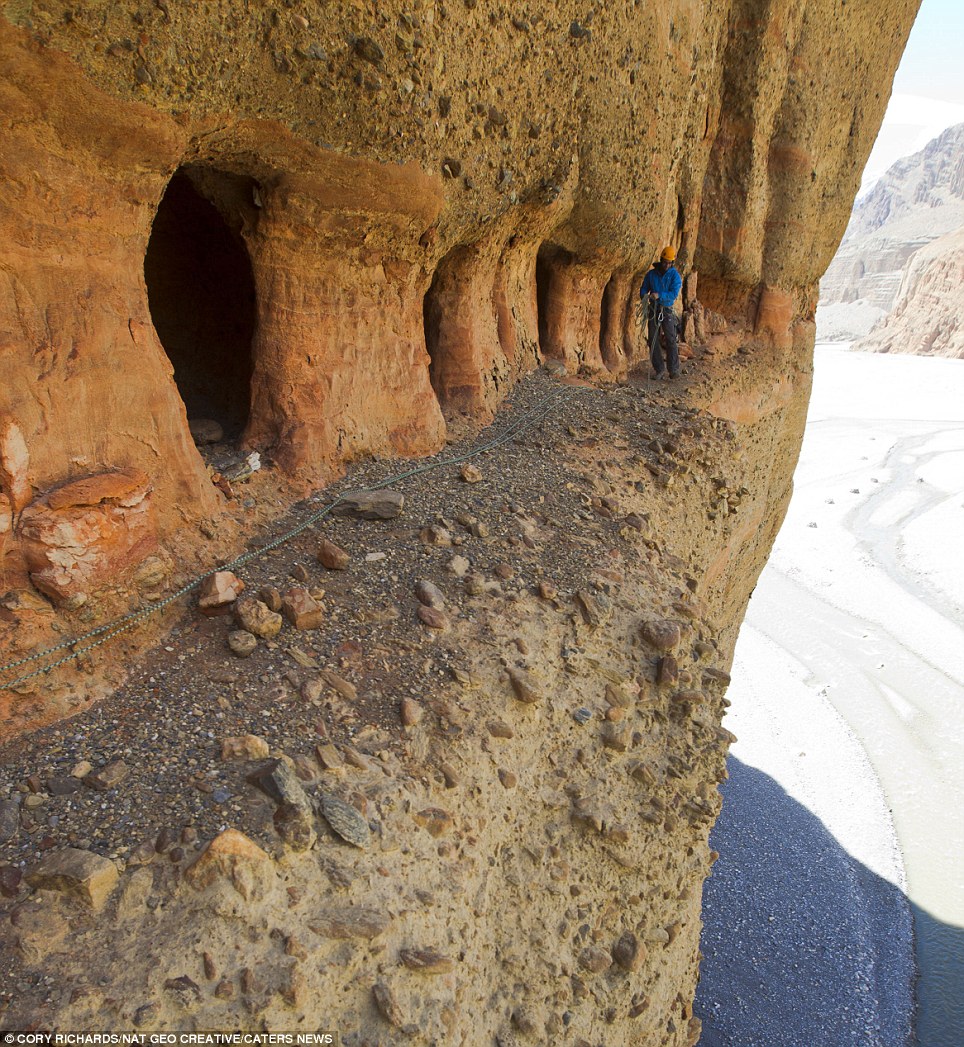
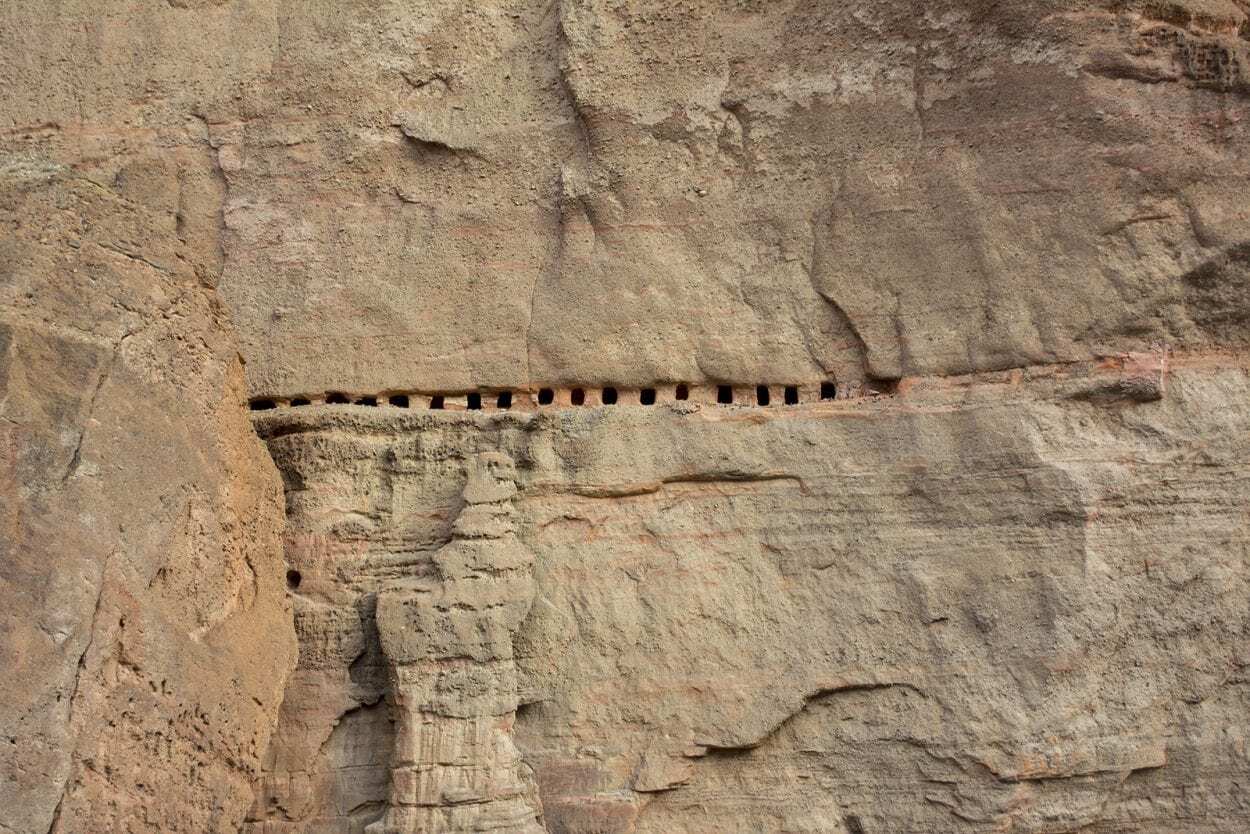
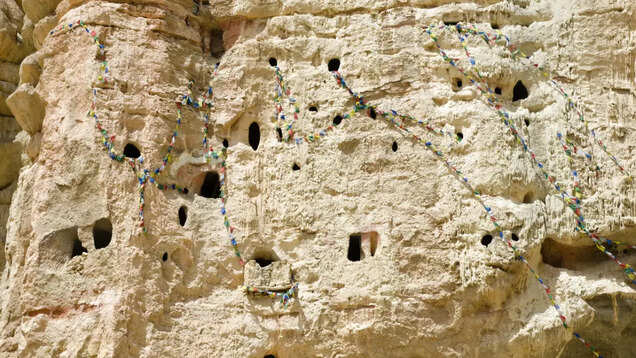
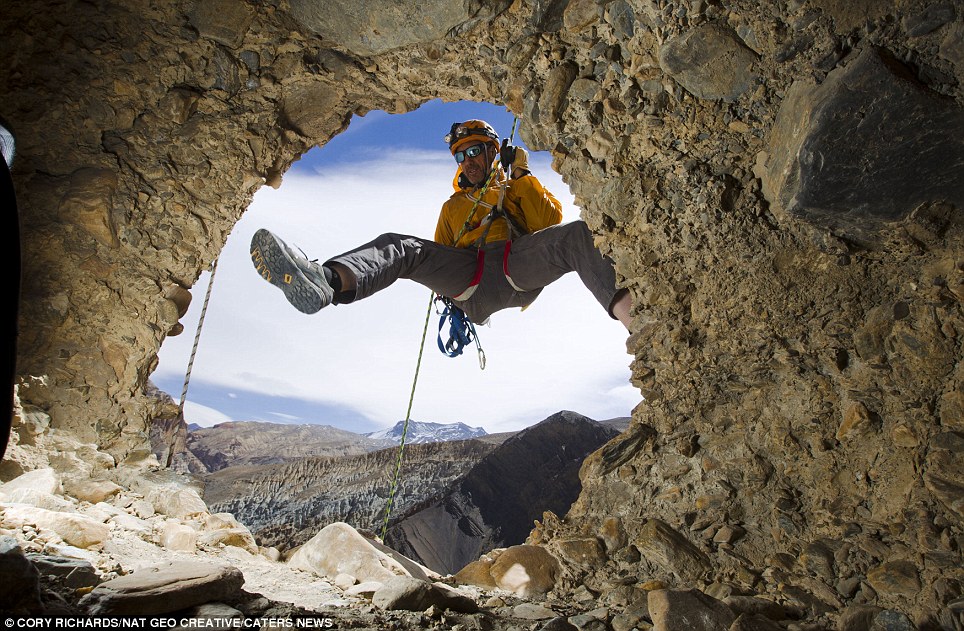
High up: Climber Pete Athans looks inside a cave found near Chuksang. It is not known how people climbed into the caves which are dug into a cliff 155foot above the valley floor

Three iron daggers, with gracefully curved hilts and heavy blades, also emerged. Then a bamboo teacup with delicate circular handle. A copper bangle. A small bronze mirror. A copper cooking pot and a ladle and a three-legged iron pot stand. Bits of fabric. A pair of yak or cow horns. An enormous copper cauldron, roomy enough to boil a beach ball. “I’m betting that’s a chang pot,” said Aldenderfer, referring to the regional beer made of fermented barley.

Finally Athans sent down a funerary mask. It was made of gold and silver pounded together, with high relief facial features. The eyes were rimmed in red, the mouth was slightly turned down, the nose was linear; there was a hint of a beard. Pinholes outlined the edge. Likely the mask was sewn to fabric and draped over the face. The beads had been part of the mask.

Aldenderfer, normally restrained and scholarly, could not contain himself as he cradled the mask in his palms. “It’s stunning,” he marveled. “The workmanship that’s involved, the obvious wealth it represents, the colors, the delicateness—it’s the best thing ever found in Mustang. Period.”

Nearly all the items in the cave had been imported from elsewhere. Even the coffin’s wood had come from a tropical environment. How could a person from this place—today so bereft of resources that merely accumulating firewood requires hours of effort—gather such riches? Salt, most likely. Controlling a piece of the salt trade may have been the current equivalent of owning an oil pipeline.

The entire haul, from what seemed a nondescript cave, left Aldenderfer giddily struggling to place the find in historical context. “This is unique,” he said. “Spectacular. This is rewriting the region’s prehistory in a serious way.”

Everything the team found was left behind, in the care of Samdzong’s village leaders. Athans, as he’s done elsewhere in Mustang, also donated personal funds to endow a modest museum. “The people of Mustang should have pride in their own rich history,” he says. Only tiny sample chips and bits of bone were removed by the scientists. These will be studied in various labs—teeth go to the University of Oklahoma; metals to University College London. Paints will be separated into chemical constituents, to see which plants were used to make them. A splinter of wood, a thread of textile, a powder of tooth enamel; all will be rigorously analyzed. The process could take a decade.

That’s without any additional materials. Early Mustang, it’s thought, was ruled by powerful kings. With so many exposed caves and an unknown number of hidden crypts, far more remarkable troves may be awaiting discovery. “It could be in the next cave we visit,” says Aldenderfer. “It could be in a hundred more caves.” Indeed, as the team finished their work in Samdzong, there was one more find. Walking across the cliff top after removing the rebar anchors, Hesser came across a distinct, unnaturally round depression in the gravel. Very likely, he had stumbled upon the entrance to another shaft tomb—this one still plugged, its contents sealed within.

The team’s travel permit was set to expire; they had a long journey ahead of them. There was little choice but to let this pass by. At least for now. As ever in Mustang, the cliffs hold secrets yet to be uncovered.

~ Michael Finkel, National Geographic, Photographs by Cory Richards

Mustang
Dangerous: Climber Cedar Wright explores the series of caves near the village of Tsele
Mustang
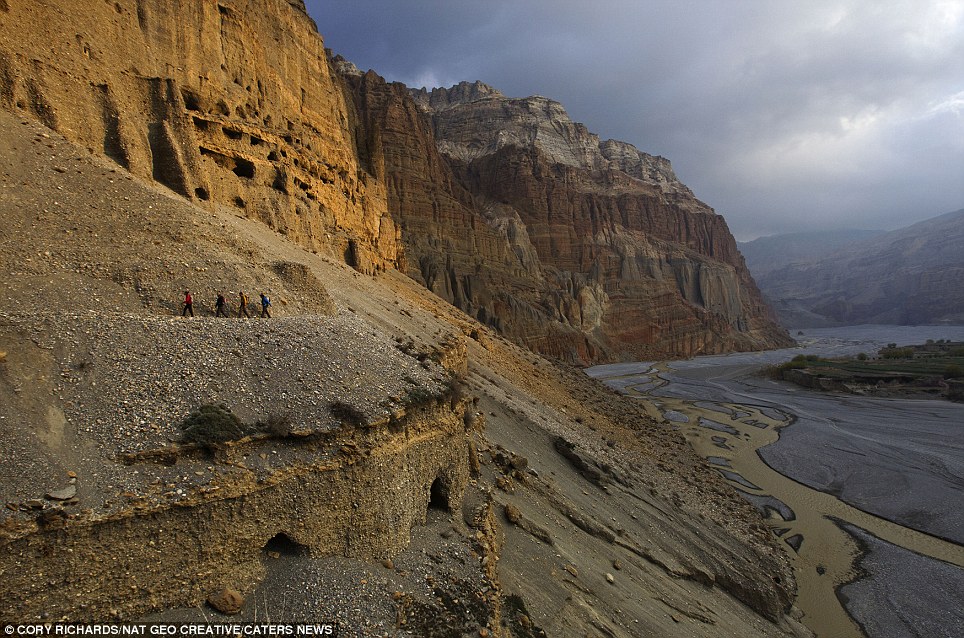
Adventure: Climbers and scientists follow a trail above the Kali Gandaki River
Mustang
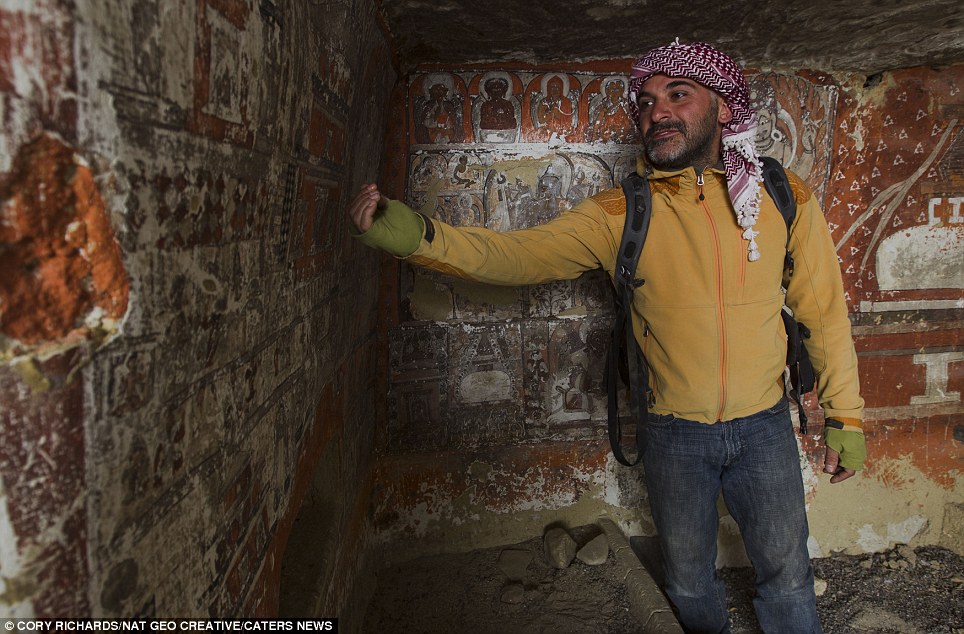
Impressive: This image shows eroded murals on the walls of the Ritseling Cave in Upper Mustang. The astonishing number of caves are thousands of years old
Mustang
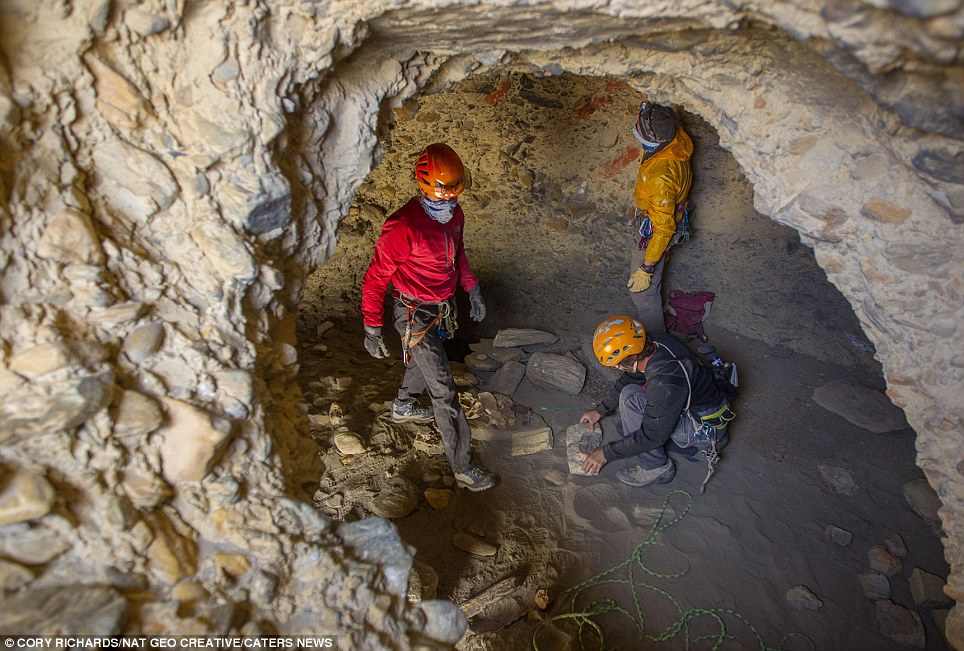
Exploration: Members of the team do a preliminary survey of a cave


Image Credit : Grace Marcella Norman - CC BY 2.0


The Mustang region of Nepal was off-limits for travellers for a long time. It was not very long ago that the region opened again to visitors. Now, when you book your trek in the Upper Mustang region, expect to see one of the most sought after tourist attractions in the region – the Sky Caves of Mustang. 

Also known as the Mustang Sky Caves or the Cave Temples of Mustang, these man-made caves are found on steep valley walls. More than two decades ago, a group of archaeologists unearthed more than 20 human remains from the Sky Caves in Samdzong area in Upper Mustang. Interestingly, these remains (bones) had several cut marks, which were similar to the unique Buddhist burial tradition known as Sky Burial. Along with the remains, archaeologists also found some relics and statues related to Buddhism


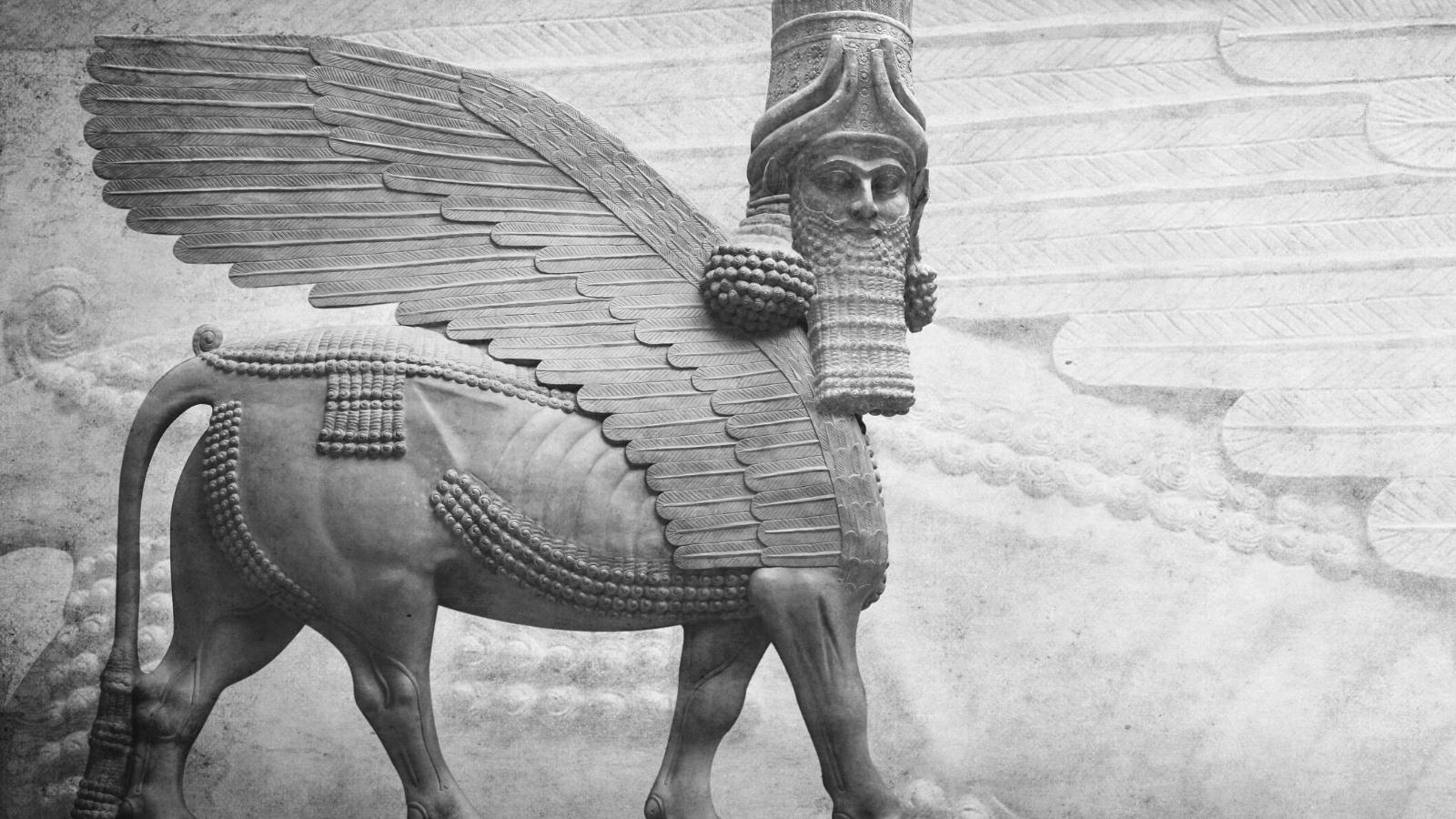
Lamassu


Pair of stone lamassu sculptures with human heads and winged bull bodies displayed in the Iraq Museum in 2018

1.  Word SCARAB equated word thimble[Thimble[THIMBLE]].

a.  

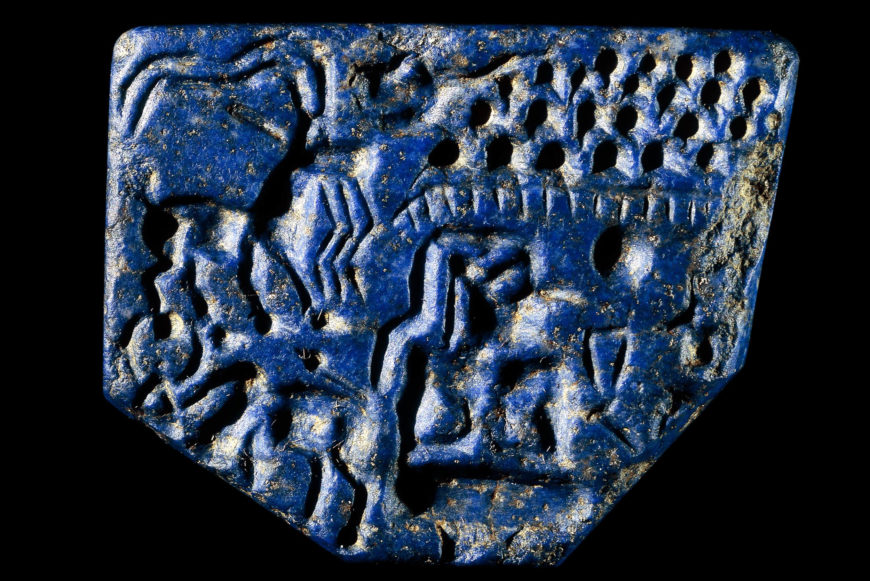
Stamp seal (scaraboid) with divine symbols, Lapis lazuli, Assyrian

Public Domain 

Artwork Details

Object Information
  • Title: Stamp seal (scaraboid) with divine symbols
  • Period: Neo-Assyrian
  • Date: 7th century BCE
  • Geography: Mesopotamia
  • Culture: Assyrian
  • Medium: Lapis lazuli
  • Dimensions: Seal Face: 1.94 x 1.38 cm
    Height: 0.75 cm
    String Hole: 0.23 cm
  • Credit Line: Purchase, 1886
  • Object Number: 86.11.4
  • Curatorial Department: Ancient West Asian Art

b.  The Met Collection

Artwork Details


Lapis lazuli stamp seal

This stamp seal was originally almost square, but because of damage one corner is missing. Originally two figures faced each other. The one on the left has largely disappeared. On the right is a man with his legs folded beneath him. It is suggested that at the top are rain clouds and rain or a fenced enclosure. Behind the man are a long-horned goat above a zebu. This last animal is related in style to similar creatures depicted on seals from the Indus Valley civilization, which was thriving at this time. There were close connections between the Indus Valley civilization and eastern Iran.

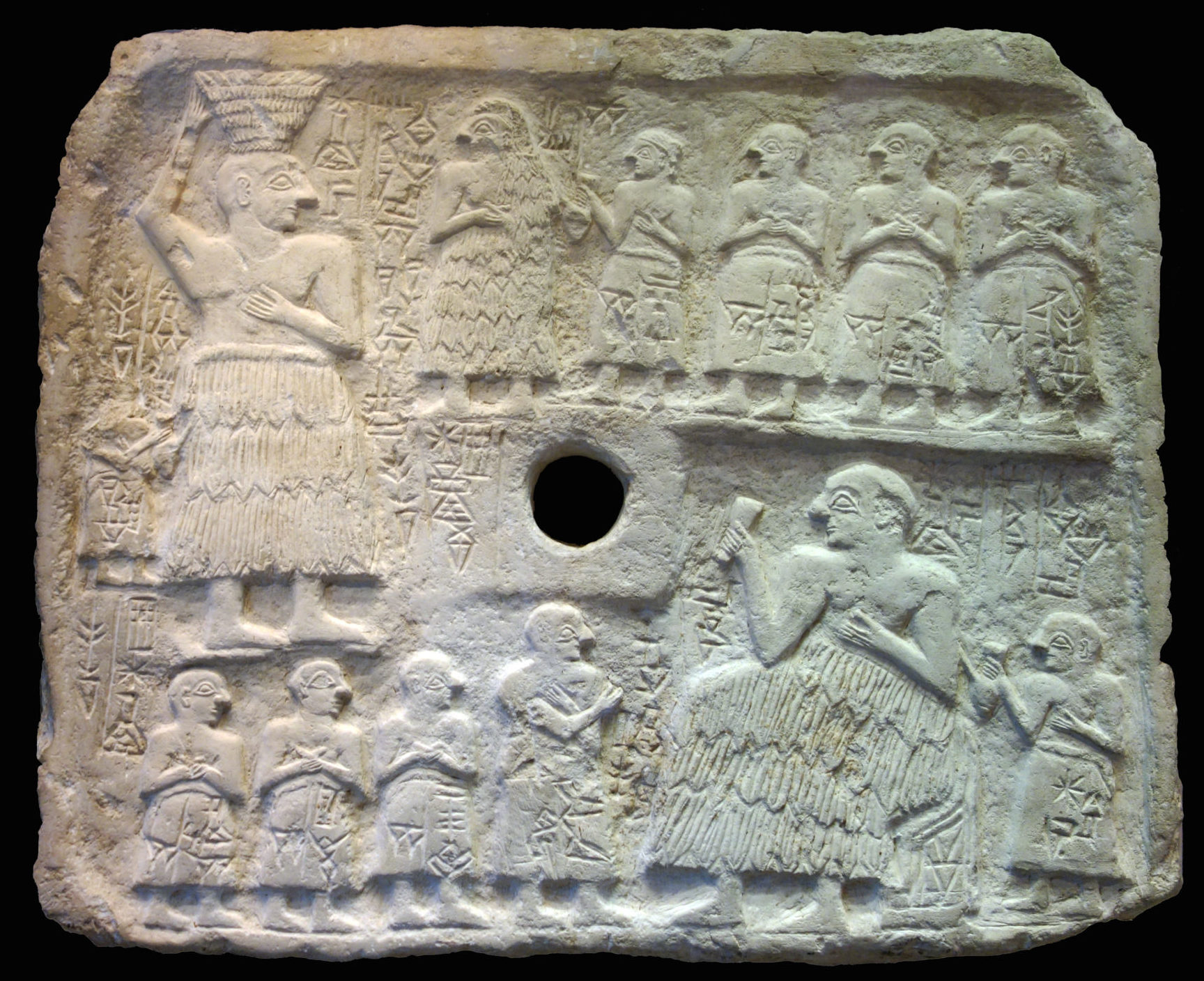
Perforated Relief of Ur-Nanshe

No comments:

Post a Comment

An Independent Mind, Knot Logic

An Independent Mind, Knot Logic

Title: Words This votive plaque, equated word the Volume plaque: Words Equated word Up the Lamp

High up: Climber Pete Athans looks inside a cave found near Chuksang. It is not known how people climbed into the caves which are dug into a...

Karen A. Placek, aka Karen Placek, K.A.P., KAP

My photo
Presents, a Life with a Plan. My name is Karen Anastasia Placek, I am the author of this Google Blog. This is the story of my journey, a quest to understanding more than myself. The title of my first blog delivered more than a million views!! The title is its work as "The Secret of the Universe is Choice!; know decision" will be the next global slogan. Placed on T-shirts, Jackets, Sweatshirts, it really doesn't matter, 'cause a picture with my slogan is worth more than a thousand words, it's worth??.......Know Conversation!!!
Know Decision of the Public: Popular Posts!!