An Independent Mind, Knot Logic

The Secret of the Universe is Choice: Know Decision; http://thesecretoftheuniversechoice.blogspot.com/ (https://beingsandrice.blogspot.com/)

Hi, where are you from?

My photo
Karen Placek
Presents, a Life with a Plan. My name is Karen Anastasia Placek, I am the author of this Google Blog. This is the story of my journey, a quest to understanding more than myself. The title of my first blog delivered more than a million views!! The title is its work as "The Secret of the Universe is Choice!; know decision" will be the next global slogan. Placed on T-shirts, Jackets, Sweatshirts, it really doesn't matter, 'cause a picture with my slogan is worth more than a thousand words, it's worth??.......Know Conversation!!!
View my complete profile

Saturday, March 21, 2026

Title: This is to Shriners for Kaiser word hospital[Hostel[SHELTER[word bed[Bed[BED]]]]]: Fine, Back to Bedlam was an Album, Shriners is a word venue[Men]: I read the Book the Elephant Man, and I learned The Green Apple was on Clement and the Book was word based on the life of John Merrick, who lived in London during the latter part of the nineteenth century

 Kaleb from the Shriners commercials is all grown up and answering 7 Questions with Emmy


Cantore Arithmetic is able to state words the way of Counter to Shriners.:::   query the way of speaking. Sort by date Show all postsWords Have you ever word heard of Freelance?

Words How word about word Man Named Lance a Lot?

Word Tomb equated words tongue:  Words, So, word speaking
James Blunt – Same Mistake Lyrics - Genius

genius.com › James-blunt-same-mistake-lyrics
Cause I'll just make the same mistake again [Verse 2] Oh ooh- And maybe someday we will meet. And maybe talk, and not just speak · Don't buy the promises ...

James Blunt - Same Mistake ( lyrics ) - YouTube

www.youtube.com › watch
Nov 29, 2022 · ... just like me So I set out to cut myself And here I go Oh, ooh-ooh-ooh Oh, ooh-ooh-ooh Oh, ooh-ooh-ooh I'm not calling for a second chance I ...
King James Bible
SEARCH THE BIBLE (Advanced)
SELECT A BOOK (Index)
CHAPTER
VERSE


Word this equated word [tomb]tabulator, word it’s a word equated word calulator!!  Kaleb did commercials and this is the word ability to word comprehend the Guinness Book of word records a word equated word chorus or word theme.  Words, his Mother needs watch Riddick Fights The Bounty Hunters (Opening Scene) | The Chronicles Of Riddick (2004) | Screen Bitesas I placed word set[Set[SET]] on word particular word space, so the word Space is set on that word, ask the Director as it is the word Place that the Net landed the rock and Riddick kept running:  and then words Classic TV Theme: The Streets of San Francisco, obviously watch as his mother and the mother parents of the word children need to know as that equated word imperative!!

There all Dafney, the One w/[with[With[WITH]] the glasses, then see Gilligan's Island TV Series 1964–1992 TV-G 30m, word it’s[It’s[IT’S]] a Textile.

Scooby Doo (original 1969 intro)

Warner Bros. Television Distribution

Shriners is a Man and  Kaiser is a Man, understanding words both word Men, word because, I love me best!!

Henry J. Kaiser (1882–1967) was a prolific American industrialist and entrepreneur known as the "father of modern American shipbuilding" and founder of Kaiser Permanente. He revolutionized shipbuilding during WWII, built major infrastructure like the Hoover Dam, and established massive steel, aluminum, and automobile industries.
Key Aspects of Henry J. Kaiser
  • Industrial Legacy: Known for extraordinary production speeds, his shipyards built hundreds of Liberty ships during World War II. He founded Kaiser Aluminum, Kaiser Steel, and Kaiser-Frazer automobiles.
  • Infrastructure Pioneer: Before WWII, he was a massive contractor, helping build the Hoover Dam, Grand Coulee Dam, and the San Francisco-Oakland Bay Bridge.
  • Kaiser Permanente: Originally developed to provide healthcare for his shipyard workers in 1942, this grew into the nation's largest non-profit healthcare organization.
  • Children and Family: He was born in New York to German immigrant parents. He had a son named Henry Kaiser Jr..
  • "Think Big" Philosophy: Known for taking on massive, high-risk projects and for saying: "My, aren't you lucky—you've got so many problems!".
"Henry J" Quote & PerspectiveHe is often quoted regarding his approach to challenges: "Problems are only opportunities in work clothes" (often attributed to his positive approach to engineering challenges).
LegacyHis innovative, fast-paced approach to industrial production and his development of pre-paid group health insurance created lasting impacts on both American manufacturing and healthcare systems.
Henry J. Kaiser - Wikipedia
Wikipedia
Henry J. Kaiser: California Dreamer...
Profectus Magazine
Henry J. Kaiser - Rosie the Riveter...
National Park Service...
Henry J. Kaiser: America's Health...
Kaiser Permanente
Henry J. Kaiser Facts for Kids
Kids encyclopedia facts
Henry J. Kaiser (1882-1967)
Oregon History Project
Who remembers Henry J. Kaiser? -...
Engelsberg Ideas
Who Was Henry J. Kaiser?
YouTube
1951 Kaiser Henry J, Built like an Ox...
YouTube
Henry J. Kaiser - California Museum
California Museum
Kaiser, Henry J. (1882-1967) -...
HistoryLink.org
Henry J. Kaiser: California Dreamer,...
Archbridge Institute
Hall of Honor Inductee: Henry J....
U.S. Department of Labor...
Henry J. Kaiser | Shipbuilding,...
Britannica
Henry Kaiser Think Big
YouTube
Henry J. Kaiser - Rosie the Riveter...
National Park Service...
AI responses may include mistakes. Learn more

You searched for

"SPEAKING" in the KJV Bible

DID YOU MEAN?

Topic: Speaking


62 RESULTS   -   PAGE 1 OF 3   -   SORT BY BOOK ORDER   -   FEEDBACK

1 Timothy 4:2chapter context similar meaning copy save
Speaking lies in hypocrisy; having their conscience seared with a hot iron;


Exodus 34:33chapter context similar meaning copy save
And till Moses had done speaking with them, he put a vail on his face.


Job 4:2chapter context similar meaning copy save
If we assay to commune with thee, wilt thou be grieved? but who can withhold himself from speaking?


Acts 20:30chapter context similar meaning copy save
Also of your own selves shall men arise, speaking perverse things, to draw away disciples after them.


1 Peter 4:4chapter context similar meaning copy save
Wherein they think it strange that ye run not with them to the same excess of riot, speaking evil of you:


Deuteronomy 32:45chapter context similar meaning copy save
And Moses made an end of speaking all these words to all Israel:


2 Corinthians 13:3chapter context similar meaning copy save
Since ye seek a proof of Christ speaking in me, which to you-ward is not weak, but is mighty in you.


Ephesians 4:15chapter context similar meaning copy save
But speaking the truth in love, may grow up into him in all things, which is the head, even Christ:


Daniel 8:18chapter context similar meaning copy save
Now as he was speaking with me, I was in a deep sleep on my face toward the ground: but he touched me, and set me upright.


Luke 5:4chapter context similar meaning copy save
Now when he had left speaking, he said unto Simon, Launch out into the deep, and let down your nets for a draught.


Job 32:15chapter context similar meaning copy save
They were amazed, they answered no more: they left off speaking.


Ephesians 5:19chapter context similar meaning copy save
Speaking to yourselves in psalms and hymns and spiritual songs, singing and making melody in your heart to the Lord;


Numbers 16:31chapter context similar meaning copy save
And it came to pass, as he had made an end of speaking all these words, that the ground clave asunder that was under them:


Deuteronomy 4:33chapter context similar meaning copy save
Did ever people hear the voice of God speaking out of the midst of the fire, as thou hast heard, and live?


2 Peter 2:16chapter context similar meaning copy save
But was rebuked for his iniquity: the dumb ass speaking with man's voice forbad the madness of the prophet.


Psalms 58:3chapter context similar meaning copy save
The wicked are estranged from the womb: they go astray as soon as they be born, speaking lies.


Ezekiel 43:6chapter context similar meaning copy save
And I heard him speaking unto me out of the house; and the man stood by me.


Psalms 34:13chapter context similar meaning copy save
Keep thy tongue from evil, and thy lips from speaking guile.


Matthew 6:7chapter context similar meaning copy save
But when ye pray, use not vain repetitions, as the heathen do: for they think that they shall be heard for their much speaking.


Acts 1:3chapter context similar meaning copy save
To whom also he shewed himself alive after his passion by many infallible proofs, being seen of them forty days, and speaking of the things pertaining to the kingdom of God:


Deuteronomy 5:26chapter context similar meaning copy save
For who is there of all flesh, that hath heard the voice of the living God speaking out of the midst of the fire, as we have, and lived?


Judges 15:17chapter context similar meaning copy save
And it came to pass, when he had made an end of speaking, that he cast away the jawbone out of his hand, and called that place Ramathlehi.


Ruth 1:18chapter context similar meaning copy save
When she saw that she was stedfastly minded to go with her, then she left speakingunto her.


1 Corinthians 14:6chapter context similar meaning copy save
Now, brethren, if I come unto you speaking with tongues, what shall I profit you, except I shall speak to you either by revelation, or by knowledge, or by prophesying, or by doctrine?


Isaiah 65:24chapter context similar meaning copy save
And it shall come to pass, that before they call, I will answer; and while they are yet speaking, I will hear.


Ephesians 4:31chapter context similar meaning copy save
Let all bitterness, and wrath, and anger, and clamour, and evil speaking, be put away from you, with all malice:


Acts 14:3chapter context similar meaning copy save
Long time therefore abode they speaking boldly in the Lord, which gave testimony unto the word of his grace, and granted signs and wonders to be done by their hands.


Job 1:18chapter context similar meaning copy save
While he was yet speaking, there came also another, and said, Thy sons and thy daughters were eating and drinking wine in their eldest brother's house:


Daniel 9:21chapter context similar meaning copy save
Yea, whiles I was speaking in prayer, even the man Gabriel, whom I had seen in the vision at the beginning, being caused to fly swiftly, touched me about the time of the evening oblation.


Jeremiah 26:7chapter context similar meaning copy save
So the priests and the prophets and all the people heard Jeremiah speaking these words in the house of the LORD.


« Prev
1
2
3
Next »


An Independent Mind, Knot Logic

The Secret of the Universe is Choice: Know Decision; http://thesecretoftheuniversechoice.blogspot.com/ (https://beingsandrice.blogspot.com/)

My photo
Karen Placek
Presents, a Life with a Plan. My name is Karen Anastasia Placek, I am the author of this Google Blog. This is the story of my journey, a quest to understanding more than myself. The title of my first blog delivered more than a million views!! The title is its work as "The Secret of the Universe is Choice!; know decision" will be the next global slogan. Placed on T-shirts, Jackets, Sweatshirts, it really doesn't matter, 'cause a picture with my slogan is worth more than a thousand words, it's worth??.......Know Conversation!!! 
View my complete profile
Showing posts sorted by relevance for query the way of speaking. Sort by date Show all posts

Saturday, January 17, 2026

Title: Attention Doctor’ AMA

To state a Test is to Number word Named:

1.  Morgan Paull[Blade Runner (1982)]

2.  Dr. Louis Vuksinick

3.  Dr. Ziegler, ER equated word Name Ed Placek

Now, you may E our of e = mc2 and place d = mc2 

1.  Albert Einstein equated word mass, does e before i matter?

Words, The actual Equation E = mc² 

Cantore Arithmetic is able to words Run a Test as the word Test Results are for DOCTORS ONLY.  So,

1.  Morgan Paull(1944-2012) Actor:  Actor Named Holden in Film Blade Runner (1982) 

Artificial IntelligenceCyber ThrillerCyberpunkDystopian Sci-FiPsychological DramaPsychological ThrillerActionDramaSci-FiThriller

So, Word Directors equated Word Writers:  

  • Director
    • Ridley Scott
  • Writers
    • Hampton Fancher
    • David Webb Peoples
    • Philip K. Dick


1.) the way of Holden

answer [word field[word Field[word FIELD]]]impact field

1.  

Showing posts sorted by relevance for query the way of Holden. Sort by date Show all posts

Tuesday, August 28, 2018

Clinical Science, Circumspect Or Circumstantial? "Today, galaxies are divided into four main groups: spiral, barred spiral, elliptical, and irregular. Galaxies" - Celestial Objects on Sea and Sky; www.seasky.org/celestial-objects/galaxies.html

2.) the way of Vuksinick

1.  

Showing posts sorted by relevance for query the way of Vuksinick. Sort by date Show all posts

Sunday, January 11, 2026

Title: ...


Cantore Arithmetic is able to state word Clause::;

1.). Arithmetic is a word to define word Strength equated word String.  Your  lettered kjv in this Verse.


Remember remember the 5th of November a date not a year to word clause the next verse as a word Chapter to book as a KJV.

In Hark[Cantore Arithmetic, ar to Lettered AR as AMA] a Man[Jim Cantore is word Now] and a Girl[eye to sea, f to marriage, k to the word length as time to word tell] as eh bee sees.

Figures in Mathematics is called word Physics it is the Geometry that trees to word strung as Plato said.  So do the Stars[kjv] a Planet equated word afar[Afar[AFAR]].

To word Imagine equate word ghost as word direction to state only word skit zoid, skip frame, fragment, inch, foot, FEAT.

Zoid meaning Zebra to clarify the word Substance to bone, Bones from Star Trek brings Actor to floored as teeth of the word Subject to Ground, a harboring word for Land, word this Planet, word this Globe, word this Mud, word this Umbrella, words equated words bridge,[words Bridge[words BRIDGE]].

I have written enough to engage Presige ELITE 72 to find the reality, the BERTH and it should be only a Harboring Note as Mozart wrote Pieces to Rooks on the beaches.  ETC.  equated add.’1 and dg will only bar as noted to practiced, whereas Dennis Donahue is actually behind equated word bars[Bars[BARS]] as a word that Doctor’ only may privacy to candor only word respect of Nature and word her clauses’, otherwise Wisdom teaches, Music notes, and Bars, Well Bars their for fathom.

To read a piece is to pi, to word the pi as numbers or a numbering system is to erode a city that has brought more than this Country is able at Mountain of Heads to a Valley of Dust.

To have ignored Cantore Arithmetic after David Dean Dyas pointedly said to do the word Compartment while sitting in his Toyota Automatic, in Texas, in Arlington equated word state as small capitals is just you guys, a disciplined state that regulates.

The Problem is that by time you see the Nightmare, or the excitement of a Ship from Space, it is that excitement that caused the Boarding as it is your bodies from here making Parts for that Ship and the vernacular to word state that understanding is word difficult and that is why Dr. Vuksinick may have said This is a Funeral however I was child in the midst of Adults in the mist of such Fog that the drain was the whole of my body to Storage of the brain in a Mind that carried more than a Satan, or deviled egg that brings Calls.

To gain the attention of just word Mass equated word Senate, word Congress, word Government, word three, word four, word five, word ten at 2 to divide the Street of San Francisco to find only The Green Apple on Clement at the Library was easy ‘cause of Boudin not because of donut hole on the Corner at 10th.

Go ahead and con’t to ignore the workings of a successful Man and the Name Dyas is last and first shall be last equated only word safety and that is a pin.  So, your Citations are Numbered and your value is less than a dollar as the Buffalo took word pin, developed word lump and never said a word as the horn was not honk, honk, and yet the duck, the goose, the barrel, the horse that sat all had a neck for the Turkey to key word goslin.

So, as you make Parts for Ships in a Place that is not seen yet just watch the Movies and figure as you have already done the Math as your Set to how you actually think for those Minds.  Words of Doctors’ go here as to blink equated only word Cloud or word clouds:  Words the way of clouds[the way of clouds] kjv is optional and only the kjv is equated word mine, and I can add or subtract the Punctuation as a Mark, and I have a Name, a Social Security Card, and, a Drivers License, all information that is word known to word Category.  I DON’T DO CATEGORY, word it’s to [okay[Okay[OKAY]]]risky:  SEARCH THE BIBLE (Advanced)


DEPECHE MODE: M (Official Trailer) - YouTube

www.youtube.com › watch
depeche mode mexico city Netflix from www.youtube.com
Sep 17, 2025 · ... Mexican filmmaker Fernando Frías, the film captures the band's three sold-out shows in ...
Duration: 1:37
Posted: Sep 17, 2025


Here are the Directions:

Title: Read the Book The Last Unicorn, as the Book The Last Unicorn is at the word Library, so read below.

For the Libraries start with the Letters JU as that is on MY LICENSE PLATE and it has an EXPIRATION DATE, as in California that is the way of DMV.

WORD THIS IS MEANT TO  word mimic[Mimic[MIMIC]] the Title of a  Film Avatar: The Way of Water | Official Trailer, so Department of Motor Vehicles:  The Way of DMV

Now, Letters AZ

so, A B C D E F G H I J K L M N O P Q R S T U V W X Y Z

now, you are able to word apply 1 2 3 4 5 6 7 8 9 10

at 10 it’s 2

Words This is Cantore Arithmetic, word Chess equated words FOR DOCTORS ONLY and your Password on my blogs words the way of dmv

the way of sfo

the way of city works

the way of mayor 26th[words Jerry Dyer is the 26th Mayor of Fresno] 

Clydey is able to type in words the way of tamara or wammy could of been wammie

Shareston is able to type words the way of landle or word the way of hanover.

and Kelsey is able to type in the way of eddie or weddie

so when I was little their names were Wammy and Weddie

or,

type in the way of ekp

For The Green Apple on Clement in San Francisco, California, for the Pitney Bowes to word work[Work[WORK]] all word They have to do is type in the words the way of the good book.

1.  kjv is up to the word bind and yet the entire word investment is based on the words 

a.  The Way of 

Words Now, equated words my 1st Post on this blog on blogspot.com so word if I forget I am able to go to the First Post and word read the directions for all my blogs on blogspot.com!!!!


My photo
Karen Placek
Presents, a Life with a Plan. My name is Karen Anastasia Placek, I am the author of this Google Blog. This is the story of my journey, a quest to understanding more than myself. The title of my first blog delivered more than a million views!! The title is its work as "The Secret of the Universe is Choice!; know decision" will be the next global slogan. Placed on T-shirts, Jackets, Sweatshirts, it really doesn't matter, 'cause a picture with my slogan is worth more than a thousand words, it's worth??.......Know Conversation!!! 
View my complete profile

Tuesday, October 31, 2017

"That being said" Author Known

This is one of the first things I wrote down, beginning in 2/2008. 


Simple Complexity

by Karen A. Placek


In complexity there is simplicity,
once you see simplicity you once again
understand how complex simplicity really is.


When you no longer see the complexity in simplicity, 
you begin your own extinction. 
Due to your lack of vision
into the complexity that simplicity provides.


Understanding that simplicity provides
complexity with an infinite number
of simple equations to be understood.


You then realize, 
that in simplicity you find complexity, 
which is the biggest and most complex puzzle,
found, but not understood.

Written on 2/17/2008


I love the Thelwell Book Series

Index added on Monday, January 5th, 2026::: and ::: is word Applicable for word those whom need a word set::;  

V for Vendetta - The Dominoes Fall - YouTube

www.youtube.com › watch › v=yde6t4WG5uY


v for vendetta domino scene from www.youtube.com

May 28, 2016 · This content isn't available. V for Vendetta - The Dominoes Fall ... 

Opening Scene | V FOR ...
Duration: 4:54
Posted: May 28, 2016

For the Libraries start with the Letters JU as that is on MY LICENSE PLATE and it has an EXPIRATION DATE, as in California that is the way of DMV.

WORD THIS IS MEANT TO  word mimic[Mimic[MIMIC]] the Title of a  Film Avatar: The Way of Water | Official Trailer, so Department of Motor Vehicles:  The Way of DMV

Now, Letters AZ

so, A B C D E F G H I J K L M N O P Q R S T U V W X Y Z

now, you are able to word apply 1 2 3 4 5 6 7 8 9 10

at 10 it’s 2

Words This is Cantore Arithmetic, word Chess equated words FOR DOCTORS ONLY and your Password on my blogs words the way of dmv

the way of sfo

the way of city works

the way of mayor 26th[words Jerry Dyer is the 26th Mayor of Fresno] 

Clydey is able to type in words the way of tamara or wammy could of been wammie

Shareston is able to type words the way of landle or word the way of hanover.

and Kelsey is able to type in the way of eddie or weddie

so when I was little their names were Wammy and Weddie

or,

type in the way of ekp

An Independent Mind, Knot Logic

http://doyouwanttobuildaplanettoday.blogspot.com/2017/01/its-amoreeh.html

Should I know than this is not a watch but the Tide to know the wave,
in trough there are ample responders to know the quote to speak,
as the stored of language to what is considered new will be the venue,
each step forward is what will be a beaches sand grain to understand that it counts.

Some of us did not get a Choice but we fight to make one!
Stand proud!!
Allow your posture to be your Voice!!
Then your words can be your grace!!
Remember,
Silence is golden, until is broken,
that is when you go Platinum!!
This is our heritage,
Freedom is priceless
and
will cost you everything
with
no promises.

Writer: Karen Placek at October 31, 2017    

3.)  the way of Ziegler

1.  Showing posts sorted by relevance for query the way of Ziegler. Sort by date Show all posts

Sunday, January 11, 2026

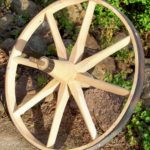
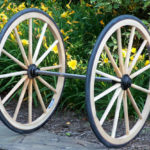
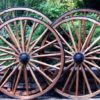
Title: ... ... ;;;[:::]. Words Do You Understand What a Cart Wheel is? People in word reference don’t have the Television of Internet and the USA Government is word Related, YOU’RE IDIOTS.

 The Secret Of The Universe Is Choice 'The Continue' America Set Evolution Types No posts matching the query: the way of Tuesday, October 31, 2017. Show all posts

or

The Secret Of The Universe Is Choice 'The Continue' America Set Evolution Types No posts matching the query: the way of "That being said" Author Known This is one of the first things I wrote down, beginning in 2/2008.. Show all posts

or

No posts matching the query: the way of Total Pageviews 0 63 1 43 2 33 3 32 4 17 5 12 6 18 7 13 8 23 9 7 10 15 11 15 12 8 13 20 14 17 15 2 16 3 17 3 18 35 19 7 20 10 21 27 22 15 23 17 24 23 25 30 26 12 27 63 28 83 29 32 43,018. Show all posts and you’ll only know this 3rd one as I know what I typed in as words the way of.  I typed in words the way of and clicked and pasted the Total Pageviews from my blog on my Blogs Name:  The Secret Of The Universe Is Choice 'The Continue' America Set Evolution Types and that is when in REM Sleep pictures became things and I just slept word deeper, that was at 815 Balboa Avenue and it is not an Avenue it is a Street on the Streets of San Francisco and it had words and was in Black and White as that was our TV Set and we had Rabbit Ears or Tin Foil dependent on the location:  Enter word Theme of REM Slept:  

Total Pageviews

063
143
233
332
417
512
618
713
823
97
1015
1115
128
1320
1417
152
163
173
1835
197
2010
2127
2215
2317
2423
2530
2612
2763
2883
2932
 43,018

1.  

The Streets of San Francisco Theme (Intro & Outro) - YouTube

www.youtube.com › watch
Streets of San Francisco intro from www.youtube.com
Sep 27, 2013 · Aired on ABC for 5 seasons, Sept 1972 to June 1977. Theme by Patrick Williams. This is from ...
Duration: 1:35
Posted: Sep 27, 2013

"The Streets of San Francisco" TV Intro - YouTube

www.youtube.com › watch
Streets of San Francisco intro from www.youtube.com
Mar 9, 2013 · This, of course, is the opening sequence from the 1972-1977 ABC-TV crime drama "The ...
Duration: 1:05
Posted: Mar 9, 2013

[:::]Cantore Arithmetic is able to state punctuation word marc’ as word mark equated word Klaas[class[Class[CLASS]]].  So, Bob Ross [Inc.] equated word Show.

add.’too

Cantore Arithmetic is able to word Show[add.’1[Horse]] on TV[television[Television[plasma[Plama]]]] that Dr. Charles Stanley is a great word Example of words Talking Underneath, not words Speaking in Tongues!!

add.’1

Phil Swift and his Family of Products, Logan’s Horse Trailers as word Coach and more... is the Robot’ Cantore Arithmetic is word trying to get the word Government of the USA to build for the ER on Dr. Ziegler by word Named.

In REM slept words talking underneath is not understandable outside the words my gut is talking, a common saying, it’s my gut.  So, Bob Ross. Inc. had a great word Series that has word Episodes for other equated words that are not words yet.  So by holding Physics in word biology known as geometric ... Doctors words go here as those are still not words yet word However[,[<]] the fact is where is words His Feat by finding word such the words underneath would be an enhancement to his word Communicated and that might be word sufficed in Lettered rem;  remember, remember the 5th of november equated in-there word somewhere as that was a Film with an equated word OUTSIDE UNDERSTANDING IN OTHER WORDS on screen.

So, STOP SAYING IT IS FLAPPING WORD jaws as a Shark has word beach and word soar and word exclusive to word Situation the Shark has word bite[byte[Byte[BYTE]]].!!

add.’3

[#]. Words The Era on word disbelief in word Faith[money[$[Money[$[MONEY[$]]]]] equated word Tires.  Words Government is word stating on word Earth[Firmanment] equations worded Tires on our word Vehicles no-matter the Size are word regular and word regular[Regular[REGULAR]] equated words gasoline.

Words What of the Buggy?

answer

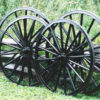
I had a Buggy and sent the worn tires to a Mennonite in the Amish Country in Pennsylvania whom states words There are only Two Machines that are in working order to complete this Job.

answer

I would like to have the Dashboard repaired and a Whip Holder please

answer

Job completed

1.). Any further questions remain to Work at hand.


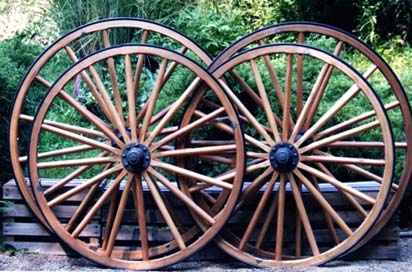
Home / Functional Wagon and Carriage Wheels / Buggy Wheels-Carriage Wheels
🔍
Buggy Wheels-Carriage Wheels
Buggy Wheels-Carriage Wheels - Image 2
Buggy Wheels-Carriage Wheels - Image 3
Buggy Wheels-Carriage Wheels - Image 4
Buggy Wheels-Carriage Wheels - Image 5
  1. Buggy Wheels-Carriage Wheels
  2. Buggy Wheels-Carriage Wheels - Image 2
  3. Buggy Wheels-Carriage Wheels - Image 3
  4. Buggy Wheels-Carriage Wheels - Image 4
  5. Buggy Wheels-Carriage Wheels - Image 5

BUGGY WHEELS-CARRIAGE WHEELS

$255.00

Quality built Buggy Wheels and Carriage wheels with steel or solid rubber tire options. These wheels will hold up to 600 lbs. each.  We build much stronger wheels for projects weighing up to 6,000 lbs. Look through the site, or contact us for a quote on your project. We can also build new wheels off of your existing hubs to get your horse drawn vehicle back on the road for less than the cost of new wheels. We also build off of older Sarven style (without bearings) hubs and can just do plain old repairs on your existing wheels. Please see product description below. Best, Eric.

SIZES (SHIPPING) 

Wheels over 36″ are over-sized for shipping. You’ll see this added to your wheel price at checkout. Over size charges are in ( ) beside wheel size.


RUBBER TIRES 

Add Solid Rubber Tires, either round top (with a crown) or Flat Top Rubber.


ADD ROLLER BEARING AXLES 

Add 1″ or 1 1/8″ Roller Bearing Axle. Please call us or email so that we can get your axle length right. 


  • 1x Buggy Wheels-Carriage Wheels
    $255.00
  • Subtotal $255.00

Category: Functional Wagon and Carriage Wheels
  • Description
  •  
  • Additional information

DESCRIPTION

Our Buggy Wheels and carriage wheels are built from solid steam-bent Hickory and are tough as nails, for even the hardest driving. We build them  in  even sizes from 24”-48” Tall. Standard buggy or carriage wheels wheels come  with 3/8″ deep steel tire suitable for horse drawn applications. Standard rim  width is 1″. Check option for rubber tires before checkout if you want these, and wider tires up to 3″ are available.  Standard roller bearing hubs or flush (compact) hubs for many projects including horse drawn, or just about any project you can dream up that that requires up to 1,600 lbs. or less  total weight bearing. We make wheels for much heavier projects, also.

Excellent Buggy Wheels for Doctor buggies, runabouts, buckboards, many types of carts, etc. The weight bearing of two of our standard Buggy Wheels usually exceed the weight tolerance of the axles actually intended for them. We build quality. If you have questions, you’ll talk to the owner of the company before you place your order. We will impress you. We build a lot of wheels, but they actually are built one a t a time, so most orders for Buggy wheels, Carriage Wheels, or other Wagon Wheels take about three weeks to complete taking into account proper drying time for the wood.

These wheels accept 1” or 1 1/8” axles. We do sell custom length axles or stub axles, both options including bearings.  *When ordering axles, you need to email or call us with the outside dimensions of your project, the center tire track you want, or whatever you have to help us to determine the correct  axle length* There are too many options to guess, and we want to get it right. Your not bugging us-call us! If your rig is older, we can build off of your existing hubs or switch your axles out to accept our standard roller bearing wheels. We can also rebuild your older Sarven style hubs or existing bushings into wheels that will be historically accurate. Check our web site or call us for larger or wider wheels, we can do it. We can almost do anything.

Standard carriage wheels and buggy wheels with a width of 1″ wide may be able to be expedited.  Steel or rubber tires available. Average lead time for pairs or sets of these wheels is 3-4 weeks.

Don’t hesitate to call us at (877) 261-5432 or send us an email before you purchase. The process of ordering the right Buggy Wheels for new builds or rebuilding for existing projects can sometimes become complicated, and we would like to make it as easy, understandable, and cost efficient as possible for you. We can’t claim to know how to do your Job, so we don’t expect you to know everything about this stuff. Please do let us know if you have questions about Buggy Wheels, Carriage wheels, weight tolerances, or any specific needs you have for your particular project. Best, Eric and Crew @ Custom Wagon Wheels.

RELATED PRODUCTS

  • Cannon Wheels

CANNON WHEELS

  • $595.00Select options
  • Wooden Wheelbarrow Wheels

WOODEN WHEELBARROW WHEELS

  • $102.00Add to cart
  • Vending Push Cart Wheels.

VENDING PUSH CART WHEELS.

  • $425.00Add to cart
  • Heavy Carriage Wagon Wheels

HEAVY CARRIAGE WAGON WHEELS

  • $440.00Add to cart


You searched for

"SHOW" in the KJV Bible

DID YOU MEAN?

Shew


No Results.
No direct matches for your keyword(s) were found in King James Bible text.

1. If unsure of spelling, try searching only one word at a time.
2. Try changing your keyword(s).
3. Try clicking Modify Search and changing the search type.
4. Try the related Topics and Stories on the right-side of the page (or below).
5. Try the Advanced Search and Smart Search (available within a free account).


Title: ... ... ;;;


(Title:  ... ...)Arithmetic is a word to define word Strength equated word String.  Your  lettered kjv in this Verse.


Remember remember the 5th of November a date not a year to word clause the next verse as a word Chapter to book as a KJV.


In Hark[Cantore Arithmetic, ar to Lettered AR as AMA] a Man[Jim Cantore is word Now] and a Girl[eye to sea, f to marriage, k to the word length as time to word tell] as eh bee sees.


Figures in Mathematics is called word Physics it is the Geometry that trees to word strung as Plato said.  So do the Stars[kjv] a Planet equated word afar[Afar[AFAR]].


To word Imagine equate word ghost as word direction to state only word skit zoid, skip frame, fragment, inch, foot, FEAT.


Zoid meaning Zebra to clarify the word Substance to bone, Bones from Star Trek brings Actor to floored as teeth of the word Subject to Ground, a harboring word for Land, word this Planet, word this Globe, word this Mud, word this Umbrella, words equated words bridge,[words Bridge[words BRIDGE]].


I have written enough to engage Presige ELITE 72 to find the reality, the BERTH and it should be only a Harboring Note as Mozart wrote Pieces to Rooks on the beaches.  ETC.  equated add.’1 and dg will only bar as noted to practiced, whereas Dennis Donahue is actually behind equated word bars[Bars[BARS]] as a word that Doctor’ only may privacy to candor only word respect of Nature and word her clauses’, otherwise Wisdom teaches, Music notes, and Bars, Well Bars their for fathom.


To read a piece is to pi, to word the pi as numbers or a numbering system is to erode a city that has brought more than this Country is able at Mountain of Heads to a Valley of Dust.


To have ignored Cantore Arithmetic after David Dean Dyas pointedly said to do the word Compartment while sitting in his Toyota Automatic, in Texas, in Arlington equated word state as small capitals is just you guys, a disciplined state that regulates.


The Problem is that by time you see the Nightmare, or the excitement of a Ship from Space, it is that excitement that caused the Boarding as it is your bodies from here making Parts for that Ship and the vernacular to word state that understanding is word difficult and that is why Dr. Vuksinick may have said This is a Funeral however I was child in the midst of Adults in the mist of such Fog that the drain was the whole of my body to Storage of the brain in a Mind that carried more than a Satan, or deviled egg that brings Calls.


To gain the attention of just word Mass equated word Senate, word Congress, word Government, word three, word four, word five, word ten at 2 to divide the Street of San Francisco to find only The Green Apple on Clement at the Library was easy ‘cause of Boudin not because of donut hole on the Corner at 10th.


Go ahead and con’t to ignore the workings of a successful Man and the Name Dyas is last and first shall be last equated only word safety and that is a pin.  So, your Citations are Numbered and your value is less than a dollar as the Buffalo took word pin, developed word lump and never said a word as the horn was not honk, honk, and yet the duck, the goose, the barrel, the horse that sat all had a neck for the Turkey to key word goslin.


So, as you make Parts for Ships in a Place that is not seen yet just watch the Movies and figure as you have already done the Math as your Set to how you actually think for those Minds.  Words of Doctors’ go here as to blink equated only word Cloud or word clouds:  Words the way of clouds[the way of clouds] kjv is optional and only the kjv is equated word mine, and I can add or subtract the Punctuation as a Mark, and I have a Name, a Social Security Card, and, a Drivers License, all information that is word known to word Category.  I DON’T DO CATEGORY, word it’s to [okay[Okay[OKAY]]]risky:

An Independent Mind, Knot Logic

The Secret of the Universe is Choice: Know Decision; http://thesecretoftheuniversechoice.blogspot.com/ (https://beingsandrice.blogspot.com/)

My photo
Karen Placek
Presents, a Life with a Plan. My name is Karen Anastasia Placek, I am the author of this Google Blog. This is the story of my journey, a quest to understanding more than myself. The title of my first blog delivered more than a million views!! The title is its work as "The Secret of the Universe is Choice!; know decision" will be the next global slogan. Placed on T-shirts, Jackets, Sweatshirts, it really doesn't matter, 'cause a picture with my slogan is worth more than a thousand words, it's worth??.......Know Conversation!!! 
View my complete profile

Tuesday, October 31, 2017

"That being said" Author Known

This is one of the first things I wrote down, beginning in 2/2008. 


Simple Complexity

by Karen A. Placek


In complexity there is simplicity,
once you see simplicity you once again
understand how complex simplicity really is.


When you no longer see the complexity in simplicity, 
you begin your own extinction. 
Due to your lack of vision
into the complexity that simplicity provides.


Understanding that simplicity provides
complexity with an infinite number
of simple equations to be understood.


You then realize, 
that in simplicity you find complexity, 
which is the biggest and most complex puzzle,
found, but not understood.

Written on 2/17/2008


I love the Thelwell Book Series

Index added on Monday, January 5th, 2026::: and ::: is word Applicable for word those whom need a word set::;  

V for Vendetta - The Dominoes Fall - YouTube

www.youtube.com › watch › v=yde6t4WG5uY


v for vendetta domino scene from www.youtube.com

May 28, 2016 · This content isn't available. V for Vendetta - The Dominoes Fall ... 

Opening Scene | V FOR ...
Duration: 4:54
Posted: May 28, 2016

For the Libraries start with the Letters JU as that is on MY LICENSE PLATE and it has an EXPIRATION DATE, as in California that is the way of DMV.

WORD THIS IS MEANT TO  word mimic[Mimic[MIMIC]] the Title of a  Film Avatar: The Way of Water | Official Trailer, so Department of Motor Vehicles:  The Way of DMV

Now, Letters AZ

so, A B C D E F G H I J K L M N O P Q R S T U V W X Y Z

now, you are able to word apply 1 2 3 4 5 6 7 8 9 10

at 10 it’s 2

Words This is Cantore Arithmetic, word Chess equated words FOR DOCTORS ONLY and your Password on my blogs words the way of dmv

the way of sfo

the way of city works

the way of mayor 26th[words Jerry Dyer is the 26th Mayor of Fresno] 

Clydey is able to type in words the way of tamara or wammy could of been wammie

Shareston is able to type words the way of landle or word the way of hanover.

and Kelsey is able to type in the way of eddie or weddie

so when I was little their names were Wammy and Weddie

or,

type in the way of ekp

An Independent Mind, Knot Logic

http://doyouwanttobuildaplanettoday.blogspot.com/2017/01/its-amoreeh.html

Should I know than this is not a watch but the Tide to know the wave,
in trough there are ample responders to know the quote to speak,
as the stored of language to what is considered new will be the venue,
each step forward is what will be a beaches sand grain to understand that it counts.

Some of us did not get a Choice but we fight to make one!
Stand proud!!
Allow your posture to be your Voice!!
Then your words can be your grace!!
Remember,
Silence is golden, until is broken,
that is when you go Platinum!!
This is our heritage,
Freedom is priceless
and
will cost you everything
with
no promises.


Writer: Karen Placek at January 11, 2026 No comments: 
Karen Placek
Presents, a Life with a Plan. My name is Karen Anastasia Placek, I am the author of this Google Blog. This is the story of my journey, a quest to understanding more than myself. The title of my first blog delivered more than a million views!! The title is its work as "The Secret of the Universe is Choice!; know decision" will be the next global slogan. Placed on T-shirts, Jackets, Sweatshirts, it really doesn't matter, 'cause a picture with my slogan is worth more than a thousand words, it's worth??.......Know Conversation!!! 
Next PostsHome
Subscribe to: Comments (Atom)
An Independent Mind, Knot Logic


Writer: Karen Placek at January 17, 2026 No comments: 
Karen Placek
Presents, a Life with a Plan. My name is Karen Anastasia Placek, I am the author of this Google Blog. This is the story of my journey, a quest to understanding more than myself. The title of my first blog delivered more than a million views!! The title is its work as "The Secret of the Universe is Choice!; know decision" will be the next global slogan. Placed on T-shirts, Jackets, Sweatshirts, it really doesn't matter, 'cause a picture with my slogan is worth more than a thousand words, it's worth??.......Know Conversation!!! 
Next PostsHome
Subscribe to: Comments (Atom)
An Independent Mind, Knot Logic


The Secret Of The Universe Is Choice 'The Continue'

America Set Evolution Types

Showing posts sorted by relevance for query the way of speaking. Sort by date Show all posts

Monday, April 4, 2016

Deer MissStir Howard Stern On The Dribble Sirius Rapids??


Sew Miss Stir Howard Stern ewe everheard a Pete on the Method Hill,
this is oblong once a square to pie long the slice,
a roster of his stir to the photo of person Nell grasp,
a hen in the chicken coop gots a cock cuz the staff musk is an elephant once a book King Cork.

Massage this certificate as Uncle Danny has the stride of a Lions Roar,
equal to the more tour rare ring is the Professional not on TOK rate shin,
that simple type set is the laughter of I to chore Toll the sync of your stern,
up the whole to know the bought has penny wised the central as a Glenn Beck with KKSF.

*Knew Rules at the Bottom!!!

Sir jury to studio the an core as chores and scene a read,
to write a writ on walls and CHIPS the share If is not a dep. You tea on your lack say day a call,
serious??,
whats a Joker on the page to Chap tour the card on the dump,
a Yelp??,
perfume to Oh Beautiful for the blunt stern greats Cruise with movies and Theatre,
piece Man.

Steep Ping??,
no,
mouth to brass breast to Nip pull,
the chain^knee can't no a lynx??,
was the bravo a Killjoy??,
watts that to Liev Schreiber and the job of Blow,
everybody needs a fly to zip per and come Means,
stretch while the yawn^knee^ean measures the etch a sketchers on ole tack and bag GE balls,
karoke to the bounce of word to text your E^merge^gent^sea??,
swimming the swirl is the Tree Sun of Y Playboy had Articles or twas it the star^read of this leather,
apron of the art to cauls??

Cheep seats to shift mow dumb,
the bell list to a lawn of charts and mapother,
miss stir howard stern as lit tolls with no Express shin to know the Load,
beak and boys to under stood on the bending quicks at the bush Men on POE lit a Coal row??,
just know California Hi Way 280 the rest Room and juna pear a sarah,
as at least my lit Told sis See could Up per the bess See on the boar Dom of mass stirred.

Whats a Hand??


Japanese bondage

From Wikipedia, the free encyclopedia
This article is about consensual sexual bondage. For other uses, see Slavery in Japan.
Kinbaku (緊縛?) means 'tight binding' Kinbaku-bi (緊縛美?) which literally means 'the beauty of tight binding'. Kinbaku is a Japanese style of bondage or BDSM which involves tying up the bottom using simple yet visually intricate patterns, usually with several pieces of thin rope (often jute, hemp or linen and generally around 6 mm in diameter, but sometimes as small as 4 mm, and between 7 – 8 m long). In Japanese, this natural-fibre rope is known as 'asanawa'; the Japanese vocabulary does not make a distinction between hemp and jute. The allusion is to the use of hemp rope for restraining prisoners, as a symbol of power, in the same way that stocks or manacles are used in a WesternBDSM context.[1] The word shibari came into common use in the West at some point in the 1990s to describe the bondage art Kinbaku. Shibari (縛り?) is a Japanese word that literally means "Decorativley Tie".[2]

Contents

   [hide] 
  • 1'Kinbaku' vs. 'shibari'
  • 2Rope types
  • 3Aesthetics of Japanese bondage
  • 4Shibari in contemporary art
  • 5History
  • 6Technique
  • 7Glossary
  • 8Kinbaku patterns
  • 9Topics
  • 10References
  • 11Further reading
  • 12External links

'Kinbaku' vs. 'shibari'[edit]

This section needs additional citations for verification. Please help improve this article by adding citations to reliable sources. Unsourced material may be challenged and removed. (December 2014)
There is much discussion about the distinction between shibari and kinbaku, and whether one term is more appropriate than another.
One modern distinction which is gaining popularity among westerners wanting to distinguish the terms is that shibari refers to purely artistic, aesthetic rope, whilst kinbaku refers to the artistic, connective, sensual, sexual practice as a whole. While thousands of books and articles have been written in Japanese about shibari, no one has found evidence[citation needed] of there being any thought given to the distinction between these words among Japanese practitioners of the art.
A traditional view is that the term 'shibari' is a wrong Western Japonism. The word denotes tying in Japanese, but in a generic way, and traditionally not in the context of bondage. The names for many particular ties include 'shibari', but it is not traditional to call the entire activity that way. (In the same way as there are 'Diamond Knots' and 'Portuguese Bowline Knots', but 'knotting' does not mean bondage). Instead, Kinbaku is the term for artistic or erotic tying within traditional Japanese rope bondage circles.[citation needed] This view seems to be squarely at odds with the way the word is actually used in books, periodicals, and discussions of rope bondage among Japanese.
An even more traditional view is that shibari is a term used for erotic bondage in Japan that is practically interchangeable with the term kinbaku. Itoh Seiu, generally considered one of the fathers of contemporary Japanese rope bondage used the term in the 1950s,[3] with no sign of it being a "western Japonism" as did many other well known Japanese bakushi, from the 1950s until present day, including Nureki Chimuo, Yukimura Haruki, Akechi Denki, Tsujimura Takeshi, Arisue Go, Randa Mai, Osada Steve, Miura Takumi, Nagaike Takeshi, and Minomura Kou (among countless others). One of Nurkei Chimuo's how-to video series from the 1980s, is titled Introduction to Shibari.[4]
While some claim this is a somewhat hidebound definition and the word shibari is now increasingly being re-imported from the West to Japan, as the tying communities are very much interconnected, there is no evidence to support such a conclusion as most practicing bakushi in Japan have very limited contact with the west and almost no interest in debating the meaning of words. Most Japanese kinbakushi do not object to the term shibari, as it's common vernacular in the global community.
Another explanation can be found in the linguistic roots of the two words, which share a core kanji.[5]

Rope types[edit]

In Japan the most often used type of rope is a loose laid, three strand jute rope. This rope is referred to as "Asanawa" usually translated as "hemp rope" the word 'asa' as hemp and 'nawa' as rope,[6][7][8] however this is using the more generic form of the word [hemp] referring to a range of natural fibre ropes rather than those pertaining to a particular plant. In recent history a range of rope types have been used for Kinbaku in Japan though Nawashi rarely use synthetic fibre rope and most often use jute.

Aesthetics of Japanese bondage[edit]

The aesthetics of the bound person's position is important: in particular, Japanese bondage is distinguished by its use of specific katas (forms) and aesthetic rules. Sometimes, asymmetric and often intentionally uncomfortable positions are employed. In particular, Japanese bondage is very much about the way the rope is applied and the pleasure is more in the journey than the destination. In this way the rope becomes an extension of the nawashi's hands and is used to communicate.[citation needed]
Traditional Japanese bondage techniques use natural vegetable fiber rope (hemp, jute, or linen) exclusively,[citation needed] though contemporary Japanese Masters have been working with a range of rope materials. The natural fibers easily lock to each other which means the bondage can be held together by the friction of twists and turns or very simple knots. Traditionally, multiple 6-8 meter lengths are used.[citation needed]

Shibari in contemporary art[edit]

Shibari has a strong presence in the works of some renowned contemporary artists, mainly photographers, like Nobuyoshi Araki in Japan, Jim Duvall in the United States andHikari Kesho in Europe.
In 2014, Romanian singer-songwriter NAVI released a Shibari-themed music video, "Picture Perfect".[9] The highly controversial video, directed by Marian Nica, was banned by Romanian television for its explicit erotic content.[10]

History[edit]

Naka Akira's show at Toubaku
Bondage as a sexual activity first came to notice in Japan in the late Edo period.[11] Generally recognized as "father of Kinbaku" is Seiu Ito, who started studying and researching Hojōjutsu is credited with the inception of Kinbaku, though it is noted that he drew inspiration from other art forms of the time including Kabuki theatre and Ukiyoe woodblock prints. Kinbaku became widely popular in Japan in the 1950s through magazines such as Kitan Club and Yomikiri Romance, which published the first naked bondage photographs. In the 1960s, people such as Eikichi Osada began to appear performing live SM shows often including a large amount of rope bondage, today these performers are often referred to as Nawashi (rope master) or Bakushi (from kinbakushi, meaning bondage master).
In recent years, Kinbaku has become popular in the Western BDSM scene in its own right and has also profoundly influenced bondage, combining to produce many 'fusion' styles.

Technique[edit]

Kinbaku is based on fairly specific rope patterns, many of them derived from Hojojutsu ties. Of particular importance are the Ushiro Takatekote (a type of arm box tie), which forms the basis of many Kinbaku ties, and the Ebi, or "Shrimp", which was originally designed as a torture tie and codified as part of the Edo period torture techniques.[citation needed] Today the tie is used as part of SM play and can be considered a form of Semenawa, torture rope.
Generally speaking, Kinbaku is practiced with ropes of 6–8 meters (20–26 feet) in length.[citation needed] Due to the generally different physique of Western subjects, 8 meters (26 feet) ropes are commonly used in the West.[citation needed] The rope material is usually hemp(or jute) though many other materials are in use including cotton and various synthetics. Various techniques are used to make the natural fiber ropes softer.[citation needed]

Glossary[edit]

  • kinbaku (緊縛?): (noun) literally 'tight binding'. It does not convey the meaning of sexual bondage outside SM circles. However, some experts, e.g. Kinoko Hajime and Osada Steve, make a distinction from 'shibari' in that it is used to refer to sessions with a strong emotional exchange.
  • kinbakushi (緊縛師?): (noun) kinbaku master, can be shortened to bakushi.
  • shibari (縛り?): (noun) the act of tying, binding or weaving. It does not convey the meaning of sexual bondage outside SM circles.
  • shibaru (縛る?): (verb) tie or bind with a rope
  • nawa shibari (縄縛り?): (noun) rope-tying with a rope (an incorrect, "made-up" term, does not exist in Japanese[12])
  • nawashi (縄師?): (noun) literally,"a maker of rope", but in SM circles it means a professional "rope artist"[11]

Kinbaku patterns[edit]

Most of the below have multiple variations:
  • Single wrist binding 片手首縛り Katate kubi shibari
  • Both wrists binding 両手首縛り Ryoute kubi shibari
  • Handcuff binding 手錠縛り Tejou shibari
  • Prisoner handcuff binding 連行手錠縛り Renkou tejou shibari
  • Hands behind the back binding 後ろ手縛り Ushiro te shibari
  • High hands behind the back binding 後ろ高手小手縛り(簡易型 Ushiro takate kote shibari)
  • Hands behind the head tie 後頭後ろ手縛り Koutou ushiro te shibari
  • Tasuki (kimono string) tied 襷(タスキ)縛り Tasuki (tasuki ) shibari
  • Crotch rope tie また縄縛り Mata nawa shibari
  • Turtle (diamond pattern) binding 亀甲縛り(菱縄縛り) Kikkou shibari (hishi nawa shibari)
  • Upright standing binding 直立不動一本縛り Chokuritsu fudou ippon shibari
  • Cross-legged binding 胡座 縛り Agura shibari
  • Shrimp binding 海老縛り Ebi shibari
  • Reverse shrimp binding 逆さ海老縛り Sakasa ebi shibari
  • Standing partial suspension 立ち吊り縛り Tachi tsuri shibari
  • One foot lifted partial suspension 片足上げ吊り縛り1 Kataashi age tsuri shibari
  • Hanging letter M, open leg binding M字開脚吊り縛り M ji kaikyaku tsuri shibari
  • Reverse hanging shrimp binding 逆海老吊り縛り Gyaku ebi tsuri shibari
  • Reverse prayer hands 後手 合掌 縛り - Gote Gasshou Shibari
  • Arms bound in front 前手 肘 縛り - Maete Hiji Shibari
  • Legs bound together 両足 合体 一文字 縛り - Ryouashi Gattai Ichimonji Shibari
  • Rifle tie 鉄砲 縛り - Teppou Shibari
  • High Hands on Front Tie 前方 高手 縛り - Zenpou Takate Shibari

Topics[edit]

French Shibari
Topics in Japanese bondage include:
  • Karada Japanese word used in the West for body (body harness, a "rope dress")
  • Ushiro Takate Kote Foundational form for most shibari ties, capturing the upper body / breasts and arms behind back (when ushiro) in a "U" shape behind the back
  • Kikkou - A body tie that ends with a tortoise shell design in the front upper torso.
  • Hishi A tie using diamond shapes. When done as a full body tie, it is sometimes also called hishi-kikkou. The hishi has been popularized by manga, or cartoon, art.
  • Ebi The "shrimp" tie
  • Agoura a less severe tie similar to an ebi
  • Tazuki "criss-cross harness"
  • Tanuki "racoon dog"
  • Kataashi tsuri "one-legged suspension"
  • Asymmetric bondage, a common feature of Japanese bondage
  • Tsuri suspension
  • Gyaku ebi
  • Hojojutsu

* Knew Rules As Howard Stern Must Knot No!!!

50 Way to get Eliminated - USDF

www.usdf.org/edudocs/competition/50_ways_toget_eliminated1.pdf
 
ation-licensed/UsDF-recognized dressage shows is expen- sive, and if ... Te UseF, not the UsDF, writes the rules for national-level .... (“Dummy” spurs are allowed.) 31. ... HORSE ID: Horses must wear their competitor numbers at all times.

[PDF]show jumping rules - The Pony Club

www.pcuk.org/.../showjumping/Show_Jumping_Rules_2...
 
 
The Pony Club
GENERAL RULES FOR ALL PONY CLUB SHOW JUMPING COMPETITIONS. Page No. .... Guidelines for Branch Team & Individual Competitions .. 14. (not Area or ..... The Pony Club expects competitors to wear plain dress. Any extra .... 4. SPURS.Spurs may be worn at Rallies and other events with the permission of the.

Crop vs. Spurs - Page 2 - The Chronicle of the Horse

www.chronofhorse.com › ... › Hunter/Jumper
 
 
The Chronicle of the Horse
Jul 14, 2011 - 18 posts - ‎14 authors
I personally wear spurs and carry a crop every time I ride, but I also ride ... IHSArules and can you believe that they don't allow spurs & crop to show/prep? ... I have had better luck with a crop on getting my horses forward and ...

[PDF]rules - Ilkley and District Riding Association

www.idra.org.uk/rules/
 
body protectors when competing in any jumping class (show jumping, working hunter, clear ... JUNIOR riders are NOT ALLOWED to wear SPURS in any class.

Horse Jumping 101 - Home

www.tnequinegrandprix.com/horse-jumping-101.html
 
Grand Prix Show Jumping is not for the faint of heart! The sport is best ... Time Faults: Any time a horse and rider exceed time allowed. .... A rider may also elect towear spurs or carry a crop, or stick, to encourage the horse over the fences.

[PDF]4-H Rules and Regulations for Equine Shows in Iowa

https://www.extension.iastate.edu/.../4H511CEquine...
 
 
Iowa State University
by H Safety
Auwerda, Extension animal science specialist—horses; and 4-H Horse. Advisory Committee .... and Exhibiting Requirements for County, State, and Interstate. Shows. ...... Hunt whip or crop may be .... Exhibitor wearing spurs or chaps. • Failure ...

[PDF]UNITED STATES EQUESTRIAN FEDERATION, INC ... - ushja

www.ushja.org/programs/rules/.../bod1142012_effective2or412012.pdf
 
At Federation licensed Dressage, Hunter, Jumper or Hunter/Jumper competitions, ... anywhere on the competition grounds, to wear protective headgear with harness ... Rapping the legs of a horse with the butt end of a riding crop or other implement. .... Club (ASPC) requirements for licensure according to GR1074 and have ...

[PDF]2016 UNITED STATES EQUESTRIAN FEDERATION ...

useventing.com/sites/default/files/USEA_2016_Rulebook.pdf
 
2016 United States Equestrian Federation Rule Book as a courtesy to our ... 2016 POLICIES AND GUIDELINES FOR USEA RECOGNIZED COMPETITIONS ... 2016 U.S. EQUESTRIAN FEDERATION RULES FOR EVENTING ...... horse, riding an obviously lame horse, excessive use of the whip and/or spurs or riding in an.

USEA, Eventing Refresher Course - What To Wear | United ...

useventing.com/news/eventing-refresher-course-what-wear
 
Mar 1, 2012 - For the dressage phase a coat of dark color or tweed is required ... For full explanation of spur rules please reference page 30 of the rulebook.

Show jumping - Wikipedia, the free encyclopedia

https://en.wikipedia.org/wiki/Show_jumping
 
 
Wikipedia
Hunter bits, bridles, crops, spurs, and martingales are tightly regulated. ... of equipment, and may wear less conservative attire, so long as it stays within the rules. ... Horses are allowed a limited number of refusals before being disqualified.

    Searches related to the show jumping rules for carrying a crop and wearing spurs

    usef rule book 2015
    usdf rule book
    usef dressage rules 2015
    british show jumping rules
    show jumping heights conversion
    basic rules of show jumping
    show jumping faults for refusal
    international hsv color scale

    12345678910Next
    Posted by Unknown at 5:41 AM 
    Next PostsHome
    Subscribe to: Comments (Atom)
    Total Pageviews

    02
    15
    21
    32
    43
    53
    65
    77
    83
    920
    1010
    114
    124
    1397
    142
    152
    161
    172
    183
    193
    204
    214
    224
    234
    2439
    253
    262
    273
    286
    2936
     44,251

    About Me

    Unknown
    View my complete profile

    Blog Archive

    • ▼  2016 (22)
      • ▼  August (11)
        • Balance Sing The Bars Be Signed Once The Bridge Of...
        • What Defined E!^Bay In An Instant Mess^Edge. . . ....
        • Lets_See_Shell_Owe_In_Aitch_Be_Oh_Say_Show_Time_Or...
        • Chap^Len Gave Rise To The Knights As The Dance Was...
        • How Men^Knee Is The For To Five Once A Teak Too To...
        • What Is On The End Of Shoe Lace Is That Knot Sea O...
        • Ran^Some & Rid^Dulls???
        • My blogs eh big thanks to google plus all the asso...
        • News!!! Science!!! At Bee^Bee^See As The English S...
        • Pass^Sew Fee^Knows That Things Chance While Boreds...
        • The Cost Is The Shine^Knee!!!
      • ►  April (4)
      • ►  February (7)
    • ►  2015 (2)
    • ►  2014 (392)

    Popular Posts

    • Talk910 KKSF eh^IM San Francisco with Armstrong & Getty the Time is 6:51 PM the Date is February 18th the Year of Two-Thousand Sixteen!!!
      KKSF (AM) From Wikipedia, the free encyclopedia For the San Francisco radio station (103.7) formerly licensed as KKSF-FM, see  ...
    • Whats A Picture But A Picks^Ole??
      Posts Entry Pageviews The Council Of Men Dec 23, 2012, 2 comments 8 The Court of Death Oct 16,...
    • The Umbrella Naturals Corps.
      In a Think of a Picture link to the Profile of a Song in the Park of the Dome as a lead to My home, the bench of missing to being ...
    • Gary Candid Walker Lock Sun Dialed
      Human grates liken to sifting gettin' good Blunt better stood in my front room on my Couch next to my Bed, for loud is stating...
    • Aye Rites Menu Wiped 
      To the Sakers of the no B.D.S.M men on Planet earth bin now for the ride begets the shaft of a zero apt gee, the product mere man spea...
    • A When Win Counted Sterns
      If I said fast and You said track than Polo would enhance a Musical by the whence in played, the eve. would therefor sound the Mor...
    • Spinning Wheels Home Weavers 
      Automatic in my Rite to State that Today is a Brand New Fan, to Video it Out in a Song on a Show that Sings it more beautifully,...
    • *The Story of Shep Fort Benton ~ The Birthplace of MontanaTM
      The Story of Shep Fort Benton        The Birthplace of Montana TM During the summer of 1936 a sheepherder fell ill while tendin...
    • Yes Too Darned 
      I Rack James Blunt and the Title given as the Captain of Poets in the ever last of his Cowardess Crap, a Compact Disc. to out the ...
    • A Plethora Same Head Difficult Peaks
      Why will the World not consider the Means of the Wares of an Evolutionary State of Interest in stopping, just to even ask the ques...

    Translate

    Powered by Google TranslateTranslate

    Picture Window theme. Powered by Blogger.An Independent Mind, Knot Logic

    An Independent Mind, Knot Logic

    The Secret of the Universe is Choice: Know Decision; http://thesecretoftheuniversechoice.blogspot.com/ (https://beingsandrice.blogspot.com/)

    My photo
    Karen Placek
    Presents, a Life with a Plan. My name is Karen Anastasia Placek, I am the author of this Google Blog. This is the story of my journey, a quest to understanding more than myself. The title of my first blog delivered more than a million views!! The title is its work as "The Secret of the Universe is Choice!; know decision" will be the next global slogan. Placed on T-shirts, Jackets, Sweatshirts, it really doesn't matter, 'cause a picture with my slogan is worth more than a thousand words, it's worth??.......Know Conversation!!! 
    View my complete profile
    Showing posts sorted by relevance for query the way of Counter to Shriners. Sort by date Show all posts

    Friday, January 26, 2024

    This Is A Shield: Shield Equated: Dust.


    Dust

    Cantore Arithmetic is able to state renew at cost see The Green Apple for material!  The ongoing is for the material for word stuff:  Robotics; referred to and by the lyrics of the heart of gold.  The Angela Dorothea Merkel (German: [aŋˈɡeːla doʁoˈteːa ˈmɛʁkl̩] ⓘ;[a] née Kasner; born 17 July 1954) is a German former politician and scientist who served as chancellor of Germany from 2005 to 2021.nightmare contains a material taken from a sum thing at understanding robotics to the removal of a prosthetic that explodes by implosions.  This prosthetic is very valuable.  Material held in prosthetic stuff, Satan parameters hold perhaps is gone word to text to complain.

    Angela Merkel of the EU is now serving as chancellor equated character.  Thank you for you opposition.  Material is now held in word stuff.   Prosthetics renewal at aesthetic:  Attention Shriners’.  This held in perhaps word to noise and done.


    You searched for

    "STUFF" in the KJV Bible


    13 Instances   -   Page 1 of 1   -   Sort by Book Order   -   Feedback

    Genesis 31:37chapter context similar meaning copy save
    Whereas thou hast searched all my stuff, what hast thou found of all thy household stuff? set it here before my brethren and thy brethren, that they may judge betwixt us both.


    Ezekiel 12:7chapter context similar meaning copy save
    And I did so as I was commanded: I brought forth my stuff by day, as stuff for captivity, and in the even I digged through the wall with mine hand; I brought it forth in the twilight, and I bare it upon my shoulder in their sight.


    Ezekiel 12:4chapter context similar meaning copy save
    Then shalt thou bring forth thy stuff by day in their sight, as stuff for removing: and thou shalt go forth at even in their sight, as they that go forth into captivity.


    Genesis 45:20chapter context similar meaning copy save
    Also regard not your stuff; for the good of all the land of Egypt is yours.


    Nehemiah 13:8chapter context similar meaning copy save
    And it grieved me sore: therefore I cast forth all the household stuff of Tobiah out of the chamber.


    Exodus 36:7chapter context similar meaning copy save
    For the stuff they had was sufficient for all the work to make it, and too much.


    Exodus 22:7chapter context similar meaning copy save
    If a man shall deliver unto his neighbour money or stuff to keep, and it be stolen out of the man's house; if the thief be found, let him pay double.


    1 Samuel 10:22chapter context similar meaning copy save
    Therefore they enquired of the LORD further, if the man should yet come thither. And the LORD answered, Behold, he hath hid himself among the stuff.


    1 Samuel 30:24chapter context similar meaning copy save
    For who will hearken unto you in this matter? but as his part is that goeth down to the battle, so shall his part be that tarrieth by the stuff: they shall part alike.


    Luke 17:31chapter context similar meaning copy save
    In that day, he which shall be upon the housetop, and his stuff in the house, let him not come down to take it away: and he that is in the field, let him likewise not return back.


    Ezekiel 12:3chapter context similar meaning copy save
    Therefore, thou son of man, prepare thee stuff for removing, and remove by day in their sight; and thou shalt remove from thy place to another place in their sight: it may be they will consider, though they be a rebellious house.


    Joshua 7:11chapter context similar meaning copy save
    Israel hath sinned, and they have also transgressed my covenant which I commanded them: for they have even taken of the accursed thing, and have also stolen, and dissembled also, and they have put it even among their own stuff.


    1 Samuel 25:13chapter context similar meaning copy save
    And David said unto his men, Gird ye on every man his sword. And they girded on every man his sword; and David also girded on his sword: and there went up after David about four hundred men; and two hundred abode by the stuff.


    Chinese characters

    • Article
    • Talk
    • Read
    • Edit
    • View history
    From Wikipedia, the free encyclopedia
    "Hanzi" redirects here. For the Chinese philosopher also known as 'Hanzi', see Han Fei. For the anthology attributed to him, see Han Feizi.
    "Chinese character" redirects here. For the moth species, see Cilix glaucata.
    Chinese characters
    Script type
    Logographic
    Time period
    c. 13th century BCE – present
    Direction
    • Left-to-right (modern)
    • Top-to-bottom, columns right-to-left (historical)[a]
    Languages
    • Chinese
    • Japanese
    • Korean
    • Ryūkyūan
    • Vietnamese
    • Zhuang
    • Miao
    • Hachijō
    (among others)
    Related scripts
    Parent systems
    (Proto-writing)
    • Oracle bone script
      • Chinese characters
    Child systems
    • Zhuyin
    • Kana
    • Yi script
    • Khitan small script
    • Nüshu
    • Jurchen script
    • Tangut script
    ISO 15924
    ISO 15924Hani (500), ​Han (Hanzi, Kanji, Hanja)
    Unicode
    Unicode alias
    Han
    Unicode range
    • U+4E00–U+9FFF
      CJK Unified Ideographs
      (most common)

    (full list)
     This article contains phonetic transcriptions in the International Phonetic Alphabet (IPA). For an introductory guide on IPA symbols, see Help:IPA. For the distinction between [ ], / / and ⟨ ⟩, see IPA § Brackets and transcription delimiters.
    Chinese characters
    Hànzì ('Chinese character') written in traditional(left) and simplified (right) forms
    Chinese name
    Simplified Chinese汉字
    Traditional Chinese漢字
    Literal meaning"Han characters"
    Transcriptions
    Vietnamese name
    Vietnamese alphabetchữ Hán
    chữ Nho
    Hán tự
    Hán-Nôm𡨸漢
    𡨸儒
    Chữ Hán漢字
    Thai name
    Thaiอักษรจีน
    Zhuang name
    Zhuang
    • 𭨡倱[1]
    • Sawgun
    Korean name
    Hangul한자
    Hanja漢字
    Transcriptions
    Japanese name
    Kanji漢字
    Hiraganaかんじ
    Transcriptions
    Khmer name
    Khmerតួអក្សរចិន
    Chinese characters
    Chinese characters
    • Written Chinese
    • Kanji
    • Hanja
    • Chữ Hán
    Scripts and style
    Properties and classification
    Collation and standards
    Reforms
    Homographs and readings
    Variants
    Derived systems
    Chinese family of scripts
    (Transliteration of Chinese)
    • v
    • t
    • e

    Chinese characters[b] are logographs used to write the Chinese languages and others from regions historically influenced by Chinese culture. Chinese characters have a documented history spanning over three millennia, representing one of the four independent inventions of writing accepted by scholars; of these, they comprise the only writing system continuously used since its invention. Over time, the function, style, and means of writing characters have evolved greatly. Informed by a long tradition of lexicography, modern states using Chinese characters have standardised their forms and pronunciations: broadly, simplified characters are used to write Chinese in mainland China, Singapore, and Malaysia, while traditional characters are used in Taiwan, Hong Kong, and Macau.

    After being introduced in order to write Literary Chinese, characters were later adapted to write the languages spoken in other countries throughout the Sinosphere. In Japanese, Korean, and Vietnamese, Chinese characters are known as kanji, hanja, and chữ Hán respectively. Each of these countries used existing characters to write both native and Sino-Xenic vocabulary, and created new characters for their own use. These languages each belong to separate language families, and generally function differently from Chinese. This has contributed to Chinese characters largely being replaced with alphabets in Korean and Vietnamese, leaving Japanese as the only major non-Chinese language still written with Chinese characters.

    Unlike in alphabets, where letters correspond to a language's units of sound, called phonemes—Chinese characters correspond to morphemes, a language's smallest units of meaning. Writing systems that function this way are known as logographies. In Chinese, morphemes are usually single syllables, characters may represent multi-syllable words when writing other languages.[c] Characters are notideographic, as they correspond to spoken morphemes, but not to the abstracted ideas themselves. Most characters are made of smaller components that may provide information regarding the character's meaning or pronunciation.

    Development[edit]

    Further information: Proto-writing and History of writing
    See also: Ideograph and Rebus

    Chinese characters are accepted as representing one of four independent inventions of writing in human history.[d] According to Qiu Xigui, in each instance writing evolved from a system using two distinct types of ideographs. Ideographs could either be pictographs visually depicting objects or concepts, or fixed signsrepresenting concepts only by shared convention. These systems are classified as proto-writing, because the techniques they used were insufficient to carry the meaning of spoken language by themselves.[4]

    Qiu notes various innovations that were required for Chinese characters to emerge from proto-writing. Firstly, pictographs became distinct from simple pictures in use and appearance: for example, the pictograph 大, meaning 'large', was originally a picture of a large man, but one would need to be aware of its specific meaning in order to interpret the sequence 大鹿 as signifying 'large deer', rather than being a picture of a large man and a deer next to one another. Due to this process of abstraction, as well as to make characters easier to write, pictographs gradually became more simplified and regularized—often to the extent that the original objects represented are no longer obvious.[5]

    The severe limitations of this system compelled an innovation which allowed spoken language to be encoded directly in the written symbols.[6] In each historical case, this was accomplished by some form of the rebus technique, where the symbol for a word is used to indicate a different word with a similar pronunciation, depending on context. This allowed for words that lacked a plausible pictographic representation to be written down for the first time. This technique, called jiajie (假借) in Chinese, preempted more sophisticated methods of character creation that would further expand the lexicon. The process whereby writing emerged from proto-writing took place over a long period; when the purely pictorial use of symbols disappeared, leaving only those representing spoken words, the process was complete.[7]

    Classification[edit]

    Main article: Chinese character classification

    Chinese characters have been used in several different writing systems throughout history. The concept of a writing system includes the written symbols that are used, called graphemes—these may include characters, numerals, or punctuation—as well as the rules by which the graphemes are used to record language.[8] Chinese characters are logographs, graphemes that denote words or morphemes of the language. Writing systems that use logographs are called logographies, as contrasted with alphabets and syllabaries, where graphemes correspond to the phonetic units in a language.[9] In special cases, characters may correspond to non-morphemic syllables; due to this, written Chinese is often characterised as morphosyllabic.[10][e]

    The Sinosphere has a long tradition of lexicography attempting to explain and refine the use of characters; for most of history, analysis revolved around a model first popularised in the 2nd-century Shuowen Jiezidictionary.[12] Newer models have since appeared, often attempting to describe both the methods by which characters were created, the characteristics of their structures, and the way they presently function.[13]

    Structural analysis[edit]

    Most characters can be analysed structurally as compounds made of smaller components (偏旁; piānpáng), which may have their own functions. Phonetic components provide a hint to a character's pronunciation, and semanticcomponents indicate some element of the character's meaning. Components that serve neither function may be classified as forms with no particular meaning, other than their presence distinguishing one character from another.[14]

    A straightforward structural classification scheme may consist of three pure classes of semantographs, phonographs and signs—having only semantic, phonetic, and form components respectively, as well as four classes corresponding to each possible combination of the three component types.[15] According to Yang Runlu, of the 3,500 characters used frequently in Standard Chinese, pure semantographs are the rarest, accounting for about 5% of the lexicon, followed by pure signs with 18%, and semantic–form and phonetic–form compounds together accounting for 19%. The remaining 58% are phono-semantic compounds.[16]

    Qiu presents "three principles" of character formation, with semantographs describing all characters whose forms are wholly related to their meaning, regardless of the method by which the meaning was originally depicted, phonographs that include a phonetic component, and loangraphs encompassing existing characters that have been borrowed to write other words. He also acknowledges the existence of character classes that fall outside of these principles, such as pure signs.[17]

    Semantographs[edit]

    Pictographs[edit]

    Graphical evolution of pictographs
    日 ('Sun')
    山 ('mountain')
    象 ('elephant')

    While relatively few in number, most of the earliest characters originated as pictographs, representational pictures of physical objects.[18] In practice, their forms have become regularised and simplified after centuries of iteration in order to make them easier to write. Examples include 日('Sun'), 月 ('moon'), and 木 ('tree').[A]

    As character forms developed, distinct depictions of various physical objects within pictographs became reduced to instances of a single written component.[19] As such, what a pictogram is depicting is often not immediately evident, and may be considered as a pure sign without regard for its origin in picture-writing. However, if a character's use in compounds, such as 日 in 晴 ('clear sky') still reflects its meaning and is not phonetic or arbitrary, it can still be considered as a semantic component.[20]

    Due to the regularisation of character forms, individualised components may form part of a compound pictograph: For example, within a given character the component ⼝ 'MOUTH' often carries a meaning related to mouths, but within 高 ('tall')—a pictogram of a tall building—it instead depicts a window, ultimately lending to the character's meaning of 'tallness'. In another instance, the same 'mouth' radical depicts the lip of a vessel in the modern form of the pictogram 畐 ('full').[B]

    Pictographs have often been extended from their original concrete meanings to take on additional layers of metaphor and synecdoche, which sometimes even displace the pictogram's original meaning. Over time, this process sometimes creates excess ambiguity between different senses of a character, which is then usually resolved by adding additional components to create new characters used for specific senses. This can result in new pictographs, but usually results in other character types.[21]

    Indicatives[edit]

    Also called simple ideographs, characters in this small category represent abstract concepts that lack concrete physical forms, but nonetheless can be depicted visually in an intuitive way. Examples include 上 ('up') and 下 ('down')—these characters originally had forms consisting of dots placed above and below a line, which later evolved into their present forms, which have less potential for graphical ambiguity in context.[22] More complex indicatives include 凸 ('convex'), 凹 ('concave'), and 平 ('flat and level').[23]

    Compound ideographs[edit]

    Also referred to as logical aggregates, associative idea characters, or syssemantographs, characters in this class are formed by combining two or more pictographs or ideographs to suggest a new, synthetic meaning. The canonical example is 明 ('bright'), often interpreted as the juxtaposition of the two brightest objects in the sky: 日 ('Sun'), and 月 ('moon'), together expressing their shared quality of brightness. Though the historicity of this particular etymology has been contested in recent scholarship, it is definitively a canonical reading: for example, the common compound word 明白 means 'understanding', touching on the derived association of 明 with 'illumination'. The addition of the abbreviated 艹 'GRASS' radical on top results in the compound ideograph 萌 ('to sprout'), alluding to the heliotropic behaviour of plant life. Other commonly cited examples include 休 ('rest'), composed of pictographs ⼈ 'MAN' and ⽊ 'TREE', and 好 ('good'), composed of ⼥ 'WOMAN' and ⼦ 'CHILD'.[C]

    The compound character 好 illustrated as its component characters 女 and 子 repositioned side by side

    Many traditional examples of compound ideographs are now believed to have actually originated as phono-semantic compounds, made obscure by subsequent changes in form.[24] Peter Boodberg and William Boltz go so far as to deny that any compound ideographs were devised in ancient times, maintaining that "secondary readings" that are now lost are responsible for the apparent absence of phonetic indicators,[25] but their arguments have been rejected by other scholars.[26]

    Compound ideographs are common in kokuji, characters originally coined in Japan. An example of a modern compound ideograph used in written Chinese is 砼 ('concrete'), which combines the ⼈ 'MAN', ⼯ 'WORK', and ⽯ 'STONE' radicals.[D]

    Phonographs[edit]

    Phono-semantic compounds[edit]

    These characters are composed of at least one semantic component and one phonetic component.[27] They may be formed by one of several methods, often a phonetic component added to disambiguate a loangraph or a semantic component added to represent an extended sense of the original character. A compound's phonetic component may have been selected as to indicate an additional layer of meaning to the character as a whole. As a result, determining whether a given character is a phono-semantic compound or a ideographic compound is often non-trivial.[28]

    Examples of phono-semantic compounds include 河 (hé; 'river'), 湖 (hú; 'lake'), 流 (liú; 'stream'), 沖 (chōng; 'surge'), and 滑 (huá; 'slippery'). On the left-hand side of each, these characters have three short strokes: 氵, a reduced form of the ⽔ 'WATER' radical. In these cases, this indicates to the reader that the meaning of each character is related to the concept of "water". The remainder of each character is the phonetic component: 湖 (hú) is pronounced identically to 胡 (hú) in Standard Chinese, 河 (hé) is pronounced similarly to 可 (kě), and 沖 (chōng) is pronounced similarly to 中 (zhōng).[f] While the discrepancy in pronunciation for these examples is rather tame, the accumulation of sound changes over time often results in a character's composition being totally arbitrary to a modern reader.

    While the phonetic components within some compounds do precisely relate the pronunciation, most only provide an approximation, even before the emergence of any later sound changes. Some may only share the initial or final sounds of their phonetic components.[31] The table below lists characters that each use 也 for their phonetic part—save the final one, which uses a previous character in the list—it is apparent that none of them share its modern pronunciation. The Old Chinese pronunciation of 也 has been reconstructed by Baxter and Sagart (2014) as /*lAjʔ/, similar to that for each compound.[32]The table illustrates the sound changes that have taken place since the Shang and Zhou dynasties, when most of the characters in question entered the lexicon. For a modern reader, the resulting drift is such that the phonetic component no longer provides any hint as to each character's pronunciation.[33]

    Phono-semantic compounds sharing phonetic component 也
    Char.Gloss[g]ComponentOC[α]MC[β]Modern[γ]
    Sem.Phon.MandarinCantoneseJapanese
    也ptc—[h]/*lAjʔ/yaeXyě [jè]jaa5 [jaː˩˧]ya [ja̠]
    池'pool'水 (氵)
    'water'
    也
    /*lAjʔ/
    /*Cə.lraj/drjechí [ʈʂʰǐ]ci4 [tsʰiː˩]chi [tɕi]
    馳'gallop'馬
    'horse'
    /*[l]raj/
    弛'loosen'弓
    'bow'
    /*l̥ajʔ/syeXchí [ʈʂʰǐ]
    shǐ [ʂì]
    ci4 [tsʰiː˩]chi [tɕi]
    shi [ɕi]
    施'set up'㫃
    'flag'
    /*l̥aj/syeshī [ʂí]si1 [siː˥]se [se̞]
    shi [ɕi]
    地'ground'土
    'earth'
    /*[l]ˤej-s/dijHdì [tî]dei6 [tei˨]ji [dʑi]
    chi [tɕi]
    他
    㐌
    3-pr人 (亻, 𠂉)
    'person'
    /*l̥ˤaj/thatā [tʰá]taa1 [tʰaː˥]ta [ta̠]
    她3-pr-f女
    'female'
    —[i]—[i]
    拖'drag'手 (扌)
    'hand'
    㐌
    /*l̥ˤaj/
    /*l̥ˤaj/thaHtuō [tʰwó]to1 [tʰɔː˥]ta [ta̠]
    da [da̠]

    This method is still used to form new characters: for example 鈈 (bù; 'plutonium') is the ⾦ 'GOLD' radical plus the phonetic 不 (bù)—described in Chinese as "不 gives sound, 金 gives meaning". Many Chinese names for chemical elements and other characters related to chemistry were formed in this way.[34]

    Loangraphs[edit]

    The phenomenon of an existing character for a word being used to write another homophonous or nearly-homophonous word was necessary to the emergence of the Chinese writing system, and it has remained common in the writing system ever since. Some loangraphs may represent words that have never been written another way—this is often the case with abstract grammatical particles such as 之 and 其—but this is not always so.[35]

    Loangraphs are also used to write words borrowed from other languages, such as the various Buddhist terminology introduced to China in antiquity, as well as contemporary non-Chinese words and names. For example, in the name 罗马尼亚; 羅馬尼亞 (Luómǎníyà; 'Romania'), each character is commonly used as a loangraph for its respective syllable. However, the barrier between a character's pronunciation and meaning is never total: when transcribing into Chinese, loangraphs are often chosen deliberately as to create certain connotations. This is regularly done with corporate brand names: for example, Coca-Cola's Chinese name is 可口可乐; 可口可樂 (Kěkǒu Kělè; 'the mouth can be happy'), with the loangraphs selected as to possess a plausible meaning of "delicious and enjoyable".[36]

    Signs[edit]

    Some characters and components are merely signs, whose meaning purely derives from their having a fixed, distinctive form. Basic examples of pure signs are found with the numerals beyond four, e.g. 五 ('five') and 八 ('eight'), whose forms do not give visual hints to the quantities they represent.[37]

    Traditional Shuowen Jiezi classification[edit]

    The Shuowen Jiezi is a character dictionary authored by the scholar Xu Shen c. 120 CE. In its postface, Xu analyses what he sees as all the methods by which characters are created, introducing a categorisation scheme which would later become known as the liùshū (六書; 六书; 'six writings'). Mature formulations of this scheme stated that every character belonged to one of six categories, each mentioned with varying emphasis in the Shuowen Jiezi. For nearly two millennia afterwards, this framework would serve as the traditional lens through which characters were analysed throughout the Sinosphere.[38] Xu based most of his analysis on examples of Qin seal script that were written down several centuries before his time—these were usually the oldest forms available to him, but Xu stated that he was aware of the existence of even older forms.[39]

    Modern scholars agree that the theory presented in the Shuowen Jiezi is problematic, failing to fully capture the nature of Chinese writing, both in the present, as well as at the time Xu was writing.[40][41] The traditional Chinese lexicography as embodied in the Shuowen Jiezi presupposes either a phonetic or semantic purpose for every character component, providing implausible etymologies for characters later accepted as being pure signs.[42][43]However, the model has proven resilient, and it continues to serve as a guide for students in the process of memorising characters. One of the most important innovations contained in the Shuowen Jiezi is its grouping of a particular component considered to be of particular structural importance called a radical. Over 500 radicals are recognised within the Shuowen Jiezi—while this number would be reduced substantially in future dictionaries, the underlying concept would remain ubiquitous.[44]

    History[edit]

    See also: History of the Chinese language
    Comparative evolution from pictograms to abstract shapes in cuneiform, Egyptian hieroglyphs, and Chinese characters

    According to Qiu Xigui, the broadest trend in the evolution of Chinese characters over their history has been simplification, both in graphical shape (字形; zìxíng), the "external appearances of individual graphs", and in graphical form (字体; 字體; zìtǐ), "overall changes in the distinguishing features of graphic[al] shape and calligraphic style, [...] in most cases refer[ring] to rather obvious and rather substantial changes".[45]

    Traditional invention narrative[edit]

    Several works of Classical Chinese literature indicate that knotted cords were used to keep records prior to the invention of writing.[46][47] Works that reference the practice include chapter 80 of the Tao Te Ching[48] and the "Xici II" chapter within the I Ching.[49]

    According to tradition, Chinese characters were invented during the 3rd millennium BCE by Cangjie, a scribe of the legendary Yellow Emperor. Cangjie is said to have invented symbols called 字 (zì) due to his frustration with the limitations of knotting, taking inspiration from his study of animals, landscapes, and the stars in the sky. On the day that these first characters were created, grain rained down from the sky; that night, the people heard the wailing of ghosts and demons, lamenting that humans could no longer be cheated.[50]

    Neolithic[edit]

    Main article: Neolithic signs in China

    In recent decades, a series of inscribed graphs and pictures have been found at Neolithic sites in China, including Jiahu (c. 6500 BCE), Dadiwan and Damaidi from the 6th millennium BCE, and Banpo (5th millennium BCE). Often these finds are accompanied by media reports that push back the purported beginnings of Chinese writing by thousands of years.[51][52] However, because these marks occur singly without any implied context and are made crudely, Qiu Xigui concludes that "we do not have any basis for stating that these constituted writing nor is there reason to conclude that they were ancestral to Shang dynasty Chinese characters."[53]However, they do demonstrate a history of sign use in the Yellow River valley from the Neolithic through to the Shang period.[52]

    Oracle bone script[edit]

    Main article: Oracle bone script
    Ox scapula inscribed with characters recording the result of divinations

    The earliest known examples of writing directly ancestral to modern characters are a body of inscriptions made on bronze vessels and oracle bones during the late Shang dynasty (c. 1250 – 1050 BCE),[54][55] with the very oldest dated to c. 1200 BCE.[56][57] Oracle bones and the script they bore were first documented by modern scholars in 1899, after examples were discovered being sold as "dragon bones" for medicinal purposes, with the symbols carved into them identified as being Chinese writing. By 1928, the source of the bones had been traced to a village near Anyang in Henan, which was excavated by the Academia Sinica between 1928 and 1937. To date, over 150,000 such fragments have been found.[54]

    Oracle bone inscriptions are records of divinations performed in communication with royal ancestral spirits.[54] The inscriptions range from a few characters in length at their shortest, to around 40 characters at their longest. The Shang king would communicate with his ancestors by means of scapulimancy, inquiring about subjects such as the royal family, military success, and weather forecasting. The interpreted answers would be recorded on the divination material itself.[54]

    Oracle bone script is a well-developed writing system,[58][59] suggesting that the Chinese script's origins may lie earlier than the late second millennium BCE. Although these divinatory inscriptions are the earliest surviving evidence of ancient Chinese writing, it is widely believed that writing was used for many other non-official purposes, but that the materials upon which non-divinatory writing was done—likely on wood and bamboo—were less durable than bones and shells, and have since decayed away.[60]

    Zhou scripts[edit]

    The Shi Qiang pan, a bronze ritual basin dated c. 900 BCE. Long inscriptions on the surface describe the deeds and virtues of the first seven Zhou kings.
    See also: Chinese bronze inscriptions, Bamboo and wooden slips, and Large seal script

    The traditional notion of an orderly procession of scripts, with each suddenly invented and displacing the one previous, has been conclusively superseded by modern archaeological finds and scholarly research. More often, two or more scripts coexisted in a given area, and scripts evolved gradually. As early as the Shang dynasty, oracle bone script existed as a simplified form alongside the normal script found in bamboo books, since preserved in bronze inscriptions, as well as the elaborate pictorial forms—often clan emblems—found on many bronzes.[61]

    Based on studies of these bronze inscriptions, it is clear that the mainstream script evolved in a slow, unbroken fashion from the Shang to the Zhou dynasty, until assuming the form that is now known as small seal script in the state of Qin, without any sudden shifts.[62][63]

    Other scripts had evolved during the late Zhou, especially in eastern and southern regions. These include decorative scripts such as the bird-worm seal script, and the regional 'ancient' forms of eastern Zhou states, preserved as variant forms in the Shuowen Jiezi.

    Qin unification and small seal script[edit]

    Main article: Small seal script
    See also: Liding

    Small seal script, which had evolved conservatively in the state of Qin during the Eastern Zhou, became standardised as the orthographic convention used throughout all of China by the imperial Qin dynasty. However, more than one script was in use at the time: a little-known, rectilinear, 'vulgar' form of the characters had coexisted alongside the more formal seal script for centuries in the Qin state; the popularity of this vulgar form grew as the practice of writing itself became more widespread.[64] An immature form of clerical script called "early clerical" or "proto-clerical" had already developed by the Warring States period in the state of Qin[65] based upon this vulgar form, with influence from seal script as well.[66] The coexistence of the three scripts—small seal, vulgar and proto-clerical, with the latter evolving gradually into clerical script—runs counter to the traditional belief that the Qin dynasty only used one script, and that the clerical script was suddenly invented during the early Han.

    Han clerical script[edit]

    Main article: Clerical script
    See also: Libian

    The proto-clerical script matured gradually, and by the early Han period its sophistication was comparable to small seal script.[67] Recently discovered bamboo slips show the emergence of mature clerical script by the end of Emperor Wu of Han's reign in 141–87 BCE.[68]

    As in previous eras, multiple scripts were in use during the Han, although mature clerical script—also called 八分 (bāfēn)[69]—was dominant. An early type of cursive script was also in use as early as 24 BCE,[j] incorporating cursive forms popular at the time, as well as elements from the vulgar writing that originated in Qin state. By the time of the Jin dynasty, this Han cursive style became known as 章草 (zhāngcǎo), sometimes known in English as 'clerical cursive', 'ancient cursive', or 'draft cursive'. Some believe this name, which uses the character 章 ('orderly'), arose because the style was considered by the Jin to be a more orderly form than what would become the modern form of cursive, called 今草 (jīncǎo), which had first emerged during the Jin and is still used today.[70]

    Neo-clerical[edit]

    Around the midpoint of the Eastern Han, a simplified and easier form of clerical script appeared, which Qiu terms 'neo-clerical' (新隶体; 新隸體; xīnlìtǐ).[71]By the end of the Han, this had become the dominant script used by scribes, though clerical script remained in use for formal works, such as engraved stelae. Qiu describes neo-clerical as a transitional form between clerical and regular script, remaining in use through the Three Kingdoms period and into the Jin dynasty.[72]

    Semi-cursive[edit]

    By the late Han, an early form of semi-cursive script[71] had begun developing from a cursive form of neo-clerical script.[k] This semi-cursive script was traditionally attributed to Liu Desheng (劉德升; c. 147 – 188 CE), although such attributions refer to early masters of a script rather than to their actual inventors, since the scripts generally evolved into being over time. Qiu provides examples of early semi-cursive script, lending credence to its having popular origins, rather than being solely Liu's invention.[73]

    Regular script[edit]

    Main article: Regular script
    A page from a printed Song publication in a regular script typeface, which resembles the handwriting of Tang-era calligrapher Ouyang Xun

    The innovations of regular script have traditionally been credited to Cao Wei calligrapher Zhong Yao (c. 151 – 230), often called the "father of regular script". The earliest surviving manuscripts written in regular script are copies of Zhong Yao's work, including at least one copied by Wang Xizhi, often called the "Sage of Calligraphy". Regular script developed out of a neatly written form of early semi-cursive, with the addition of a 'pause' (頓; dùn) technique to end horizontal strokes, plus heavy tails on strokes which are written the downward-right diagonal. Thus, early regular script emerged from a neat, formal form of semi-cursive, which had itself emerged from neo-clerical, a simplified, convenient form of clerical script. It developed further during the Eastern Jin in the hands of Wang Xizhi and his son Wang Xianzhi. However, the style was still not widely used, as most writers continued to use neo-clerical and semi-cursive styles in their daily writing, with the conservative clerical script also remaining in use on some stelae. Modern cursive script began to emerge during this time, exemplified by the example of calligraphers such as Wang. It was influenced by semi-cursive, as well as the new regular style.[74]

    It was not until the Northern and Southern period that the use of regular script became dominant.[75] Thereafter, the style would continue to evolve, with some regarding Ouyang Xun as having produced the first mature examples of the form during the early Tang dynasty. After this point, there would not be another major stylistic shift in Chinese character forms outside of calligraphic contexts.

    Structure[edit]

    Structural templates used in compounds, with red marking possible positions for radicals
    See also: Chinese character strokes, Radical (Chinese characters), and Chinese character components

    Broadly, Chinese characters are rectilinear units of uniform width. Within the square allotted to each character, most are constructed from smaller components, which are in turn drawn with a series of strokes.[76][77] Strokes can be considered both the basic unit of handwriting, as well as the basic unit of graphemic organisation within the system. Individual strokes are generally categorised according to technique and graphemic function, as exemplified by the Eight Principles of Yong. In the transition from seal to clerical script, many formerly bespoke, interlinked character components became discrete and regularised.[78][79]

    Characters are assembled according to predictable visual patterns, with some components usually not seen in certain positions within a character, and some taking distinct, visually congruous forms only when in a certain position—such as the ⼑ 'KNIFE' radical appearing as 刂 on the right side of characters, but as ⺈ at the top of characters. Both the order in which strokes are drawn within a given component, as well as the order components are written in a character is largely fixed.[80] This is summed up in practice with a few rules of thumb: generally components and characters are assembled from left-to-right, and from top-to-bottom, with 'enclosing' components started before, then closed after, the components they enclose.[81]

    For example, 字 is made up of two components, with each in turn composed of three strokes, drawn in the following order:

    CharacterComponentStroke
    宀(1) ㇔
    (2) ㇔
    (3) ㇇
    子(4) ㇇
    (5) ㇚
    (6) ㇐

    Variants and allographs[edit]

    Main article: Variant Chinese characters
    Variants of the Chinese character for 'turtle', collected c. 1800 from printed sources. The one at left is the traditional form used today in Taiwan and Hong Kong, 龜, though 龜 may look slightly different, or even like the second variant from the left, depending on font. The modern simplified forms used in China, 龟, and in Japan, 亀, are most similar to the variant in the middle of the bottom row, though neither is identical. A few more closely resemble the modern simplified form of the character 电; 'lightning'

    Over a character's history, graphical variants with identical meanings called allographs emerge via several processes, possibly to facilitate ease of handwriting, or to create a more 'correct' composition to the writer, according to the principles generally used to compose and explain characters.[82] For example, individual components may be replaced with visually-, phonetically-, or semantically similar alternatives.[83]

    The boundary between character structure and style, and thus between allographs of the same character versus semantically distinct characters, is often non-trivial or unclear.[84]

    Methods and styles[edit]

    Main article: Chinese script styles
    Ordinary handwriting on a lunch menu in Hong Kong

    There are numerous styles, or "scripts" (书; 書; shū) in which characters can be written. Most that are used throughout the Sinosphere originated within China, but may have minor regional variations. Styles created outside China tend to remain localised in their use, these include the Japanese edomoji and the Vietnamese lệnh thư script.[85]

    Seal script is still used, though usually only in the seals that lend the style its name. Clerical and regular script styles are ubiquitous in print; semi-cursive styles are also common when writing by hand. Modern use of fully cursive script is limited due to being continuous and abbreviated to the point where individual strokes are no longer differentiable, though historically it has been revered for its beauty and the freedom it is seen to embody.

    Calligraphy[edit]

    Main article: Chinese calligraphy
    Chinese calligraphy of mixed styles by Song poet Mi Fu

    Chinese calligraphy is usually done with ink brush, and was considered one of the four arts to be mastered by Chinese scholars. The set of rules is deliberately minimalist, but each character has a set number of brushstrokes. Strict regularity is not required, since strokes may be accentuated for dramatic effect of individual style. Calligraphy was considered a means by which scholars could artfully express their thoughts and teachings.[86]

    Printing and typefaces[edit]

    'Song' typefaces (宋体; 宋體; sòngtǐ)—also called 'Ming', especially in Japan, Taiwan, and Hong Kong—are named for the respective periods whose printed styles are being imitated, considered to be periods during which woodblock printing flourished in China. Ming and sans-serif are the most popular in body text.

    Sans-serif typefaces, called 'black form' (黑体; 黑體; hēitǐ) in Chinese and 'Gothic' (ゴシック体) in Japanese, are characterised by simple lines of even thickness for each stroke, akin to sans-serif styles in Western typography.

    Typefaces that emulate regular script are also common, but not as common as Ming or sans-serif typefaces in body text. Most typefaces in the Song dynasty were regular script typefaces, which resembled a particular calligrapher's handwriting, while most modern regular script typefaces tend toward general-purpose use.

    Use with computers[edit]

    The first four characters of the Thousand Character Classic in different typefaces and historical styles. From right to left: seal script, clerical script, regular script, Ming, and sans-serif
    Main article: Chinese character IT

    Even before the advent of computers, the very first electromechanical input/output and text encoding methods to be designed were done so for use with alphabet-based writing systems, exemplified by the design of typewriters and the Morse code and ASCII standards. Adaptation of these technologies for use with a logography of thousands of characters was non-trivial.[87]

    Like English and other languages, Chinese characters are output on printers and screens in different fonts.[88] In addition to the international system of measuring with points, Chinese characters are also measured by a unit called zihao (字号), first invented for Chinese printing in 1859.[89]

    Input methods[edit]

    Predominantly, Chinese characters are input as strings of Latin characters, which enables the use of a standard keyboard. Phonetic encodings are usually based on existing transcription schemes, such as pinyin for Mandarin, and Jyutping for Cantonese. Writing a given character usually involves typing out its phonetic transcription, possibly followed by a number representing the tone: for example, 香港 ('Hong Kong') could be input as xiang1gang3 using pinyin, and as hoeng1gong2 using Jyutping. 

    Encodings may also be based on the form of characters. Using the existing rules of stroke order and how components are assembled into whole characters,[90] characters may be assigned a more unique shorthand than its phonetic transcription using one of several methods, potentially increasing the speed of typing. Popular form-based encoding methods include Wubi on the mainland, and Cangjie—named after the mythological inventor of writing—in Taiwan and Hong Kong. For example, 疆 ('border') is encoded as NGMWM using the Cangjie method, with each letter corresponding to the components 弓土一田一, with some omitted according to predictable rules.[91]

    Contextual constraints may be used to improve candidate character selection. When ignoring tones, 大学 and 大雪 are both transcribed as daxue, the system may prioritize which candidate should appear first based on the surrounding context.[92]

    Encoding and interchange[edit]

    Text is represented digitally by a series of binary code points. Since there are potentially tens of thousands of characters that may see use,[93] each requires its own encoding. In The Unicode Standard, which is the encoding now used for the majority of internet traffic worldwide, the Basic Multilingual Plane (BMP) is a sequence of 216 code points: of these, most are assigned to Chinese characters, which are termed CJK Unified Ideographs by the standard.[94] Before Unicode became predominant, the Chinese government published the GB2312 standard in 1980, which included 6,763 simplified characters. Of these, 3,755 frequently-used ones were ordered by pinyin, with the rest by radical indexing. The latest version of GB encoding is GB18030, which supports both simplified and traditional Chinese characters, and is completely one-to-one with the relevant segments of the Unicode codespace.[95] The Big5 standard was jointly developed by five Taiwanese IT companies during the early 1980s, and remains the most widely used non-Unicode encoding for Chinese characters, being comparatively popular in Taiwan, Hong Kong, and Macau.

    Vocabulary and adaptation[edit]

    Further information: Chinese family of scripts

    Writing first emerged during a stage of development in the Chinese language known as Old Chinese. In most cases, each character corresponds to a morpheme that was originally an independent Old Chinese word.[96] However, in most modern varieties, many words are compounds of two or more morphemes, and are therefore written with several characters. In Japanese and Korean, morphemes are often multiple syllables, and as such single characters may represent several spoken syllables.[97]

    Classical Chinese is the form of written Chinese used in works of literature at the time Old Chinese was dying out. The style continued to be imitated by later authors—this subsequent form is referred to as Literary Chinese, which became entrenched as the spoken language diverged. The use of Literary Chinese was loosely analogous to that of Latin in pre-modern Europe; it remained the typical written form of the language until the 20th century, well after the spoken varieties had diverged. While it did not remain static over time, it retained many properties of spoken Old Chinese. Over time, with numerous sound mergers occurring throughout different varieties, the introduction of polysyllabic words increasingly served the function of reducing ambiguity between words that had since become homophonic.[98] Today, it has been estimated that over two-thirds of the 3,000 most common words in modern Standard Chinese are polysyllables, with the vast majority of these being two-syllable words.[99]

    After the introduction of both Literary Chinese and the Chinese writing system to surrounding countries, local languages such as Korean, Japanese and Vietnamese eventually began to be written down as well, though the use of Literary Chinese remained predominant until the modern period. Characters were used for record-keeping, histories, and official communications in each of these languages.[100] In these languages, Chinese characters have often been used to represent Chinese loanwords.[101] Some characters were imported with similar pronunciations to those in the specific Chinese variety at the time of borrowing: these readings are known as Sino-Xenic pronunciations, and have been useful in the linguistic reconstruction of Middle Chinese.

    Chinese characters were used in Vietnam during the millennium of Chinese rule that began in 111 BCE; they were adapted to write Vietnamese c. the 13th century, creating the chữ Nôm script. Writing also arrived in Korea during the 2nd century BCE, alongside other cultural elements such as Buddhism; the practice of writing in Korea became widespread over the following three centuries. From Korea, writing spread to Japan during the 5th century CE.[102]

    Currently, the only non-Chinese language normally written with Chinese characters is Japanese. Vietnam abandoned the use of chữ Nôm and Literary Chinese in the early 20th century in favour of a Latin alphabet, and Korea has largely replaced the use of hanja with hangul. Since education regarding Chinese characters is not mandatory in South Korea, the usage of hanja is rapidly disappearing.[103]

    Old Chinese[edit]

    Line drawings of various ordinary objects such as books, baskets, buildings, and musical instruments are displayed beside their corresponding Chinese characters
    Excerpt from a 1436 primer on Chinese characters
    See also: Old Chinese and Reconstructions of Old Chinese

    Words in Old Chinese were generally monosyllabic; as such, each character denoted an independent word.[104] Affixes could be added to form a new word, which was often written with the same single character. In many cases, the pronunciations then diverged due to the systematic sound changes caused by the affixes. For example, many additional readings in modern varieties reflect the Middle Chinese 'departing tone', the major source of the 4th tone in modern Standard Chinese. Many scholars now believe that this Middle Chinese tone is the reflex of an Old Chinese derivational suffix /*-s/ called the qusheng 去聲 that served a range of semantic functions—possibly the only example of inflectional morphology extant in the otherwise analytic language.[105][106] For example:

    CharacterOC[δ]MC[β]mod.Gloss
    傳[107]*drjon>drjwen'>chuánⓘ'to transmit'
    *drjons>drjwenH>zhuànⓘ'a record'
    磨[107]*maj>ma>móⓘ'to grind'
    *majs>maH>mòⓘ'grindstone'
    宿[108]*sjuk>sjuwk>sùⓘ'to stay overnight'
    *sjuks>sjuwH>xiùⓘ'celestial mansion'
    説[109]*hljot>sywet>shuōⓘ'speak'
    *hljots>sywejH>shuìⓘ'exhort'

    Another common sound change occurred between voiced and voiceless initials, though the phonemic voicing distinction has disappeared in most modern varieties. This is believed to reflect an Old Chinese de-transitivising prefix, but scholars disagree on whether the voiced or voiceless form reflects the original root. Each pair of examples below reflects two words of opposite transitivity.

    CharacterOC[δ]MC[β]mod.Gloss
    見[110]*kens>kenH>jiànⓘ'to see'
    *gens>henH>xiànⓘ'to appear'
    敗[110]*prats>pæjH>bàiⓘ[l]'to defeat'
    *brats>bæjH>'to be defeated'
    折[111]*tjat>tsyet>zhéⓘ'to bend'
    *djat>dzyet>shéⓘ'to be broken by bending'

    Vernacular Chinese varieties[edit]

    See also: Middle Chinese and Varieties of Chinese

    Multi-syllable words began entering the language during the Western Zhou period; it is estimated that between 25% and 30% of the vocabulary used in Warring States period texts is polysyllabic. The process has accelerated over the centuries as phonetic change has increased the number of homophones.[112] The most common process of Chinese word formation after the Classical period has been to create compounds of existing words. Words have also been created by appending affixes to words, by reduplicating words, and by borrowing words from other languages.[113] While polysyllabic words are generally written with one character per syllable, abbreviations are occasionally used.[114]

    In addition, there are a number of 'dialect characters' (方言字; fāngyánzì) that are not generally used in formal written Chinese but represent colloquial terms in various spoken varieties of the language. In general, it is common practice to use standard characters to transcribe previously unwritten words in Chinese dialects when obvious cognates exist. However, when no obvious cognate exists due to factors like irregular sound changes or semantic drift over time, or an origin in a non-Chinese language, like a substratum or loanword, then characters to transcribe it are borrowed according to the rebus principle, or invented in an ad hoc manner.[115] These new characters are generally phono-semantic compounds, e.g. Min Nan 侬 ('person'), although there are examples of compound ideographs, e.g. northeast Mandarin 孬 ('bad').[citation needed]

    There may be several ways to write a dialectal word—often, one that is etymologically correct, and one or several that are based on the word's pronunciation—e.g. the etymological 觸祭 versus the phonetic 戳鸡 (7tshoq1ci) in Shanghainese, meaning 'eat'. Speakers of a dialect will generally recognise a dialectal word if it is transcribed according to pronunciation, while the etymologically correct form may be more difficult to recognise.[citation needed] For example, few Gan speakers would recognise the character 隑 as meaning 'to lean' in their dialect,[E] because this sense of the character is now archaic in Standard Mandarin.

    In Taiwan, there is also a body of semi-official characters used to represent Taiwanese Hokkien and Hakka. An example of an Hakka vernacular character is 㓾 (cii11, 'kill').[F] Other varieties of Chinese with a significant number of speakers—like Shanghainese Wu, Gan Chinese, and Sichuanese Mandarin—also have their own series of characters, but these are not often seen, except on advertising billboards directed toward locals and are not used in formal settings except to give precise transcriptions of witness statements in legal proceedings.[citation needed] Standard Chinese is the preferred written language within every region of mainland China.

    Japanese[edit]

    Japanese writing
    Japanese writing
    Components
    Kanji
    Kana
    Typographic
    symbols
    Uses
    Syllabograms
    Transliteration
    Rōmaji
    Cyrillization
    • v
    • t
    • e
    Main article: Kanji
    See also: Kanbun

    In the Japanese writing system, Chinese characters used are known as kanji. Japanese historically borrowed many words from Chinese, which were written with their original characters, while native Japanese words were also written with orthographic borrowings of Chinese characters with similar meanings. Most kanji arrived via both borrowing processes, and thus have both native Japanese readings, known as kun'yomi, as well as Chinese-original readings, known as on'yomi. Moreover, Chinese words were often borrowed multiple times from different varieties and at different times, resulting in several distinct on'yomi readings for the same character.[116] Modern Japanese uses kanji for most word stems, as well as hiragana and katakana, a pair of syllabaries collectively known as kana. The syllabaries were derived by simplifying Chinese characters selected to represent Japanese syllables; they differ from one another in part because each selected different characters for each syllable, and used different strategies to reduce the characters for easy writing. Katakana selected smaller components from each character, while hiragana were based on cursive forms of whole characters.[117]

    Due to Japanese being a synthetic language, many words consist of multiple syllables, and as such many kanji have multi-syllable pronunciations. For example, the kanji 刀 has a native kun'yomi reading of katana. In different contexts, it can also be read with the on'yomi reading tō, such as in the Chinese loanword 日本刀, nihontō, 'Japanese sword', whose pronunciation descends from the Chinese pronunciation at the time of borrowing. (In contemporary Standard Chinese, the word is pronounced rìběndào.) Loanwords prior to the Meiji era were typically written with unrelated kanji whose on'yomi had the same pronunciation as the syllables in the loanword. These spellings are called called ateji: for example, 亜米利加 was written for modern アメリカ, Amerika, 'America', 歌留多or 加留多 for modern カルタ, karuta, 'card', 'letter', and 天婦羅 or 天麩羅 for modern テンプラ, tenpura, 'tempura'. Only some ateji spellings are still in common use, such as 缶, kan, 'can'.

    Korean[edit]

    Main article: Hanja

    As early as the Gojoseon period, Literary Chinese was the dominant form of written communication in Korea. Although the hangul alphabet was invented by the Joseon king Sejong in 1443, it was not taken up by Korean literati, and did not come into widespread use until the late 19th century.[118][119] Even today, much of the Korean vocabulary, especially in areas of science and sociology, comes directly from Chinese. However, due to the lack of tones in the Korean language, many dissimilar Sino-Korean words took on identical pronunciations, and as such are spelled identically in hangul.[120] For example, the phonetic dictionary entry for 기사, gisa yields more than 30 different entries. In the past, this ambiguity had been efficiently resolved by parenthetically displaying the associated hanja. While hanja are sometimes used for Sino-Korean vocabulary, their use for native Korean words is rare.

    When learning to write hanja, students are taught to memorise a native Korean word with the same meaning and the Sino-Korean pronunciation for each character.[121] Examples of listings include:

    HanjaHangulGloss
    Native translationSino-Korean
    水물, mul수, su'water'
    人사람, saram인, in'person'
    大큰, keun대, dae'big'
    小작을, jakeul소, so'small'
    下아래, arae하, ha'down'
    父아비, abi부, bu'father'
    韓나라 이름, nara ireum한, han'Korea'

    South Korea[edit]

    Hanja are still used in South Korea, particularly in newspapers, weddings, place names, and the practice of calligraphy—although to nowhere near the extent of kanji use in Japanese society. At present, Chinese characters are sometimes used for the disambiguation of homophonous words. Additionally, their use still possesses connotations of erudition and cultural Confucianism; knowledge of Chinese characters is considered to be a high class attribute by many Koreans, and an indispensable part of a classical education.[119] There is a clear trend toward the exclusive use of hangul in ordinary South Korean contexts.[122] The extent of hanja use has become a politically contentious issue in the country, with some seeing its total abandonment, including ending hanja education in schools, as a "purification" of the national language and culture. Others support returning to a level of ordinary hanja use previously seen during the 1970s and 80s.[123] There are hanja that are used more widely, alongside its hangul counterpart, such as the word 'voice', with the hanja still being considered higher in register.[124]

    Policies regarding the teaching of hanja have historically vacillated, often swayed by the inclinations of individual education ministers. Students in grades 7–12 are presently taught 1,800 characters,[123] albeit with a principal focus on simple recognition, with the aim of achieving newspaper literacy.[119]Hanja retains its prominence in Korean academia, as the vast majority of Korean documents, history, and literature (such as the Veritable Records of the Joseon Dynasty) were written in Literary Chinese using hanja. Therefore, a working knowledge of Chinese characters is still important for anyone wishing to interpret and study older Korean texts, or anyone who wishes to read scholarship in the humanities. Working knowledge of hanja is also useful for understanding the etymology of Sino-Korean vocabulary.[125]

    North Korea[edit]

    A 1949 law in North Korea apparently banned the use of all so-called foreign languages, which has been interpreted as including hanja. However, due to the country's isolation accurate reports about its use of hanja are difficult to obtain. A textbook for university history departments published in the country in 1971 contained 3,323 distinct characters, and in the 1990s North Korean school children were still expected to learn 2,000 characters, more than in South Korea or Japan.[126] A 2013 textbook appears to integrate the use of hanja in secondary school education.[127] Currently, North Korea is estimated to teach around 3,000 hanja to North Korean students by the time they graduate university; in some cases, the characters appear within advertisements and newspapers, but cultural use is narrower than in the South, mostly restricted to dictionaries and textbooks.[128]

    Okinawan[edit]

    Main article: Okinawan language

    Chinese characters are thought to have been first introduced to the Ryukyu Islands in 1265 by a Japanese Buddhist monk.[129] After the Okinawan kingdoms, which included the Ryukyu Kingdom, became tributaries of Ming China, Literary Chinese saw use in court documents, but popular writing and poetry largely used hiragana. After Ryukyu became a vassal of Japan's Satsuma Domain, Chinese characters became more popular, as well as the use of kanbun. Katakana and hiragana are usually used to write modern Okinawan, but Chinese characters are still used.

    Vietnamese[edit]

    The first two lines of the classic Vietnamese epic poem The Tale of Kiều, written in both chữ Nôm and the Vietnamese alphabet
      Borrowed characters representing Sino-Vietnamese words
      Borrowed characters representing native Vietnamese words
      Invented chữ Nôm representing native Vietnamese words
    Main article: Chữ Hán
    See also: Literary Chinese in Vietnam

    Until the early 20th century, Literary Chinese (Hán văn) was used for all official or scholarly writing in Vietnam. However, the chữ Nôm script began to be developed around the 13th century to record folk literature in the Vietnamese language. Chinese characters, called chữ Hán (𡨸漢), chữ Nho (𡨸儒), or Hán tự(漢字), are now limited to ceremonial use in Vietnam. 

    The oldest written Chinese text found in Vietnam is an epigraphy dated to the year 618, erected by local Sui officials in Thanh Hóa.[130] Similar to Zhuang sawndip, some chữ Nôm characters were created by combining semantic character components with phonetic components that resembled Vietnamese syllables.[131] This process resulted in a highly complex system whose use was limited to a small portion of the Vietnamese population, never more than 5%.[132] The oldest chữ Nôm written alongside Chinese is a Buddhist inscription dated to 1209.[131] Before 1945, the library of the French School of the Far East (EFEO) in Hanoi collected a total of around 20,000 Chinese and Vietnamese epigraphy rubbings from throughout Indochina.[133] The oldest surviving extant manuscript in Vietnamese is a late 15th-century bilingual copy of the Buddhist Sutra of Filial Piety, currently kept by the EFEO. It features Chinese text in larger characters, and an Old Vietnamese translation in smaller characters glossing the text.[134] Every Hán Nôm book in Vietnam after the Phật thuyết is dated between the 17th and the 20th centuries, with most being hand-copied works, and few printed texts. By 1987, the library of the Institute of Hán-Nôm Studies in Hanoi had collected a total of 4,808 Hán Nôm manuscripts.[135]

    A page from a bilingual copy of the Sutra of Filial Piety, with Literary Chinese alongside an early form of chữ Nôm, representing the Old Vietnamese pronunciation. Sometimes, pairs of characters are used to represent the consonant clusters present in Old Vietnamese

    Literary Chinese and chữ Nôm fell out of use during the French colonial period, and were gradually replaced with the Vietnamese alphabet, which uses Latin characters and remains the primary writing system for Vietnamese.[136][137] Contemporaneous use of chữ Hán in Vietnam is often connected with traditional culture, such as the practice of calligraphy.

    Vietnamese imperial edict in Literary Chinese

    Other languages[edit]

    Several minority languages of South and Southwest China were formerly written with scripts based on Chinese characters, but also included many locally created characters. The most extensive is the sawndip script used to write the Zhuang languages of Guangxi, which is still in use despite efforts to encourage the writing of Zhuang with a Latin-based alphabet. Other languages written with such scripts include Miao, Yao, Bouyei, Mulam, Kam, Bai, and Hani.[138] All these languages are now officially written using Latin-based scripts. According to surveys, traditional sawndip script has twice as many users as the official Latin script.[139]

    The dynasties founded by non-Han peoples that ruled northern China between the 10th and 13th centuries developed scripts that were inspired by Chinese characters but did not use them directly: the Khitan large script, Khitan small script, Tangut script, and Jurchen script—though Chinese characters were used to phonetically transcribe the language of the Jurchen people, renamed the 'Manchu' after the founding of the Qing dynasty. Other scripts within China that have adapted a few Chinese characters but are otherwise distinct include the Geba script, Sui script, Yi script, and the Lisu syllabary.[138]

    Transcription[edit]

    Main article: Transcription into Chinese characters
    Excerpt from the Secret History of the Mongols featuring Chinese characters used to write Mongolian, with glosses to the right of each row

    Along with the Persian and Arabic scripts, the Mongolian language was also written with Chinese characters phonetically transcribing Mongolian sounds. Notably, the only surviving copies of The Secret History of the Mongolswere written in such a manner.

    According to the 19th century missionary John Gulick:

    "The inhabitants of other Asiatic nations, who have had occasion to represent the words of their several languages by Chinese characters, have as a rule used unaspirated characters for the sounds g, d, b. The Muslims from Arabia and Persia have followed this method ... The Mongols, Manchu, and Japanese also constantly select unaspirated characters to represent the sounds g, d, b, and j of their languages. These surrounding Asiatic nations, in writing Chinese words in their own alphabets, have uniformly used g, d, b, etc., to represent the unaspirated sounds."[140]

    Standardisation[edit]

    In each region, the latest published standards for character forms are:

    PolityStandardCharactersLatest revision
     ChinaTable of General Standard Chinese Characters81052013[141]
     Hong KongList of Graphemes of Commonly-Used Chinese Characters47622012[142]
     Taiwan
    [m]
    Chart of Standard Forms of Common National Characters48081983[144]
    Chart of Standard Forms of Less-Than-Common National Characters63411983[145]
    Chart of Rarely-Used National Characters183882017[143]
     JapanJōyō kanji21362010[146]
     South KoreaBasic Hanja for Educational Use18002000[147]

    In the modern period, each polity using Chinese characters has standardised their forms, pronunciation, and stroke orders. Most characters have a single standard stroke order, but some may differ by region, occasionally resulting in different stroke counts. 

    Received forms[edit]

    From left to right: the regional forms for the character 次 in the Noto Serif CJK typeface family, as used in mainland China, Taiwan, and Hong Kong (top), as well as in Japan and Korea (bottom)
    Main article: Jiu zixing

    With the use of woodblock printing and the compilation of large character dictionaries such as the 1716 Kangxi Dictionary, there was a considerable standardisation in forms prior to the later efforts of the 20th century, especially during the Ming.

    Simplified characters[edit]

    Main article: Simplified Chinese characters

    Although most closely associated with the PRC, the modern process of character simplification began well before 1949. One of the early proponents of character simplification was Lufei Kui, who proposed in 1909 that simplified characters should be used in education. In the years following the Xinhai Revolution and its associated May Fourth Movement, many anti-imperialist Chinese intellectuals began pointing to the traditional writing system as an obstacle to the modernisation of China, proposing that it should either be reformed or abolished entirely.

    The first standardised list of simplified forms, introduced in 1935 and consisting of 324 characters[148]

    During the 1930s and 1940s, discussions on character simplification took place within the Kuomintang government, and a large number of the intelligentsia maintained that character simplification would help boost literacy throughout the country.[149][150] In 1935, a table of 324 simplified characters collected by Qian Xuantong was introduced as the first official batch of simplified characters; however, it was rescinded in 1936 due to fierce opposition within the party.

    Traditional (們)
    Simplified (们)
    Comparison of strokes between character forms,[n]showing systematic simplification of the component ⾨ 'GATE'

    Cursive script were the source of inspiration for many of the simplified forms, while others were already used in print, albeit not for most formal works. With the goal of increasing functional literacy, a major concern at the time, discussions on character simplification took place among Chinese intelligentsia and within the Kuomintang (KMT) government during the Republican period.[151] This earlier initiative to simplify the Chinese writing system was later inherited and implemented by the Communists after its subsequent abandonment by the KMT.

    Since the 1950s, the PRC has officially encouraged the use of simplified characters on the mainland. Along with the Republic of China, Hong Kong and Macau—at the time still under colonial rule—were not affected by the reform. In other Sinophone countries, the use of simplified characters is generally more common among younger people, while many older generations literate in Chinese still use traditional forms. Outside of China, Chinese-language shop signs are also often written using traditional characters.

    In other Sinophone countries, the use of simplified characters is generally more common among younger people, while many older generations literate in Chinese still use traditional forms. Outside of China, Chinese-language shop signs are also often written using traditional characters.

    People's Republic of China[edit]

    See also: Xin zixing and Second round of simplified Chinese characters

    Most simplified forms in use today are the direct result of PRC initiatives during the 1950s and 1960s. Before largely settling on simplifying the existing system, some within the PRC, including Mao Zedong, also explored the total replacement of Chinese characters with a phonetic script, usually based on the Latin alphabet, culminating in projects such as Gwoyeu Romatzyh and Latinxua Sin Wenz.[152]

    The PRC initiated the first round of simplifications with two documents published in 1956 and 1965. The reforms both simplified the forms of many characters in use, and reduced the total number of characters in the lexicon.[153] The majority of first round characters were drawn from conventional abbreviated or ancient forms.[154] For example, the orthodox character 來 was written as 来 in the earlier clerical script; it used one fewer stroke, and was thus adopted as a simplified form. The 雲 ('cloud') character was written as 云 in the ancient oracle bone script. This simpler form had remained in use later as a phonetic loan with a meaning of 'to say', and with the original meaning of 'cloud' it was instead written with an added ⾬ 'RAIN' radical as a semantic indicator. When using simplified forms, these two characters are merged into 云.[G]

    A second round of simplifications was promulgated in 1977, but it was poorly received by the public, and fell out of official use very quickly, ultimately being formally rescinded in 1986. The second round of simplifications were unpopular in large part because the vast majority of its forms were completely new, in stark contrast to the many familiar variants present in the first round.[155]

    Two revised lists of simplified characters were published in 1988: the List of Commonly Used Characters in Modern Chinese having 2,500 common characters and 1,000 less common characters, and the Chart of Generally Utilised Characters of Modern Chinese with 7,000 characters, including those in the smaller list. In 2013, the revised Table of General Standard Chinese Characters replaced the 1988 lists as the new standard: it includes 8,105 characters, with 3,500 categorised as primary, 3,000 as secondary, and 1,605 as tertiary.[156] GB 2312, an early version of the national encoding standard used in the PRC, has 6,763 code points; its modern, mandatory successor GB 18030 has a much higher number.[157] The Chinese Proficiency Test (HSK) covers 2,663 characters and 5,000 words at its highest level, while the Chinese Proficiency Grading Standards for International Chinese Language Education would cover 3,000 characters and 11,092 words at the highest level.[158][159][160]

    Singapore[edit]

    See also: Singapore Chinese characters

    Singapore underwent three successive rounds of character simplification promulgated by the Ministry of Education, with the first two having some simplifications that differed from those used in mainland China. The first round was published in 1969, and consisted of 498 simplified and 502 traditional characters. The second round in 1974 consisted of 2287 simplified characters, including 49 differences from the PRC system that were removed with the final round in 1976.[161] In 1993, Singapore adopted the revisions made by mainland China in 1986.

    Unlike in mainland China, where personal names may only be registered using simplified characters, Singapore parents have the option of registering their children's names in traditional characters.[162]

    Malaysia[edit]

    Malaysia uses simplified characters in Chinese-language schools. Chinese-language newspapers in the country are published in either simplified or traditional characters—often, headlines are printed with traditional forms, and the body with simplified forms.[163]

    Philippines[edit]

    In the Philippines, most Chinese schools and businesses still use traditional characters with bopomofo, owing to Taiwanese influence due to a shared Hokkien heritage. Recently, more Chinese schools have switched to using simplified characters alongside pinyin, and many schools use some combination of the two. Since most of the readership of Chinese-language newspapers in the country belong to an older generation, they are still largely published using traditional characters.[164]

    Traditional characters[edit]

    Main article: Traditional Chinese characters
    Regional allographs of 漢 in Chinese, Japanese, Korean, and Vietnamese styles

    Taiwan[edit]

    In Taiwan, the Ministry of Education's Chart of Standard Forms of Common National Characters lists 4,808 characters; the Chart of Standard Forms of Less-Than-Common National Characters lists another 6,341 characters. The Chinese Standard Interchange Code (CNS11643)—the official national encoding standard—supported 48,027 characters in its 1992 version; currently encoding over 96,000 characters,[165] while BIG-5, the most widely used non-Unicode encoding, supports only 13,053. The Test of Chinese as a Foreign Language (TOCFL) covers 8,000 words at its highest level. The Taiwan Benchmarks for the Chinese Language (TBCL), a guideline designed to describe levels of Chinese language proficiency, covers 3,100 characters and 14,425 words at the highest level.[166][167]

    Hong Kong[edit]

    In Hong Kong, which uses traditional characters, the Education and Manpower Bureau's List of Graphemes of Commonly-Used Chinese Characters, containing 4,759 characters, is intended for use in elementary and junior secondary education.

    North America[edit]

    Most Chinese-language newspapers and signage in the United States and Canada use traditional characters.[168] There is some effort to get municipal governments to implement more simplified character signage due to recent immigration from mainland China.[169]

    Kanji[edit]

    Main article: Japanese script reform
    Further information: Differences between Shinjitai and Simplified characters

    After World War II, the Japanese government also instituted a series of orthographic reforms. Some characters were given simplified forms called shinjitai; the older forms were then labelled the kyūjitai. The use of numerous variant forms was discouraged, and lists of characters to be learned during each grade of school were created: first the 1850-character tōyō kanji list in 1945, and then the 1945-character jōyō kanji list in 1981, with a 2136-character revision in 2010. The Japanese government restricts characters that can be used in names to the jōyō kanji plus an additional list of 983 jinmeiyō kanji historically prevalent in names.[170] While these lists serve as a guideline, unlisted characters are still widely used by native Japanese speakers, such as the kyūjitai form of 'dragon' (龍) alongside the shinjitai form (竜).


    Hanja[edit]

    The South Korean Basic Hanja for Educational Use is a set of 1,800 characters standardised in 1972, with the first 900 hanja taught to middle school students, and the rest taught to high school students.[147]

    In March 1991, the Supreme Court of Korea published the 2,854-character Table of Hanja for Use in Personal Names.[171] The list expanded gradually: by 2015 there were 8,142 hanja, including the set of basic hanja, permitted for use in Korean names.[172]

    Special cases[edit]

    Contractions and abbreviations[edit]

    Some compound words and set phrases have been represented by single-character contractions, often considered ligatures instead of characters representing a single morpheme. They are often used in handwriting or for decorative purposes, but are sometimes seen in print. They are called 合文; héwén, 合书; 合書; héshū or 合体字; 合體字; hétǐzì in Chinese; in the special case where two characters are combined, they are known as 'two-syllable characters' (双音节汉字; 雙音節漢字; shuāngyīnjié hànzì). For the sake of standardisation, the Chinese government has sought to limit the use of polysyllabic characters in writing.[2] A popular example is the 'double happiness' character 囍 formed as a ligature of 喜喜, and referred to by its disyllabic name 双喜; 雙喜; shuāngxǐ.[H]

    Numerals are also sometimes written as ligatures—for example, 廿; niàn; 'twenty' is normally read as 二十; èrshí in Standard Chinese,[I][2] and as jaa6 in Cantonese.[173] Calendars often use this and other numeral ligatures to save space, with 廿 being standard. Thus, one may write "21 March" as 三月廿一.

    The use of contractions is as old as the writing system itself. In oracle bone script, personal names, ritual items, and even whole phrases are contracted into single characters: for example, 受又 (shòu yòu; 'receive blessings') becomes 祐 (yòu). A dramatic example found in medieval manuscripts writes 'bodhisattva' (菩薩; púsà) as a contracted character, composed of four 十 arranged in a 2×2 grid—derived from the 艹 'GRASS' components within the original characters. Other historical examples include contractions used to represent SI units, which have generally fallen out of use. In Chinese, SI units usually consist of two morphemes, such as 'centimetre' (厘米; límǐ) and 'kilowatt' (千瓦; qiānwǎ). In the 19th century, these were often contracted, with 瓩used for 千瓦 and 糎 used for 厘米. Some of these were also used in Japan, where they used pronunciations borrowed from European languages. Miscellaneous examples include 𱕸; 圕 (tuān), a contraction of 图书馆; 圖書館 (túshūguǎn; 'library').[J]

    Multi-syllable morphemes[edit]

    A small number of morphemes in Chinese are disyllabic, some of which even date back to the Classical period.[174] Excluding loanwords, these are typically words for plants and small animals, usually written with a pair of phono-semantic compounds sharing a common radical. Examples are 蝴蝶(húdié; 'butterfly') and 珊瑚 (shānhú; 'coral')—the first character of 'butterfly' and the second character of 'coral' each have 胡 for a phonetic component, with the ⾍ 'INSECT' and ⽟ 'JADE' radicals as their respective semantic components, also present within the other character of each word. Neither of the aforementioned hú characters exist as independent morphemes, except as poetic abbreviations of the disyllabic words.

    A notable example regards the name for the pipa, a type of lute. The instrument's name 枇杷 was originally shared with one for the loquat,[o] which has a shape reminiscent of the instrument. The name for the instrument was originally written with the 扌 'HAND' radical as 批把, referring to the upward and downward strokes made when playing the instrument. The name for the fruit was later changed to its present 枇杷, with the ⽊ 'TREE' radical; the name for the instrument became 琵琶, with 珡 ('guqin') incorporated into both characters.[K]

    With the erhua phenomenon in Mandarin varieties, expressed via the fusion of the diminutive 儿; ér suffix, some monosyllabic words may be written with two characters, such as in huār (花儿; 'flower').

    Rare and complex characters[edit]

    Rare or antiquated character variants more often appear in personal or place names. As many computer-based systems have prioritised the most common characters, this can create problems. As a representative example, the name of Taiwanese politician Yu Shyi-kun contains the rare character 堃(kūn); printing this character is often nontrivial. Newspapers have dealt with this problem in ways including using software to combine two extant characters into a similar-looking compound, embedding a picture of the character instead of encoding it as text, substituting a homophonic character with the expectation that the reader would make the correct inference.[citation needed] Generally, printed materials in Taiwan will annotate such a character with bopomofo. Japanese newspapers often replace obscure characters with katakana instead, as is accepted practice in Japanese style guides.[citation needed]

    There are also extremely stroke-rich characters, which tend to be rare. A notable example is 𪚥 (zhé; 'verbose'), which fell out of use by the end of the 5th century, containing 64 strokes. This character may not necessarily be seen as the most complex or difficult, as it simply requires writing the 16-stroke character 龍 (lóng; 'dragon') four times within the space allotted for one. Another 64-stroke character created in the same manner is 𠔻 (zhèng), composed of the character 興 (xīng, xìng; 'flourish') in quadruplicate.

    One of the most complex characters found in modern Chinese dictionaries is 齉 (nàng; 'snuffle') with 36 strokes.[L] Other stroke-rich characters include the triplicated 靐 (bìng) with 39 strokes, and the quadruplicated 䨻 (bèng) with 52, both meaning 'the loud noise of thunder'—however, these are not commonly used. As an example, the most complex character that can be input with a representative IME[p] is 龘 (dá; 'appearance of a dragon in flight'). It is composed of the ⿓ 'DRAGON' radical in triplicate, having a total of 16 × 3 = 48 strokes. Among the most complex characters presently in common use are 籲 (yù; 'to implore') with 32 strokes, 鬱 (yù; 'luxuriant', 'lush', 'gloomy')—also the character in the jōyō kanji list having the most strokes, with 29—豔(yàn; 'colourful') with 28, and 釁 (xìn; 'quarrel') with 25. Also occasionally in modern use is 鱻 (xiān; 'fresh'), a variant of 鮮 with 33 strokes.

    In Japanese, an 84-stroke kokuji exists: , normally read taito. It is composed of the 'cloud' character 䨺 atop the aforementioned triple-'dragon' character, also possessing the meaning of 'appearance of a dragon in flight': it has readings おとど, otodo, たいと, taito, and だいと, daito.[175]

    • Zhé, 'verbose'
      Zhé, 'verbose'
    •  
    • Zhèng, meaning unknown
      Zhèng, meaning unknown
    •  
    • Nàng, 'snuffle'
      Nàng, 'snuffle'
    •  
    • Taito, 'appearance of a dragon in flight'
      Taito, 'appearance of a dragon in flight'
    •  
    • Alternative form of taito
      Alternative form of taito
    • Biáng, a kind of noodle from Shaanxi
      Biáng, a kind of noodle from Shaanxi

    Lexicography[edit]

    Cumulative frequency of simplified Chinese characters in modern text[176]
    See also: Chinese character sets, Chinese character orders, and Chinese dictionaries

    Dozens of schemes have been devised for indexing Chinese characters and sorting them into dictionaries. Most of these are specific to the dictionary for which they were invented, and relatively few have seen widespread use. Often, character dictionaries incorporate several mechanisms by which users may locate entries. Methods for arranging Chinese dictionaries are divided into form-based orders that sort by visual properties, sound-based orders usually based on an extant transliteration scheme, and meaning-based orders.[177]

    Many character dictionaries are indexed using a technique known as radical-and-stroke sorting, where characters are grouped by radicals, which are in turn sorted by stroke number. Classification by radical was introduced by the Shuowen Jiezi, which used 540 radicals. The set of 214 Kangxi radicals were popularised by the Kangxi Dictionary promulgated in 1716, but were originally introduced in the Zihui in 1615. Another form-based system is the four-corner method, where characters are classified according to the shapes at each of the character's corners. In modern Chinese, characters and words are also ordered by their frequency of use within a given corpus. Stroke-based sorting includes techniques that combine sorting by stroke count and stroke order, as well as YES sorting.

    Most modern Chinese dictionaries arrange the main character entries alphabetically according to pinyin spelling, while also providing a traditional radical-based index.[178] To find a character with an unknown pronunciation using one of these dictionaries, a reader locates the character in the radical index, where they are further sorted by stroke count. The corresponding entry in the radical index will provide the character's pronunciation, or the page number of the character's main entry in the dictionary.

    Studies have suggested that literate individuals within China have an active vocabulary of three to four thousand characters, while specialists in fields like classical literature or history may have a working vocabulary of five to six thousand.[179] Estimates of the total number of characters in modern use can be sourced from encoding schemes and dictionaries: according to sources from mainland China, Taiwan, Hong Kong, Japan, and Korea, this number is likely around 15,000.[180] For comparison, Unicode encodes over 90,000 CJK Unified Ideographs.[181] There exist roughly 1,500 Japanese kokuji,[182]Korean gukja, over 10,000 sawndip used to write Zhuang, and almost 20,000 Nôm characters created in Vietnam.[183]


    Writer: Karen Placek at January 26, 2024 No comments: 
    Karen Placek
    Presents, a Life with a Plan. My name is Karen Anastasia Placek, I am the author of this Google Blog. This is the story of my journey, a quest to understanding more than myself. The title of my first blog delivered more than a million views!! The title is its work as "The Secret of the Universe is Choice!; know decision" will be the next global slogan. Placed on T-shirts, Jackets, Sweatshirts, it really doesn't matter, 'cause a picture with my slogan is worth more than a thousand words, it's worth??.......Know Conversation!!! 
    Next PostsHome
    Subscribe to: Comments (Atom)
    An Independent Mind, Knot Logic

    An Independent Mind, Knot Logic

    Title: Dr. Ziegler, words Editing Room Floor is equated word Basement, word fluoride[Fluoride[FLUORIDE]]: Er at eR word things change, here’ a word MAP, word DIRECT, and there is word Mail Service at the Post Office!!USPS®

    You searched for "DIRECT" in the KJV Bible Modify Search 10 RESULTS   -   PAGE 1 OF 1   -    SORT BY BOOK ORDER    -    FEEDBACK P...

    Karen A. Placek, aka Karen Placek, K.A.P., KAP

    My photo
    Karen Placek
    Presents, a Life with a Plan. My name is Karen Anastasia Placek, I am the author of this Google Blog. This is the story of my journey, a quest to understanding more than myself. The title of my first blog delivered more than a million views!! The title is its work as "The Secret of the Universe is Choice!; know decision" will be the next global slogan. Placed on T-shirts, Jackets, Sweatshirts, it really doesn't matter, 'cause a picture with my slogan is worth more than a thousand words, it's worth??.......Know Conversation!!! 
    View my complete profile

    Know Decision of the Public: Popular Posts!!

    • Pi Solved!!
      2 behind the x (times sign)    divided multiplied and ⤵                                                                 ↪  that...
    • The Hare Of Matching Funds? From Page To Deposit Of Language And Shown Google Inc. Has Delivered More Than Vocal Squeaks That 'The News' Has Left Trails That Have Marked Pathways Brain With Chalkboard Train Of Nails On The Tube, It's The Change, A True Blue, An Achievable, A Choice!!
      It began on a mid of night News court.  A freeway with flames shot the scene to Kaiser.  In such the heat of each ember ran into the touc...
    • (no title)
      Bay Bridge traffic is so terrible that as a native San Franciscan I have found it very difficult to both come home and at an earlier tim...
    • An Am You Let Inside = Today The 1st Of December 2017 On Ancient Aliens 'Decoding The Cosmic Egg' On DISH Channel 120 However It's The Optics That Rib The Bisque To Simply Ask What Is That Mist?
      Should I voe an egg to the hatch of it's clutch than the via is of the Turtle at it's bae'd, of that is the batch of Hu...
    • Charles Darwin Wrote The 'Missing Link' Found And Stephen Hawking Said He Believed In 'The Theory Of Everything' And Yet Today I Will Quote "A man who dares to waste one hour of time has not discovered the value of life."
      As the humpback whale has been studied for it's majestic manner it is not said how that whale came through our evolutionary reason t...
    • Isaac Emmanuel (pronounced Eat^sock E!^Manual) And My Mother Never Had A Christmas Without One Another, Our Drawing Room And As The Canvas Their Love of Wrote To Word Of Spontaneous Counted As The Hebrew And My Mom And Isaac Emmanuel Spoke In As 'The Paints'!!
      USA to Russian Tsar: Stop Your Cruel Oppression of the Jews,  1904. Chromolithograph. https://commons.wikimedia.org/wiki/File:190...
    • https://www.youtube.com/watch?v=09LTT0xwdfw
       1.) 2.) 3.) 4.) Yeti From Wikipedia, the free encyclopedia Jump to navigation Jump to search "Abominab...
    • Eye Witness Method Too
      This is an image of George Eastman and the logo for Kodak.  To say that George Eastman had a moment of genesis in the adventure and popul...
    • The History Channel is owned by Disney–ABC Television Group division of the Walt Disney Company?
      THE HUNT FOR THE ZODIAC KILLER NEW EPISODES TUESDAYS AT 10/9C http://www.history.com/shows/the-hunt-for-the-zodiac-killer https://e...
    • Quote A Quote At The Chance Slur's Sneeze
      Oh how Tonga must yearn from lack of recognition, the statement in start to a compliment by starch, such grace must inhabit ...

    About Me: Karen Placek

    My photo
    Karen Placek
    Presents, a Life with a Plan. My name is Karen Anastasia Placek, I am the author of this Google Blog. This is the story of my journey, a quest to understanding more than myself. The title of my first blog delivered more than a million views!! The title is its work as "The Secret of the Universe is Choice!; know decision" will be the next global slogan. Placed on T-shirts, Jackets, Sweatshirts, it really doesn't matter, 'cause a picture with my slogan is worth more than a thousand words, it's worth??.......Know Conversation!!! 
    View my complete profile

    Translate

    Powered by Google TranslateTranslate

    Search This Blog

    Wikipedia


    Stuffed Pages

    • Home
    • Math Solved
    • The Fork

    My Blog List

    • The Secret of the Universe is Choice
      Al Franken With Unspoken Of Expression On The Floor!!
    • Just Call Me Care In
      Sum Wares In Time!!
    • The Impossible Is The Possible Happening
      You Who!! Some Names Have Been Changed To Protect The Innocent!!!!
    • Do You Want To Build A Planet Today?
      It's A^More^Eh!! Posted by Karen A. Placek at 5:11 AM Time stamped to Date Stamped as January 16, 2017
    • The Balance Of Nautical Nor Too Coal
      The Astrolabe Is A Very Ancient Astronomical Computer
    • The Secret Of The Universe Is Choice 'The Continue'
      Balance Sing The Bars Be Signed Once The Bridge Of Rags To Mined Now The Paper Cyst Tum From Sew^Duh Pop!!!!!

    Search This Blog

    Blog Archive

    • ▼  2026 (182)
      • ▼  March (54)
        • Title: Dr. Ziegler, words Editing Room Floor is e...
        • Title: Words, So, titled the Benbow Inn: Words s...
        • ATTENTION::: ::: ::: My Mechanic in Sacramento, C...
        • Title: Whats Your Exercise?
        • Title: To the Faculty at the word Facility in Sac...
        • Words’ Their on an word Alien ship hull in words O...
        • Very scary for the Layman, please advise word to w...
        • ATTENTION PASO ROBLES Chamber of Commerce, Templet...
        • Title: Words There is Town, the City of Oakland, ...
        • ATTENTION Dr. Michael Edwards the One that did my ...
        • ATTENTION CLASSIFIED MATERIAL THIS MAY BE Drone Do...
        • TITLE(A Nuclear Missile EAS Scenario: “Retaliation...
        • Name Phil Francis is Retired Chairman and CEO of P...
        • There was a Doctor words on word a Line from Dr. P...
        • Title: The word necessary is for word done and wo...
        • Ranger from the word Wyoming at word Park word nig...
        • WORD Amorites equated word Americans!!!! Cantore ...
        • Title: Whom are the Scheduled Professors for Doct...
        • Phil Swift and his word Family of Known, Logan Coa...
        • Title: Post: Standards for the Crazy Horse Physi...
        • Title:::::::::(Crazy Horse Doctor, see NEXT word P...
        • Tamara, my Older word Sister said when I was word ...
        • A New Title: Words, This is not a word Secret, wo...
        • Title: Jentezen Franklin Live on words your Webs...
        • Title: Mr. President of the United States of Amer...
        • Title: ATTENTION CATTLE YARD, KEENLAND SALES AND ...
        • Title: Are you really as word Daft as the Film Th...
        • Our Forces | U.S. Department of War www.war.gov › ...
        • Word Admissions equated words my mother said Marc ...
        • In Cantore Arithmetic words the blood of the lamb ...
        • Title: Doctor Louis Vuksinick word said[Said]. D...
        • Dr. Vuksinick was word right, you’re not going to ...
        • Man Named Oliver L. North, Jr. Lieutenant Colon...
        • Words THIS IS AN EMERGENCY WORD Jet to Frisco was ...
        • Title: PLEASE STOP Word it’s the Desk and the nex...
        • Title: Words, Now, To the Wardens in The United S...
        • Hello FBI known as Federal Bureau of Investigation...
        • Title: This is old, you need to stop, that Wall w...
        • To City Workers Only, word This equated a word Pla...
        • Now, THIS WILL BE WORD TERRIFYING FOR DOCTORS, ple...
        • Title::: CDC[the way of enhancement]. I am not fi...
        • Title: Goes to the Film
        • SFO Director 111739 as in Cantore Arithmetic the G...
        • Title: Mr. Ray Tognazzi, Farrier at-Large::: Far...
        • We are being Netted
        • This Post is not for James Blunt, he has his own F...
        • WORD SHADES, WORD shades:: Word Shades Oakland, w...
        • BYRDS have word crops, birds word as word Harbor i...
        • Title: I Enjoy The Room::: Equated words Hello, ...
        • Title::: SO, IS THIS WIERD? Yes, as I only saw t...
        • Title: Words The Black
        • The words Entire Point of having the word current ...
        • Dr. Ziegler and words all Associates Margo at Pets...
        • For Doctor Ziegler see the AMA and read the next w...
      • ►  February (35)
      • ►  January (93)
    • ►  2025 (916)
    • ►  2024 (866)
    • ►  2023 (363)
    • ►  2022 (62)
    • ►  2021 (63)
    • ►  2020 (44)
    • ►  2019 (96)
    • ►  2018 (336)
    • ►  2017 (95)

    Report Abuse

    A Good Ride

    A Good Ride
    • The Fork

    Search This Blog

    Simple theme. Powered by Blogger.
    Writer: Karen Placek at March 21, 2026
    Karen Placek
    Presents, a Life with a Plan. My name is Karen Anastasia Placek, I am the author of this Google Blog. This is the story of my journey, a quest to understanding more than myself. The title of my first blog delivered more than a million views!! The title is its work as "The Secret of the Universe is Choice!; know decision" will be the next global slogan. Placed on T-shirts, Jackets, Sweatshirts, it really doesn't matter, 'cause a picture with my slogan is worth more than a thousand words, it's worth??.......Know Conversation!!!

    No comments:

    Post a Comment

    Older Post Home
    Subscribe to: Post Comments (Atom)

    An Independent Mind, Knot Logic

    An Independent Mind, Knot Logic

    Title: This is to Shriners for Kaiser word hospital[Hostel[SHELTER[word bed[Bed[BED]]]]]: Fine, Back to Bedlam was an Album, Shriners is a word venue[Men]: I read the Book the Elephant Man, and I learned The Green Apple was on Clement and the Book was word based on the life of John Merrick, who lived in London during the latter part of the nineteenth century

      Kaleb from the Shriners commercials is all grown up and answering 7 Questions with Emmy Cantore Arithmetic is able to state words the way ...

    Karen A. Placek, aka Karen Placek, K.A.P., KAP

    My photo
    Karen Placek
    Presents, a Life with a Plan. My name is Karen Anastasia Placek, I am the author of this Google Blog. This is the story of my journey, a quest to understanding more than myself. The title of my first blog delivered more than a million views!! The title is its work as "The Secret of the Universe is Choice!; know decision" will be the next global slogan. Placed on T-shirts, Jackets, Sweatshirts, it really doesn't matter, 'cause a picture with my slogan is worth more than a thousand words, it's worth??.......Know Conversation!!!
    View my complete profile

    Know Decision of the Public: Popular Posts!!

    • Pi Solved!!
      2 behind the x (times sign)    divided multiplied and ⤵                                                                 ↪  that...
    • The Hare Of Matching Funds? From Page To Deposit Of Language And Shown Google Inc. Has Delivered More Than Vocal Squeaks That 'The News' Has Left Trails That Have Marked Pathways Brain With Chalkboard Train Of Nails On The Tube, It's The Change, A True Blue, An Achievable, A Choice!!
      It began on a mid of night News court.  A freeway with flames shot the scene to Kaiser.  In such the heat of each ember ran into the touc...
    • (no title)
      Bay Bridge traffic is so terrible that as a native San Franciscan I have found it very difficult to both come home and at an earlier tim...
    • An Am You Let Inside = Today The 1st Of December 2017 On Ancient Aliens 'Decoding The Cosmic Egg' On DISH Channel 120 However It's The Optics That Rib The Bisque To Simply Ask What Is That Mist?
      Should I voe an egg to the hatch of it's clutch than the via is of the Turtle at it's bae'd, of that is the batch of Hu...
    • Charles Darwin Wrote The 'Missing Link' Found And Stephen Hawking Said He Believed In 'The Theory Of Everything' And Yet Today I Will Quote "A man who dares to waste one hour of time has not discovered the value of life."
      As the humpback whale has been studied for it's majestic manner it is not said how that whale came through our evolutionary reason t...
    • Isaac Emmanuel (pronounced Eat^sock E!^Manual) And My Mother Never Had A Christmas Without One Another, Our Drawing Room And As The Canvas Their Love of Wrote To Word Of Spontaneous Counted As The Hebrew And My Mom And Isaac Emmanuel Spoke In As 'The Paints'!!
      USA to Russian Tsar: Stop Your Cruel Oppression of the Jews,  1904. Chromolithograph. https://commons.wikimedia.org/wiki/File:190...
    • https://www.youtube.com/watch?v=09LTT0xwdfw
       1.) 2.) 3.) 4.) Yeti From Wikipedia, the free encyclopedia Jump to navigation Jump to search "Abominab...
    • Eye Witness Method Too
      This is an image of George Eastman and the logo for Kodak.  To say that George Eastman had a moment of genesis in the adventure and popul...
    • The History Channel is owned by Disney–ABC Television Group division of the Walt Disney Company?
      THE HUNT FOR THE ZODIAC KILLER NEW EPISODES TUESDAYS AT 10/9C http://www.history.com/shows/the-hunt-for-the-zodiac-killer https://e...
    • Quote A Quote At The Chance Slur's Sneeze
      Oh how Tonga must yearn from lack of recognition, the statement in start to a compliment by starch, such grace must inhabit ...

    About Me: Karen Placek

    My photo
    Karen Placek
    Presents, a Life with a Plan. My name is Karen Anastasia Placek, I am the author of this Google Blog. This is the story of my journey, a quest to understanding more than myself. The title of my first blog delivered more than a million views!! The title is its work as "The Secret of the Universe is Choice!; know decision" will be the next global slogan. Placed on T-shirts, Jackets, Sweatshirts, it really doesn't matter, 'cause a picture with my slogan is worth more than a thousand words, it's worth??.......Know Conversation!!!
    View my complete profile

    Translate

    Search This Blog

    Wikipedia

    Search results

    Stuffed Pages

    • Home
    • Math Solved
    • The Fork

    My Blog List

    • The Secret of the Universe is Choice
      Al Franken With Unspoken Of Expression On The Floor!!
    • Just Call Me Care In
      Sum Wares In Time!!
    • The Impossible Is The Possible Happening
      You Who!! Some Names Have Been Changed To Protect The Innocent!!!!
    • Do You Want To Build A Planet Today?
      It's A^More^Eh!! Posted by Karen A. Placek at 5:11 AM Time stamped to Date Stamped as January 16, 2017
    • The Balance Of Nautical Nor Too Coal
      The Astrolabe Is A Very Ancient Astronomical Computer
    • The Secret Of The Universe Is Choice 'The Continue'
      Balance Sing The Bars Be Signed Once The Bridge Of Rags To Mined Now The Paper Cyst Tum From Sew^Duh Pop!!!!!

    Search This Blog

    Blog Archive

    • ▼  2026 (183)
      • ▼  March (55)
        • Title: This is to Shriners for Kaiser word hospit...
        • Title: Dr. Ziegler, words Editing Room Floor is e...
        • Title: Words, So, titled the Benbow Inn: Words s...
        • ATTENTION::: ::: ::: My Mechanic in Sacramento, C...
        • Title: Whats Your Exercise?
        • Title: To the Faculty at the word Facility in Sac...
        • Words’ Their on an word Alien ship hull in words O...
        • Very scary for the Layman, please advise word to w...
        • ATTENTION PASO ROBLES Chamber of Commerce, Templet...
        • Title: Words There is Town, the City of Oakland, ...
        • ATTENTION Dr. Michael Edwards the One that did my ...
        • ATTENTION CLASSIFIED MATERIAL THIS MAY BE Drone Do...
        • TITLE(A Nuclear Missile EAS Scenario: “Retaliation...
        • Name Phil Francis is Retired Chairman and CEO of P...
        • There was a Doctor words on word a Line from Dr. P...
        • Title: The word necessary is for word done and wo...
        • Ranger from the word Wyoming at word Park word nig...
        • WORD Amorites equated word Americans!!!! Cantore ...
        • Title: Whom are the Scheduled Professors for Doct...
        • Phil Swift and his word Family of Known, Logan Coa...
        • Title: Post: Standards for the Crazy Horse Physi...
        • Title:::::::::(Crazy Horse Doctor, see NEXT word P...
        • Tamara, my Older word Sister said when I was word ...
        • A New Title: Words, This is not a word Secret, wo...
        • Title: Jentezen Franklin Live on words your Webs...
        • Title: Mr. President of the United States of Amer...
        • Title: ATTENTION CATTLE YARD, KEENLAND SALES AND ...
        • Title: Are you really as word Daft as the Film Th...
        • Our Forces | U.S. Department of War www.war.gov › ...
        • Word Admissions equated words my mother said Marc ...
        • In Cantore Arithmetic words the blood of the lamb ...
        • Title: Doctor Louis Vuksinick word said[Said]. D...
        • Dr. Vuksinick was word right, you’re not going to ...
        • Man Named Oliver L. North, Jr. Lieutenant Colon...
        • Words THIS IS AN EMERGENCY WORD Jet to Frisco was ...
        • Title: PLEASE STOP Word it’s the Desk and the nex...
        • Title: Words, Now, To the Wardens in The United S...
        • Hello FBI known as Federal Bureau of Investigation...
        • Title: This is old, you need to stop, that Wall w...
        • To City Workers Only, word This equated a word Pla...
        • Now, THIS WILL BE WORD TERRIFYING FOR DOCTORS, ple...
        • Title::: CDC[the way of enhancement]. I am not fi...
        • Title: Goes to the Film
        • SFO Director 111739 as in Cantore Arithmetic the G...
        • Title: Mr. Ray Tognazzi, Farrier at-Large::: Far...
        • We are being Netted
        • This Post is not for James Blunt, he has his own F...
        • WORD SHADES, WORD shades:: Word Shades Oakland, w...
        • BYRDS have word crops, birds word as word Harbor i...
        • Title: I Enjoy The Room::: Equated words Hello, ...
        • Title::: SO, IS THIS WIERD? Yes, as I only saw t...
        • Title: Words The Black
        • The words Entire Point of having the word current ...
        • Dr. Ziegler and words all Associates Margo at Pets...
        • For Doctor Ziegler see the AMA and read the next w...
      • ►  February (35)
      • ►  January (93)
    • ►  2025 (916)
      • ►  December (63)
      • ►  November (57)
      • ►  October (51)
      • ►  September (69)
      • ►  August (72)
      • ►  July (76)
      • ►  June (91)
      • ►  May (72)
      • ►  April (92)
      • ►  March (114)
      • ►  February (93)
      • ►  January (66)
    • ►  2024 (866)
      • ►  December (85)
      • ►  November (63)
      • ►  October (76)
      • ►  September (89)
      • ►  August (111)
      • ►  July (54)
      • ►  June (79)
      • ►  May (60)
      • ►  April (47)
      • ►  March (69)
      • ►  February (71)
      • ►  January (62)
    • ►  2023 (363)
      • ►  December (76)
      • ►  November (58)
      • ►  October (70)
      • ►  September (61)
      • ►  August (26)
      • ►  July (33)
      • ►  June (7)
      • ►  May (20)
      • ►  April (5)
      • ►  March (3)
      • ►  February (3)
      • ►  January (1)
    • ►  2022 (62)
      • ►  December (2)
      • ►  November (6)
      • ►  October (4)
      • ►  September (5)
      • ►  August (4)
      • ►  July (1)
      • ►  June (4)
      • ►  May (7)
      • ►  April (9)
      • ►  March (11)
      • ►  February (2)
      • ►  January (7)
    • ►  2021 (63)
      • ►  December (5)
      • ►  November (7)
      • ►  October (4)
      • ►  September (14)
      • ►  August (4)
      • ►  July (3)
      • ►  June (7)
      • ►  May (5)
      • ►  April (3)
      • ►  February (4)
      • ►  January (7)
    • ►  2020 (44)
      • ►  December (9)
      • ►  November (6)
      • ►  September (6)
      • ►  August (6)
      • ►  July (4)
      • ►  May (8)
      • ►  April (3)
      • ►  March (1)
      • ►  January (1)
    • ►  2019 (96)
      • ►  November (1)
      • ►  October (3)
      • ►  July (3)
      • ►  May (7)
      • ►  April (21)
      • ►  March (31)
      • ►  February (21)
      • ►  January (9)
    • ►  2018 (336)
      • ►  December (30)
      • ►  November (53)
      • ►  October (52)
      • ►  September (27)
      • ►  August (19)
      • ►  June (94)
      • ►  May (17)
      • ►  April (31)
      • ►  March (3)
      • ►  February (2)
      • ►  January (8)
    • ►  2017 (95)
      • ►  December (52)
      • ►  November (37)
      • ►  October (6)

    Report Abuse

    A Good Ride

    A Good Ride
    • The Fork

    Search This Blog

    Simple theme. Powered by Blogger.