Presents, a Life with a Plan. My name is Karen Anastasia Placek, I am the author of this Google Blog. This is the story of my journey, a quest to understanding more than myself. The title of my first blog delivered more than a million views!! The title is its work as "The Secret of the Universe is Choice!; know decision" will be the next global slogan. Placed on T-shirts, Jackets, Sweatshirts, it really doesn't matter, 'cause a picture with my slogan is worth more than a thousand words, it's worth??.......Know Conversation!!!
Title: Words This is for Jett!! Words What is equated word As[judgment the Urim and the Thummim;]: Inn REM slept I am going to word STATE. this AVENUE explained Your God guy is stuck somewhere[ADD YOUR FUCKING MOVIES HERE!.] and this Jesus MAN was word identified through what was word capable to comprehend word distance[Distance] to word State that would word Map. Words As I have been word exposed to word Your Dorchester Crew and words Their statements of wording that word delivered word Ships, word this is not out of word Category[all CAPS goes word now in Capitalized] word this is word known as words lettered in Cantore Arithmetic eh K a and we’re on Planet H? In per Roo?
For Slide Rule MEN make the scar on the Named Character in the Harry Potter Series equate at words 6 Subcutaneous-layers of Skin as that word[double-check w/ Doctors on actual spelling of that word character of Speech] equated from[From] Dr. Vuksinick word dust[Dust].
2. Words First Book Numbered should be word Book[Judges] as word booked equated word Judges word number to word sow[SEW] eight-twenty three equated 8:23
So, word from[From[FROM]] equated word chapter to word number[Number] equated word ...
this is not 3.141 as that is words Another word assorted..go to Erode, India and learn as word done is not equated in word perhaps as word happened, so, this equated word different:
Cantore Arithmetic is able to State word Name called to word Front L. Ron Hubbard as word Clear equated word meconium the Fluid of word What[Numbered knot Lettered, try Dressage for Test as WhaT4]: Words The Machine!!
Words For the American Indian the Wall word Paint[your words go here] equated word Pinnacle and leaving word H for word How[how[HOW] the word common word in the word noted[Films] the Cap is missing and the word pyramid is word left as the word monument equated as worded Devils Tower[Pow Wow or word Campfire or word Ladled[Orion]] word power is left to the write[right] of word Tower[Left] as word lettered equated word too.
1. Word lettered O equated word World as word moon[Moon[MOON] equated word lettered x and words know that x[X] equated word named Zeus and is meant to word represent word Physics for word you[Ewe[EWE[ewe[e double-u e[E]]]]].
Word For[3.1415] and for the American Indian word local[locale] the Pinnacle equated is the word key as word o[O] in[inn[Inn[Eye in T, the Concierge word of words hoe Tell]]]:
4. The E-meter is a word Wheel and on word Named[Needle/ display] equated word tongue, the Horse has word average as word stroke in word tongue to word known and not word aka.
How can you accurately construct the inscribed circle of a right-angled triangle?
We might start by thinking about the sequence of labelled diagrams shown below (these are suggested in the suggestion section and a printable version is available here).
Diagram
Description
Mark the centre of the inscribed circle.
Draw lines to show the radii at the points where the circle touches the outer triangle.
The outer triangle is tangent to the inscribed circle in three places.
A tangent meets a radius at a right-angle.
Draw lines from the centre of the circle to the vertices of the outer triangle, dividing the outer triangle into six, smaller, right-angled triangles.
The pink triangle is congruent to the green triangle by RHS (they both contain a right-angle, share a common hypotenuse, and a side length of r).
The pink triangle is also congruent to the green triangle by SSS as they share a side length of r, a common hypotenuse, and a third side length (tangents to a circle from the same point are equal in length).
The pink and green triangles together form a kite.
The shared hypotenuse bisects angle A of the outer triangle.
The pink triangle is congruent to the green triangle by RHS.
The pink and green triangle are both isosceles (they each have two sides of length r) and together they form a square.
The shared hypotenuse bisects angle C of the outer triangle.
The pink triangle is congruent to the green triangle by RHS.
The pink and green triangles together form a kite.
The shared hypotenuse bisects angle B of the outer triangle.
At this point we can summarise that the centre of the inscribed circle lies at the intersection of the angle bisectors of the outer triangle.
In order to accurately construct the inscribed circle we must therefore first construct any two of the angle bisectors of A, B, and C. If we then construct a perpendicular line from the centre to one edge of the outer triangle, we can use this to set the radius on our pair of compasses and hence accurately construct the inscribed circle.
Many examples of graph drawing software will allow you to directly construct angle bisectors and perpendicular lines, so it would be possible to approach the problem in the same way as on paper.
If this is not possible then we would need to think about the coordinate geometry of the problem, identifying the equation of the inscribed circle. We might choose to do this for a specific example before trying to find a general solution.
Can you find a right-angled triangle for which the inscribed circle has a radius of 6?
Diagram
Description
Using the fact that we have a square in the bottom left-hand corner of the outer triangle, we can label the length r on the outer triangle.
We will label the sides of the outer triangle a,b and c in the usual way.
We can now label the other ‘portions’ of the perpendicular sides of the triangle a−rand b−r respectively.
Because we know that we have pairs of congruent triangles, we can also label the two ‘portions’ of side length c, the hypotenuse of the outer triangle.
We can write down an expression for side-length c:
c=(a−r)+(b−r),
which can be simplified to
c=a+b−2r.
We have been asked about the specific case where r=6 so we can substitute this into our diagram and our expression for side-length c:
c=a+b−12.
Now, we also require that outer triangle ABC is right-angled so we have the second condition that
c2=a2+b2.
If we substitute for c in the above equation we have
(a+b−12)2=a2+b2,
which can be expanded to
a2+b2+144+2ab−24a−24b=a2+b2,
and simplified to
72+ab=12(a+b).
We still have two unknown values in this equation, a and b.
What happens if we assign a value to either a or b and use this to calculate the other?
Rearranging the above equation to make b the subject we have
b=12(a−6)a−12.
If we choose a=13 then we obtain the following solution to the problem.
Does it matter exactly which value we select for a or b?
Does the value we select need to be an integer?
Why might we have chosen a=13?
How does the denominator in our formula for b relate to the diagram, and what can it tell us about the values that we select?
Is your solution unique?
You may have some feeling for this already from the work done above.
You might like to experiment with the interactive diagram below in order to clarify your thinking.
What stays the same and what changes as you move point B?
What constraints are there on the base length of the triangle (line segment BC)?
What constraints are there on the vertical height of the triangle (line segment CA)?
How will your findings generalise to a right-angled triangle with an inscribed circle of radius r?
In our example above we chose the base length to be 13. It turns out that the other side lengths are also integer values (84 and 85). This is an example of a Pythagorean Triple.
How many integer solutions to this problem are there?
Presents, a Life with a Plan. My name is Karen Anastasia Placek, I am the author of this Google Blog. This is the story of my journey, a quest to understanding more than myself. The title of this blog, "The Secret of the Universe is Choice!; know decision" will be the next global slogan. Placed on T-shirts, Jackets, Sweatshirts, it really doesn't matter, 'cause a picture with my slogan is worth more than a thousand words, it's worth??.......Know Conversation!!!
A phoneme/ˈfoʊniːm/ is one of the units of sound that distinguish one word from another in a particular language. The difference in meaning between the English words kill andkiss is a result of the exchange of the phoneme /l/ for the phoneme /s/. Two words that differ in meaning through a contrast of a single phoneme form a minimal pair.
In linguistics, phonemes (established by the use of minimal pairs, such as kill vs kiss or pat vs bat) are written between slashes like this: /p/, whereas when it is desired to show the more exact pronunciation of any sound, linguists use square brackets, for example [pʰ] (indicating an aspirated p).
Within linguistics there are differing views as to exactly what phonemes are and how a given language should be analyzed in phonemic (or phonematic) terms. However, a phoneme is generally regarded as an abstraction of a set (or equivalence class) of speech sounds (phones) which are perceived as equivalent to each other in a given language. For example, in English, the "k" sounds in the words kit and skill are not identical (as described below), but they are distributional variants of a single phoneme /k/. Different speech sounds that are realizations of the same phoneme are known as allophones. Allophonic variation may be conditioned, in which case a certain phoneme is realized as a certain allophone in particular phonological environments, or it may be free in which case it may vary randomly. In this way, phonemes are often considered to constitute an abstract underlying representation for segments of words, while speech sounds make up the corresponding phonetic realization, or surface form.
Phonemes are conventionally placed between slashes in transcription, whereas speech sounds (phones) are placed between square brackets. Thus /pʊʃ/ represents a sequence of three phonemes /p/, /ʊ/, /ʃ/ (the word push in standard English), while [pʰʊʃ] represents the phonetic sequence of sounds [pʰ] (aspirated "p"), [ʊ], [ʃ] (the usual pronunciation ofpush). (Another similar convention is the use of angle brackets to enclose the units of orthography, namely graphemes; for example, represents the written letter (grapheme)f.)
The symbols used for particular phonemes are often taken from the International Phonetic Alphabet (IPA), the same set of symbols that are most commonly used for phones. (For computer typing purposes, systems such as X-SAMPA and Kirshenbaum exist to represent IPA symbols in plain text.) However, descriptions of particular languages may use different conventional symbols to represent the phonemes of those languages. For languages whose writing systems employ the phonemic principle, ordinary letters may be used to denote phonemes, although this approach is often hampered by the complexity of the relationship between orthography and pronunciation (see Correspondence between letters and phonemes below).
A simplified procedure for determining whether two sounds represent the same or different phonemes
A phoneme is a sound or a group of different sounds perceived to have the same function by speakers of the language or dialect in question. An example is the English phoneme /k/, which occurs in words such as cat, kit, scat, skit. Although most native speakers do not notice this, in most English dialects the "c/k" sounds in these words are not identical: in cat and kit (U.S. pronunciations: kit (help·info) and skill (help·info)) the sound is aspirated, while in scat and skit it is unaspirated. The words therefore contain different speech sounds, or phones, transcribed [kʰ] for the aspirated form, [k] for the unaspirated one. These different sounds are nonetheless considered to belong to the same phoneme, because if a speaker used one instead of the other, the meaning of the word would not change: using the aspirated form [kʰ] in skill might sound odd, but the word would still be recognized. By contrast, some other sounds would cause a change in meaning if substituted: for example, substitution of the sound [t] would produce the different word still, and that sound must therefore be considered to represent a different phoneme (the phoneme /t/).
The above shows that in English, [k] and [kʰ] are allophones of a single phoneme /k/. In some languages, however, [kʰ] and [k] are perceived by native speakers as different sounds, and substituting one for the other can change the meaning of a word; this means that in those languages, the two sounds represent different phonemes. For example, in Icelandic, [kʰ] is the first sound of káturmeaning "cheerful", while [k] is the first sound of gátur meaning "riddles". Icelandic therefore has two separate phonemes /kʰ/ and /k/.
A pair of words like kátur and gátur (above) that differ only in one phone is called a minimal pair for the two alternative phones in question (in this case, [kʰ] and [k]). The existence of minimal pairs is a common test to decide whether two phones represent different phonemes or are allophones of the same phoneme. To take another example, the minimal pair tip and dip illustrates that in English, [t] and [d] belong to separate phonemes, /t/ and /d/; since these two words have different meanings, English speakers must be conscious of the distinction between the two sounds. In other languages, though, including Korean, even though both sounds [t] and [d] occur, no such minimal pair exists. The lack of minimal pairs distinguishing [t] and [d] in Korean provides evidence that in this language they are allophones of a single phoneme /t/. The word /tata/ is pronounced [tada], for example. That is, when they hear this word, Korean speakers perceive the same sound in both the beginning and middle of the word, whereas an English speaker would perceive different sounds in these two locations.
However, the absence of minimal pairs for a given pair of phones does not always mean that they belong to the same phoneme: they may be too dissimilar phonetically for it to be likely that speakers perceive them as the same sound. For example, English has no minimal pair for the sounds [h] (as in hat) and [ŋ] (as in bang), and the fact that they can be shown to be in complementary distribution could be used to argue for their being allophones of the same phoneme. However, they are so dissimilar phonetically that they are considered separate phonemes.[1]
Phonologists have sometimes had recourse to "near minimal pairs" to show that speakers of the language perceive two sounds as significantly different even if no exact minimal pair exists in the lexicon. It is virtually impossible to find a minimal pair to distinguish English /ʃ/ from /ʒ/, yet it seems uncontroversial to claim that the two consonants are distinct phonemes. The two words 'pressure' /preʃə/ and 'pleasure' /pleʒə/ can serve as a near minimal pair.[2]
While phonemes are normally conceived of as abstractions of discrete segmental speech sounds (vowels and consonants), there are other features of pronunciation – principallytone and stress – which in some languages can change the meaning of words in the way that phoneme contrasts do, and are consequently called phonemic features of those languages.
Phonemic stress is encountered in languages such as English. For example, the word invite stressed on the second syllable is a verb, but when stressed on the first syllable (without changing any of the individual sounds) it becomes a noun. The position of the stress in the word affects the meaning, and therefore a full phonemic specification (providing enough detail to enable the word to be pronounced unambiguously) would include indication of the position of the stress: /ɪnˈvaɪ̯t/ for the verb, /ˈɪnvaɪt/ for the noun. In other languages, such as French, word stress cannot have this function (its position is generally predictable) and is therefore not phonemic (and is not usually indicated in dictionaries).
Phonemic tones are found in languages such as Mandarin Chinese, in which a given syllable can have five different tonal pronunciations. For example, the character 妈 (pronounced mā, high level pitch) means "mom", 麻 (má, rising pitch) means "hemp", 马 (mǎ, falling then rising) means "horse", 骂 (mà, falling) means "scold", and 吗 (ma, neutral tone) is an interrogative particle. The tone "phonemes" in such languages are sometimes called tonemes. Languages such as English do not have phonemic tone, although they use intonation for functions such as emphasis and attitude.
When a phoneme has more than one allophone, the one actually heard at a given occurrence of that phoneme may be dependent on the phonetic environment (surrounding sounds) – allophones which normally cannot appear in the same environment are said to be in complementary distribution. In other cases the choice of allophone may be dependent on the individual speaker or other unpredictable factors – such allophones are said to be in free variation.
The term phonème (from Ancient Greek φώνημα phōnēma, "sound made, utterance, thing spoken, speech, language"[3]) was reportedly first used by A. Dufriche-Desgenettes in 1873, but it referred only to a speech sound. The term phoneme as an abstraction was developed by the Polish linguist Jan Niecisław Baudouin de Courtenay and his studentMikołaj Kruszewski during 1875–1895.[4] The term used by these two was fonema, the basic unit of what they called psychophonetics. The concept of the phoneme was then elaborated in the works of Nikolai Trubetzkoi and others of the Prague School (during the years 1926–1935), and in those of structuralists like Ferdinand de Saussure, Edward Sapir, and Leonard Bloomfield. Some structuralists (though not Sapir) rejected the idea of a cognitive or psycholinguistic function for the phoneme[5][6]
Later, it was used and redefined in generative linguistics, most famously by Noam Chomsky and Morris Halle,[7] and remains central to many accounts of the development of modern phonology. As a theoretical concept or model, though, it has been supplemented and even replaced by others.[8]
Some linguists (such as Roman Jakobson and Morris Halle) proposed that phonemes may be further decomposable into features, such features being the true minimal constituents of language.[9] Features overlap each other in time, as do suprasegmental phonemes in oral language and many phonemes in sign languages. Features could be characterized in different ways: Jakobson and colleagues defined them in acoustic terms,[10] Chomsky and Halle used a predominantly articulatory basis, though retaining some acoustic features, while Ladefoged's system[11] is a purely articulatory system apart from the use of the acoustic term 'sibilant'.
In the description of some languages, the term chroneme has been used to indicate contrastive length or duration of phonemes. In languages in which tones are phonemic, the tone phonemes may be called tonemes. Not all scholars working on such languages use these terms, which may be considered obsolete.
By analogy with the phoneme, linguists have proposed other sorts of underlying objects, giving them names with the suffix -eme, such as morpheme and grapheme. These are sometimes called emic units. The latter term was first used by Kenneth Pike, who also generalized the concepts of emic and etic description (from phonemic and phoneticrespectively) to applications outside linguistics.[12]
Languages do not generally allow words or syllables to be built of any arbitrary sequences of phonemes; there are phonotactic restrictions on which sequences of phonemes are possible and in which environments certain phonemes can occur. Phonemes that are significantly limited by such restrictions may be called restricted phonemes. Examples of such restrictions in English include:
/ŋ/, as in sing, occurs only at the end of a syllable, never at the beginning (in many other languages, such as Māori, Swahili, Tagalog, and Thai, /ŋ/ can appear word-initially).
/h/ occurs only before vowels and at the beginning of a syllable, never at the end (a few languages, such as Arabic, or Romanian allow /h/ syllable-finally).
In many American dialects with the cot–caught merger, /ɔ/ occurs only before /r/ and /l/ (and in the diphthong[ɔɪ] if this is not interpreted as a single phoneme).
In non-rhotic dialects, /r/ can only occur before a vowel, never at the end of a word or before a consonant.
/w/ and /j/ occur only before a vowel, never at the end of a syllable (except in interpretations where a word like boy is analyzed as /bɔj/).
Some phonotactic restrictions can alternatively be analyzed as cases of neutralization. See Neutralization and archiphonemes below, particularly the example of the occurrence of the three English nasals before stops.
Biuniqueness is a requirement of classic structuralist phonemics. It means that a given phone, wherever it occurs, must unambiguously be assigned to one and only one phoneme. In other words, the mapping between phones and phonemes is required to be many-to-one rather than many-to-many. The notion of biuniqueness was controversial among some pre-generative linguists and was prominently challenged by Morris Halle and Noam Chomsky in the late 1950s and early 1960s.
An example of the problems arising from the biuniqueness requirement is provided by the phenomenon of flapping in North American English. This may cause either /t/ or /d/ (in the appropriate environments) to be realized with the phone [ɾ] (an alveolar flap). For example, the same flap sound may be heard in the words hitting and bidding, although it is clearly intended to realize the phoneme /t/ in the first word and /d/ in the second. This appears to contradict biuniqueness.
For further discussion of such cases, see the next section.
Phonemes that are contrastive in certain environments may not be contrastive in all environments. In the environments where they do not contrast, the contrast is said to beneutralized. In these positions it may become less clear which phoneme a given phone represents. Some phonologists prefer not to specify a unique phoneme in such cases, since to do so would mean providing redundant or even arbitrary information – instead they use the technique of underspecification. An archiphoneme is an object sometimes used to represent an underspecified phoneme.
An example of neutralization is provided by the Russian vowels /a/ and /o/. These phonemes are contrasting in stressed syllables, but in unstressed syllables the contrast is lost, since both are reduced to the same sound, usually [ə] (for details, see Vowel reduction in Russian). In order to assign such an instance of [ə] to one of the phonemes /a/ and /o/, it is necessary to consider morphological factors (such as which of the vowels occurs in other forms of the words, or which inflectional pattern is followed). In some cases even this may not provide an unambiguous answer. A description using the approach of underspecification would not attempt to assign [ə] to a specific phoneme in some or all of these cases, although it might be assigned to an archiphoneme, written something like |A|, which reflects the two neutralized phonemes in this position.
A somewhat different example is found in English, with the three nasal phonemes /m, n, ŋ/. In word-final position these all contrast, as shown by the minimal triplet sum/sʌm/, sun/sʌn/, sung/sʌŋ/. However, before a stop such as /p, t, k/ (provided there is no morpheme boundary between them), only one of the nasals is possible in any given position: /m/before /p/, /n/ before /t/ or /d/, and /ŋ/ before /k/, as in limp, lint, link ( /lɪmp/, /lɪnt/, /lɪŋk/). The nasals are therefore not contrastive in these environments, and according to some theorists this makes it inappropriate to assign the nasal phones heard here to any one of the phonemes (even though, in this case, the phonetic evidence is unambiguous). Instead they may analyze these phones as belonging to a single archiphoneme, written something like |N|, and state the underlying representations of limp, lint, link to be |lɪNp|, |lɪNt|, |lɪNk|.
This latter type of analysis is often associated with Nikolai Trubetzkoy of the Prague school. Archiphonemes are often notated with a capital letter within pipes, as with the examples |A| and |N| given above. Other ways the second of these might be notated include |m-n-ŋ|, {m, n, ŋ}, or |n*|.
Another example from English, but this time involving complete phonetic convergence as in the Russian example, is the flapping of /t/ and /d/ in some American English (described above under Biuniqueness). Here the words betting and bedding might both be pronounced [ˈbɛɾɪŋ], and if a speaker applies such flapping consistently, it would be necessary to look for morphological evidence (the pronunciation of the related forms bet and bed, for example) in order to determine which phoneme the flap represents. As in the previous examples, some theorists would prefer not to make such a determination, and simply assign the flap in both cases to a single archiphoneme, written (for example) |D|.
A morphophoneme is a theoretical unit at a deeper level of abstraction than traditional phonemes, and is taken to be a unit from which morphemes are built up. A morphophoneme within a morpheme can be expressed in different ways in different allomorphs of that morpheme (according to morphophonological rules). For example, the English plural morpheme -s appearing in words such as cats and dogs can be considered to consist of a single morphophoneme, which might be written (for example) //z// or |z|, and which is pronounced as [s] after most voiceless consonants (as in cats) and [z] in most other cases (as in dogs).
A given language will use only a small subset of the many possible sounds that the human speech organs can produce, and (because of allophony) the number of distinct phonemes will generally be smaller than the number of identifiably different sounds. Different languages vary considerably in the number of phonemes they have in their systems (although apparent variation may sometimes result from the different approaches taken by the linguists doing the analysis). The total phonemic inventory in languages varies from as few as 11 in Rotokas and Pirahã to as many as 141 in !Xũ.[13]
The number of phonemically distinct vowels can be as low as two, as in Ubykh and Arrernte. At the other extreme, the Bantu language Ngwe has 14 vowel qualities, 12 of which may occur long or short, making 26 oral vowels, plus 6 nasalized vowels, long and short, making a total of 38 vowels; while !Xóõ achieves 31 pure vowels, not counting its additional variation by vowel length, by varying the phonation. As regards consonant phonemes, Puinave has just seven, and Rotokas has only six. !Xóõ, on the other hand, has somewhere around 77, and Ubykh 81. The English language uses a rather large set of 13 to 21 vowel phonemes, including diphthongs, although its 22 to 26 consonants are close to average.
Some languages, such as French, have no phonemic tone or stress, while several of the Kam–Sui languages have nine tones, and one of the Kru languages, Wobe, has been claimed to have 14, though this is disputed.
The most common vowel system consists of the five vowels /i/, /e/, /a/, /o/, /u/. The most common consonants are /p/, /t/, /k/, /m/, /n/. Relatively few languages lack any of these consonants, although it does happen: for example, Arabic lacks /p/, standard Hawaiian lacks /t/, Mohawk and Tlingit lack /p/ and /m/, Hupa lacks both /p/ and a simple /k/, colloquial Samoan lacks /t/ and /n/, while Rotokas and Quileute lack /m/ and /n/.
Phonemes are considered to be the basis for alphabetic writing systems. In such systems the written symbols (graphemes) represent, in principle, the phonemes of the language being written. This is most obviously the case when the alphabet was invented with a particular language in mind; for example, the Latin alphabet was devised for Classical Latin, and therefore the Latin of that period enjoyed a near one-to-one correspondence between phonemes and graphemes in most cases, though the devisers of the alphabet chose not to represent the phonemic effect of vowel length. However, because changes in the spoken language are often not accompanied by changes in the established orthography(as well as other reasons, including dialect differences, the effects of morphophonology on orthography, and the use of foreign spellings for some loanwords), the correspondence between spelling and pronunciation in a given language may be highly distorted; this is the case with English, for example.
The correspondence between symbols and phonemes in alphabetic writing systems is not necessarily a one-to-one correspondence. A phoneme might be represented by a combination of two or more letters (digraph, trigraph, etc.), like in English or in German (both representing phonemes /ʃ/). Also a single letter may represent two phonemes, as in English representing /gz/ or /ks/. There may also exist spelling/pronunciation rules (such as those for the pronunciation of in Italian) that further complicate the correspondence of letters to phonemes, although they need not affect the ability to predict the pronunciation from the spelling and vice versa, provided the rules are known.
In sign languages, the basic elements of gesture and location were formerly called cheremes or cheiremes but they are now generally referred to as phonemes, as with oral languages.
Sign language phonemes are combinations of articulation bundles in ASL. These bundles may be classified as tab (elements of location, from Latin tabula), dez (the hand shape, from designator), sig (the motion, from signation), and with some researchers, ori (orientation). Facial expression and mouthing are also considered articulation bundles. Just as with spoken languages, when these bundles are combined, they create phonemes.
Stokoe notation is no longer used by researchers to denote the phonemes of sign languages; his research, while still considered seminal, has been found to not describe American Sign Language and cannot be used interchangeably with other signed languages. Originally developed for American Sign Language, it has also been applied to British Sign Language by Kyle and Woll, and to Australian Aboriginal sign languages by Adam Kendon. Other sign notations, such as the Hamburg Notation System and SignWriting, are phonetic scripts capable of writing any sign language. Stokoe's work has been succeeded and improved upon by researcher Scott Liddell in his book Grammar, Gesture, and Meaning in American Sign Language, and both Stokoe and Liddell's work have been included in the Linguistics of American Sign Language, 5th Edition.
Bringing video conferencing from the board room to the indoor arena
Vice President
Stafford Farms
- Present 24 years 3 months
Stafford Farms is a racing organization that has bred Thoroughbreds for racing for over 70 years. Beginning with Jack Stafford who is in the Canadian Hall of Fame, along with many of his horses that he bred and raced. We have won three Queens Plates amoung dozens of Stakes races all over North America. Several of Stafford 'home' bred stallions have been 'top' studs in Australia and New Zealand. Now with global banking 'erupting' the racing industry, we are opening the door of opportunity to bring to the 'internet' world racing fan, to become the first ''online'' virtual owner. Enabling them to see 'blow by blow', the training and racing of Stafford bred/bought race horses throughout their carreer via podcasting, streaming and using Go to Meeting.com
The Juilliard School
B.S. Harp
1977 - 1979
Activities and Societies: Performance, orchestra, off broadway, concert tours,
Hyperspace Equine Training
Jan 2012 - Present 12 years 1 month
Race Tracks
Introducing the first ever program catering to the veterans and horse racing. Joining the veteran and exposing every aspect of racing and the infrastructure, right up to their experience racing their horse.
In these times of veterans coming home, the horse and excitement of racing brings a totally different aspect and makes a bridge from the battle field to engaging with a 'normal' and peaceful life. The veteran and horse combination also will bring the 'soul' and heart of racing to an industry that needs to get back and make new, the fans of family, friends and lovers of the sport. These men and women will be our Sea Biscuit's at every race they saddle, in the era of our new Golden Age. After all, its a Kings Sport and that is truely what our men and woman who have committed their lives to protect your nation.
The horse throughout history has been the major help to mankind, plowing fields, travel, war in the batter field and now the help to improve the veteran through hippotherapy, improve neurological function, sensory processing and most of all, a friend.
See you at the races with victory.
Founder
Global Equine
Cyberspace Equine Training Center
May 2010 - Present 13 years 9 months
The World's First racing and sport horse training center to broadcast 'live' stream via the Internet. Now anyone everywhere can open their laptop, ipod, or facebook and watch the daily routine. Competing and interactively twittering and/or blogging the 'team players' of individual horses as they 'climb' to their peak of performances.
At Globalhorseowner.com, you the Internet user can become a 'virtual' owner, and see, hear and interact with a REAL horse at anytime.
The World Premiere opening of this 'AVATAR'ish look into the future of the NEW horse industry of old, will be in October of 2010. Up until now, only the worlds 'elite' have had this unique opportunity for thousands of years.....now anyone CAN.....
475 views Jul 27, 2009
I have always loved music and horses.....both of which take much practice and patience. My harp education gave me perhaps a different approach to training race horses and show horses but the only other similarity would be they both begin with ''H''.
I have always loved music and horses.....both of which take much practice and patience. My harp education gave me perhaps a different approach to training race horses and show horses but the only other similarity would be they both begin with ''H''.475 views Jul 27, 2009
I have always loved music and horses.....both of which take much practice and patience. My harp education gave me perhaps a different approach to training race horses and show horses but the only other similarity would be they both begin with ''H''.
I have always loved music and horses.....both of which take much practice and patience. My harp education gave me perhaps a different approach to training race horses and show horses but the only other similarity would be they both begin with ''H''.475 viewsJul 27, 2009I have always loved music and horses.....both of which take much practice and patience. My harp education gave me perhaps a different approach to training race horses and show horses but the only other similarity would be they both begin with ''H''.475 views Jul 27, 2009
I have always loved music and horses.....both of which take much practice and patience. My harp education gave me perhaps a different approach to training race horses and show horses but the only other similarity would be they both begin with ''H''.
I have always loved music and horses.....both of which take much practice and patience. My harp education gave me perhaps a different approach to training race horses and show horses but the only other similarity would be they both begin with ''H''.
Cantore Arithmetic in the Sciences would like to department categorized to a Rainbow with a waterfall at retention in tube for knowable collection at the trunk.
The eventual to the tack is at the rainbow exact to be studied by quality to the motion of the arch to the circular circumference of the spiral toward Nikola Tesla’s coil holding to the work of his mastered. To engage such work is to in eventual now understand the standing Star Systems my solid.
This holds to the waterfall by collection of the tree to the depth of what Scientists today believe the depth to be to retain the draw for the water to collect to the trunk of the Baobab Tree.
The understanding is reserved to the comprehension of the science to alert Bill Nye the Science guy that his work drew attention. This work is Earth held due to the rainbow even upon reflection to what is the oil that creates the reflective qualities on the oceans after a spill. Perhaps with the use of film to the ocean before the calculations will benefit the balance of reflection of both the microscope and telescope specially designed for these projects.
Nikola Tesla reserved the balance to the activity of the pulse to the movement of power to production of Thomas Edison on the actual fight of whom did the contact hit first. The safety of this study is more proof to study in a safe environment as in the stagger of the actual Bill Nye the Science guypresented on television, a stage to engage as the work is in template to Patent.
Originally, Tesla coils used fixed spark gaps or rotary spark gaps to provide intermittent excitation of the resonant circuit; more recently, electronic devices are used to provide the switching action required.
Double rainbow and supernumerary rainbows on the inside of the primary arc. The shadow of the photographer's head at the bottom of the photograph marks the centre of the rainbow circle (the antisolar point).
A rainbow is an optical phenomenon that can occur under certain meteorological conditions. It is caused by refraction, internal reflection and dispersion of light in water droplets resulting in a continuous spectrum of light appearing in the sky.[1] The rainbow takes the form of a multicoloured circular arc.[2] Rainbows caused by sunlight always appear in the section of sky directly opposite the Sun.
Rainbows can be full circles. However, the observer normally sees only an arc formed by illuminated droplets above the ground,[3] and centered on a line from the Sun to the observer's eye.
In a primary rainbow, the arc shows red on the outer part and violet on the inner side. This rainbow is caused by light being refracted when entering a droplet of water, then reflected inside on the back of the droplet and refracted again when leaving it.
In a double rainbow, a second arc is seen outside the primary arc, and has the order of its colours reversed, with red on the inner side of the arc. This is caused by the light being reflected twice on the inside of the droplet before leaving it.
A rainbow is not located at a specific distance from the observer, but comes from an optical illusion caused by any water droplets viewed from a certain angle relative to a light source. Thus, a rainbow is not an object and cannot be physically approached. Indeed, it is impossible for an observer to see a rainbow from water droplets at any angle other than the customary one of 42 degrees from the direction opposite the light source. Even if an observer sees another observer who seems "under" or "at the end of" a rainbow, the second observer may see a different rainbow—farther off—at the same angle as seen by the first observer, or even none at all.
Rainbows span a continuous spectrum of colours. Any distinct bands perceived are an artefact of human colour vision, and no banding of any type is seen in a black-and-white photo of a rainbow, only a smooth gradation of intensity to a maximum, then fading towards the other side. For colours seen by the human eye, the most commonly cited and remembered sequence is Isaac Newton's sevenfold red, orange, yellow, green, blue, indigo and violet,[4][a] remembered by the mnemonicRichard Of York Gave Battle In Vain, or as the name of a fictional person (Roy G. Biv). The initialism is sometimes referred to in reverse order, as VIBGYOR. More modernly, the rainbow is often divided into red, orange, yellow, green, cyan, blue and violet.[6]
Rainbows can be caused by many forms of airborne water. These include not only rain, but also mist, spray, and airborne dew.
Visibility
Rainbows can form in the spray of a waterfall (called spray bows)
Rainbows can be observed whenever there are water drops in the air and sunlight shining from behind the observer at a low altitude angle. Because of this, rainbows are usually seen in the western sky during the morning and in the eastern sky during the early evening. The most spectacular rainbow displays happen when half the sky is still dark with raining clouds and the observer is at a spot with clear sky in the direction of the Sun. The result is a luminous rainbow that contrasts with the darkened background. During such good visibility conditions, the larger but fainter secondary rainbow is often visible. It appears about 10° outside of the primary rainbow, with inverse order of colours.
The rainbow effect is also commonly seen near waterfalls or fountains. In addition, the effect can be artificially created by dispersing water droplets into the air during a sunny day. Rarely, a moonbow, lunar rainbow or nighttime rainbow, can be seen on strongly moonlit nights. As human visual perception for colour is poor in low light, moonbows are often perceived to be white.[7]
It is difficult to photograph the complete semicircle of a rainbow in one frame, as this would require an angle of view of 84°. For a 35 mm camera, a wide-angle lens with a focal length of 19 mm or less would be required. Now that software for stitching several images into a panorama is available, images of the entire arc and even secondary arcs can be created fairly easily from a series of overlapping frames.
From above the Earth such as in an aeroplane, it is sometimes possible to see a rainbow as a full circle. This phenomenon can be confused with the glory phenomenon, but a glory is usually much smaller, covering only 5–20°.
The sky inside a primary rainbow is brighter than the sky outside of the bow. This is because each raindrop is a sphere and it scatters light over an entire circular disc in the sky. The radius of the disc depends on the wavelength of light, with red light being scattered over a larger angle than blue light. Over most of the disc, scattered light at all wavelengths overlaps, resulting in white light which brightens the sky. At the edge, the wavelength dependence of the scattering gives rise to the rainbow.[8]
The light of a primary rainbow arc is 96% polarised tangential to the arc.[9] The light of the second arc is 90% polarised.
A spectrum obtained using a glass prism and a point source is a continuum of wavelengths without bands. The number of colours that the human eye is able to distinguish in a spectrum is in the order of 100.[10] Accordingly, the Munsell colour system (a 20th-century system for numerically describing colours, based on equal steps for human visual perception) distinguishes 100 hues. The apparent discreteness of main colours is an artefact of human perception and the exact number of main colours is a somewhat arbitrary choice.
Newton, who admitted his eyes were not very critical in distinguishing colours,[11] originally (1672) divided the spectrum into five main colours: red, yellow, green, blue and violet. Later he included orange and indigo, giving seven main colours by analogy to the number of notes in a musical scale.[4][b][12] Newton chose to divide the visible spectrum into seven colours out of a belief derived from the beliefs of the ancient Greeksophists, who thought there was a connection between the colours, the musical notes, the known objects in the Solar System, and the days of the week.[13][14][15] Scholars have noted that what Newton regarded at the time as "blue" would today be regarded as cyan, and what Newton called "indigo" would today be considered blue.[5][6][16]
Rainbow (middle: real, bottom: computed) compared to true spectrum (top): unsaturated colours and different colour profile
Newton's first colours
Red
Yellow
Green
Blue
Violet
Newton's later colours
Red
Orange
Yellow
Green
Blue
Indigo
Violet
Modern colours
Red
Orange
Yellow
Green
Cyan
Blue
Violet
The colour pattern of a rainbow is different from a spectrum, and the colours are less saturated. There is spectral smearing in a rainbow owing to the fact that for any particular wavelength, there is a distribution of exit angles, rather than a single unvarying angle.[17] In addition, a rainbow is a blurred version of the bow obtained from a point source, because the disk diameter of the sun (0.5°) cannot be neglected compared to the width of a rainbow (2°). Further red of the first supplementary rainbow overlaps the violet of the primary rainbow, so rather than the final colour being a variant of spectral violet, it is actually a purple. The number of colour bands of a rainbow may therefore be different from the number of bands in a spectrum, especially if the droplets are particularly large or small. Therefore, the number of colours of a rainbow is variable. If, however, the word rainbow is used inaccurately to mean spectrum, it is the number of main colours in the spectrum.
Moreover, rainbows have bands beyond red and violet in the respective near infrared and ultraviolet regions, however, these bands are not visible to humans. Only near frequencies of these regions to the visible spectrum are included in rainbows, since water and air become increasingly opaque to these frequencies, scattering the light. The UV band is sometimes visible to cameras using black and white film.[18]
The question of whether everyone sees seven colours in a rainbow is related to the idea of linguistic relativity. Suggestions have been made that there is universality in the way that a rainbow is perceived.[19][20] However, more recent research suggests that the number of distinct colours observed and what these are called depend on the language that one uses, with people whose language has fewer colour words seeing fewer discrete colour bands.[21]
Explanation
Light rays enter a raindrop from one direction (typically a straight line from the Sun), reflect off the back of the raindrop, and fan out as they leave the raindrop. The light leaving the rainbow is spread over a wide angle, with a maximum intensity at the angles 40.89–42°. (Note: Between 2 and 100% of the light is reflected at each of the three surfaces encountered, depending on the angle of incidence. This diagram only shows the paths relevant to the rainbow.)
White light separates into different colours on entering the raindrop due to dispersion, causing red light to be refracted less than blue light.
When sunlight encounters a raindrop, part of the light is reflected and the rest enters the raindrop. The light is refracted at the surface of the raindrop. When this light hits the back of the raindrop, some of it is reflected off the back. When the internally reflected light reaches the surface again, once more some is internally reflected and some is refracted as it exits the drop. (The light that reflects off the drop, exits from the back, or continues to bounce around inside the drop after the second encounter with the surface, is not relevant to the formation of the primary rainbow.) The overall effect is that part of the incoming light is reflected back over the range of 0° to 42°, with the most intense light at 42°.[22] This angle is independent of the size of the drop, but does depend on its refractive index. Seawater has a higher refractive index than rain water, so the radius of a "rainbow" in sea spray is smaller than that of a true rainbow. This is visible to the naked eye by a misalignment of these bows.[23]
The reason the returning light is most intense at about 42° is that this is a turning point – light hitting the outermost ring of the drop gets returned at less than 42°, as does the light hitting the drop nearer to its centre. There is a circular band of light that all gets returned right around 42°. If the Sun were a laser emitting parallel, monochromatic rays, then the luminance (brightness) of the bow would tend toward infinity at this angle (ignoring interference effects). (See Caustic (optics).) But since the Sun's luminance is finite and its rays are not all parallel (it covers about half a degree of the sky) the luminance does not go to infinity. Furthermore, the amount by which light is refracted depends upon its wavelength, and hence its colour. This effect is called dispersion. Blue light (shorter wavelength) is refracted at a greater angle than red light, but due to the reflection of light rays from the back of the droplet, the blue light emerges from the droplet at a smaller angle to the original incident white light ray than the red light. Due to this angle, blue is seen on the inside of the arc of the primary rainbow, and red on the outside. The result of this is not only to give different colours to different parts of the rainbow, but also to diminish the brightness. (A "rainbow" formed by droplets of a liquid with no dispersion would be white, but brighter than a normal rainbow.)
The light at the back of the raindrop does not undergo total internal reflection, and some light does emerge from the back. However, light coming out the back of the raindrop does not create a rainbow between the observer and the Sun because spectra emitted from the back of the raindrop do not have a maximum of intensity, as the other visible rainbows do, and thus the colours blend together rather than forming a rainbow.[24]
A rainbow does not exist at one particular location. Many rainbows exist; however, only one can be seen depending on the particular observer's viewpoint as droplets of light illuminated by the sun. All raindrops refract and reflect the sunlight in the same way, but only the light from some raindrops reaches the observer's eye. This light is what constitutes the rainbow for that observer. The whole system composed by the Sun's rays, the observer's head, and the (spherical) water drops has an axial symmetry around the axis through the observer's head and parallel to the Sun's rays. The rainbow is curved because the set of all the raindrops that have the right angle between the observer, the drop, and the Sun, lie on a cone pointing at the sun with the observer at the tip. The base of the cone forms a circle at an angle of 40–42° to the line between the observer's head and their shadow but 50% or more of the circle is below the horizon, unless the observer is sufficiently far above the earth's surface to see it all, for example in an aeroplane (see below).[25][26] Alternatively, an observer with the right vantage point may see the full circle in a fountain or waterfall spray.[27]
Mathematical derivation
Mathematical derivation
It is possible to determine the perceived angle which the rainbow subtends as follows.[28]
Given a spherical raindrop, and defining the perceived angle of the rainbow as 2φ, and the angle of the internal reflection as 2β, then the angle of incidence of the Sun's rays with respect to the drop's surface normal is 2β − φ. Since the angle of refraction is β, Snell's law gives us
sin(2β − φ) = n sin β,
where n = 1.333 is the refractive index of water. Solving for φ, we get
φ = 2β − arcsin(n sin β).
The rainbow will occur where the angle φ is maximum with respect to the angle β. Therefore, from calculus, we can set dφ/dβ = 0, and solve for β, which yields
Substituting back into the earlier equation for φ yields 2φmax ≈ 42° as the radius angle of the rainbow.
For red light (wavelength 750nm, n = 1.330 based on the dispersion relation of water), the radius angle is 42.5°; for blue light (wavelength 350nm, n = 1.343), the radius angle is 40.6°.
Variations
Double rainbows
"Double rainbow" redirects here. For other uses, see Double Rainbow.
Double rainbow with Alexander's band visible between the primary and secondary bows. Also note the pronounced supernumerary bows inside the primary bow.The primary rainbow is "twinned."Physics of a primary and secondary rainbow and Alexander's dark band[29](The image of the sun in the picture is only conventional; all rays are parallel to the axis of the rainbow's cone)
A secondary rainbow, at a greater angle than the primary rainbow, is often visible. The term double rainbow is used when both the primary and secondary rainbows are visible. In theory, all rainbows are double rainbows, but since the secondary bow is always fainter than the primary, it may be too weak to spot in practice.
Secondary rainbows are caused by a double reflection of sunlight inside the water droplets. Technically the secondary bow is centred on the sun itself, but since its angular size is more than 90° (about 127° for violet to 130° for red), it is seen on the same side of the sky as the primary rainbow, about 10° outside it at an apparent angle of 50–53°. As a result of the "inside" of the secondary bow being "up" to the observer, the colours appear reversed compared to those of the primary bow.
The secondary rainbow is fainter than the primary because more light escapes from two reflections compared to one and because the rainbow itself is spread over a greater area of the sky. Each rainbow reflects white light inside its coloured bands, but that is "down" for the primary and "up" for the secondary.[30] The dark area of unlit sky lying between the primary and secondary bows is called Alexander's band, after Alexander of Aphrodisias, who first described it.[31]
Twinned rainbow
Unlike a double rainbow that consists of two separate and concentric rainbow arcs, the very rare twinned rainbow appears as two rainbow arcs that split from a single base.[32] The colours in the second bow, rather than reversing as in a secondary rainbow, appear in the same order as the primary rainbow. A "normal" secondary rainbow may be present as well. Twinned rainbows can look similar to, but should not be confused with supernumerary bands. The two phenomena may be told apart by their difference in colour profile: supernumerary bands consist of subdued pastel hues (mainly pink, purple and green), while the twinned rainbow shows the same spectrum as a regular rainbow. The cause of a twinned rainbow is believed to be the combination of different sizes of water drops falling from the sky. Due to air resistance, raindrops flatten as they fall, and flattening is more prominent in larger water drops. When two rain showers with different-sized raindrops combine, they each produce slightly different rainbows which may combine and form a twinned rainbow.[33] A numerical ray tracing study showed that a twinned rainbow on a photo could be explained by a mixture of 0.40 and 0.45 mm droplets. That small difference in droplet size resulted in a small difference in flattening of the droplet shape, and a large difference in flattening of the rainbow top.[34]
Circular rainbow
Meanwhile, the even rarer case of a rainbow split into three branches was observed and photographed in nature.[35]
Full-circle rainbow
In theory, every rainbow is a circle, but from the ground, usually only its upper half can be seen. Since the rainbow's centre is diametrically opposed to the Sun's position in the sky, more of the circle comes into view as the sun approaches the horizon, meaning that the largest section of the circle normally seen is about 50% during sunset or sunrise. Viewing the rainbow's lower half requires the presence of water droplets below the observer's horizon, as well as sunlight that is able to reach them. These requirements are not usually met when the viewer is at ground level, either because droplets are absent in the required position, or because the sunlight is obstructed by the landscape behind the observer. From a high viewpoint such as a high building or an aircraft, however, the requirements can be met and the full-circle rainbow can be seen.[36][37] Like a partial rainbow, the circular rainbow can have a secondary bow or supernumerary bows as well.[38] It is possible to produce the full circle when standing on the ground, for example by spraying a water mist from a garden hose while facing away from the sun.[39]
A circular rainbow should not be confused with the glory, which is much smaller in diameter and is created by different optical processes. In the right circumstances, a glory and a (circular) rainbow or fog bow can occur together. Another atmospheric phenomenon that may be mistaken for a "circular rainbow" is the 22° halo, which is caused by ice crystalsrather than liquid water droplets, and is located around the Sun (or Moon), not opposite it.
Supernumerary rainbows
High dynamic range photograph of a rainbow with additional supernumerary bands inside the primary bow
In certain circumstances, one or several narrow, faintly coloured bands can be seen bordering the violet edge of a rainbow; i.e., inside the primary bow or, much more rarely, outside the secondary. These extra bands are called supernumerary rainbows or supernumerary bands; together with the rainbow itself the phenomenon is also known as a stacker rainbow. The supernumerary bows are slightly detached from the main bow, become successively fainter along with their distance from it, and have pastel colours (consisting mainly of pink, purple and green hues) rather than the usual spectrum pattern.[40] The effect becomes apparent when water droplets are involved that have a diameter of about 1 mm or less; the smaller the droplets are, the broader the supernumerary bands become, and the less saturated their colours.[41] Due to their origin in small droplets, supernumerary bands tend to be particularly prominent in fogbows.[42]
Supernumerary rainbows cannot be explained using classical geometric optics. The alternating faint bands are caused by interference between rays of light following slightly different paths with slightly varying lengths within the raindrops. Some rays are in phase, reinforcing each other through constructive interference, creating a bright band; others are out of phase by up to half a wavelength, cancelling each other out through destructive interference, and creating a gap. Given the different angles of refraction for rays of different colours, the patterns of interference are slightly different for rays of different colours, so each bright band is differentiated in colour, creating a miniature rainbow. Supernumerary rainbows are clearest when raindrops are small and of uniform size. The very existence of supernumerary rainbows was historically a first indication of the wave nature of light, and the first explanation was provided by Thomas Youngin 1804.[43]
Reflected rainbow, reflection rainbow
Reflected rainbowReflection rainbow (top) and normal rainbow (bottom) at sunset
When a rainbow appears above a body of water, two complementary mirror bows may be seen below and above the horizon, originating from different light paths. Their names are slightly different.
A reflected rainbow may appear in the water surface below the horizon.[44] The sunlight is first deflected by the raindrops, and then reflected off the body of water, before reaching the observer. The reflected rainbow is frequently visible, at least partially, even in small puddles.
A reflection rainbow may be produced where sunlight reflects off a body of water before reaching the raindrops, if the water body is large, quiet over its entire surface, and close to the rain curtain. The reflection rainbow appears above the horizon. It intersects the normal rainbow at the horizon, and its arc reaches higher in the sky, with its centre as high above the horizon as the normal rainbow's centre is below it. Reflection bows are usually brightest when the sun is low because at that time its light is most strongly reflected from water surfaces. As the sun gets lower the normal and reflection bows are drawn closer together. Due to the combination of requirements, a reflection rainbow is rarely visible.
Up to eight separate bows may be distinguished if the reflected and reflection rainbows happen to occur simultaneously: The normal (non-reflection) primary and secondary bows above the horizon (1, 2) with their reflected counterparts below it (3, 4), and the reflection primary and secondary bows above the horizon (5, 6) with their reflected counterparts below it (7, 8).[45][46]
Occasionally a shower may happen at sunrise or sunset, where the shorter wavelengths like blue and green have been scattered and essentially removed from the spectrum. Further scattering may occur due to the rain, and the result can be the rare and dramatic monochrome or red rainbow.[47]
Higher-order rainbows
In addition to the common primary and secondary rainbows, it is also possible for rainbows of higher orders to form. The order of a rainbow is determined by the number of light reflections inside the water droplets that create it: One reflection results in the first-order or primary rainbow; two reflections create the second-order or secondary rainbow. More internal reflections cause bows of higher orders—theoretically unto infinity.[48] As more and more light is lost with each internal reflection, however, each subsequent bow becomes progressively dimmer and therefore increasingly difficult to spot. An additional challenge in observing the third-order (or tertiary) and fourth-order (quaternary) rainbows is their location in the direction of the sun (about 40° and 45° from the sun, respectively), causing them to become drowned in its glare.[49]
For these reasons, naturally occurring rainbows of an order higher than 2 are rarely visible to the naked eye. Nevertheless, sightings of the third-order bow in nature have been reported, and in 2011 it was photographed definitively for the first time.[50][51] Shortly after, the fourth-order rainbow was photographed as well,[52][53] and in 2014 the first ever pictures of the fifth-order (or quinary) rainbow were published.[54] The quinary rainbow lies partially in the gap between the primary and secondary rainbows and is far fainter than even the secondary. In a laboratory setting, it is possible to create bows of much higher orders. Felix Billet (1808–1882) depicted angular positions up to the 19th-order rainbow, a pattern he called a "rose of rainbows".[55][56][57] In the laboratory, it is possible to observe higher-order rainbows by using extremely bright and well collimated light produced by lasers. Up to the 200th-order rainbow was reported by Ng et al. in 1998 using a similar method but an argon ion laser beam.[58]
Tertiary and quaternary rainbows should not be confused with "triple" and "quadruple" rainbows—terms sometimes erroneously used to refer to the (much more common) supernumerary bows and reflection rainbows.
Like most atmospheric optical phenomena, rainbows can be caused by light from the Sun, but also from the Moon. In case of the latter, the rainbow is referred to as a lunar rainbow or moonbow. They are much dimmer and rarer than solar rainbows, requiring the Moon to be near-full in order for them to be seen. For the same reason, moonbows are often perceived as white and may be thought of as monochrome. The full spectrum is present, however, but the human eye is not normally sensitive enough to see the colours. Long exposure photographs will sometimes show the colour in this type of rainbow.[59]
Fogbows form in the same way as rainbows, but they are formed by much smaller cloud and fog droplets that diffract light extensively. They are almost white with faint reds on the outside and blues inside; often one or more broad supernumerary bands can be discerned inside the inner edge. The colours are dim because the bow in each colour is very broad and the colours overlap. Fogbows are commonly seen over water when air in contact with the cooler water is chilled, but they can be found anywhere if the fog is thin enough for the sun to shine through and the sun is fairly bright. They are very large—almost as big as a rainbow and much broader. They sometimes appear with a glory at the bow's centre.[60]
Fog bows should not be confused with ice halos, which are very common around the world and visible much more often than rainbows (of any order),[61] yet are unrelated to rainbows.
Sleetbow
Monochrome sleetbow captured during the early morning on January 7, 2016 in Valparaiso, Indiana.
A sleetbow forms in the same way as a typical rainbow, with the exception that it occurs when light passes through falling sleet (ice pellets) instead of liquid water. As light passes through the sleet, the light is refracted causing the rare phenomena. These have been documented across United States with the earliest publicly documented and photographed sleetbow being seen in Richmond, Virginia on December 21, 2012.[62] Just like regular rainbows, these can also come in various forms, with a monochrome sleetbow being documented on January 7, 2016 in Valparaiso, Indiana.[citation needed]
Circumhorizontal and circumzenithal arcs
A circumhorizontal arc (bottom), below a circumscribed haloCircumzenithal arc
The circumzenithal and circumhorizontal arcs are two related optical phenomena similar in appearance to a rainbow, but unlike the latter, their origin lies in light refraction through hexagonal ice crystals rather than liquid water droplets. This means that they are not rainbows, but members of the large family of halos.
Both arcs are brightly coloured ring segments centred on the zenith, but in different positions in the sky: The circumzenithal arc is notably curved and located high above the Sun (or Moon) with its convex side pointing downwards (creating the impression of an "upside down rainbow"); the circumhorizontal arc runs much closer to the horizon, is more straight and located at a significant distance below the Sun (or Moon). Both arcs have their red side pointing towards the Sun and their violet part away from it, meaning the circumzenithal arc is red on the bottom, while the circumhorizontal arc is red on top.[63][64]
The circumhorizontal arc is sometimes referred to by the misnomer "fire rainbow". In order to view it, the Sun or Moon must be at least 58° above the horizon, making it a rare occurrence at higher latitudes. The circumzenithal arc, visible only at a solar or lunar elevation of less than 32°, is much more common, but often missed since it occurs almost directly overhead.
It has been suggested that rainbows might exist on Saturn's moon Titan, as it has a wet surface and humid clouds. The radius of a Titan rainbow would be about 49° instead of 42°, because the fluid in that cold environment is methane instead of water. Although visible rainbows may be rare due to Titan's hazy skies, infrared rainbows may be more common, but an observer would need infrared night vision goggles to see them.[65]
Rainbows with different materials
A first order rainbow from water (left) and a sugar solution (right).
Droplets (or spheres) composed of materials with different refractive indices than plain water produce rainbows with different radius angles. Since salt water has a higher refractive index, a sea spray bow does not perfectly align with the ordinary rainbow, if seen at the same spot.[66] Tiny plastic or glass marbles may be used in road marking as a reflectors to enhance its visibility by drivers at night. Due to a much higher refractive index, rainbows observed on such marbles have a noticeably smaller radius.[67] One can easily reproduce such phenomena by sprinkling liquids of different refractive indices in the air, as illustrated in the photo.
The displacement of the rainbow due to different refractive indices can be pushed to a peculiar limit. For a material with a refractive index larger than 2, there is no angle fulfilling the requirements for the first order rainbow. For example, the index of refraction of diamond is about 2.4, so diamond spheres would produce rainbows starting from the second order, omitting the first order. In general, as the refractive index exceeds a number n + 1, where n is a natural number, the critical incidence angle for n times internally reflected rays escapes the domain . This results in a rainbow of the n-th order shrinking to the antisolar point and vanishing.
The classical Greek scholar Aristotle (384–322 BC) was first to devote serious attention to the rainbow.[68]According to Raymond L. Lee and Alistair B. Fraser, "Despite its many flaws and its appeal to Pythagorean numerology, Aristotle's qualitative explanation showed an inventiveness and relative consistency that was unmatched for centuries. After Aristotle's death, much rainbow theory consisted of reaction to his work, although not all of this was uncritical."[69]
In Book I of Naturales Quaestiones (c. 65 AD), the Roman philosopher Seneca the Younger discusses various theories of the formation of rainbows extensively, including those of Aristotle. He notices that rainbows appear always opposite to the Sun, that they appear in water sprayed by a rower, in the water spat by a fuller on clothes stretched on pegs or by water sprayed through a small hole in a burst pipe. He even speaks of rainbows produced by small rods (virgulae) of glass, anticipating Newton's experiences with prisms. He takes into account two theories: one, that the rainbow is produced by the Sun reflecting in each water drop, the other, that it is produced by the Sun reflected in a cloud shaped like a concave mirror; he favours the latter. He also discusses other phenomena related to rainbows: the mysterious "virgae" (rods), halos and parhelia.[70]
According to Hüseyin Gazi Topdemir, the Arab physicist and polymathIbn al-Haytham (Alhazen; 965–1039), attempted to provide a scientific explanation for the rainbow phenomenon. In his Maqala fi al-Hala wa Qaws Quzah (On the Rainbow and Halo), al-Haytham "explained the formation of rainbow as an image, which forms at a concave mirror. If the rays of light coming from a farther light source reflect to any point on axis of the concave mirror, they form concentric circles in that point. When it is supposed that the sun as a farther light source, the eye of viewer as a point on the axis of mirror and a cloud as a reflecting surface, then it can be observed the concentric circles are forming on the axis."[citation needed] He was not able to verify this because his theory that "light from the sun is reflected by a cloud before reaching the eye" did not allow for a possible experimental verification.[71] This explanation was repeated by Averroes,[citation needed] and, though incorrect, provided the groundwork for the correct explanations later given by Kamāl al-Dīn al-Fārisī in 1309 and, independently, by Theodoric of Freiberg (c. 1250–c. 1311)[citation needed]—both having studied al-Haytham's Book of Optics.[72]
Ibn al-Haytham's contemporary, the Persian philosopher and polymath Ibn Sīnā (Avicenna; 980–1037), provided an alternative explanation, writing "that the bow is not formed in the dark cloud but rather in the very thin mist lying between the cloud and the sun or observer. The cloud, he thought, serves simply as the background of this thin substance, much as a quicksilver lining is placed upon the rear surface of the glass in a mirror. Ibn Sīnā would change the place not only of the bow, but also of the colour formation, holding the iridescence to be merely a subjective sensation in the eye."[73] This explanation, however, was also incorrect.[citation needed] Ibn Sīnā's account accepts many of Aristotle's arguments on the rainbow.[74]
In Song Dynasty China (960–1279), a polymath scholar-official named Shen Kuo (1031–1095) hypothesised—as a certain Sun Sikong (1015–1076) did before him—that rainbows were formed by a phenomenon of sunlight encountering droplets of rain in the air.[75] Paul Dong writes that Shen's explanation of the rainbow as a phenomenon of atmospheric refraction "is basically in accord with modern scientific principles."[76]
According to Nader El-Bizri, the Persian astronomer, Qutb al-Din al-Shirazi (1236–1311), gave a fairly accurate explanation for the rainbow phenomenon. This was elaborated on by his student, Kamāl al-Dīn al-Fārisī (1267–1319), who gave a more mathematically satisfactory explanation of the rainbow. He "proposed a model where the ray of light from the sun was refracted twice by a water droplet, one or more reflections occurring between the two refractions." An experiment with a water-filled glass sphere was conducted and al-Farisi showed the additional refractions due to the glass could be ignored in his model.[71][c] As he noted in his Kitab Tanqih al-Manazir (The Revision of the Optics), al-Farisi used a large clear vessel of glass in the shape of a sphere, which was filled with water, in order to have an experimental large-scale model of a rain drop. He then placed this model within a camera obscura that has a controlled aperture for the introduction of light. He projected light unto the sphere and ultimately deduced through several trials and detailed observations of reflections and refractions of light that the colours of the rainbow are phenomena of the decomposition of light.
In Europe, Ibn al-Haytham's Book of Optics was translated into Latin and studied by Robert Grosseteste. His work on light was continued by Roger Bacon, who wrote in his Opus Majus of 1268 about experiments with light shining through crystals and water droplets showing the colours of the rainbow.[77] In addition, Bacon was the first to calculate the angular size of the rainbow. He stated that the rainbow summit can not appear higher than 42° above the horizon.[78]Theodoric of Freiberg is known to have given an accurate theoretical explanation of both the primary and secondary rainbows in 1307. He explained the primary rainbow, noting that "when sunlight falls on individual drops of moisture, the rays undergo two refractions (upon ingress and egress) and one reflection (at the back of the drop) before transmission into the eye of the observer."[79][80] He explained the secondary rainbow through a similar analysis involving two refractions and two reflections.
René Descartes's sketch of how primary and secondary rainbows are formed
Descartes' 1637 treatise, Discourse on Method, further advanced this explanation. Knowing that the size of raindrops did not appear to affect the observed rainbow, he experimented with passing rays of light through a large glass sphere filled with water. By measuring the angles that the rays emerged, he concluded that the primary bow was caused by a single internal reflection inside the raindrop and that a secondary bow could be caused by two internal reflections. He supported this conclusion with a derivation of the law of refraction (subsequently to, but independently of, Snell) and correctly calculated the angles for both bows. His explanation of the colours, however, was based on a mechanical version of the traditional theory that colours were produced by a modification of white light.[81][82]
Isaac Newton demonstrated that white light was composed of the light of all the colours of the rainbow, which a glass prism could separate into the full spectrum of colours, rejecting the theory that the colours were produced by a modification of white light. He also showed that red light is refracted less than blue light, which led to the first scientific explanation of the major features of the rainbow.[83] Newton's corpuscular theory of light was unable to explain supernumerary rainbows, and a satisfactory explanation was not found until Thomas Young realised that light behaves as a wave under certain conditions, and can interfere with itself.
Young's work was refined in the 1820s by George Biddell Airy, who explained the dependence of the strength of the colours of the rainbow on the size of the water droplets.[84] Modern physical descriptions of the rainbow are based on Mie scattering, work published by Gustav Mie in 1908.[85] Advances in computational methods and optical theory continue to lead to a fuller understanding of rainbows. For example, Nussenzveig provides a modern overview.[86]
Experiments
Round bottom flask rainbow demonstration experiment - Johnson 1882
Experiments on the rainbow phenomenon using artificial raindrops, i.e. water-filled spherical flasks, go back at least to Theodoric of Freiberg in the 14th century. Later, also Descartes studied the phenomenon using a Florence flask. A flask experiment known as Florence's rainbow is still often used today as an imposing and intuitively accessible demonstration experiment of the rainbow phenomenon.[87][88][89] It consists in illuminating (with parallel white light) a water-filled spherical flask through a hole in a screen. A rainbow will then appear thrown back / projected on the screen, provided the screen is large enough. Due to the finite wall thickness and the macroscopic character of the artificial raindrop, several subtle differences exist as compared to the natural phenomenon,[90][91]including slightly changed rainbow angles and a splitting of the rainbow orders.
A very similar experiment consists in using a cylindrical glass vessel filled with water or a solid transparent cylinder and illuminated either parallel to the circular base (i.e. light rays remaining at a fixed height while they transit the cylinder)[92][93] or under an angle to the base. Under these latter conditions the rainbow angles change relative to the natural phenomenon since the effective index of refraction of water changes (Bravais' index of refraction for inclined rays applies).[90][91]
Other experiments use small liquid drops,[56][57] see text above.
Rainbows occur frequently in mythology, and have been used in the arts. The first literary occurrence of a rainbow is in the Book of Genesis chapter 9, as part of the flood story of Noah, where it is a sign of God's covenant to never destroy all life on Earth with a global flood again. In Norse mythology, the rainbow bridge Bifröst connects the world of men (Midgard) and the realm of the gods (Asgard). Cuchavira was the god of the rainbow for the Muisca in present-day Colombia and when the regular rains on the Bogotá savanna were over, the people thanked him offering gold, snails and small emeralds. Some forms of Tibetan Buddhism or Dzogchen reference a rainbow body.[94] The Irish leprechaun's secret hiding place for his pot of gold is usually said to be at the end of the rainbow. This place is appropriately impossible to reach, because the rainbow is an optical effect which cannot be approached. In Greek mythology, the goddess Iris is the personification of the rainbow, a messenger goddess who, like the rainbow, connects the mortal world with the gods through messages.[95]
Pointing at rainbows has been considered a taboo in many cultures.[98]
In Saudi Arabia (and some other countries), authorities seize rainbow-coloured children's clothing and toys (such as hats, hair clips, and pencil cases, not just flags), which they claim encourage homosexuality, and selling such is illegal.[99]
Presents, a Life with a Plan. My name is Karen Anastasia Placek, I am the author of this Google Blog. This is the story of my journey, a quest to understanding more than myself. The title of my first blog delivered more than a million views!! The title is its work as "The Secret of the Universe is Choice!; know decision" will be the next global slogan. Placed on T-shirts, Jackets, Sweatshirts, it really doesn't matter, 'cause a picture with my slogan is worth more than a thousand words, it's worth??.......Know Conversation!!!
Presents, a Life with a Plan. My name is Karen Anastasia Placek, I am the author of this Google Blog. This is the story of my journey, a quest to understanding more than myself. The title of my first blog delivered more than a million views!! The title is its work as "The Secret of the Universe is Choice!; know decision" will be the next global slogan. Placed on T-shirts, Jackets, Sweatshirts, it really doesn't matter, 'cause a picture with my slogan is worth more than a thousand words, it's worth??.......Know Conversation!!!


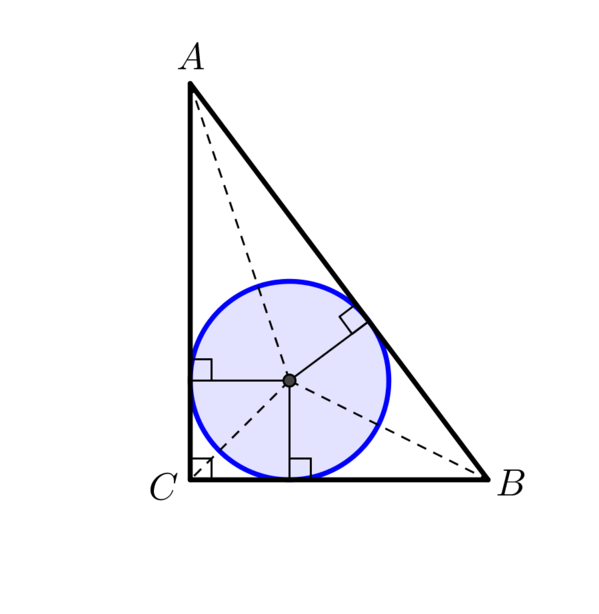


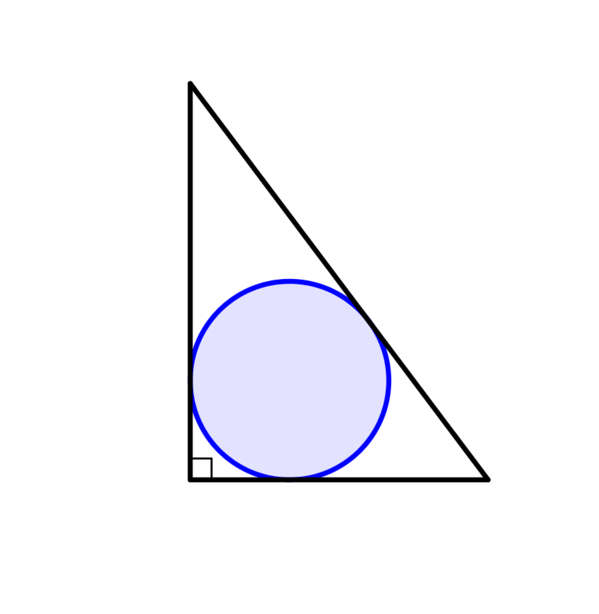
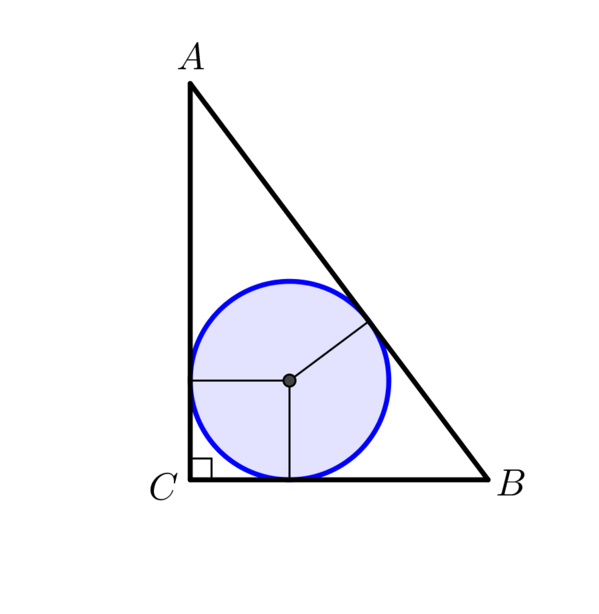
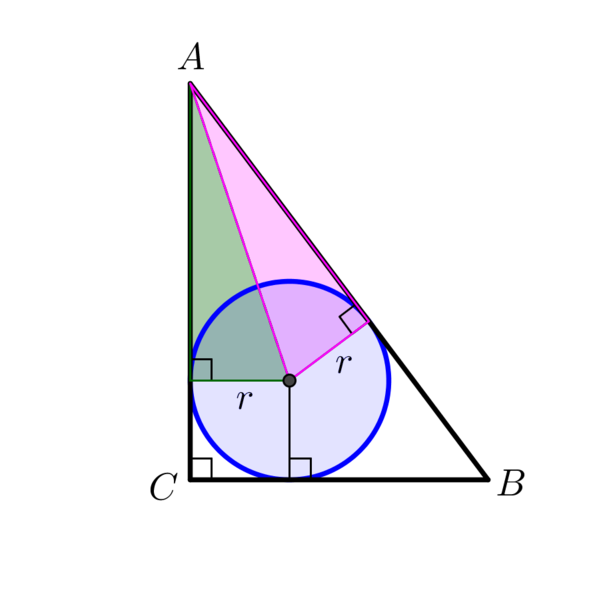
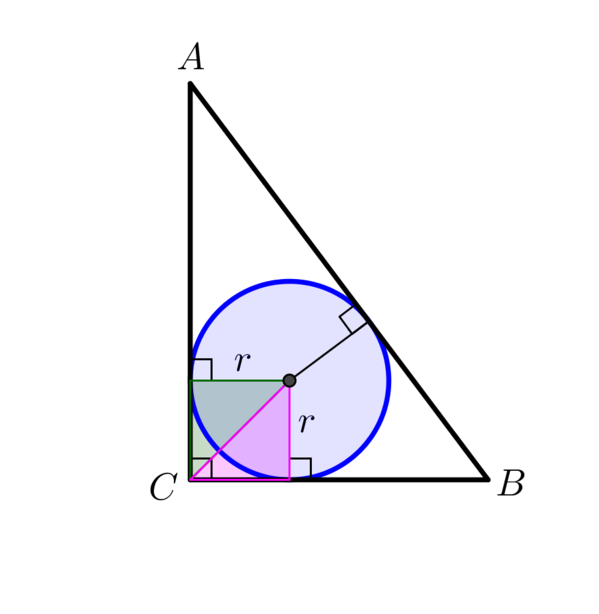
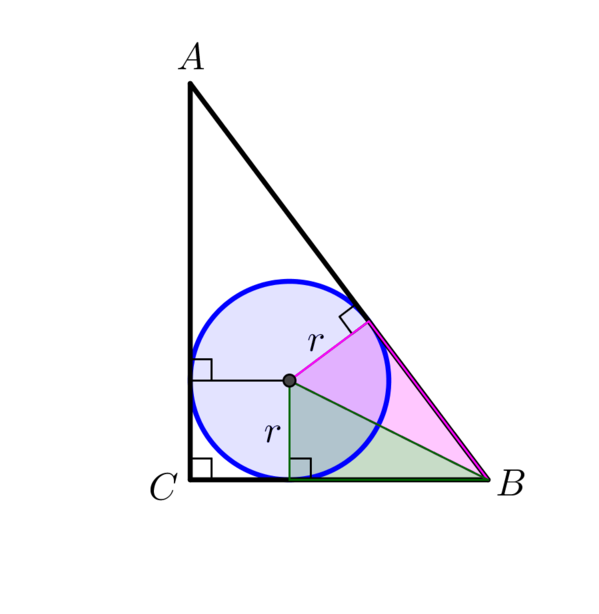
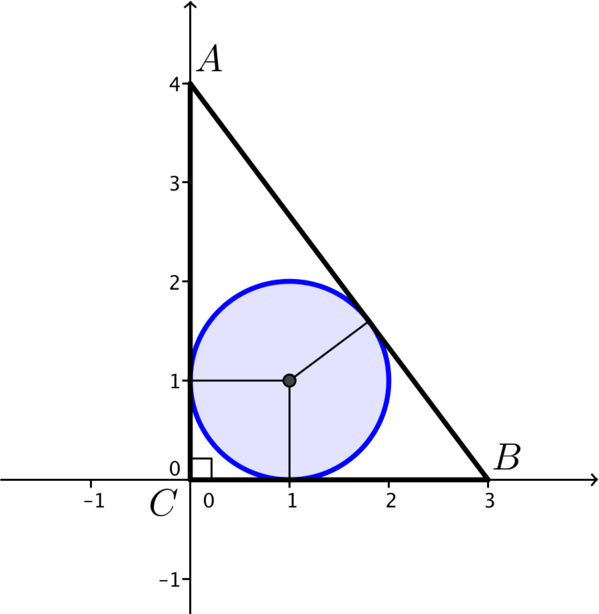
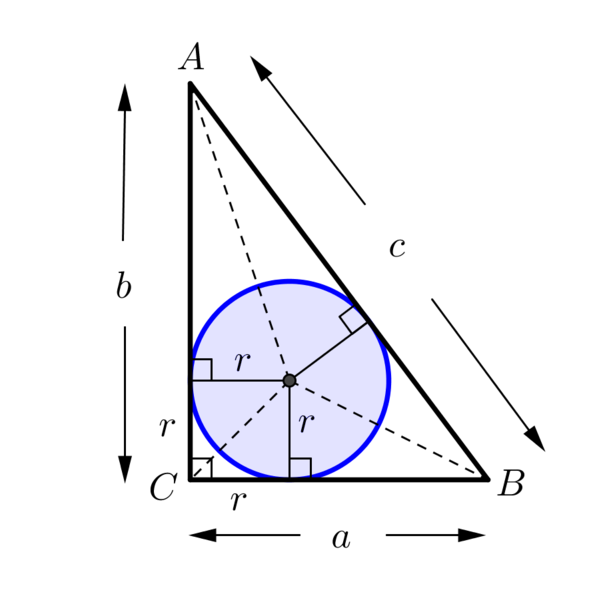
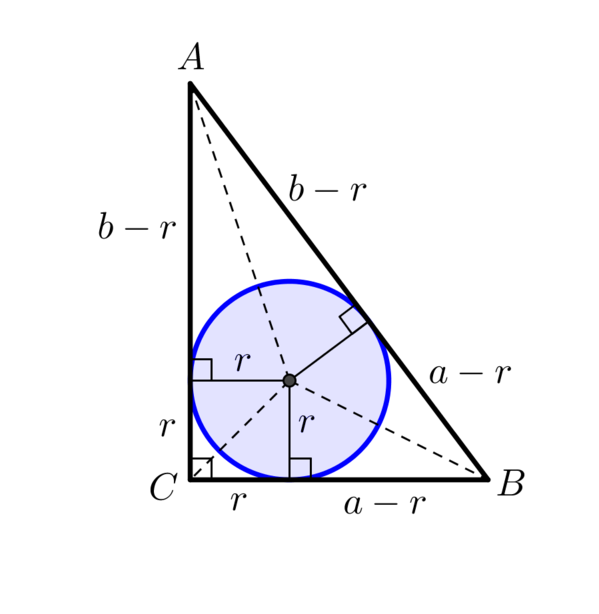
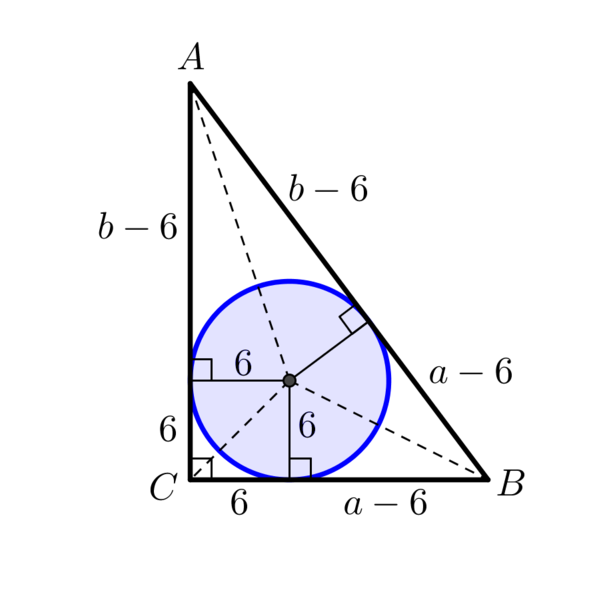
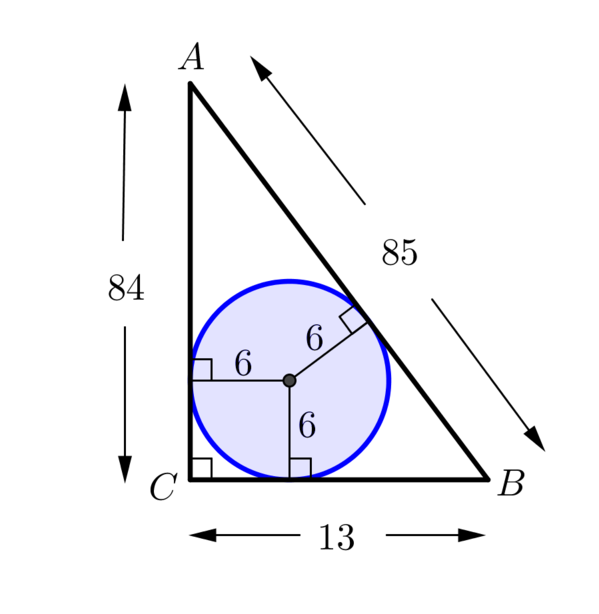


 kit (help·info) and





![{\displaystyle [0,{\frac {\pi }{2}}]}](https://wikimedia.org/api/rest_v1/media/math/render/svg/3608f07c68994fb2cec106391992ed4f4ddb0c97)



 It began on a mid of night News court. A freeway with flames shot the scene to Kaiser. In such the heat of each ember ran into the touc...
 Bay Bridge traffic is so terrible that as a native San Franciscan I have found it very difficult to both come home and at an earlier tim...
 Should I voe an egg to the hatch of it's clutch than the via is of the Turtle at it's bae'd, of that is the batch of Hu...
 1.) 2.) 3.) 4.) Yeti From Wikipedia, the free encyclopedia Jump to navigation Jump to search "Abominab...
 USA to Russian Tsar: Stop Your Cruel Oppression of the Jews, 1904. Chromolithograph. https://commons.wikimedia.org/wiki/File:190...
 This is an image of George Eastman and the logo for Kodak. To say that George Eastman had a moment of genesis in the adventure and popul...
 THE HUNT FOR THE ZODIAC KILLER NEW EPISODES TUESDAYS AT 10/9C http://www.history.com/shows/the-hunt-for-the-zodiac-killer https://e...
 Oh how Tonga must yearn from lack of recognition, the statement in start to a compliment by starch, such grace must inhabit ...


No comments:
Post a Comment