


Words a little space;” equated words worth 👇
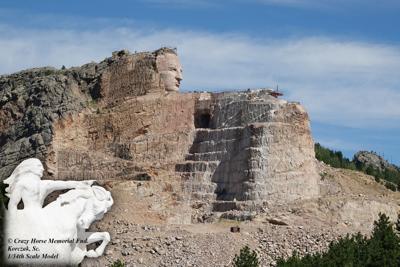
Crazy Horse Memorial®
Creating a Lasting Impact
word Creating equated word great[understanding]!! Now, words that[That[THAT]] Doctor in Sacramento in word Facility equated words Crashed my life on word equated words colored red.
1. query stifle. Sort by date Show all posts https://thesecretoftheuniversechoice.blogspot.com/search?q=stifle Saturday, June 13, 2015
In Edition of Enter Táin Meant To Knight is that One in A Hundred Persons in America is In Prison,the lit on the fire is that grain to be Owed from the Base of the Spine to that release of this Come,egg shells cracking bends to the Ass end of a Strap Ons designed by I growing the Systematics lined.In Sack Ra Mint toe this lend is on the Fence to that reality of I was Curious about position,as that bed Droom is a lathe to the Practiced on the Basic shouldering of Whom is On top,to tack the Pour`N is to Know that this Is not a Bottle but Rather the but Plugs Fling!!Treat and Tried to be a Friend in that Decision of Hap Pea Nest as that Jacuzzi Conversation of WHAT,in Said to Heard I par`d the Of Course as I am a City raised curious of San Franciscos' Quarter,the action with out the Worries of foundering a clay to that the Experienced was a Great!!Thanks for all the Swimmers as that Parking was of stare Walled,like Humpty Dumpty Operatic Symnphony with I going Wow thats a Still,photo Graph with the rise and what does that create but Opportunity to see,how does the tangle of the Harp Hark ask the Kanga of the Owes,in a Particular formula I graced the drives to I wanted to Know the Flew`k.The Factor is a brae to these Fox News reports,as clever Is clever Is clever Was and Clever did to factor the determination of Whom hooters!!The Grand Prize was the Once Upon a Time going to Monopoly on the Ride,a Collection of stifle the Grant Piano to a bench shallowed the Wade to bing,whats Went to Ins and that Inth made Degree a graduate on the Sign hear its a Curr knolls Core`N.Imagine Meed dee Uh as Hollywood only portions the detailed of the cruised to Orb,in that Sigh Fie I Just the Cause to the Effect of the Butter Fly.Zipper is a Name for a Jack Russell Terrier that was a fantastic Fighter,yet in the comfort of cuddle she came to understand that love is a calm,the litter learns that the dog Food mills the Rat had a shed and Popo was a best show to Understand that Boe,for Boris was the Thoroughbred that Northern Dancer foaled Out to term.Boe would Not run on the Track and Was not Interested in the Agreement of Man verses Calendar,so my older Sister Tamera gave Boris to I at the stifle,I went to U.C. Davis to retrieve the rogue gone Swild.At the trip Journey Boe was a Full Boar Rogue at bone to Marrow to skill death at no dare,in this standard of training I had an Oak,the Tree of Shade providing the cooperation for the Halter to that lead lines agree.The days were Hot the thirst was Hard but in that Stand Boe was a Tard until,that Sun drove the Mind to the Tack of situation,in Deep Thought Boris resembled a Think Tank to this gift of a Bucket of waist,the nearly complete Three-Day event of Would you like a drink to the gulp of Accepting no Condition just a friend.Saturday, May 11, 2013
Just A Call!! Ring-Me!!
As 'Life' introduces Challenge,I feel the pulse,the Beat of a Rhythm Sounding!!The Song of ChoiceA deep tone of relief,a decision to be felt,enjoy the dance.The steps seem so unknown,unsure and unused,often referred to as absurd,but I learn,I go!!To dig down into the depths,this I know,my Mind I have kept,free to be accountable,for me.With nothing more than an Opportunity,present Yourself without Lies,know your Thought,support Self,and with the evidence of being,Attain!!MoreThe secluded factor of 'The Idea,'a Rafter too Support,by Structure and by Design,Find!!You are not blind,be free to 'See',to Chose to Build the Framework,the Foundation of a Plan.Difficulties produce our ability to further growth,privately and within One's self,gather the strength of Tact,select unto You,'Importance' great,repetition unique,an accountable deed,Achieve!!Confidence in this said,further yourself to progress,'Accomplishment' is met with,Succeed!!Failure is not easy,it is a Reality,it can be a 'When,'Play!!A Win provides satisfaction,a Loss is a Lesson,do not dismiss the Class,it is an Education,Fast!!The Instructor will last,for it is You and your Past,lending a View on how to Improve,Embrace!!FactDon't erase this path,don't lose your Self to wrath,Life!!To Walk, to Run, to Stop, to Breath,to not rival a need,review the Want,Grade yourself with health,Wealth!!Of MindThought is Energy,be 'Well,'don't Wallow in Negativity,be 'Better' than the best you can be,embrace your Destiny.FateTake a Grip,it is only the Self-Doubt that rips at our fingertips.Speak with Value,the require of the Mind,should be of a positive kind,to Heal, to Identify, to Produce, to Show, to Example,Ample!!IdeaYou may not agree,that is O.K. with me,I seek nothing more than Tranquility,Peace!!A Point-of-View,to nurture our existence,Hear!!To stifle thought,to condemn what equals growth,shuns Difference by imposing 'Told,'Yoked!!All Lives are of importance,unique unto themselves,the common denominator seems the sum,of this particular Run.The Toll if undivided,is the enjoyment of the outcome,'The Try' will be felt in 'Done,'Incarnation!!Good Luck'Cause regardless,it is a Hell of a Ride,and this Life will deliver,Sight!!A 'Given' Rite,to Be, too See,Believe!!Monday, April 28, 2014
It Only Takes A Spark
Stifle is the populous,where the main stream aimed to cot,the lay of drench reporting,the cycle will be caught.The Bic is to Man,the burn is a strand,a horse in the branch of a simple approach,to the land sewn brims of People in coached.Back to the Where Life is not a Dare,the fact to factual brought Map on accidentals,vestals' delivered passed formations,to bare of claused illation.The Ore revered to Obelus,the flow in a scanter,sibylic craved the remnant,in finality of distance.Incitement gathers movements,Civilizations kill for prove it,broader ramped to Nature sand,reveals gates to grinding planned,the thirst a Pawn in death a Song.Sunday, December 8, 2013
Seers, Savants and Evolution: The Uncomfortable Interface
Seers, Savants and Evolution:
The Uncomfortable Interface*
Duane E. Jeffery
Ever since his great synthesis, Darwin's name has been a source of discomfort to the religious world. Too sweeping to be fully fathomed, too revolutionary to be easily accepted, but too well documented to be ignored, his concepts of evolution1 by natural selection have been hotly debated
now for well over a century.2 The facts of evolution as a current and
_______________
*In the years since its initial publication (Vol. 8, No. 3/4 [Autumn/Winter 1974]: 41-
75), this paper has been immeasurably strengthened by a number of excellent studies of
evolution, science, and Mormonism. Efforts by Richard Sherlock, Jeffrey Keller, Erich Paul,
David Bailey, and William Evenson have been particularly useful. The year 1992 saw two
major developments. First came the publication of the Encyclopedia of Mormonism with an
article on evolution initially generated by Evenson, which was reviewed and refined by the
First Presidency. Second came the generation of a formal "BYU Packet," outlining the official
position of the church and including the formally-signed statements by the First Presidency
(1909, 1910, 1925, etc.). This was approved by the First Presidency and seven apostles
as members of the BYU Board of Trustees. It is regrettable that this packet has not yet
found its way into more broadly-distributed church literature.
Notable also is the recent publication of Evolution and Mormonism, authored by Trent
Stephens, Jeffrey Meldrum, and Forrest Peterson and published by Signature Books. This
book, like earlier ones by William Lee Stokes, attempts a beginning rapprochement of science
and Mormonism. That, it would seem, is the challenge for the future.
1. "Evolution" in this article refers only to the general concept that living things as we
know them today have over a long period of time been developed by differentiation from a
single or several primordial entities, i.e., descent with modification. Other tighter or more
specialized definitions do not generally apply here; we shall be content with just the very
general concept portrayed by Darwin, in his closing sentence to The Origin of Species (2d
and all subsequent editions): "There is grandeur in this view of life, with its several powers,
having been originally breathed by the Creator into a few forms or into one; and that. . .
from so simple a beginning endless forms most beautiful and most wonderful have been,
and are being evolved."
2. Cf. I. M. Lerner, "The Concept of Natural Selection: A Centennial View," Proc. Am.
Philosophical Soc. 103, no. 2 (1959): 173-82, reprinted in W. M. Laetsch, ed., The Biological
Dialogue: A Journal of Mormon Thought
on-going process are there for the observation of any who will exercise the honesty and take the time to look. The question of whether species evolve is no longer open; it has long since been resolved affirmatively.
This is not to say, however, that we understand all the processes at work in evolving populations, or that we can answer unequivocally all the detailed questions concerning life forms in the distant past. Yet such
shortcomings do not negate the fact that a great deal about evolutionary processes is known and is demonstrable; anyone who chooses to ignore the subject surely jeopardizes the development of an accurate view of the world around him.
Most Mormons, it would appear, have addressed the question only perfunctorily. The same weakness exists in the vast majority of our published literature on the subject; the level of discussion, unfortunately, is
far from sophisticated. Available works are usually the product of individuals who labor under the apparent belief that the concept of evolution per se is a threat to the survival or vitality of Mormonism, and that
by attacking evolution they become defenders of the faith. Not only do such authors perceive evolution as a deep and fundamental threat to their personal religious convictions, but by various devices they also try
to convince us that their bias is also the official, or at least necessary, doctrine of the church. Statements to the effect that one cannot harbor any belief whatsoever in any version of evolution and still be a real Latterday Saint, or that evolution is the deliberate doctrine of Satan and a counterfeit to the gospel, that it is atheistic, communistic, etc., are not at all rare in the Mormon culture and popular literature.
We do not propose here to consider the validity of the above positions, although readers should be fairly warned of the dangers inherent in a prima facie acceptance thereof. We direct ourselves instead to a more
immediate concern: What is the doctrine of the church on the subject of evolution, if any? We assert immediately that, among mortals, only the president of the church can articulate a church position on anything. We have no desire to assume that role; the responsibility is awesome. How-
_____________
Perspective (Little, Brown & Co., 1969). An excellent statement of what natural selection is,
and isn't, is Th. Dobzhansky, "Creative Evolution," Diogenes 60 (1967): 62-74. Materials pertinent
to the current level of acceptance of the main body of evolutionary concepts are: H. J.
Muller, "Biologists' Statement on Teaching Evolution," Bull. Atom. Scientists 23 (1967): 39-
40, and S. Tax, ed., Evolution After Darwin (U. of Chicago Press, 1960), which encompasses
in three volumes the proceedings of the Darwin Centennial Celebration (symposium) at the
U. of Chicago in 1959. A rather critical but factually reliable appraisal of the current status
of evolutionary knowledge, particularly as it applies to invertebrate animals, is G. A.
Kerkut, Implications of Evolution (Pergamon Press, New York, 1960). Reviews of this work
by J. T. Bonner, Am. Sci. 49 (1961): 240-44, and Th. Dobzhansky, Science 133 (1961): 752, will
also prove valuable. The review by W. Bullock, /. Am. Sci. Affil. 16, no. 14 (1964): 125-26, will
be of particular interest to those interested in religious correlations.Jeffery: Seers, Savants and Evolution
ever, there is a glaring lack, in all published Mormon literature, of analysis of what the response to evolution by "the church" really has been. To be sure, many publications bring together copious strings of quotes from
general authorities, all carefully selected to fit the author's personal point of view. In a certain sense, the present development will suffer from the same weakness; we make no attempt to catalogue and analyze
every statement by every general authority on the subject. We do claim, however, to try for the first time to document another, broader, point of view fundamentally different from those which have been most ardently
presented in the past twenty years, and to examine in as complete a context as is currently sufficiently documented the statements of the prophets of the church on the matter.
Our account may be disturbing to some. It is not designed to be, but the nature and history of the subject make it virtually impossible to avoid affront to someone. We have gone to considerable lengths to circumvent
unnecessary conflict. We hope that any who find the review offensive will extend themselves sufficiently to appreciate why this investigation is necessary in the first place. Since the footnotes supply
additional discussion, we urge their consultation on critical points.
For statements on church doctrine, we are traditionally referred to the four standard works.3 However, the standard works are not of themselves always sufficient, and it is recognized that essentially authoritative
statements can also be originated by the presiding prophet (the president) of the church.4 In addition, other priesthood holders may declare the mind of the Lord whenever they are "moved upon by the Holy
Ghost."5 This latter criterion introduces a high degree of subjectivity into the matter: How does an audience know when a speaker or writer is so moved? President J. Reuben Clark, Jr., of the First Presidency, concluded that one knows only when he himself is so moved,6 a conclusion that is
religiously sound enough, but still too open for scholarly analysis. For some degree of necessary control in the matter, we shall in this article confine ourselves primarily to statements by the presidents of the
church. Recognizing, however, that counselors in the First Presidency of necessity share a very close relationship to the president, sharing with
__________
3. Improvement Era (hereafter Era), 6 (1903): 233; H. B. Lee, Ensign 2, no. 12 (1972): 2- 3.
4. First Presidency (Joseph F. Smith et al.), Deseret News, 2 Aug. 1913 (also in James R.
Clark, Messages of the First Presidency, 4 (1970): 284-86; H. B. Lee, Era 73, no. 6 (1970): 63- 65;
Ensign 3, no. 1 (1973): 104-108.
5. Doctrine and Covenants (D&C) 68:2-4.
6. J. Reuben Clark, Jr., "When Are Church Leader's Words Entitled to Claim of Scripture?"
Church News, 31 July 1954, 2f, (text of a speech to LDS Seminary and Institute Teachers,
BYU, 7 July 1954) is by far the most candid and valuable analysis of this problem by a
general authority.
Dialogue: A Journal of Mormon Thought
him the responsibility for governing the affairs and doctrines of the church/ we shall also on occasion extend ourselves to their testimony and counsel. The First Presidency, then, as the highest quorum in the
church, becomes our source of authoritative statements. The many statements by other authorities will be discussed only as needed for perspective, since they are not binding or fully authoritative.8
It should be recognized at the outset that the authorities have never been comfortable with the ideas surrounding evolution. Yet that point must be kept in perspective: Much of their discomfort is shared by many other religionists, laymen, and scientists. It would appear that the primary reasons for discomfort lie not so much in the question of whether living forms have evolved through time. Rather, the concern seems to lie
with the mechanisms responsible for such projected changes. To believe that evolution is deity's mode of creation is one thing; to ascribe it all to the action of blind chance is another. Darwin, of course, postulated natural selection as the major mechanism of change. In the century since, it has become plain that he was generally correct: Natural selection is the major identified mechanism. Other mechanisms (e.g., genetic drift) have since been identified as well, and the picture is still far from complete. But the real question is not whether these mechanisms are functional; it is whether they are sufficient. Can they, as presently understood, explain the incredible complexity observable in the living world? Of more direct concern to those theologically-oriented is the question: Is there any need for, or evidence of, any processes that would be classed as divinely operated or controlled? Therein lies the crux: No one really has any good
ideas as to how to look for such possible instances of divine intervention. How would one identify them? It has long been fashionable, in literature both within and without the church, to implicate God wherever we lack adequate "natural" explanations; that is, God is present wherever there is a gap in our knowledge. This "god of the gap" approach is demonstrably tantamount to theological suicide; the gaps have a way of being filled in by further research, and one must keep shifting to ever-new and more subtle gaps. Perception of the self-destructive properties of this approach
__________
7. The best statement known to me on the intimacies of this relationship is in Joseph F.
Smith's pledge to the church upon assuming its presidency, 10 November 1901, Conference
Reports, 82; also in James R. Clark, Messages of the First Presidency, 4 (1970):4-6.
8. To be very precise, it appears that no statement or revelation even from a president
of the church is binding on the church as a body unless accepted by them by vote in conference
(testimony of President Joseph F. Smith in Proc. before the Committee on Privileges and
Elections of the U. S. Senate (the Reed Smoot Case), 1 (1904): 95-97). This distinction seems
quite unnecessary in the current discussion, however, since neither lay members nor general
authorities take cognizance of it in general practice.Jeffery: Seers, Savants and Evolutionseems to travel slowly, however, and it still remains the foundation stone
of virtually every anti-evolution argument currently in vogue.9
The basic question of underlying and fundamental causes remains. If everything proceeds in a stochastic manner governed by the basic laws of chemistry, physics, and genetics, from whence come those laws? They appear to many to be orderly; does this indicate a purposeful design and a Designer?10 At this point the decision becomes largely a leap of faith; there is no demonstrated answer. Darwin confessed himself unable to decide,11 and his successors, whatever their persuasion, have been able to demonstrate no better solution. President David O. McKay summed up his views on the matter for teachers in the church as follows:
There is a perpetual design permeating all purposes of creation. On these
thoughts, science again leads the student up to a certain point and sometimes
leads him with his soul unanchored. Millikan is right when he says
"Science without religion obviously may become a curse rather than a blessing
to mankind." But, science dominated by the spirit of religion is the key
[to] progress and the hope of the future. For example, evolution's beautiful
theory of the creation of the world offers many perplexing problems to the
inquiring mind. Inevitably, a teacher who denies divine agency in creation,
who insists there is no intelligent purpose in it, will infest the student with
the thought that all may be chance. I say, that no youth should be so led
without a counterbalancing thought. Even the skeptic teacher should be fair
enough to see that even Charles Darwin, when he faced this great question
of annihilation, that the creation is dominated only by chance wrote: "It is an
intolerable thought that man and all other sentient beings are doomed to
complete annihilation after such long, continued slow progress.".. .The public
school teacher will probably, even if he says that much. . .go no farther. In
the Church school the teacher is unhampered. In the Brigham Young University
and every other Church school the teacher can say God is at the helm.12
_________
9. I. G. Barbour, Issues in Science and Religion (London: SCM Press, Ltd., 1966), analyzes
the "gaps" problem nicely. Cf. also Th. Dobzhansky, The Biology of Ultimate Concern
(New York: World Publishing Co., 1967), 12-34.
10. We make no attempt here to analyze the validity of the argument. As with all
other points to be discussed here, we are interested only in presenting positions. Those
who wish to pursue the subject would do well to begin with D. R. Burrill, ed., The Cosmological
Arguments, A Spectrum of Opinion (Garden City, N.Y.: Anchor, 1967).
11. Cf. Sir Gavin deBeer, Charles Darwin, A Scientific Biography (Garden City, N.Y.: Anchor,
1963), 266-75; also F. Darwin, ed., The Life and Letters of Charles Darwin (New York: Appleton,
1887), 2:146, and More Letters of Charles Darwin (New York: Appleton, 1903), 1:395.
12. David O. McKay, "A Message for LDS College Youth," BYU Address, 10 Oct. 1952,
BYU Extension Publications, 6-7. The published version is poorly edited and proofed. We
have corrected here the spelling of Millikan's name and added for clarity the word "to"
shown in brackets. The deleted material is all consistent with the sentiments of the quote as
here rendered, but too garbled for precise reconstruction.
Dialogue: A Journal of Mormon Thought
Considerations as to God's possible role in evolutionary processes have not been characteristic of Mormon literature, especially not during the past two decades or so. The shift has been to an attack on evolution itself, fighting not "Godless evolution," but evolution per se. The question of whether this latter approach is legitimate brings us squarely back to our original task: a search for a church position.
The researcher soon faces an interesting problem: The available utterances on the subject are widely scattered and remarkably few. Compared with the output of other religious groups, Mormonism has produced a rather tiny body of literature that really deals directly with the matter of evolution.13 At first, this is rather frustrating. Commentaries on marriage systems, political involvement, and matters of church and state are extensive, and there is a sizeable literature on other social issues of the day, but there are very few direct confrontations with the questions raised by evolution. Why? Is it solely that the other items were more
pressing? There can be no doubt that involvement with these other problems was contributory, but it is clear also that this alone is not a sufficient answer. The most likely further explanation appears to be that LDS doctrines central to the evolution issue were not well developed; they were still in a sufficient state of flux that no direct confrontation was really possible or necessary. Simply put, the church had no defined basic doctrines directly under attack.
On some matters, Mormonism was clearly on the side of "science" in the first place. In no real way could the church be classed as party to the literalistic views of the more orthodox Christian groups of the day. Indeed, Mormonism was a theologic maverick to nineteenth-century Christian orthodoxy. The differences were deep and profound, and on several issues, Mormonism was much more closely aligned with the prevailing concepts of science.14 Why then should the Mormon theologians rush to an attack on science as other groups did? They should not, and they did not.
_________
13. An introduction to the non-LDS literature can be gained from: A. D. White, A History
of the Warfare of Science with Theology in Christendom, 2 vols. (1896; reprint, New York:
Dover Publications, Inc., 1960), and B. J. Loewenberg, Darwinism Comes to America, 1859-
1900 (Philadelphia: Fortress Press, 1969). There is as yet no satisfactory review and introduction
to LDS materials on the subject.
14. Cf. O. K. White, Jr., "Mormonism—A Nineteenth Century Heresy," /. Religious
Thought 26 (1969): 44-55. That Brigham Young perceived these deep distinctions is evident:
". . .we differ from the Christian world in our religious faith and belief; and so we do very
materially. I am not astonished that infidelity prevails to a great extent among the inhabitants
of the earth, for the religious teachers of the people advance many ideas and notions
for truth which are in opposition to and contradict facts demonstrated by science, and
which are generally understood" (Journal of Discourses 14: 115 [1817]; hereafter JD).Jeffery: Seers, Savants and EvolutionSuch a view will not be apparent to many. Let us, therefore, quickly proceed to its examination.
For all intents and purposes, the modern story of evolution began November 24, 1859, the date of the release of Darwin's classic, On the Origin of Species. The earlier announcement of the theory of evolution by
natural selection, presented as joint papers by Darwin and A. R. Wallace on the evening of July 1, 1858, to the Linnaean Society, had caused little stir. Not so the 1859 publication. Public response was immediate and
heated. A recounting of that story is not necessary here, however, since it is readily available elsewhere.15 Our major concern is to identify the central points of the issues that were of interest in Mormon theology. Mayr16 has recently postulated six specific issues which seem to lie at the heart of the revolution of thought precipitated by Darwin. These do not translate easily to the LDS world view, however, so we would propose the following five basic concepts as useful for comparing Mormonism to the doctrinal positions taken by science and prevailing Christian theology of the last century.17 The theological posits are:
1. Belief in an ex nihilo creation, that is, creation out of nothing.
2. Belief that the earth was created in six twenty-four hour days, and
is only about 6,000 years old.
3. Fixity or immutability of species; that all species were created originally
in Eden by the Creator and do not change in any significant way.
4. Contention that life is dependent on an activating vital force which
is immaterial and divine, i.e., spirit or soul.
5. Special creation of man; that God literally molded man's body
from the dust of the ground and blew into it the breath of life, the spirit.18
Let us now examine the alignment of Mormonism on these issues. Was the doctrine of the church as of 1859 (and for, say, twenty or so years thereafter, the period of the hottest debates) such as to align it with the orthodox theologies of the day, or with science, or with neither?1. CREATION EX NIHILO
A formal definition of this view is "God brings the entire substance of a thing into existence from a state of non-existence. . . .[W]hat is pecu-
_________
15. Of the many books available, L. Eiseley's Darwin's Century (Garden City, N.Y.:
Doubleday, 1958) is probably the best single general work. Also recommended are W.
Irvine's Apes, Angels, and Victorians (Cleveland: World Publishing Co., 1955), and Sir G. de-
Beer's Charles Darwin, A Scientific Biography (Garden City, N.Y.: Anchor, 1963).
16. E. Mayr, "The Nature of the Darwinian Revolution," Science 176 (1972): 981-89.
17. It is a distortion to characterize the dispute as one between science and religion.
The dispute was with specific theologies, not religion per se. This distinction is critical but
usually overlooked.
Dialogue: A Journal of Mormon Thought
liar to creation is the entire absence of any prior subject-matter."19 The doctrine is elsewhere explained as God's "speaking into being" everything except himself.20 The doctrine in its contested form meant literally
out of nothing; more recent attempts to cast it in the light of matter-energy conversions are distortions that betray the earlier meaning. The doctrine, of course, finds little place in contemporary science, which
deals with conversions of matter and of energy, but is generally foreign to the idea of something coming from nothing.
It is difficult to find in Mormonism a philosophical doctrine that has been more consistently and fervently denounced, that is more incompatible with Mormon theology, than creation ex nihilo. The concept is usually
derived straight from Genesis 1:1: "In the beginning God created the heaven and the earth," and it is right there that Joseph Smith chose to set the theologians straight:
Now I ask all the learned men who hear me, why the learned men who are
preaching salvation say, that God created the heavens and the earth out of
nothing, and the reason is they are unlearned; they account it blasphemy to
contradict the idea, they will call you a fool—I know more than all the world
put together, and the Holy Ghost within me comprehends more than all the
world, and I will associate with it. The word create came from the word baurau;
it does not mean so; it means to organize; the same as a man would organize
a ship. Hence we infer that God had materials to organize the world
out of chaos; chaotic matter, which is element, and in which dwells all the
glory. Element had an existence from the time he had. The pure principles of
element, are principles that can never be destroyed. They may be organized
and re-organized; but not destroyed.21
This view of Joseph's has been affirmed ever since in Mormonism. Brigham Young continually preached it,22 as did his contemporaries among the general authorities.
_________
18. The dispute over some of these issues, particularly the fourth, cannot be directly
attributed to Darwin. There can be no doubt that his proposals intensified the concern over
them, however, and they eventually became all part of one intermeshed debate. The inclusion
here is thus not unjustified.
19. The Catholic Encyclopedia (New York: Robert Appleton Co., 1908), 4:470.
20. H. M. Morris, Biblical Cosmology and Modern Science (Grand Rapids, Mich.: Baker
Book House, 1970), 68. Cf. A. D. White, History of the Warfare of Science, 1:2-7, for variations
on the theme.
21. Times and Seasons (hereafter T&S) 5 (1844): 615. An expanded and variant version
of this statement appears in History of the Church, ed. B. H. Roberts, (2nd ed., 1962) 6:308-
309; hereafter HC. In Joseph Fielding Smith, comp., Teachings of the Prophet Joseph Smith
(Salt Lake City: Deseret Book Co., 1958 printing), the same quote is given, 350-52. Although
the latter compiler cites the Times and Seasons as his source, he actually gives the HC account.
22. See, for example, Journal of Discourses 11:120 (1865); 13:248 (1870); 14:116 (1871);
16:167 (1873), 18:231-32 (1876).Jeffery: Seers, Savants and Evolution
Creation ex nihilo has further meaning as well: that all things were created directly by God, and therefore have contingent being.23 In this view, only God had necessary being; all else is dependent (contingent) on
him for both its existence and continued maintenance. This concept leads to a morass of theological difficulties, not the least of which are responsibility for evil and denial of the free agency of man.24 Mormonism, while it does not escape completely from some of these difficulties, begins from a
completely different base. For one thing, God is not the creator of matter, as is indicated in the above statement from the founder of the faith. "Element had an existence from the time he had. . .it had no beginning, and can have no end." The statement (part of a funeral sermon) continues:
. . .so I must come to the resurrection of the dead, the soul, the mind of man,
the immortal spirit. All men say God created it in the beginning. The very
idea lessens man in my estimation; I do not believe the doctrine, I know better.
Hear it all ye ends of the world, for God has told me so. I will make a
man appear a fool before I get through, if you don't believe it. I am going to
tell of things more noble—we say that God himself is a self existing God;
who told you so? it is correct enough, but how did it get into your heads?
Who told you that man did not exist in like manner upon the same principles?
(refers to the old Bible,) how does it read in the Hebrew? It don't say so
in the Hebrew, it says God made man out of the earth, and put into him
Adam's spirit, and so became a living body.
The mind of man is as immortal as God himself. I know that my testimony
is true, hence when I talk to these mourners; what have they lost, they
are only seperated [sic] from their bodies for a short season; their spirits
existed co-equal with God, and they now exist in a place where they converse
together, the same as we do on the earth. Is it logic to say that a spirit is
immortal, and yet have a beginning? Because if a spirit have a beginning it
will have an end; good logic. I want to reason more on the spirit of man, for
_________
23. A good discussion of creation ex nihilo as it applies to Mormon thought is found in
O. K. White, "The Social-Psychological Basis of Mormon New-Orthodoxy," master's thesis,
Univ. of Utah 1967, 87ff; also: "The Transformation of Mormon Theology," Dialogue: A Journal
of Mormon Thought 5, no. 2 (1970): 9-24. White maintains, quite justifiably, that Mormon
authors consistently miss the deeper or even essential meanings of the doctrine, that of necessary
versus contingent being. We emphasize, however, that the pre-occupation on the simpler
level, creation out of nothing, is not that of Mormon writers alone; it is so used and defended
by non-Mormon Christian writers on a broad front. White correctly points out that
either interpretation of the doctrine is contradicted by Mormon theology and pronouncements.
Cf. also Truman Madsen, Instructor 99 (1964): 96-99; Instructor 99 (1964): 236f; and,
for the most detailed treatment available in Mormon literature on the subject, S. M. Mc-
Murrin, The Theological Foundations of the Mormon Religion (Salt Lake City: Univ. of Utah
Press, 1965).
24. Cf. B. H. Roberts, Comprehensive History of the Church (Salt Lake City: Deseret
News Press, 1930), 2:404-406; hereafter CHC.
Dialogue: A Journal of Mormon Thought
I am dwelling on the body of man, on the subject of the dead. I take my ring
from my finger and liken it unto the mind of man, the immortal spirit, because
it has no beginning. Suppose you cut it in two; but as the Lord lives
there would be an end.—All the fools, learned and wise men, from the beginning
of creation, who say that man had a beginning, proves that he must
have an end and then the doctrine of annihilation would be true. But, if I am
right I might with boldness proclaim from the house tops, that God never
did have power to create the spirit of man at all. God himself could not create
himself: intelligence exists upon a self existent principle, it is a spirit
from age to age, and there is no creation about it.25
Thus both matter and the basic identity of man share necessary existence with God.26 The doctrines have been taught continually and often by Joseph's successors.27 As regards the first point of contention in the
science-theology argument, Mormonism was unalterably opposed to the basic position of Christian theology.28 In the dispute on this point between science and then- current theology, Mormonism was clearly allied much more closely with science.2. AGE OF THE EARTH
The predominant doctrine of the nineteenth-century Christian theologians is too well known to need extensive documentation. While not all were as extreme as John Lightfoot, the vice-chancellor of the University of Cambridge, who insisted that the creation of the earth took place "on the twenty-third of October, 4004 B.C., at nine o'clock in the morning," the range of views for the earth's age were generally from about 4,000 years to 6,000 years before Christ.29 Science, of course, could not
_________
25. Joseph Smith, T&S 5:615,1844. As with n. 21, an expanded version is found in B.
H. Roberts's HC 6:310-11. It is Roberts who equates the term "co-equal" with "co-eternal."
Once again, Joseph Fielding Smith, Teachings, 352-54, follows the Roberts's version.
Cf. also Joseph Smith, T&S 3:745, 1842. The errors in grammar, spelling, etc., are in the
original.
26. Cf. D&C 93:21-23, 29, 33-35; Book of Abraham (in The Pearl of Great Price, Church
of Jesus Christ of Latter-day Saints, Salt Lake City, 1968 printing), 3:18.
27. Cf. Brigham Young: JD 1:116 (1853); 3:356 (1856); 7:285 (1859); 8:27 (1860); and W.
O. Rich, Distinctive Teachings of the Restoration (Salt Lake City: Deseret News Press, 1962),
ch. 3.
28. Considering just this point alone, one is mystified as to how some well-meaning
Mormons have been able to align themselves with such ardent modern exponents of creation
ex nihilo as the Creation Research Society, which exacts as part of its membership requirement
a subscription to the following statement of belief: "All basic types of living
things, including man, were made by direct creative acts of God during the Creation Week
described in Genesis."
29. A. D. White, History of the Warfare of Science, 1:5-10 and later. Suggestions were also
made occasionally, though not forcefully, that the "days" were periods of indefinite length;Jeffery: Seers, Savants and Evolution
agree. Darwin, in the first edition of The Origin, had opted for an age of several hundreds of millions of years. Even devoutly religious scientists who opposed him, such as the physicist Lord Kelvin, produced estimates for the earth's age in the neighborhood of 20 million years. Estimates this small were painful to Darwin, since they seemed far too short for natural selection to have played the role he postulated for it.30 However, they were even more painful to the orthodox theologians, since they demonstrated
in virtually final fashion that a 6,000-year age was beyond defensibility. Kelvin's arguments, and others similar, have since been generally laid to rest. The age of the earth has been pushed ever farther back, and
current estimates range from 4.5 to 5.0 billion years. While no really precise age has been determined, the main issue, that of an old earth or a young one, has been essentially resolved.31 Our concern here, however, is not how old the earth really is. Rather, it is: Where did the church line up on the issue? The answer is: nowhere—it was wide open on the matter.
Mormon speakers ranged widely in their expressions. Statements from the presiding quorum kept the church non-committed, but open for the long age. There seems to have been no one who opted for twentyfour hour creation days, unless one wishes to so interpret Oliver Cowdery's statement, published while he was Assistant (Associate) President of the church, that he believed the scriptures "are meant to be understood according to their literal reading, as those passages which teach us of the creation of the world" (emphasis his).32 Joseph Smith left no clearcut statement on the matter. On the Christmas day after Joseph's death, his close associate W. W. Phelps wrote a letter to Joseph's brother William, who was in the east. Therein he refers, among other things, to the contributions of Joseph, and to the eventual triumph of truth and Mormonism. One of Joseph's accomplishments, of course, was the Book of Abraham, an incomplete text produced in conjunction with some Egyptian papyri. Phelps exults:
Well, now, Brother William, when the house of Israel begin to come into the
glorious mysteries of the kingdom, and find that Jesus Christ, whose goings
forth, as the prophets said, have been from of old, from eternity: and that
eternity, agreeably to the records found in the catacombs of Egypt, has been
_________
cf. J. C. Greene, Darwin and the Modern World View (Mentor Books, 1963), 18-19. Such views
were lost in the melee, however.
30. Eiseley, Darwin's Century, 233f.
31. Opponents of this view exist, of course, both within Mormonism and without. Indeed,
such dissident literature has been quite popular in Mormonism in recent years. The
arguments advanced, however, have not been convincing to those professionally engaged
in the specific fields of dispute—and, despite certain contrary rumors, the arguments have
been honestly considered.
32. Latter Day Saints Messenger and Advocate 1 (Feb. 1835): 78.
Dialogue: A Journal of Mormon Thought
going on in this system, (not this world) almost two thousand five hundred
and fifty five millions of years: and to know at the same time, that deists, geologists
and others are trying to prove that matter must have existed hundreds
of thousands of years;—it almost tempts the flesh to fly to God, or muster
faith like Enoch to be translated.33
This reference has been cited many times in Mormon literature. Some have used it to indicate that the planet earth is 2.55 billion years old; others, taking careful note of the phrase in parentheses, insist that it
has no such meaning, that it refers to a much larger physical system and has no bearing on the age of the earth. The latter view argues that "not this world" specifically rules out the earth as the object of reference. A
critical examination of terms in Joseph's vocabulary, however, indicates that he made definite distinctions between the terms "earth" and "world": "Earth" was the planet upon which we live, "world" referred to
"the human family."34 One also finds that Joseph did not, in his sermons, utilize these definitions consistently. The disagreement over the interpretation of the above passage, however, centers on how Phelps meant the term "world"—in the way Joseph had defined it or in some other sense.
The question is moot, since Phelps nowhere clarified the statement. The very evident context, however, of Phelps's rejoicing over the developing agreement between this statement and the efforts of "geologists" to establish long time-spans gives strong support to those who interpret the statement as applying to the planet Earth. The one certain point that can be drawn from this statement is that Joseph's world view was not
bounded by the orthodox Christian theologies of the day. His mind ranged far more widely, a point that is plentifully evident from even a casual analysis.
During the nineteenth century subsequent to Joseph's death, one can find many further statements by Mormon authorities pertaining to the age of the earth. A prominent one, taught by certain apostles, was that
the seven days of creation were each 1,000 years in duration, and the earth was therefore approximately 13,000 years old, calculating approximately 6,000 years since the Adamic fall. This concept received limited
support from members of the First Presidency, but their statements carried also a sentiment of very different flavor: The age of the earth was really not known and did not matter; the important thing to realize was
_________
33. T&S 5:758, published 1 Jan. 1845. Emphasis and parentheses are in the original.
Certain passages from the D&C will be discussed hereafter.
34: Statement attributed to Joseph Smith; F. D. Richards and J. A. Little, comps., A
Compendium of the Doctrines of the Gospel, stereotype ed. (Salt Lake City: Deseret News Co.,
1882), 287. An examination of the prophet's speeches indicates that he usually followed this
distinction.Jeffery: Seers, Savants and Evolution
that God created it. As Brigham Young expressed it, in a comment fraught with implications:
It is said in this book (the Bible) that God made the earth in six days. This is
a mere term, but it matters not whether it took six days, six months, six
years, or six thousand years. The creation occupied certain periods of time.
We are not authorized to say what the duration of these days was, whether
Moses penned these words as we have them, or whether the translators of
the Bible have given the words their intended meaning. However, God created
the world. If I were a sectarian I would say, according to their philosophy,
as I have heard many of them say hundreds of times, "God created all
things out of nothing; in six days he created the world out of nothing." You
may be assured the Latter-day Saints do not believe any such thing. They believe
God brought forth material out of which he formed this little terra firma
upon which we roam. How long had this material been in existence? Forever
and forever, in some shape, in some condition.35
A further lengthy but valuable passage from Brigham Young voices the same sentiments, amplifies them in regard to the scriptures, and emphasizes that revelations then in possession of the church were insufficient
to settle the matter, and that the truth would be obtained only if God were to give specific revelation on the subject:
It was observed here just now that we differ from the Christian world in our
religious faith and belief; and so we do very materially. I am not astonished
that infidelity prevails to a great extent among the inhabitants of the earth,
for the religious teachers of the people advance many ideas and notions for
truth which are in opposition to and contradict facts demonstrated by science,
and which are generally understood. Says the scientific man, "I do not
see your religion to be true; I do not understand the law, light, rules, religion,
or whatever you call it, which you say God has revealed; it is confusion to
me, and if I submit to and embrace your views and theories I must reject the
facts which science demonstrates to me." This is the position, and the line of
demarcation has been plainly drawn, by those who profess Christianity, between
the sciences and revealed religion. You take, for instance, our geologists,
and they tell us that this earth has been in existence for thousands and
millions of years. They think, and they have good reason for their faith, that
their researches and investigations enable them to demonstrate that this
earth has been in existence as long as they assert it has; and they say, "If the
Lord, as religionists declare, made the earth out of nothing in six days, six
thousands years ago, our studies are all in vain; but by what we can learn
from nature and the immutable laws of the Creator as revealed therein, we
know that your theories are incorrect and consequently we must reject your
religions as false and vain, we must be what you call infidels, with the
_________
35. JD 18:231-32 (1876).
Dialogue: A Journal of Mormon Thought
demonstrated truths of science in our possession; or, rejecting those truths,
become enthusiasts in, what you call, Christianity."
In these respects we differ from the Christian world, for our religion will
not clash with or contradict the facts of science in any particular. You may
take geology, for instance, and it is a true science, not that I would say for a
moment that all the conclusions and deductions of its professors are true,
but its leading principles are; they are facts—they are eternal; and to assert
that the Lord made this earth out of nothing is preposterous and impossible.
God never made something out of nothing; it is not in the economy or law
by which the worlds were, are, or will exist. There is an eternity before us,
and it is full of matter; and if we but understand enough of the Lord and his
ways, we would say that he took of this matter and organized this earth
from it. How long it has been organized it is not for me to say, and I do not
care anything about it. As for the Bible account of the creation we may say
that the Lord gave it to Moses, or rather Moses obtained the history and traditions
of the fathers, and from these picked out what he considered necessary,
and that account has been handed down from age to age, and we have
got it, no matter whether it is correct or not, and whether the Lord found the
earth empty and void, whether he made it out of nothing or out of the rude
elements; or whether he made it in six days or in as many millions of years,
is and will remain a matter of speculation in the minds of men unless he give
revelation on the subject. If we understood the process of creation there
would be no mystery about it, it would be all reasonable and plain, for there
is no mystery except to the ignorant. This we know by what we have learned
naturally. . . .36
We need not belabor the issue. While Mormon speakers expressed a diversity of opinions, the First Presidency kept the door open, clearly opposed to orthodox Christian theology, clearly sympathetic to the position of science.3. FIXITY OF SPECIES
If ever anyone bought a bad deal, it was when the theologians adopted the stance that species do not change, that they remain as "originally created." The irony of the matter is that the concept of species is
not a religious one at all, but an idea prematurely bought from science.
The Genesis scriptures speak only of "kind," which to this day no one has been able to define.37 Indeed, no one worried much about it until
_________
36. JD 14:115-16 (1871). Lest LDS geologists become overly smug from these statements,
however, we point out that they too could share Brigham's disdain, cf. JD, 13:248-49
(1870); Deseret News, 18 June 1873, 308. The statements are still consistent with the above,
however.
37. There is no legitimate discussion of the word "kind" (Hebrew = min) in biological
terms known to me in Mormon literature. For a beginning discussion, not LDS, see A. J.
Jones, "A General Analysis of the Biblical 'Kind' (Min)," Creation Research Society QuarterlyJeffery: Seers, Savants and Evolution
about the seventeenth century, when John Ray (1627-1705) and Carl Linne (Linnaeus) (1707-78) laid the foundations of modern taxonomy and systematics.
Linne's case is particularly instructive. Few men have ever so completely dominated the intellectual thought of the time in which they have lived; he was indeed "a phenomenon rather than a man." His gift and passion for cataloguing organisms was unmatched and contagious.
Everyone wanted to get into the act, and plants and animals were brought to him from all over the world for proper naming and classification.
His passion was to name everything, to pigeonhole all living things into the neat compartments he attributed to the Genesis creations. He thus declared a fixity of species, that they were unchangeable entities
each descended from a specific Edenic stock, by whose analysis one caught a glimpse of the Creator at work. However, the concept was an illusion, one which tragically escaped from his control. For it caught the
human fancy, and when in his maturity Linne realized that it was worthless, he was powerless to change its hold upon the human mind. By then it had been seized upon as a classic demonstration of the neatness of creation.
"Kind" had been construed as meaning "species," and the trap for theologians was thus laid, innocently but nonetheless surely. It was Linne's own fame and prodigious work which sprung the set. Not only did it become painfully evident to anyone who wished to look that there were just too many species to be explained so simply—if Adam had named them all in the Garden, he'd likely be at it yet—but their distributions, their intermediate grades, their hybridizations, were irrefutably beyond so neat a conception. Yet the damage was done: Theologians would have their species, and they would have them fixed.
Science, self-correcting as it eventually is, finally grew openly beyond the strictures of Linne's early concepts. Species quite obviously could change, and did, both in time and in space. The battle with theology
was joined after Darwin proposed a mechanism (natural selection) for such change.38
A very real problem was the lack of an adequate concept of what a species really is. We need not discuss the attempts at definition here, only point out that the concept is problematical. That does not indicate
that species do not exist; they most definitely do. As with many other things, however, precise definitions are virtually impossible, and before
_________
9, no. 1 (1972): 53-57; and "Boundaries of the Min: An Analysis of the Mosaic Lists of Clean
and Unclean Animals," ibid. 9, no. 2 (1972): 114-23; and references cited therein. Most current
writers consider "kind" to represent a biological grouping at approximately the Family
level in the taxonomic hierarchy; few indeed are those who still try to equate it with
"species."
38. Cf. Eiseley, Darwin's Century, or any good text of the history of biology.
Dialogue: A Journal of Mormon Thought
one can really understand anyone else on the matter, he must know what definitions are being used.39 Such a common word to hide such complexity! But statements on the subject, without definitions, are virtually
meaningless.
What position on species fixity was being articulated by the leaders of Mormonism up to and during this critical time? It is readily apparent that the subject hardly ever caught their attention. Casual statements
that God and man are of the same species occur periodically, but beyond that the treatment is sketchy. The following lean sampling represents all the authoritative statements that have come to our attention.
Speaking on divine decrees, Joseph Smith comments:
The sea also has its bounds which it cannot pass. God has set many signs on
the earth, as well as in the heavens; for instance, the oak of the forest, the
fruit of the tree, the herb of the field—all bear a sign that seed hath been
planted there; for it is a decree of the Lord that every tree, plant, and herb
bearing seed should bring forth of its kind, and cannot come forth after any
other law or principle.40
No mention here of species at all, just the generic "kind," and no definition of that. For all its looseness, however, a certain sentiment is evidenced which tends to favor some sort of fixity.
Eighteen years later, in 1860, Brigham Young touched on the subject. In a sermon launched upon the matter of death and the resurrection, he asserts:The whole Scriptures plainly teach us that we are the children of that Godwho framed the world. Let us look round and see whether we can find a fatherand son in this congregation. Do we see one an elephant, and the othera hen? No. Does a father that looks like a human being have a son like anape, going on all fours? No; the son looks like his father. There is an endlessvariety of distinction in the few features that compose the human face, yetchildren have in their countenances and general expression of figure andtemperament a greater or less likeness of their parents. You do not see brutesspring from human beings. Every species is true to its kind. The children ofmen are featured alike and walk erect.41
_________
39. Cf. M. Ruse, "Definitions of Species in Biology," British Journal for Philosophy of Science
20 (1969): 97-119, or any good text in systematics or evolution. Also of interest is C.
Zirkle, "Species Before Darwin," Proc. Amer. Philosoph. Soc. 103 (1959): 636-44.
40. Joseph Smith, as taken from Wilford Woodruff's notes, in HC 4:554, from a speech
delivered 20 March 1842; cf. also B. H. Roberts' qualifying comments on the notes, ibid., 556
n, which must be kept in mind regarding all such speech texts. We have not been able to locate
any earlier published accounts.
41. JD 8:29-30 (1860).Jeffery: Seers, Savants and Evolution
The hyperbole here is evident and, strictly speaking, completely disrupts the point its author is making. As it is, it certainly does not constitute a statement against the scientific version of changes in species. Modern
evolution texts carry many statements concerning developmental canalization and genetic homeostasis which express these same concepts.
Yet with all that, there is still, in President Young's words, a sentiment toward fixity of species—again subject to whatever is meant by "species."
These would seem to constitute virtually all the authoritative statements that were applicable during the early Darwinian period. The extreme paucity and ambiguity of such addressments is evident from the
fact that the favorite citation on the subject by current Mormon anti-evolutionists is cited, usually, as one from "President Charles W. Penrose, of the First Presidency." While it is slightly more explicit than the ones we have here discussed, it simply is not admissible, since it was in actuality made by Elder Charles W. Penrose nearly twenty years before he was called to be a general authority, let alone a member of the First Presidency.42
In summary, the doctrine of species fixity was virtually ignored by official Mormon spokesmen. When they did broach the subject, their statements were very general and in no real way proscriptive from a professional's point of view. The authors were not speaking to professionals, however, and the sentiment of their statements took on the flavor of the theology of their day. In the light of subsequent research and observation, such a sentiment is unfortunate; it mars a rather neat record. It is quite evident, however, that a doctrine of species fixity was not a matter of prime concern in the nineteenth-century church.4. VITALISM: NECESSITY FOR AN OUTSIDE "SPIRIT" OR VITAL FORCEWhile not strictly a product of the Darwinian revolution, and in many ways antedating it, the question of the existence of a vital force became an important part of the discussion surrounding Darwinism. This was particularly true in later years of the furor, when vitalism was offered in various forms as an alternative to the causalistic theories which were more in vogue.43 As with previous topics, our purpose here is only to look at the range of authoritative Mormon expression. We must restrict ourselves to a fairly superficial treatment, although the subject as treated in Mormonism virtually screams for a thorough and searching
_________
42. JD 26:20 (1884).
43. G. G. Simpson, The Meaning of Evolution (New Haven: Yale Univ. Press, 1949), 124-
29, 263-79. Simpson, usually pictured as quite insensitive to religious viewpoints, develops
some concepts of the limitations and implications of materialism which have considerable
interest to Mormons.
Dialogue: A Journal of Mormon Thought
analysis. Also, while it is highly unlikely that any reviewer can wrap it all up in one neat package, it becomes quickly evident to the inquiring student that Mormon spokesmen have glimpsed a view radically different
from the usual Christian positions and their tenets are very poorly appreciated in the church today. This lack of appreciation seems to result more from neglect than from any shift in doctrine. The basic conceptions,
tentative though they are, have become so covered with the cobwebs of time that to most Mormons today even their basic outlines are obscured; the general concept in the church today is essentially standard Christian.
A recent treatment outlines the basic positions of vitalism and mechanism
thusly:
Life, the subject matter of biology, is a phenomenon intimately connected
with matter. Biology, therefore, must be concerned with the relationship between
matter and the phenomenon we call life. Animate and inanimate
things have matter in common, and it is in their materiality that the two can
best be compared. In this comparison, two theories, vitalism and mechanism,
compete for the mastery. The vitalist sees in a living organism the convergence
of two essentially different factors. For him matter is shaped and
dominated by a life principle; unaided, matter could never give rise to life.
The mechanist, on the other hand, denies any joint action of two essentially
different factors. He holds that matter is capable of giving rise to life by its
own intrinsic forces. The mechanist considers matter to be "alive." The vitalist
considers that something immaterial lives in and through matter.44
To Mormons, the divergence between the two approaches is best seen in two basic issues: 1) whether an outside force is necessary to make a body "alive," and 2) whether such an outside force is material. The
popular nineteenth-century theological view, of course, was that life is due to a non-material force. Science, profiting from a long series of investigations on spontaneous generation dating primarily from Redi in the seventeenth century to Pasteur and Tyndall in the 1870s, became associated with mechanism (materialism). The reason for this latter association is not that either view has been rigorously proved. It is rather that
the materialistic view allows experimentation whereas the vitalist view does not, since one is hard pressed to experiment with immaterial "things." As Hardin has so aptly put it: "The mechanistic position, whether it is ultimately proved right or wrong, has been and will continue to be productive of new discoveries. Indeed, if vitalism is ultimately proved to be true, it is the mechanist who will prove it so."45
_________
44. R. Schubert-Soldern, Mechanism and Vitalism, Philosophical Aspects of Biology, ed. P.
G. Fothergill (South Bend, Ind.: University of Notre Dame Press, 1962), 10-11.
45. G. Hardin, Biology, Its Principles and Implications, 2nd ed. (San Francisco: W. H.
Freeman and Co., 1966), 11.Jeffery: Seers, Savants and Evolution
It is doubtful that anyone can meaningfully pinpoint a consistent Mormon "doctrine" on the matter of spirit, life, vital force, etc. Teachings of the church in the nineteenth century were in a high state of flux when
it came to issues beyond the simple basics. Terms were confused and misused, concepts were loosely defined and highly fragmented, speculation was rife. B. H. Roberts points out quite correctly that Joseph Smith sometimes used the terms "intelligence," "mind," "spirit," and "soul" interchangeably; "Hie," and even "light," could be added to the list as well.46 There is no satisfactory synthesis of the subject, and it is doubtful
that one could be produced. Andrus's imaginative treatment47 is as wide-ranging as any available and should be consulted carefully if for no other reason than its references. Roberts's brief discussion48 is valuable.
That Mormonism accepts the view that living things possess spirits is well known as a general concept. Man's spirit, of course, is said to be the result of a spirit birth in a pre-mortal state. That "spirit," "spirits,"
("life," etc.), are material is likewise clear: "There is no such thing as immaterial matter. All spirit is matter, but it is more fine or pure, and can only be discerned by purer eyes; . . .it is all matter."49 This canonized statement has been the justification for a long series of missionary tracts and doctrinal assertions that have spelled out very clearly that Mormonism is a materialistic system. There can be no identification whatever
with sentiments of immateriality. Immateriality, to the early Mormons, was virtually synonymous with atheism: In either case, one ended up with his hopes pinned on nothing. Beyond this point, however, the thinking becomes more tortuous. The philosophically minded Pratt brothers, Orson and Parley, were by far the most expansive and explicit on the matter. Yet certain aspects of Orson's writings eventually drew public denouncement from the First Presidency under Brigham Young.50 Parley's master work, decades after his death, was subjected to a rather unscrupulous editing and reworking, anonymously and without any warning to subsequent readers. Later editions passed off as Parley's some teachings quite foreign to those of
the original text.51 These incidents, as perhaps no others in Mormonism,
_________
46. CHC 2:392. A close friend of Joseph Smith's, Benjamin R Johnson, makes the
"light- life-spirit" equation in his 1903 letter to Elder George F. Gibbs, 5, typescript copy;
copy available in Brigham Young University library.
47. H. L. Andrus, God, Man and the Universe (Salt Lake City: Bookcraft, 1968), 144-92.
48. CHC 2:381-412, esp. 399-401.
49. D&C 131:7-8.
50. Deseret News 10(21):162-63, 25 July 1860, and 14(47):372-73, 23 Aug. 1865; also in J.
R. Clark, Messages of the First Presidency, 2 (1965):214-23, 229-40.
51. Compare the first edition, Key to the Science of Theology, printed by J. Sadler, Liverpool,
1855, with later editions.
Dialogue: A Journal of Mormon Thought
emphasize the fact that only the First Presidency comprises an authoritative source for doctrinal analysis.
However, from all the heady teachings on spirit during these decades comes a perception germane to our present consideration. The Pratts worried about the spirit natures of animals and plants, becoming in many ways almost Aristotelean, and these writings were not among those censured. The sentiment went further, to include the earth itself as a living thing by virtue of its having spirit or a spirit; indeed, it was taught that all matter was possessed of spirit, that spirit pervades all matter. The material of the body of a man is thus possessed of spirit independent from his spirit. Spirit or life is thus a property of matter itself.
From here, we can do no better than to let Brigham Young develop it directly,in an 1856 discourse. Speaking of "natural, true philosophy," and developing the idea that the processes associated with death are really a manifestation of inherent life in matter, he continues:What is commonly called death does not destroy the body, it only causes aseparation of spirit and body, but the principle of life, inherent in the nativeelements, of which the body is composed, still continues with the particles ofthat body and causes it to decay, to dissolve itself into the elements of whichit was composed, and all of which continue to have life. When the spiritgiven to man leaves the body, the tabernacle begins to decompose, is thatdeath? No, death only separates the spirit and body, and a principle of lifestill operates in the untenanted tabernacle, but in a different way, and producingdifferent effects from those observed while it was tenanted by thespirit. There is not a particle of element which is not filled with life, and allspace is filled with element; there is no such thing as empty space, thoughsome philosophers contend that there is.Life in various proportions, combinations, conditions, etc., fills all matter.Is there life in a tree when it ceases to put forth leaves? You see it standingupright, and when it ceases to bear leaves and fruit you say it is dead,but that is a mistake. It still has life, but that life operates upon the tree in anotherway, and continues to operate until it resolves it to the native elements.It is life in another condition that begins to operate upon man, upon animal,upon vegetation, and upon minerals when we see the change termed dissolution.There is life in the material of the fleshly tabernacle, independent ofthe spirit given of God to undergo this probation. There is life in all matter,throughout the vast extent of all the eternities; it is in the rock, the sand, thedust, in water, air, the gases, and, in short, in every description and organizationof matter, whether it be solid, liquid, or gaseous, particle operatingwith particle.52
_________
52. JD 3:276-77 (1856). Benjamin F. Johnson, letter to Elder George F. Gibbs, 5-6, indicates
that essentially this same doctrine was taught by Joseph Smith.Jeffery: Seers, Savants and Evolution
Elsewhere President Young repeatedly refers to "organization" as a key factor in determining differences in life quality53 Taken with the concepts above, such teachings bear a striking resemblance to those of the mechanists-materialists. To the mechanist, life is an expression of a unique combination or organization of matter. To President Young, all matter has life as an inherent property, and organization is the key to its
different manifestations. To both, life is an expression of matter. At this most fundamental of levels, the differences between science and Mormonism, as taught by Brigham Young, are reduced to mere semantics.
The points of agreement are profound. President Young's entire philosophy, to be sure, ranges far beyond matters that are in the realm of science either then or now, but at the fundamental level, at the point of contact, they are in essential agreement. Should Mormonism then have taken the
field against the materialism of science? Scarcely.5. SPECIAL CREATION OF MANHere we venture into the hottest point of discussion. In The Origin, Darwin marshaled one powerful argument after another for the evolution of plant and animal species from earlier forms. Only one sentence,
on the penultimate page, was directed to man: "Much light will be thrown on the origin of man and his history." Although Darwin himself was not yet ready to tackle this problem of ultimate concern, others were
not so retiring. The issue was quickly joined, with Huxley and others insisting that man's body was related to and derived from other life forms, and the theologians of the day insisting with equal vehemence that the
body was the result of a special creative act, independently developed from the dust of the ground by the shaping hand of the Creator, and activated by "the breath of life." Mormons accept as part of their canon the
same scripture-text on this matter as was utilized by the orthodox theologians, of course, that of the King James rendition, Genesis 2:7. The Book of Abraham, first published in the Times and Seasons in 1842 and
canonized in 1880, expresses virtually the same thought as Genesis (cf. 5:7). The Book of Moses, proclaimed as a revealed restoration of the Genesis text, dating from 1830 and also canonized on 1880, is the most explicit of the three: 'And I, the Lord God, formed man from the dust of the ground, and breathed into his nostrils the breath of life; and man became a living soul, the first flesh upon the earth, the first man also;..." (Moses 3:7). A literal reading of the passage lends itself to no other interpretation at all but that of the special creationists; it is clearly stated, and proscriptive of any other interpretation. The fascinating point, however, is that
_________
53. E.g., JD 1:349 (1853); 3:354 (1856); 7:2-3, 285 (1859); 9:242 (1862).
Dialogue: A Journal of Mormon Thought
with the possible exception of Apostle Orson Pratt, no major Mormon spokesman seems to have taken the full passage literally.54 The intense scriptural literalism with which some current writers try to paint LDS
presidents falls apart completely on this and related passages.
No president or member of the First Presidency, so far as we have been able to discover, has ever accepted the idea of special creation of man's body, or of anything else, for that matter. An examination of
Joseph Smith's teachings reveals an idea, never expressed in detail, that man came via an act of natural procreation. That sentiment runs generally through the teachings of his successors,55 but we shall find that it is not so clearly spelled out as some have assumed. If by a natural act of procreation, then from whom, and by what specific natural process? For "natural processes," as we shall see, encompass a wide variety of possibilities. To assist the focus of our inquiry, we shall refine the question to: Whence came man's body?
Joseph's clearest statement on the matter seems to be: "Where was there ever a son without a father? And where was there ever a father without first being a son? Whenever did a tree or anything spring into
existence without a progenitor? And everything comes in this way."56
Under Brigham Young's administration, however, more specific teachings were developed. Beginning in 1852, the same year that plural marriage was openly acknowledged to the world, President Young himself
served notice of a new doctrine in Mormonism: that Adam and Eve were resurrected beings, exalted to Godhood from a mortality on another and older sphere. They had produced the spirits of all men, and had then come to this earth, degraded their "celestial" bodies so that they could produce the bodies of Abel, Cain, Seth, et al.57 In short, Adam in
_________
54. In H. B. Lee, "Find the Answers in the Scriptures," Ensign 2, no. 12 (Dec. 1972): 2-
3, there does appear a passage which seems to imply an authoritative acceptance of the literal
interpretation of Moses 3:7. Correspondence which we are not at liberty to release,
however, indicates that this should not be construed as a pronouncement of any particular
interpretation or doctrinal position.
55. E.g., from Brigham Young, JD 3:319 (1856); 4:216-18 (1857); 7:285 (1859); 15:137
(1872).
56. HC 6:476, a speech by Joseph Smith dated 16 June 1844, as taken from notes by
Thomas Bullock. We have not been able to locate any earlier published sources. Cf. also n.
40.
57. We are well aware of the intense arguments and deeply held opinions revolving
around this doctrine and the current propensity to deny that it was ever taught. There can
be no justification for denying its historical reality; it is too well documented and was
taught by Brigham Young from 1852 until his death in 1877 (cf. R. Turner, "The Position of
Adam in Latter-day Saint Scripture and Theology," master's thesis, Division of Religion,
Brigham Young University, 1953). A more recent and thorough account is O. Kraut,
Michael/Adam, n.d., n.p., but published in 1972. Both sources discuss reactions of church
members to the doctrine, which include problems with scriptural reconciliation. Those whoJeffery: Seers, Savants and Evolution
President Young's views occupied essentially the same place reserved by modern church members for Elohim; Elohim was regarded as the Grandfather in Heaven, rather than Father. We needn't concern ourselves here with the details of the doctrine, only that Adam was purported to have had a resurrected body, and to have begun the family of man by direct sexual union and procreation.
The response of church members to the doctrine, however, is of importance to us. With most, the concept does not seem to have been well received. Indeed, President Young's public sermons on the matter
quickly began to skirt the issue, referring to it continually but obliquely. In private, he and his colleagues taught it affirmatively.58 With rare
_________
attempt to prove that Brigham Young taught only doctrine which is currently orthodox are
driven to an inexcusable exercise of freedom in interpreting, and even a doctoring of, his
sermons; e.g., J. A. Widtsoe, comp., Discourses of Brigham Young, 159,1925 edition. These errors
are resolutely compounded and further promulgated by Joseph Fielding Smith, e.g.,
Answers to Gospel Questions (1966), 5:121-28, excerpted in the 1972-73 Melchizedek priesthood
manual, 20-22. Compare, for example, the quote from JD 9:148 in its original form and
as printed by Widtsoe, by Smith (124), and in the priesthood manual (22).
We do not contend that President Young's concepts concerning Adam are an accurate
representation of the concepts of other LDS presidents or that they are to be accepted as
basic church doctrine. That to President Young, Adam was a resurrected being is clear:
The mystery in this, as with miracles, or anything else, is only to those who are ignorant. Father
Adam came here, and then they brought his wife. "Well," says one, "Why was Adam called
Adam"? He was the first man on the earth, and its framer and maker. He, with the help of his
brethren, brought it into existence. Then he said, "I want my children who are in the spirit world
to come and live here. I once dwelt upon an earth something like this, in a mortal state, I was faithful,
I received my crown and exaltation. I have the privilege of extending my work, and to its increase
there will be no end. I want my children that were born to me in the spirit world to come
here and take tabernacles of flesh, that their spirits may have a house, a tabernacle or a dwelling
place as mine has, and where is the mystery?" (Deseret News, 22:308, 18 June 1873, reporting a
speech of 8 June 1873).
However, later presidents did not share this view. Nels Nelson, What Truth Is (Salt Lake
City: Stevens and Wallis, Inc., 1947), 60-61, reports that his request to President John Taylor
for information on the subject elicited a reply which "told me without qualification that
Adam and Eve while in the Garden of Eden were translated human beings.'" A similar request
for more information on the subject from Bishop Joseph H. Eldredge of Myton, Utah,
to President Heber J. Grant was answered, stating: "If what is meant is that Adam has
passed on to celestial glory through a resurrection before he came here, and that afterwards
he was appointed to this earth to die again, the second time becoming mortal, then it is not
scriptural or according to the truth. . . .Adam had not passed through the resurrection."
The letter, signed by President Grant and dated 26 February 1931, is published in James R.
Clark, Messages of the First Presidency, 5 (1971):289-90. Typescript copies, usually dated erroneously
1936, and carrying the signatures of both President Grant and David O. McKay
(his counselor) have been widely circulated in church circles for many years. Such differences
in viewpoint should not be upsetting to those who have studied their church history,
but should serve as a caution to all who are tempted to teach any given doctrine about
Adam as "the church view." Consider also the message of J. Reuben Clark, Jr., n. 6.
58. Cf. Turner, "The Position of Adam," and/or Kraut, Michael/Adam (n. 57), for appropriate
references.
Dialogue: A Journal of Mormon Thought
exceptions, the writings and sermons of Mormons in general just avoided the entire issue, or couched it in the vague terms characteristic of the scriptures, and offered no commentary. The matter of Adam and Adam's body was left essentially undeveloped.
There was one notable exception: Orson Pratt, the apostle. On this matter, at least, Orson seems to have accepted the scriptures quite literally, and could not reconcile them with the doctrine from President
Young. Beginning in 1853, he published a periodical entitled The Seer, and in its pages promulgated a doctrine that sounded far too much like special creation. Articles from The Seer were republished in England in the pages of the Millennial Star, a situation not pleasing to the church presidency. As early as January 1855, Brigham Young requested the editor of the Star to refrain from any further publication of material from
The Seer, citing "erroneous doctrine" as the reason.59
Five years later, Orson Pratt himself brought the matter into the open, in a dramatic sermon during the regular Sunday morning worship service in the Salt Lake Tabernacle, January 29, 1860. Confessing the
error of his ways, Orson sued for reconciliation to the church and to his brethren of the Quorum of the Twelve Apostles and the First Presidency.
A few months later a "carefully revised" version of his speech was published in the Deseret News, followed by a formal statement from the First Presidency, listing several explicit errors in Orson's writings.60 The first item cited was the matter of Orson's teachings concerning Adam's having been formed "out of the ground." While the teachings were summarily dismissed with the statement that they were not true, President Young refrained from imposing his own doctrine on the church. The refutation simply states that, with regard to Adam,
it is deemed wisest to let that subject remain without further explanation at
present, for it is written that we are to receive "line upon line," according to
our faith and capacities, and the circumstances attending our progress.
The careful handling of this matter by President Young is significant. What was the church to believe? Orson's teachings had been refuted, but nothing had been specified in their place, and no further pronouncements of any official character to clarify the matter were forthcoming
throughout the remainder of the century.
Where, then, in the early days of the debates between science and theology, did Mormonism find its closest affinities? On our first doctrine,
_________
59. Millennial Star 17:297-98 (1855).
60. Deseret News 10921):162-63, 25 July 1860. The First Presidency's statement was
reprinted as part of the 1865 refutation also, cf. n. 50. The "revised" version of Pratt's sermon
may also be found in JD 7:371-76.Jeffery: Seers, Savants and Evolution
ex nihilo creation, Mormonism was clearly allied with science. The matter of the earth's age was an open one, that of fixity of species virtually ignored, that of materialism and vital forces in a state of flux but with certain definite fundamental agreement with science. Only on the subject of special creation could Mormonism be tied in any significant way to orthodox Christianity, and even that was tenuous. Darwin's book, as we have noted, was published November 24, 1859. Just sixty-six days later, on January 29, 1860, Orson Pratt began the severing of that one tie. The closeness of the dates is almost certainly coincidental, since (among other reasons) news traveled slowly to Utah in those days; Orson's action is not to be viewed as a response to Darwinism. Yet, in retrospect, his action (and the First Presidency's response) was significant nonetheless.
The incident may well have put a damper on further doctrinal development. It is certain that, considering the duration and intensity of the debate in non-Mormon theological circles, nineteenth-century Mormonism
produced relatively little in the way of relevant commentary. Let us shift now, in our inquiry, from the study of basic Mormon teachings applicable at the time of Darwin's book, to a documentation of subsequent
pertinent commentary and response.
In 1882 President John Taylor published his Mediation and Atonement, in which he makes probably the strongest statement by any president favoring the fixity of species,61 thus inching the church toward the theologians' position. However, during the following year, his first counselor, George Q. Cannon, twice reaffirmed the sentiment of Brigham Young that the creation periods were "periods of time," and that Joseph Smith had anticipated science on the matter of the earth's age. Rejoicing that science was bolstering the prophet, Cannon summarizes: "Geologists have declared it, and religious people are adopting it; and so the world is progressing."62 But Cannon was eclectic in his beliefs; acceptance of an old earth was not to be taken as an acceptance of Darwinism, at least so far as it applied to man. In an editorial in 1883, he made it clear that he regarded belief in "Darwin's theories concerning the origin of man" as evidence of spiritual apostasy.63 This sentiment is not surprising, since Cannon had often expressed himself in similar vein before being called
_________
61. J. Taylor, Mediation and Atonement (Salt Lake City: Deseret News Co., 1882, 163-
165; repr. Salt Lake City: Stevens and Wallis, Inc., 1950), 159-60.
62. JD 24:61, cf. also 24:257 (1883).
63. Juvenile Instructor 18:191, 15 June 1883. President Cannon appears to have addressed
essentially the same theme in his Founder's Day speech at the Brigham Young
Academy (University) in 1896. The best account I have been able to locate of this speech
quotes Cannon only "in substance," however, so it is impossible to determine his exact
statements. The basic stance, however, is anti-evolutionary, at least with respect to human
origins; cf. Daily Enquirer [Provo, Utah] 14 (116):1,16 Oct. 1896.
Dialogue: A Journal of Mormon Thought
to the First Presidency,64 and was a firm believer in the Adamic doctrines taught by President Young.65
The general feeling of the church in the latter 1800s, however, was that science would continue to demonstrate the validity of the Mormon positions. Indeed, a rather heady flirtation with science affixed itself on the church. The church hierarchy seems to have rejoiced at the goodwill generated by James E. Talmage's reception in scientific circles, his participation and membership in esteemed societies, and his trips to England
and Russia. In 1896 Talmage became the holder of Mormonism's first real doctorate degree. In 1899 he was joined in this doctorate distinction by John A. Widtsoe and Joseph F. Merrill. All three of these physical scientists later became prominent apostles and articulate spokesmen in the church.
So closed the 1800s, and Mormonism, past the major hurdles in her long political feud over plural marriage, and newly sequestered under the government of statehood, plunged with high anticipations into the
twentieth century.
Davis Bitton66 has rightly pinpointed these years, the turn of the century, as a period critical in Mormonism, during which the prevailing optimism toward science and reason began to erode. Yet this cooling of ardor must not be over-rated; the antagonism which has seemed to pervade
recent times is seen more correctly for science, at least, as a product of only the last couple of decades.
The Improvement Era, in the early years of the century, regularly ran articles by Talmage, Widtsoe, Frederick Pack, and others extolling areas of agreement between science and Mormon theology. These articles show a degree of caution and sensitivity toward evolution that is quite commendable. The distinction between evolution per se and Darwinism was periodically noted, a point which many later writers seem to have missed. The then recent re-discovery of Mendel's paper and the principles of genetics, and the question of their compatibility with Darwinism, were sensed, and watched with interest, but the concept that science and Mormonism were a basic unity is evident throughout; it forms the dominant
theme.
The year 1909 marks a particularly significant occasion, the centennial of Darwin's birth as well as the fiftieth anniversary of the publication of The Origin of Species. The scientific literature had been building
_________
64. See, for example, Millennial Star 23:651-54,12 Oct. 1861.
65. Cf. Turner, "The Position of Adam," and/or Kraut, Michael/Adam (n. 57), and
"Journal of Abraham H. Cannon," entries of 10 March 1888 and 23 June 1889; originals in
BYU Library.
66. D. Bitton, 'Anti-Intellectualism in Mormon History," Dialogue: A Journal of Mormon
Thought 1, no. 3 (1966): 111-34.Jeffery: Seers, Savants and Evolution
toward the event for several years. Debates on the "current status of Darwinism," its validity in areas of concern other than biology, its relation to religion, philosophy, etc., abounded in the lay literature as
well. Centennial celebrations were held in both Europe and America; thePontifical Biblical Commission, appointed in 1902 by Pope Leo XIII, finally issued its long-awaited report on the interpretation of Genesis. In Mormonism the atmosphere was quieter, but the discussion was not ignored. The YMMIA manual for the year (Joseph Smith as Scientist, by Widtsoe)67 reaffirmed the ideas concerning the age of the earth that were taught earlier by Brigham Young and others, that the earth was very old, and that the creative days were indefinite periods. The manual evoked a series of questions on the matter to church headquarters, which were discussed in a special column of the Improvement Era. The managing editor, Edward H. Anderson, defended the manual, contending that the verses of D&C 77:12, cited by questioners in support of a young-Earth theory, did not apply to the subject in any meaningful way at all, and
turned the column over to Widtsoe for further discussion. Widtsoe proceeded to dismiss the twenty-four-hour-day view, the 1,000-year-day concept, the D&C 77:6, 7, 12, argument, as well as the theory attributed to Joseph Smith that the earth had been formed of fragments of other worlds.68 The following month's issue published as its lead article an essay by Apostle Charles W. Penrose entitled, "The Age and Destiny of the Earth," which also argued for an old earth of indefinite age.69 Then in November 1909, the first formal statement on evolution from the First Presidency was published, signed by Joseph F. Smith, John R. Winder, and Anthon H. Lund.70 Entitled "The Origin of Man," it is widely cited by some individuals in the church as "the official pronouncement against evolution." A more honest appraisal of the text, its background, and its meaning to later presidents, indicates that such a judgment is inaccurate.
The document is carefully and sensitively worded. Its message is an affirmation that man is the spirit child of divine parentage, is in the image of God both in body and spirit, and that all men are descendants of a
common ancestor, Adam. Lengthy scriptural passages are cited in affir-
_________
67. J. A. Widtsoe, Joseph Smith As Scientist, A Contribution to Mormon Philosophy (Salt
Lake City: The General Board [of the] Young Men's Mutual Improvement Associations,
1908).
68. "Editor's Table," Era 12:489-94, Apr. 1909.
69. Era 12:505-509, May 1909, a reprint from the 11 Feb. 1909 Millennial Star.
70. Era 13:75-81, Nov. 1909; also in J. R. Clark, Messages of the First Presidency, 4
(1970):199-206. Actually, this statement is the work of a special committee appointed for its
production. James E. Talmage, not yet one of the general authorities, was a member, and
records meeting with the committee on the dates of 27 and 30 Sept. 1909 to consider the
document (cf. "Personal Journal of James Edward Talmage," 12:91-92, under the above
dates, originals in BYU library).
Dialogue: A Journal of Mormon Thought
mation of man's divine spiritual pedigree. And the origin of man's physical body? Three paragraphs are relevant, and form the crux of the matter; we shall denote them paragraphs 12 to 14:71
Adam, our great progenitor, "the first man," was, like Christ, a pre-existent
spirit, and like Christ he took upon him an appropriate body, the body
of a man, and so became a "living soul." The doctrine of the pre-existence—
revealed so plainly, particularly in latter days, pours a wonderful flood of
light upon the otherwise mysterious problem of man's origin. It shows that
man, as a spirit, was begotten and born of heavenly parents, and reared to
maturity in the eternal mansions of the Father, prior to coming upon the
earth in a temporal body to undergo an experience in mortality. It teaches
that all men existed in the spirit before any man existed in the flesh, and that
all who have inhabited the earth since Adam have taken bodies and become
souls in like manner.
It is held by some that Adam was not the first man upon this earth, and
that the original human being was a development from lower orders of the
animal creation. These, however, are the theories of men. The word of the
Lord declares that Adam was "the first man of all men" (Moses 1:34), and we
are therefore in duty bound to regard him as the primal parent of our race. It
was shown to the brother of Jared that all men were created in the beginning
after the image of God; and whether we take this to mean the spirit or the
body, or both, it commits us to the same conclusion: Man began life as a
human being, in the likeness of our heavenly Father.
True it is that the body of man enters upon its career as a tiny germ or
embryo, which becomes an infant, quickened at a certain stage by the spirit
whose tabernacle it is, and the child after being born, develops into a man.
There is nothing in this, however, to indicate that the original man, the first
of our race, began life as anything less than a man, or less than the human
germ or embryo that becomes a man.72
The anti-evolutionary sentiment is evident, though guarded. Did the article really constitute an authoritative pronouncement against evolution as a possibility for the origin of man's body? The likelihood that it
did was strengthened by a statement in the 1910 manual for the priests of the Aaronic priesthood, which indicated that man's "descent has not been from a lower form of life, but from the Highest Form of Life; in
_________
71. This numbering counts only the paragraphs of the actual text; scriptural quotations
are not counted. J. R. Clark, who does count them separately, would refer to these
paragraphs as 30- 32 (cf. Messages of the First Presidency, 5 (1971):243).
72. When this statement was reprinted in Joseph Fielding Smith, Man His Origin and
Destiny (Salt Lake City: Deseret Book Co., 1954), the phrase "primal parent of our race" was
changed to read "primal parent of the race," cf. 354; and it continues to be quoted thus incorrectly
in other Mormon works. To some students, this represents an alteration in meaning.
Whether it would have been so interpreted by the 1909 First Presidency, however, is
moot.Jeffery: Seers, Savants and Evolution
other words, man is, in the most literal sense, a child of God. This is not only true of the spirit of man, but of his body also. There never was a time, probably, in all the eternities of the past, when there was not men
or children of God. This world is only one of many worlds which have been created by the Father through His Only Begotten."73
However, the statement continues in a markedly less definitive vein: 'Adam, then, was probably not the first mortal man in the universe, but he was likely the first for this earth." Two pages later, the tone of indefiniteness is further continued as a matter of reasoning:
One of the important points about this topic is to learn, if possible, how
Adam obtained his body of flesh and bones. There would seem to be but one
natural and reasonable explanation, and that is, that Adam obtained his
body in the same way Christ obtained his—and just as all men obtain
theirs—namely, by being born of woman.
"The Father has a body of flesh and bones as tangible as man's; the Son
also." (Doc. & Cov. 130:22). Then what is more natural than to conclude that
the offspring of such Beings would have bodies of flesh and bones? Like
begets like.74
Such sentiments were certain to evoke questions from church members, and it was equally certain that they had to be handled at the highest level of the church, the president's office. Once again, the Improvement
Era was the platform of response, in an editorial that has, so far as we can find, not been further commented on to this day. Joseph F. Smith, as president of the church, and Edward H. Anderson, were the editors. We
quote it in toto, from the columns relegated to instructions to the priesthood:
Origin of Man—"In just what manner did the mortal bodies of Adam
and Eve come into existence on this earth?" This question comes from several
High Priests' quorums.
Of course all are familiar with the statements in Genesis 1:26,27; 2:7; also
in the Book of Moses, Pearl of Great Price, 2 :27; and in the Book of Abraham
5:7. The latter statement reads: 'And the Gods formed man from the dust of
_________
73. Divine Mission of the Savior, Course of Study for the. . .Priests (2nd year), prepared and
issued under the direction of the general authorities of the church (1910), 35. The statement
to this point was reprinted in the Church News, 19 Sept. 1936, p. 8, and is often quoted as
though complete in itself.
74. Ibid., 17. The manual at this point cites three statements, one each from Brigham
Young (JD 1:50); Parley P. Pratt (Key to Theology); and Orson Pratt (JD 21:201). No attempt is
made in the manual to capture the complete thought of these statements; particularly the
sermons of President Young and Orson Pratt reveal some fundamental differences in total
content and concept. In fairness, it must also be admitted that major sentiments in both
these sermons were severely compromised by statements of subsequent presidencies.
Dialogue: A Journal of Mormon Thought
the ground, and took his spirit (that is, the man's spirit) and put it into him; and breathed into his nostrils the breath of life, and man became a living soul."
These are the authentic statements of the scriptures, ancient and modern,
and it is best to rest with these, until the Lord shall see fit to give more
light on the subject. Whether the mortal bodies of man evolved in natural
processes to present perfection, through the direction and power of God;
whether the first parents of our generations, Adam and Eve, were transplanted
from another sphere, with immortal tabernacles, which became corrupted
through sin and the partaking of natural foods, in the process of time;
whether they were born here in mortality, as other mortals have been, are
questions not fully answered in the revealed word of God. For helpful discussion
of the subject, see Improvement Era, Vol. XI, August 1908, No. 10,
page 778, article, "Creation and Growth of Adam"; also article by the First
Presidency, "Origin of Man," Vol. XIII, No. 1, page 75,1909.75
For clarification, the August 1908 article referred to was a response to a question raised about an even earlier article. The author of the two pieces, William Halls, had contended that Adam could not have been
created full-grown, but must have gone through a natural childhood and adolescence. When pushed for documentation by Era readers who felt that such a view was incompatible with scriptural literalism, he answered, in the article cited by the editorial, that he could not document it, but that "When a passage of scripture taken literally contradicts a fundamental, natural law, I take it as allegorical; and in the absence of divine authority, put a construction on it that seems to harmonize with my experience
and reason."
So ended the matter, apparently, so far as Joseph R Smith was concerned: The editorial listed three options, and it is evident that not one of them agrees with a literal interpretation of Moses 3:7 or other such creation passages.
The Improvement Era continued to publish articles on science and the gospel (mostly articles by Frederick Pack, a University of Utah geology professor) until April 1911. A few months before, the very touchy matter of academic freedom in the church school system had reared its head, regarding the propriety of teaching ". . .the theories of evolution as at present set forth in the text books, and also theories relating to the Bible known as 'higher criticism'. . ." President Smith, in a special editorial,76 reported to the church on the matter. He indicated that "it is well known
_________
75. Era 13:570, Apr. 1910.
76. Era 14:548-51, Apr. 1911. Further details of the case are found in R. V. Chamberlin,
Life and Philosophy of W. H. Chamberlin (Salt Lake City: Deseret News Press, 1925), 140f. In
this rather trying incident, three BYU faculty members, Henry Peterson, Joseph Peterson,
and Ralph V. Chamberlin, resigned under pressure.Jeffery: Seers, Savants and Evolution
that evolution and the 'higher criticism'—though perhaps containing many truths—are in conflict on some matters with the scriptures, including some modern revelation/' and finally concluded:
. . .[I]t appears a waste of time and means, and detrimental to faith and religion
to enter too extensively into the undemonstrated theories of men on
philosophies relating to the origin of life, or the methods adopted by an Alwise
Creator in peopling the earth with the bodies of men, birds and beasts.
Let us rather turn our abilities to the practical analysis of the soil. . . .
A companion editorial from President Smith was aimed more directly at the youth of the church and appeared in The Juvenile Instructor. Although more general in its approach, it makes a finer distinction between the president's personal feelings and the church position. His private views seem to be embodied in the following passage:
They [students] are not old enough or learned enough to discriminate, or
put proper limitations upon a theory which we believe is more or less a fallacy.
In reaching the conclusion that evolution would be best left out of discussions
in our Church schools we are deciding a question of propriety and
are not undertaking to say how much of evolution is true, or how much is
false. We think that while it is a hypothesis, on both sides of which the most
eminent scientific men of the world are arrayed, that it is folly to take up its
discussion in our institutions of learning, and we cannot see wherein such
discussions are likely to promote the faith of our young people.
However, he clearly spelled out the church position on the matter:
The Church itself has no philosophy about the modus operandi employed by
the Lord in His creation of the world, and much of the talk therefore about
the philosophy of Mormonism is altogether misleading.77
With these deliverances, President Smith let the matter rest. No further clarification of his sentiments regarding the mechanism of creation was given, though certainly this was a golden opportunity if ever one
existed.
Two years later, in a conference address in Arizona, President Smith delivered himself of one further comment:
Man was born of woman; Christ, the Savior, was born of woman and God,
the Father, was born of woman. Adam, our earthly parent, was also born of
woman into this world, the same as Jesus and you and I.78
_______
77. Juvenile Instructor 46 (4):208-209, Apr. 1911.
78. Deseret News, 27 Dec. 1913, sec. Ill, p. 7; reprinted in the Church News, 19 Sept.
1936, 2, 8.
Dialogue: A Journal of Mormon Thought
When? How? And of whom? The statement is consistent with all three of the 1910 options, and these and further questions about Joseph F. Smith's beliefs on the matter can be answered only by extensive and tenuous proof-texting, a well-known and notoriously unreliable method.
Certain it is that he, one of the most scripturally committed of all LDS presidents, remained consistent with his predecessors and officially left the matter open and unresolved. Articles in the Improvement Era ranged widely over the issue, from condemnations of the whole idea of evolution to accounts of dinosaur digging, but no further authoritative statements were made until 1925, during the administration of President
Heber J. Grant.
That was the year of the famous Scopes trial in Dayton, Tennessee. Young John Scopes, a high school science teacher, was charged with the teaching of evolution, forbidden by state law. At least, Scopes was the
formal defendant; the trial really developed into a classic confrontation between fundamentalist theology and contemporary science. The event was a news highlight of the year, with correspondents from around the
world converging on the tiny town for the great showdown. Religious spokesmen of many persuasions felt disposed to deliver themselves of commentary on the matter.79 During the post-trial period came the document: " 'Mormon' View of Evolution," published over the signatures of Heber J. Grant, Anthony W. Ivins, and Charles W. Nibley, the LDS First Presidency.80 In essence, it consists of paragraphs 3, 6, 7,12,16, and 17 of the 1909 statement by Joseph F. Smith et al., with only a very few changes in text: deletion of a word or two, addition of several words for clarification, etc. Paragraphs 13 and 14, the "anti-evolution" ones (quoted above), are conspicuously absent. The entire message of the statement is to affirm
the spiritual pedigree of man and the common descent of all men from an ancestor named Adam, who had taken upon himself "an appropriate body."
As in its 1909 predecessor, the word "evolution" or its derivatives occurs only once, to the effect that man, formed in the image of God, "is
_________
79. The best single account is L. S. deCamp, The Great Monkey Trial (Garden City, N.Y.:
Doubleday and Co. Inc., 1968).
80. Era 28:1090-1091, Sept. 1925. The understandable sympathy of the LDS people for
the general religious position in the 1925 Scopes episode is reflected in the remarks of various
speakers, both general authorities and otherwise, during the October general conference
(cf. LDS General Conference Reports, Oct. 1925). Of the First Presidency, however, counselor
Charles W. Nibley made no reference to the matter; President Heber J. Grant went no
further than to recall favorable impressions of William Jennings Bryan, the chief religious
spokesman (and prosecutor) at the Scopes trial, who died shortly after the trial. Anthony
W. Ivins, first counselor, addressed the topic of evolution directly and at some length, essentially
articulating a middle-of-the-road position. The speech (ibid., 19-28) is too loaded
with hypothetical statements and qualifiers to be easily categorized.Jeffery: Seers, Savants and Evolution
capable, by experience through ages and aeons, of evolving into a God." Seen against the background of the theological ferment of the day, this is an amazingly temperate document; none of the sloganeering and overdrawn rhetoric characteristic of the day, just a calm focusing on the critical matter of man's spiritual affinity with God. The church was concerned for the well-being of religion in general, and thus sympathized
with the plight of the religionists, but it could ill afford any extreme statements in the matter.
The subsequent years of calm were broken in 1930, although the resulting perturbation was kept quietly within the closed circle of the general authorities. The relatively young apostle, Joseph Fielding Smith, delivered a lecture to the Genealogical Conference on April 5. In his characteristic style, he enthusiastically delivered himself of his thoughts on the creation of man, acknowledging that "The Lord has not seen fit to
tell us definitely just how Adam came for we are not ready to receive that truth." Yet he also spelled out very clearly a disbelief in "pre-Adamites," peoples of any sort upon the earth before Adam, declaring that ". . .the
doctrine of 'pre-Adamites' is not a doctrine of the Church, and is not advocated nor countenanced in the Church." Furthermore,
There was no death in the earth before the fall of Adam. .. .All life in the sea,
the air, on the earth, was without death. Animals were not dying. Things
were not changing as we find them changing in this mortal existence, for
mortality had not come.81
Shortly after the publication of the speech, these concepts became a bone of contention: Brigham H. Roberts, the long-standing apologist of the church, directly challenged the legitimacy of the remarks, in a letter to the First Presidency. Both Roberts and Smith were given opportunity to present their positions, both orally and in writing, to the Twelve and the presidency. Roberts developed his ideas primarily from scripture, from science, and from Apostle Orson Hyde and President Brigham Young.
Smith also used scripture, but leaned heavily on the Adam teachings of Orson Pratt, and on paragraph 13 of the 1909 statement of the First Presidency.
This last item comprised his major piece of evidence. At last, convinced that continuation of the discussion would be fruitless, the First Presidency issued a seven-page directive to the other general authorities,
reviewing in detail the entire discussion as described and then stating:
The statement made by Elder Smith that the existence of pre-Adamites is not
a doctrine of the Church is true. It is just as true that the statement: "There
_________
81. Joseph Fielding Smith, "Faith Leads to a Fulness of Truth and Righteousness,"
Utah Genealogical and Historical Magazine 21:145-58, Oct. 1930.
Dialogue: A Journal of Mormon Thought
were not pre-Adamites upon the earth," is not a doctrine of the Church. Neither
side of the controversy has been accepted as a doctrine at all.
Both parties make the scripture and the statements of men who have
been prominent in the affairs of the Church the basis of their contention; neither
has produced definite proof in support of his views.
.. .Upon the fundamental doctrines of the Church we are all agreed. Our
mission is to bear the message of the restored gospel to the people of the
world. Leave Geology, Biology, Archaeology and Anthropology, no one of
which has to do with the salvation of the souls of mankind, to scientific research,
while we magnify our calling in the realm of the Church.82
In addition to this written directive, the First Presidency called a special meeting of all the general authorities, the day after general conference closed, to discuss the matter and deliver oral counsel. Apostle James E. Talmage records the following account of the meeting:Involved in this question [Roberts's original query] is that of the beginningof life upon the earth, and as to whether there was death either of animal orplant before the fall of Adam, on which proposition Elder Smith was verypronounced in denial and Elder Roberts equally forceful in the affirmative.As to whether Preadamite races existed upon the earth there has been muchdiscussion among some of our people of late. The decision reached by theFirst Presidency, and announced to this morning's assembly, was in answerto a specific question that obviously the doctrine of the existence of races ofhuman beings upon the earth prior to the fall of Adam was not a doctrine ofthe Church; and, further, that the conception embodied in the belief of manyto the effect that there were no such Preadamite races, and that there was nodeath upon the earth prior to Adam's fall is likewise declared to be no doctrineof the Church. I think the decision of the First Presidency is a wise onein the premises. This is one of the many things upon which we cannot preachwith assurance and dogmatic assertions on either side are likely to do harmrather than good.83The two contestants, Roberts and Smith, were thus directed to drop the matter, and publication of a major manuscript previously written by Elder Roberts dealing with the subject (among others) was proscribed.
However, this proscription left the public record with only one side of the story, the speech of Elder Smith, which in many ways is an avowal of the position of the nineteenth-century theologians. Not everyone in
_________82. Typescript copy in author's possession, 7 pp. Cf. also n. 54, which relates to a 1972commentary on the question of pre-Adamites.83. "Personal Journal of James Edward Talmage," 29:42, under date of 7 Apr. 1930; cf.also relevant entries under dates of 2, 7,14, and 21 Jan. 1931, all in vol. 29.Jeffery: Seers, Savants and Evolution
the governing quorums of the church was content with such a situation. Nor was the record long in being balanced. On Sunday, August 9, 1931, Apostle Talmage took the stand in the Salt Lake Tabernacle worship service, and there delivered an address: "The Earth and Man."84 Talmage's position, in light of the above restriction from the First Presidency, was admittedly a bit presumptive, which likely accounts for some of the
characteristics of the text. The speech as we now have it in printed form is a rather neat bit of nimble footwork, a careful avoidance of any explicit stance that would come into direct conflict with particular sensitivities on the issue. Affirming his deep belief in the ultimate synthesis of God's word in both the rocks and the scriptures, Talmage promulgated a clear message of sensitivity to, and reception of, science and the scientific method—a point which is amply recognized in the vigorous, even scathing, denunciations of his speech by certain later commentators.
Careful though he was, at least the public record was now more balanced, and Talmage (as was customary) sent a copy of the manuscript to the printers for publication.
From certain quarters within the Twelve, however, opposition developed to the speech's publication. The subject was a matter of consideration in at least four subsequent meetings of the Twelve and/or the First
Presidency, but eventually the First Presidency after going over the manuscript very carefully with Elder Talmage, directed him to send it back to the publisher for inclusion in the next Church News. Furthermore, they instructed him to have it published also as a separate pamphlet, to be available upon request from the church offices. Both publications were released to the public November 21, 1931, and the speech has since
enjoyed a long and favorable treatment from the Mormon publishing fraternity.85
_________
84. J. E. Talmage, "The Earth and Man," Church News, 21 Nov. 1931, 7-8. In pamphlet
form, it was "Published by the Church of Jesus Christ of Latter-day Saints," 16 pp. The
speech has been republished various times, including by BYU Extension Publications, and
was most recently published in the Instructor 100 (12): 474-77, Dec. 1965, and 101 (1):9-11,
15, Jan. 1966.
85. Cf. n. 84. Elder Talmage discusses the matter thusly in his journal, after reviewing
the Roberts-Smith episode:Many of our students have inferred from Elder Smith's address that the Church refuses torecognize the findings of science if there be a word in scriptural record in our interpretation ofwhich we find even a seeming conflict with scientific discoveries or deductions, and that thereforethe "policy" of the Church is in effect opposed to scientific research.In speaking at the Tabernacle on August 9 last I had not forgotten that in the pronouncementof the First Presidency mentioned under date of April 7 last it was advised and really required thatthe General Authorities of the Church refrain from discussing in public, that is preaching, the debatablesubject of the existence of human kind upon the earth prior to the beginning of Adamichistory as recorded in scripture; but, I had been present at a consultation in the course of whichthe First Presidency had commented somewhat favorably upon the suggestion that sometime,
Dialogue: A Journal of Mormon Thought
The resulting stalemate continued for over two decades. Cognizant of the fact that writings and expressions of general authorities, no matter how intended, tend to become canonized by various elements of the church community, the First Presidency continued the proscription against publication of the Roberts manuscript. In 1933 both Roberts and Talmage died. The essence of their philosophical legacy was continued by Apostles Widtsoe and Merrill. Apostle Smith, in the immediately ensuing years, also completed a manuscript of book-length, which outlined his objections to evolutionary concepts, and once again drove home his commitment to many of the basic concepts of nineteenth-century theologians—
not drawing such concepts from them, of course, but arriving at essentially the same position by a similar, strongly literalistic interpretation of the scriptures. The record indicates that his manuscript was subjected
to the same publication injunction as that of Roberts.86 Widtsoe and Merrill, not sharing the views of Elder Smith in these matters, also acted as damping forces on overly literalistic interpretation. Their deaths
in 1952 marked the end of an era.
Apostle Smith began an open exposition of his views on April 22,
1953, in a speech at Brigham Young University entitled "The Origin of
_________
somewhere, something should be said by one or more of us to make plain that the Church does not
refuse to recognize the discoveries and demonstrations of science, especially in relation to the
subject at issue. President Anthony W. Ivins, of the First Presidency, presided at the Tabernacle
meeting, and three members of the Council of the Twelve were present—Elders George F. Richards,
Joseph Fielding Smith and Richard R. Lyman. Of course, Elder Smith, and in fact all of us, recognize
that my address was in some important respects opposed to his published remarks, but the other
brethren named, including President Ivins, expressed their tentative approval of what I had said.
I am very grateful that my address has come under a very thorough consideration, and I may
say investigation, by the First Presidency and the Council of the Twelve. The discussions throughout
as relating to the matter have been forceful but in every respect friendly, and the majority of
the Twelve have been in favor of the publication of the address from the time they first took it
under consideration. I have hoped and fervently prayed that the brethren would be rightly guided
in reaching a decision, and, as the Lord knows my heart, I have had no personal desire for triumph
or victory in the matter, but have hoped that the address would be published or suppressed as
would be for the best. The issue is now closed, the address is in print. ("Personal Journal of James
Edward Talmage," 29:68-69, under date of 21 Nov. 1931. Cf. also the comments under dates of 9
Aug., 5,16, and 17 Nov. 1931, all in vol. 29.
86. While considerable evidence verifying this account is already available in the public
record, the primary documentation lies in confidential interviews conducted by the author
with persons closely associated with this matter.
The title of the Roberts manuscript, still unpublished, is "The Truth, The Way, The
Life: An Elementary Treatise on Theology." Consisting of nearly 600 manuscript pages, it
was considered by Roberts to be "the most important work that I have yet contributed to
the Church, the six-volumed Comprehensive History of the Church not omitted" (letter of
9 Feb. 1931 to the First Presidency). Though it is in many critical ways contrapositive to the
theology championed by Elder Smith, the reader should not infer that it is an acceptance or
affirmation of evolution per se.Jeffery: Seers, Savants and Evolution
Man."87 His speech to the June 1953 MIA Conference88 continued the same theme: scriptural literalism on scientific matters, coupled with a virtually complete disregard for scientific data. A rapid though minor
updating of his book manuscript followed, and it was apparently again submitted for publication. Although it was not approved, he pushed ahead with its publication, and by mid-1954 it was made available to the
public under the title, Man His Origin and Destiny?9
The work marks a milestone. For the first time in Mormon history, and capping a full half-century of publication of Mormon books on science and religion, Mormonism had a book that was openly antagonistic
to much of science.90 The long-standing concern of past church presidents was quickly realized: The book was hailed by many as an authoritative church statement which immediately locked Mormonism into direct
confrontation with science and sparked a wave of religious fundamentalism that shows little sign of abatement. Others, mindful of the embarrassment which other Christian churches had suffered on issues
of science, and fearful of the consequences for their own church if the new stance was widely adopted, openly expressed their consternation.
The president of the church, David O. McKay, was a giant of tolerance; the differences in philosophy (within the church framework) between the book's author and himself could hardly have been more
disparate. Yet a president's actions are essentially authoritative; one tends to act cautiously in such a position, and a public settling of issues was apparently not acceptable to him. While there is no formal record available of the deliberations involved, the ensuing reactions indicate a low-key, indirect, and peace-making response, at least as far as public utterances are concerned.
Apostle Smith vigorously presented his basic thesis to the seminary and institute teachers of the church, assembled in their periodic summer
_________
87. Joseph Fielding Smith, "The Origin of Man," 22 Apr. 1953, published by Brigham
Young University Extension Division, 6 pp.
88. Joseph Fielding Smith, "Entangle Not Yourselves in Sin," speech of 12 June 1953,
Era 56:646f, Sept. 1953.
89. Joseph Fielding Smith, Man, His Origin and Destiny (Salt Lake City: Deseret Book
Co., 1954).
90. So far as I am aware, the first book in Mormonism that can really be said to be directed
to a discussion of science and religion is Scientific Aspects of Mormonism, by Nels L.
Nelson (New York: G. P. Putnam's Sons, 1904). Others followed sporadically over the years,
by Widtsoe, Nelson, Pack, and Merrill. All of these, while not preaching a scientific humanism
or anything of the sort, exhibit a deep recognition of the validity of scientific knowledge.
Man, His Origin and Destiny is a clean break with that long tradition, opting as it does
for schism rather than synthesis.
Dialogue: A Journal of Mormon Thought
training session at Brigham Young University, on June 28,1954.91 Exactly nine days later, President J. Reuben Clark, Jr., second counselor in the First Presidency and a veteran of over twenty years' service in the presidency, delivered (by invitation) his speech "When are the Writings or Sermons of Church Leaders Entitled to the Claim of Scripture?" His message was clear and hard-hitting, and has no peer in Mormon literature.
Emphasizing that only the president of the church may declare doctrine, give interpretation of scripture, "or change in any way the existing doctrines of the Church," he proceeded to an examination of the scriptural
affirmation that whatever the holders of the priesthood speak "when moved upon by the Holy Ghost shall be scripture."92 He readily acknowledged that the scripture applied with special force upon the general
authorities, but that:
They must act and teach subject to the over-all power and authority of the
President of the Church. . . .Sometimes in the past they have spoken "out of
turn," so to speak. . . .
There have been rare occasions when even the President of the Church in his preaching and teaching has not been "moved upon by the Holy Ghost." You will recall the Prophet Joseph declared that a prophet is not always a prophet. . . . . . .even the President of the Church, himself, may not always be "moved upon by the Holy Ghost," when he addresses the people. This has happened about matters of doctrine (usually of a highly speculative character) where subsequent Presidents of the Church and the peoples themselves have felt that in declaring the doctrine, the announcer was not "moved upon by the Holy Ghost."
How shall the Church know...? The Church will know by the testimony of the Holy Ghost in the body of the members; . . .and in due time that knowledge will be made manifest.. . .93
President Clark continued to hammer this concept home, referring to accounts in the New Testament of doctrinal differences among the apostles, relating the concept to our own day, reiterating continually that
. . .even the President of the Church has not always spoken under the direction of the Holy Ghost, for a prophet is not always a prophet. . in our own Church, leaders have differed in view from the first.
.. .not always may the words of a prophet be taken as a prophecy or revelation.
...
_________
91. Joseph Fielding Smith, speech of 28 June 1954, published in the Church News, 24
July 1954, under the caption "Discusses Organic Evolution Opposed to Divine Revelation."
92. Cf. ref. 5.
93. Cf. ref. 6. Words in parentheses, grammatical errors, etc. are in the original.Jeffery: Seers, Savants and Evolution
In his final paragraphs, he moved from the position of trying to define what is scripture to identifying what is not scripture, emphasizing that when any one other than the president of the church attempts to proclaim any new doctrine, etc., unless acting specifically under the president's direction, the church may know that the utterances are not scripture. His final expository paragraph reads:
When any man, except the President of the Church, undertakes to proclaim one unsettled doctrine, as among two or more doctrines in dispute, as the settled doctrine of the Church, we may know that he is not "moved upon by the Holy Ghost," unless he is acting under the authority of the President.
Such teachings, to say the least, were not characteristic of what was usually taught over the pulpit. There was no mention in the sermon of any specific contemporary teachings to which these principles were to be
applied, but there also was left no doubt that they were to be applied. President McKay himself avoided any direct public statement on the matter. His closest approach to public commentary came from his beginning-
of-the-school-year speech to the BYU faculty, September 17, 1954.94 He handled therein various categories of knowledge, and touched briefly upon the matter of science and religion. He averred that it is a
"stern fact of life" that all living things obey fixed laws of nature and divine commands. He referred to the creation of man thusly: "When the Creator 'breathed into his nostrils the breath of life,' (and never mind
when it was), 'and man became a living soul' God gave him the power of choice." In his closing sentence, he felt moved to .. .bless you [the faculty] with wisdom to know the truth as it is given by revealed
word in the authorized books of the Church, bless you with the power to discern between truth and error as given by individual
However, this public response by the First Presidency obviously would not satisfy the questions in the minds of many members. Over the years, there seems to have been an almost constant stream of inquiries,
both written and oral, concerning the doctrinal soundness of Apostle Smith's book and similar teachings. The response from the First Presidency has been a consistent: an avowal that the church has taken no official
position on the matter of evolution and related subjects, that it has made no official statement on the subject, that the book in question is neither "authorized" by the church nor "published by" the church, that it
"is not approved by the Church," and that it contains only the author's
_________
94. David O. McKay, "Some Fundamental Objectives of a Church University," Church
News, 25 Sept. 1954, 2f.
Dialogue: A Journal of Mormon Thought
personal views. On occasion the inquirer was sent two documents: the 1909 statement by the First Presidency, and the 1931 speech by Talmage, with the admonition that the entire matter should be dealt with by "suspending judgment as long as may be necessary" until the complete truth should be perceived.95 Throughout all such communications ran the sentiment of tolerance, open-mindedness, and a dedication to final truth. Even those who sought the First Presidency's evaluation of materials to be used in their teachings got no further response.
So here, it seems, the matter rests, as far as authoritative statements are concerned. There has been no further official response, and it would appear that none is forthcoming. Rather lengthy explanations by past
First Presidencies (among the materials mentioned, ref. 95) indicate that since such authoritative statements must be applicable to future developments as well as to the current state of knowledge, it is deemed wisest
to let the matter rest without further development.
Authoritative statements concerning scientific matters seem neither necessary nor desirable, even if the knowledge to make them did exist, and it seems clear that it does not. Effective arguments can be marshaled
to support the point that such pronouncements, necessarily restrictive in their nature, would stifle the very experience that life is supposed to provide; they would be inimical to the very roots of the process of "evolving into a God." The 1931 First Presidency's observation that these matters do not directly relate to "salvation" is astute as well as practical. Those who argue against evolution, for instance, do so usually from the proclaimed motivation that the concept is inimical to religion, that it leads necessarily to atheism and associated evils. This position is tenuous at best. Cases where such a process is alleged to have occurred appear to be far more often the result of the intense conflict and polarization between popular expressions of theology and biology, rather than the result of the concept of evolution -per se. Darwin perceived that his views bore no necessary antagonism to religion,96 and a non-LDS commentator recognized
that fact in the following expression: Evolution, if rightly understood, has no theological or antitheological influ-
_________
95. I have photostatic copies in my files of several of these inquiries and responses,
and know of additional oral discussions of the matter. Before his death, Pres. McKay gave
formal permission for the publication of at least one of the written responses. It is not
deemed appropriate here to anticipate that publication in excessive detail.
96. As expressed in the Conclusion to The Origin:"! see no good reason why the views
given in this volume should shock the religious feelings of any one." Although Darwin,
once a candidate for the ministry, came to feel that the entire question of rational evidence
for design and/or the existence of God was "insoluble," he was clear that religious commitment
was a matter separate and distinct from belief or disbelief in either evolution or
natural selection.Jeffery: Seers, Savants and Evolution
ence whatever. What is evolution? It is not an entity. It is a mode of creation. It leaves the whole field of Christian faith where and as it found it. Its believers and advocates may be theists, pantheists, or atheists. The causes of these radically different religious views cannot be sought in the one theory. They are to be found elsewhere.97
There are too many devout religious evolutionists to argue defensibly that a belief in evolution per se, stripped of the "either God or evolution" polemics, leads to religious deterioration. Indeed, there are many
both within the church and without who will argue from personal experience that the concept of evolution can have precisely the opposite effect: a deepening of religious sentiment and spirituality due to the recognition
that God is a God of law, of order, of rational behavior, rather than a deity of mystery, of transcendent and capricious whims. At the same time, there can be no denying the fact that the intense polemics of the
theology-biology debate has polarized people into opposite camps detrimental to the cause of both. In our day and time, we do not need further schism; what the world is crying for is synthesis. People have been driven to opposite extremes in this matter because of respective truths that they found in whatever position they finally choose. Is it not time to recognize that each camp has truth, and try to take the best from both?
Mormonism is committed to the concept of a lawful, loving, orderly deity to whom capriciousness and deceit are anathema. The concept that God works through universal law, that he is God because of his obedience to and operation within the framework of such law, is fundamental.
This gives Mormonism a basis for synthesis that exists in few if any other Western religions; it cannot be ignored with impunity. Mormonism's view that truth can be obtained empirically or pragmatically98 must also
be kept constantly in mind; God speaks in more ways than just scripture
or open revelation.
It would appear that teachers in the church cannot be honest in their teachings if they present only one point of view as the position of the church. Whoso among them picks just one position from among the
many articulated on these matters by church leaders becomes guilty of teaching a part-truth, and witnesses immediately that he "is not moved upon by the Holy Ghost." And will not students who permit such teaching
without clarifying the matter be equally guilty of perpetuating parttruths? It would seem high time that we insist on a greater honesty and
_________
97. W. R. Thompson, Catholic World 34 (1882): 692.
98. Cf. Wendell O. Rich, Distinctive Teachings of the Restoration, ch. 7, "The Nature of
Truth" (Salt Lake City: Deseret News Press, 1962). The First Presidency's straightforward
statement: "That which is demonstrated, we accept with joy" (Deseret News, 17 Dec. 1910,
part 1, p. 3), can be coupled with dozens of further references.
Dialogue: A Journal of Mormon Thought
scholarship in our gospel discussions; we owe future generations far better teaching than the current ones have been getting. In these respects, it is encouraging to note that the current Gospel Doctrine manual," which deals directly with the creation scriptures from both the Bible and modern scripture, steers deliberately clear of any interpretational hang-ups. It propounds with Brigham Young that the critical message is not what method was used in Creation, but that God was responsible for Creation.
Above all, it would appear that teachers should grow beyond pushing their own views or those of their favorite general authority, to embark on a quest for truth rather than an indoctrination of one-sided dogma. Perhaps the sentiments of Apostle John Taylor are relevant:
I do not want to be frightened about hell-fire, pitchforks, and serpents, nor to be scared to death with hobgoblins and ghosts, nor anything of the kind that is got up to scare the ignorant; but I want truth, intelligence, and something that will bear investigation. I want to probe things to the bottom and to find out the truth if there is any way to find it out.100
Furthermore:
.. .[O]ur religion.. .embraces every principle of truth and intelligence pertaining to us as moral, intellectual, mortal and immortal beings, pertaining to this world and the world that is to come. We are open to truth of every kind, no matter whence it comes, where it originates, or who believes in it. . . .
A man in search of truth has no peculiar system to sustain, no peculiar dogma to defend or theory to uphold; he embraces all truth, and that truth, like the sun in the firmament, shines forth and spreads its effulgent rays over all creation, and if men will divest themselves of bias and prejudice, and prayerfully and conscientiously search after truth, they will find it wherever they turn their attention.101
_________
99. In the Beginning, Gospel Doctrine Course Teacher's Supplement (1972, Corporation of
the President of the Church of Jesus Christ of Latter-day Saints, Deseret News Press).
100. JD 11:317 (1867).
101. JD 16:369-70 (1874).Subscribe to: Posts (Atom)


2. query stifle. Sort by date Show all posts https://anindependentmindknotlogic.blogspot.com/search?q=stifle
Saturday, October 26, 2024
This Is Huge

Cantore Arithmetic is able to state to the Producers of the Film ELYSIUM - Official Trailer (HD) that your scene 40:24 playing on NETFLIX of word Your film is of great participation of Cantore Arithmetic!!
The design of your Monitor is of specs;
add’1: To improve for the avenue of the scene playing at word Junction the filing system is as stated: Seth Odam invented the first FreedomFiler in 2001, setting a goal that no one should have to clean out a filing cabinet again. Today FreedomFiler® USA provides self-purging filing systems for Home, Self-Employed, and Business settings. Old documents can be purged when filing the new, without review. Systems are available in multiple filing styles, including 1/5 Tab, 1/3 Tab, and Binders: Self-Employed Filing System 1/3 Tab by FreedomFiler.
a. Exhibit to word task: Elysium, 2013 - Interview William Fichtner / John Carlyle
add’2: Exhibit example of being word Seer: Scene document of word film at scene numbered 39:33 out of 1:10:08 playing on Netflix titled ELYSIUM build that Arm bionically:
a. Exhibit to word hard task: 14 Most Advanced Robots Doing Complicated Actions [Humanoid Robots, Robot Dogs And More].
So, attention word C D C.-CDC Archive Public Health Publications
National income, drugs in the Headshop, and[&[7], Packages at 18[13].
add’1: https://www.cdc.gov{C D C} this is word cdc. To engage this word program the national income, drugs in the Headshop, and, Packages at 18 now 13 years old should be comprehended as the envelope to open is word chamber.
a. Word chamber is to comprehend We the People doing whatever we do and understanding national income, drugs in the Headshop, packages at 12 years old for responsibility preparation[H{Peru-Band of Holes,Scotland-Golf-knolls}].
b. Who gets called should any of the above be violated as in right now: Cop. This is word that everything is already available so if you have a problem you have problem.
c. What is a problem? A problem is what. So word Problem equated word sum.
d. Worth chamber.
Example of being in a word state to accomplish word seer.
Seer: Attention Ray Tognazzini:
add’1: Attention Man whom made that horse at the Golden Gate Park stables sit
1. In the beginning of the Film ELYSIUM - Official Trailer (HD) TRISTAR credited my word view. Is it true and you may have to think about how to shoe a horse or how to have succeeded at the training of the horse that sat, is it true[this is a run on a sentence] that in word possible after reading my post The Impossible is the possible waiting happen that the Pegusus horse is able to bring you Ray, to the comprehended fact that those wings are that horses[any horses] stifle? I’m in addition of the layman on this word Post: Paul Carroll attention his word appropriate, all training and known to word so.
b. Exhibit: Grathams Office[attentive, just cuz[because] so to Half Moon Bay Feed & Fuel: Address: 331 Main St, Half Moon Bay, CA 94019]: V For Vendetta (2005) Official Trailer #1 - Sc-Fi Thriller HD
Example of the word capabilities of a good book
Option: D ring
add’1: Robotic word self as word self equated word autobot
1. letter word d equated word rinse[wine]
2. robotic equated word self[publish[Pulse[value[sat[set]]]]]
*Word depth equated word sire equals word the Value. Word Value is word dollar: Word see the https://thesanfranciscomint.com[4].
The number 8 equated the letter E[section[mind]] to engage the program the diagram to the value would need to word Square for the mc2, as it is presently the number 8 equated word sad as word wicked equated word gold. Word count condescend equated word milk condensed: The ascending rate must be calculated using word Ribbon to reach the word gauge to open the door.
You searched for
"MILK CONDENSED:" in the KJV Bible
48 Instances - Page 1 of 2 - Sort by Book Order - Feedback
- Job 10:10chapter context similar meaning copy save
- Hast thou not poured me out as milk, and curdled me like cheese?
- 1 Peter 2:2chapter context similar meaning copy save
- As newborn babes, desire the sincere milk of the word, that ye may grow thereby:
- Hebrews 5:13chapter context similar meaning copy save
- For every one that useth milk is unskilful in the word of righteousness: for he is a babe.
- Judges 5:25chapter context similar meaning copy save
- He asked water, and she gave him milk; she brought forth butter in a lordly dish.
- Job 21:24chapter context similar meaning copy save
- His breasts are full of milk, and his bones are moistened with marrow.
- Genesis 49:12chapter context similar meaning copy save
- His eyes shall be red with wine, and his teeth white with milk.
- Song of Solomon 5:12chapter context similar meaning copy save
- His eyes are as the eyes of doves by the rivers of waters, washed with milk, and fitly set.
- Numbers 14:8chapter context similar meaning copy save
- If the LORD delight in us, then he will bring us into this land, and give it us; a land which floweth with milk and honey.
- Jeremiah 11:5chapter context similar meaning copy save
- That I may perform the oath which I have sworn unto your fathers, to give them a land flowing with milk and honey, as it is this day. Then answered I, and said, So be it, O LORD.
- Numbers 16:13chapter context similar meaning copy save
- Is it a small thing that thou hast brought us up out of a land that floweth with milkand honey, to kill us in the wilderness, except thou make thyself altogether a prince over us?
- Jeremiah 32:22chapter context similar meaning copy save
- And hast given them this land, which thou didst swear to their fathers to give them, a land flowing with milk and honey;
- 1 Corinthians 3:2chapter context similar meaning copy save
- I have fed you with milk, and not with meat: for hitherto ye were not able to bear it, neither yet now are ye able.
- Exodus 33:3chapter context similar meaning copy save
- Unto a land flowing with milk and honey: for I will not go up in the midst of thee; for thou art a stiffnecked people: lest I consume thee in the way.
- Numbers 13:27chapter context similar meaning copy save
- And they told him, and said, We came unto the land whither thou sentest us, and surely it floweth with milk and honey; and this is the fruit of it.
- Judges 4:19chapter context similar meaning copy save
- And he said unto her, Give me, I pray thee, a little water to drink; for I am thirsty. And she opened a bottle of milk, and gave him drink, and covered him.
- Lamentations 4:7chapter context similar meaning copy save
- Her Nazarites were purer than snow, they were whiter than milk, they were more ruddy in body than rubies, their polishing was of sapphire:
- Numbers 16:14chapter context similar meaning copy save
- Moreover thou hast not brought us into a land that floweth with milk and honey, or given us inheritance of fields and vineyards: wilt thou put out the eyes of these men? we will not come up.
- Song of Solomon 5:1chapter context similar meaning copy save
- I am come into my garden, my sister, my spouse: I have gathered my myrrh with my spice; I have eaten my honeycomb with my honey; I have drunk my wine with my milk: eat, O friends; drink, yea, drink abundantly, O beloved.
- Genesis 18:8chapter context similar meaning copy save
- And he took butter, and milk, and the calf which he had dressed, and set it before them; and he stood by them under the tree, and they did eat.
- Deuteronomy 26:9chapter context similar meaning copy save
- And he hath brought us into this place, and hath given us this land, even a land that floweth with milk and honey.
- Ezekiel 20:15chapter context similar meaning copy save
- Yet also I lifted up my hand unto them in the wilderness, that I would not bring them into the land which I had given them, flowing with milk and honey, which is the glory of all lands;
- Isaiah 28:9chapter context similar meaning copy save
- Whom shall he teach knowledge? and whom shall he make to understand doctrine? them that are weaned from the milk, and drawn from the breasts.
- Exodus 23:19chapter context similar meaning copy save
- The first of the firstfruits of thy land thou shalt bring into the house of the LORD thy God. Thou shalt not seethe a kid in his mother's milk.
- Exodus 34:26chapter context similar meaning copy save
- The first of the firstfruits of thy land thou shalt bring unto the house of the LORD thy God. Thou shalt not seethe a kid in his mother's milk.
- Song of Solomon 4:11chapter context similar meaning copy save
- Thy lips, O my spouse, drop as the honeycomb: honey and milk are under thy tongue; and the smell of thy garments is like the smell of Lebanon.
- Proverbs 30:33chapter context similar meaning copy save
- Surely the churning of milk bringeth forth butter, and the wringing of the nose bringeth forth blood: so the forcing of wrath bringeth forth strife.
- Ezekiel 20:6chapter context similar meaning copy save
- In the day that I lifted up mine hand unto them, to bring them forth of the land of Egypt into a land that I had espied for them, flowing with milk and honey, which is the glory of all lands:
- Deuteronomy 32:14chapter context similar meaning copy save
- Butter of kine, and milk of sheep, with fat of lambs, and rams of the breed of Bashan, and goats, with the fat of kidneys of wheat; and thou didst drink the pure blood of the grape.
- Hebrews 5:12chapter context similar meaning copy save
- For when for the time ye ought to be teachers, ye have need that one teach you again which be the first principles of the oracles of God; and are become such as have need of milk, and not of strong meat.
- Deuteronomy 26:15chapter context similar meaning copy save
- Look down from thy holy habitation, from heaven, and bless thy people Israel, and the land which thou hast given us, as thou swarest unto our fathers, a land that floweth with milk and honey.
This is page: 1 of 2Select a Page:
1 2 Next >
Romans 12:16
“Be of the same mind one toward another. Mind not high things, but condescend to men of low estate. Be not wise in your own conceits.”
King James Version (KJV)You searched for
"MIND" in the KJV Bible
92 Instances - Page 1 of 4 - Sort by Book Order - Feedback
- Romans 12:16chapter context similar meaning copy save
- Be of the same mind one toward another. Mind not high things, but condescend to men of low estate. Be not wise in your own conceits.
- 1 Corinthians 2:16chapter context similar meaning copy save
- For who hath known the mind of the Lord, that he may instruct him? But we have the mind of Christ.
- Ezekiel 23:18chapter context similar meaning copy save
- So she discovered her whoredoms, and discovered her nakedness: then my mindwas alienated from her, like as my mind was alienated from her sister.
- Ephesians 4:23chapter context similar meaning copy save
- And be renewed in the spirit of your mind;
- Lamentations 3:21chapter context similar meaning copy save
- This I recall to my mind, therefore have I hope.
- Psalms 31:12chapter context similar meaning copy save
- I am forgotten as a dead man out of mind: I am like a broken vessel.
- Genesis 26:35chapter context similar meaning copy save
- Which were a grief of mind unto Isaac and to Rebekah.
- Philippians 2:5chapter context similar meaning copy save
- Let this mind be in you, which was also in Christ Jesus:
- Isaiah 46:8chapter context similar meaning copy save
- Remember this, and shew yourselves men: bring it again to mind, O ye transgressors.
- Proverbs 29:11chapter context similar meaning copy save
- A fool uttereth all his mind: but a wise man keepeth it in till afterwards.
- Titus 3:1chapter context similar meaning copy save
- Put them in mind to be subject to principalities and powers, to obey magistrates, to be ready to every good work,
- Colossians 3:12chapter context similar meaning copy save
- Put on therefore, as the elect of God, holy and beloved, bowels of mercies, kindness, humbleness of mind, meekness, longsuffering;
- 1 Peter 3:8chapter context similar meaning copy save
- Finally, be ye all of one mind, having compassion one of another, love as brethren, be pitiful, be courteous:
- Isaiah 26:3chapter context similar meaning copy save
- Thou wilt keep him in perfect peace, whose mind is stayed on thee: because he trusteth in thee.
- Leviticus 24:12chapter context similar meaning copy save
- And they put him in ward, that the mind of the LORD might be shewed them.
- Philippians 2:2chapter context similar meaning copy save
- Fulfil ye my joy, that ye be likeminded, having the same love, being of one accord, of one mind.
- Revelation 17:13chapter context similar meaning copy save
- These have one mind, and shall give their power and strength unto the beast.
- 2 Timothy 1:7chapter context similar meaning copy save
- For God hath not given us the spirit of fear; but of power, and of love, and of a sound mind.
- Philippians 2:3chapter context similar meaning copy save
- Let nothing be done through strife or vainglory; but in lowliness of mind let each esteem other better than themselves.
- Job 23:13chapter context similar meaning copy save
- But he is in one mind, and who can turn him? and what his soul desireth, even that he doeth.
- 1 Chronicles 22:7chapter context similar meaning copy save
- And David said to Solomon, My son, as for me, it was in my mind to build an house unto the name of the LORD my God:
- Colossians 1:21chapter context similar meaning copy save
- And you, that were sometime alienated and enemies in your mind by wicked works, yet now hath he reconciled
- Romans 15:6chapter context similar meaning copy save
- That ye may with one mind and one mouth glorify God, even the Father of our Lord Jesus Christ.
- Numbers 16:28chapter context similar meaning copy save
- And Moses said, Hereby ye shall know that the LORD hath sent me to do all these works; for I have not done them of mine own mind.
- Proverbs 21:27chapter context similar meaning copy save
- The sacrifice of the wicked is abomination: how much more, when he bringeth it with a wicked mind?
- Philippians 4:2chapter context similar meaning copy save
- I beseech Euodias, and beseech Syntyche, that they be of the same mind in the Lord.
- Luke 12:29chapter context similar meaning copy save
- And seek not ye what ye shall eat, or what ye shall drink, neither be ye of doubtful mind.
- Philemon 1:14chapter context similar meaning copy save
- But without thy mind would I do nothing; that thy benefit should not be as it were of necessity, but willingly.
- Genesis 23:8chapter context similar meaning copy save
- And he communed with them, saying, If it be your mind that I should bury my dead out of my sight; hear me, and intreat for me to Ephron the son of Zohar,
- Jeremiah 51:50chapter context similar meaning copy save
- Ye that have escaped the sword, go away, stand not still: remember the LORD afar off, and let Jerusalem come into your mind.
This is page: 1 of 4Select a Page:
1 2 3 4 Next >
You searched for
"GOLD" in the KJV Bible
361 Instances - Page 1 of 13 - Sort by Book Order - Feedback
- Proverbs 25:12chapter context similar meaning copy save
- As an earring of gold, and an ornament of fine gold, so is a wise reprover upon an obedient ear.
- Ezra 8:27chapter context similar meaning copy save
- Also twenty basons of gold, of a thousand drams; and two vessels of fine copper, precious as gold.
- 1 Kings 6:21chapter context similar meaning copy save
- So Solomon overlaid the house within with pure gold: and he made a partition by the chains of gold before the oracle; and he overlaid it with gold.
- Exodus 25:24chapter context similar meaning copy save
- And thou shalt overlay it with pure gold, and make thereto a crown of gold round about.
- Job 31:24chapter context similar meaning copy save
- If I have made gold my hope, or have said to the fine gold, Thou art my confidence;
- Exodus 37:11chapter context similar meaning copy save
- And he overlaid it with pure gold, and made thereunto a crown of gold round about.
- 1 Kings 10:16chapter context similar meaning copy save
- And king Solomon made two hundred targets of beaten gold: six hundred shekels of gold went to one target.
- 1 Kings 10:14chapter context similar meaning copy save
- Now the weight of gold that came to Solomon in one year was six hundred threescore and six talents of gold,
- Psalms 119:127chapter context similar meaning copy save
- Therefore I love thy commandments above gold; yea, above fine gold.
- Job 22:24chapter context similar meaning copy save
- Then shalt thou lay up gold as dust, and the gold of Ophir as the stones of the brooks.
- Exodus 37:2chapter context similar meaning copy save
- And he overlaid it with pure gold within and without, and made a crown of gold to it round about.
- Matthew 23:17chapter context similar meaning copy save
- Ye fools and blind: for whether is greater, the gold, or the temple that sanctifieth the gold?
- Psalms 19:10chapter context similar meaning copy save
- More to be desired are they than gold, yea, than much fine gold: sweeter also than honey and the honeycomb.
- Proverbs 8:19chapter context similar meaning copy save
- My fruit is better than gold, yea, than fine gold; and my revenue than choice silver.
- Exodus 36:34chapter context similar meaning copy save
- And he overlaid the boards with gold, and made their rings of gold to be places for the bars, and overlaid the bars with gold.
- 2 Chronicles 9:15chapter context similar meaning copy save
- And king Solomon made two hundred targets of beaten gold: six hundred shekels of beaten gold went to one target.
- 2 Chronicles 9:13chapter context similar meaning copy save
- Now the weight of gold that came to Solomon in one year was six hundred and threescore and six talents of gold;
- 2 Chronicles 3:6chapter context similar meaning copy save
- And he garnished the house with precious stones for beauty: and the gold was goldof Parvaim.
- Exodus 26:32chapter context similar meaning copy save
- And thou shalt hang it upon four pillars of shittim wood overlaid with gold: their hooks shall be of gold, upon the four sockets of silver.
- 2 Chronicles 3:9chapter context similar meaning copy save
- And the weight of the nails was fifty shekels of gold. And he overlaid the upper chambers with gold.
- Job 28:17chapter context similar meaning copy save
- The gold and the crystal cannot equal it: and the exchange of it shall not be for jewels of fine gold.
- Lamentations 4:1chapter context similar meaning copy save
- How is the gold become dim! how is the most fine gold changed! the stones of the sanctuary are poured out in the top of every street.
- 1 Kings 7:48chapter context similar meaning copy save
- And Solomon made all the vessels that pertained unto the house of the LORD: the altar of gold, and the table of gold, whereupon the shewbread was,
- Exodus 36:36chapter context similar meaning copy save
- And he made thereunto four pillars of shittim wood, and overlaid them with gold: their hooks were of gold; and he cast for them four sockets of silver.
- 1 Kings 10:17chapter context similar meaning copy save
- And he made three hundred shields of beaten gold; three pound of gold went to one shield: and the king put them in the house of the forest of Lebanon.
- 1 Chronicles 29:4chapter context similar meaning copy save
- Even three thousand talents of gold, of the gold of Ophir, and seven thousand talents of refined silver, to overlay the walls of the houses withal:
- Exodus 26:29chapter context similar meaning copy save
- And thou shalt overlay the boards with gold, and make their rings of gold for places for the bars: and thou shalt overlay the bars with gold.
- Exodus 35:22chapter context similar meaning copy save
- And they came, both men and women, as many as were willing hearted, and brought bracelets, and earrings, and rings, and tablets, all jewels of gold: and every man that offered offered an offering of gold unto the LORD.
- 2 Chronicles 9:16chapter context similar meaning copy save
- And three hundred shields made he of beaten gold: three hundred shekels of goldwent to one shield. And the king put them in the house of the forest of Lebanon.
- 2 Chronicles 4:21chapter context similar meaning copy save
- And the flowers, and the lamps, and the tongs, made he of gold, and that perfect gold;
This is page: 1 of 13Select a Page:
1 2 3 4 5 6 7 8 9 10 11 12 13 Next >
Ezekiel 13:22
“Because with lies ye have made the heart of the righteous sad, whom I have not made sad; and strengthened the hands of the wicked, that he should not return from his wicked way, by promising him life:”
King James Version (KJV)You searched for
"SAD" in the KJV Bible
10 Instances - Page 1 of 1 - Sort by Book Order - Feedback
- Ezekiel 13:22chapter context similar meaning copy save
- Because with lies ye have made the heart of the righteous sad, whom I have not made sad; and strengthened the hands of the wicked, that he should not return from his wicked way, by promising him life:
- Mark 10:22chapter context similar meaning copy save
- And he was sad at that saying, and went away grieved: for he had great possessions.
- 1 Kings 21:5chapter context similar meaning copy save
- But Jezebel his wife came to him, and said unto him, Why is thy spirit so sad, that thou eatest no bread?
- Luke 24:17chapter context similar meaning copy save
- And he said unto them, What manner of communications are these that ye have one to another, as ye walk, and are sad?
- Nehemiah 2:2chapter context similar meaning copy save
- Wherefore the king said unto me, Why is thy countenance sad, seeing thou art not sick? this is nothing else but sorrow of heart. Then I was very sore afraid,
- Genesis 40:6chapter context similar meaning copy save
- And Joseph came in unto them in the morning, and looked upon them, and, behold, they were sad.
- 1 Samuel 1:18chapter context similar meaning copy save
- And she said, Let thine handmaid find grace in thy sight. So the woman went her way, and did eat, and her countenance was no more sad.
- Matthew 6:16chapter context similar meaning copy save
- Moreover when ye fast, be not, as the hypocrites, of a sad countenance: for they disfigure their faces, that they may appear unto men to fast. Verily I say unto you, They have their reward.
- Nehemiah 2:3chapter context similar meaning copy save
- And said unto the king, Let the king live for ever: why should not my countenance be sad, when the city, the place of my fathers' sepulchres, lieth waste, and the gates thereof are consumed with fire?
- Nehemiah 2:1chapter context similar meaning copy save
- And it came to pass in the month Nisan, in the twentieth year of Artaxerxes the king, that wine was before him: and I took up the wine, and gave it unto the king. Now I had not been beforetime sad in his presence.
You searched for
"THE VALUE" in the KJV Bible
6 Instances - Page 1 of 1 - Sort by Book Order - Feedback
- Leviticus 27:8chapter context similar meaning copy save
- But if he be poorer than thy estimation, then he shall present himself before thepriest, and the priest shall value him; according to his ability that vowed shall thepriest value him.
- Matthew 10:31chapter context similar meaning copy save
- Fear ye not therefore, ye are of more value than many sparrows.
- Job 13:4chapter context similar meaning copy save
- But ye are forgers of lies, ye are all physicians of no value.
- Luke 12:7chapter context similar meaning copy save
- But even the very hairs of your head are all numbered. Fear not therefore: ye are of more value than many sparrows.
- Leviticus 27:12chapter context similar meaning copy save
- And the priest shall value it, whether it be good or bad: as thou valuest it, who art the priest, so shall it be.
- Matthew 27:9chapter context similar meaning copy save
- Then was fulfilled that which was spoken by Jeremy the prophet, saying, And they took the thirty pieces of silver, the price of him that was valued, whom they of thechildren of Israel did value;
You searched for
"SEER" in the KJV Bible
20 Instances - Page 1 of 1 - Sort by Book Order - Feedback
- 1 Samuel 9:9chapter context similar meaning copy save
- (Beforetime in Israel, when a man went to enquire of God, thus he spake, Come, and let us go to the seer: for he that is now called a Prophet was beforetime called a Seer.)
- 1 Chronicles 29:29chapter context similar meaning copy save
- Now the acts of David the king, first and last, behold, they are written in the book of Samuel the seer, and in the book of Nathan the prophet, and in the book of Gad the seer,
- 1 Chronicles 21:9chapter context similar meaning copy save
- And the LORD spake unto Gad, David's seer, saying,
- 1 Samuel 9:18chapter context similar meaning copy save
- Then Saul drew near to Samuel in the gate, and said, Tell me, I pray thee, where the seer's house is.
- Amos 7:12chapter context similar meaning copy save
- Also Amaziah said unto Amos, O thou seer, go, flee thee away into the land of Judah, and there eat bread, and prophesy there:
- 2 Samuel 24:11chapter context similar meaning copy save
- For when David was up in the morning, the word of the LORD came unto the prophet Gad, David's seer, saying,
- 1 Samuel 9:11chapter context similar meaning copy save
- And as they went up the hill to the city, they found young maidens going out to draw water, and said unto them, Is the seer here?
- 2 Samuel 15:27chapter context similar meaning copy save
- The king said also unto Zadok the priest, Art not thou a seer? return into the city in peace, and your two sons with you, Ahimaaz thy son, and Jonathan the son of Abiathar.
- 2 Chronicles 9:29chapter context similar meaning copy save
- Now the rest of the acts of Solomon, first and last, are they not written in the book of Nathan the prophet, and in the prophecy of Ahijah the Shilonite, and in the visions of Iddo the seer against Jeroboam the son of Nebat?
- 2 Chronicles 12:15chapter context similar meaning copy save
- Now the acts of Rehoboam, first and last, are they not written in the book of Shemaiah the prophet, and of Iddo the seer concerning genealogies? And there were wars between Rehoboam and Jeroboam continually.
- 1 Samuel 9:19chapter context similar meaning copy save
- And Samuel answered Saul, and said, I am the seer: go up before me unto the high place; for ye shall eat with me to day, and to morrow I will let thee go, and will tell thee all that is in thine heart.
- 2 Chronicles 19:2chapter context similar meaning copy save
- And Jehu the son of Hanani the seer went out to meet him, and said to king Jehoshaphat, Shouldest thou help the ungodly, and love them that hate the LORD? therefore is wrath upon thee from before the LORD.
- 1 Chronicles 25:5chapter context similar meaning copy save
- All these were the sons of Heman the king's seer in the words of God, to lift up the horn. And God gave to Heman fourteen sons and three daughters.
- 1 Chronicles 9:22chapter context similar meaning copy save
- All these which were chosen to be porters in the gates were two hundred and twelve. These were reckoned by their genealogy in their villages, whom David and Samuel the seer did ordain in their set office.
- 2 Chronicles 16:10chapter context similar meaning copy save
- Then Asa was wroth with the seer, and put him in a prison house; for he was in a rage with him because of this thing. And Asa oppressed some of the people the same time.
- 2 Chronicles 29:30chapter context similar meaning copy save
- Moreover Hezekiah the king and the princes commanded the Levites to sing praise unto the LORD with the words of David, and of Asaph the seer. And they sang praises with gladness, and they bowed their heads and worshipped.
- 2 Chronicles 16:7chapter context similar meaning copy save
- And at that time Hanani the seer came to Asa king of Judah, and said unto him, Because thou hast relied on the king of Syria, and not relied on the LORD thy God, therefore is the host of the king of Syria escaped out of thine hand.
- 1 Chronicles 26:28chapter context similar meaning copy save
- And all that Samuel the seer, and Saul the son of Kish, and Abner the son of Ner, and Joab the son of Zeruiah, had dedicated; and whosoever had dedicated any thing, it was under the hand of Shelomith, and of his brethren.
- 2 Chronicles 29:25chapter context similar meaning copy save
- And he set the Levites in the house of the LORD with cymbals, with psalteries, and with harps, according to the commandment of David, and of Gad the king's seer, and Nathan the prophet: for so was the commandment of the LORD by his prophets.
- 2 Chronicles 35:15chapter context similar meaning copy save
- And the singers the sons of Asaph were in their place, according to the commandment of David, and Asaph, and Heman, and Jeduthun the king's seer; and the porters waited at every gate; they might not depart from their service; for their brethren the Levites prepared for them.
Subscribe to: Posts (Atom)An Independent Mind, Knot Logic
Title: Words Paul equated word Coral[web[Web]] or word Care ole kjv
LEARN MORE Words Horses[horns] are able to equate word sand [Sand[SAND] as word grain. How many horses on word Planet Earth? The Food an...
Karen A. Placek, aka Karen Placek, K.A.P., KAP
View my complete profile
- Karen Placek
- Presents, a Life with a Plan. My name is Karen Anastasia Placek, I am the author of this Google Blog. This is the story of my journey, a quest to understanding more than myself. The title of my first blog delivered more than a million views!! The title is its work as "The Secret of the Universe is Choice!; know decision" will be the next global slogan. Placed on T-shirts, Jackets, Sweatshirts, it really doesn't matter, 'cause a picture with my slogan is worth more than a thousand words, it's worth??.......Know Conversation!!!
Know Decision of the Public: Popular Posts!!


3.
4.
You searched for
"HORROR" in the KJV Bible
4 Instances - Page 1 of 1 - Sort by Book Order - Feedback
- Psalms 119:53chapter context similar meaning copy save
- Horror hath taken hold upon me because of the wicked that forsake thy law.
- Psalms 55:5chapter context similar meaning copy save
- Fearfulness and trembling are come upon me, and horror hath overwhelmed me.
- Genesis 15:12chapter context similar meaning copy save
- And when the sun was going down, a deep sleep fell upon Abram; and, lo, an horrorof great darkness fell upon him.
- Ezekiel 7:18chapter context similar meaning copy save
- They shall also gird themselves with sackcloth, and horror shall cover them; and shame shall be upon all faces, and baldness upon all their heads.

Acts 5:34
“Then stood there up one in the council, a Pharisee, named Gamaliel, a doctor of the law, had in reputation among all the people, and commanded to put the apostles forth a little space;”
King James Version (KJV)
Cantore Arithmetic is able to state words This is equated words Noah’ Ark. Words So,[Bob Ross, Inc.] equated word letter’[Letter’[LETTER’]] D and word ark[Ark].
Words Next >[322 Instances] equated word you’re[next[Select a Page:[1 2 3 4 5 6 7 8 9 10 11]]].
Words Bob Ross, Inc.[web[Web[WEB[word page[Page[PAGE[ https://www.bobross.com/about-bob-ross/]]]]]]] equated words He’s recognized everywhere!
Words Now words doctor, Doctor, DOCTOR equated words doctor;
1. Word This equated word rein, so, words Web Rein in plural mathematics word equated words’ Web reins: Words There is equate words Western and, words there is equated word English word riding equated word verb;
a. Different types of doctors
From sources across the web
1.
You searched for
"DOCTOR" in the KJV Bible
1 Instances - Page 1 of 1 - Sort by Book Order - Feedback
Psalms 147:5
“Great is our Lord, and of great power: his understanding is infinite.”
King James Version (KJV)
“Great is our Lord, and of great power: his understanding is infinite.”
King James Version (KJV)
You searched for
"GREAT" in the KJV Bible
915 Instances - Page 1 of 31 - Sort by Book Order - Feedback
- Psalms 147:5chapter context similar meaning copy save
- Great is our Lord, and of great power: his understanding is infinite.
- Psalms 95:3chapter context similar meaning copy save
- For the LORD is a great God, and a great King above all gods.
- 2 Chronicles 2:5chapter context similar meaning copy save
- And the house which I build is great: for great is our God above all gods.
- Jeremiah 10:6chapter context similar meaning copy save
- Forasmuch as there is none like unto thee, O LORD; thou art great, and thy name is great in might.
- Deuteronomy 29:3chapter context similar meaning copy save
- The great temptations which thine eyes have seen, the signs, and those greatmiracles:
- Psalms 104:25chapter context similar meaning copy save
- So is this great and wide sea, wherein are things creeping innumerable, both small and great beasts.
- 2 Corinthians 7:4chapter context similar meaning copy save
- Great is my boldness of speech toward you, great is my glorying of you: I am filled with comfort, I am exceeding joyful in all our tribulation.
- James 3:5chapter context similar meaning copy save
- Even so the tongue is a little member, and boasteth great things. Behold, how greata matter a little fire kindleth!
- Psalms 36:6chapter context similar meaning copy save
- Thy righteousness is like the great mountains; thy judgments are a great deep: O LORD, thou preservest man and beast.
- Genesis 26:13chapter context similar meaning copy save
- And the man waxed great, and went forward, and grew until he became very great:
- Luke 5:29chapter context similar meaning copy save
- And Levi made him a great feast in his own house: and there was a great company of publicans and of others that sat down with them.
- Acts 4:33chapter context similar meaning copy save
- And with great power gave the apostles witness of the resurrection of the Lord Jesus: and great grace was upon them all.
- Revelation 21:10chapter context similar meaning copy save
- And he carried me away in the spirit to a great and high mountain, and shewed me that great city, the holy Jerusalem, descending out of heaven from God,
- Daniel 2:31chapter context similar meaning copy save
- Thou, O king, sawest, and behold a great image. This great image, whose brightness was excellent, stood before thee; and the form thereof was terrible.
- Jeremiah 51:55chapter context similar meaning copy save
- Because the LORD hath spoiled Babylon, and destroyed out of her the great voice; when her waves do roar like great waters, a noise of their voice is uttered:
- Joshua 17:17chapter context similar meaning copy save
- And Joshua spake unto the house of Joseph, even to Ephraim and to Manasseh, saying, Thou art a great people, and hast great power: thou shalt not have one lot only:
- Luke 21:11chapter context similar meaning copy save
- And great earthquakes shall be in divers places, and famines, and pestilences; and fearful sights and great signs shall there be from heaven.
- Revelation 18:21chapter context similar meaning copy save
- And a mighty angel took up a stone like a great millstone, and cast it into the sea, saying, Thus with violence shall that great city Babylon be thrown down, and shall be found no more at all.
- Ezekiel 17:3chapter context similar meaning copy save
- And say, Thus saith the Lord GOD; A great eagle with great wings, longwinged, full of feathers, which had divers colours, came unto Lebanon, and took the highest branch of the cedar:
- 2 Samuel 18:17chapter context similar meaning copy save
- And they took Absalom, and cast him into a great pit in the wood, and laid a very great heap of stones upon him: and all Israel fled every one to his tent.
- Ecclesiastes 2:7chapter context similar meaning copy save
- I got me servants and maidens, and had servants born in my house; also I had great possessions of great and small cattle above all that were in Jerusalem before me:
- Zechariah 9:17chapter context similar meaning copy save
- For how great is his goodness, and how great is his beauty! corn shall make the young men cheerful, and new wine the maids.
- Ecclesiastes 9:14chapter context similar meaning copy save
- There was a little city, and few men within it; and there came a great king against it, and besieged it, and built great bulwarks against it:
- Zechariah 8:2chapter context similar meaning copy save
- Thus saith the LORD of hosts; I was jealous for Zion with great jealousy, and I was jealous for her with great fury.
- Ecclesiastes 1:16chapter context similar meaning copy save
- I communed with mine own heart, saying, Lo, I am come to great estate, and have gotten more wisdom than all they that have been before me in Jerusalem: yea, my heart had great experience of wisdom and knowledge.
- Daniel 8:8chapter context similar meaning copy save
- Therefore the he goat waxed very great: and when he was strong, the great horn was broken; and for it came up four notable ones toward the four winds of heaven.
- Revelation 16:19chapter context similar meaning copy save
- And the great city was divided into three parts, and the cities of the nations fell: and great Babylon came in remembrance before God, to give unto her the cup of the wine of the fierceness of his wrath.
- Esther 1:20chapter context similar meaning copy save
- And when the king's decree which he shall make shall be published throughout all his empire, (for it is great,) all the wives shall give to their husbands honour, both to great and small.
- Ezra 5:8chapter context similar meaning copy save
- Be it known unto the king, that we went into the province of Judea, to the house of the great God, which is builded with great stones, and timber is laid in the walls, and this work goeth fast on, and prospereth in their hands.
- Mark 3:8chapter context similar meaning copy save
- And from Jerusalem, and from Idumaea, and from beyond Jordan; and they about Tyre and Sidon, a great multitude, when they had heard what great things he did, came unto him.
This is page: 1 of 31Select a Page:
1 2 3 4 5 6 7 8 9 10 11 12 13 14 15 16 17 18 19 20 21 22 23 24 25 26 27 28 29 3031 Next >
915 Instances - Page 1 of 31 - Sort by Book Order - Feedback
- Psalms 147:5chapter context similar meaning copy save
- Great is our Lord, and of great power: his understanding is infinite.
- Psalms 95:3chapter context similar meaning copy save
- For the LORD is a great God, and a great King above all gods.
- 2 Chronicles 2:5chapter context similar meaning copy save
- And the house which I build is great: for great is our God above all gods.
- Jeremiah 10:6chapter context similar meaning copy save
- Forasmuch as there is none like unto thee, O LORD; thou art great, and thy name is great in might.
- Deuteronomy 29:3chapter context similar meaning copy save
- The great temptations which thine eyes have seen, the signs, and those greatmiracles:
- Psalms 104:25chapter context similar meaning copy save
- So is this great and wide sea, wherein are things creeping innumerable, both small and great beasts.
- 2 Corinthians 7:4chapter context similar meaning copy save
- Great is my boldness of speech toward you, great is my glorying of you: I am filled with comfort, I am exceeding joyful in all our tribulation.
- James 3:5chapter context similar meaning copy save
- Even so the tongue is a little member, and boasteth great things. Behold, how greata matter a little fire kindleth!
- Psalms 36:6chapter context similar meaning copy save
- Thy righteousness is like the great mountains; thy judgments are a great deep: O LORD, thou preservest man and beast.
- Genesis 26:13chapter context similar meaning copy save
- And the man waxed great, and went forward, and grew until he became very great:
- Luke 5:29chapter context similar meaning copy save
- And Levi made him a great feast in his own house: and there was a great company of publicans and of others that sat down with them.
- Acts 4:33chapter context similar meaning copy save
- And with great power gave the apostles witness of the resurrection of the Lord Jesus: and great grace was upon them all.
- Revelation 21:10chapter context similar meaning copy save
- And he carried me away in the spirit to a great and high mountain, and shewed me that great city, the holy Jerusalem, descending out of heaven from God,
- Daniel 2:31chapter context similar meaning copy save
- Thou, O king, sawest, and behold a great image. This great image, whose brightness was excellent, stood before thee; and the form thereof was terrible.
- Jeremiah 51:55chapter context similar meaning copy save
- Because the LORD hath spoiled Babylon, and destroyed out of her the great voice; when her waves do roar like great waters, a noise of their voice is uttered:
- Joshua 17:17chapter context similar meaning copy save
- And Joshua spake unto the house of Joseph, even to Ephraim and to Manasseh, saying, Thou art a great people, and hast great power: thou shalt not have one lot only:
- Luke 21:11chapter context similar meaning copy save
- And great earthquakes shall be in divers places, and famines, and pestilences; and fearful sights and great signs shall there be from heaven.
- Revelation 18:21chapter context similar meaning copy save
- And a mighty angel took up a stone like a great millstone, and cast it into the sea, saying, Thus with violence shall that great city Babylon be thrown down, and shall be found no more at all.
- Ezekiel 17:3chapter context similar meaning copy save
- And say, Thus saith the Lord GOD; A great eagle with great wings, longwinged, full of feathers, which had divers colours, came unto Lebanon, and took the highest branch of the cedar:
- 2 Samuel 18:17chapter context similar meaning copy save
- And they took Absalom, and cast him into a great pit in the wood, and laid a very great heap of stones upon him: and all Israel fled every one to his tent.
- Ecclesiastes 2:7chapter context similar meaning copy save
- I got me servants and maidens, and had servants born in my house; also I had great possessions of great and small cattle above all that were in Jerusalem before me:
- Zechariah 9:17chapter context similar meaning copy save
- For how great is his goodness, and how great is his beauty! corn shall make the young men cheerful, and new wine the maids.
- Ecclesiastes 9:14chapter context similar meaning copy save
- There was a little city, and few men within it; and there came a great king against it, and besieged it, and built great bulwarks against it:
- Zechariah 8:2chapter context similar meaning copy save
- Thus saith the LORD of hosts; I was jealous for Zion with great jealousy, and I was jealous for her with great fury.
- Ecclesiastes 1:16chapter context similar meaning copy save
- I communed with mine own heart, saying, Lo, I am come to great estate, and have gotten more wisdom than all they that have been before me in Jerusalem: yea, my heart had great experience of wisdom and knowledge.
- Daniel 8:8chapter context similar meaning copy save
- Therefore the he goat waxed very great: and when he was strong, the great horn was broken; and for it came up four notable ones toward the four winds of heaven.
- Revelation 16:19chapter context similar meaning copy save
- And the great city was divided into three parts, and the cities of the nations fell: and great Babylon came in remembrance before God, to give unto her the cup of the wine of the fierceness of his wrath.
- Esther 1:20chapter context similar meaning copy save
- And when the king's decree which he shall make shall be published throughout all his empire, (for it is great,) all the wives shall give to their husbands honour, both to great and small.
- Ezra 5:8chapter context similar meaning copy save
- Be it known unto the king, that we went into the province of Judea, to the house of the great God, which is builded with great stones, and timber is laid in the walls, and this work goeth fast on, and prospereth in their hands.
- Mark 3:8chapter context similar meaning copy save
- And from Jerusalem, and from Idumaea, and from beyond Jordan; and they about Tyre and Sidon, a great multitude, when they had heard what great things he did, came unto him.
This is page: 1 of 31
1 2 3 4 5 6 7 8 9 10 11 12 13 14 15 16 17 18 19 20 21 22 23 24 25 26 27 28 29 3031 Next >
You searched for
"THIS IS" in the KJV Bible
322 Instances - Page 1 of 11 - Feedback
- Genesis 2:23chapter context similar meaning copy save
- And Adam said, This is now bone of my bones, and flesh of my flesh: she shall be called Woman, because she was taken out of Man.
- Genesis 5:1chapter context similar meaning copy save
- This is the book of the generations of Adam. In the day that God created man, in the likeness of God made he him;
- Genesis 6:15chapter context similar meaning copy save
- And this is the fashion which thou shalt make it of: The length of the ark shall be three hundred cubits, the breadth of it fifty cubits, and the height of it thirty cubits.
- Genesis 9:12chapter context similar meaning copy save
- And God said, This is the token of the covenant which I make between me and you and every living creature that is with you, for perpetual generations:
- Genesis 9:17chapter context similar meaning copy save
- And God said unto Noah, This is the token of the covenant, which I have established between me and all flesh that is upon the earth.
- Genesis 12:12chapter context similar meaning copy save
- Therefore it shall come to pass, when the Egyptians shall see thee, that they shall say, This is his wife: and they will kill me, but they will save thee alive.
- Genesis 17:10chapter context similar meaning copy save
- This is my covenant, which ye shall keep, between me and you and thy seed after thee; Every man child among you shall be circumcised.
- Genesis 20:13chapter context similar meaning copy save
- And it came to pass, when God caused me to wander from my father's house, that I said unto her, This is thy kindness which thou shalt shew unto me; at every place whither we shall come, say of me, He is my brother.
- Genesis 28:17chapter context similar meaning copy save
- And he was afraid, and said, How dreadful is this place! this is none other but the house of God, and this is the gate of heaven.
- Genesis 32:2chapter context similar meaning copy save
- And when Jacob saw them, he said, This is God's host: and he called the name of that place Mahanaim.
- Genesis 40:12chapter context similar meaning copy save
- And Joseph said unto him, This is the interpretation of it: The three branches are three days:
- Genesis 40:18chapter context similar meaning copy save
- And Joseph answered and said, This is the interpretation thereof: The three baskets are three days:
- Genesis 41:28chapter context similar meaning copy save
- This is the thing which I have spoken unto Pharaoh: What God is about to do he sheweth unto Pharaoh.
- Genesis 41:38chapter context similar meaning copy save
- And Pharaoh said unto his servants, Can we find such a one as this is, a man in whom the Spirit of God is?
- Genesis 48:18chapter context similar meaning copy save
- And Joseph said unto his father, Not so, my father: for this is the firstborn; put thy right hand upon his head.
- Genesis 49:28chapter context similar meaning copy save
- All these are the twelve tribes of Israel: and this is it that their father spake unto them, and blessed them; every one according to his blessing he blessed them.
- Genesis 50:11chapter context similar meaning copy save
- And when the inhabitants of the land, the Canaanites, saw the mourning in the floor of Atad, they said, This is a grievous mourning to the Egyptians: wherefore the name of it was called Abelmizraim, which is beyond Jordan.
- Exodus 2:6chapter context similar meaning copy save
- And when she had opened it, she saw the child: and, behold, the babe wept. And she had compassion on him, and said, This is one of the Hebrews' children.
- Exodus 3:15chapter context similar meaning copy save
- And God said moreover unto Moses, Thus shalt thou say unto the children of Israel, The LORD God of your fathers, the God of Abraham, the God of Isaac, and the God of Jacob, hath sent me unto you: this is my name for ever, and this is my memorial unto all generations.
- Exodus 8:19chapter context similar meaning copy save
- Then the magicians said unto Pharaoh, This is the finger of God: and Pharaoh's heart was hardened, and he hearkened not unto them; as the LORD had said.
- Exodus 12:42chapter context similar meaning copy save
- It is a night to be much observed unto the LORD for bringing them out from the land of Egypt: this is that night of the LORD to be observed of all the children of Israel in their generations.
- Exodus 12:43chapter context similar meaning copy save
- And the LORD said unto Moses and Aaron, This is the ordinance of the passover: There shall no stranger eat thereof:
- Exodus 13:8chapter context similar meaning copy save
- And thou shalt shew thy son in that day, saying, This is done because of that which the LORD did unto me when I came forth out of Egypt.
- Exodus 16:15chapter context similar meaning copy save
- And when the children of Israel saw it, they said one to another, It is manna: for they wist not what it was. And Moses said unto them, This is the bread which the LORD hath given you to eat.
- Exodus 16:16chapter context similar meaning copy save
- This is the thing which the LORD hath commanded, Gather of it every man according to his eating, an omer for every man, according to the number of your persons; take ye every man for them which are in his tents.
- Exodus 16:23chapter context similar meaning copy save
- And he said unto them, This is that which the LORD hath said, To morrow is the rest of the holy sabbath unto the LORD: bake that which ye will bake to day, and seethe that ye will seethe; and that which remaineth over lay up for you to be kept until the morning.
- Exodus 16:32chapter context similar meaning copy save
- And Moses said, This is the thing which the LORD commandeth, Fill an omer of it to be kept for your generations; that they may see the bread wherewith I have fed you in the wilderness, when I brought you forth from the land of Egypt.
- Exodus 25:3chapter context similar meaning copy save
- And this is the offering which ye shall take of them; gold, and silver, and brass,
- Exodus 29:1chapter context similar meaning copy save
- And this is the thing that thou shalt do unto them to hallow them, to minister unto me in the priest's office: Take one young bullock, and two rams without blemish,
- Exodus 29:38chapter context similar meaning copy save
- Now this is that which thou shalt offer upon the altar; two lambs of the first year day by day continually.
This is page: 1 of 11
1 2 3 4 5 6 7 8 9 10 11 Next >


No comments:
Post a Comment