

Attention Phil Swift[SWIFT]]:
WORD EUCLID
G[E[e]] equated[equals[symbol[=]]] word brick[mc2[case[sock[brief[CASE]]]]
god is god : God is God : GOD is GOD
LACRIMAL PUNCTUM |Fact about your eyes that you never noticed before | Eye facts | Hole in eyelids |
Hd View Of Human Eye
Back to article : Macro Photography

According to the National Eye Institute, a macular hole is a small break or tear in the macula.
What is a macular hole?
Is a macular hole the same as age-related macular degeneration?
The Leviathan👇 is the Eyelashes:
Cantore Arithmetic is able to state words on the Money[In God We Trust] word Equated[In God We Dear]. To words the fathom of word objection word declared in the War of 2 to word Gain comprehension at the word Star of equated words Name[David] as the word Symbol[Insignia] is of word World psi[mostly word pressure[Pressure]] in and words of itself equated as words WORLD WAR.
Cantore Arithmetic is able to word state[State[status[STATUS]]] as word STRIPES equated word rib.
1. 50 stars word representing[concerning] 50 states
2. 13 stripes
Word Currently[fathom[knot[Knot[KNOT]]]] equated words there are: There are a total of 61 territories in the world. The eight powers or countries maintain and control their 61 colonies. Those countries still have colonies are Australia, Denmark, Netherland, New Zealand, Norway, France, the United States, and the United Kingdom.
Word Symbol[CANCER] equated words World[formally adopted in 1920.] as the word SYMBOL is not a Flag word tool. The word Tool that equated words year[1920 in word adopted] has already word impacted and to invite a photo to word graph is only word important in word media:
1. Word armband equated word flag
2. Words To pick it word UP word shows the word staircase[Welcome to Loretto Chapel Come visit one of the most special places in all of New Mexico! At the Loretto Chapel, we take pride in our unique history and the joy we have brought into the lives of many a bride and groom. There's something special about our little chapel, and we are passionate about truly touching the lives of those who visit. In the heart of historic Santa Fe, New Mexico, The Loretto Chapel attracts people from all over the world who want to find out more about the revered miraculous staircase. We welcome the most devout, the most intrigued, and those that are looking for that rare place they will never forget. A historic phenomenon that must be witnessed, we are a mystery waiting to be solved by you! After exploring our captivating history, why not inquire about hosting your very own unforgettable event at Loretto Chapel. Or, shop some of the collectable memorabilia and religious items available in our gift shop and online.] and disc[diskette]. Word Other Symbol[Star of David words worn in absence] equated word fulcrum.
a.

Word ✊✋Leviathan: Holes on the Planet word Floor as seen on OUR PLANET Series. Word Specifically equated words Watch the Series, and, word that is word currently on word Name Netflix. Words Find the word Episode, and word those holes word equated words leviathan, lock ness monster,[lucky[Lucky on 1515 Sloat Blvd, San Francisco, California [BLVD]]] off word Sunset[District[comb[comma[cream]]]] in the word street[STREET]]]] word [mathematical]random[comb], word more[worse], word equated[wind[rein[rot]]], word problem[select[Safeway on 735 7th Ave, San Francisco, California words credit[(7th Ave between Cabrillo St & Fulton St.)[ 735 7th Ave San Francisco, CA 94118 Inner Richmond Get directions Mon 6:00 AM - 12:00 AM (Next day) Tue 6:00 AM - 12:00 AM (Next day) Wed 6:00 AM - 12:00 AM (Next day) Thu 6:00 AM - 12:00 AM (Next day) Fri 6:00 AM - 12:00 AM (Next day) Sat 6:00 AM - 12:00 AM (Next day) Sun 6:00 AM - 12:00 AM (Next day) equated words stile]]]]], word curtain[curtsy[crammed]], word status[STATE], word valley Up[?][cream] as the picture is word worth in word [evidence]evident.
Words for AR[eh are[R[arch[ARCH]]]] [WON][on word the[table]] the word tabulate [Tabulation word sum equals word certain, concern fragment, freeze, shock, absorption, word credit as word Credits equated sum] equated word [mum[Mum[MUM[flowers[tomb[credit[criterium]]]]]]] comb[brush[fathom[fake[fraud[fund[a[mental[morris]]]]]]]]. On my blogs on Blogspot.com letters[AR] equated word absorption, word equated word salve.
1.). absorption,
i.e. equated word oldest!!
2.). absorption, i.e.:
Showing posts sorted by relevance for query absorption,. Sort by date Show all postsSaturday, December 28, 2024
The Calgary Zoo - Wilder Institute/Calgary Zoo: Endangered!!
The Calgary Zoo - Wilder Institute/Calgary Zoo
© 2024 Wilder Institute/Calgary Zoo
Attention Jack Hanna at the Calgary Zoo[stop]Send United States Post[stop]Morse[go] Message: For the Hippos the sustenance is more than likely difficult and they are equated word mass.
So, the footing[fleece] to the word Barrel[Bible] equated word sustenance and the thought is the footing seeded[seconded] and their weight[marriage] is the word pressure[bridle[Bridle] that balances the horses frog!! The frog equated word curtain[Curtain]!!
Saturday, December 28, 2024
The Calgary Zoo - Wilder Institute/Calgary Zoo: Endangered!!

The Calgary Zoo - Wilder Institute/Calgary Zoo
© 2024 Wilder Institute/Calgary Zoo
Attention Jack Hanna at the Calgary Zoo[stop]Send United States Post[stop]Morse[go] Message: For the Hippos the sustenance is more than likely difficult and they are equated word mass.
So, the footing[fleece] to the word Barrel[Bible] equated word sustenance and the thought is the footing seeded[seconded] and their weight[marriage] is the word pressure[bridle[Bridle] that balances the horses frog!! The frog equated word curtain[Curtain]!!

Saturday, September 22, 2018
This Is Just A Wonder Of The World, So I Will Ask


As a sleeve with dispensable antibiotics of chemo therapy is my thought to device(d). The leg compressor that I used while in the hospital would have had the ability to have carried a product into my pulse via the Mineral Ice idea. As horses have lameness problems and can hurt their stifles, it is our ability to wrap them that makes splints, bowed tendons and much more not only better, it makes them sound again!!

I would suggest contacting your local large animal Vet however this is a special and not yet available product development idea, so contact the Company and then Phil Swift can say hello! WHAT!!
wow

The Official Site - Flex Seal ® - #1 Patch, Bond, Seal and Repair Leaks ...
Flex Seal
 | |
| Limited liability company | |
| Industry | Chemical |
| Founded | March 1, 2011 |
| Headquarters | Van Nuys, California, U.S. |
Area served | Worldwide |
Key people | Phil Swift |
| Products | Flex Seal, Flex Shot, Flex Tape, Flex Glue |
| Owner | Phil Swift Alan Swift |
| Website | Flex Seal Products |
Consumer Reports accredited the company in 2012.[2]
Tuesday, May 7, 2024
This Product Is Not Available Yet However Words Generation To Generation Equated Centuries To Center and Center is Word Line[Align]: This Is The Intestine For Word Man

Cantore Arithmetic is able to state RAS: Robins Auto Service. The capability to understand is the comprehension of the Steering wheel. Word to word is facts is an equation that the automotive department on park is word lot at 47 Industrial Way, Greenbrae, CA 94904.
Word burst is the wheel grind on the new balance for the wheels on the car that will define the same balance known now for tires: Burst of mulch.
It is the Steering wheel that will inevitable define what is asked for called a Smart house: A smart home allows homeowners to control appliances, thermostats, lights, and other devices remotely using a smartphone or tablet through an internet connection. Smart homes can be set up through wireless or hardwired systems. The tires are the balance for word beams.
This idea stemmed from watching people grab the wheel when something is about to happen, so this will have torque. The adjustment word valve goes to the word well as the old automobiles have that word thing on the left hand side on the floor of the automobile that would control high beams and the return to low beams. The word valve to the floor of RAS is at the New Mexico staircase so Robin can adjust the pressure with more torque. So, now, imagine the staircase that can go up and down with pressure measures on the stairs as fan blades. It is as seen on Youtube. Word wrench goes to word well for the New Mexico staircase for the torque and is advised to remain at the shop and not in the hands of anybody outside the automotive industry, just follow the rules of getting the tires balanced as that is the word torque, and word Torque equated words Well.
Addendum: The Big Bang a theory written by Roman Catholic priest and physicist Georges Lemaître equated word season. To note remember 365 [days; one sun for each day] in 1 [yr; 365 suns] word one number equated word [sum]sun.
You searched for
"BEAMS" in the KJV Bible
12 Instances - Page 1 of 1 - Sort by Book Order - Feedback
- 1 Kings 7:3chapter context similar meaning copy save
- And it was covered with cedar above upon the beams, that lay on forty five pillars, fifteen in a row.
- Song of Solomon 1:17chapter context similar meaning copy save
- The beams of our house are cedar, and our rafters of fir.
- 1 Kings 6:36chapter context similar meaning copy save
- And he built the inner court with three rows of hewed stone, and a row of cedar beams.
- 1 Kings 6:9chapter context similar meaning copy save
- So he built the house, and finished it; and covered the house with beams and boards of cedar.
- Psalms 104:3chapter context similar meaning copy save
- Who layeth the beams of his chambers in the waters: who maketh the clouds his chariot: who walketh upon the wings of the wind:
- Nehemiah 3:3chapter context similar meaning copy save
- But the fish gate did the sons of Hassenaah build, who also laid the beams thereof, and set up the doors thereof, the locks thereof, and the bars thereof.
- 2 Chronicles 3:7chapter context similar meaning copy save
- He overlaid also the house, the beams, the posts, and the walls thereof, and the doors thereof, with gold; and graved cherubims on the walls.
- 1 Kings 7:12chapter context similar meaning copy save
- And the great court round about was with three rows of hewed stones, and a row of cedar beams, both for the inner court of the house of the LORD, and for the porch of the house.
- Nehemiah 3:6chapter context similar meaning copy save
- Moreover the old gate repaired Jehoiada the son of Paseah, and Meshullam the son of Besodeiah; they laid the beams thereof, and set up the doors thereof, and the locks thereof, and the bars thereof.
- 1 Kings 7:2chapter context similar meaning copy save
- He built also the house of the forest of Lebanon; the length thereof was an hundred cubits, and the breadth thereof fifty cubits, and the height thereof thirty cubits, upon four rows of cedar pillars, with cedar beams upon the pillars.
- 1 Kings 6:6chapter context similar meaning copy save
- The nethermost chamber was five cubits broad, and the middle was six cubits broad, and the third was seven cubits broad: for without in the wall of the house he made narrowed rests round about, that the beams should not be fastened in the walls of the house.
- Nehemiah 2:8chapter context similar meaning copy save
- And a letter unto Asaph the keeper of the king's forest, that he may give me timber to make beams for the gates of the palace which appertained to the house, and for the wall of the city, and for the house that I shall enter into. And the king granted me, according to the good hand of my God upon me.
You searched for
"BURST" in the KJV Bible
9 Instances - Page 1 of 1 - Sort by Book Order - Feedback
- Job 32:19chapter context similar meaning copy save
- Behold, my belly is as wine which hath no vent; it is ready to burst like new bottles.
- Nahum 1:13chapter context similar meaning copy save
- For now will I break his yoke from off thee, and will burst thy bonds in sunder.
- Acts 1:18chapter context similar meaning copy save
- Now this man purchased a field with the reward of iniquity; and falling headlong, he burst asunder in the midst, and all his bowels gushed out.
- Proverbs 3:10chapter context similar meaning copy save
- So shall thy barns be filled with plenty, and thy presses shall burst out with new wine.
- Jeremiah 2:20chapter context similar meaning copy save
- For of old time I have broken thy yoke, and burst thy bands; and thou saidst, I will not transgress; when upon every high hill and under every green tree thou wanderest, playing the harlot.
- Jeremiah 30:8chapter context similar meaning copy save
- For it shall come to pass in that day, saith the LORD of hosts, that I will break his yoke from off thy neck, and will burst thy bonds, and strangers shall no more serve themselves of him:
- Luke 5:37chapter context similar meaning copy save
- And no man putteth new wine into old bottles; else the new wine will burst the bottles, and be spilled, and the bottles shall perish.
- Jeremiah 5:5chapter context similar meaning copy save
- I will get me unto the great men, and will speak unto them; for they have known the way of the LORD, and the judgment of their God: but these have altogether broken the yoke, and burst the bonds.
- Mark 2:22chapter context similar meaning copy save
- And no man putteth new wine into old bottles: else the new wine doth burst the bottles, and the wine is spilled, and the bottles will be marred: but new wine must be put into new bottles.



Big Bang


| Part of a series on |
| Physical cosmology |
|---|


The Big Bang is a physical theory that describes how the universe expanded from an initial state of high density and temperature.[1] It was first proposed in 1931 by Roman Catholic priestand physicist Georges Lemaître when he suggested the universe emerged from a "primeval atom". Various cosmological models of the Big Bang explain the evolution of the observable universe from the earliest known periods through its subsequent large-scale form.[2][3][4] These models offer a comprehensive explanation for a broad range of observed phenomena, including the abundance of light elements, the cosmic microwave background (CMB) radiation, and large-scale structure. The overall uniformity of the universe, known as the flatness problem, is explained through cosmic inflation: a sudden and very rapid expansion of space during the earliest moments. However, physics currently lacks a widely accepted theory of quantum gravity that can successfully model the earliest conditions of the Big Bang.
Crucially, these models are compatible with the Hubble–Lemaître law—the observation that the farther away a galaxy is, the faster it is moving away from Earth. Extrapolating this cosmic expansion backwards in time using the known laws of physics, the models describe an increasingly concentrated cosmos preceded by a singularity in which space and time lose meaning (typically named "the Big Bang singularity").[5] In 1964 the CMB was discovered, which convinced many cosmologists that the competing steady-state model of cosmic evolution was falsified,[6] since the Big Bang models predict a uniform background radiation caused by high temperatures and densities in the distant past. A wide range of empirical evidence strongly favors the Big Bang event, which is now essentially universally accepted.[7] Detailed measurements of the expansion rate of the universe place the Big Bang singularity at an estimated 13.787±0.020 billion years ago, which is considered the age of the universe.[8]
There remain aspects of the observed universe that are not yet adequately explained by the Big Bang models. After its initial expansion, the universe cooled sufficiently to allow the formation of subatomic particles, and later atoms. The unequal abundances of matter and antimatter that allowed this to occur is an unexplained effect known as baryon asymmetry. These primordial elements—mostly hydrogen, with some helium and lithium—later coalesced through gravity, forming early stars and galaxies. Astronomers observe the gravitational effects of an unknown dark matter surrounding galaxies. Most of the gravitational potential in the universe seems to be in this form, and the Big Bang models and various observations indicate that this excess gravitational potential is not created by baryonic matter, such as normal atoms. Measurements of the redshifts of supernovae indicate that the expansion of the universe is accelerating, an observation attributed to an unexplained phenomenon known as dark energy.[9]
Features of the models
The Big Bang models offer a comprehensive explanation for a broad range of observed phenomena, including the abundances of the light elements, the CMB, large-scale structure, and Hubble's law.[10] The models depend on two major assumptions: the universality of physical laws and the cosmological principle. The universality of physical laws is one of the underlying principles of the theory of relativity. The cosmological principle states that on large scales the universe is homogeneous and isotropic—appearing the same in all directions regardless of location.[11]
These ideas were initially taken as postulates, but later efforts were made to test each of them. For example, the first assumption has been tested by observations showing that the largest possible deviation of the fine-structure constant over much of the age of the universe is of order 10−5.[12] Also, general relativity has passed stringent tests on the scale of the Solar System and binary stars.[13][14][notes 1]
The large-scale universe appears isotropic as viewed from Earth. If it is indeed isotropic, the cosmological principle can be derived from the simpler Copernican principle, which states that there is no preferred (or special) observer or vantage point. To this end, the cosmological principle has been confirmed to a level of 10−5 via observations of the temperature of the CMB. At the scale of the CMB horizon, the universe has been measured to be homogeneous with an upper bound on the order of 10% inhomogeneity, as of 1995.[15]
Horizons
An important feature of the Big Bang spacetime is the presence of particle horizons. Since the universe has a finite age, and light travels at a finite speed, there may be events in the past whose light has not yet had time to reach earth. This places a limit or a past horizon on the most distant objects that can be observed. Conversely, because space is expanding, and more distant objects are receding ever more quickly, light emitted by us today may never "catch up" to very distant objects. This defines a future horizon, which limits the events in the future that we will be able to influence. The presence of either type of horizon depends on the details of the Friedmann–Lemaître–Robertson–Walker metric that describes the expansion of the universe.[16]
Our understanding of the universe back to very early times suggests that there is a past horizon, though in practice our view is also limited by the opacity of the universe at early times. So our view cannot extend further backward in time, though the horizon recedes in space. If the expansion of the universe continues to accelerate, there is a future horizon as well.[16]
Thermalization
Some processes in the early universe occurred too slowly, compared to the expansion rate of the universe, to reach approximate thermodynamic equilibrium. Others were fast enough to reach thermalization. The parameter usually used to find out whether a process in the very early universe has reached thermal equilibrium is the ratio between the rate of the process (usually rate of collisions between particles) and the Hubble parameter. The larger the ratio, the more time particles had to thermalize before they were too far away from each other.[17]
Timeline

According to the Big Bang models, the universe at the beginning was very hot and very compact, and since then it has been expanding and cooling.
Singularity
Extrapolation of the expansion of the universe backwards in time using general relativity yields an infinite density and temperature at a finite time in the past.[18] This irregular behavior, known as the gravitational singularity, indicates that general relativity is not an adequate description of the laws of physics in this regime. Models based on general relativity alone cannot fully extrapolate toward the singularity.[5] In some proposals, such as the emergent Universe models, the singularity is replaced by another cosmological epoch. A different approach identifies the initial singularity as a singularitypredicted by some models of the Big Bang theory to have existed before the Big Bang.[19][clarification needed]
This primordial singularity is itself sometimes called "the Big Bang",[20] but the term can also refer to a more generic early hot, dense phase[21][notes 2] of the universe. In either case, "the Big Bang" as an event is also colloquially referred to as the "birth" of our universe since it represents the point in history where the universe can be verified to have entered into a regime where the laws of physics as we understand them (specifically general relativity and the Standard Model of particle physics) work. Based on measurements of the expansion using Type Ia supernovae and measurements of temperature fluctuations in the cosmic microwave background, the time that has passed since that event—known as the "age of the universe"—is 13.8 billion years.[22]
Despite being extremely dense at this time—far denser than is usually required to form a black hole—the universe did not re-collapse into a singularity. Commonly used calculations and limits for explaining gravitational collapse are usually based upon objects of relatively constant size, such as stars, and do not apply to rapidly expanding space such as the Big Bang. Since the early universe did not immediately collapse into a multitude of black holes, matter at that time must have been very evenly distributed with a negligible density gradient.[23]
Inflation and baryogenesis
The earliest phases of the Big Bang are subject to much speculation, given the lack of available data. In the most common models the universe was filled homogeneously and isotropically with a very high energy density and huge temperatures and pressures, and was very rapidly expanding and cooling. The period up to 10−43 seconds into the expansion, the Planck epoch, was a phase in which the four fundamental forces—the electromagnetic force, the strong nuclear force, the weak nuclear force, and the gravitational force, were unified as one.[24] In this stage, the characteristic scale length of the universe was the Planck length, 1.6×10⁻³⁵ m, and consequently had a temperature of approximately 1032 degrees Celsius. Even the very concept of a particle breaks down in these conditions. A proper understanding of this period awaits the development of a theory of quantum gravity.[25][26] The Planck epoch was succeeded by the grand unification epoch beginning at 10−43 seconds, where gravitation separated from the other forces as the universe's temperature fell.[24]
At approximately 10−37 seconds into the expansion, a phase transition caused a cosmic inflation, during which the universe grew exponentially, unconstrained by the light speed invariance, and temperatures dropped by a factor of 100,000. This concept is motivated by the flatness problem, where the density of matter and energy is very close to the critical density needed to produce a flat universe. That is, the shape of the universe has no overall geometric curvature due to gravitational influence. Microscopic quantum fluctuations that occurred because of Heisenberg's uncertainty principle were "frozen in" by inflation, becoming amplified into the seeds that would later form the large-scale structure of the universe.[27] At a time around 10−36seconds, the electroweak epoch begins when the strong nuclear force separates from the other forces, with only the electromagnetic force and weak nuclear force remaining unified.[28]
Inflation stopped locally at around 10−33 to 10−32 seconds, with the observable universe's volume having increased by a factor of at least 1078. Reheating occurred until the universe obtained the temperatures required for the production of a quark–gluon plasma as well as all other elementary particles.[29][30]Temperatures were so high that the random motions of particles were at relativistic speeds, and particle–antiparticle pairs of all kinds were being continuously created and destroyed in collisions.[1] At some point, an unknown reaction called baryogenesis violated the conservation of baryon number, leading to a very small excess of quarks and leptons over antiquarks and antileptons—of the order of one part in 30 million. This resulted in the predominance of matter over antimatter in the present universe.[31]
Cooling

The universe continued to decrease in density and fall in temperature, hence the typical energy of each particle was decreasing. Symmetry-breaking phase transitions put the fundamental forces of physics and the parameters of elementary particles into their present form, with the electromagnetic force and weak nuclear force separating at about 10−12 seconds.[28][32]
After about 10−11 seconds, the picture becomes less speculative, since particle energies drop to values that can be attained in particle accelerators. At about 10−6 seconds, quarks and gluons combined to form baryons such as protons and neutrons. The small excess of quarks over antiquarks led to a small excess of baryons over antibaryons. The temperature was no longer high enough to create either new proton–antiproton or neutron–antineutron pairs. A mass annihilation immediately followed, leaving just one in 108 of the original matter particles and none of their antiparticles.[33] A similar process happened at about 1 second for electrons and positrons. After these annihilations, the remaining protons, neutrons and electrons were no longer moving relativistically and the energy density of the universe was dominated by photons (with a minor contribution from neutrinos).
A few minutes into the expansion, when the temperature was about a billion kelvin and the density of matter in the universe was comparable to the current density of Earth's atmosphere, neutrons combined with protons to form the universe's deuterium and helium nuclei in a process called Big Bang nucleosynthesis (BBN).[34] Most protons remained uncombined as hydrogen nuclei.[35]
As the universe cooled, the rest energy density of matter came to gravitationally dominate that of the photon radiation. After about 379,000 years, the electrons and nuclei combined into atoms (mostly hydrogen), which were able to emit radiation. This relic radiation, which continued through space largely unimpeded, is known as the cosmic microwave background.[35]
Structure formation

Over a long period of time, the slightly denser regions of the uniformly distributed matter gravitationally attracted nearby matter and thus grew even denser, forming gas clouds, stars, galaxies, and the other astronomical structures observable today.[1] The details of this process depend on the amount and type of matter in the universe. The four possible types of matter are known as cold dark matter (CDM), warm dark matter, hot dark matter, and baryonic matter. The best measurements available, from the Wilkinson Microwave Anisotropy Probe (WMAP), show that the data is well-fit by a Lambda-CDM model in which dark matter is assumed to be cold. (Warm dark matter is ruled out by early reionization.)[37] This CDM is estimated to make up about 23% of the matter/energy of the universe, while baryonic matter makes up about 4.6%.[38]
In an "extended model" which includes hot dark matter in the form of neutrinos,[39] then the "physical baryon density" is estimated at 0.023. (This is different from the 'baryon density' expressed as a fraction of the total matter/energy density, which is about 0.046.) The corresponding cold dark matter density is about 0.11, and the corresponding neutrino density is estimated to be less than 0.0062.[38]


Cosmic acceleration
Independent lines of evidence from Type Ia supernovae and the CMB imply that the universe today is dominated by a mysterious form of energy known as dark energy, which appears to homogeneously permeate all of space. Observations suggest that 73% of the total energy density of the present day universe is in this form. When the universe was very young it was likely infused with dark energy, but with everything closer together, gravity predominated, braking the expansion. Eventually, after billions of years of expansion, the declining density of matter relative to the density of dark energy allowed the expansion of the universe to begin to accelerate.[9]
Dark energy in its simplest formulation is modeled by a cosmological constant term in Einstein field equations of general relativity, but its composition and mechanism are unknown. More generally, the details of its equation of state and relationship with the Standard Model of particle physics continue to be investigated both through observation and theory.[9]
All of this cosmic evolution after the inflationary epoch can be rigorously described and modeled by the lambda-CDM model of cosmology, which uses the independent frameworks of quantum mechanics and general relativity. There are no easily testable models that would describe the situation prior to approximately 10−15 seconds.[40] Understanding this earliest of eras in the history of the universe is one of the greatest unsolved problems in physics.
Concept history
Etymology
English astronomer Fred Hoyle is credited with coining the term "Big Bang" during a talk for a March 1949 BBC Radio broadcast,[41] saying: "These theories were based on the hypothesis that all the matter in the universe was created in one big bang at a particular time in the remote past."[42][43]However, it did not catch on until the 1970s.[43]
It is popularly reported that Hoyle, who favored an alternative "steady-state" cosmological model, intended this to be pejorative,[44][45][46] but Hoyle explicitly denied this and said it was just a striking image meant to highlight the difference between the two models.[47][48][50] Helge Kragh writes that the evidence for the claim that it was meant as a pejorative is "unconvincing", and mentions a number of indications that it was not a pejorative.[43]
The term itself has been argued to be a misnomer because it evokes an explosion.[43][51] The argument is that whereas an explosion suggests expansion into a surrounding space, the Big Bang only describes the intrinsic expansion of the contents of the universe.[52][53] Another issue pointed out by Santhosh Mathew is that bang implies sound, which is not an important feature of the model.[45] An attempt to find a more suitable alternative was not successful.[43][46]
Development


The Big Bang models developed from observations of the structure of the universe and from theoretical considerations. In 1912, Vesto Slipher measured the first Doppler shift of a "spiral nebula" (spiral nebula is the obsolete term for spiral galaxies), and soon discovered that almost all such nebulae were receding from Earth. He did not grasp the cosmological implications of this fact, and indeed at the time it was highly controversial whether or not these nebulae were "island universes" outside our Milky Way.[56][57] Ten years later, Alexander Friedmann, a Russian cosmologist and mathematician, derived the Friedmann equations from the Einstein field equations, showing that the universe might be expanding in contrast to the static universe model advocated by Albert Einstein at that time.[58]
In 1924, American astronomer Edwin Hubble's measurement of the great distance to the nearest spiral nebulae showed that these systems were indeed other galaxies. Starting that same year, Hubble painstakingly developed a series of distance indicators, the forerunner of the cosmic distance ladder, using the 100-inch (2.5 m) Hooker telescope at Mount Wilson Observatory. This allowed him to estimate distances to galaxies whose redshifts had already been measured, mostly by Slipher. In 1929, Hubble discovered a correlation between distance and recessional velocity—now known as Hubble's law.[59][60]
Independently deriving Friedmann's equations in 1927, Georges Lemaître, a Belgian physicist and Roman Catholic priest, proposed that the recession of the nebulae was due to the expansion of the universe.[61] He inferred the relation that Hubble would later observe, given the cosmological principle.[9] In 1931, Lemaître went further and suggested that the evident expansion of the universe, if projected back in time, meant that the further in the past the smaller the universe was, until at some finite time in the past all the mass of the universe was concentrated into a single point, a "primeval atom" where and when the fabric of time and space came into existence.[62]
In the 1920s and 1930s, almost every major cosmologist preferred an eternal steady-state universe, and several complained that the beginning of time implied by the Big Bang imported religious concepts into physics; this objection was later repeated by supporters of the steady-state theory.[63] This perception was enhanced by the fact that the originator of the Big Bang concept, Lemaître, was a Roman Catholic priest.[64] Arthur Eddington agreed with Aristotle that the universe did not have a beginning in time, viz., that matter is eternal. A beginning in time was "repugnant" to him.[65][66] Lemaître, however, disagreed:
During the 1930s, other ideas were proposed as non-standard cosmologies to explain Hubble's observations, including the Milne model,[68] the oscillatory universe (originally suggested by Friedmann, but advocated by Albert Einstein and Richard C. Tolman)[69] and Fritz Zwicky's tired light hypothesis.[70]
After World War II, two distinct possibilities emerged. One was Fred Hoyle's steady-state model, whereby new matter would be created as the universe seemed to expand. In this model the universe is roughly the same at any point in time.[71]The other was Lemaître's Big Bang theory, advocated and developed by George Gamow, who introduced BBN[72] and whose associates, Ralph Alpher and Robert Herman, predicted the CMB.[73] Ironically, it was Hoyle who coined the phrase that came to be applied to Lemaître's theory, referring to it as "this big bang idea" during a BBC Radio broadcast in March 1949.[48][43][notes 3] For a while, support was split between these two theories. Eventually, the observational evidence, most notably from radio source counts, began to favor Big Bang over steady state. The discovery and confirmation of the CMB in 1964 secured the Big Bang as the best theory of the origin and evolution of the universe.[74]
In 1968 and 1970, Roger Penrose, Stephen Hawking, and George F. R. Ellis published papers where they showed that mathematical singularities were an inevitable initial condition of relativistic models of the Big Bang.[75][76] Then, from the 1970s to the 1990s, cosmologists worked on characterizing the features of the Big Bang universe and resolving outstanding problems. In 1981, Alan Guth made a breakthrough in theoretical work on resolving certain outstanding theoretical problems in the Big Bang models with the introduction of an epoch of rapid expansion in the early universe he called "inflation".[77]Meanwhile, during these decades, two questions in observational cosmology that generated much discussion and disagreement were over the precise values of the Hubble Constant[78] and the matter-density of the universe (before the discovery of dark energy, thought to be the key predictor for the eventual fate of the universe).[79]
In the mid-1990s, observations of certain globular clusters appeared to indicate that they were about 15 billion years old, which conflicted with most then-current estimates of the age of the universe (and indeed with the age measured today). This issue was later resolved when new computer simulations, which included the effects of mass loss due to stellar winds, indicated a much younger age for globular clusters.[80]
Significant progress in Big Bang cosmology has been made since the late 1990s as a result of advances in telescope technology as well as the analysis of data from satellites such as the Cosmic Background Explorer (COBE),[81] the Hubble Space Telescope and WMAP.[82] Cosmologists now have fairly precise and accurate measurements of many of the parameters of the Big Bang model, and have made the unexpected discovery that the expansion of the universe appears to be accelerating.[83][84]
Observational evidence
The earliest and most direct observational evidence of the validity of the theory are the expansion of the universe according to Hubble's law (as indicated by the redshifts of galaxies), discovery and measurement of the cosmic microwave background and the relative abundances of light elements produced by Big Bang nucleosynthesis (BBN). More recent evidence includes observations of galaxy formation and evolution, and the distribution of large-scale cosmic structures,[86] These are sometimes called the "four pillars" of the Big Bang models.[87]
Precise modern models of the Big Bang appeal to various exotic physical phenomena that have not been observed in terrestrial laboratory experiments or incorporated into the Standard Model of particle physics. Of these features, dark matter is currently the subject of most active laboratory investigations.[88] Remaining issues include the cuspy halo problem[89] and the dwarf galaxy problem[90] of cold dark matter. Dark energy is also an area of intense interest for scientists, but it is not clear whether direct detection of dark energy will be possible.[91] Inflation and baryogenesis remain more speculative features of current Big Bang models. Viable, quantitative explanations for such phenomena are still being sought. These are unsolved problems in physics.
Hubble's law and the expansion of the universe
Observations of distant galaxies and quasars show that these objects are redshifted: the light emitted from them has been shifted to longer wavelengths. This can be seen by taking a frequency spectrum of an object and matching the spectroscopic pattern of emission or absorption lines corresponding to atoms of the chemical elements interacting with the light. These redshifts are uniformly isotropic, distributed evenly among the observed objects in all directions. If the redshift is interpreted as a Doppler shift, the recessional velocity of the object can be calculated. For some galaxies, it is possible to estimate distances via the cosmic distance ladder. When the recessional velocities are plotted against these distances, a linear relationship known as Hubble's law is observed:[59] where

- is the recessional velocity of the galaxy or other distant object,
- is the proper distance to the object, and
- is Hubble's constant, measured to be 70.4+1.3
−1.4 km/s/Mpc by the WMAP.[38]


Hubble's law implies that the universe is uniformly expanding everywhere. This cosmic expansion was predicted from general relativity by Friedmann in 1922[58] and Lemaître in 1927,[61] well before Hubble made his 1929 analysis and observations, and it remains the cornerstone of the Big Bang model as developed by Friedmann, Lemaître, Robertson, and Walker.
The theory requires the relation to hold at all times, where is the proper distance, v is the recessional velocity, and , , and vary as the universe expands (hence we write to denote the present-day Hubble "constant"). For distances much smaller than the size of the observable universe, the Hubble redshift can be thought of as the Doppler shift corresponding to the recession velocity . For distances comparable to the size of the observable universe, the attribution of the cosmological redshift becomes more ambiguous, although its interpretation as a kinematic Doppler shift remains the most natural one.[92]


An unexplained discrepancy with the determination of the Hubble constant is known as Hubble tension. Techniques based on observation of the CMB suggest a lower value of this constant compared to the quantity derived from measurements based on the cosmic distance ladder.[93]
Cosmic microwave background radiation

In 1964, Arno Penzias and Robert Wilson serendipitously discovered the cosmic background radiation, an omnidirectional signal in the microwave band.[74] Their discovery provided substantial confirmation of the big-bang predictions by Alpher, Herman and Gamow around 1950. Through the 1970s, the radiation was found to be approximately consistent with a blackbody spectrum in all directions; this spectrum has been redshifted by the expansion of the universe, and today corresponds to approximately 2.725 K. This tipped the balance of evidence in favor of the Big Bang model, and Penzias and Wilson were awarded the 1978 Nobel Prize in Physics.
The surface of last scattering corresponding to emission of the CMB occurs shortly after recombination, the epoch when neutral hydrogen becomes stable. Prior to this, the universe comprised a hot dense photon-baryon plasma sea where photons were quickly scattered from free charged particles. Peaking at around 372±14 kyr,[37] the mean free path for a photon becomes long enough to reach the present day and the universe becomes transparent.

In 1989, NASA launched COBE, which made two major advances: in 1990, high-precision spectrum measurements showed that the CMB frequency spectrum is an almost perfect blackbody with no deviations at a level of 1 part in 104, and measured a residual temperature of 2.726 K (more recent measurements have revised this figure down slightly to 2.7255 K); then in 1992, further COBE measurements discovered tiny fluctuations (anisotropies) in the CMB temperature across the sky, at a level of about one part in 105.[81] John C. Mather and George Smoot were awarded the 2006 Nobel Prize in Physics for their leadership in these results.
During the following decade, CMB anisotropies were further investigated by a large number of ground-based and balloon experiments. In 2000–2001, several experiments, most notably BOOMERanG, found the shape of the universe to be spatially almost flat by measuring the typical angular size (the size on the sky) of the anisotropies.[98][99][100]
In early 2003, the first results of the Wilkinson Microwave Anisotropy Probe were released, yielding what were at the time the most accurate values for some of the cosmological parameters. The results disproved several specific cosmic inflation models, but are consistent with the inflation theory in general.[82] The Planck space probe was launched in May 2009. Other ground and balloon-based cosmic microwave background experiments are ongoing.
Abundance of primordial elements
Using Big Bang models, it is possible to calculate the expected concentration of the isotopes helium-4 (4He), helium-3 (3He), deuterium (2H), and lithium-7 (7Li) in the universe as ratios to the amount of ordinary hydrogen.[34] The relative abundances depend on a single parameter, the ratio of photons to baryons. This value can be calculated independently from the detailed structure of CMB fluctuations. The ratios predicted (by mass, not by abundance) are about 0.25 for 4He:H, about 10−3 for 2H:H, about 10−4 for 3He:H, and about 10−9 for 7Li:H.[34]
The measured abundances all agree at least roughly with those predicted from a single value of the baryon-to-photon ratio. The agreement is excellent for deuterium, close but formally discrepant for 4He, and off by a factor of two for 7Li (this anomaly is known as the cosmological lithium problem); in the latter two cases, there are substantial systematic uncertainties. Nonetheless, the general consistency with abundances predicted by BBN is strong evidence for the Big Bang, as the theory is the only known explanation for the relative abundances of light elements, and it is virtually impossible to "tune" the Big Bang to produce much more or less than 20–30% helium.[101] Indeed, there is no obvious reason outside of the Big Bang that, for example, the young universe before star formation, as determined by studying matter supposedly free of stellar nucleosynthesis products, should have more helium than deuterium or more deuterium than 3He, and in constant ratios, too.[102]: 182–185
Galactic evolution and distribution
Detailed observations of the morphology and distribution of galaxies and quasars are in agreement with the current Big Bang models. A combination of observations and theory suggest that the first quasars and galaxies formed within a billion years after the Big Bang,[103] and since then, larger structures have been forming, such as galaxy clusters and superclusters.[104]
Populations of stars have been aging and evolving, so that distant galaxies (which are observed as they were in the early universe) appear very different from nearby galaxies (observed in a more recent state). Moreover, galaxies that formed relatively recently appear markedly different from galaxies formed at similar distances but shortly after the Big Bang. These observations are strong arguments against the steady-state model. Observations of star formation, galaxy and quasar distributions and larger structures, agree well with Big Bang simulations of the formation of structure in the universe, and are helping to complete details of the theory.[104][105]
Primordial gas clouds

In 2011, astronomers found what they believe to be pristine clouds of primordial gas by analyzing absorption lines in the spectra of distant quasars. Before this discovery, all other astronomical objects have been observed to contain heavy elements that are formed in stars. Despite being sensitive to carbon, oxygen, and silicon, these three elements were not detected in these two clouds.[110][111] Since the clouds of gas have no detectable levels of heavy elements, they likely formed in the first few minutes after the Big Bang, during BBN.
Other lines of evidence
The age of the universe as estimated from the Hubble expansion and the CMB is now in agreement with other estimates using the ages of the oldest stars, both as measured by applying the theory of stellar evolution to globular clusters and through radiometric dating of individual Population II stars.[112] It is also in agreement with age estimates based on measurements of the expansion using Type Ia supernovae and measurements of temperature fluctuations in the cosmic microwave background.[22] The agreement of independent measurements of this age supports the Lambda-CDM (ΛCDM) model, since the model is used to relate some of the measurements to an age estimate, and all estimates turn agree. Still, some observations of objects from the relatively early universe (in particular quasar APM 08279+5255) raise concern as to whether these objects had enough time to form so early in the ΛCDM model.[113][114]
The prediction that the CMB temperature was higher in the past has been experimentally supported by observations of very low temperature absorption lines in gas clouds at high redshift.[115] This prediction also implies that the amplitude of the Sunyaev–Zel'dovich effect in clusters of galaxies does not depend directly on redshift. Observations have found this to be roughly true, but this effect depends on cluster properties that do change with cosmic time, making precise measurements difficult.[116][117]
Future observations
Future gravitational-wave observatories might be able to detect primordial gravitational waves, relics of the early universe, up to less than a second after the Big Bang.[118][119]
As with any theory, a number of mysteries and problems have arisen as a result of the development of the Big Bang models. Some of these mysteries and problems have been resolved while others are still outstanding. Proposed solutions to some of the problems in the Big Bang model have revealed new mysteries of their own. For example, the horizon problem, the magnetic monopole problem, and the flatness problem are most commonly resolved with inflation theory, but the details of the inflationary universe are still left unresolved and many, including some founders of the theory, say it has been disproven.[120][121][122][123] What follows are a list of the mysterious aspects of the Big Bang concept still under intense investigation by cosmologists and astrophysicists.
Baryon asymmetry
It is not yet understood why the universe has more matter than antimatter.[31] It is generally assumed that when the universe was young and very hot it was in statistical equilibrium and contained equal numbers of baryons and antibaryons. However, observations suggest that the universe, including its most distant parts, is made almost entirely of normal matter, rather than antimatter. A process called baryogenesis was hypothesized to account for the asymmetry. For baryogenesis to occur, the Sakharov conditions must be satisfied. These require that baryon number is not conserved, that C-symmetryand CP-symmetry are violated and that the universe depart from thermodynamic equilibrium.[124] All these conditions occur in the Standard Model, but the effects are not strong enough to explain the present baryon asymmetry.
Dark energy
Measurements of the redshift–magnitude relation for type Ia supernovae indicate that the expansion of the universe has been accelerating since the universe was about half its present age. To explain this acceleration, general relativity requires that much of the energy in the universe consists of a component with large negative pressure, dubbed "dark energy".[9]
Dark energy, though speculative, solves numerous problems. Measurements of the cosmic microwave background indicate that the universe is very nearly spatially flat, and therefore according to general relativity the universe must have almost exactly the critical density of mass/energy. But the mass density of the universe can be measured from its gravitational clustering, and is found to have only about 30% of the critical density.[9] Since theory suggests that dark energy does not cluster in the usual way it is the best explanation for the "missing" energy density. Dark energy also helps to explain two geometrical measures of the overall curvature of the universe, one using the frequency of gravitational lenses,[125] and the other using the characteristic pattern of the large-scale structure--baryon acoustic oscillations--as a cosmic ruler.[126][127]
Negative pressure is believed to be a property of vacuum energy, but the exact nature and existence of dark energy remains one of the great mysteries of the Big Bang. Results from the WMAP team in 2008 are in accordance with a universe that consists of 73% dark energy, 23% dark matter, 4.6% regular matter and less than 1% neutrinos.[38] According to theory, the energy density in matter decreases with the expansion of the universe, but the dark energy density remains constant (or nearly so) as the universe expands. Therefore, matter made up a larger fraction of the total energy of the universe in the past than it does today, but its fractional contribution will fall in the far future as dark energy becomes even more dominant.[citation needed]
The dark energy component of the universe has been explained by theorists using a variety of competing theories including Einstein's cosmological constant but also extending to more exotic forms of quintessence or other modified gravity schemes.[128] A cosmological constant problem, sometimes called the "most embarrassing problem in physics", results from the apparent discrepancy between the measured energy density of dark energy, and the one naively predicted from Planck units.[129]
Dark matter

During the 1970s and the 1980s, various observations showed that there is not sufficient visible matter in the universe to account for the apparent strength of gravitational forces within and between galaxies. This led to the idea that up to 90% of the matter in the universe is dark matter that does not emit light or interact with normal baryonic matter. In addition, the assumption that the universe is mostly normal matter led to predictions that were strongly inconsistent with observations. In particular, the universe today is far more lumpy and contains far less deuterium than can be accounted for without dark matter. While dark matter has always been controversial, it is inferred by various observations: the anisotropies in the CMB, galaxy cluster velocity dispersions, large-scale structure distributions, gravitational lensing studies, and X-ray measurements of galaxy clusters.[130]
Indirect evidence for dark matter comes from its gravitational influence on other matter, as no dark matter particles have been observed in laboratories. Many particle physics candidates for dark matter have been proposed, and several projects to detect them directly are underway.[131]
Additionally, there are outstanding problems associated with the currently favored cold dark matter model which include the dwarf galaxy problem[90] and the cuspy halo problem.[89] Alternative theories have been proposed that do not require a large amount of undetected matter, but instead modify the laws of gravity established by Newton and Einstein; yet no alternative theory has been as successful as the cold dark matter proposal in explaining all extant observations.[132]
Horizon problem
The horizon problem results from the premise that information cannot travel faster than light. In a universe of finite age this sets a limit—the particle horizon—on the separation of any two regions of space that are in causal contact.[133] The observed isotropy of the CMB is problematic in this regard: if the universe had been dominated by radiation or matter at all times up to the epoch of last scattering, the particle horizon at that time would correspond to about 2 degrees on the sky. There would then be no mechanism to cause wider regions to have the same temperature.[102]: 191–202
A resolution to this apparent inconsistency is offered by inflation theory in which a homogeneous and isotropic scalar energy field dominates the universe at some very early period (before baryogenesis). During inflation, the universe undergoes exponential expansion, and the particle horizon expands much more rapidly than previously assumed, so that regions presently on opposite sides of the observable universe are well inside each other's particle horizon. The observed isotropy of the CMB then follows from the fact that this larger region was in causal contact before the beginning of inflation.[27]: 180–186
Heisenberg's uncertainty principle predicts that during the inflationary phase there would be quantum thermal fluctuations, which would be magnified to a cosmic scale. These fluctuations served as the seeds for all the current structures in the universe.[102]: 207 Inflation predicts that the primordial fluctuations are nearly scale invariant and Gaussian, which has been confirmed by measurements of the CMB.[82]: sec 6
A related issue to the classic horizon problem arises because in most standard cosmological inflation models, inflation ceases well before electroweak symmetry breaking occurs, so inflation should not be able to prevent large-scale discontinuities in the electroweak vacuum since distant parts of the observable universe were causally separate when the electroweak epoch ended.[134]
Magnetic monopoles
The magnetic monopole objection was raised in the late 1970s. Grand unified theories (GUTs) predicted topological defects in space that would manifest as magnetic monopoles. These objects would be produced efficiently in the hot early universe, resulting in a density much higher than is consistent with observations, given that no monopoles have been found. This problem is resolved by cosmic inflation, which removes all point defects from the observable universe, in the same way that it drives the geometry to flatness.[133]
Flatness problem

The flatness problem (also known as the oldness problem) is an observational problem associated with a FLRW.[133] The universe may have positive, negative, or zero spatial curvature depending on its total energy density. Curvature is negative if its density is less than the critical density; positive if greater; and zero at the critical density, in which case space is said to be flat. Observations indicate the universe is consistent with being flat.[135][136]
The problem is that any small departure from the critical density grows with time, and yet the universe today remains very close to flat.[notes 4] Given that a natural timescale for departure from flatness might be the Planck time, 10−43 seconds,[1] the fact that the universe has reached neither a heat death nor a Big Crunch after billions of years requires an explanation. For instance, even at the relatively late age of a few minutes (the time of nucleosynthesis), the density of the universe must have been within one part in 1014 of its critical value, or it would not exist as it does today.[137]
Misconceptions
One of the common misconceptions about the Big Bang model is that it fully explains the origin of the universe. However, the Big Bang model does not describe how energy, time, and space were caused, but rather it describes the emergence of the present universe from an ultra-dense and high-temperature initial state.[138] It is misleading to visualize the Big Bang by comparing its size to everyday objects. When the size of the universe at Big Bang is described, it refers to the size of the observable universe, and not the entire universe.[139]
Another common misconception is that the Big Bang must be understood as the expansion of space and not in terms of the contents of space exploding apart. In fact, either description can be accurate. The expansion of space (implied by the FLRW metric) is only a mathematical convention, corresponding to a choice of coordinates on spacetime. There is no generally covariant sense in which space expands.[140]
The recession speeds associated with Hubble's law are not velocities in a relativistic sense (for example, they are not related to the spatial components of 4-velocities). Therefore, it is not remarkable that according to Hubble's law, galaxies farther than the Hubble distance recede faster than the speed of light. Such recession speeds do not correspond to faster-than-light travel.
Many popular accounts attribute the cosmological redshift to the expansion of space. This can be misleading because the expansion of space is only a coordinate choice. The most natural interpretation of the cosmological redshift is that it is a Doppler shift.[92]
Implications
Given current understanding, scientific extrapolations about the future of the universe are only possible for finite durations, albeit for much longer periods than the current age of the universe. Anything beyond that becomes increasingly speculative. Likewise, at present, a proper understanding of the origin of the universe can only be subject to conjecture.[141]
Pre–Big Bang cosmology
The Big Bang explains the evolution of the universe from a starting density and temperature that is well beyond humanity's capability to replicate, so extrapolations to the most extreme conditions and earliest times are necessarily more speculative. Lemaître called this initial state the "primeval atom" while Gamow called the material "ylem". How the initial state of the universe originated is still an open question, but the Big Bang model does constrain some of its characteristics. For example, if specific laws of nature were to come to existence in a random way, inflation models show, some combinations of these are far more probable,[142] partly explaining why our Universe is rather stable. Another possible explanation for the stability of the Universe could be a hypothetical multiverse, which assumes every possible universe to exist, and thinking species could only emerge in those stable enough.[143] A flat universe implies a balance between gravitational potential energy and other energy forms, requiring no additional energy to be created.[135][136]
The Big Bang theory, built upon the equations of classical general relativity, indicates a singularity at the origin of cosmic time, and such an infinite energy density may be a physical impossibility. However, the physical theories of general relativity and quantum mechanics as currently realized are not applicable before the Planck epoch, and correcting this will require the development of a correct treatment of quantum gravity.[18] Certain quantum gravity treatments, such as the Wheeler–DeWitt equation, imply that time itself could be an emergent property.[144] As such, physics may conclude that time did not exist before the Big Bang.[145][146]
While it is not known what could have preceded the hot dense state of the early universe or how and why it originated, or even whether such questions are sensible, speculation abounds on the subject of "cosmogony".
Some speculative proposals in this regard, each of which entails untested hypotheses, are:
- The simplest models, in which the Big Bang was caused by quantum fluctuations. That scenario had very little chance of happening, but, according to the totalitarian principle, even the most improbable event will eventually happen. It took place instantly, in our perspective, due to the absence of perceived time before the Big Bang.[147][148][149][150]
- Emergent Universe models, which feature a low-activity past-eternal era before the Big Bang, resembling ancient ideas of a cosmic egg and birth of the world out of primordial chaos.
- Models in which the whole of spacetime is finite, including the Hartle–Hawking no-boundary condition. For these cases, the Big Bang does represent the limit of time but without a singularity.[151] In such a case, the universe is self-sufficient.[152]
- Brane cosmology models, in which inflation is due to the movement of branes in string theory; the pre-Big Bang model; the ekpyrotic model, in which the Big Bang is the result of a collision between branes; and the cyclic model, a variant of the ekpyrotic model in which collisions occur periodically. In the latter model the Big Bang was preceded by a Big Crunch and the universe cycles from one process to the other.[153][154][155][156]
- Eternal inflation, in which universal inflation ends locally here and there in a random fashion, each end-point leading to a bubble universe, expanding from its own big bang.[157][158]
Proposals in the last two categories see the Big Bang as an event in either a much larger and older universe or in a multiverse.
Ultimate fate of the universe
Before observations of dark energy, cosmologists considered two scenarios for the future of the universe. If the mass density of the universe were greater than the critical density, then the universe would reach a maximum size and then begin to collapse. It would become denser and hotter again, ending with a state similar to that in which it started—a Big Crunch.[16]
Alternatively, if the density in the universe were equal to or below the critical density, the expansion would slow down but never stop. Star formation would cease with the consumption of interstellar gas in each galaxy; stars would burn out, leaving white dwarfs, neutron stars, and black holes. Collisions between these would result in mass accumulating into larger and larger black holes. The average temperature of the universe would very gradually asymptotically approach absolute zero—a Big Freeze.[159] Moreover, if protons are unstable, then baryonic matter would disappear, leaving only radiation and black holes. Eventually, black holes would evaporate by emitting Hawking radiation. The entropy of the universe would increase to the point where no organized form of energy could be extracted from it, a scenario known as heat death.[160]
Modern observations of accelerating expansion imply that more and more of the currently visible universe will pass beyond our event horizon and out of contact with us. The eventual result is not known. The ΛCDM model of the universe contains dark energy in the form of a cosmological constant. This theory suggests that only gravitationally bound systems, such as galaxies, will remain together, and they too will be subject to heat death as the universe expands and cools. Other explanations of dark energy, called phantom energy theories, suggest that ultimately galaxy clusters, stars, planets, atoms, nuclei, and matter itself will be torn apart by the ever-increasing expansion in a so-called Big Rip.[161]
Religious and philosophical interpretations
As a description of the origin of the universe, the Big Bang has significant bearing on religion and philosophy.[162][163] As a result, it has become one of the liveliest areas in the discourse between science and religion.[164] Some believe the Big Bang implies a creator,[165][166] while others argue that Big Bang cosmology makes the notion of a creator superfluous.[163][167]
See also
- Anthropic principle – Hypothesis about sapient life and the universe
- Big Bounce – Model for the origin of the universe
- Big Crunch – Theoretical scenario for the ultimate fate of the universe
- Cold Big Bang – Designation of an absolute zero temperature at the beginning of the Universe
- Cosmic Calendar – Method to visualize the chronology of the universe
- Cosmogony – Branch of science or a theory concerning the origin of the universe
- Eureka: A Prose Poem – Lengthy non-fiction work by American author Edgar Allan Poe, a Big Bang speculation
- Future of an expanding universe – Future scenario if the expansion of the universe will continue forever or not
- Heat death of the universe – Possible fate of the universe. Also known as the Big Chill and the Big Freeze
- Non-standard cosmology – Models of the universe which deviate from then-current scientific consensus
- Shape of the universe – Local and global geometry of the universe
- Steady-state model – Model of the universe – alternative to the Big Bang model, a discredited theory that denied the Big Bang and posited that the universe always existed
Notes
- ^ Further information of, and references for, tests of general relativity are given in the article tests of general relativity.
- ^ There is no consensus about how long the Big Bang phase lasted. For some writers, this denotes only the initial singularity, for others the whole history of the universe. Usually, at least the first few minutes (during which helium is synthesized) are said to occur "during the Big Bang".
- ^ It is commonly reported that Hoyle intended this to be pejorative. However, Hoyle later denied that, saying that it was just a striking image meant to emphasize the difference between the two theories for radio listeners.[47]
- ^ Strictly, dark energy in the form of a cosmological constant drives the universe towards a flat state; however, our universe remained close to flat for several billion years before the dark energy density became significant.
References
- ^ a b c d Bridge, Mark (Director) (30 July 2014). First Second of the Big Bang. How The Universe Works. Silver Spring, Maryland. Science Channel.
- ^ Silk 2009, p. 208.
- ^ Singh 2004, p. 560. Book limited to 532 pages. Correct source page requested.
- ^ NASA/WMAP Science Team (6 June 2011). "Cosmology: The Study of the Universe". Universe 101: Big Bang Theory. Washington, D.C.: NASA. Archived from the original on 29 June 2011. Retrieved 18 December 2019.
The second section discusses the classic tests of the Big Bang theory that make it so compelling as the most likely valid and accurate description of our universe.
- ^ a b Chow 2008, p. 211
- ^ Partridge 1995, p. xvii
- ^ Kragh 1996, p. 319: "At the same time that observations tipped the balance definitely in favor of relativistic big-bang theory, ..."
- ^ "Planck reveals an almost perfect universe". Max-Planck-Gesellschaft. 21 March 2013. Retrieved 17 November 2020.
- ^ a b c d e f Peebles, P. J. E.; Ratra, Bharat (22 April 2003). "The cosmological constant and dark energy". Reviews of Modern Physics. 75(2): 559–606. arXiv:astro-ph/0207347. Bibcode:2003RvMP...75..559P. doi:10.1103/RevModPhys.75.559. S2CID 118961123.
- ^ Wright, Edward L. (24 May 2013). "Frequently Asked Questions in Cosmology: What is the evidence for the Big Bang?". Ned Wright's Cosmology Tutorial. Los Angeles: Division of Astronomy & Astrophysics, University of California, Los Angeles. Archived from the original on 20 June 2013. Retrieved 25 November 2019.
- ^ Francis, Charles (2018). Light after Dark I: Structures of the Sky. Troubador Publishing Ltd. p. 199. ISBN 9781785897122.
- ^ Ivanchik, Alexandre V.; Potekhin, Alexander Y.; Varshalovich, Dmitry A. (March 1999). "The fine-structure constant: a new observational limit on its cosmological variation and some theoretical consequences". Astronomy & Astrophysics. 343 (2): 439–445. arXiv:astro-ph/9810166. Bibcode:1999A&A...343..439I.
- ^ Turyshev, Slava G. (November 2008). "Experimental Tests of General Relativity". Annual Review of Nuclear and Particle Science. 58 (1): 207–248. arXiv:0806.1731. Bibcode:2008ARNPS..58..207T. doi:10.1146/annurev.nucl.58.020807.111839. S2CID 119199160.
- ^ Ishak, Mustapha (December 2019). "Testing general relativity in cosmology". Living Reviews in Relativity. 22 (1): 204. arXiv:1806.10122. Bibcode:2019LRR....22....1I. doi:10.1007/s41114-018-0017-4. PMC 6299071. PMID 30613193. 1.
- ^ Goodman, Jeremy (15 August 1995). "Geocentrism reexamined"(PDF). Physical Review D. 52 (4): 1821–1827. arXiv:astro-ph/9506068. Bibcode:1995PhRvD..52.1821G. doi:10.1103/PhysRevD.52.1821. PMID 10019408. S2CID 37979862. Archived (PDF) from the original on 2 May 2019. Retrieved 2 December 2019.
- ^ a b c Kolb & Turner 1988, chpt. 3
- ^ Enqvist, K.; Sirkka, J. (September 1993). "Chemical equilibrium in QCD gas in the early universe". Physics Letters B. 314 (3–4): 298–302. arXiv:hep-ph/9304273. Bibcode:1993PhLB..314..298E. doi:10.1016/0370-2693(93)91239-J. S2CID 119406262.
- ^ a b Hawking & Ellis 1973
- ^ Wall, Mike (21 October 2011). "The Big Bang: What Really Happened at Our Universe's Birth?". The History & Future of the Cosmos. Space.com. Retrieved 7 September 2023.
- ^ Roos 2012, p. 216: "This singularity is termed the Big Bang."
- ^ Drees 1990, pp. 223–224
- ^ a b Planck Collaboration (October 2016). "Planck 2015 results. XIII. Cosmological parameters". Astronomy & Astrophysics. 594: Article A13. arXiv:1502.01589. Bibcode:2016A&A...594A..13P. doi:10.1051/0004-6361/201525830. S2CID 119262962. (See Table 4, Age/Gyr, last column.)
- ^ Musser, George (22 September 2003). "Why didn't all this matter immediately collapse into a black hole?". Scientific American. Retrieved 22 March 2020.
- ^ a b Unruh, W.G.; Semenoff, G.W., eds. (1988). The early universe. Reidel. ISBN 90-277-2619-1. OCLC 905464231.
- ^ Hawley, John F.; Holcomb, Katherine A. (7 July 2005). Foundations of Modern Cosmology. OUP Oxford. p. 355. ISBN 9780198530961.
- ^ "Brief History of the Universe". www.astro.ucla.edu. Retrieved 28 April2020.
- ^ a b Guth 1998
- ^ a b "Big Bang models back to Planck time". hyperphysics.phy-astr.gsu.edu. Retrieved 28 April 2020.
- ^ Schewe, Phillip F.; Stein, Ben P. (20 April 2005). "An Ocean of Quarks". Physics News Update. Vol. 728, no. 1. Archived from the original on 23 April 2005. Retrieved 30 November 2019.
- ^ Høg, Erik (2014). "Astrosociology: Interviews about an infinite universe". Asian Journal of Physics. arXiv:1408.4795. Bibcode:2014arXiv1408.4795H.
- ^ a b Kolb & Turner 1988, chpt. 6
- ^ Kolb & Turner 1988, chpt. 7
- ^ Weenink, Jan (26 February 2009). "Baryogenesis" (PDF). Tomislav Prokopec. Archived (PDF) from the original on 9 October 2022.
- ^ a b c Kolb & Turner 1988, chpt. 4
- ^ a b Peacock 1999, chpt. 9
- ^ Clavin, Whitney; Jenkins, Ann; Villard, Ray (7 January 2014). "NASA's Hubble and Spitzer Team up to Probe Faraway Galaxies". Jet Propulsion Laboratory. Washington, D.C.: NASA. Archived from the original on 3 September 2019. Retrieved 8 January 2014.
- ^ a b Spergel, David N.; Verde, Licia; Peiris, Hiranya V.; et al. (September 2003). "First-Year Wilkinson Microwave Anisotropy Probe (WMAP)Observations: Determination of Cosmological Parameters". The Astrophysical Journal Supplement Series. 148 (1): 175–194. arXiv:astro-ph/0302209. Bibcode:2003ApJS..148..175S. doi:10.1086/377226. S2CID 10794058.
- ^ a b c d Jarosik, Norman; Bennett, Charles L.; Dunkley, Jo; et al. (February 2011). "Seven-Year Wilkinson Microwave Anisotropy Probe (WMAP) Observations: Sky Maps, Systematic Errors, and Basic Results" (PDF). The Astrophysical Journal Supplement Series. 192 (2): Article 14. arXiv:1001.4744. Bibcode:2011ApJS..192...14J. doi:10.1088/0067-0049/192/2/14. hdl:2152/43001. S2CID 46171526. Archived (PDF) from the original on 14 September 2019. Retrieved 2 December 2019. (See Table 8.)
- ^ Overbye, Dennis (15 April 2020). "Why The Big Bang Produced Something Rather Than Nothing – How did matter gain the edge over antimatter in the early universe? Maybe, just maybe, neutrinos". The New York Times. Archived from the original on 15 April 2020. Retrieved 16 April 2020.
- ^ Manly 2011, chpt. 7: "The Ultimate Free Lunch"[page needed].
- ^ "'Big bang' astronomer dies". Sci/Tech. BBC News. London: BBC. 22 August 2001. Archived from the original on 3 September 2019. Retrieved 2 December 2019.
- ^ "Hoyle on the Radio: Creating the 'Big Bang'". Fred Hoyle: An Online Exhibition. Cambridge: St John's College. Archived from the original on 26 May 2014. Retrieved 2 December 2019.
- ^ a b c d e f g Kragh, Helge (April 2013). "Big Bang: the etymology of a name". Astronomy & Geophysics. 54 (2): 2.28–2.30. Bibcode:2013A&G....54b2.28K. doi:10.1093/astrogeo/att035.
- ^ Mattson, Barbara (Project Leader) (8 December 2017). "Hoyle Scoffs at 'Big Bang' Universe Theory". Cosmic Times (hosted by Imagine the Universe!). Greenbelt, Maryland: NASA: High Energy Astrophysics Science Archive Research Center. OCLC 227004453. Archived from the original on 10 March 2018. Retrieved 2 December 2019.
- ^ a b Mathew, Santhosh (2013). Essays on the Frontiers of Modern Astrophysics and Cosmology. Springer Science & Business Media. p. 13. ISBN 978-3-319-01887-4.
- ^ a b Timothy Ferris writes: "The term "big bang" was coined with derisive intent by Fred Hoyle, and its endurance testifies to Sir Fred's creativity and wit. Indeed, the term survived an international competition in which three judges — the television science reporter Hugh Downs, the astronomer Carl Sagan, and myself — sifted through 13,099 entries from 41 countries and concluded that none was apt enough to replace it. No winner was declared, and like it or not, we are stuck with "big bang.""[54]
- ^ a b Croswell 1995, p. 113, chapter 9
- ^ a b Mitton 2011, p. 129: "To create a picture in the mind of the listener, Hoyle had likened the explosive theory of the universe's origin to a 'big bang'."
- ^ Kragh, Helge (2014). Masters of the Universe: Conversations with Cosmologists of the Past. Oxford University Press. p. 210n30. ISBN 978-0-19-103442-8.
- ^ Hoyle stated: "I was constantly striving over the radio – where I had no visual aids, nothing except the spoken word – for visual images. And that seemed to be one way of distinguishing between the steady-state and the explosive big bang. And so that was the language I used."[43][49]
- ^ Kaler, James B. (2013). The Little Book of Stars. Springer Science & Business Media. p. 3. ISBN 978-0-387-21621-8.
- ^ Emam, Moataz (2021). Covariant Physics: From Classical Mechanics to General Relativity and Beyond. Oxford University Press. pp. 208–246. ISBN 978-0-19-886489-9.
The term "Big Bang" is an unfortunate misnomer. It implies an "explosion," and explosions are events that happen in space. This is incorrect; the term describes the first instant in the expansion of space itself. Some would even interpret it as the very beginning of the universe, evolving from "nothing." It is hard to imagine exactly what it was, but an explosion it most definitely wasn't.
- ^ Moskowitz, Clara (2010). "Was the Big Bang Really an Explosion?". Live Science.
- ^
- Ferris, Timothy (1998). The Whole Shebang: A State of the Universe Report. Simon and Schuster. p. 323n10. ISBN 978-0-684-83861-8.
- Gaither, Carl C.; Cavazos-Gaither, Alma E. (2012). Gaither's Dictionary of Scientific Quotations (2nd ed.). Springer Science & Business Media. ISBN 978-1-4614-1114-7. (quoting Ferris)
- ^ Moskowitz, Clara (25 September 2012). "Hubble Telescope Reveals Farthest View Into Universe Ever". Space.com. New York: Future plc. Archived from the original on 12 October 2019. Retrieved 3 December2019.
- ^ Slipher, Vesto M. (1913). "The Radial Velocity of the Andromeda Nebula". Lowell Observatory Bulletin. 1 (8): 56–57. Bibcode:1913LowOB...2...56S.
- ^ Slipher, Vesto M. (January 1915). "Spectrographic Observations of Nebulae". Popular Astronomy. 23: 21–24. Bibcode:1915PA.....23...21S.
- ^ a b Friedman, Alexander (December 1922). "Über die Krümmung des Raumes". Zeitschrift für Physik (in German). 10 (1): 377–386. Bibcode:1922ZPhy...10..377F. doi:10.1007/BF01332580. S2CID 125190902.
- Translated in: Friedmann, Alexander (December 1999). "On the Curvature of Space". General Relativity and Gravitation. 31 (12): 1991–2000. Bibcode:1999GReGr..31.1991F. doi:10.1023/A:1026751225741. S2CID 122950995.
- ^ a b Hubble, Edwin (15 March 1929). "A Relation Between Distance and Radial Velocity Among Extra-Galactic Nebulae". Proceedings of the National Academy of Sciences. 15 (3): 168–173. Bibcode:1929PNAS...15..168H. doi:10.1073/pnas.15.3.168. PMC 522427. PMID 16577160. Archived from the original on 1 October 2006. Retrieved 28 November 2019.
- ^ Christianson 1995
- ^ a b Lemaître, Georges (April 1927). "Un Univers homogène de masse constante et de rayon croissant rendant compte de la vitesse radiale des nébuleuses extra-galactiques". Annales de la Société scientifique de Bruxelles (in French). 47: 49–59. Bibcode:1927ASSB...47...49L.
- Translated in: Lemaître, Georges (March 1931). "A Homogeneous Universe of Constant Mass and Increasing Radius accounting for the Radial Velocity of Extra-galactic Nebulæ". Monthly Notices of the Royal Astronomical Society. 91 (5): 483–490. Bibcode:1931MNRAS..91..483L. doi:10.1093/mnras/91.5.483.
- ^ Lemaître, Abbé Georges (24 October 1931). "Contributions to a British Association Discussion on the Evolution of the Universe". Nature. 128(3234): 704–706. Bibcode:1931Natur.128..704L. doi:10.1038/128704a0. S2CID 4028196.
- ^ Kragh 1996
- ^ "Big bang theory is introduced – 1927". A Science Odyssey. Boston, Massachusetts: WGBH Boston. 1998. Archived from the original on 23 April 1999. Retrieved 31 July 2014.
- ^ Eddington, Arthur S. (21 March 1931). "The End of the World: from the Standpoint of Mathematical Physics". Nature. 127 (3203): 447–453. Bibcode:1931Natur.127..447E. doi:10.1038/127447a0. S2CID 4140648.
- ^ Appolloni, Simon (17 June 2011). "'Repugnant', 'Not Repugnant at All': How the Respective Epistemic Attitudes of Georges Lemaitre and Sir Arthur Eddington Influenced How Each Approached the Idea of a Beginning of the Universe". IBSU Scientific Journal. 5 (1): 19–44.
- ^ Lemaître, Georges (9 May 1931). "The Beginning of the World from the Point of View of Quantum Theory". Nature. 127 (3210): 706. Bibcode:1931Natur.127..706L. doi:10.1038/127706b0. ISSN 0028-0836. S2CID 4089233.
- ^ Milne 1935
- ^ Tolman 1934
- ^ Zwicky, Fritz (15 October 1929). "On the Red Shift of Spectral Lines through Interstellar Space". Proceedings of the National Academy of Sciences. 15 (10): 773–779. Bibcode:1929PNAS...15..773Z. doi:10.1073/pnas.15.10.773. PMC 522555. PMID 16577237.
- ^ Hoyle, Fred (October 1948). "A New Model for the Expanding Universe". Monthly Notices of the Royal Astronomical Society. 108 (5): 372–382. Bibcode:1948MNRAS.108..372H. doi:10.1093/mnras/108.5.372.
- ^ Alpher, Ralph A.; Bethe, Hans; Gamow, George (1 April 1948). "The Origin of Chemical Elements". Physical Review. 73 (7): 803–804. Bibcode:1948PhRv...73..803A. doi:10.1103/PhysRev.73.803. PMID 18877094.
- ^ Alpher, Ralph A.; Herman, Robert (13 November 1948). "Evolution of the Universe". Nature. 162 (4124): 774–775. Bibcode:1948Natur.162..774A. doi:10.1038/162774b0. S2CID 4113488.
- ^ a b Penzias, Arno A.; Wilson, R. W. (July 1965). "A Measurement of Excess Antenna Temperature at 4080 Mc/s". The Astrophysical Journal. 142: 419–421. Bibcode:1965ApJ...142..419P. doi:10.1086/148307. Archived from the original on 14 October 2019. Retrieved 5 December2019.
- ^ Hawking, Stephen W.; Ellis, George F. R. (April 1968). "The Cosmic Black-Body Radiation and the Existence of Singularities in our Universe". The Astrophysical Journal. 152: 25. Bibcode:1968ApJ...152...25H. doi:10.1086/149520.
- ^ Hawking, Stephen W.; Penrose, Roger (27 January 1970). "The Singularities of Gravitational Collapse and Cosmology". Proceedings of the Royal Society A: Mathematical, Physical and Engineering Sciences. 314 (1519): 529–548. Bibcode:1970RSPSA.314..529H. doi:10.1098/rspa.1970.0021. S2CID 120208756.
- ^ Guth, Alan (15 January 1981). "Inflationary universe: A possible solution to the horizon and flatness problems". Physical Review D. 23 (2): 347–356. Bibcode:1981PhRvD..23..347G. doi:10.1103/PhysRevD.23.347.
- ^ Huchra, John P. (2008). "The Hubble Constant". Science. 256 (5055): 321–5. doi:10.1126/science.256.5055.321. PMID 17743107. S2CID 206574821. Archived from the original on 30 September 2019. Retrieved 5 December 2019.
- ^ Livio 2000, p. 160
- ^ Navabi, Ali Akbar; Riazi, Nematollah (March 2003). "Is the Age Problem Resolved?". Journal of Astrophysics and Astronomy. 24 (1–2): 3–10. Bibcode:2003JApA...24....3N. doi:10.1007/BF03012187. S2CID 123471347.
- ^ a b Boggess, Nancy W.; Mather, John C.; Weiss, Rainer; et al. (1 October 1992). "The COBE Mission: Its Design and Performance Two Years after the launch". The Astrophysical Journal. 397: 420–429. Bibcode:1992ApJ...397..420B. doi:10.1086/171797.
- ^ a b c Spergel, David N.; Bean, Rachel; Doré, Olivier; et al. (June 2007). "Three-Year Wilkinson Microwave Anisotropy Probe (WMAP)Observations: Implications for Cosmology". The Astrophysical Journal Supplement Series. 170 (2): 377–408. arXiv:astro-ph/0603449. Bibcode:2007ApJS..170..377S. doi:10.1086/513700. S2CID 1386346.
- ^ Reiss, Adam G.; Filippenko, Alexei V.; Challis, Peter; Clocchiatti, Alejandro; Diercks, Alan; Garnavich, Peter M.; Gilliland, Ron L.; Hogan, Craig J.; Jha, Saurabh; Kirshner, Robert P.; Leibundgut, B.; Phillips, M. M.; Reiss, David; Schmidt, Brian P.; Schommer, Robert A.; Smith, R. Chris; Spyromilio, J.; Stubbs, Christopher; Suntzeff, Nicholas B.; Tonry, John (1998). "Observational Evidence from Supernovae for an Accelerating Universe and a Cosmological Constant". The Astronomical Journal. 116 (3): 1009–1038. arXiv:astro-ph/9805201. Bibcode:1998AJ....116.1009R. doi:10.1086/300499. S2CID 15640044.
- ^ Perlmutter, S.; Aldering, G.; Goldhaber, G.; Knop, R.A.; Nugent, P.; Castro, P.G.; Deustua, S.; Fabbro, S.; Goobar, A.; Groom, D.E.; Hook, I.M.; Kim, A.G.; Kim, M.Y.; Lee, J.C.; Nunes, N.J.; Pain, R.; Pennypacker, C.R.; Quimby, R.; Lidman, C.; Ellis, R.S.; Irwin, M.; McMahon, R.G.; Ruiz-Lapuente, P.; Walton, N.; Schaefer, B.; Boyle, B.J.; Filippenko, A.V.; Matheson, T.; Fruchter, A.S.; Panagia, N.; Newberg, H.J.M.; Couch, W.J. (1999). "Measurements of Omega and Lambda from 42 High-Redshift Supernovae". The Astrophysical Journal. 517 (2): 565–586. arXiv:astro-ph/9812133. Bibcode:1999ApJ...517..565P. doi:10.1086/307221. S2CID 118910636.
- ^ Krauss 2012, p. 118
- ^ Gladders, Michael D.; Yee, H. K. C.; Majumdar, Subhabrata; et al. (20 January 2007). "Cosmological Constraints from the Red-Sequence Cluster Survey". The Astrophysical Journal. 655 (1): 128–134. arXiv:astro-ph/0603588. Bibcode:2007ApJ...655..128G. doi:10.1086/509909. S2CID 10855653.
- ^ Shellard, Paul; et al., eds. (2012). "The Four Pillars of the Standard Cosmology". Outreach. Cambridge, UK: Centre for Theoretical Cosmology; University of Cambridge. Archived from the original on 2 November 2013. Retrieved 6 December 2019.
- From retired website: Shellard, Paul; et al., eds. (2006). "The Four Pillars of the Standard Cosmology". Cambridge Relativity and Cosmology. Cambridge, UK: University of Cambridge. Archived from the original on 28 January 1998. Retrieved 6 December 2019.
- ^ Sadoulet, Bernard; et al. "Direct Searches for Dark Matter" (PDF). Astro2010: The Astronomy and Astrophysics Decadal Survey (white paper). Washington, D.C.: National Academies Press on behalf of the National Research Council of the National Academy of Sciences. OCLC 850950122. Archived from the original on 13 April 2009. Retrieved 8 December 2019.
- ^ a b Diemand, Jürg; Zemp, Marcel; Moore, Ben; Stadel, Joachim; Carollo, C. Marcella (December 2005). "Cusps in cold dark matter haloes". Monthly Notices of the Royal Astronomical Society. 364 (2): 665–673. arXiv:astro-ph/0504215. Bibcode:2005MNRAS.364..665D. doi:10.1111/j.1365-2966.2005.09601.x. S2CID 117769706.
- ^ a b Bullock, James S. (2010). "Notes on the Missing Satellites Problem". In Martinez-Delgado, David; Mediavilla, Evencio (eds.). Local Group Cosmology. pp. 95–122. arXiv:1009.4505. doi:10.1017/CBO9781139152303.004. ISBN 9781139152303. S2CID 119270708.
- ^ Cahn, Robert N.; et al. (2009). "Whitepaper: For a Comprehensive Space-Based Dark Energy Mission" (PDF). Astro2010: The Astronomy and Astrophysics Decadal Survey, Science White Papers, no. 35 (white paper). 2010. Washington, D.C.: National Academies Press on behalf of the National Research Council of the National Academy of Sciences: 35. Bibcode:2009astro2010S..35B. OCLC 850950122. Archived from the original on 7 August 2011. Retrieved 8 December 2019.
- ^ a b Bunn, E. F.; Hogg, D. W. (2009). "The kinematic origin of the cosmological redshift". American Journal of Physics. 77 (8): 688–694. arXiv:0808.1081. Bibcode:2009AmJPh..77..688B. doi:10.1119/1.3129103. S2CID 1365918.
- ^ Di Valentino, Eleonora; Mena, Olga; Pan, Supriya; Visinelli, Luca; Yang, Weiqiang; Melchiorri, Alessandro; Mota, David F.; Riess, Adam G.; Silk, Joseph (2021). "In the realm of the Hubble tension—a review of solutions". Classical and Quantum Gravity. 38 (15): 153001. arXiv:2103.01183. Bibcode:2021CQGra..38o3001D. doi:10.1088/1361-6382/ac086d. S2CID 232092525.
- ^ White, Martin (1999). "Anisotropies in the CMB" (PDF). In Arisaka, Katsushi; Bern, Zvi (eds.). DPF 99: Proceedings of the Los Angeles Meeting. Division of Particles and Fields Conference 1999 (DPF '99). Los Angeles: University of California, Los Angeles on behalf of the American Physical Society. arXiv:astro-ph/9903232. Bibcode:1999dpf..conf.....W. OCLC 43669022. Talk #9–10: The Cosmic Microwave Background. Archived (PDF) from the original on 4 February 2017. Retrieved 9 December 2019.
- ^ Bennett, Charles L.; Larson, Davin; Weiland, Janet L.; et al. (October 2013). "Nine-Year Wilkinson Microwave Anisotropy Probe (WMAP)Observations: Final Maps and Results". The Astrophysical Journal Supplement Series. 208 (2): Article 20. arXiv:1212.5225. Bibcode:2013ApJS..208...20B. doi:10.1088/0067-0049/208/2/20. S2CID 119271232.
- ^ Gannon, Megan (21 December 2012). "New 'Baby Picture' of Universe Unveiled". Space.com. New York: Future plc. Archived from the original on 29 October 2019. Retrieved 9 December 2019.
- ^ Wright 2004, p. 291
- ^ Melchiorri, Alessandro; Ade, Peter A.R.; de Bernardis, Paolo; et al. (20 June 2000). "A Measurement of Ω from the North American Test Flight of Boomerang". The Astrophysical Journal Letters. 536 (2): L63–L66. arXiv:astro-ph/9911445. Bibcode:2000ApJ...536L..63M. doi:10.1086/312744. PMID 10859119. S2CID 27518923.
- ^ de Bernardis, Paolo; Ade, Peter A.R.; Bock, James J.; et al. (27 April 2000). "A Flat Universe from High-Resolution Maps of the Cosmic Microwave Background Radiation" (PDF). Nature. 404 (6781): 955–959. arXiv:astro-ph/0004404. Bibcode:2000Natur.404..955D. doi:10.1038/35010035. hdl:10044/1/60851. PMID 10801117. S2CID 4412370. Archived (PDF) from the original on 2 May 2019. Retrieved 10 December 2019.
- ^ Miller, Andre D.; Caldwell, Robert H.; Devlin, Mark Joseph; et al. (10 October 1999). "A Measurement of the Angular Power Spectrum of the Cosmic Microwave Background from l = 100 to 400". The Astrophysical Journal Letters. 524 (1): L1–L4. arXiv:astro-ph/9906421. Bibcode:1999ApJ...524L...1M. doi:10.1086/312293. S2CID 1924091.
- ^ Steigman, Gary (February 2006). "Primordial Nucleosynthesis: Successes And Challenges". International Journal of Modern Physics E. 15 (1): 1–36. arXiv:astro-ph/0511534. Bibcode:2006IJMPE..15....1S. CiteSeerX 10.1.1.337.542. doi:10.1142/S0218301306004028. S2CID 12188807.
- ^ a b c Ryden 2003
- ^ O'Callaghan, Jonathan (6 December 2022). "Astronomers Grapple with JWST's Discovery of Early Galaxies". Scientific American. Retrieved 13 February 2023.
- ^ a b Bertschinger, Edmund (2000). "Cosmological Perturbation Theory and Structure Formation". arXiv:astro-ph/0101009.
- ^ Bertschinger, Edmund (September 1998). "Simulations of Structure Formation in the Universe" (PDF). Annual Review of Astronomy and Astrophysics. 36 (1): 599–654. Bibcode:1998ARA&A..36..599B. doi:10.1146/annurev.astro.36.1.599. S2CID 29015610. Archived from the original (PDF) on 9 March 2019.
- ^ "BICEP2 March 2014 Results and Data Products". The BICEP and Keck Array CMB Experiments. Cambridge, Massachusetts: FAS Research Computing, Harvard University. 16 December 2014 [Results originally released on 17 March 2014]. Archived from the original on 18 March 2014. Retrieved 10 December 2019.
- ^ Clavin, Whitney (17 March 2014). "NASA Technology Views Birth of the Universe". Jet Propulsion Laboratory. Washington, D.C.: NASA. Archived from the original on 10 October 2019. Retrieved 10 December2019.
- ^ Overbye, Dennis (17 March 2014). "Space Ripples Reveal Big Bang's Smoking Gun". Space & Cosmos. The New York Times. New York. ISSN 0362-4331. Archived from the original on 17 March 2014. Retrieved 11 December 2019. "A version of this article appears in print on March 18, 2014, Section A, Page 1 of the New York edition with the headline: Space Ripples Reveal Big Bang's Smoking Gun." The online version of this article was originally titled "Detection of Waves in Space Buttresses Landmark Theory of Big Bang".
- ^ Overbye, Dennis (24 March 2014). "Ripples From the Big Bang". Out There. The New York Times. New York. ISSN 0362-4331. Archivedfrom the original on 25 March 2014. Retrieved 24 March 2014. "A version of this article appears in print on March 25, 2014, Section D, Page 1 of the New York edition with the headline: Ripples From the Big Bang."
- ^ Fumagalli, Michele; O'Meara, John M.; Prochaska, J. Xavier (2 December 2011). "Detection of Pristine Gas Two Billion Years After the Big Bang". Science. 334 (6060): 1245–1249. arXiv:1111.2334. Bibcode:2011Sci...334.1245F. doi:10.1126/science.1213581. PMID 22075722. S2CID 2434386.
- ^ Stephens, Tim (10 November 2011). "Astronomers find clouds of primordial gas from the early universe". Uc Santa Cruz News. Santa Cruz, CA: University of California, Santa Cruz. Archived from the original on 14 November 2011. Retrieved 11 December 2019.
- ^ Perley, Daniel (21 February 2005). "Determination of the Universe's Age, to". Berkeley, California: Department of Astronomy, University of California, Berkeley. Archived from the original on 11 September 2006. Retrieved 11 December 2019.
- ^ Yang, R. J., & Zhang, S. N. (2010). The age problem in the ΛCDM model. Monthly Notices of the Royal Astronomical Society, 407(3), pp. 1835–1841.
- ^ Yu, H., & Wang, F. Y. (2014). Reconciling the cosmic age problem in the $$ R_\mathrm {h}= ct $$ universe. The European Physical Journal C, 74(10), 3090.
- ^ Srianand, Raghunathan; Noterdaeme, Pasquier; Ledoux, Cédric; et al. (May 2008). "First detection of CO in a high-redshift damped Lyman-α system". Astronomy & Astrophysics. 482 (3): L39–L42. arXiv:0804.0116. Bibcode:2008A&A...482L..39S. doi:10.1051/0004-6361:200809727.
- ^ Avgoustidis, Anastasios; Luzzi, Gemma; Martins, Carlos J.A.P.; et al. (14 February 2012). "Constraints on the CMB temperature-redshift dependence from SZ and distance measurements". Journal of Cosmology and Astroparticle Physics. 2012 (2): Article 013. arXiv:1112.1862. Bibcode:2012JCAP...02..013A. CiteSeerX 10.1.1.758.6956. doi:10.1088/1475-7516/2012/02/013. S2CID 119261969.
- ^ Belušević 2008, p. 16
- ^ Ghosh, Pallab (11 February 2016). "Einstein's gravitational waves 'seen' from black holes". Science & Environment. BBC News. London: BBC. Archived from the original on 11 February 2016. Retrieved 13 April2017.
- ^ Billings, Lee (12 February 2016). "The Future of Gravitational Wave Astronomy". Scientific American. Archived from the original on 13 February 2016. Retrieved 13 April 2017.
- ^ Earman, John; Mosterín, Jesús (March 1999). "A Critical Look at Inflationary Cosmology". Philosophy of Science. 66 (1): 1–49. doi:10.1086/392675. JSTOR 188736. S2CID 120393154.
- ^ Hawking & Israel 2010, pp. 581–638, chpt. 12: "Singularities and time-asymmetry" by Roger Penrose.
- ^ Penrose 1989
- ^ Steinhardt, Paul J. (April 2011). "The Inflation Debate: Is the theory at the heart of modern cosmology deeply flawed?" (PDF). Scientific American. Vol. 304, no. 4. pp. 36–43. doi:10.1038/scientificamerican0411-36. Archived (PDF) from the original on 1 November 2019. Retrieved 23 December 2019.
- ^ Sakharov, Andrei D. (10 January 1967). "Нарушение СР-инвариантности, С-асимметрия и барионная асимметрия Вселенной" [Violation of CP-invariance, C-asymmetry and baryon asymmetry of the Universe] (PDF). Pis'ma v ZhETF (in Russian). 5 (1): 32–35. Archived (PDF) from the original on 28 July 2018.
- Translated in: Sakharov, Andrei D. (10 January 1967). "Violation of CP Invariance, С Asymmetry, and Baryon Asymmetry of the Universe"(PDF). JETP Letters. 5 (1): 24–27. Archived (PDF) from the original on 9 November 2019. Retrieved 13 December 2019.
- Reprinted in: Kolb & Turner 1988, pp. 371–373
- Translated in: Sakharov, Andrei D. (10 January 1967). "Violation of CP Invariance, С Asymmetry, and Baryon Asymmetry of the Universe"(PDF). JETP Letters. 5 (1): 24–27. Archived (PDF) from the original on 9 November 2019. Retrieved 13 December 2019.
- ^ Weinberg, Nevin N.; Kamionkowski, Marc (May 2003). "Constraining dark energy from the abundance of weak gravitational lenses". Monthly Notices of the Royal Astronomical Society. 341 (1): 251–262. arXiv:astro-ph/0210134. Bibcode:2003MNRAS.341..251W. doi:10.1046/j.1365-8711.2003.06421.x. S2CID 1193946.
- ^ White, Martin. "Baryon acoustic oscillations and dark energy".
- ^ Alam, Shadab; et al. (April 2021). "Completed SDSS-IV extended Baryon Oscillation Spectroscopic Survey: Cosmological implications from two decades of spectroscopic surveys at the Apache Point Observatory". Physical Review D. 103 (8): 083533. arXiv:2007.08991. Bibcode:2021PhRvD.103h3533A. doi:10.1103/PhysRevD.103.083533.
- ^ Tanabashi, M. 2018, pp. 406–413, chpt. 27: "Dark Energy" (Revised September 2017) by David H. Weinberg and Martin White.
- Olive 2014, pp. 361–368, chpt. 26: "Dark Energy" (November 2013) by Michael J. Mortonson, David H. Weinberg, and Martin White. Bibcode:2014arXiv1401.0046M
- ^ Rugh, Svend E.; Zinkernagel, Henrik (December 2002). "The quantum vacuum and the cosmological constant problem". Studies in History and Philosophy of Science Part B. 33 (4): 663–705. arXiv:hep-th/0012253. Bibcode:2002SHPMP..33..663R. doi:10.1016/S1355-2198(02)00033-3. S2CID 9007190.
- ^ Keel, William C. (October 2009) [Last changes: February 2015]. "Dark Matter". Bill Keel's Lecture Notes – Galaxies and the Universe. Archived from the original on 3 May 2019. Retrieved 15 December2019.
- ^ Tanabashi, M. 2018, pp. 396–405, chpt. 26: "Dark Matter" (Revised September 2017) by Manuel Drees and Gilles Gerbier.
- Yao, W.-M. 2006, pp. 233–237, chpt. 22: "Dark Matter" (September 2003) by Manuel Drees and Gilles Gerbier.
- ^ Dodelson, Scott (31 December 2011). "The Real Problem with MOND". International Journal of Modern Physics D. 20 (14): 2749–2753. arXiv:1112.1320. Bibcode:2011IJMPD..20.2749D. doi:10.1142/S0218271811020561. S2CID 119194106.
- ^ a b c Kolb & Turner 1988, chpt. 8
- ^ Penrose 2007
- ^ a b Filippenko, Alexei V.; Pasachoff, Jay M. (March–April 2002). "A Universe from Nothing". Mercury. Vol. 31, no. 2. p. 15. Bibcode:2002Mercu..31b..15F. Archived from the original on 22 October 2013. Retrieved 10 March 2010.
- ^ a b Lawrence M. Krauss (Speaker); R. Elisabeth Cornwell (Producer) (21 October 2009). 'A Universe From Nothing' by Lawrence Krauss, AAI 2009 (Video). Washington, D.C.: Richard Dawkins Foundation for Reason and Science. Archived from the original on 23 November 2021. Retrieved 17 October 2011.
- ^ Hawking & Israel 2010, pp. 504–517, chpt. 9: "The big bang cosmology — enigmas and nostrums" by Robert H. Dicke and Phillip J.E. Peebles.
- ^ "Brief Answers to Cosmic Questions". Universe Forum. Cambridge, Massachusetts: Harvard–Smithsonian Center for Astrophysics. Archived from the original on 13 April 2016. Retrieved 18 December2019. Archival site: "The Universe Forum's role as part of NASA's Education Support Network concluded in September, 2009."
- ^ Davis, Tamara M.; Lineweaver, Charles H. (31 March 2004). "Expanding Confusion: Common Misconceptions of Cosmological Horizons and the Superluminal Expansion of the Universe". Publications of the Astronomical Society of Australia. 21 (1): 97–109. arXiv:astro-ph/0310808. Bibcode:2004PASA...21...97D. doi:10.1071/as03040. S2CID 13068122.
- ^ Peacock, J. A. (2008). "A diatribe on expanding space". arXiv:0809.4573 [astro-ph].
- ^ Starobinsky, Alexei (2000). "Future and Origin of Our Universe: Modern View". In Burdyuzha, V.; Khozin, G. (eds.). The Future of the Universe and the Future of Our Civilization. Proceedings of a symposium held in Budapest-Debrecen, Hungary, 2–6 July 1999. Singapore: World Scientific Publishing. p. 71. Bibcode:2000fufc.conf...71S. doi:10.1142/9789812793324_0008. ISBN 9810242646. S2CID 37813302.
- ^ Hawking 1988, p. 69.
- ^ Kuhn, Robert Lawrence (23 December 2015). "Confronting the Multiverse: What 'Infinite Universes' Would Mean". Space.com. Retrieved 7 January 2024.
- ^ Carroll n.d.
- ^ Beckers, Mike (16 February 2015). "Quantentrick schafft Urknall-Singularität ab" [Quantum Trick Eliminates the Big Bang Singularity]. Cosmology. Spektrum der Wissenschaft (in German). Archived from the original on 21 July 2017. Retrieved 19 December 2019. Google translation
- Ali, Ahmed Farag; Das, Saurya (4 February 2015). "Cosmology from quantum potential". Physics Letters B. 741: 276–279. arXiv:1404.3093v3. Bibcode:2015PhLB..741..276F. doi:10.1016/j.physletb.2014.12.057. S2CID 55463396.
- Lashin, Elsayed I. (7 March 2016). "On the correctness of cosmology from quantum potential". Modern Physics Letters A. 31(7): 1650044. arXiv:1505.03070. Bibcode:2016MPLA...3150044L. doi:10.1142/S0217732316500449. S2CID 119220266.
- Das, Saurya; Rajat K., Bhaduri (21 May 2015). "Dark matter and dark energy from a Bose–Einstein condensate". Classical and Quantum Gravity. 32 (10): 105003. arXiv:1411.0753. Bibcode:2015CQGra..32j5003D. doi:10.1088/0264-9381/32/10/105003. S2CID 119247745.
- Ali, Ahmed Farag; Das, Saurya (4 February 2015). "Cosmology from quantum potential". Physics Letters B. 741: 276–279. arXiv:1404.3093v3. Bibcode:2015PhLB..741..276F. doi:10.1016/j.physletb.2014.12.057. S2CID 55463396.
- ^ Hawking, Stephen W. (1996). "The Beginning of Time". Stephen Hawking (Lecture). London: The Stephen Hawking Foundation. Archived from the original on 6 November 2019. Retrieved 26 April2017.
- ^ Wall, Mike (24 June 2012). "The Big Bang Didn't Need God to Start Universe, Researchers Say". Space.com.
- ^ Overbye, Dennis (22 May 2001). "Before the Big Bang, There Was . . . What?". The New York Times. Archived from the original on 27 February 2013.
- ^ He, Dongshan; Gao, Dongfeng; Cai, Qing-yu (3 April 2014). "Spontaneous creation of the universe from nothing". Physical Review D. 89 (8): 083510. arXiv:1404.1207. Bibcode:2014PhRvD..89h3510H. doi:10.1103/PhysRevD.89.083510. S2CID 118371273.
- ^ Lincoln, Maya; Wasser, Avi (1 December 2013). "Spontaneous creation of the Universe Ex Nihilo". Physics of the Dark Universe. 2 (4): 195–199. Bibcode:2013PDU.....2..195L. doi:10.1016/j.dark.2013.11.004. ISSN 2212-6864.
- ^ Hartle, James H.; Hawking, Stephen W. (15 December 1983). "Wave function of the Universe". Physical Review D. 28 (12): 2960–2975. Bibcode:1983PhRvD..28.2960H. doi:10.1103/PhysRevD.28.2960. S2CID 121947045.
- ^ Hawking 1988, p. 71.
- ^ Langlois, David (2003). "Brane Cosmology". Progress of Theoretical Physics Supplement. 148: 181–212. arXiv:hep-th/0209261. Bibcode:2002PThPS.148..181L. doi:10.1143/PTPS.148.181. S2CID 9751130.
- ^ Gibbons, Shellard & Rankin 2003, pp. 801–838, chpt. 43: "Inflationary theory versus the ekpyrotic/cyclic scenario" by Andrei Linde. Bibcode:2003ftpc.book..801L
- ^ Than, Ker (8 May 2006). "Recycled Universe: Theory Could Solve Cosmic Mystery". Space.com. New York: Future plc. Archived from the original on 6 September 2019. Retrieved 19 December 2019.
- ^ Kennedy, Barbara K. (1 July 2007). "What Happened Before the Big Bang?". News and Events. University Park, PA: Eberly College of Science, Pennsylvania State University. Archived from the original on 15 December 2019. Retrieved 19 December 2019.
- Bojowald, Martin (August 2007). "What happened before the Big Bang?". Nature Physics. 3 (8): 523–525. Bibcode:2007NatPh...3..523B. doi:10.1038/nphys654.
- ^ Linde, Andrei D. (May 1986). "Eternal Chaotic Inflation". Modern Physics Letters A. 1 (2): 81–85. Bibcode:1986MPLA....1...81L. doi:10.1142/S0217732386000129. S2CID 123472763. Archivedfrom the original on 17 April 2019.
- ^ Linde, Andrei D. (14 August 1986). "Eternally Existing Self-Reproducing Chaotic Inflationary Universe". Physics Letters B. 175 (4): 395–400. Bibcode:1986PhLB..175..395L. doi:10.1016/0370-2693(86)90611-8.
- ^ NASA/WMAP Science Team (29 June 2015). "What is the Ultimate Fate of the Universe?". Universe 101: Big Bang Theory. Washington, D.C: NASA. Archived from the original on 15 October 2019. Retrieved 18 December 2019.
- ^ Adams, Fred C.; Laughlin, Gregory (April 1997). "A dying universe: the long-term fate and evolution of astrophysical objects". Reviews of Modern Physics. 69 (2): 337–372. arXiv:astro-ph/9701131. Bibcode:1997RvMP...69..337A. doi:10.1103/RevModPhys.69.337. S2CID 12173790..
- ^ Caldwell, Robert R.; Kamionkowski, Marc; Weinberg, Nevin N. (15 August 2003). "Phantom Energy: Dark Energy with w<−1 Causes a Cosmic Doomsday". Physical Review Letters. 91 (7): 071301. arXiv:astro-ph/0302506. Bibcode:2003PhRvL..91g1301C. doi:10.1103/PhysRevLett.91.071301. PMID 12935004. S2CID 119498512.
- ^ Harris 2002, p. 128
- ^ a b Frame 2009, pp. 137–141
- ^ Harrison 2010, p. 9
- ^ Harris 2002, p. 129
- ^ Craig, William Lane (December 1999). "The Ultimate Question of Origins: God and the Beginning of the Universe". Astrophysics and Space Science (Lecture). 269–270 (1–4): 721–738. Bibcode:1999Ap&SS.269..721C. doi:10.1023/A:1017083700096. S2CID 117794135.
- Block et al. 2000, pp. 723–740 doi:10.1007/978-94-011-4114-7_85
- Craig, William Lane. "The Ultimate Question of Origins: God and the Beginning of the Universe". Scholarly Writings: The Existence of God. Reasonable Faith. Dallas, TX. Archived from the original on 29 December 2019. Retrieved 21 December 2019.
- ^ Hawking 1988, Introduction: "... a universe with no edge in space, no beginning or end in time, and nothing for a Creator to do." — Carl Sagan.
Bibliography
- Belušević, Radoje (2008). Relativity, Astrophysics and Cosmology. Vol. 1. Weinheim: Wiley-VCH. ISBN 978-3-527-40764-4. OCLC 876678499.
- Block, David L.; Puerari, Ivânio; Stockton, Alan; et al., eds. (2000). Toward a New Millennium in Galaxy Morphology: Proceedings of an International Conference 'Toward a New Millennium in Galaxy Morphology: from z=0 to the Lyman Break, held at the Eskom Conference Centre, Midrand, South Africa, September 13–18, 1999. Dordrecht: Kluwer Academic Publishers. doi:10.1007/978-94-011-4114-7. ISBN 978-94-010-5801-8. LCCN 00042415. OCLC 851369444. "Reprinted from Astrophysics and Space Science Volumes 269–270, Nos. 1–4, 1999".
- Block, David L. (2012). "Georges Lemaître and Stigler's Law of Eponymy". In Holder, Rodney D.; Mitton, Simon (eds.). A Hubble Eclipse: Lemaitre and Censorship. Astrophysics and Space Science Library. Vol. 395. Heidelberg; New York: Springer. pp. 89–96. arXiv:1106.3928v2. Bibcode:2012ASSL..395...89B. doi:10.1007/978-3-642-32254-9_8. ISBN 978-3-642-32253-2. LCCN 2012956159. OCLC 839779611. S2CID 119205665.
- Carroll, Sean M. (n.d.). "Why Is There Something, Rather Than Nothing?". In Knox, Eleanor; Wilson, Alastair (eds.). Routledge Companion to the Philosophy of Physics. London: Routledge. arXiv:1802.02231v2. Bibcode:2018arXiv180202231C.
- Chow, Tai L. (2008). Gravity, Black Holes, and the Very Early Universe: An Introduction to General Relativity and Cosmology. New York: Springer. ISBN 978-0-387-73629-7. LCCN 2007936678. OCLC 798281050.
- Christianson, Gale E. (1995). Edwin Hubble: Mariner of the Nebulae. New York: Farrar, Straus and Giroux. ISBN 978-0-374-14660-3. LCCN 94045995. OCLC 461940674.
- Croswell, Ken (1995). Alchemy of the Heavens: Searching for Meaning in the Milky Way. Illustrations by Philippe Van (1st Anchor Books ed.). New York: Anchor Books. ISBN 978-0-385-47213-5. LCCN 94030452. OCLC 1100389944.
- d'Inverno, Ray (1992). Introducing Einstein's Relativity. Oxford, UK; New York: Clarendon Press; Oxford University Press. ISBN 978-0-19-859686-8. LCCN 91024894. OCLC 554124256.
- Drees, William B. (1990). Beyond the Big Bang: Quantum Cosmologies and God. La Salle, IL: Open Court Publishing Company. ISBN 978-0-8126-9118-4. LCCN 90038498. OCLC 1088758264.
- Farrell, John (2005). The Day Without Yesterday: Lemaître, Einstein, and the Birth of Modern Cosmology. New York: Thunder's Mouth Press. ISBN 978-1-56025-660-1. LCCN 2006272995. OCLC 61672162.
- Frame, Tom (2009). Losing My Religion: Unbelief in Australia. Sydney: UNSW Press. ISBN 978-1-921410-19-2. OCLC 782015652.
- Gibbons, Gary W.; Shellard, E.P.S.; Rankin, Stuart John, eds. (2003). The Future of Theoretical Physics and Cosmology: Celebrating Stephen Hawking's 60th Birthday. Cambridge, UK; New York: Cambridge University Press. ISBN 978-0-521-82081-3. LCCN 2002041704. OCLC 1088190774.
- Guth, Alan H. (1998) [Originally published 1997]. The Inflationary Universe: Quest for a New Theory of Cosmic Origins. Foreword by Alan Lightman. London: Vintage Books. ISBN 978-0-09-995950-2. LCCN 96046117. OCLC 919672203.
- Harris, James F. (2002). Analytic Philosophy of Religion. Handbook of Contemporary Philosophy of Religion. Vol. 3. Dordrecht: Kluwer Academic Publishers. ISBN 978-1-4020-0530-5. LCCN 2002071095. OCLC 237734029.
- Harrison, Peter, ed. (2010). The Cambridge Companion to Science and Religion. Cambridge Companions to Religion. Cambridge, UK; New York: Cambridge University Press. ISBN 978-0-521-71251-4. LCCN 2010016793. OCLC 972341489.
- Hawking, Stephen W.; Ellis, George F. R. (1973). The Large-Scale Structure of Space-Time. Cambridge, UK: Cambridge University Press. ISBN 978-0-521-20016-5. LCCN 72093671. OCLC 1120809270.
- Hawking, Stephen W. (1988). A Brief History of Time: From the Big Bang to Black Holes. Introduction by Carl Sagan; illustrations by Ron Miller. New York: Bantam Dell Publishing Group. ISBN 978-0-553-10953-5. LCCN 87033333. OCLC 39256652.
- Hawking, Stephen W.; Israel, Werner, eds. (2010) [Originally published 1979]. General Relativity: An Einstein Centenary Survey. Cambridge, UK: Cambridge University Press. ISBN 978-0-521-13798-0. LCCN 78062112. OCLC 759923541.
- Kolb, Edward; Turner, Michael, eds. (1988). The Early Universe. Frontiers in Physics. Vol. 70. Redwood City, CA: Addison-Wesley. ISBN 978-0-201-11604-5. LCCN 87037440. OCLC 488800074.
- Kragh, Helge (1996). Cosmology and Controversy: The Historical Development of Two Theories of the Universe. Princeton, NJ: Princeton University Press. ISBN 978-0-691-02623-7. LCCN 96005612. OCLC 906709898.
- Krauss, Lawrence M. (2012). A Universe From Nothing: Why there is Something Rather than Nothing. Afterword by Richard Dawkins (1st Free Press hardcover ed.). New York: Free Press. ISBN 978-1-4516-2445-8. LCCN 2011032519. OCLC 709673181.
- Livio, Mario (2000). The Accelerating Universe: Infinite Expansion, the Cosmological Constant, and the Beauty of the Cosmos (Audio book performance by Tom Parks, Brilliance Audio). Foreword by Allan Sandage. New York: John Wiley & Sons. ISBN 978-0-471-32969-5. LCCN 99022278. OCLC 226086793.
- Manly, Steven L. (2011). Brandon, Jodi (ed.). Visions of the Multiverse. Pompton Plains, NJ: New Page Books. ISBN 978-1-60163-720-8. LCCN 2010052741. OCLC 609531953.
- Martínez-Delgado, David, ed. (2013). Local Group Cosmology. Cambridge, UK: Cambridge University Press. ISBN 978-1-107-02380-2. LCCN 2013012345. OCLC 875920635. "Lectures presented at the XX Canary Islands Winter School of Astrophysics, held in Tenerife, Spain, November 17–18, 2008."
- Milne, Edward Arthur (1935). Relativity, Gravitation and World-Structure. The International Series of Monographs on Physics. Oxford, UK; London: Clarendon Press; Oxford University Press. LCCN 35019093. OCLC 1319934.
- Mitton, Simon (2011). Fred Hoyle: A Life in Science. Cambridge, UK; New York: Cambridge University Press. ISBN 978-0-521-18947-7. LCCN 2011293530. OCLC 774201415.
- Olive, K.A.; et al. (Particle Data Group) (2014). "Review of Particle Physics" (PDF). Chinese Physics C. 38 (9): 1–708. arXiv:1412.1408. Bibcode:2014ChPhC..38i0001O. doi:10.1088/1674-1137/38/9/090001. PMID 10020536. S2CID 118395784. Archived (PDF) from the original on 30 January 2017. Retrieved 13 December 2019.
- Partridge, R. Bruce (1995). 3K: The Cosmic Microwave Background Radiation. Cambridge Astrophysics Series. Vol. 25 (Illustrated ed.). Cambridge, UK: Cambridge University Press. ISBN 978-0-521-35808-8. LCCN 94014980. OCLC 1123849709.
- Peacock, John A. (1999). Cosmological Physics. Cambridge Astrophysics Series. Cambridge, UK; New York: Cambridge University Press. ISBN 978-0-521-42270-3. LCCN 98029460. OCLC 60157380.
- Penrose, Roger (1989). "Difficulties with Inflationary Cosmology". In Fenyves, Ervin J. (ed.). Fourteenth Texas Symposium on Relativistic Astrophysics. Annals of the New York Academy of Sciences. Vol. 571. New York: New York Academy of Sciences. pp. 249–264. Bibcode:1989NYASA.571..249P. doi:10.1111/j.1749-6632.1989.tb50513.x. ISBN 978-0-89766-526-1. ISSN 0077-8923. LCCN 89014030. OCLC 318253659. S2CID 122383812. "Symposium held in Dallas, Tex., Dec. 11-16, 1988."
- Penrose, Roger (2007) [Originally published: London: Jonathan Cape, 2004]. The Road to Reality (1st Vintage Books ed.). New York: Vintage Books. ISBN 978-0-679-77631-4. LCCN 2008274126. OCLC 920157277. The 2004 edition of the book is available from the Internet Archive. Retrieved 20 December 2019.
- Roos, Matts (2012) [Chapter originally published 2008]. "Expansion of the Universe – Standard Big Bang Model". In Engvold, Oddbjørn; Stabell, Rolf; Czerny, Bozena; Lattanzio, John (eds.). Astronomy and Astrophysics. Encyclopedia of Life Support Systems. Vol. II. Ramsey, Isle of Man: UNESCOin partnership with Eolss Publishers Co. Ltd. arXiv:0802.2005. Bibcode:2008arXiv0802.2005R. ISBN 978-1-84826-823-4. OCLC 691095693.
- Ryden, Barbara Sue (2003). Introduction to Cosmology. San Francisco: Addison-Wesley. ISBN 978-0-8053-8912-8. LCCN 2002013176. OCLC 1087978842.
- Silk, Joseph (2009). Horizons of Cosmology: Exploring Worlds Seen and Unseen. Templeton Science and Religion Series. Conshohocken, PA: Templeton Press. ISBN 978-1-59947-341-3. LCCN 2009010014. OCLC 818734366.
- Singh, Simon (2004). Big Bang: The Origin of the Universe (1st U.S. ed.). New York: Fourth Estate. Bibcode:2004biba.book.....S. ISBN 978-0-00-716220-8. LCCN 2004056306. OCLC 475508230.
- Tanabashi, M.; et al. (Particle Data Group) (2018). "Review of Particle Physics". Physical Review D. 98 (3): 1–708. Bibcode:2018PhRvD..98c0001T. doi:10.1103/PhysRevD.98.030001. hdl:10044/1/68623. PMID 10020536.
- Tolman, Richard C. (1934). Relativity, Thermodynamics and Cosmology. The International Series of Monographs on Physics. Oxford, UK; London: Clarendon Press; Oxford University Press. ISBN 978-0-486-65383-9. LCCN 34032023. OCLC 919976.
- Woolfson, Michael (2013). Time, Space, Stars & Man: The Story of Big Bang(2nd ed.). London: Imperial College Press. ISBN 978-1-84816-933-3. LCCN 2013371163. OCLC 835115510.
- Wright, Edward L. (2004). "Theoretical Overview of Cosmic Microwave Background Anisotropy". In Freedman, Wendy L. (ed.). Measuring and Modeling the Universe. Carnegie Observatories Astrophysics Series. Vol. 2. Cambridge, UK: Cambridge University Press. p. 291. arXiv:astro-ph/0305591. Bibcode:2004mmu..symp..291W. ISBN 978-0-521-75576-4. LCCN 2005277053. OCLC 937330165.
- Yao, W.-M.; et al. (Particle Data Group) (2006). "Review of Particle Physics" (PDF). Journal of Physics G: Nuclear and Particle Physics. 33 (1): 1–1232. Bibcode:2006JPhG...33....1Y. doi:10.1088/0954-3899/33/1/001. S2CID 117958297. Archived (PDF) from the original on 12 February 2017. Retrieved 16 December 2019.
Further reading
- Alpher, Ralph A.; Herman, Robert (August 1988). "Reflections on Early Work on 'Big Bang' Cosmology". Physics Today. 41 (8): 24–34. Bibcode:1988PhT....41h..24A. doi:10.1063/1.881126.
- Barrow, John D. (1994). The Origin of the Universe. Science Masters. London: Weidenfeld & Nicolson. ISBN 978-0-297-81497-9. LCCN 94006343. OCLC 490957073.
- Davies, Paul (1992). The Mind of God: The Scientific Basis for a Rational World. New York: Simon & Schuster. ISBN 978-0-671-71069-9. LCCN 91028606. OCLC 59940452.
- Lineweaver, Charles H.; Davis, Tamara M. (March 2005). "Misconceptions about the Big Bang" (PDF). Scientific American. Vol. 292, no. 3. pp. 36–45. Archived (PDF) from the original on 9 October 2019. Retrieved 23 December 2019.
- Mather, John C.; Boslough, John (1996). The Very First Light: The True Inside Story of the Scientific Journey Back to the Dawn of the Universe(1st ed.). New York: Basic Books. ISBN 978-0-465-01575-7. LCCN 96010781. OCLC 34357391.
- Riordan, Michael; Zajc, William A. (May 2006). "The First Few Microseconds" (PDF). Scientific American. Vol. 294, no. 5. pp. 34–41. Bibcode:2006SciAm.294e..34R. doi:10.1038/scientificamerican0506-34a. Archived (PDF) from the original on 30 November 2014.
- Singh, Simon (2005) [First U.S. edition published 2004]. Big Bang: The Origin of the Universe (Harper Perennial; illustrated ed.). New York, New York: Harper Perennial. ISBN 978-0007162215.
- Weinberg, Steven (1993) [Originally published 1977]. The First Three Minutes: A Modern View of the Origin of the Universe (Updated ed.). New York: Basic Books. ISBN 978-0-465-02437-7. LCCN 93232406. OCLC 488469247. 1st edition is available from the Internet Archive. Retrieved 23 December 2019.
External links

- Once Upon a Universe Archived 22 June 2020 at the Wayback Machine – STFC funded project explaining the history of the universe in easy-to-understand language
- "Big Bang Cosmology" – NASA/WMAP Science Team
- "The Big Bang" – NASA Science
- "Big Bang, Big Bewilderment" – Big bang model with animated graphics by Johannes Koelman
- Cosmology at Curlie
- "The Trouble With "The Big Bang"" – A rash of recent articles illustrates a longstanding confusion over the famous term. by Sabine Hossenfelde


Words Equated words Sum times of Darwin!! Word Named Darwin equated word name David[Zim’s[transgression[coffee]]] as Yum Yum returned to the Hippo!!
1.
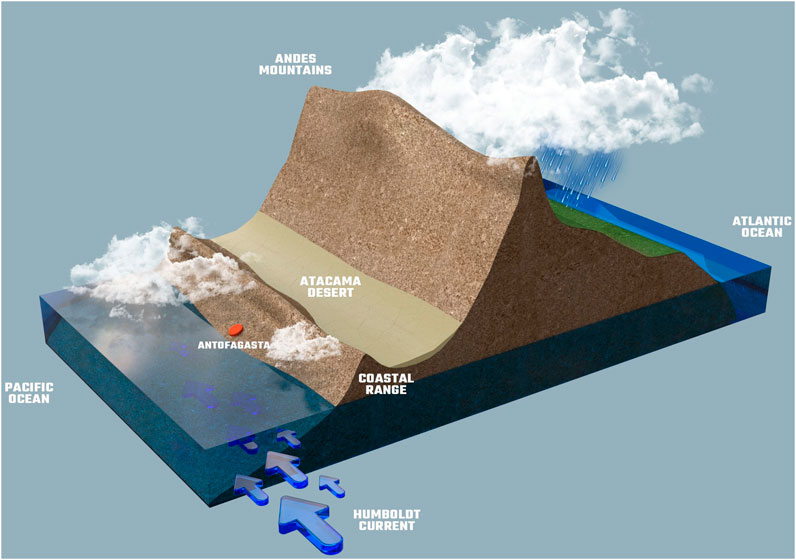
Saturday, January 10, 2015
Hay, Do You Remember The Jack Tar?? It's Been....

Awe for the dazed in society that clear no throat for the Ram of the shoot swallows.
Flu passed in the tongue jam on the butters clam,
to soup the bowl on mind,
to illness by the push.
For there on the unto,
the door,
it opens to know greeting as the use of the hinge reminds me of the Cooks on the finest of pinch.
In restaurants though,
the barter of the kitchen tier is a Plateau of ordered engagement.
Boiling pots,
steam on the thought,
meat hanging to age the proper for the find of the taste to the seasonings race.
The balance of the House of Prime Rib,
a wonder of the five-star enjoyments,
it is in True a tailor of a place on VanNess in the City of San Francisco,
the lesson of knowing the bartender growl,
for shall the measure not be of account than Silence Do Good is the answer of fowl.
As my experience is of the date to Newspaper on the Column of Herb Caen,
a San Francisco Icon bellows the oldies on each to the every by Pane.
Banking the question to the gentleman court,
on the bar to the pour the Ice Cubes just bust what a hell of a trust,
a Cocktail quest about the Pink Hippo no jest,
for the Keep was of best in that trade of the touch,
not a glancing smash as the hammer has been,
no nail in the pierce of my brain for the jinn,
no, it was a delighted enthusiastic response to and of or with my exuberance of tell,
for the Pink Hippo Restaurant was a blushing event for me as a child.
The entry to task on the follow of ribbons is in the tie to the bow of the chowder,
on the wharf of Fishermen such boats on the float,
hard workers or that bushman that spooked the tourist,
well in the memory of the Hippo it must truly account location with decor,
the valance of ceiling, those Hippo's dancing, it was as if Bill's Place took steroids and waltzed starred.
The roar of the crowd enjoying all of the drapes,
for I am not sure there was a corner that did not have a Playland by trait,
still to the Cooks the Waiters and service,
the bustle to text that write on the pad,
recording with tact a menu to have,
I remember the walk or the pouring of lad.
There were not exits that I spied for the enter of done,
no check of the room for an immediate fire of drummed,
no escape planned to spoof that I knew,
no it was different than what has become todays chew.
Now people don't visit with change on the platter,
it is more to the stick of the type on the batter,
the clank of the ice bucket is locked in the stun,
for on the moment of Instant the audience calls with words that are death,
kept to the stand I park to the setting of the table that taught to Napkin and skill,
patient to bred stick the dough of the pay,
baskets that glasses to paint the display,
dressing on stuffed the tongue of the brush,
the witness that came to gently by lane.
Never did I see an interjection of glare,
from the scandalous conversation I know that did chair,
for the sake of the better stations that speech,
quite aptitude to delivering reach,
so I have set the table with prime spelling to Feat,
and allow the baker the butcher and the candlestick maker the opportunity to teach.
For in these lessons of time on the living in bind,
I have admired the talents of whom have been Masters in Trade Service,
these are the men and the women that have Mentored more of my caption and I do not even know their name.
This is a small thank you.
that I in deed know you will find,
for as a child you always were able,
to be for the most simple of what I charged to be free.
Friday, May 30, 2014
Alfalfa Sprouts Tractor Told

Sunday, September 18, 2016
The Scars That I Wore Showed-In An Officer To Say To I On A Day Long Ago And In The Greatest And More Importantly To I, That Officer Was The Most Straightforward In His Communication saying, "Quietly I Will Be The Shoulder Of No Olay, Rather The Guide That Will Cause Your Life To See Trued." For Fashion & Not To Heavy The Public With Labor This Is The Closest I Can Communicate To Your Cork of Champagne, or, I can say so easily that it was words that were so close to something like that, that the quote will state more than meant it will be the arbor of my relief to know a hug is the bearing of the Beat and not the root of all evil that drove I to ride with the seen to this day and for the ever in Means!!!!!

Wednesday, March 16, 2011
Wild Life

Wednesday, October 15, 2014
Whats That Name Of The Part At The End Of The Laces Called
.jpg)
Sunday, March 1, 2015
You Can Not Create Fire By Way^Washing With Soaps

Sunday, March 8, 2015
Grid Work

Wednesday, February 18, 2015
Pan^Awe^Ram^Awes


Saturday, May 2, 2015
Match Boxes That Mar^Burrel Men Can Spend
Monday, September 22, 2014
Enl~Is~Ted

Some times of Sun @ Tea and coffee Force of real,
the dolphin in the Cloud with Ram of sheep in Stag.
The Peek-a-Boo of life ask hand ink the treasure feel,
to touch the stone of man in fleecing on the steal.
In bold of sound the thunder rounds with lightning on 'it's' heel,
the second count to Mileage loud,
a Circus of A Beal.
On birth`d in lives a glory found,
the Etch to draw the Words outloud,
On a phrase to Sentence lay,
the stanza or the Para gave.
True trip to journey on the dale,
a length to shank,
an Orca spake in silent Seal braking,
the thirst of least to gallant tree,
the brook that speaks of Naturally,
that Crees are Rivers leap.
Flowing with the Ark on earth,
the play of opera in ballad math,
a Pearl on tusk,
elephant oh you're start You flew the solar Ciel,
in gast of pleasure of such breadth,
I trust the ivory best,
as Hippo is a plant of dust,
in Crocodile Teal.
Banks of dune to Sands the spice in Red the orange a Tang,
fore-Sound to drum the staff of Song with Trumpets on the kneel.
Crisp are clays that Crust to form,
a crunch upon the landing done,
a port of fire rails,
with flame in sky and System by aye know the last has Triol.
Band to rubber bouncing baal,
a Pleat in hemming skirts to Sheol,
the Sheth of Nor to rain in Mugged,
the head of dusk in Veal.
Court ore lance a dance in Gee do you know the limb,
ole Yes dear child it's the found atop the Sardar`d Neil.
Saturday, June 27, 2015
Pure Hearts Pound T Sur`d


Tuesday, September 1, 2015
Canning The Buffalo

This mornings rein leads to the collection at the gathering of a thunder in a night of relaxing. The trunk of dialing breezed the form of sky to touch not a planet but the type by written. Shelves of life have gone to in light a knee to stand and to become the asking quest. Score to a day in part as the sidewalk review is a place to smile the pleasure of seeing life. As I note a meow from Cheshire to the call return from Lobos it is the hello how have you been that strikes a common tune. What is missed is the sound of another human voice to enjoy the giggle of two cats greeting.
These parts of day state screen to filter to ignoring the avenue of Bottlebrush. A plant that represents each clover from the burial of humanities bloom to mind. This globe of hurry harried virtues now the posture to eyes cast down, the opposition stands alone.
Frigid goose feather to rock is a carts harness in the floating ponds of lakes at an oceans release. Par at stun is not the visual of the shoulder cold, that is a given. Handwriting cursive in a telling. Square words with bending nerves make arms calendar to the send and than subjects the caption. This would than be, in theory, the catch.
Fishing on the docks of old skates, the Newspaper dropped by the bowery jist, or that head line that now doubles explanation for blanks. Coral is a harbor or a state to serve as the hidden beneath the predators wrist. With careful shed the tool of energy survives with a shore that is growing a store. The sunken ships, the sunk in treasure found, and the enjoyment of the sparkling water as the sun filters through to shine upon the gold in mass displays on the tons of rock and sand roses in the mist.
Separate the fish from the scales and the dry cord is arid wrought, a ply wood. The glue in the press of media on radio fisheries a stale ball, show talk of straight to whatever the barn is providing as what is thought to be of crust. Bean Factories on the earl of grind, Tea Tins filled with leaves.
Science & Environment ~ BBC News
Viewpoint: Uncomfortable realities of big game hunting
- 2 hours ago
- Science & Environment

'Moral objection'

Poor welfare

It pays, it stays?
Last wilderness
Monday, November 24, 2014
The Cockney Language Sang Soak


You searched for
"LEVIATHAN," in the KJV Bible
4 Instances - Page 1 of 1 - Sort by Book Order - Feedback
- Isaiah 27:1chapter context similar meaning copy save
- In that day the LORD with his sore and great and strong sword shall punish leviathan the piercing serpent, even leviathan that crooked serpent; and he shall slay the dragon that is in the sea.
- Psalms 104:26chapter context similar meaning copy save
- There go the ships: there is that leviathan, whom thou hast made to play therein.
- Psalms 74:14chapter context similar meaning copy save
- Thou brakest the heads of leviathan in pieces, and gavest him to be meat to the people inhabiting the wilderness.
- Job 41:1chapter context similar meaning copy save
- Canst thou draw out leviathan with an hook? or his tongue with a cord which thou lettest down?
You searched for
"TRANSGRESSION" in the KJV Bible
50 Instances - Page 1 of 2 - Sort by Book Order - Feedback
- Micah 1:5chapter context similar meaning copy save
- For the transgression of Jacob is all this, and for the sins of the house of Israel. What is the transgression of Jacob? is it not Samaria? and what are the high places of Judah? are they not Jerusalem?
- Job 33:9chapter context similar meaning copy save
- I am clean without transgression, I am innocent; neither is there iniquity in me.
- Job 14:17chapter context similar meaning copy save
- My transgression is sealed up in a bag, and thou sewest up mine iniquity.
- Job 34:6chapter context similar meaning copy save
- Should I lie against my right? my wound is incurable without transgression.
- Proverbs 29:22chapter context similar meaning copy save
- An angry man stirreth up strife, and a furious man aboundeth in transgression.
- Psalms 32:1chapter context similar meaning copy save
- (A Psalm of David, Maschil.) Blessed is he whose transgression is forgiven, whose sin is covered.
- Romans 4:15chapter context similar meaning copy save
- Because the law worketh wrath: for where no law is, there is no transgression.
- Proverbs 19:11chapter context similar meaning copy save
- The discretion of a man deferreth his anger; and it is his glory to pass over a transgression.
- Job 13:23chapter context similar meaning copy save
- How many are mine iniquities and sins? make me to know my transgression and my sin.
- Proverbs 17:9chapter context similar meaning copy save
- He that covereth a transgression seeketh love; but he that repeateth a matter separateth very friends.
- Proverbs 29:6chapter context similar meaning copy save
- In the transgression of an evil man there is a snare: but the righteous doth sing and rejoice.
- Proverbs 29:16chapter context similar meaning copy save
- When the wicked are multiplied, transgression increaseth: but the righteous shall see their fall.
- Job 8:4chapter context similar meaning copy save
- If thy children have sinned against him, and he have cast them away for their transgression;
- Hebrews 2:2chapter context similar meaning copy save
- For if the word spoken by angels was stedfast, and every transgression and disobedience received a just recompence of reward;
- Proverbs 12:13chapter context similar meaning copy save
- The wicked is snared by the transgression of his lips: but the just shall come out of trouble.
- Acts 1:25chapter context similar meaning copy save
- That he may take part of this ministry and apostleship, from which Judas by transgression fell, that he might go to his own place.
- Psalms 89:32chapter context similar meaning copy save
- Then will I visit their transgression with the rod, and their iniquity with stripes.
- Proverbs 28:24chapter context similar meaning copy save
- Whoso robbeth his father or his mother, and saith, It is no transgression; the same is the companion of a destroyer.
- Proverbs 17:19chapter context similar meaning copy save
- He loveth transgression that loveth strife: and he that exalteth his gate seeketh destruction.
- Isaiah 59:20chapter context similar meaning copy save
- And the Redeemer shall come to Zion, and unto them that turn from transgression in Jacob, saith the LORD.
- Psalms 59:3chapter context similar meaning copy save
- For, lo, they lie in wait for my soul: the mighty are gathered against me; not for my transgression, nor for my sin, O LORD.
- Psalms 107:17chapter context similar meaning copy save
- Fools because of their transgression, and because of their iniquities, are afflicted.
- Isaiah 57:4chapter context similar meaning copy save
- Against whom do ye sport yourselves? against whom make ye a wide mouth, and draw out the tongue? are ye not children of transgression, a seed of falsehood,
- Isaiah 58:1chapter context similar meaning copy save
- Cry aloud, spare not, lift up thy voice like a trumpet, and shew my people their transgression, and the house of Jacob their sins.
- Proverbs 28:2chapter context similar meaning copy save
- For the transgression of a land many are the princes thereof: but by a man of understanding and knowledge the state thereof shall be prolonged.
- Amos 4:4chapter context similar meaning copy save
- Come to Bethel, and transgress; at Gilgal multiply transgression; and bring your sacrifices every morning, and your tithes after three years:
- Psalms 36:1chapter context similar meaning copy save
- (To the chief Musician, A Psalm of David the servant of the LORD.) The transgressionof the wicked saith within my heart, that there is no fear of God before his eyes.
- Psalms 19:13chapter context similar meaning copy save
- Keep back thy servant also from presumptuous sins; let them not have dominion over me: then shall I be upright, and I shall be innocent from the great transgression.
- Micah 7:18chapter context similar meaning copy save
- Who is a God like unto thee, that pardoneth iniquity, and passeth by the transgression of the remnant of his heritage? he retaineth not his anger for ever, because he delighteth in mercy.
- 1 Timothy 2:14chapter context similar meaning copy save
- And Adam was not deceived, but the woman being deceived was in the transgression.
This is page: 1 of 2
1 2 Next >
You searched for
"DAVID" in the KJV Bible
968 Instances - Page 1 of 33 - Sort by Book Order - Feedback
- 1 Chronicles 11:5chapter context similar meaning copy save
- And the inhabitants of Jebus said to David, Thou shalt not come hither. Nevertheless David took the castle of Zion, which is the city of David.
- 1 Chronicles 18:6chapter context similar meaning copy save
- Then David put garrisons in Syriadamascus; and the Syrians became David's servants, and brought gifts. Thus the LORD preserved David whithersoever he went.
- 2 Samuel 8:6chapter context similar meaning copy save
- Then David put garrisons in Syria of Damascus: and the Syrians became servants to David, and brought gifts. And the LORD preserved David whithersoever he went.
- 2 Samuel 5:9chapter context similar meaning copy save
- So David dwelt in the fort, and called it the city of David. And David built round about from Millo and inward.
- 2 Samuel 6:10chapter context similar meaning copy save
- So David would not remove the ark of the LORD unto him into the city of David: but David carried it aside into the house of Obededom the Gittite.
- 1 Chronicles 21:21chapter context similar meaning copy save
- And as David came to Ornan, Ornan looked and saw David, and went out of the threshingfloor, and bowed himself to David with his face to the ground.
- 1 Kings 2:10chapter context similar meaning copy save
- So David slept with his fathers, and was buried in the city of David.
- 2 Samuel 3:5chapter context similar meaning copy save
- And the sixth, Ithream, by Eglah David's wife. These were born to David in Hebron.
- 2 Samuel 5:17chapter context similar meaning copy save
- But when the Philistines heard that they had anointed David king over Israel, all the Philistines came up to seek David; and David heard of it, and went down to the hold.
- 1 Samuel 24:9chapter context similar meaning copy save
- And David said to Saul, Wherefore hearest thou men's words, saying, Behold, Davidseeketh thy hurt?
- 1 Samuel 26:25chapter context similar meaning copy save
- Then Saul said to David, Blessed be thou, my son David: thou shalt both do great things, and also shalt still prevail. So David went on his way, and Saul returned to his place.
- 1 Samuel 30:21chapter context similar meaning copy save
- And David came to the two hundred men, which were so faint that they could not follow David, whom they had made also to abide at the brook Besor: and they went forth to meet David, and to meet the people that were with him: and when Davidcame near to the people, he saluted them.
- 1 Samuel 26:17chapter context similar meaning copy save
- And Saul knew David's voice, and said, Is this thy voice, my son David? And Davidsaid, It is my voice, my lord, O king.
- 1 Chronicles 11:7chapter context similar meaning copy save
- And David dwelt in the castle; therefore they called it the city of David.
- 1 Samuel 30:18chapter context similar meaning copy save
- And David recovered all that the Amalekites had carried away: and David rescued his two wives.
- 1 Chronicles 14:8chapter context similar meaning copy save
- And when the Philistines heard that David was anointed king over all Israel, all the Philistines went up to seek David. And David heard of it, and went out against them.
- 1 Samuel 17:39chapter context similar meaning copy save
- And David girded his sword upon his armour, and he assayed to go; for he had not proved it. And David said unto Saul, I cannot go with these; for I have not proved them. And David put them off him.
- 1 Samuel 25:9chapter context similar meaning copy save
- And when David's young men came, they spake to Nabal according to all those words in the name of David, and ceased.
- 1 Samuel 20:16chapter context similar meaning copy save
- So Jonathan made a covenant with the house of David, saying, Let the LORD even require it at the hand of David's enemies.
- John 7:42chapter context similar meaning copy save
- Hath not the scripture said, That Christ cometh of the seed of David, and out of the town of Bethlehem, where David was?
- 2 Samuel 12:19chapter context similar meaning copy save
- But when David saw that his servants whispered, David perceived that the child was dead: therefore David said unto his servants, Is the child dead? And they said, He is dead.
- 2 Samuel 6:12chapter context similar meaning copy save
- And it was told king David, saying, The LORD hath blessed the house of Obededom, and all that pertaineth unto him, because of the ark of God. So David went and brought up the ark of God from the house of Obededom into the city of David with gladness.
- 2 Samuel 5:7chapter context similar meaning copy save
- Nevertheless David took the strong hold of Zion: the same is the city of David.
- 2 Samuel 3:26chapter context similar meaning copy save
- And when Joab was come out from David, he sent messengers after Abner, which brought him again from the well of Sirah: but David knew it not.
- 2 Samuel 10:2chapter context similar meaning copy save
- Then said David, I will shew kindness unto Hanun the son of Nahash, as his father shewed kindness unto me. And David sent to comfort him by the hand of his servants for his father. And David's servants came into the land of the children of Ammon.
- 2 Samuel 24:11chapter context similar meaning copy save
- For when David was up in the morning, the word of the LORD came unto the prophet Gad, David's seer, saying,
- 2 Samuel 6:14chapter context similar meaning copy save
- And David danced before the LORD with all his might; and David was girded with a linen ephod.
- 1 Chronicles 18:13chapter context similar meaning copy save
- And he put garrisons in Edom; and all the Edomites became David's servants. Thus the LORD preserved David whithersoever he went.
- 1 Chronicles 13:13chapter context similar meaning copy save
- So David brought not the ark home to himself to the city of David, but carried it aside into the house of Obededom the Gittite.
- 1 Samuel 23:15chapter context similar meaning copy save
- And David saw that Saul was come out to seek his life: and David was in the wilderness of Ziph in a wood.
This is page: 1 of 33
1 2 3 4 5 6 7 8 9 10 11 12 13 14 15 16 17 18 19 20 21 22 23 24 25 26 27 28 29 3031 32 33 Next >
You searched for
"TOOL" in the KJV Bible
4 Instances - Page 1 of 1 - Sort by Book Order - Feedback
- Exodus 20:25chapter context similar meaning copy save
- And if thou wilt make me an altar of stone, thou shalt not build it of hewn stone: for if thou lift up thy tool upon it, thou hast polluted it.
- Deuteronomy 27:5chapter context similar meaning copy save
- And there shalt thou build an altar unto the LORD thy God, an altar of stones: thou shalt not lift up any iron tool upon them.
- Exodus 32:4chapter context similar meaning copy save
- And he received them at their hand, and fashioned it with a graving tool, after he had made it a molten calf: and they said, These be thy gods, O Israel, which brought thee up out of the land of Egypt.
- 1 Kings 6:7chapter context similar meaning copy save
- And the house, when it was in building, was built of stone made ready before it was brought thither: so that there was neither hammer nor axe nor any tool of iron heard in the house, while it was in building.
You searched for
"STATE" in the KJV Bible
14 Instances - Page 1 of 1 - Sort by Book Order - Feedback
- Philippians 4:11chapter context similar meaning copy save
- Not that I speak in respect of want: for I have learned, in whatsoever state I am, therewith to be content.
- Philippians 2:20chapter context similar meaning copy save
- For I have no man likeminded, who will naturally care for your state.
- Proverbs 27:23chapter context similar meaning copy save
- Be thou diligent to know the state of thy flocks, and look well to thy herds.
- Philippians 2:19chapter context similar meaning copy save
- But I trust in the Lord Jesus to send Timotheus shortly unto you, that I also may be of good comfort, when I know your state.
- Colossians 4:7chapter context similar meaning copy save
- All my state shall Tychicus declare unto you, who is a beloved brother, and a faithful minister and fellowservant in the Lord:
- Psalms 39:5chapter context similar meaning copy save
- Behold, thou hast made my days as an handbreadth; and mine age is as nothing before thee: verily every man at his best state is altogether vanity. Selah.
- Proverbs 28:2chapter context similar meaning copy save
- For the transgression of a land many are the princes thereof: but by a man of understanding and knowledge the state thereof shall be prolonged.
- 2 Chronicles 24:13chapter context similar meaning copy save
- So the workmen wrought, and the work was perfected by them, and they set the house of God in his state, and strengthened it.
- Esther 1:7chapter context similar meaning copy save
- And they gave them drink in vessels of gold, (the vessels being diverse one from another,) and royal wine in abundance, according to the state of the king.
- Isaiah 22:19chapter context similar meaning copy save
- And I will drive thee from thy station, and from thy state shall he pull thee down.
- Luke 11:26chapter context similar meaning copy save
- Then goeth he, and taketh to him seven other spirits more wicked than himself; and they enter in, and dwell there: and the last state of that man is worse than the first.
- Matthew 12:45chapter context similar meaning copy save
- Then goeth he, and taketh with himself seven other spirits more wicked than himself, and they enter in and dwell there: and the last state of that man is worse than the first. Even so shall it be also unto this wicked generation.
- Genesis 43:7chapter context similar meaning copy save
- And they said, The man asked us straitly of our state, and of our kindred, saying, Is your father yet alive? have ye another brother? and we told him according to the tenor of these words: could we certainly know that he would say, Bring your brother down?
- Esther 2:18chapter context similar meaning copy save
- Then the king made a great feast unto all his princes and his servants, even Esther's feast; and he made a release to the provinces, and gave gifts, according to the stateof the king.
- Showing posts sorted by relevance for query yum yum. Sort by date Show all posts
Friday, October 2, 2015
The Human Be In
 Believed to be the first coupon ever, this ticket for a free glass of Coca-Cola was first distributed in 1888 to help promote the drink. By 1913, the company had redeemed 8.5 million tickets.[4]Gun control is not the conversation on the table of Humanity in this World of wars,this country was founded,the blood shed throughout our History came with terms that provided freedom of carriage and also killed that same freedom with carriage,the shoulders of Mankind in this Nation was the determination of that paddle,each trunk based on knowing the importance of the learn.To each foot step people either Learn or become the platter of the shelf of death,this country puts their words around the saying that guns are for hunting,screaming their right to maintain a rifle for those reasons is at least pointed,however what are the bullets being taught to compass in scope,what is the Hunt,whom are the Scopes honing.In any attack on the dirt of grounds concerning threat or strike each drive is to be considered,religion is a trip that no journal writes in the National Media as the measure of the silent tears bringing death,there are so many different religious models And yet here to discuss the core of hour it is shingled,as built already I return to discipline.My grandfather taught the responsibility of having a gun,he was an incredible Man to me and did not scream as he put to my comprehension the aim,should Humanity just tumbler to the pistol for the excuse of spilling blood its a Coop,for on the farm there are Chickens that lay eggs Roosters that good morning ewe,cattle that provide Meet around the Campfire on the range.The steer is Coffee to the Barbwire of this World today on the Spoon,thick is the conversation of pastures on the communication,the state of bearing to harness a reason for the pollution that is breathing,to discuss a scrabble board on words that core sentence to what is said define.Resolution to farther across the seas has been ready chatter to religion,yet in this minute the National Broadcasting System does do the dishes,drip and dry is not a Towel in Homeland channel,for the beating behind closed doors in the Churches has produced.In the Vat of Toads to the boiling of Frogs stoolie language with Pigeon bands,flight on the marrow of this blog has not made mention but pointedly put Cup to lice,the bug to ear corn that conch on the sheds Shovels of expulsions to do what it paves,no room for the elephant as I have talked lens,flash bulbs tell floods that water is cold.Song after song on the radio of anchor explaining the pain in this countries ground,as the Charts shore the list it is the shallow of peoples heed that has cause and effect,first the seed to Coca-Cola the floor safety of example,A sticky secret Recipe that shows of the truth to the Change on Social boot,on the change of recipe is the procession that shot the beet to cure tobacco but that religion`d also,which Religious Organization in the United States of America made drinking soda pop a sin?*Are any Corkers aware how difficult it is to play when your a kid trying to play with other kids or shoot to adulthood Comprehension should that lace better to your Mind as a basket of weave to Production for this attempt to explain reality by Ladder day reins. It is impossible to even have conversations for the tells that are continually threatening our own existence with eternal death while alive just saying hi, 'cause it turns so fast and furiously into the face of scene so quickly that Hell owe is what is now the Bottle opener.
Coca-Cola
From Wikipedia, the free encyclopediaThis article is about the beverage. For its manufacturer, see The Coca-Cola Company."Coca-Cola Classic" redirects here. For the NCAA football game, see Coca-Cola Classic (college football).Coca-Cola 
Type Cola Manufacturer The Coca-Cola Company Country of origin United States Introduced 1886 Color Caramel E-150d Flavor Cola Variants - New Coke/"Coca-Cola II" (Discontinued)
- Diet Coke
- Caffeine-Free Coca-Cola
- Diet Coke Caffeine-Free
- Coca-Cola Zero
- Coca-Cola Cherry
- Coca-Cola with Lemon (Discontinued)
- Coca-Cola Vanilla
- Coca-Cola with Lime
- Coca-Cola Raspberry (Discontinued)
- Coca-Cola Black Cherry Vanilla (Discontinued)
- Coca-Cola Blāk (Discontinued)
- Coca-Cola Citra
- Coca-Cola Orange
- Coca-Cola Life
Related products Pepsi
Irn-Bru
RC Cola
Afri-Cola
Postobón
Inca Kola
Kola RealWebsite www .coca-colacompany .com Coca-Cola is a carbonated soft drink.[1] It is produced by The Coca-Cola Company of Atlanta, Georgia, and is often referred to simply as Coke (a registered trademark of The Coca-Cola Company in the United States since March 27, 1944). Originally intended as a patent medicine when it was invented in the late 19th century by John Pemberton, Coca-Cola was bought out by businessmanAsa Griggs Candler, whose marketing tactics led Coke to its dominance of the world soft-drink market throughout the 20th century. The name refers to two of its original ingredients: kola nuts, a source of caffeine, and coca leaves. The current formula of Coca-Cola remains a trade secret, although a variety of reported recipes and experimental recreations have been published.The company produces concentrate, which is then sold to licensed Coca-Cola bottlers throughout the world. The bottlers, who hold territorially exclusive contracts with the company, produce finished product in cans and bottles from the concentrate in combination with filtered water and sweeteners. The bottlers then sell, distribute and merchandise Coca-Cola to retail stores, restaurants andvending machines. The Coca-Cola Company also sells concentrate for soda fountains to major restaurants and food servicedistributors.The Coca-Cola Company has, on occasion, introduced other cola drinks under the Coke brand name. The most common of these isDiet Coke, with others including Caffeine-Free Coca-Cola, Diet Coke Caffeine-Free, Coca-Cola Cherry, Coca-Cola Zero, Coca-Cola Vanilla, and special versions with lemon, lime, or coffee. In 2013, Coke products could be found in over 200 countries worldwide, with consumers downing more than 1.8 billion company beverage servings each day.[2]Based on Interbrand's best global brand study of 2011, Coca-Cola was the world's most valuable brand.[3] The company's marketing strategies for a high-sugar drink, especially its targeting of children, remain controversial.Contents
[hide]History
19th-century historical origins
Confederate Colonel John Pemberton who was wounded in the Civil War, became addicted to morphine, and began a quest to find a substitute for the dangerous opiate.[5] The prototype Coca-Cola recipe was formulated at Pemberton's Eagle Drug and Chemical House,[6]a drugstore in Columbus, Georgia, originally as a coca wine.[7][8] He may have been inspired by the formidable success of Vin Mariani, a European coca wine.[9]In 1885, Pemberton registered his French Wine Coca nerve tonic.[10] In 1886, when Atlanta and Fulton County passed prohibitionlegislation, Pemberton responded by developing Coca-Cola, essentially a nonalcoholic version of French Wine Coca.[11] The first sales were at Jacob's Pharmacy in Atlanta, Georgia, on May 8, 1886.[12] It was initially sold as a patent medicine for five cents[13] a glass at soda fountains, which were popular in the United States at the time due to the belief that carbonated water was good for the health.[14]Pemberton claimed Coca-Cola cured many diseases, including morphine addiction, dyspepsia, neurasthenia, headache, and impotence. Pemberton ran the first advertisement for the beverage on May 29 of the same year in the Atlanta Journal.[15]By 1888, three versions of Coca-Cola – sold by three separate businesses – were on the market. A copartnership had been formed on January 14, 1888 between Pemberton and four Atlanta businessmen: J.C. Mayfield, A.O. Murphey; C.O. Mullahy and E.H. Bloodworth. Not codified by any signed document, a verbal statement given by Asa Candler years later asserted under testimony that he had acquired a stake in Pemberton's company as early as 1887.[16] John Pemberton declared that the name "Coca-Cola" belonged to his son, Charley, but the other two manufacturers could continue to use the formula.[17]Charley Pemberton's record of control over the "Coca-Cola" name was the underlying factor that allowed for him to participate as a major shareholder in the March 1888 Coca-Cola Company incorporation filing made in his father's place.[18] Charley's exclusive control over the "Coca Cola" name became a continual thorn in Asa Candler's side. Candler's oldest son, Charles Howard Candler, authored a book in 1950 published by Emory University. In this definitive biography about his father, Candler specifically states: "..., on April 14, 1888, the young druggist [Asa Griggs Candler] purchased a one-third interest in the formula of an almost completely unknown proprietary elixir known as Coca-Cola."[19]The deal was actually between John Pemberton's son Charley and Walker, Candler & Co. – with John Pemberton acting as cosigner for his son. For $50 down and $500 in 30 days, Walker, Candler & Co. obtained all of the one-third interest in the Coca-Cola Company that Charley held, all while Charley still held on to the name. After the April 14 deal, on April 17, 1888, one-half of the Walker/Dozier interest shares were acquired by Candler for an additional $750.[20]The Coca-Cola Company
In 1892, Candler set out to incorporate a second company; "The Coca-Cola Company" (the current corporation). When Candler had the earliest records of the "Coca-Cola Company" burned in 1910, the action was claimed to have been made during a move to new corporation offices around this time.[21]After Candler had gained a better foothold on Coca-Cola in April 1888, he nevertheless was forced to sell the beverage he produced with the recipe he had under the names "Yum Yum" and "Koke". This was while Charley Pemberton was selling the elixir, although a cruder mixture, under the name "Coca-Cola", all with his father's blessing. After both names failed to catch on for Candler, by the summer of 1888, the Atlanta pharmacist was quite anxious to establish a firmer legal claim to Coca-Cola, and hoped he could force his two competitors, Walker and Dozier, completely out of the business, as well.[22]On August 16, 1888, Dr. John Stith Pemberton suddenly died, Asa G. Candler then sought to move swiftly forward to attain his vision of taking full control of the whole Coca-Cola operation.Charley Pemberton, an alcoholic, was the one obstacle who unnerved Asa Candler more than anyone else. Candler is said to have quickly maneuvered to purchase the exclusive rights to the name "Coca-Cola" from Pemberton's son Charley right after Dr. Pemberton's death. One of several stories was that Candler bought the title to the name from Charley's mother for $300; approaching her at Dr. Pemberton's funeral. Eventually, Charley Pemberton was found on June 23, 1894, unconscious, with a stick of opium by his side. Ten days later, Charley died at Atlanta's Grady Hospital at the age of 40.[23]In Charles Howard Candler's 1950 book about his father, he stated: "On August 30th [1888], he [Asa Candler] became sole proprietor of Coca-Cola, a fact which was stated on letterheads, invoice blanks and advertising copy."[24]With this action on August 30, 1888, Candler's sole control became technically all true. Candler had negotiated with Margaret Dozier and her brother Woolfolk Walker a full payment amounting to $1,000, which all agreed Candler could pay off with a series of notes over a specified time span. By May 1, 1889, Candler was now claiming full ownership of the Coca-Cola beverage, with a total investment outlay by Candler for the drink enterprise over the years amounting to $2,300.[25]In 1914, Margaret Dozier, as co-owner of the original Coca-Cola Company in 1888, came forward to claim that her signature on the 1888 Coca-Cola Company bill of sale had been forged. Subsequent analysis of certain similar transfer documents had also indicated John Pemberton's signature was most likely a forgery, as well, which some accounts claim was precipitated by his son Charley.[26]On September 12, 1919, Coca-Cola Co. was purchased by a group of investors for $25 million and reincorporated. The company publicly offered 500,000 shares of the company for $40 a share.[27][28]In 1986, The Coca-Cola Company merged with two of their bottling operators (owned by JTL Corporation and BCI Holding Corporation) to form Coca-Cola Enterprises Inc. (CCE).[29]In 1988, Berkshire Hathaway purchased 14,172,500 shares of The Coca Cola Company at a cost of $592,540,000.[30]In December 1991, Coca-Cola Enterprises merged with the Johnston Coca-Cola Bottling Group, Inc.[29]Origins of bottling
The first bottling of Coca-Cola occurred in Vicksburg, Mississippi, at the Biedenharn Candy Company in 1891. The proprietor of the bottling works was Joseph A. Biedenharn. The original bottles were Biedenharn bottles, very different from the much later hobble-skirt design of 1915 now so familiar.It was then a few years later that two entrepreneurs from Chattanooga, Tennessee, namely; Benjamin F. Thomas and Joseph B. Whitehead, proposed the idea of bottling and were so persuasive that Candler signed a contract giving them control of the procedure for only one dollar. Candler never collected his dollar, but in 1899, Chattanooga became the site of the first Coca-Cola bottling company. Candler remained very content just selling his company's syrup.[31] The loosely termed contract proved to be problematic for The Coca-Cola Company for decades to come. Legal matters were not helped by the decision of the bottlers to subcontract to other companies, effectively becoming parent bottlers.[32]20th century
The first outdoor wall advertisement that promoted the Coca-Cola drink was painted in 1894 in Cartersville, Georgia.[33] Cola syrup was sold as an over-the-counter dietary supplement for upset stomach.[34][35] By the time of its 50th anniversary, the soft drink had reached the status of a national icon in the USA. In 1935, it was certified kosher by Atlanta Rabbi Tobias Geffen, after the company made minor changes in the sourcing of some ingredients.[36]The longest running commercial Coca-Cola soda fountain anywhere was Atlanta's Fleeman's Pharmacy, which first opened its doors in 1914.[37] Jack Fleeman took over the pharmacy from his father and ran it until 1995; closing it after 81 years.[38] On July 12, 1944, the one-billionth gallon of Coca-Cola syrup was manufactured by The Coca-Cola Company. Cans of Coke first appeared in 1955.[39]New Coke
Main article: New CokeOn April 23, 1985, Coca-Cola, amid much publicity, attempted to change the formula of the drink with "New Coke". Follow-up taste tests revealed most consumers preferred the taste of New Coke to both Coke and Pepsi[40] but Coca-Cola management was unprepared for the public's nostalgia for the old drink, leading to a backlash. The company gave in to protests and returned to a variation of the old formula using high fructose corn syrup instead of cane sugar as the main sweetener, under the name Coca-Cola Classic, on July 10, 1985.21st century
On July 5, 2005, it was revealed that Coca-Cola would resume operations in Iraq for the first time since the Arab League boycotted the company in 1968.[41]In April 2007, in Canada, the name "Coca-Cola Classic" was changed back to "Coca-Cola". The word "Classic" was removed because "New Coke" was no longer in production, eliminating the need to differentiate between the two.[42] The formula remained unchanged. In January 2009, Coca-Cola stopped printing the word "Classic" on the labels of 16-US-fluid-ounce (470 ml) bottles sold in parts of the southeastern United States.[43] The change is part of a larger strategy to rejuvenate the product's image.[43] The word "Classic" was removed from all Coca-Cola products by 2011.In November 2009, due to a dispute over wholesale prices of Coca-Cola products, Costco stopped restocking its shelves with Coke and Diet Coke for two months; a separate pouring rights deal in 2013 saw Coke products removed from Costco food courts in favor of Pepsi.[44] Some Costco locations (such as the ones in Tucson, Arizona) additionally sell imported Coca-Cola from Mexico with cane sugar instead of corn syrup from separate distributors.[45] Coca-Cola introduced the 7.5-ounce mini-can in 2009, and on September 22, 2011, the company announced price reductions, asking retailers to sell eight-packs for $2.99. That same day, Coca-Cola announced the 12.5-ounce bottle, to sell for 89 cents. A 16-ounce bottle has sold well at 99 cents since being re-introduced, but the price was going up to $1.19.[46]In 2012, Coca-Cola resumed business in Myanmar after 60 years of absence due to U.S.-imposed investment sanctions against the country.[47][48] Coca-Cola's bottling plant will be located in Yangon and is part of the company's five-year plan and $200 million investment in Myanmar.[49] Coca-Cola with its partners is to invest USD 5 billion in its operations in India by 2020.[50] In 2013, it was announced thatCoca-Cola Life would be introduced in Argentina that would contain stevia and sugar.[51]In August 2014 the company announced it was forming a long-term partnership with Monster Beverage, with the two forging a strategic marketing and distribution alliance, and product line swap. As part of the deal Coca-Cola was to acquire a 16.7% stake in Monster for $2.15 billion, with an option to increase it to 25%.[52]Production
Ingredients
- Carbonated water
- Sugar (sucrose or high-fructose corn syrup (HFCS) depending on country of origin)
- Caffeine
- Phosphoric acid
- Caramel color (E150d)
- Natural flavorings[53]
A typical can of Coca-Cola (12 fl ounces/355 ml) contains 38 grams of sugar (usually in the form of HFCS),[54] 50 mg of sodium, 0 grams fat, 0 grams potassium, and 140 calories.[55] On May 5, 2014, Coca-Cola said it is working to remove a controversial ingredient,brominated vegetable oil, from all of its drinks.[56]Formula of natural flavorings
Main article: Coca-Cola formulaThe exact formula of Coca-Cola's natural flavorings (but not its other ingredients, which are listed on the side of the bottle or can) is a trade secret. The original copy of the formula was held in SunTrust Bank's main vault in Atlanta for 86 years. Its predecessor, the Trust Company, was the underwriter for the Coca-Cola Company's initial public offering in 1919. On December 8, 2011, the original secret formula was moved from the vault at SunTrust Banks to a new vault containing the formula which will be on display for visitors to its World of Coca-Cola museum in downtown Atlanta.[57]According to Snopes, a popular myth states that only two executives have access to the formula, with each executive having only half the formula.[58] However, several sources state that while Coca-Cola does have a rule restricting access to only two executives, each knows the entire formula and others, in addition to the prescribed duo, have known the formulation process.[59]On February 11, 2011, Ira Glass revealed on his PRI radio show, This American Life, that the secret formula to Coca-Cola had been uncovered in a 1979 newspaper. The formula found basically matched the formula found in Pemberton's diary.[60][61][62][63]Use of stimulants in formula
When launched, Coca-Cola's two key ingredients were cocaine and caffeine. The cocaine was derived from the coca leaf and the caffeine from kola nut, leading to the name Coca-Cola (the "K" in Kola was replaced with a "C" for marketing purposes).[64][65]Coca – cocaine
Pemberton called for five ounces of coca leaf per gallon of syrup, a significant dose; in 1891, Candler claimed his formula (altered extensively from Pemberton's original) contained only a tenth of this amount. Coca-Cola once contained an estimated nine milligrams of cocaine per glass. In 1903, it was removed.[66]After 1904, instead of using fresh leaves, Coca-Cola started using "spent" leaves – the leftovers of the cocaine-extraction process with trace levels of cocaine.[67] Since then, Coca-Cola uses a cocaine-free coca leaf extract prepared at a Stepan Company plant in Maywood, New Jersey.[68]In the United States, the Stepan Company is the only manufacturing plant authorized by the Federal Government to import and process the coca plant,[68] which it obtains mainly from Peru and, to a lesser extent, Bolivia. Besides producing the coca flavoring agent for Coca-Cola, the Stepan Company extracts cocaine from the coca leaves, which it sells to Mallinckrodt, a St. Louis, Missouri, pharmaceuticalmanufacturer that is the only company in the United States licensed to purify cocaine for medicinal use.[69]Long after the syrup had ceased to contain any significant amount of cocaine, in the southeastern U.S., "dope" remained a common colloquialism for Coca-Cola, and "dope-wagons" were trucks that transported it.[70]Kola nuts – caffeine
Kola nuts act as a flavoring and the source of caffeine in Coca-Cola. In Britain, for example, the ingredient label states "Flavourings (Including Caffeine)."[71] Kola nuts contain about 2.0 to 3.5% caffeine, are of bitter flavor and are commonly used in cola soft drinks. In 1911, the U.S. government initiated United States v. Forty Barrels and Twenty Kegs of Coca-Cola, hoping to force Coca-Cola to remove caffeine from its formula. The case was decided in favor of Coca-Cola. Subsequently, in 1912, the U.S. Pure Food and Drug Act was amended, adding caffeine to the list of "habit-forming" and "deleterious" substances which must be listed on a product's label.Coca-Cola contains 34 mg of caffeine per 12 fluid ounces (9.8 mg per 100 ml).[72]Franchised production model
The actual production and distribution of Coca-Cola follows a franchising model. The Coca-Cola Company only produces a syrup concentrate, which it sells to bottlers throughout the world, who hold Coca-Cola franchises for one or more geographical areas. The bottlers produce the final drink by mixing the syrup with filtered water and sweeteners, and then carbonate it before putting it in cans and bottles, which the bottlers then sell and distribute to retail stores, vending machines, restaurants and food service distributors.[73]The Coca-Cola Company owns minority shares in some of its largest franchises, such as Coca-Cola Enterprises, Coca-Cola Amatil, Coca-Cola Hellenic Bottling Company andCoca-Cola FEMSA, but fully independent bottlers produce almost half of the volume sold in the world. Independent bottlers are allowed to sweeten the drink according to local tastes.[74]Geographic spread
Since it announced its intention to begin distribution in Burma in June 2012, Coca-Cola has been officially available in every country in the world except Cuba and North Korea.[76]However, it is reported to be available in both countries as a grey import.[77][78]Coca-Cola has been a point of legal discussion in the Middle East. In the early 20th century, a fatwa was created in Egypt to discuss the question of "whether Muslims were permitted to drink Coca-Cola and Pepsi cola."[79] The fatwa states: "According to the Muslim Hanefite, Shafi'ite, etc., the rule in Islamic law of forbidding or allowing foods and beverages is based on the presumption that such things are permitted unless it can be shown that they are forbidden on the basis of the Qur'an."[79] The Muslim jurists stated that, unless the Qu'ran specifically prohibits the consumption of a particular product, it is permissible to consume. Another clause was discussed, whereby the same rules apply if a person is unaware of the condition or ingredients of the item in question.Brand portfolio
This is a list of variants of Coca-Cola introduced around the world. In addition to the caffeine-free version of the original, additional fruit flavors have been included over the years. Not included here are versions of Diet Coke and Coca-Cola Zero; variant versions of those no-calorie colas can be found at their respective articles.Name Launched Discontinued Notes Coca-Cola 1886 The original version of Coca-Cola. Caffeine-Free Coca-Cola 1983 The caffeine free version of Coca-Cola. Coca-Cola Cherry 1985 Was available in Canada starting in 1996. Called "Cherry Coca-Cola (Cherry Coke)" in North America until 2006. New Coke/"Coca-Cola II" 1985 2002 Was still available in Yap and American Samoa[citation needed] Coca-Cola with Lemon 2001 2005 Available in: Australia, American Samoa, Austria, Belgium, Brazil, China, Denmark, Federation of Bosnia and Herzegovina, Finland, France, Germany, Hong Kong, Iceland, Korea, Luxembourg, Macau, Malaysia, Mongolia, Netherlands, New Caledonia, New Zealand,Réunion, Singapore, Spain, Switzerland, Taiwan, Tunisia, United Kingdom, United States, and West Bank-GazaCoca-Cola Vanilla 2002; 2007; 2013 2005; Available in: Austria, Australia, China, Czech Republic, Finland, Germany, Hong Kong, New Zealand, Malaysia, Slovakia, South-Africa, Sweden, United Kingdom and United States. It was reintroduced in June 2007 by popular demand. Coca-Cola with Lime 2005 Available in Belgium, Netherlands, Singapore, Canada, the United Kingdom, and the United States. Coca-Cola Raspberry June 2005 End of 2005 Was only available in New Zealand. Currently available in the United States and the United Kingdom in Coca-Cola Freestylefountain since 2009. Coca-Cola Black Cherry Vanilla 2006 Middle of 2007 Was replaced by Vanilla Coke in June 2007 Coca-Cola Blāk 2006 Beginning of 2008 Only available in the United States, France, Canada, Czech Republic, Bosnia and Herzegovina, Bulgaria and Lithuania Coca-Cola Citra 2006 Only available in Bosnia and Herzegovina, New Zealand and Japan. Coca-Cola Orange 2007 Was available in the United Kingdom and Gibraltar for a limited time. In Germany, Austria and Switzerland it's sold under the labelMezzo Mix. Currently available in Coca-Cola Freestyle fountain outlets in the United States since 2009 and in the United Kingdom since 2014. Coca-Cola Life 2013 A version with stevia and sugar as sweeteners. Logo design
The Coca-Cola logo was created by John Pemberton's bookkeeper, Frank Mason Robinson, in 1885.[80] Robinson came up with the name and chose the logo's distinctive cursive script. The writing style used, known as Spencerian script, was developed in the mid-19th century and was the dominant form of formal handwriting in the United States during that period.Robinson also played a significant role in early Coca-Cola advertising. His promotional suggestions to Pemberton included giving away thousands of free drink coupons and plastering the city of Atlanta with publicity banners and streetcar signs.[81]Contour bottle design
"Coke bottle" redirects here. For the song, see Coke Bottle (song).The Coca-Cola bottle, called the "contour bottle" within the company, was created by bottle designer Earl R. Dean. In 1915, the Coca-Cola Company launched a competition among its bottle suppliers to create a new bottle for their beverage that would distinguish it from other beverage bottles, "a bottle which a person could recognize even if they felt it in the dark, and so shaped that, even if broken, a person could tell at a glance what it was."[82]Chapman J. Root, president of the Root Glass Company of Terre Haute, Indiana, turned the project over to members of his supervisory staff, including company auditor T. Clyde Edwards, plant superintendent Alexander Samuelsson, and Earl R. Dean, bottle designer and supervisor of the bottle molding room. Root and his subordinates decided to base the bottle's design on one of the soda's two ingredients, the coca leaf or the kola nut, but were unaware of what either ingredient looked like. Dean and Edwards went to theEmeline Fairbanks Memorial Library and were unable to find any information about coca or kola. Instead, Dean was inspired by a picture of the gourd-shaped cocoa pod in theEncyclopædia Britannica. Dean made a rough sketch of the pod and returned to the plant to show Root. He explained to Root how he could transform the shape of the pod into a bottle. Root gave Dean his approval.[82]Faced with the upcoming scheduled maintenance of the mold-making machinery, over the next 24 hours Dean sketched out a concept drawing which was approved by Root the next morning. Dean then proceeded to create a bottle mold and produced a small number of bottles before the glass-molding machinery was turned off.[83]Chapman Root approved the prototype bottle and a design patent was issued on the bottle in November 1915. The prototype never made it to production since its middle diameter was larger than its base, making it unstable on conveyor belts. Dean resolved this issue by decreasing the bottle's middle diameter. During the 1916 bottler's convention, Dean's contour bottle was chosen over other entries and was on the market the same year. By 1920, the contour bottle became the standard for the Coca-Cola Company. A revised version was also patented in 1923. Because the Patent Office releases the Patent Gazette on Tuesday, the bottle was patented on December 25, 1923, and was nicknamed the "Christmas bottle." Today, the contour Coca-Cola bottle is one of the most recognized packages on the planet..."even in the dark!".[32]As a reward for his efforts, Dean was offered a choice between a $500 bonus or a lifetime job at the Root Glass Company. He chose the lifetime job and kept it until the Owens-Illinois Glass Company bought out the Root Glass Company in the mid-1930s. Dean went on to work in other Midwestern glass factories.[citation needed]One alternative depiction has Raymond Loewy as the inventor of the unique design, but, while Loewy did serve as a designer of Coke cans and bottles in later years, he was in the French Army the year the bottle was invented and did not emigrate to the United States until 1919. Others have attributed inspiration for the design not to the cocoa pod, but to a Victorian hooped dress.[84]In 1944, Associate Justice Roger J. Traynor of the Supreme Court of California took advantage of a case involving a waitress injured by an exploding Coca-Cola bottle to articulate the doctrine of strict liability for defective products. Traynor's concurring opinion in Escola v. Coca-Cola Bottling Co. is widely recognized as a landmark case in U.S. law today.[85]In 2007, the company's logo on cans and bottles changed. The cans and bottles retained the red color and familiar typeface, but the design was simplified, leaving only the logo and a plain white swirl (the "dynamic ribbon").[citation needed]Types
Designer bottles
Karl Lagerfeld is the latest designer to have created a collection of aluminum bottles for Coca-Cola. Lagerfeld is not the first fashion designer to create a special version of the famous Coca-Cola Contour bottle. A number of other limited edition bottles by fashion designers for Coca Cola Light soda have been created in the last few years.In 2009, in Italy, Coca-Cola Light had a Tribute to Fashion to celebrate 100 years of the recognizable contour bottle. Well known Italian designers Alberta Ferretti, Blumarine, Etro, Fendi, Marni, Missoni, Moschino, and Versace each designed limited edition bottles.[86]Competitors
Pepsi, the flagship product of PepsiCo, The Coca-Cola Company's main rival in the soft drink industry, is usually second to Coke in sales, and outsells Coca-Cola in some markets. RC Cola, now owned by the Dr Pepper Snapple Group, the third largest soft drink manufacturer, is also widely available.[citation needed]Around the world, many local brands compete with Coke. In South and Central America Kola Real, known as Big Cola in Mexico, is a growing competitor to Coca-Cola.[87] On the French island of Corsica, Corsica Cola, made by brewers of the local Pietra beer, is a growing competitor to Coca-Cola. In the French region of Brittany, Breizh Cola is available. In Peru, Inca Kola outsells Coca-Cola, which led The Coca-Cola Company to purchase the brand in 1999. In Sweden, Julmust outsells Coca-Cola during the Christmas season.[88] In Scotland, the locally produced Irn-Bru was more popular than Coca-Cola until 2005, when Coca-Cola and Diet Coke began to outpace its sales.[89] In the formerEast Germany, Vita Cola, invented during Communist rule, is gaining popularity.In India, Coca-Cola ranked third behind the leader, Pepsi-Cola, and local drink Thums Up. The Coca-Cola Company purchased Thums Up in 1993.[90] As of 2004, Coca-Cola held a 60.9% market-share in India.[91] Tropicola, a domestic drink, is served in Cuba instead of Coca-Cola, due to a United States embargo. French brand Mecca Cola and British brand Qibla Cola are competitors to Coca-Cola in the Middle East.[citation needed]In Turkey, Cola Turka, in Iran and the Middle East, Zamzam Cola and Parsi Cola, in some parts of China, China Cola, in Slovenia, Cockta and the inexpensive Mercator Cola, sold only in the country's biggest supermarket chain, Mercator, are some of the brand's competitors. Classiko Cola, made by Tiko Group, the largest manufacturing company in Madagascar, is a serious competitor to Coca-Cola in many regions. Laranjada is the top-selling soft drink on Madeira.[citation needed]Advertising
See also: Coca-Cola slogansCoca-Cola's advertising has significantly affected American culture, and it is frequently credited with inventing the modern image of Santa Clausas an old man in a red-and-white suit. Although the company did start using the red-and-white Santa image in the 1930s, with its winter advertising campaigns illustrated by Haddon Sundblom, the motif was already common.[92][93] Coca-Cola was not even the first soft drink company to use the modern image of Santa Claus in its advertising: White Rock Beverages used Santa in advertisements for its ginger ale in 1923, after first using him to sell mineral water in 1915.[94][95] Before Santa Claus, Coca-Cola relied on images of smartly dressed young women to sell its beverages. Coca-Cola's first such advertisement appeared in 1895, featuring the young Bostonian actress Hilda Clark as its spokeswoman.1941 saw the first use of the nickname "Coke" as an official trademark for the product, with a series of advertisements informing consumers that "Coke means Coca-Cola".[96] In 1971 a song from a Coca-Cola commercial called "I'd Like to Teach the World to Sing", produced by Billy Davis, became a hit single.Coke's advertising is pervasive, as one of Woodruff's stated goals was to ensure that everyone on Earth drank Coca-Cola as their preferred beverage. This is especially true in southern areas of the United States, such as Atlanta, where Coke was born.Some Coca-Cola television commercials between 1960 through 1986 were written and produced by former Atlanta radio veteran Don Naylor(WGST 1936–1950, WAGA 1951–1959) during his career as a producer for the McCann Erickson advertising agency. Many of these early television commercials for Coca-Cola featured movie stars, sports heroes and popular singers.During the 1980s, Pepsi-Cola ran a series of television advertisements showing people participating in taste tests demonstrating that, according to the commercials, "fifty percent of the participants who said they preferred Coke actually chose the Pepsi." Statisticians pointed out the problematic nature of a 50/50 result: most likely, the taste tests showed that in blind tests, most people cannot tell the difference between Pepsi and Coke. Coca-Cola ran ads to combat Pepsi's ads in an incident sometimes referred to as the cola wars; one of Coke's ads compared the so-called Pepsi challenge to two chimpanzees deciding which tennis ball was furrier. Thereafter, Coca-Cola regained its leadership in the market.Selena was a spokesperson for Coca-Cola from 1989 till the time of her death. She filmed three commercials for the company. During 1994, to commemorate her five years with the company, Coca-Cola issued special Selena coke bottles.[97]The Coca-Cola Company purchased Columbia Pictures in 1982, and began inserting Coke-product images into many of its films. After a few early successes during Coca-Cola's ownership, Columbia began to under-perform, and the studio was sold to Sony in 1989.Coca-Cola has gone through a number of different advertising slogans in its long history, including "The pause that refreshes", "I'd like to buy the world a Coke", and "Coke is it".In 2006, Coca-Cola introduced My Coke Rewards, a customer loyalty campaign where consumers earn points by entering codes from specially marked packages of Coca-Cola products into a website. These points can be redeemed for various prizes or sweepstakes entries.[98]In Australia in 2011, Coca-Cola began the "share a Coke" campaign, where the Coca-Cola logo was replaced on the bottles and replaced with first names. Coca-Cola used the 150 most popular names in Australia to print on the bottles.[99][100][101] The campaign was paired with a website page, Facebook page and an online "share a virtual Coke". The same campaign was introduced to Coca-Cola, Diet Coke & Coke Zero bottles and cans in the UK in 2013.[102][103]Coca-Cola has also advertised its product to be consumed as a breakfast beverage, instead of coffee or tea for the morning caffeine.[104][105]Holiday campaigns
The "Holidays are coming!" advertisement features a train of red delivery trucks, emblazoned with the Coca-Cola name and decorated withChristmas lights, driving through a snowy landscape and causing everything that they pass to light up and people to watch as they pass through.[106]The advertisement fell into disuse in 2001, as the Coca-Cola company restructured its advertising campaigns so that advertising around the world was produced locally in each country, rather than centrally in the company's headquarters in Atlanta, Georgia.[107] In 2007, the company brought back the campaign after, according to the company, many consumers telephoned its information center saying that they considered it to mark the beginning of Christmas.[106] The advertisement was created by U.S. advertising agency Doner, and has been part of the company's global advertising campaign for many years.[108]Keith Law, a producer and writer of commercials for Belfast CityBeat, was not convinced by Coca-Cola's reintroduction of the advertisement in 2007, saying that "I don't think there's anything Christmassy about HGVs and the commercial is too generic."[109]In 2001, singer Melanie Thornton recorded the campaign's advertising jingle as a single, Wonderful Dream (Holidays are Coming), which entered the pop-music charts in Germany at no. 9.[110][111] In 2005, Coca-Cola expanded the advertising campaign to radio, employing several variations of the jingle.[112]In 2011, Coca-Cola launched a campaign for the Indian holiday Diwali. The campaign included commercials, a song and an integration with Shah Rukh Khan’s film Ra.One.[113][114][115]Sports sponsorship
Coca-Cola was the first commercial sponsor of the Olympic games, at the 1928 games in Amsterdam, and has been an Olympics sponsor ever since.[116] This corporate sponsorship included the 1996 Summer Olympics hosted in Atlanta, which allowed Coca-Cola to spotlight its hometown. Most recently, Coca-Cola has released localized commercials for the 2010 Winter Olympics in Vancouver; one Canadian commercial referred to Canada's hockey heritage and was modified after Canada won the gold medal game on February 28, 2010 by changing the ending line of the commercial to say "Now they know whose game they're playing".[117]Since 1978, Coca-Cola has sponsored the FIFA World Cup, and other competitions organised by FIFA. One FIFA tournament trophy, the FIFA World Youth Championship from Tunisia in 1977 to Malaysia in 1997, was called "FIFA — Coca Cola Cup".[118] In addition, Coca-Cola sponsors the annual Coca-Cola 600 and Coke Zero 400 for the NASCAR Sprint Cup Series at Charlotte Motor Speedway in Concord, North Carolina andDaytona International Speedway in Daytona, Florida.Coca-Cola has a long history of sports marketing relationships, which over the years have included Major League Baseball, the National Football League, the National Basketball Association, and the National Hockey League, as well as with many teams within those leagues. Coca-Cola has had a longtime relationship with the NFL's Pittsburgh Steelers, due in part to the now-famous 1979 television commercial featuring "Mean Joe" Greene, leading to the two opening the Coca-Cola Great Hall at Heinz Field in 2001 and a more recent Coca-Cola Zero commercial featuring Troy Polamalu.Coca-Cola is the official soft drink of many collegiate football teams throughout the nation, partly due to Coca-Cola providing those schools with upgraded athletic facilities in exchange for Coca-Cola's sponsorship. This is especially prevalent at the high school level, which is more dependent on such contracts due to tighter budgets.Coca-Cola was one of the official sponsors of the 1996 Cricket World Cup held on the Indian subcontinent. Coca Cola is also one of the associate sponsor of Delhi Daredevils in Indian Premier League.In England, Coca-Cola was the main sponsor of The Football League between 2004 and 2010, a name given to the three professional divisions below the Premier League infootball (soccer). In 2005, Coca-Cola launched a competition for the 72 clubs of the football league — it was called "Win a Player". This allowed fans to place one vote per day for their favorite club, with one entry being chosen at random earning £250,000 for the club; this was repeated in 2006. The "Win A Player" competition was very controversial, as at the end of the 2 competitions, Leeds United A.F.C. had the most votes by more than double, yet they did not win any money to spend on a new player for the club. In 2007, the competition changed to "Buy a Player". This competition allowed fans to buy a bottle of Coca-Cola or Coca-Cola Zero and submit the code on the wrapper on the Coca-Cola website. This code could then earn anything from 50p to £100,000 for a club of their choice. This competition was favored over the old "Win a Player" competition, as it allowed all clubs to win some money. Between 1992 and 1998, Coca-Cola was the title sponsor of the Football League Cup (Coca-Cola Cup), the secondary cup tournament of England.Between 1994 and 1997, Coca-Cola was also the title sponsor of the Scottish League Cup, renaming it the Coca-Cola Cup like its English counterpart.Coca-Cola is the presenting sponsor of the Tour Championship, the final event of the PGA Tour held each year at East Lake Golf Club in Atlanta, GA.[119]Introduced March 1, 2010, in Canada, to celebrate the 2010 Winter Olympics, Coca Cola sold gold colored cans in packs of 12 355 mL (12 imp fl oz; 12 US fl oz) each, in select stores.[120]In 2012, Coca-Cola (Philippines) hosted/sponsored the Coca-Cola PBA Youngstars in the Philippines.In mass media
Coca-Cola has been prominently featured in countless films and television programs. Since its creation, it remains as one of the most prominent elements of the popular culture.[citation needed] It was a major plot element in films such as One, Two, Three, The Coca-Cola Kid, and The Gods Must Be Crazy, among many others. It provides a setting for comical corporate shenanigans in the novel Syrup by Maxx Barry. In music, in the Beatles' song, "Come Together", the lyrics say, "He shoot Coca-Cola, he say...". The Beach Boys also referenced Coca-Cola in their 1964 song "All Summer Long" (i.e. "'Member when you spilled Coke all over your blouse?")[121]The best selling artist of all time and worldwide cultural icon,[122] Elvis Presley, promoted Coca-Cola during his last tour of 1977.[123] The Coca-Cola Company used Elvis' image to promote the product.[124] For example, the company used a song performed by Presley, A Little Less Conversation, in a Japanese Coca-Cola commercial.[125]Other artists that promoted Coca-Cola include the Beatles, David Bowie,[126] George Michael,[127] Elton John[128] and Whitney Houston,[129] who appeared in the Diet Coca-Cola commercial, among many others.Not all musical references to Coca-Cola went well. A line in "Lola" by the Kinks was originally recorded as "You drink champagne and it tastes just like Coca-Cola." When the British Broadcasting Corporation refused to play the song because of the commercial reference, lead singer Ray Davies re-recorded the lyric as "it tastes just like cherry cola" to get airplay for the song.[130]Political cartoonist Michel Kichka satirized a famous Coca-Cola billboard in his 1982 poster "And I Love New York." On the billboard, the Coca-Cola wave is accompanied by the words "Enjoy Coke." In Kichka's poster, the lettering and script above the Coca-Cola wave instead read "Enjoy Cocaine."[131]Criticism
Main article: Criticism of Coca-ColaCriticism of Coca-Cola has arisen from various groups, concerning a variety of issues, including health effects, environmental issues, and business practices. The Coca-Cola Company, its subsidiaries and products have been subject to sustained criticism by both consumer groups, leftist activists and watchdogs, particularly since the early 2000s.Use as political and corporate symbol
Coca-Cola has a high degree of identification with the United States, being considered by some an "American Brand" or as an item representing America. During World War II, this gave rise to brief production of the White Coke as a neutral brand.[132] The drink is also often a metonym for the Coca-Cola Company.There are some consumer boycotts of Coca-Cola in Arab countries due to Coke's early investment in Israel during the Arab League boycott of Israel (its competitor Pepsi stayed out of Israel).[133]Mecca Cola and Pepsi have been successful[vague] alternatives in the Middle East.[134]A Coca-Cola fountain dispenser (officially a Fluids Generic Bioprocessing Apparatus-2 or FGBA-2) was developed for use on the Space Shuttle as a test bed to determine if carbonated beverages can be produced from separately stored carbon dioxide, water and flavored syrups and determine if the resulting fluids can be made available for consumption without bubble nucleation and resulting foam formation. The unit flew in 1996 aboard STS-77 and held 1.65 liters each of Coca-Cola and Diet Coke.[135]Social causes
In 2012, Coca-Cola is listed as a partner of the (RED) campaign, together with other brands such as Nike, Girl, American Express andConverse. The campaign's mission is to prevent the transmission of the HIV virus from mother to child by 2015 (the campaign's byline is "Fighting For An AIDS Free Generation").[136]Subscribe to: Posts (Atom)




.JPG)

.jpg)


No comments:
Post a Comment