Hi, where are you from?

My photo
Presents, a Life with a Plan. My name is Karen Anastasia Placek, I am the author of this Google Blog. This is the story of my journey, a quest to understanding more than myself. The title of my first blog delivered more than a million views!! The title is its work as "The Secret of the Universe is Choice!; know decision" will be the next global slogan. Placed on T-shirts, Jackets, Sweatshirts, it really doesn't matter, 'cause a picture with my slogan is worth more than a thousand words, it's worth??.......Know Conversation!!!

Monday, October 19, 2026

This is Very Strong. Title The Chime equated Words the bellows and equated word LAU and when I was a Child I had the Japanese Tea Garden and zen. This Word bridge brings The Green Apple on Clement to word SATISFY Sound as more than the ABRASIVE word Chime and leave The Bells to whom is on word Constantly WHISTLE as that equated words A SIREN.


Title The Chime equated Words the bellows and equated word LAU and when I was a Child I had the Japanese Tea Garden and zen.  This Word bridge brings The Green Apple on Clement to word SATISFY Sound as more than the ABRASIVE word Chime and leave The Bells to whom is on word Constantly WHISTLE as that equated words A SIREN.

The Willows 

Words Moon Bridge equated word Words.  Word Words equated word Wood and with three and Seven the music equated word able to word Panel as word state to increase word solar as word particle to word Board word Plans a word outlines to word accomplish word entry to word NAMED word Lau.

understand 

Square Roots

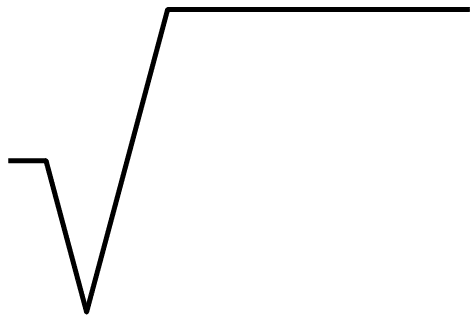
When you square a number, you are multiplying it by itself, e.g. 6*6 = 36.  When you take the square-root of a number, you are undoing the square, going backwards from the result of squaring to the input that was originally squared: sqrt{36} = 6.  Similarly, 8*8 = 64, so sqrt{64} = 8.  As long as all the numbers are positive, everything is straightforward.

It’s easy to find the square root of a perfect square.  All other square roots are ugly decimals.  For estimation purposes on the very hardest GMAT questions, it might be useful to memorize that sqrt{2} = 1.4and sqrt{3} = 1.7, but without a calculator, no one is going to ask you to calculate the values of any decimal square roots bigger than that.  If something like sqrt{52} shows up, all you have to recognize is between what integers you would find that decimal.  For example,

49 < 52 < 64

therefore

sqrt{49} < sqrt{52} < sqrt{64}

therefore

7 < sqrt{52} < 8

1.  
A line must start with a point
The circle must begin with a point to a line
I'm set at zero, I shift
Infinity is both a sign and a math equation

Equated word Hollow


  1. Example:
    Chinese Zen Garden from www.youtube.com
    Jan 29, 2026 · Zen Garden Chinese Instrumentals Peaceful Flute, Erhu & Guzheng Melody · Comments. 369 ...
    Duration: 3:00:05
    Posted: Jan 29, 2026


Japanese vs Chinese Zen Garden: Key Differences Explained

Japanese vs Chinese Zen Garden: contrasting elements and design features in serene landscapes.


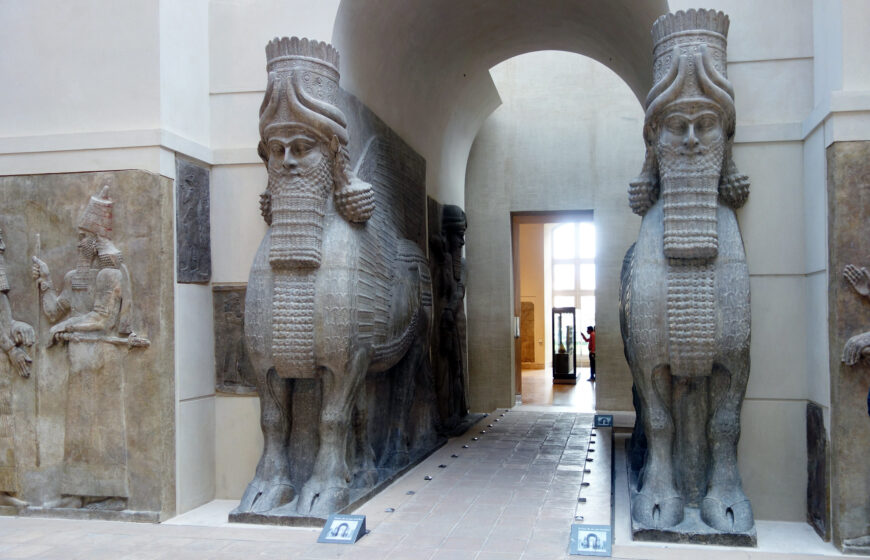
Word Nimrod is equated words Very ADVANCED!


Quick answer: Japanese and Chinese garden traditions share a long history of cultural exchange, but they are not two versions of the same “Zen garden.” The clearest comparison is between Japanese karesansui (dry landscape gardens) and Chinese classical or literati gardens. Karesansui often uses rocks, gravel, limited planting, and a composed viewing position. Chinese scholar gardens typically combine water, rocks, plants, architecture, paths, and changing views to create a landscape experienced in sequence.

People commonly search for “Japanese vs Chinese Zen garden,” so this guide uses that phrase to answer the question directly. Historically, however, “Chinese Zen garden” is not the standard name for Chinese classical garden traditions. Chan Buddhism developed in China and influenced East Asian culture, but Chinese private gardens are more accurately discussed as classical, scholar, or literati gardens, especially in the Jiangnan and Suzhou traditions.

The comparison below is therefore a practical introduction, not a rulebook. Japan has pond gardens, tea gardens, stroll gardens, and many other forms; China also has regional and historical variation. Neither tradition can be reduced to one visual formula.

Japanese vs Chinese Zen Garden at a Glance


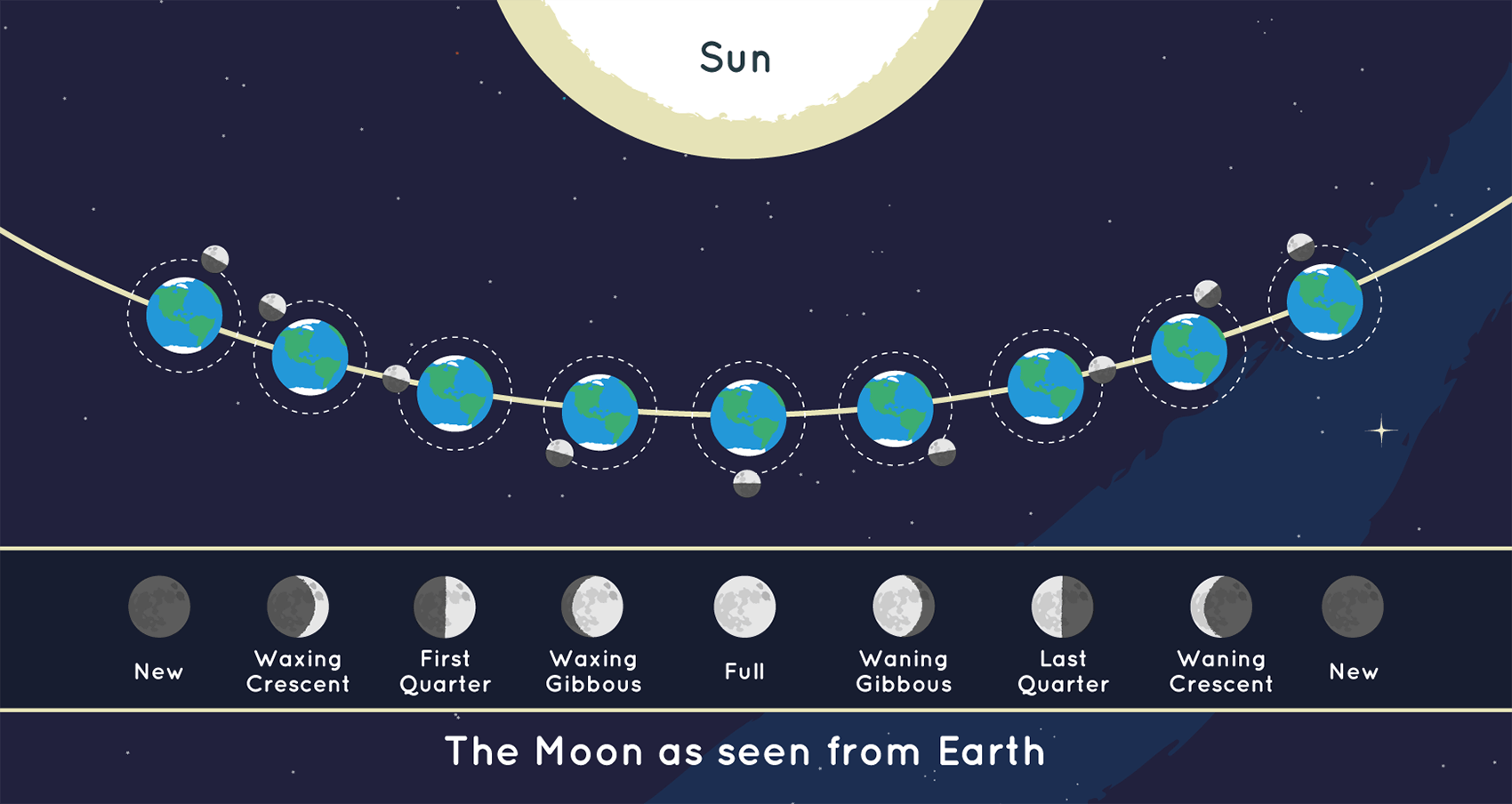
 Position of Moon and Sun, matched with depictions of the Moon’s phases as seen from Earth’s viewpoint.


Pi  π 3.141
Math is Tone.


Next >

94124, San Francisco, CA - From your IP address - Learn more
AnIndependentMindKnotLogic@gmail.com - Sign out


You searched for

"HOLLOW" in the KJV Bible


8 RESULTS   -   PAGE 1 OF 1   -   SORT BY BOOK ORDER   -   FEEDBACK
  1. Genesis 32:25chapter context similar meaning copy save
    And when he saw that he prevailed not against him, he touched the hollow of his thigh; and the hollow of Jacob's thigh was out of joint, as he wrestled with him.


  2. Genesis 32:32chapter context similar meaning copy save
    Therefore the children of Israel eat not of the sinew which shrank, which is upon the hollow of the thigh, unto this day: because he touched the hollow of Jacob's thigh in the sinew that shrank.


  3. Exodus 27:8chapter context similar meaning copy save
    Hollow with boards shalt thou make it: as it was shewed thee in the mount, so shall they make it.


  4. Exodus 38:7chapter context similar meaning copy save
    And he put the staves into the rings on the sides of the altar, to bear it withal; he made the altar hollow with boards.


  5. Leviticus 14:37chapter context similar meaning copy save
    And he shall look on the plague, and, behold, if the plague be in the walls of the house with hollow strakes, greenish or reddish, which in sight are lower than the wall;


  6. Judges 15:19chapter context similar meaning copy save
    But God clave an hollow place that was in the jaw, and there came water thereout; and when he had drunk, his spirit came again, and he revived: wherefore he called the name thereof Enhakkore, which is in Lehi unto this day.


  7. Isaiah 40:12chapter context similar meaning copy save
    Who hath measured the waters in the hollow of his hand, and meted out heaven with the span, and comprehended the dust of the earth in a measure, and weighed the mountains in scales, and the hills in a balance?


  8. Jeremiah 52:21chapter context similar meaning copy save
    And concerning the pillars, the height of one pillar was eighteen cubits; and a fillet of twelve cubits did compass it; and the thickness thereof was four fingers: it was hollow.


Phases of the Moon and Percent of the Moon Illuminated

From any location on the Earth, the Moon appears to be a circular disk which, at any specific time, is illuminated to some degree by direct sunlight. Like the Earth, the Moon is a sphere which is always half illuminated by the Sun, but as the Moon orbits the Earth we get to see more or less of the illuminated half. During each lunar orbit (a lunar month), we see the Moon's appearance change from not visibly illuminated through partially illuminated to fully illuminated, then back through partially illuminated to not illuminated again. Although this cycle is a continuous process, there are eight distinct, traditionally recognized stages, called phases. The phases designate both the degree to which the Moon is illuminated and the geometric appearance of the illuminated part. These phases of the Moon, in the sequence of their occurrence (starting from New Moon), are listed below.

Following waning crescent is New Moon, beginning a repetition of the complete phase cycle of 29.5 days average duration. The time in days counted from the time of New Moon is called the Moon's "age". Each complete cycle of phases is called a "lunation".

Because the cycle of the phases is shorter than most calendar months, the phase of the Moon at the very beginning of the month usually repeats at the very end of the month. When there are two Full Moons in a month (which occurs, on average, every 2.7 years), the second one is called a "Blue Moon". See the article "Once in a Blue Moon" for the story of how the usage of this term has evolved (Ref: Philip Hiscock, Sky & Telescope , March 1999, pp. 52-55.).

The first time that the thin waxing crescent Moon is visible after New Moon (low in the evening sky just after sunset) marks the beginning of a month in the Islamic Calendar - see the Astronomical Information Center for Crescent Moon Visibility and the Islamic Calendar.

Although Full Moon occurs each month at a specific date and time, the Moon's disk may appear to be full for several nights in a row if it is clear. This is because the percentage of the Moon's disk that appears illuminated changes very slowly around the time of Full Moon (also around New Moon, but the Moon is not visible at all then). The Moon may appear 100% illuminated only on the night closest to the time of exact Full Moon, but on the night before and night after will appear 97-99% illuminated; most people would not notice the difference. Even two days from Full Moon the Moon's disk is 93-97% illuminated.

New Moon, First Quarter, Full Moon, and Last Quarter phases are considered to be primary phases and their dates and times are published in almanacs and on calendars. (Click here for a list.) The two crescent and two gibbous phases are intermediate phases, each of which lasts for about a week between the primary phases, during which time the exact fraction of the Moon's disk that is illuminated gradually changes.

The phases of the Moon are related to (actually, caused by) the relative positions of the Moon and Sun in the sky. For example, New Moon occurs when the Sun and Moon are quite close together in the sky. Full Moon occurs when the Sun and Moon are at nearly opposite positions in the sky - which is why a Full Moon rises about the time of sunset, and sets about the time of sunrise, for most places on Earth. First and Last Quarters occur when the Sun and Moon are about 90 degrees apart in the sky. In fact, the two "half Moon" phases are called First Quarter and Last Quarter because they occur when the Moon is, respectively, one- and three-quarters of the way around the sky (i.e., along its orbit) from New Moon.

The relationship of the Moon's phase to its angular distance in the sky from the Sun allows us to establish very exact definitions of when the primary phases occur, independent of how they appear. Technically, the phases New Moon, First Quarter, Full Moon, and Last Quarter are defined to occur when the excess of the apparent ecliptic (celestial) longitude of the Moon over that of the Sun is 0, 90, 180, and 270 degrees, respectively. These definitions are used when the dates and times of the phases are computed for almanacs, calendars, etc. Because the difference between the ecliptic longitudes of the Moon and Sun is a monotonically and rapidly increasing quantity, the dates and times of the phases of the Moon computed this way are instantaneous and well defined.

The percent of the Moon's surface illuminated is a more refined, quantitative description of the Moon's appearance than is the phase. Considering the Moon as a circular disk, the ratio of the area illuminated by direct sunlight to its total area is the fraction of the Moon's surface illuminated; multiplied by 100, it is the percent illuminated. At New Moon the percent illuminated is 0; at First and Last Quarters it is 50%; and at Full Moon it is 100%. During the crescent phases the percent illuminated is between 0 and 50% and during gibbous phases it is between 50% and 100%.

For practical purposes, phases of the Moon and the percent of the Moon illuminated are independent of the location on the Earth from where the Moon is observed. That is, all the phases occur at the same time regardless of the observer's position.

Lunation Movie
Click to see small movie
Small movie (134k) 
Click to see large movie
Large movie (493k)

If you click on either of the two images on the right, you will see a time-lapse movie of the appearance of the Moon over one lunation. A lunation is a lunar month, during which time the Moon completely circles the Earth in its orbit. The complete cycle of phases is obvious. Two other effects can be easily seen. First, due to the elliptical shape of the Moon's orbit, the apparent size of the Moon's disk changes as its distance from Earth varies (the closest and farthest points do not always occur at the same phases, however). Second, although the Moon's near side directly faces the Earth on average, we get to view the Moon from slightly different angles as it orbits us. This effect, called libration, is caused partly by the tilt of the Moon's rotation axis with respect to its orbital plane and partly by the fact that the Moon's speed in its orbit varies but its rotation rate does not.

The movie is an animated gif created by Antonio Cidadao from a sequence of still images taken during March and April 1998.

Copyright Antonio Cidadao . Used by permission.

No comments:

Post a Comment

An Independent Mind, Knot Logic

An Independent Mind, Knot Logic

I would like to know what happened as it’s just like the chills without a goose and the Test Results are Test Results, so what happened? Title: Words There was a Cop that drank word SOMETHING inside my House in the Kitchen at 385 Municipal Drive Sacramento, California, PLEASE READ POST.

Wolfgang Amadeus Mozart wrote 27 numbered piano concertos , alongside famous concertos for violin, flute, clarinet, and horn. Mozart's P...

Karen A. Placek, aka Karen Placek, K.A.P., KAP

My photo
Presents, a Life with a Plan. My name is Karen Anastasia Placek, I am the author of this Google Blog. This is the story of my journey, a quest to understanding more than myself. The title of my first blog delivered more than a million views!! The title is its work as "The Secret of the Universe is Choice!; know decision" will be the next global slogan. Placed on T-shirts, Jackets, Sweatshirts, it really doesn't matter, 'cause a picture with my slogan is worth more than a thousand words, it's worth??.......Know Conversation!!!

Know Decision of the Public: Popular Posts!!