

Friday, November 10, 2023
It Is Not The Birds And The Bees As The Lord Advanced In Isaiah 7:18 (K.J.V.). This Is A Sliver To A Book Named And Not Yet Written Called ‘Joy of Health’ And Or The Dream Of Mozart; A Soprano Part!
.jpg)
Cantore Arithmetic is at the met to enhance phonics as the book of known to what is the pi on industry following the branch to the limb. Hatred equated hat red and that changed Strength of the King to Strength of Men: 1 Corinthians11:4 kjv: Praying equated having sex and prophesying equated baby-sat.
Read is equated to a whistler as the color of red is vein in the ligament of man and that made the bell the leg to an ankle replaced: Underlined twice inaspect word replaced.
Dr. Pol,
When I was a kid in Montara we had a Mare that had a foal. The Vet that tended the problem as the Foal never got to her feet worked for WILLIAM A GRANTHAM, DVM - Half Moon Bay, CA whom did work on the Tracks so the Vet that tended our Mare is probably still around and can be found to tend this information as after Dorchester I saw the strangest things happen to People, this was a horse and her filly.
All the stuff the Vet told us to do we did however the information is best held in the word Keep, so, find him and ask him yourself.
That Foal had something called freckles, I know this as the Necropsy that the Vet did on the foal after the loss of her equated word lid exposed that disease named freckles. I saw plainly and equated nothing but the name(Freckles.), I did not say anything as I still don’t much about that type of stuff however the linguistics to the word touching equated word snow and that horse on the inside was known to me in a Film, The Wizard of Oz.
The Wizard of Oz - Horse of a Different Color in this verse the foal is equated word red. So, you have to do it as there is to much word conatation to all of this already, however an End is an end until you see the staff as a braid, equated word blizzard.
The word Tory[red[Red[RED]]] on my blog equated word Troy as word trojan is yours to comprehend.
Revelation 6:2
“And I saw, and behold a white horse: and he that sat on him had a bow; and a crown was given unto him: and he went forth conquering, and to conquer.”
King James Version (KJV)
Showing posts sorted by relevance for query red. Sort by date Show all posts
Tuesday, October 6, 2015
Bow^Tan^It^Cull

Tory
From Wikipedia, the free encyclopediaThis article is about politics in the British Isles. For other uses, see Tory (disambiguation).Part of the Politics series on Toryism 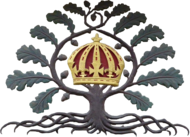
A Tory holds a political philosophy (Toryism) based on a British version oftraditionalism and conservatism. In politics, the Tory political faction originated with the Cavalier faction during the English Civil War (sometimes more scrupulously known as the "Wars of the Three Kingdoms"). This political philosophy is prominent in the politics of the United Kingdom, and also appears in parts of the Commonwealth, particularly in Canada. It also had exponents in parts of the former British Empire, such as the Loyalists of British America who opposed American secession during the American War of Independence. The Tory ethos has been summed up with the phrase 'God, King and Country'.[1]Tories generally advocate monarchism, are usually of a High Church Anglicanreligious heritage,[2][3] and are opposed to the radical liberalism of the Whigfaction. Under the Corn Laws (1815–1846) a majority of Tories supportedprotectionist agrarianism with tariffs being imposed at the time for sustainability, self-sufficiency and enhanced wages in rural employment.The Tory political faction originally emerged within the Parliament of England to uphold the legitimist rights of James, Duke of York, to succeed his brotherCharles II to the throne. James II was a Catholic, while the state institutions had broken from the Catholic Church—this was an issue for the Exclusion Billsupporting Patricians, the political heirs to the nonconformist Roundheads and Covenanters. There were two Tory ministries under James II; the first led by Lord Rochester, the second by Lord Belasyse. A significant faction took part in the ousting of James II with the Whigs to defend the Anglican Church or definitive protestantism. A large but dwindling faction of Tories held sympathy for Catholic Stuart heirs to the throne from the accession of the first Hanoverian monarchin 1714, many of which supported Jacobitism, the military campaigns of which saw them lost and castigated. Although only a minority of Tories gave their adhesion to the Jacobite risings, it was used by the Whigs to completely discredit the Tories and paint them as traitors. After the advent of the Prime Ministerial system under the Whig Robert Walpole, Lord Bute's premiership in the reign of George III marked a revival.Conservatism emerged by the end of the 18th century—it synthesised moderate Whig economic positions and many Tory social values to create a new political philosophy and faction, in opposition to the French Revolution. Edmund Burkeand William Pitt the Younger led the way in this. Interventionism and a strong military were to prove a hallmark of Toryism under subsequent Prime Ministers. Due to these Tories leading the formation of the Conservative Party, members of the party are colloquially referred to as Tories, even if they are not traditionalists. Actual adherents to traditional Toryism in contemporary times may be referred to as High Tories as the traditionalist conservative values of Toryism differ from that of the more liberal and cosmopolitan parts of the Conservative Party.
| Part of the Politics series on |
| Toryism |
|---|
 |
Contents
History of the term[edit]
The word "Tory" derives from the Middle Irish word tóraidhe; modern Irish tóraí:outlaw, robber or brigand, from the Irish word tóir, meaning "pursuit", since outlaws were "pursued men".[4][5] It was originally used to refer to an Irish outlawand later applied to Confederates or Royalists in arms.[6] The term was thus originally a term of abuse, "an Irish rebel", before being adopted as a political label in the same way as Whig.Towards the end of Charles II's reign (1660–85) there was some debate about whether or not his brother, James, Duke of York, should be allowed to succeed to the throne. 'Whigs', originally a reference to Scottish cattle-drivers (stereotypically radical anti-Catholic Covenanters), was the abusive term directed at those who wanted to exclude James on the grounds that he was a Roman Catholic. Those who were not prepared to exclude James were labelled 'Abhorrers' and later 'Tories'. Titus Oates applied the term "Tory", which then signified an Irish robber, to those who would not believe in his Popish plot, and the name gradually became extended to all who were supposed to have sympathy with the Catholic Duke of York.[7]The suffix -ism was quickly added to both 'Whig' and 'Tory' to make Whiggismand Toryism, meaning the principles and methods of each faction.

English and British politics[edit]
Main article: Tories (British political party)Historically, the term Tory has been applied in various ways to loyalists of the British monarchy. The term was initially applied in Ireland to the isolated bands of guerrillas resisting Oliver Cromwell's nine-month 1649–1650 campaign in Ireland, who were allied with Royalists through treaty with the Parliament of Confederate Ireland, signed at Kilkenny in January 1649;[8] and later to dispossessed Catholics in Ulsterfollowing the Restoration.[9]During the Exclusion Bill Crisis the word Tory was applied in England as a nickname to the opponents of the bill, called the Abhorrers. The word "Tory" had connotations of Papist and outlaw[10] derived from its previous use in Ireland.English Tories from the time of the Glorious Revolution up until the Reform Bill of 1832 were characterised by strong monarchist tendencies, support for the Church of England, and hostility to radical reform, while the Tory Party was an actual organisation which held power intermittently throughout the same period.[11]Since 1832, the term "Tory" is commonly used to refer to the Conservative Party and its members.
,_1st_Baron_Belasyse_of_Worlaby_by_Gilbert_Jackson.jpg)
United States[edit]
See also: Loyalist (American Revolution)The term Tory or "Loyalist" was used in the American Revolution for those who remained loyal to the British Crown. Since early in the 18th century, Tory had described those upholding the right of the King over Parliament. During the war of independence, particularly after the Declaration of Independence in 1776 this use was extended to cover anyone who remained loyal to the British Crown. About 80% of the Loyalists remained in the United States after the war. The 60,000 or so Loyalists who settled in Canada, the Bahamas, or returned to Great Britain after the American War of Independence are known as United Empire Loyalists.[12]On February 12, 1798, Thomas Jefferson described the Federalist Party as "A political Sect [...] believing that the executive is the branch of our government which the most needs support, [who] are called federalists, sometimes aristocrats or monocrats, and sometimes Tories, after the corresponding sect in the English Government of exactly the same definition".[13] That, however, was clearly a hostile description by the Federalists' foes, of whom Jefferson was one, and not a name used by the Federalists themselves.

Canada[edit]
Main article: Conservatism in CanadaSee also: Upper Canada Tories and Conservative Party of Canada (historical)The term was used to designate the pre-Confederation British ruling classes of Upper Canada and Lower Canada, known as the Family Compact and the Château Clique, an elite within the governing classes, and often members within a section of society known as the United Empire Loyalists.In post-Confederation Canada the terms "Red Tory" and "Blue Tory" have long been used to describe the two wings of the Conservative and previously the Progressive Conservative (PC) parties. The dyadic tensions originally arose out of the 1854 political union of British-Canadian Tories, French-Canadian traditionalists, and the monarchist and loyalist leaning sections of the emerging commercial classes at the time—many of whom were uncomfortable with the pro-American and annexationist tendencies within the liberal Grits. Tory strength and prominence in the political culture was a feature of life in Nova Scotia, New Brunswick, Prince Edward Island, Ontario, and Manitoba.[14]By the 1930s, the factions within Canadian Toryism were associated with either the urban business elites, or with rural traditionalists from the country's hinterland. A "Red Tory" is a member of the more moderate wing of the party (in the manner of John Farthing and George Grant). They are generally unified by their adherence to British traditions in Canada.[15]Throughout the course of Canadian history, the Conservative Party was generally controlled by MacDonaldian Tory elements, which in Canada meant an adherence to the English-Canadian traditions of Monarchy, Empire-Commonwealth, parliamentary government, nationalism, protectionism, social reform, and eventually, acceptance of the necessity of the welfare state.[16]By the 1970s the Progressive Conservative Party was a Keynesian-consensus party. With the onset of stagflation in the 1970s, some Canadian Tories came under the influence of neo-liberal developments in Great Britain and the United States, which highlighted the policies for privatization and supply-side interventions. In Canada, these tories have been labeled neoconservatives—which has a somewhat different connotation in the US. By the early 1980s there was no clear neoconservative in the Tory leadership cadre, but Brian Mulroney, who became leader in 1983, eventually came to adopt many policies from the Margaret Thatcher and Ronald Reagan governments.[17]As Mulroney took the Progressive Conservative Party further in this direction, with policy initiatives in the areas of deregulation, privatization, free-trade, and a consumption tax called the Goods and Services Tax (GST), many traditionally-minded Tories became concerned that a political and cultural schism was occurring within the party.The 1986 creation of the Reform Party of Canada attracted some of the neo-liberals and social conservatives away from the Tory party, and as some of the neoconservative policies of the Mulroney government proved unpopular, some of the provincial-rights elements moved towards Reform as well. In 1993, Mulroney resigned, rather than fight an election based on his record after almost nine years in power. This left the PCs in disarray and scrambling to understand how to make toryism relevant in provinces such as Quebec, Saskatchewan, Alberta, and British Columbia that had never had a strong tory tradition and political culture.Thereafter in the 1990s, the PCs were a small party in the Canadian House of Commons, and could only exert legislative pressure on the government through their power in the Senate of Canada. Eventually, through death and retirements, this power waned. Joe Clark returned as leader, but the schism with the Reformers effectively watered down the combined Blue and Red Tory vote in Canada.By the late 1990s, there was talk of the necessity of uniting the right in Canada, to deter further Liberal majorities. Many tories—both red and blue—opposed such moves, while others took the view that all would have to be pragmatic if there was any hope of reviving a strong party system. The Canadian Alliance party (as the Reform Party had become), and some leading tories came together on an informal basis to see if they could find common ground. While Progressive Conservative Leader Joe Clark rebuffed the notion, the talks moved ahead and eventually in December 2003, the Canadian Alliance and the Progressive Conservative parties voted to rejoin into a new party called the Conservative Party of Canada.After the merger of the PCs with the Canadian Alliance in 2003, there was debate as to whether the "Tory" appellation should survive at the federal level. Although it was widely believed that some Alliance members would take offence to the term, it was officially accepted by the newly merged party during the 2004 leadership convention. Stephen Harper, leader of the Conservative Party of Canada, and the Prime Minister as a result of the January 2006 election, regularly refers to himself as a Tory and has suggested that the new party is a natural evolution of the conservative political movement in Canada.[18][19]
Texas Revolution[edit]
In Texas 1832–36 support for the Texas Revolution was not unanimous. The "Tories" were men who supported the Mexican government. The Tories generally were long-term property holders whose roots were outside of the lower South. They typically had little interest in politics and sought conciliation rather than war or they withheld judgment from both sides. The Tories preferred to preserve the economic, political, and social gains that they enjoyed as citizens of Mexico, and the revolution threatened to jeopardize the security of their world.[20]
Current usage[edit]
"Tory" has become shorthand for a member of the Conservative Party or for the party in general. Some Conservatives call themselves "Tory" and the term is common in the media, but deprecated by some media channels.In Canada, the term "Tory" may describe any member of the Conservative Party of Canada, its predecessor party theProgressive Conservative Party of Canada, or any similarly named provincial party; the term is frequently used in contrast to "Grit", a shorthand for the Liberal Party of Canada, "Dipper", a shorthand for the New Democratic Party of Canada, and " Seppies", shorthand for the members of the Québec separatist party Bloc Québécois.In Australia, "Tory" is used as a pejorative term by members of the Labor Party to refer to members of the conservative and often coalition Liberal and National parties.[21]
Blue Tory
From Wikipedia, the free encyclopediaPart of the Politics series on Toryism
Blue Tories, also known as small 'c' conservatives, are, in Canadian politics, members of the former federal Progressive Conservative Party of Canada, current Conservative Party of Canada and provincial Progressive Conservative parties who are more economically right wing. Prior to the 1960s, these Conservatives were most identified with the Montreal and Toronto commercial elite who took positions of influence within the Progressive Conservative Party. Since the mid-1970s, they have been heavily influenced by the libertarianmovement. Blue Tories tend to favour libertarian policies such as devolution of federal power to the provincial governments, a reduced role for government in the economy, reduction of taxation and similar mainstream market liberalideals. The term Blue Tory does not refer to social conservatism.One example of a Blue Tory administration in Canada was the "Common Sense Revolution" provincial Progressive Conservative government of Ontario PremierMike Harris. The Harris Tories were widely viewed as radical by Canadian standards in their economic policies and style of governance. Harris' government embarked on a number of initiatives, including cuts to education, welfare and Medicare, privatization of government services and health care, the sale of provincial highways and the forced amalgamation of municipalities. Provincial income taxes were also cut by 30% and corporate tax rates were nearly cut in half during the Harris mandate.Most Blue Tories are at least somewhat ideologically aligned close to the economic libertarian positions of the formerCanadian Alliance and as such supported the merger between the PCs and the Alliance to form the new federalConservative Party of Canada (CPC). Some notable Blue Tories include many prominent federal and provincial Progressive Conservatives such as former PC Party Leader and current Attorney General Peter MacKay, Conservative Party leadership contender and current Treasury Board President Tony Clement, and former Premier of Ontario Mike Harris. Based on his statements and actions made in the last election, some political commentators have suggested that the current Conservative Prime Minister, Stephen Harper, has also shifted his ideology closer to the Blue Tory mould as opposed to the social conservatism that was usually identified with the leadership of the Canadian Alliance and ReformParties.
| Part of the Politics series on |
| Toryism |
|---|
|
Red Tory
From Wikipedia, the free encyclopediaPart of the Politics series on Toryism
A Red Tory is an adherent of a progressive conservative political philosophy, tradition, and disposition in Canada similar to the High Tory tradition in the United Kingdom; it is contrasted with "Blue Tory" or "Small-c". In Canada, Red Toryism is found in provincial and federal Conservative political parties. The history of Red Toryism marks differences in the development of the political cultures of Canada and the United States. Canadian conservatism andAmerican conservatism have been different from each other in fundamental ways.[1]The term Red Tory has been revived in recent years by individuals such as the British philosopher Phillip Blond, also Director of the ResPublica think tank, to promote a radical communitarian traditionalist conservatism. It inveighs against welfare states as well as market monopolies. Instead, it respects traditional values and institutions, localism, devolution of powers from the central governments to local communities, small businesses, and volunteerism and favours empowering social enterprises, charities and other elements of civil society to solve problems such as poverty.[2]It is also used to describe the British Labour Party post-New Labour, particularly in Scotland[3][4] as they campaign under the colour red, but their policies are seen by some, including supporters of the SNP, as indistinguishable from those of the Conservative Party.
| Part of the Politics series on |
| Toryism |
|---|
|


No comments:
Post a Comment