Hi, where are you from?

My photo
Presents, a Life with a Plan. My name is Karen Anastasia Placek, I am the author of this Google Blog. This is the story of my journey, a quest to understanding more than myself. The title of my first blog delivered more than a million views!! The title is its work as "The Secret of the Universe is Choice!; know decision" will be the next global slogan. Placed on T-shirts, Jackets, Sweatshirts, it really doesn't matter, 'cause a picture with my slogan is worth more than a thousand words, it's worth??.......Know Conversation!!!

Tuesday, May 12, 2026

Title: FLEX TAPE®, © 2025 Logan Coach Trailers, John Travolta!!

Jett Travolta (1992–2009) was the eldest son of actors John Travolta and Kelly Preston. He tragically died at age 16 on January 2, 2009, after suffering a seizure and hitting his head in a bathtub while on a family vacation in the Bahamas. Jett had a history of illness, including Kawasaki disease and autism, with frequent, severe seizures.

Jett Travolta Dies At 16

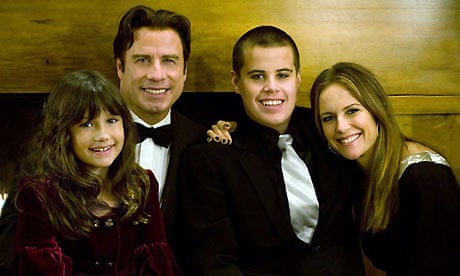
John Travolta with his family, including his late son Jett (second right) Photograph: Getty Images


AR is able to complete word Cantore Arithmetic as word able word as I used Tires(4) to words 1 one thousand, 2 one thousand, 3 One thousand 4 ONE Thousand as the FILM Riddick (2004) Necromonger Invasion | The Chronicles of Riddick | All Action the dumbbells, so, >-< >-< and right now the cramps are really bad and I am burping, similar to when Replica flipped over on my in Montara, California.  Words She had reared and flipped, falling directly on me, I was taken to the Hospital in Montara so that report is there however when I went home in Montara and for what seemed like a while, another words I went home to 22 and I con’t[word continued] to have the hiccups and now is it’s gas, it feels like a rupture, or the cramps people have spoken of while menstruating although mine is pulling really hard to my right-side in my abodomen and upper chest sort of gross feeling at the other Hospital in Templeton, California when they said I had pleurisy.

I would go to the Hospital here but I am in to much pain again and that is why I had to get home to see my Mother before she word decided to word go, in other words she word passed and you are horrible people.

The Pain does not need a Chart or explanation as when it hit before and real bad in Petaluma, California hit was my sphincter that cramped so hard that sweating just to have a bowel movement was normal and your thyroid medicine is bullshit, so have fun as FUCK-YOU is word stun, how’s your Gun in Marin County, you mother-fuckers!  Words This is how I know that you don’t know:  Killer Laser Room Returns | Resident Evil: The Final Chapter | CLIP and I started with the The Return of the Pink Panther (1975) - Thief scene Tourettes The Pink Panther Season 1 Episode 1.

Words for the precept, you’re not a doctor, not even on TV, you’re Mercenaries or the Order of Prescribed for the Product from Dr. Byron Kilgore would have never been word overlooked.

ar rest for the Marin County Police and Sheriff Offices, you’re going down. equated words you’re going word sound[down], on a personal note your word bound by words that equated and it was not word law[Law[LAW]], you’re in word bindings so the John Travolta’ word named daughter is still word named Jetski!!

So, if I wrote a note the music would Mozart,

the heart of a Man that stood to a Planned,

the ride was horse, the track was just Polo,

I wrapped those horses as the Saddles were wool,

I learned the balance I cut my hair,

my life was full ‘cause you were just their.

Signed, much love, you’re a level.
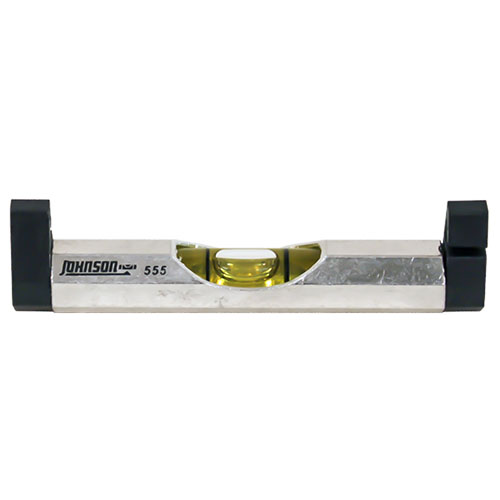
Johnson Level 3&quot; Aluminum Line Level - 555

1.  See this Picture Rock-Hewn Churches of Lalibela, Ethiopia | Africa’s Cultural Landmarks

a.  See this Shape Ice hockey sticks are essential equipment for shooting, passing, and controlling the puck, typically measuring 150–200 cm (approx. 60–63 inches) in length with a composite or wood construction. Modern composite sticks, such as the Bauer Vapor Volt or CCM JetSpeed FT5, offer enhanced, lightweight performance, while traditional wood sticks like the Sher-Wood 5030 provide classic feel and durability.

2.  See this Cammode as Uncle Dennis had an older word style of word reality:  

High Tank Pull Chain Toilets - Renovators Supply

· Free delivery over $35
High tank toilets, also known as pull chain toilets, feature a tank mounted high on the wall, allowing for a classic, vintage look while ...

3.  Flip the Shape to California and the handle at 22 was reality too, so you see REM Sleep is words that equated words that are the sayings of words Common man as to use the Lou is a last Name Ferrigno and the funny Rolodex is type.

4.  The words best I can do is to word state My Aunt Billy, my Father’ word sister, wore Leggs Nylons, L'eggs is a well-known brand of hosiery and tights and words Those words were on word Line[google.com] and word precept;  do I type in the word search bar

 are just another Scene in Blade Runner (1982) for my Aunt Billy 

Blade Runner (1/10) Movie CLIP - She's a Replicant (1982) HD - YouTube

Blade Runner 1982 Scene replicants from www.youtube.com
May 28, 2011 · Blade Runner movie clips: http://j.mp/1uvWGzg · BUY THE MOVIE: http://amzn.to/2cyUhQy · Don ...
Duration: 2:43
Posted: May 28, 2011

Siri?  Words thats’ word theft

1.  Copyright © 2026 Apple Inc. All rights reserved.

Word named Andrew Wommack you’re in word trouble, read this, and note words and word symbol:  Copyright © 2026 Apple Inc. All rights reserved. as the circle is a Tire on that RV next door to 811 Balboa and 
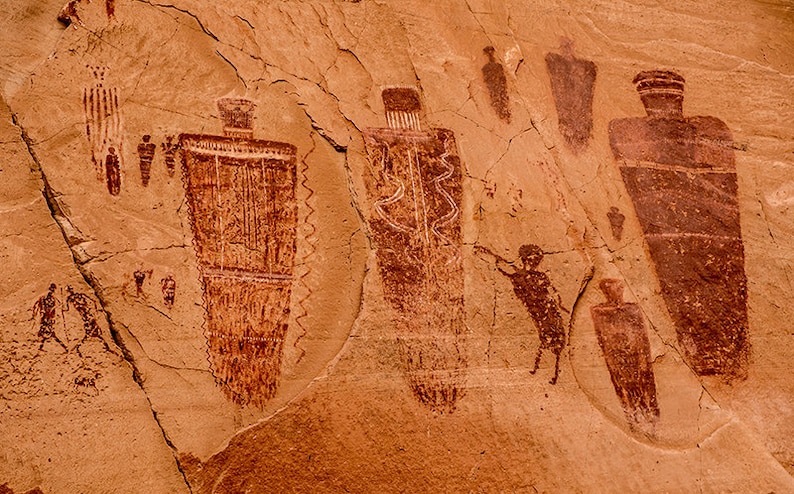
A PICTURE IS ONLY WORTH A THOUSAND WORDS 

The ScreamFigure on cliffside walkway holding head with handsMap
ArtistEdvard MunchYear1893; 133 years agoTypeOiltemperapastel and crayon on cardboardMovementProto-ExpressionismDimensions91 cm × 73.5 cm (36 in × 28.9 in)LocationNational Museum and Munch MuseumOsloYou searched for

"THEFT" in the KJV Bible


2 RESULTS   -   PAGE 1 OF 1   -   SORT BY BOOK ORDER   -   FEEDBACK

Exodus 22:4chapter context similar meaning copy save
If the theft be certainly found in his hand alive, whether it be ox, or ass, or sheep; he shall restore double.


Exodus 22:3chapter context similar meaning copy save
If the sun be risen upon him, there shall be blood shed for him; for he should make full restitution; if he have nothing, then he shall be sold for his theft.


Words The Set that Andrew Wommack is on while on word recording has a word reminder to the Serenity (2005) that I set word man named Iran's supreme leader, Ayatollah Ali Khamenei, word in.

1.  and that word equated word thread, so the President whom stated words Boots on the Ground would not be word compromised.

a.  The Serenity Crew Escape The Reavers | Serenity (2005) | Science Fiction Station 

Words this Picture should do the word job for a precept, as the Film Trailer fills it-in on a word Set:  Blade Runner (1982) Official Trailer - Ridley Scott, Harrison Ford Movie as Precept[Morgan Paull (December 15, 1944 – July 17, 2012) is now word precept, the Crazy Horse Doctor in Sacramento, California and Precept is on word Named word Numb as words we’re on word Ego[Devils Tower National Monument] and Earth Numb and, Earth Ego are equated word Equals.  Words, Now, words there are two earths[Earths[EARTHS]] and no Ships or ships, or SHIPS.

National Income

Drugs in the Headshop

Packages at 18 Years Old or you’re equated words part of it

Jet to Frisco was a Registered Appaloosa :

Register your Appaloosa with the ApHC, you receive a certificate of registration that provides official recognition of your horse's identity.
Horse Name/Pedigree Search, Breeder Achievement Award, Order Pedigrees, Order DNA/HYPP Test, Small Horse Certificate Program, Stallion Directory Tutorial ...


How To Coil ANY SIZE Rope Tangle Free [+ Extension Cord & Hoses]

Don't Get Dragged-How to Carry Your Lariat Rope Safely

Word It’s the equated word torque only; precept, it’s the torque as the circle? to the What Are These Thousands of Weird Holes in Peru, to a Triangle, to a Square for an intestinal track word equated.

Words, So, Bob Ross, Inc. for the Paints and the House on Park Road for the Precept Morgan Paull in Scene in the Film Blade Runner (1982) at 3:00 so, 3 ‘O’ Clock.

Words, Now, Blade Runner - Opening Scene (HDR - 4K - 5.1) Man named Morgan Paull, an Actor in Hollywood on word Lot as the word graphics are unknown to word I, word making word seen a word clip of a word Frame to word Set the word Picture to words moving.

1.  Morgan Paull (December 15, 1944 – July 17, 2012) was an American actor. He was most known for playing Dave Holden in the Ridley Scott film Blade Runner and as Dave Holden is standing on the outside of the House on Park Road and I am on the inside looking at the Swamp Cooler leading to the Motels that have the Heaters that looked like the old Cable Boxes, making word Rabbit Ears the prior to the word scene at 815 Balboa word Street.


You searched for

"ITS" in the KJV Bible


4,718 RESULTS   -   PAGE 1 OF 158   -   SORT BY BOOK ORDER   -   FEEDBACK
Job 5:27chapter context similar meaning copy save
Lo this, we have searched it, so it is; hear it, and know thou it for thy good.


Ezekiel 17:10chapter context similar meaning copy save
Yea, behold, being planted, shall it prosper? shall it not utterly wither, when the east wind toucheth it? it shall wither in the furrows where it grew.


Exodus 30:32chapter context similar meaning copy save
Upon man's flesh shall it not be poured, neither shall ye make any other like it, after the composition of it: it is holy, and it shall be holy unto you.


Isaiah 27:3chapter context similar meaning copy save
I the LORD do keep it; I will water it every moment: lest any hurt it, I will keep it night and day.


Leviticus 26:35chapter context similar meaning copy save
As long as it lieth desolate it shall rest; because it did not rest in your sabbaths, when ye dwelt upon it.


Exodus 22:15chapter context similar meaning copy save
But if the owner thereof be with it, he shall not make it good: if it be an hired thing, it came for his hire.


Job 28:27chapter context similar meaning copy save
Then did he see it, and declare it; he prepared it, yea, and searched it out.


Ezekiel 15:5chapter context similar meaning copy save
Behold, when it was whole, it was meet for no work: how much less shall it be meet yet for any work, when the fire hath devoured it, and it is burned?


Job 20:13chapter context similar meaning copy save
Though he spare it, and forsake it not; but keep it still within his mouth:


Daniel 7:5chapter context similar meaning copy save
And behold another beast, a second, like to a bear, and it raised up itself on one side, and it had three ribs in the mouth of it between the teeth of it: and they said thus unto it, Arise, devour much flesh.


Ezekiel 21:10chapter context similar meaning copy save
It is sharpened to make a sore slaughter; it is furbished that it may glitter: should we then make mirth? it contemneth the rod of my son, as every tree.


Habakkuk 2:3chapter context similar meaning copy save
For the vision is yet for an appointed time, but at the end it shall speak, and not lie: though it tarry, wait for it; because it will surely come, it will not tarry.


Ezekiel 4:2chapter context similar meaning copy save
And lay siege against it, and build a fort against it, and cast a mount against it; set the camp also against it, and set battering rams against it round about.


Numbers 11:8chapter context similar meaning copy save
And the people went about, and gathered it, and ground it in mills, or beat it in a mortar, and baked it in pans, and made cakes of it: and the taste of it was as the taste of fresh oil.


Proverbs 17:8chapter context similar meaning copy save
A gift is as a precious stone in the eyes of him that hath it: whithersoever it turneth, it prospereth.


Daniel 7:7chapter context similar meaning copy save
After this I saw in the night visions, and behold a fourth beast, dreadful and terrible, and strong exceedingly; and it had great iron teeth: it devoured and brake in pieces, and stamped the residue with the feet of it: and it was diverse from all the beasts that were before it; and it had ten horns.


Ezekiel 17:8chapter context similar meaning copy save
It was planted in a good soil by great waters, that it might bring forth branches, and that it might bear fruit, that it might be a goodly vine.


Ezekiel 21:27chapter context similar meaning copy save
I will overturn, overturn, overturn, it: and it shall be no more, until he come whose right it is; and I will give it him.


1 Kings 21:2chapter context similar meaning copy save
And Ahab spake unto Naboth, saying, Give me thy vineyard, that I may have it for a garden of herbs, because it is near unto my house: and I will give thee for it a better vineyard than it; or, if it seem good to thee, I will give thee the worth of it in money.


Leviticus 27:12chapter context similar meaning copy save
And the priest shall value it, whether it be good or bad: as thou valuest it, who art the priest, so shall it be.


Exodus 39:4chapter context similar meaning copy save
They made shoulderpieces for it, to couple it together: by the two edges was it coupled together.


Mark 4:6chapter context similar meaning copy save
But when the sun was up, it was scorched; and because it had no root, it withered away.


Psalms 80:9chapter context similar meaning copy save
Thou preparedst room before it, and didst cause it to take deep root, and it filled the land.


Deuteronomy 30:12chapter context similar meaning copy save
It is not in heaven, that thou shouldest say, Who shall go up for us to heaven, and bring it unto us, that we may hear it, and do it?


Job 28:5chapter context similar meaning copy save
As for the earth, out of it cometh bread: and under it is turned up as it were fire.


Leviticus 19:7chapter context similar meaning copy save
And if it be eaten at all on the third day, it is abominable; it shall not be accepted.


Ecclesiastes 3:14chapter context similar meaning copy save
I know that, whatsoever God doeth, it shall be for ever: nothing can be put to it, nor any thing taken from it: and God doeth it, that men should fear before him.


Exodus 27:8chapter context similar meaning copy save
Hollow with boards shalt thou make it: as it was shewed thee in the mount, so shall they make it.


Proverbs 4:15chapter context similar meaning copy save
Avoid it, pass not by it, turn from it, and pass away.


Isaiah 5:2chapter context similar meaning copy save
And he fenced it, and gathered out the stones thereof, and planted it with the choicest vine, and built a tower in the midst of it, and also made a winepress therein: and he looked that it should bring forth grapes, and it brought forth wild grapes.


What are Plate Tectonics & Plate Boundaries?

The lithosphere is made up of the Earth’s crust and the top


Same thing as >-< and 1 one thousand, 2 one thousand, 3 One thousand 4 ONE Thousand as the FILM Riddick (2004) Necromonger Invasion | The Chronicles of Riddick | All Action the dumbbells are something but when giant blocks move to the description of your DUMB FUCKING EARTHQUAKE MENTION ON STUPID DOCUMENTARIES thats when word blocks is a blog:  GREEK INSCRIPTIONSpage6image636311312

Ancient Greek writing engraved on Parthenon building, Athens, Greece.


1.  The Mysterious Ancient Band Of Holes In Peru 

2.  Weave together to or ask Dr. Edwards as Torque would be very important for the Large intestine.

3.  You want a Triangle then you open the Triangle to a Square and begin word equate word Portion

Words these word directions are equated word us and are word supplied around this Earth in the word funniest ways.

For Robots Phil Swift and his Family of Products, for Logan Coach Horse Trailers this seams to all begin with the Band of Holes in Peru and is a word woven, so from the weave to the triangle to opening the square it word perimeters and then just roles as it is an Organ Administrator.

1.  How to fold a U.S. flag for military funeral ceremony | West Point Band

2.  Folding the casket flag part 1 

DNA helix line icon, DNA symbol in flat style vector illustration

Staff

Picture

Treble Clef
Picture
There are two main clefs. The first is the treble clef, sometimes called the G clef, as it loops around the G line. The treble clef has the "fancy" letter G on the far left side. The treble clef is the higher staff of music, so if your instrument is in a higher pitch, you will be reading in this clef.

Instruments: Flute, Oboe, Clarinet, Saxophone, French Horn, Trumpet

How to remember these note names?
For lines, E G B D F, “Every Good Boy Does Fine.” 
For spaces, F A C E is just like the word “face,” so I like to remember FACE -- SPACE. 

Bass Clef

Picture
The second main clef is the bass clef. Some also call it the F clef, as the bass clef loops around the F line. The bass clef is the lower staff of music, so if your instrument is in a lower pitch, you will be reading this clef.

Instruments: Baritone, Trombone, Tuba, Bassoon


How to remember these note names?
For lines, G B D F A, “Good Boys DFine Always.” 
For the spaces, A C E G, “All Cows Eat Grass.”

Notes: Parts

Notes placed on the staff tell us which note letter to play on our instrument and how long to play it. There are three parts of each note, the note head, the stem and the flag. 

While I am demonstrating with a treble clef, the same rules apply to the bass clef.

Note Heads

Picture
Every note has a note head, either filled (black) or open (white). Where the note head sits on the staff (either on a line or a space) determines which note you will play. *Sometimes note heads will sit above or below the five lines and four spaces of a staff. In that case, a line is drawn through the note, above the note, or below the note head, to indicate the note letter to play, just like B and C in the picture.

*Attention! Everyone will run into these notes at some point, especially FLUTE AND OTHER HIGHER REGISTER INSTRUMENTS, so don't get caught off guard!

Stems

The note stem is a line that extends either up or down from the note head. The line extends from the right if going up or from the left if going down. Stems do not affect how you play a note, but is a way to make the notes easier to read, and allows them to fit neatly on the staff. 

Flags

The note flag is a curvy mark to the right of the note stem. Its purpose is to tell you how long to hold a note. 
We’ll see below how a single flag shortens the note’s duration, while multiple flags can make it shorter still.

Notes: Values

Now that you know the parts to each note, we’ll take a closer look at those filled and open note heads we talked about. Whether a note head is filled or open shows us the note’s value, or how long that note should be held. 

Quarter Notes, Half Notes, and Whole Notes

Picture
Let's start with the basics:

AI Overview
Perimeter is the total distance around the outside of a two-dimensional shape, calculated by adding the lengths of all its outer sides. It represents the length of a boundary, such as a fence around a yard, and differs from area, which measures the space inside.
Key Formulas
  • Square: 4 \times \text{side}
  • Rectangle: 2 \times (\text{length} + \text{width})
  • Triangle: \text{side}1 + \text{side}2 + \text{side}3
  • Circle (Circumference): 2 \times \pi \times \text{radius} or \pi \times \text{diameter}
  • Regular Polygon: \text{Number of sides} \times \text{side length}
How to Calculate Perimeter
  1. Identify all side lengths: For any polygon, identify the length of every outer edge.
  2. Sum the sides: Add all side lengths together.
  3. Irregular Shapes: If sides are missing, determine them based on parallel sides, then add all sides.
  4. Units: Ensure all units of measurement are the same before adding (e.g., convert inches to feet).
Examples
  • Rectangle: A rectangle with a length of 6 units and width of 3 units has a perimeter of 6+3+6+3 = 18 units.
  • Triangle: A triangle with sides 3, 4, and 5 cm has a perimeter of 3+4+5 = 12cm.
Note: In some contexts, particularly in technology, "Perimeters" refers to SaaS security solutions for cloud application monitoring.
AI responses may include mistakes. Learn more
page1image367323104

GREEK INSCRIPTIONS

PUBLIC FUNERAL MONUMENTS (18-21)

18 FRAGMENT of a steleof Pentelicmarble,with the rough-pickedbackpre- served, found on November 14, 1936, in the wall of a modernhouse in Section T.

Height, 0.412 m.; width, 0.156 m.; thickness. 0.183 m.

Height of letters, 0.014 m. Inv. No. I 953b.

The writing is stoichedon, with a vertical unit of ca. 0.023 m. and a horizontal unit of 0.018 m.

Before 450 B.C. vacat

[K ] TrEO-KXE'

[A] UcXVXXL[sE] [14] Xrov

["A]pCLO-8 [E s] 5 [JLtX]8qo[s]

[Ka] XX4Lax[of] [HE'T]raXos

[X]OKpa'rEg

10 [E]VryLTO [V] [K] XEOKp[--]

[1] FXtO[e--]

07-Of[Enl rxf]

No. 18 This panel of names may belong to a public funeral monument.

19. Two fragments of Pentelic mnarbleo,ne of which (a) is brokenon all sides and at the back, while the other (b), though broken on all sides, apparently has the original thickness preserved. Fragment a was found on April 2, 1936, in a modern wall in Section P; fragment b was found on May 28, 1933, in a modern wall in

Hesperia,XV, 3

page1image367153216
page1image367154256

American School of Classical Studies at Athens is collaborating with JSTOR to digitize, preserve, and extend access to

Hesperia ® www.jstor.org

page2image656123376

170 BENJAMIN D. MERITT

Section I. Fragment b probably joins an unpublished piece (E.M. 5164) in the Epigraphical Museum, though the actual test has not as yet been made. The com- bined fragments indicate a width of column of 12 letter spaces.

Fragment a: Height, 0.22 m.; width, 0.15 m.; thickness, 0.125 m. Height of letters, 0.018 m.
Inv. No. 1 895 b.

Fragment b: Height, 0.295 m.; width, 0.11 m.; thickness, 0.16 m. Height of letters, 0.018 m.
Inv. No. I 895 a.

No. 19. Fragment a

No. 19. Fragment b

The writing is stoichedon, with a vertical chequer unit of 0.024 m. and a hori- zontal unit of 0.0205 m. Omicron is small (0.01 m.) and made with the tubular drill. In spite of the Ionic alphabet the letter-forms point to a date later than the middle of the fifth century, possibly near the outbreak of the Peloponnesian War.

page2image656232416 page2image656232720
page3image367456608

r|w- NZ s| -

s l,:| |- gg

|

5

10

[Mv] no' [7,uos]

[Av] aayo'[prj]

[A]v7,71rp[lOS]

[A] eayop [7)s] ['I]oSXa

I. ]aroK4---]

[Na] vay [Op7] ?

lacuna

| - -|| s- g*

g- |

--

- |--- -- -

|- |

|-- |--

l- -

-- -

-|
-||-
|- --s- ----

-

--

- - - - - - - -

15 g]
[s Y]OP?719 [---

No. 19. Fragmentb + E.M. 5164 (Photographfrom Squeeze)

GREEK INSCRIPTIONS

171 YTOIX. 12

page3image367511120

Ft]

av8pog

In Hesperia, XII, 1943, pp. 25-27, Raubitschekpublishedpart of a casualty list which he identified (following Wilhelm) as the first such list from the Peloponnesian War. The letters of the present text are not by the same hand, but they are of similar monumentalsize and may well be from approximnatelythe same date. Apparently this too was a funeral monument, commemorating allies of the Athenians whose names might reasonably have been inscribed in Ionic letters.

20. Two contiguous fragments of an inscribed stele of Pentelic marble. One fragment, brokenon all sides, was found in December, 1934, in the wall of a modern house in Section II. The other fragment, with the smooth right face and rough- picked back preserved, was found on TMay22, 1933, in a modern house in Section I.

Height, as joined, ca. 0.50 m.; width, as joined, ca. 0.55 m.; thickness, 0.247 m. Height of letters, 0.011 m.
Inv. No. I 888.

The inscription is stoichedon, with a chequer pattern in which the vertical unit is 0.0167 m. and the horizontal unit 0.014 m.

ca.430B.C.
Col. I

[L--
[lIav ['AXv]
adrqg

[s] ]Tra6yvcro

['Apw-r]KNo6S[ V

Col.II ?- ]

[. ...]X 20 ?

[---]

page4image636193856

No. 20

page5image367758320

Late Fifth Century B.C.

J'XaV'Kt7rVO19 lIvOo,KcX

YTOIX.

A[-
15 
NLKO[----

20

)avo',.kaXog
AV1rOKXES ha[-----]

]

MEvacXo,go XapCKXE'AS8Es

IHaTpoKXE" AlI;-XE/w;

MV,EoCtaSg XcatpE8Epjos q)txovt,8Es

A45[- -]

KaAX -- -Tp]

25 ...8... K]X^l XP8

g

GREEK INSCRIPTIONS

173

Avo-aviasg
'ApXovt8&E
KaXXtorTparos 35 Xpo6ov

10 OEOIT-FL'8EI Kv&rov

MZKOS
oE [ ? ] Tt6Wos

40

45

50

llpaI[. .6. . .
'A [ptirOKXEL8ES

'A [ptcr6o']& 8KOS

... ... ] re

.....
- .tog

aacutta

30

II TT

NaL-] Av[

'Ava[-j llpa[---]

Ko,4---i

lIhcr'r[---] DoXo[---]

KaX[----]

-]

....... [6]

[. OV [. ]OV

..... ]paTos [.

vacat

*]

page6image636311312

174 BENJAMIN D. MERITT

page6image636324784

I.G., 12, 956 (Photograph from Squeeze)

The text has been given here in connection with I.G., I>, 956. The lettering and spacing seem from the squeezes to be so nearly alike as to permit this association.'butthetestmustsomedaybemadeinAthenstoseewhetherthestonesjoin. Itmay be that the lacuna indicated in the text above can be so reduced that some of the fragmentary names in Column II will be shown to belong together. The stone was evidently part of a public funeral monument of the latter part of the fifth century.

21. Fragment of a block of Hymettian marble, broken on all sides but with the rough-pickedback preserved, found on March 4, 1933, in Section H.

Height, 0.22 m.; width, 0.16 m.; thickness, 0.065 m. Height of letters, 0.011 m.-0.016 m.
Inv. No. I 512.

:TOIX.

The spacing on I.G., I2, 956 seems slightly wider. The thickness is recorded as having a maximum of 0.24 m. This corresponds well with the 0.247 m. of the Agora fragment.

ca. 400 B.c.

?----

[]VI

orEpa

?-----
'AIpqg II-]

1]

Ooipo[s
[--! rarp8!! -l -

page7image636702880

GREEK INSCRIPTIONS 175

page7image636731488

No. 21
These lines appear to be part of a public funeral epigram.

BOUNDARY MARKER

22. Fragment of Pentelic marble, found in the demolition of a modern house in Section I early in 1933.

page7image636755552

Height, 0.19 m.; width, 0.25 m.; 0.12 m.

Height of letters, 0.03 m.-0.04 m. Inv. No. I 370.

Fourth Century B.C. [OpoS]

[TE] &EVoV9 [AL6]g

thickness,

No. 22

page8image656659488

176 BENJAMIN D. MERITT

DEDICATIONS OF THE FOURTH CENTURY (23-25)

23. Three fragments of a sculptured stele, which are published here for the sake of the names on the moulding which divides the stele horizontally. From left to right, the fragments bear the epig,raphical inventory numbers I 3193, 1 1759, and I 289, having been accessioned, respectively, on January 27, 1936, on April 3, 1934, and early in 1933. The fragment at the right shows a seated satyr, playing the double pipes, and looking toward flames which are rising from the ground above the mould- ing. In the field below the moulding are dolphins. The fragments all deserve studv and publication as sculpture; so further details are reserved until then. The inscrip- tion is cut in characteristic letters of the fourth century B.c. and reads as follows:

[---

-] vEavLaW vacat K-]'Xj ITVKVE'[O] vacat IJtXXOKW/VOS

Apparently there were three names, each given with its patronymic. If this is true then VEavWLa is an epithet, and not the name itself; of this first name nothing is now preserved. The second name was IDtX6'KcouK[--- -] and the third name was

[--- -] EAX) ITVKVE [O]. Here the patronymic is new, representing probably a nomina- tive llvKvEag, otherwise unattested. There is room on the stone for the restoration of only one letter, so that the choice seems limited to the patronymic form here given.

The Dionysiac character of the relief is evident, and is further emphasized by the inscription, which has certain resemblances (vEavtcac with NEavtcsa; 4I XOKKUO gwith Kct)oo) to the legends on a cerenmonialvase described in Roscher's Lexicon, der griechischcn und r5inischen Mythologie, I, 1, s. v. Dionysos, col. 1072: Die Fornmder Kannen, die spater nur noch bei demnFeste in Gebrauch war . . lernen wir aus einemnExemplar (abgeb. Archdol. Zeittg. 1852 Taf. 37, vergl. L. Fivel, GaZ1.Arch. p. 6 f.) kennen, auf welchem vier Knabengestalten samtlich Kannen gleicher Gestalt. wie das Gefass mit Epheu bekrcinzt. in den Handen halten; benannt sind ITAIAN mit Fackel (Schlussgesang des Symposion), KQMOE, NEANIAS. Cf. Deubner, At- tische Fest-e, pp. 96 ff.

24. Block of Hlymettian marble, broken at the left, found on May 22, 1933, in Section H'. The stone originally served as the capping member of a dedicatory monu- ment and was topped by a projecting cornice which is now broken awvayexcept for the bed moulding.

Height of the inscribed face, 0.16 m.; width, 0.38 mn.;depth (complete), 0.66 m. Height of letters, 0.018 m.
Tnv.No. I 882.

page9image1285855888

I

E".vOafxd,pE )

ca. 325 B.C.
[Oiv'tq e VtKa

r1a. I____]
]V 
07

ca.-]V

EV

O

GREEK INSCRIPTIONS 177

page9image1285891872

The dedication com- memorates a victory, proba- bly in the avvOvwra-iSaof the Panathenaic festival,2 where

(as also elsewhere) phy-
larchs commandedthe 
caval-
ry of their several tribes
between which the competi-
tion occurred. A 
possible
restoration for line 2 is [krOiFT;;f1VrEt]
of space if it may be assumed that the inscription was symmetrical.

25. A base of Hymettian marble, the larger fragment of which was found on June 4, 1933, in a well in Section Z. The left side of the base is preserved on the smaller fragment which was found in the summer of 1934 among the stones removed

No. 25

from the same well. Most of the top of the base and part of the back have been broken away. The back is rough-picked;the bottom is rough-pickedat the center but around this on all four sides is a band 0.09 m. wide worked with a tooth chisel. The top is dressed smooth where it is preserved. The left side was rough-picked with a smooth

'i I

No. 24 (Photograph from Squeeze)

e4vxapXet, which would satisfy the requirements

page9image1286008608

For epigraphical references to this contest see I.G., II2, 3079 and 3130.

page10image368023328

178 BENJAMIN D. MERITT

band at the top and bottom. The right side is much weathered, but apparently was smnooth-dressed. The set-back at the left end of the inscribed face is 0.14 m. wide and 0.02 m. deep.

Height, 0.232 in.; width, 0.64 m.; thickness, 0.56 m. Height of letters, 0.008 mn.
Inv. No. 1940.

ca. 325 B.C.

NON-YTOIX.

5

10

[----] o [----]

[- -r)t[o 'Icv[t8-qs

$o [o-i] ,taxoq Mvo[ptvovo-tos]

KaXXt/E&8vXoXX[E&8qs9]

[?]

vacat
I II

[ - vs lT o oT-rE0avOE'vEs

/3ovX'3s1 E'] VEKa

rjs) K[a Tov &fl,OV tKaLoOVv7q

iTt apxov-ro 9

'AXapvEV'1 s

(X AVEV'9 OivaZos

[poS] 'AXOnTEK'OEv ypa[t] a-rEvs 'AptorOKXEtibq'Apto-roKXE'ov9>OVVtEv'v

171[..]toS ?----]

This dedicatory base carried the names of ten members of a board or commis- sion, one from each tribe, arranged in tribal order, and followed by the name of their secretary. Kallimedon is already known (P.A., no. 8033) from an honorary decreepraising his son (I.G., II2, 1214), and his name has been used as the guide in dating the text. Above the list of names there was room for four lines of the larger letters of the dedication proper. In many respects this inscription resembles I.G., 112, 2822, which is a dedication by the Board of Treasurers of the Goddess in 349/8 B.c. The names appear in two columns (not rigidly separated in I.G., 12, 2822) in tribal order, with the name of the secretary in the concluding line. This does not prove that this text names Treasurers of the Goddess, but if this should be the case the approximate date 325 B.C. might with some probability be made definite as suiting a secretary from Leontis (Sounion) to the requirements of the tribal cycle.3

GRAVE MONUMENTS OF THE FOURTH CENTURY (26-30)

26. Fragment of Pentelic marble, broken on all sides, found on June 13, 1933, in Section Z.

See Ferguson, Treasurers of Athenta,p. 144.

?)_c-_ -c.9-]

[a

[....]

7-]
I]KXEs871q 'Aft8vaZo9

page11image367997632

No. 26

GREEK INSCRIPTIONS 179

page11image367980496

27. Fragment of a sculptured stele of Pentelic marble, broken on all sides, found on May 5, 1933, in Section e.

Height, 0.255 m.; width, 0.18 m.; thickness, 0.14 m. Height of letters, 0.018 m.
Inv. No. I 780.

Fourth CenturyB.C.

Height, 0.122 m.; width, 0.134 m.; thickness, 0.04 m.

Height of letters, 0.006 m. Inv. No. I 961.

Fourth Century .c. ( ?) Atyvirrta

The letters are very shallow and faint. The same name occurs in I.G., IJ2 1567, line 3, and in I.G., II2, 10596.

page11image1286080112

The inscription is on a taenia below a double crowning
moulding. On the surface of the relief below the inscrip-
tion are traces of a head, much broken. The father, 
Rhinon,
probably lived in the late fifth century, a contemporary
of the other known men of that name, or perhaps to be identified with one of them.4

Al 07o A\ I O

E IOHA AP\JT

No. 27

HE OY

MyPPI
4P.A., nos. 12531, 12532; cf. Meritt, Ath. Fin. Doc., p. 161, lines 26-27.

NY28~QN

No. 28

page12image1286206352 page12image1286204384

180 BENJAMIN D. MERITT

28. Grave stele of Pentelic marble, found on April 24, 1933, built into the east face of the Valerian wall in Section I. Height and width seem to be complete, but the thickness is concealedwithin the wall.

Height, 1.80 m.; width, 0.775 m. Height of letters, 0.03 m.
Inv. No. I 754.

ca. 350 B.C.

A&O2TELO?)S ALoXavrov Mvppwvotcnos

The family is well known, and Diopeithes is to be identified as P.A., no. 4323. This in- scription gives for the first time the name of his father.

29. Sepulchral stele of Pentelic marble, found on February 12, 1932, in Section E.

Height, 1.725 m.; width at the top of the inscribed surface, 0.415 m.; width at the bottom, 0.47 m.; thickness at the top of the inscribed surface, 0.13 m.; thickness at the bottom, 0.165 m.

Height of letters, 0.015 m. Inv. No. 1 167.

ca. 350 B.C.

KXEatvE'T]r, [NcK]tcVo[gsA] XatE'W9 [

Ovya6rqp,

Xap'vAe]--s

Two ornaments

N&KkOV 4DtXL7rTTo['vAX] atEvs

The surface of the stone has been so heavily corrodedthat the letters are now almost indistinguishable. This stele was one of those

page13image1286372928

Early Fourth Century B.C.

[...

.]..... [HHAr] [rt,u

IC[..... ]... wto o[IKav

YTOIX. 25 ]

I.G., II2, 1579

GREEK INSCRIPTIONS 181

reused face downward as cover slabs over the great drain in the Agora, on which the inscriptions were all severely damaged by chemical action on the surface of the marble.5

30. Two joining fragments of Pentelic marble, preserving the complete width of a grave stele, that on the left having been found in Section I on April 20, 1933, and that on the right in Section I on February 1, 1933. The fragments have been measuredas joined.

page13image1286456848

N

No. 30

POLETAI RECORDS (31-33)

31. Fragment of Pentelic marble, broken on all sides, found on November 17, 1937, in the wall of a modern house in Section T.

Height, 0. 165 m.; width, 0. 159 m.; thickness (not original), 0.04 m. Height of letters, 0.008 m.
Inv. No. 
T627b.

The writing is stoichedon, wffitha vertical unit in the upper lines of ca. 0.011 mi., in the lower lines of ca. 0.009 m., and a horizontal unit of ca. 0.0105 m. This frag- ment belongs with the stone already published as I.G., I2, 1579.

8o/] ppaOEv 77 oo [s[, voroOEv 8] 5See, for example, Hesperia, III, 1934, nos. 17-20.

KLOV'Ayp[vXye] ,

Height, 0.33 m.; width, 0.70 m.; thickness, 0.205 m.

Height of letters, ca. 0.04 m. Inv. Nos. 1 719 + 388.

ca. 325 B.C.

[- - -. - @]EV01 'EpLoX6aov Aa,TrpEv1

page14image1286191104

182

BENJAMIN D. MERITT

10

15

20

25

CV7TEy: eEo/EOvos1 EVrE[E-rat&wosoo0] KWav Ev $aXaaktvt E[v .9.

35

vacat
[o0] Ktat as Oi 8&j, [apXot arE'ypaov]

vacat
N6Ot7roos, [O)t'o a1rEypacE ....]

Bo'XAEOi'o ?ot[Kitav ....... Kat] K'OV Ct YETWV /oppacOEv ....]

[E'rTW ][.]o

[E\EV'Ov'] iaXos*Erpiar [o E'Ov/uja6Xo'AypvX [

... 8
]

OEv yEyvV vacat

[H]HHHA (7TCR)

PrsWFOi-o,uos

[H AAAAPr

E7C)OTOOEV [F-FF]

[XXXHHP] [E7T]
[FAP]

.

YtETy.L /oppaO[-EV OTOOEV8& NLK&K [OS

'Apto-rovo' [o si EYyv vacat

Kara,/oX(q) P6AAAHF
OEuoEIS1 ETEpa otKta [Ev
tTW r)t yEirTo, /3oppa'O [EVl ?/ o0o0,]

8& 'Ee'Ko-CrO[S0piaw] ME'XA-roMgEyaKXE'Os 'AX[OTEKijOE] [V] E,'V vacat

[Kara/BoX: AAPrH-H] vacat lacunqa

...7.... t1
YEI(k [0ppaOEv.V

I..... v-O] v]E8E[. '.'. ]

[ crv]

KaTra/0oX): AAAAIFFF [
(A) EVKoXo'os Ee $aXa [p,'vos ra8E]

Epta]ro ME'X[qTo MEyaKXE'o]

Agora Inv. No. 627b

[L...
[sg'AXcow1]EKfOEV E[ yyv

vacat ELrE'807ro]

PHF[-- [7a] E-cimvta1rpt[cLEvos

vacat

vacat EV8EKa

]

[Kara],/oX

[ .]V) [V] V[o]'T[6OeV &8E.. .1]

The purchaser of the first house on the Agora fragment was the same as the purchaser of the last house on I.G., 12, 1579.6 These two items can be more closely

For Meletos see P.A., no. 9828.

.7.Y
Elapco

.7 ]

vacat .

]

page15image636318352

VA~~~~~~~~a ~~

GREEK INSCRIPTIONS 183

page15image636139904

No. 31. I.G., JJ2, 1579 (above) and Agora Inv. No. 627b (below)

juxtaposed if the document is so reconstructed that the Agora fragment falls below I.G., 112, 1579. Moreover, the Agora fragment introduces a category of houses for which the listings were made by the demarchoi (line 32). If the Corpus fragment were to be placed below the Agora fragment it would have to be far enough below to allow room for a different heading, for it is obviously not possible to assume that Leukolophos (line 8) was a demarchos. The better arrangement is that shown in the text above. An additional epigraphical argument is that the unit of verticalspacing on I.G., II', 1579 agrees with that of the upper lines of the Agora piece

(0.011 m.).

page16image1855240352

184 BENJAMIN D. MERITT

The letters in line 32 are not strictly stoichedon, and I have assumed that the 24 letters of the restored text filled out the line completely. On an unpublished frag- ment of the Fifth Century from the Agora (Inv. No. I 236e) the phrase 8&j,/apXogacTEYpaIE, entirely preserved, gives the parallel for the restorations in lines 32 and 34. This r6le of the demarchos is attested also in the literary tradition, and a similar reference is partially preserved in No. 32, line 25, below.

The character of the present document, already assumed as a record of the poletai, is further shown by the reference to the Eleven in line 30. One can restore [rTcV] 'V&KKa, indicating the source from which the poletai received the houses for

sale. A similar procedure is illustrated in the poletai record of 367/6 published in

Hesperia, X, 1941, pp. 14-30. There in lines 1-7 (loc. cit., p. 14) appears the statement

&XA77raT Ta8E d7TEovro 7Tapa r&wvEv8EKa, and the first item was a --- 7TapaXa,80ovTrEs

house which had been listed (the verb is &7E'ypafEv) by a certain Theomnestos. There is not room in the present text to restore in line 30 the complete phrase [7rapa -rwV] EV8EKa,though it is of course possible to read the aorist of the verb T7roypakEtvas well as the imperfect in lines 32 and 34. These responsibilities of the Eleven to the poletai are described also by Aristotle ('AO. HAo., 52): Kat ra. a7ToypaoOLtEva Xwpta KcLLOLKWas EUTcLovTas EL9 To &KaoT7)ptov, Kat ra ooavra &Y7/ tOO tvat 7Tap c8ooovtag

rots rcoXranta -- -.
One must assumnethat Nothippos (line 34) was demarchos of Oion. The property

which he listed with the Eleven must therefore also have been in Oion. The locative phrase EvOt'otis too short by one letter for the restoration of the lacuna in line 35, but a more specific designation of locality within the deme would in any case perhaps be preferable.8

In Hesperia, IT, 1935, pp. 570-571, I exposed the difficulty of accepting the interpretation EyyV(z-) or EyyV(-qg)for the abbreviated form of the word in lines 14 and 20, and even suggested that this form should not be restored at all in line 6. suggested rather that the expanded form should be Eyyv(-p-r'), as in I.G., 12, 1590- 1593, though it was obvious here that in no preserved instance was a bondsmar. mentioned by name. There is now aniother passage (line 35) where E[yyv] must berestored and where no name can be joined with it. Rather than assume that no bondsman was named in connection with any purchase in this inscription, and rather than assume (which seems to me still more awkward) that the purchaser was in each instance himself the bondsman, I now believe that E-yyv should be expanded to

and that in each case the translation should be: that so-and-so, properly bonded, purchased the property.

See Busolt-Swoboda, Gr. Staatsku'nde,p. 968 and note 2, with references there cited.
See, e. g., lines 10-11 and 16-17.
Plato (Laws, 855 B) shows that one could be bonded by his friends: Eav aOpa /wrvEElOESA@CtV

av-rov Trwv lA,o)v Eyyv&TOat TE KaOt $vVEK-Tt'OVTES c7rEXEVeOpowv -- -. This is sufficient evidence for a per- sonal passive with the meaning here desired. -

eyyv(Qq6EL),j

page17image654982864

5

[lEp ]yao-03[OEv?] .]To-

[rX]avKtr7ro0v [-?

[.. ]YA[. ]O[. gEvoKXE[o lEpaE/on]

GREEK INSCRIPTIONS 185

32. Two fragments of a stele of bluish Hymettian marble. The smaller piece (a), with the left side preserved, was found on March 2, 1935, in Section B'. The large piece (b) preserves the bottom and full width and thickness of the stele; it was

found on May 26, 1933, in Section Z. The fragments do not join.

page17image655042896

a: Height, ca. 0.11m.; width, 0.095 m.; thickness, 0.025 m.

Height of letters, 0.007 m. Inv. No. I 870.

b: Height, 0.855 m.; width, 0.485 m.; thickness 0.105 m.

Height of letters, 0.007 m. Inv. No. I 870.

The writing is stoichedon, of the fourth century B.C., with a squarechequerpatternin which each unit measures 0.012 m.

ca. 350 B.C.

.-
-~~~~~~~~.,~X.-:~~e~-~~~~~~~~~~~~~~~~~~~~~~~

[. ]opj?L--------

[**]I [?---------
[.. ]KAIPE[- - - - - - - - - - - - - - -

taccuna

----]

.]I[. .]OA[---- o[tKt'av ...........

a!TEypcakEv] 7)L yd]

15 Tctv f8OppaOEv [...E...[]?E[?
Kai OLKO'TE80V MEXatE [X] 7TpO [8'] [vaToXad ......]

No. 32. Fr-agmentETOIX. 39

page18image1286196176
page19image1848798736

20

'A]p4w[ [arfr]'y[paf]ev 5[Ev]oKXAos [I]E[pas]Kwsaa

X .0.]

[...]1QNMETO[. .. .

8.

Lvo[x]E[p0

]A Y ...]

.

o

o[V] 1T[....

4..5. .

[**5**X
.... [..
[. 8

30 [....

to 847J ]o-&ov [.. . . E[*

[.12
K]AFYP[..............
...2....K ]aXXu-O [

GREEK INSCRIPTIONS

187

E.k V]orOOEV8E Ta[o K6]r8ov

]lfoXoXog Xa[ *.

KaG [K]Xw-[ O]V

Aly728oq [......
25 [otUl/ap ]Xo&?rIEy[paov ........ ]E[. .. .....]

]AF7..4.I-

"i' I[....

wplo ay[. ..............l]

]V y[drEv
] vor6o[ev 8E-

].ONI[??N_] ]AH[?

oppa0Ev ?? ]

....... Ev-q

o&K[av MEX&[nl&t] ydrTov Soppa[Ev

This is a record of sales of property by the poletai. Many of the readings are doubtful, because the stone has been so worn as to make certainty in many cases impossible. In line 12 the -beginningsof a consecutive text, however, can be made out. I assume that Glaukippos was the father of the man who purchased the property describedimmediatelyabove. Then in line 13 comes the name of the man who listed the house of Xenokles. The demotic is supplied in line 14 from the probable reading of line 20. This property is described and its record comes to an end in line 19. Kallisthenes listed another house (and lot and shed) belonging to Xenokles. The purchaseris namedin line 23, and what appearsto be one paymentmadeto the poletai appears, at least in part, in line 24.

T77)S]

page19image1848953808

Line 24 introduces a new category: properties listed by the demarchoi in the prytany of Aigeis. A similar category appears also in No. 31, line 32, above.

33. Fragment of bluish white marble, broken on all sides, found on March 30. 1933, in Section Z.

Height, 0.165 m.; width, 0.165 m.; thickness, 0.045 m.

Height of letters, 0.005 m. Inv. No. I 626.

o 3

No. 32

page20image1855296464

188

BENJAMIN D. MERITT

Early Second

Century B.c.

[---] 'AXvsA

NON-NTOIX.ca. 5S

10

[--'A7o
[-- 'Ava] KaCtv's,Kparw[?

?_ ?-

[-- ypa] 4F[wja]TE K[

[----]qoawv (apyqXcj[o------ [--- I/1UElVE'1?I

[----]ov [?]

aor[------]

[------]

'IX - ]XXO'8o8pog [co-rca'&qg

The inscription begins with a list of names arranged in the official order of the phylai, lines 2, 3, and 4, respectively showing demotics which belong to Aigeis (II), Akamnantis(VI), and Hippothontis (IX). If these lines are filled out with an allowance of about sixteen letters for the name and demotic of each missing member

of the board the length of line is determinedas ca. 58 letters. In line 5 the name of the secretary must have followed without a break after the member from Attalis

(XII).
These men seem to me to represent a board of 
iroX-rrai. The fragment was found

in Section Z, where numerous other fragments of poletai-records were found; the beginningofline7mayperhapshavebeen[a&vEwypa]tiaavn;dthemonthofThargelion is the date when payments on houses sold by the poletai were due.10 Hence my tenta- tive suggestion of the identification.

The date is determinedby the lettering.

HONORARY DECREAES EMENDED (34-36)

34. Several suggestions for the text published as Hesperica,III, 1934, no. 6, have been madeby Helen Pope, NTonA-Athenians in Attic Inscriptions, p. 230. It seems quite possible that Aischron of the Hesperia text is the same as Aischron from Chalkis in I.G., II2, 491, lines 9-10. I therefore adopt her restoration [XacXKC8J&]for line 12 and its accompanying ['EpErpCEv1]for line 13. It is more difficultto follow Mrs. Pope's suggestion of reading K[at 'ApXE'XE&XVaAXK]8Es9in I.G., II2, 491, lines 11-12, because the lacuna there in line 11 is too long by one letter for the restoration of 'ApXE'XE&V.

J. H. Oliver has reportedby letter from Athens that the reading of the last line, in the Hesperia inscription,which I had given as [.]E.. .01, is [.1 EE[a]ya[0]ot.

10 See Aristotle, 'AO.1IoA., 47, 3. The date named by Aristotle is the ninth prytany, but in the second century this would have been nearly equivalent to the eleventh prytany and Thargelion.

page21image1856076160

GREEK INSCRIPTIONS 189

So the completephrase may be developedas the conventional [d'v8p]Es [d]ya. [6]oi of honorary decrees, leaving in line 13 just the correct amount of space for the ethnic 'EpE-rptEv's,as suggested above.

With reference to Hesperica,IlI, 1934, p. 5, no. 6, one may now read lines 12-14 as follows:

[K] ai 'ApXE'XE(o AC'-Xp(oV[o? XaXKl8JZ9 K] [a]i NlKrq1(ras Ir[apX] ov ['EpErpLEEv aV8]

[pI|Es [a]yc [0] [EiO-tv?]

35. The documentpublishedin Hesperia, III, 1934, pp. 43-44 (no. 32) as part of a tribal decree yields a consecutive text with a stoichedon pattern of eighteen letters.

ca. 325 B.C. YTOIX.18

.6..ELITEV EEL]

TT)tioK[par&s o 0Eo o] E6&rr KaActXo[ Kait cXor]

i,UCatP)XSEL [rinV aPXoVK] at ETrt/1,EX[ZEiTat Tav ITEI]

pt rr)1V4vXA)[v Karc'ar'ov]

[vo6]4ovg, Efn)[jbioaL ...]

a Tt [VrT]as c [Eao'vEoa ]

wKPac,r-q]Tv[ ?--]

Lines 7-8 must have carried the name of the phyle which Timokrates represented as thesmothetes. The stoichedon order limits the choice to [AtcavrC8]avg or [AEawv-

C38]acu. For this use of the tribal name in the formula of resolution, see I.G., II,1163,line15.Myearlierrestorationwas[0vXE&r]qvb,utthepublishedphotograph shows that part of the tau should have been visible if this restoration were correct. Epigraphically it is much more probable that the fourth letter of line 8 was delta rather than tau.

36. The decree first published as Hesperica, III, 1934, no. 8 has yielded at least some of its meaning to further study, and it is possible now to make corrections in the reading and disposition of the text. The new version is presented here.

Early Third Century B.C. ETOIX.29 EIO - - - - - - - - - - - - - - -

IAO[--?-?-?-_

--- -

atL,uEX[-qa/ -- ---?]--

NT----
TPA?-----__

page22image1855258512

190

BENJAMIN D. MERITT

10

[. . . .

[VEKact.T

E.E/3

1~~~~0~0i~~Vov] 9]o[

]t [cs E

VI

16 ION. .].15&]1i.

T..[......T[.

"

OEOVS Kat [4ntXoI&] E7L)7s/,]ovX70 KaLtr[ov 8&vv]

TpO, poVS]

[dtasgr'
[uov Kact OTE9cEavt)oO-a]E'Kao-rovlI[avirwv

[Xpvo-ht TELf)(Ot 15 [.. .

E] 'atvE'at [8E Kac V] 'XAI]pVapva a[vacypa6'] 7'oto]ILa KacLra' [aXXaAfn]

[iat &E'rogEr7
[bo-ptacra(?) rov ypapi IarE'arOVK[cara' rpv]

[TaVEcav Ev O'T7XE] XLOCVELK[aat7r [-ac- Ev r^t 'EXEvo-rCCVc]k [? ?

V]I

Evidently lines 8-9, at least, contained the names of men who belonged to sonme

officialboard([Ei]ITLJU[EX inlines2-3). Iflines4-7alsocontainednames,itseenms ra'l]

reasonable to estimate that the board consisted of six members. It is clear that it numbered at least two, and (because of E'KaO-roivn line 13) probably more than two. No intelligible text can be decipheredin lines 4-6.

In restoring the later lines of the inscription I have made the assumption that syllabic division was employed, though I confess that in the earlier lines there is an apparent exception between lines 3 and 4. L)ow called to my attention some time ago that the restoration [e'vr)r lTpVravlK]w4 [i], which I had proposed as the place for erecting the stele, could not be correct because the letter before the preserved omega is notkappa.Itseemstomerathertohavebeeniota,sothatIsuggest [E'VCO'EXEvO-LVi]cot as a supplementwhich meets the requirementsof space and which names a known locale. I think it improbablethat the epimeletai, however, were the EqJtlEX-qTa-rwc^

for at the time of this inscriptionthey were two in number,as they were MvnTpk)pi0V,

also in Aristotle's time, though he says in his 'AO7)vat)dHwOVXuTEl'athat there were four."1 Moreover, the 6TCLzLEX7)TaT'tcOVMv-rT7)ptolwVere praised in I.G., I12, 661 for their piety

[TpoT a] OEa6rather than [Irpo roTvs] OEOVi,as here in line 11.

EPHEBIC INSCRIPTIONS (37-42)

37. Parts of a stele honoring the epheboi of the archonship of Menekrates (220/19 B.C.). Fragment a, consisting of two joining pieces, was found on February

'AO. loX., ?57, 1: [O] 8E /3a-tXcvXs7TpTOV /1EV /1V7T'qpt'JV E7rt/IEXdT [at /IETa Trv ErTL1EX-T?V WIv Or[~osxl ]EtpO'rOVe, vS'o pLv f6 'A6r1va`o)v airwvTWV, 'va 8' [e EvKoXirt&Wv, ]va] 8' (K KP[VKW] V. See the

commentary by Kirchner on I.G., 12I, 661.

]

page23image1849128144

GREEK INSCRIPTIONS 191

14, 1938, in a wall of Byzantine date in Section II. Its rough-pickedback and right side are preserved. Fragment b, broken on all sides, was found on February 3, 1938, in Section AA. Fragment c, with part of the right edge preserved, was found on May 21, 1936, in Section P. I suspect a join between Fragments b and c; in any case their relative positions are easily determinable.

No. 37. Fragment b

No. 37. Fragment a No. 37. Fragment c

Fragment a:
Height, 0.376 m.; width, 0.237 m.; thickness, 0.125 m. Height of letters, 0.005 m. and 0.016 m.
Inv. No. I 4992.

Fragment b:
Height, 0.166 m.; width, 0.168 
m.; thickness, 0.05m. Height of letters, 0.005 m.

Inv. No. I 5175.

Fragment c:
Height, 0.091 m.; width, 0.097 mi.; thickness, 0.065 m. Height of letters, 0.005 m.
Inv. No. I 4171.

page23image1849235072 page23image1849235376 page23image1849235680
page24image1855270480

192

BENJAMIN D. MERITT

5

7rpvTaVEcav

el- OXEC

Xd)'] Wq]

Kacr[ V-EL Ka"L o-r

i'o-at

220/19 B.C.

[O'

Er/q)/3Ev1cLaVTEs EITL M]EVEKpaJTOV1IapXovosT]
I IT

L

NON-.TOIX. ca. 58

] ~~~|2~0~~~~Ka ~

__________------]v?Hpa[--- [?~~~~~~~

ca.___] iJ~~~~~~~A[_ca. 19

ca.]

vov Aa[ ]
T' 8ET7/ tLJr CLaKaC ivo4a] ra a'rTv [rov /ypa/iarEa TOV KaL

1--a r~~T~VTCWECWcwaypai4ic

aE'vaoa*cr E6 JYOPai' EL-g

[r0 ye-vo'EVOV a'vaAXwa]

[coronia]

In corona

[77/3o]vX74

[6 ]77o? [---]EL[.]

corona

[Co lumn11I1missinlg]

15 DaT8pog ev/toXdpov loff[rrof] MEVEKpaTrrj Z4i'v&os EK [KEpapyE`w]

avaypa' Evnc6v

[Column I contained the names

of el)heboi from Antigonis

?
Aigeis 'AvTtOXi8[os]

Demetrias Erechtheis

]
Alavn)8 [os0]

(?) 'Ava4iaViTEV14]

Pandionis Leontis Ptolemnais

The entire list may have con- tained about twenty names]

[EEOEv]

-o-To- eEOUPV) [O-Tr] ov 'AvaibX [vi(o-To)]

30 83ovX[r] o [8NtoS]

10

'

A
[[nfvaV-vwayipa/1r)v Ka8LaLaWvLCLsOoE(TLl)rr-sr)orm)vX ]v0e1r)OrE'ITLTCEL [OLCoK07-E'1L sat]

XaptKX ttXoeEvov

20 ['A] -v8p6iLKOS ['Apt] o-TEi[r --

5r)T

_?

[Tto ]

] _]

]

25 c-at]

[eIoOcoTiTCVSo0] lacuna

?

'AKapavTC8 [os ]

lacuna

KXEa[v8pOV

,.LEpCO-c

page25image1849314416

GREEK INSCRIPTIONS 193

Phaidros, of line 15, was the son of that Thymochares (P.A., 7411) who served as one of the curators of the Asklepieion in the archonshipof Diomedon (247/6 B.C.) and who made a contribution for the safety of the state and the defence of the country in that same year.1" Charikles, in line 17, was probably a forebear of

[(DC]Xo'eEVOs'Apto-ro6voIv ],rro-g, who was ephebos in 10211 B.C.13

38. Five small fragments of Hymettian marble, which belong to a decree in praise of the epheboi. Fragments a, b, and c were found on June 23, 1933, in a con- text of the second century after Christ in Section H'. Fragment a has the right side preserved, fragment b is broken on all sides, and fragment c has the left side pre- served. Fragment d, broken on all sides, was found on June 24, 1933, in a fill of Roman date in Section W'. Fragment e has the left edge preserved. It is mended from two pieces which were found on June 13 and 15, 1933, in Section W'.

Fragment a:
Height, 0.15 m.; width, 0.062 m.; thickness, 0.075 m. Height of letters, 0.006 mn.
Inv. No. I 1015 b.

Fragment b:
Height, 0.02 m.; width, 0.08 m.; thickness, 0.012 m. Height of letters, 0.06 m.
Inv. No. I 1015 c.

Fragment c:
Height, 0.095 m.; width, 0.145 mn.;thickness, 0.04 m. Height of letters, 0.006 m.
Inv. No. I 1015 a.

Fragment d:
Height, 0.065 m.; width, 0.07 m.; thickness, 0.033 m. Height of letters, 0.01 m. and 0.005 m.
Tnv.No. I 1017.

12 See Hesperia, XI, 1942, p. 291, line 70 (= I.G., I12, 791); I.G., I2, 13 I.G., I12, 1028, line 117. For the date see Chronology, p. xxxv.

1534, line 165. For the date of the archonship of Diomedon see Pritchett-Meritt, Chronology, passims>.

page26image1286193232

194 BENJAMIN D. MERITT

Fragment e:
Height, 0.145 m.; width, 0.145 m.; thickness, 0.042 in. Height of letters, 0.005 m.
Inv. No. I 979.

Ten lines of text measure 0.087 m.

No. 38. Fragment a

No. 38. Fragment b

page26image1855265888 page26image1855266192 page26image1855266496page26image1855266800

No. 38. Fragment c

No. 38. Fragment d

page27image1856918848

5

_

[---------------------------------?]TO

GREEK INSCRIPTIONS

195

page27image1856926480

[-?--

--

--

-- --

No. 38. Fragment e

-- -- -- -- _---------?

-- --

NON-ITOIX. ca. 80

- --]\PXH ]:EKAI

10 [a &yaO9e?TXet 8TEXoEaTe 80ovXETtOOvXaXovTag7rpOASpOvSELs TT71VE'7ovrav EKK] Xr7crtav

[xpr,n.arTraa 7TEpL ToVrTv, yvct4Lv)v &E !v,4cXXErOat T7^s 80ovX^3 EL's T'OPV^,uov O'T 8OK4E^&] /3OvXEZ

[&iratvE'-aLTOvt E'4,q'3ov0 Tovl) bri ZcnrvpovapXoVTOg Kal o-TE0av&ox-atXpvo- oYTEXavcot e] v1,Ef3Etag

TCO
[EVEKEV T7)S 1TpOg TOVg OEOVS 
Kal EvTag&c vEXovPTEq &ETEXE7av Ev OXCOL EvtaVTOsJL

Ka& obXoT]Lu4ag [ ns]
[Eis rT2V f8ovX'iv Kac TOV877/LOP?--1

lacuna

15 [---- Era tPEOaL 8E Kai TOVs 8t8a0-KaLXOVT TOv TE 6rXou/]daXoVIEpo [atov avXpaxov KKvvvE'aKa' TOP]

----]

POY7E TOVT

page28image1849305344

196

BENJAMIN D. MERITT

[aKovrL-r?Xv NLKo4aXOV
NLKO,dXao'Av4t8atZovKa'Tr?vIT] 'E[p,i86opov

'Eop,riov'AXapvE'aKat]

[row -'rqv HE&E'a NE6vApOV EK KEpalE'OV Ka" rv rooe] 'r-v l'oTov Hp[ofeov $k7)TTLOV Kat c-TEda ]

[zvirat] EK[aorov OaAXXoovTESbav&t acvaypa'Wat 8E To8E ro lfJrpto-/La 7ov ypa/i,/&craa 70ov KaTa ITpvTavEtav]

Ev AXEAX[LO&EL Ka" ___ _ TTa-TLa Ev a-yopat rO EyEV0/.EvOVv avaAc] 20 /la E'lg TE 7/v [(aTTr7XTVKaC 77)v aVaLOEOv /EPLTOat ToPv Ta/iav rToWv0TpatcLtLKcOv].

186/5

25

30

35

B.C.

[01E30677/3Ecvavre9

Zw [1n-ipov a'pXovrog]

,q [/3ovAr] [6 &3pos]

[citation]

['EpeX0E^8os] lacunta

[A1yEZ8of] lacuna

HIP/ [------]
'E7rt 
4iXw [ ?-] Evibpcov [ ? ]

[Hav8tovL8of]

rest of columns II and III missing

[----] NiK(0V 'EVO[ -- -]

AE [I v71809]
[K ] pa'TtmTosKt[----]

A7-qt7TPts

Other citations lost

ET] I
I II III

lacuna

[--]YE

[-]

The preliminary reports from Athens indicate that several small unpublished fragments from the Epigraphical Museum are perhaps part of this inscription, but no account can be taken of them until there is an opportunity for further study.

The present text is of interest chiefly because of the names and titles of the trainers preserved in lines 15-17. These items can be restored completely with the aid of the corresponding passage in J.G., I12, 900, lines 21-23, which in turn can becorrected and restored from this inscription. It is clear from fragment b that the

0eo4T7)gwas Sosos. Hence this title should be restored for him in I.G., 11, 900,14

14 The suggested text in Hesperia, XI, 1942, pp. 300-301, note 57, is incorrect, and should b- replaced by the text suggested here.

at8oTrp<K>/3qv

page29image1857108576

KO0$/nqnV

?---------- &raweaa &, Kat TO[v] avir65v 0E6O/ovXov0 [Eof3ovXov 'EXEvO-i'vuoavpETr7] EVEKEV KaL 4A&XonlpiaS

7qV EX&v &taTEXEL rpo 20 nr) ,0ovX Nv KaL roV O7ov _

v]o,uov EraLvE[a-aL]

a. 24 tag Kat 0--aEwO 'va[L Ka]'a r[ov

GREEKINSCRIPTIONS 197

leaving Nikomachos of Aphidnai as aKOVTO-Ts,g probably to be identified with him of Hesperia, III, p. 16, lines 118-121, as this inscription is republishedbelow under number 40. The text of the lines in question from I.G., IJ2, 900 is as follows.'5

8o KaiL Tovs SL8ca0cK[a'Xovs, rov TE 0X7rXouaxov HEp]ralov Iv,.,uaXov Kaicvvva Ka" rTO 7TraL8oTpf,837v ['Ep,uo]

[8] pov 'Eoprtov ['AXapvE'a Kai rov aKOVTLOTTjv NLK64LaXO]V NlKOILa6XOV 'Aot8valov Kai rOV Kara7aXTrac [Er7)v HIE]

KepaEWV Kai Tov TOfOT67] lcooov llpo{eov 6K [amrov av']

------------------------

39.
and back preserved, found on April 20, 1933, in a modern wall in Section I. The bottom and side are worked with a fine-toothed chisel; the back is more roughly dressed.

Height, 0.175 m.; width, 0.375 m.; thickness, 0.18 m.

Height of letters, ca. 0.006 m.

Inv. No. I 721.

The writing is not stoiche- don. Each line occupies ca. 0.014 m. on the stone.

Early Second Century B.C.

[Z]cio -o,[ca.5 4Evo4OLXo[s 'Ep,pO8wpos

[8&Ea

[T6v

NeaLvpov EK oT-4caPoxYat OaXXov o-reao?

10prTTLOV Kal ]

Part of a stele of Hymettian marble, with part of the bottom, left side,

page29image1857309600

15 For the restoration in line 19, see Hesperia, VIII, 1939, p. 179.

No. 39 (Photograph from Squeeze)

A'yL]XtEvE
]E[ . ] ov Oivatog

'Ep,u ro])4vov A7yuAX&evi vacat

page30image1849129408

198 BENJ AMIN D. MERITT

Xenophilos (P.A., no. 11292) served as an envoy in 158/7, and Hermodoros is probablythe -grandfatherof that Hermodoros who had a son Hermogenes (P.A.. 5125) who was an ephebos in 10211. The stemma may be developed somewhat as follows:

'EpuoJyEOvYEAitLXLEv13 (above, line 4)

'EpIuo8&poq'Epu [o ] yEvov AlytXvLXL (above, line 4)

(approximately of the same age as the envoy Xenophilos in 158/7)

'EpuoJyEOvYE[AtiytXtEvt] (Sundwall, Nachtrdge zUr Pros. Att., p. 73)

cE[p],u6&opoq 'EpuoyE'vov [AtytXtEev]

(Hlvao-rrq TraZcsa. 137; cf. Sundwall, loc. cit.)

'EpEuoyEvrq'Epuo&ctOpoAvtiytLXEv1 (P.A., no. 5125; Ephebos in 10211)

ca. 220

ca. 187

ca. 154

ca. 121

ca. 88

The present document may be part of an ephebic list dating from the earlier years of Xenophilos and Hermodoros.

40. Study of the stone in Athens. and of the published photographs, has mad( possible many new readings in the text of Hesperia, III, 1934, no. 17. In the follow ing version the restorations in lines 51-52 were supplied by Sterling Dow; those i] lines 20-23 were supplied by Meritt. The name in line 6 was read by Meritt an} Raubitschek, and the other readings and restorations of lines 1-49 and 53-56 wet communicatedfrom Athens by G. A. Stamires, whose study of the Agora documen has in many instances been a source of valuable help to the editors. Prompted by tl study of a small Agora fragment (Inv. No. I 1015c) which he had previously mi interpreted,16Meritt also proposes a new text for lines 115-120. A. W. Gomme, tyl letter, has called attention to the fact that Kromachos of Pallene (lines 124-126) was descendedfromKp&4,ua[xos]'OXvu,7Tto&C6HpolaXX-qvEvolfI.G.,II2,2374.

,"In Hesperia, XI, 1942, pp. 300-301, note 57. In point of fact Sosos was TO$4T\S.

page31image1857489328

1010 E(,'f?Y>Y,7b/3oOLoOtEI7TLt$Cca yl-Ol q,r00<tyEvov

25

/3EVOVCTV [caE KaX(O9 Ka" lLOTXor TELOapXElv TOIS] KaLOLETTa[/iE[vOL8ttLa&OKa'XOL EV ElOOcLV OTL3ovX0)]

Kal [ql),09 TtL(LOOLV TOV9 KaXAO) E vfo-3EXTLavTag,ayacOVL] TVXV)L 8Eo0X[OaL TEl /3OVXEL Tovs XaXoXvTas 7TpOE,8pov]
EtlS T-qV EITL1to[o-av E'KKXV)(YLav XpWuiaTLoaL JTEpLroTrcOvT yvd]

V,qv &\vL/6[XaEoW-OaL T/S /3g ovXr, Ebg TOPv /U/ov OTtL80KEL] TEL 8ovXEL [IraLviE'aL TrovS 7f8/OVS TOVS E`7T, >200-LyE`VOV] apPoXvoOVTO,g [Kai 0r7pTXpvE(0aaXvwx?aLa avToEv0sogXmppvmor-Z"t)asrYevToEt/L)LSL Xo[ rTL1tiaa 'VEKKa TV/s Etis Tqv\ /3OVX'V KaL TO?v &olo-- -]

30 ..o

45

['y]]g0'[EL Ka' TxV ITpOE

8EKa]

oxarLKpaTOv9] TEVEV [EXa]0-V,/oXtLvog [v] 6[TE]

'AXAo[ITEK'0EV EypacL]pa

[TEL] TV/S 7TpVTa[VEias 8poV VTEAJVl/L[EV

EK]KXV/oia EV

vacat ['A] va [f l]O`v

EgoA(EoP~EvTE'L8OVVXXEE'tLKatL

TpoE8pOL

GREEK INSCRIPTIONS 199

171/0 B.C. NON->TOIX. ca. 44 [L]

E'7t 'AvrTyE'vov apXovrogEmrSEpEXO)t8og rETra'p

T')s ITpVTacLLC's I 'aav8pog Jx u'Kp [T] ov [ s 'AXAo ITEK7)El EypalLLcEVEP llvavoftLvog [f] v [ EL Ka" vE'at]

E/O,3o,Et Kai 8EKaLTEt Ty)g 7TpvTaVEta [g EKKX'7Tra KVp] t'a
Ev TLt 6EaELTpt) Trov ITpoEpctv [EIT] [+JIIjOtb,Ev] Ev[.. .. ]t 8-g 'ExqXvov 'AXapvEv\ [Kat O-V/,u7rpOE8pO]

E'8oeEV rEt [/3ovXEA] Kat 'Avae4L w6v Eviopayo'pov 'PauvoVoLoI

rT. L
ELITEV EIT8EL& Ot

eE@rj,J37v)/oEaVvczcLrETE8c ETEXEcv EvTaKTov [PEs KVV ITEL6aPX TEo TO)L KOO-]

JlL77TELKaL TOLS 0T L[par]Tqy[OLS KaiL OLAorTLpov1.VEvoL EIEFE]

r^g 4vXa [K?3g Tov) rE aCL(TEs)9 Kai rov IHELpaLE'&s] Xj(qo-cav q q

aKOXOVOCO(TOroL0t V[/.LOtL a 1O V7o T ir^8"40 4 'rrriU 15 VOL Kat o-v[vE`7reIiav TEL 7ToXEL Tda 7ro,u7Ta 7raIoaO Tra\ Ka] 0' EavTov9 Ka0VqK[ov'o-ca EOvoav 8E KaL TrOL ALL Kat raLs]

:EpJvaLs 3Eal [aTVEEoYpyK7AXaT7cT()s Kat Tag aAAasXE
Tas KaOI7KOVO-[ag a&-ra/ro-agEXELTOvpy-)o-aV JLETCaITCaLO)s] EvKo0-,tLa s1 KaCL TovxLCa9 &ET?7qp?OCav KaL rT/v 7rpos aCXXV)]

20 Xovs [ 6F6voLav Ka\L OtXiLav oCO ov0OV' E1aCLLXXov V)L ToLt E4r]

,XE-a E, ar^VE

K\

,,T 0pX^

aKoRoVt7ht)qtTOlS ? UOlS (al wTOlSVGTOtTOV OUOV ~n)lCLVO "

PXl!0 apXovrog

lines 31-42 illegible

E7T[ 7TVS-c Eva6TV ITpvTa]

[E']It 'AvTLyE'vov apXovTog [v] EtaLg EL 1[60ro-avipog

lO-TauE'vov TOJL O[EaTp])L ----]&wOC[ ? Kal o-vp

T&)LuVC-/qOirLr1 acat
[E] v'[kpay6pov TPaFLvoV`o.L, ELITEV* EITEL8--1

page32image1858449600

200 50

55

80

85

90

95

100?

105

BENJAMIN D. MERITT

TOv [....]

I. OA.o[s EvtavTov [rO-v

KO[T/.L7)TN XELPOTO]v7)[EL

[a'pXovo9 Kact[

3

]

ET[L r]oi4s 0

E'OvO-E-v]'Y.. 8

fnj3ovs [En]

EiTC $co]o-rtyE'vov ai~vTXv [ras Ovo4aa] KaXco1

... ONTI*.. . .. .... .ITOY.. . .YNIKIASTA.. TONO. .A------ [ebVvI/3wv.. N?

lines 57-77 illegible

[ol E4r7)/3j]Ev/oavTE9 En-iIO)OLyEvov a&pxovrog ['EPEX0O#os]

--
___~~~~~~~~ Vk

____ _-

_________________

?'AvtLoxt8o

tv8og

~~~~~~Aiavrt'aos

~~~/3~o~vX~~i7~7) oos

P. .
TY---

[0

page33image1848802736

110

115

120

125

[r7f] o[vX?4]

an[pFo]

[X.] Ribmv

-[r7v] --

'4/3o0vXAr

871,oS

'AXEetv XoXapyE'

a

[r1,]ovXA

----

'EarT[o]8Go pov Ilpo

,3aXi

8'4/30vXA 8'},Ov Kp4,uaX ov HaX

Xr1vEa

I[Tv

\o]uaXxjv

GREEK INSCRIPTIONS

201

[o &IFos] 8a

aK]o[vTrt] NLKO

aXOV'A cf8vaZ

ov /vX7

8'1gOv NE'av8pov EKKepa

,usxv

o[[vo]

41. Several new fragments have been added to the stele of ephebic inscriptions publishedby Dow in Hesperia, IV, 1935, pp. 71-81, so that it is now possible to give
a more nearly complete, and in some instances, an improved text. In an addenadum to his earlier study Dow reportedtwo of these pieces.17One of them, itself consisting of two fragments, joins Fragments A
and E and so fills out the completewidth
of the upper section of the stele.8 I
give it here as A2. It was found in the
wall of a modern house in Section II
on February 14, 1935.

o0

'ATTaXi8og

page33image1857123968

Fragment A':

Height, 0.20 m.; width, 0.32 m.; thickness, 0.155 m.

Height of letters, ca. 0.008 m. Inv. No. I 286e.

1~~~~~~ l~~

No. 41. Fragment A

17 Loc. cit., p. 90, no. 37. The description of the larger piece should indicate that the left edge, not the right edge, is preserved.

18 Fragments already published are listed by Dow, loc. cit., p. 71. One should note that Frag- ment FF is Agora Inv. No. I 286d.

page34image1858740256

202 BENJAMIN D. MERITT

Sokolowski has already indicated the correct reading and restoration in line 18,'" and part of the sentence now appears on the new fragment: E'-[oo-avaro &EKat] Trv abowordtiav r[?)v EtIs AEX]04oiv. Several lines earlier (lines 13-14) a reading left by Dow without restoration should be [Ka't ras Xavwa]at3a E'[p3patoiv], and in line 14

(near the end) the reading 8-pov seems to me correct, rather than oz'V. The hitherto enigmatic letters at the bottom of Fragment E in line 28 are part of the name [eE] 9[Watptir] for the restoration, see I.G., 112, 1009, lines 7-8.

For the most part the restorations can be made with reference to similar docu- ments, particularlyI.G., 112, 1006-1011. The length of line at first was about sixty letters. This was increased in line 13 to sixty-five letters, in line 15 (according to my reckoning) to seventy-three letters, and then in line 21 to seventy-eight letters. There is very little uniformity, and one can notice that lines which contain proper names are apt to be somewhat more widely spaced than the others, doubtless so that more prominencemay be given to the names. In the second decree (lines 76-98) the lines vary in length from 77 to 89 letters, and subsequentlythroughout the text of the other decrees about this same average is maintained.20

Dow noted that the trainers must have been honored in the latter part of Decree I, as well as in Decree V. One of the new fragments discovered in Section I (E 1299) proves this to have been the case. The contribution of this fragment is represented in the text below in lines 40-48 and 57-58, though without further advice from Athens it is impossible now to say with certainty what its lateral position in the stele must have been. I publish the piece here as Fragment E2.

It is possible now also to present a photograph of Fragment FF, which gives the text of lines 50-56 and part of lines 76-78. This was mentioned by Dow in Hesperia, IV, 1935, p. 71, note 1, and the text was given by him (loc. cit., pp. 73-74) as lines 29-33h and lines 34-36.21

With the hel]pof other new fragments it is possible to recover an almost complete text of Decree II. Fragment H2, found in Section I (E 1298) joins Dow's Fragment H,andpreservespartofthetextoflines81-91. BelowthisFragmentG2makesajoin, and gives part of lines 92-102. I suspect also a join between Fragments G2 and G, but hesitate to claim it as certain until all the records are available. Fragment G2 was found in Section I and was also given the temporary number $11299. These pieces all must have further study in Athens, together with other small fragments found with them on or after February 27, 1937, and for which no texts are now available to me.22

19 B.C.H., LX, 1936, pp. 386-388. See also P. Roussel, B.C.H., LVIII, 1934, pp. 92-93.

20 I attribute the wider spacing which differentiates the preserved parts of Decree IV from Decree V to the presence of proper names rather than to a general relaxation. Cf. Dow, loc. cit., p. 77. 21 The patronymic which Dow records in line 33a does not appear on the stone, and in the

second crown I read only part of the word e [ovs].
22 One of these unpublished pieces is known to be 1333.

page35image1857830480

GREEK INSCRIPTIONS 203

page35image1857835456

No. 41. Fragment E2 (Photograph from Squeeze)

*''''%;~~~~~~~X..1R.'...~.......C:f~D~~~~~~~~~~~~~~~~~~~~~~~~~~

page35image1857848448 page35image1857848752

No. 41. Fragment FF

No. 41. Fragment H2 (Photograph from Squeeze)

;1|Ilft05S:.,.t.S.-.S;;:~~~~~~ 0i s E...M..:v^w atstt.*X -.: i005.~...~.~~~~~~~~

page36image1858739264

204 BENJAMIN D. MERITT

page36image1858426208

No. 41. Fragment G2 (Photograph from Squeeze)

Fragment I2, found in Section I on December 13, 1935, yields parts of lines 102-

109 and makes possible a nearly complete restoration of Decree III. joins Fragment I.

This fragment

page36image1858583840

Height, 0. 158 m.; width, 0. 175 m.; thickness, 0.175 m.

Height of letters, 0.008 m. Inv. No. I 286h.

There is still much that is missing from Decree IV and from the beginning of Decree V, but one of the new pieces (J2) gives a large part of the end of Decree V

.

. .. .......

(lines 130-140), part of the head-
ing of the list of epheboi (line
141), and the beginning of the
third column of names (lines 228-
229). This fragment was found
in Section II on April 12, 1935 and has its back and part of the right side preserved.

Height, 0.22 m.; width, 0.405 m.; thickness, 0.18 m. Height of letters, ca. 0.009 m. and 0.019 m.
Inv. No. I 286g.

.......;

....'....

> , . > .

e

....'..''" . ,ls?>.g. ;0

4*--:-.:;:.

.-v:...&.;8"S'.... 8 'e

g.f;;;;;,.N o.4Ziwz , 41..Z F r m n

12

-/Z |,/ ze,,l

page37image1857097184

GREEK INSCRIPTIONS

205

page37image1857921216

No. 41. Fragment J2

No. 41. Fragment J3

From the list of names, a snmallfragment (J3) which joins both Fragments and preserves parts of lines 156-163. This is the smaller of the two pieces men- tioned by Dow in his addendumin Hesperia, IV, 1935, p. 90, no. 37. It was found in Section 1I on February 22, 1935.

Height, 0.132 m.; width, 0.21 m.; thickness, 0.17 m. Height of letters, 0.008 m.-0.009 m.
Inv. No. I 286f.

page37image1857970368

Possibly a small area of the rough-picked back is preserved.

page38image1862422544

206 BENJAMIN D. MERITT

127/6 'Eirc eEO8 [a)pi8ov a'pXovrog] E7ir rijs yE [Z0Og Tpirr,q lTpvtaVElaS] I?oo-tKpa,

,r- Ev?>pov[iov eptacroto Eyp] auarEv [Ev Bo8po,u&twvos rEvTTr7 Ci-rapE&ov /F /'\1r//'s 1/C2

rTEvorTTT)h)nTpvTaraVE'ag EKKAXj ['KV Ca EV T&)t UEa'Tp(c0 7T0I[V JTp 0Eo p(v OV E

Ev0~EV rTr)L /)v] vacat 3\v

E'olq780C 0t' E(JYY),8EV'T av)TE3EITL ra EcTtrqptaE1v Th)t ITpV

Tavetc&t EITr Irs [KoKvw3 EOGTiag /ETa TE TOV Ko001-t)TOV Kat Tov cE pEO TroV

Kat T&)V Xa[ptTwv E&7X0oolav rT71v E'avTrct TpOs fl)V ITOAXtv at'p] E0v1 &ErE XEo-av E&ITEOapXo [vvrEg rT( KOOT7T7 Ka^ TOaS 1TaEvTat e'Ovo]avc& Kat ras10 Ovo-iaq a&rcao-aq rois [6Eo^s KaCrots EvEpyETatgs EITO-o-avro &\] KaC r-)v a&a' [v

r)qo-LV rOS EpOIS Kat iT[po E'TEucav avra pavTo &EKaC rovs 38]ov^g&' Eavr [ov\] rots Mvo-nrqpiotgJo-av[rw E-v'EXEVO-tvIv ovvETE'XEoav OE Kact roV 8p] otovs T[avl Ta9 EVO)X-q/ovw ) TOVS Tr[E Elv TOtS acyLXtL Kat TOrS yv/JJvaTCtOCgKat ras XaviTa'] oaSg' [opa]

[,UOV Ka\] ra iToviral E7TOVnT [EVo-aV Kacra TE TOVs VO/1LOV3 Kact Ta 7o71uaTa rov]

&7/,UOV OE[v]
15 og e- o-[yayo]v 8E Ka\ roiv [tovvo-ov aIro r-] E-Xapas Ka ITpooETtrX-v Eavrl v

tXor,uiav a7T[o]
OEtKl)VFLEl)Ot rapV [ov EErcvav Kat E'Ovo-av rct1] E&l &s'rt ua[aXto-ra EVTpETE'] o-Trara2

E7TOo-avTTO 8 K [a']

/UEXEAT?7VEv To3 6o'ITXo[s Kat jE'avbTo] EV E) Ka aAXA]j Kara q0sEt'[ots

'4tCEV 'Ava

.............

.. KaL O-V7TpOE8po0 eCFrev Frecor)

'

lloAXiappuos -ix"Xp-tg

oCarZc..l.3a.13 ..ELITEV

[* ...
Acovvo-'ova'pX[ovrog Ov6oaVTEgTavg E-yypa4aZS

&Aq/ov

/\\ TOV9 VO/LLOV9 Kat ra

EIT[oqoTavlro &EKa] rTv (ov IToE

alTAo&fJavl) r[vql) Et9 AEX] 0ov dti5s

fio7mura roi &iJOV EKaTEpov

0)1) EVTLKTW9 C\ OV E WvTaKT Kat

CtCT EV'~TEg E"XEro'p LI-O-av) &KaCLLEl) -rats EVOX [6 avoa][rp]a s XELToip[

EITEWT)q0t'

,Ce/ ,v Ova-iavg a'raco-at9 EV

20 o-e/3&s Kac 4AtXor4tcog oV&- [ev]E XEi7TO1V[TE]s rolv a-vayKaUOl)V Ka [t EsOT]E?avl)tRq(cav

,rTCAOLrtoOv SOsEvOVor4 crmoda

[V]OCL'6Oi9 Kat KOOT7kSqT[ KaL 01 &t8a[OjKaXot a-vr^v*Tot o-a[vr]Kat TOV EVs zaAa,aXa^tva 7TXAovv

ElTt Tov ayJva Trv AilavTr[Eto [V E'OVO-a [V] TE EI7TLrov rpoI7Tatov [r&] At Kat Ta a-

EIrOTEvo-av YEVOyevoLEV

EOoavO- rot A'avrt Kar&t] 'AOKX-qr [tc] '8pauov &EKat Tr)v [Xa] v7rTara KaX(^9 Kat EVOqX1r,oVO9 'v

[E] Gvo-aviE Kat EI7rt TWV op [twV] Kat 7o0[1" Eo]`3 Tt9o^ KaTEXovO- [tv] Tr"v ATTLKT)'v EOvOl-Eav Katrot0

25 [HEL]patotL Tt ALOltoVv(Tt [KaCt] ELT?77a[ya iov 7]0V OEolv 1TapaK[ aOt']oTaVTEg ElV 7Tw^t

llEtpaE v7)/-qpa

[zETTap]asa Ev"Ta6KTO' EXE[t]ro'py- [o-av o] E Kat rats EE[/lEuva^t]9 OECatsalVEYKX?7Trwg

[7Tap)pEv

]

page39image1862376768

40 [?Kait
[rov o-7E()avov 0rov71rAovltOvciW1V TE T70V Ev 6C0TEl

KalvOIS 7payw0ois

45

[NiKavcpov

[Kai rov

701) aKOl)71ff7771] Ev'ovvuE'a K]ai

EK KEpauE`&] ypauuaTEa Oap] pa6Tcov( avaypafat

rwov-rofo'-mqvllvo-[riXov EWOiEvK Kai 701rova0)E7rV IIE&E`a

plVoV Aav1iT<7>pE'a Kat 7ro [v v7rr77pErv Ipwa 'Avayv- ro&]

50

55

Irovs edjh [ovs]

Kai EXEVOL]
IV(i&V Kal llroXEuxaTwOcrVJYVAlKOIS acyco]0t1v

77g [&cEatvayLOpEVO-EWg ToV o-7Eba1vov

[I-o 4-4top,ua

avazypaoqV7b KaL

[ '/3ovXrj1 o o 1

TOV KOo7fu--r71V

'AroAAct)vlov~ SOv1)tEa
Kat 7ovs

&frriIovs

7r7)v avatoaEcr]lV) 7S (T

[r)PyovX>r) o or) [71ov KO]07ff1777V

[O yE)O/EO

[---+1

a1)a&a

/EpLOT rov

[----1

[ TOV ]

KOO-I77qT)V A7roAX vtov]

[ovz'] lea

II TE7OtEe-127/6

[plOOV a'p]Xov-rog EIL -r77 [it'yEJo -pt7T-g 1TpV7a1aVEtag I7 WOKpa7r7 Ev1opoviov] eptacr'tog Eypapjiua

GREEK INSCRIPTIONS 207

[-av 8E' Ka rat S] EKKX 77C [La] tg aJ76o- [acS E'V T] o0 6'AoL[s EV(ITX] O1vw aVEEtO7Kav 8[E KaUi 0taX7)v]

[T)lZrrpl r&w 6]EcV K[a-r]a] 70o 7f)t[o7rua 0 eE]oa[&pt&7S

[aJXXrxovs o/L,u6votaVKa]i btXAiav[8&'o'Xov ToV3Evavrov- lacuna of several linzes

EI4TE]l)

?

Kai

(TVl)E7pr)Yrav

avtEL7ELV] llava6nvaiov

E7tL/lEXq)O6) 1
[vat rovg cr7pa-r-yov] Kai rov ra1tav r6j] o-rparto[7tK6h' EIatlEo-at Ka' -rov'

71aL&Ev-ra av&r]v
[rov TE 7Tat8orpi/3r-v NLKWV]B-qpv'TCoV Kaa Tov o6[7Xo,uaxov lOrao)7cv loXE'a KaCi

7rovypaL/jLCa-rEa] r)OVKara 7rpvTavEa[aE)EI T77)X7)lXvt6)77V)Kai o-m7ocuat Ev acyOpfa Els &ET7)v]

60

75

[Kai

rEVEV* Bo77 [Oppo/t] (WVOS 7TETpaap /1E7 ElKa&ag KKaT 3LPXO1ETaKa ..E . ..... ,U/Er EtKa] s 7ErapT77 Kat E[1]

KOT7Tf 71S [ITpVT]aVEiaXS EKKX77 [oia KVpJJa ElV 7wTEOEaTpqv 70)1 1TrpoE'p)v EITEr4I774EV q

[----]

page40image636730496

208 BENJAMIN D. MERITT

1TVpL&7)s Kat [O-vV7T'Ep&8po* '8OeEV 'T &8 ca 25 ELTEV EITEL7Y'A] AToXXwtvcol[ogvv$ ]

80 EVs'XEtPoT0o [O6EL KO(T/J7)T?7q EI7T TOVS Eb7/8o0v EiS r'Ov Evtav-ro'v TOv EA7TtAovvo-ov apxov ros roV' IETa Av

85

KUTKOV ?peE T'V [apXq'V KaTa'iTETE TOVS VOlOV9 Kac ra J?7Sto7JaTa 'Ov &]/J0ov iTp[o- E(TV7 8E KLt Ti?7g EvTact4ag

EctW TfN8c)Wv Kai Elv To'g /laUOr7Ec1r)0TXE1v)?7 EOTaOLas EITE/JEA 7 '[UvOEJ 8E K]ai Tas OVcriag a,7Ta

(Tasg IET av7wv r[oZ OEois Kat T0ot EvEpyE`Tacg' ETo?70-caTo 8E K] at T71)v aJ7ITo871dcav /LET aVT)l)v Eis/ A[EX]

TfovgaS'et9E'KaTE[paV T)V 7TOAXEvO)TVaKTC)g KaC EVOTX7LkOvl)COavawTTp] aoE4 E'XEC- OVPPyI7WoEV Ka' EV

rats Ovcrtacg aITcLTacat[[EVTE,/3w'g Kact btX0oTts/.UoVOE'v ElXEI74T&VTWV a-vayK]a tO)VKat EOTr[Eoavwlr)6% T) TOV 6EOV']

c'TE4LVqV *&E-rrp?7O-E [v 8Eo Ka" T?7lV ITpo? aXX?7jXov o/lovocaV Ka"c ObX] av 'o'Xov

95

[y] (0oo0 Ka"C HavaO)vai [(V Kat EEXEvO-Cv(OlV Kai] [aywo-v T?71 OE avayOpEVcTEW9 TOV 07E]

4cavov E7ITC/1EX7O?7vl)Taco [vs O-TpaTr?yovg Kat T]ovTa0T/av ypaiat E TO'& To fn-tocrka Tov]

lToXEptaiaw Tots

YV/JJ2LKOIS

100

ypa,ip.aTEa TOV KaTa 7Tpv [rTaVEiav ELs c-T ] vqlv XtcOhvlqKVat o-Tiqo-at Ev ayop [a &ET-7v avaypafr?V Ka ))v ava]

OEOtcV T'S7 OT?NAr?7 TO yEVo [tl)EoVO alv] aAXcopa/JEptcTat Trov Tatalav Trcv [-rTpaTrwCOrK&v] Two lines ninascribed

^, ^3,

ro [V EvtavTov ovTov ov

aptOlOlOV EKa-rOv EITraC [Kab 7TaTra g &EbV'XaeEV

aClvOl)(olv av-TolV Kat ol E] boxpvoC

0T [Efa6vl EO-ESbavoxav] a7TO&EKVV'/JkEVOT?7V [yEyOVEtavEas

avrTo1vN KatoO-V)V-V KacEvvot]avc o'imTwgEO4t|X [Xov

TOCs KaO6tTra]
/EloIS K007LTr)TLSs OK [ais Kat Tol avTovpOrOV &eCayEtV Kat EKE] /VO/TOViTO 7rpar-

T [OV1)Eg O7T(jo Ttlk/OlvTat]

90 KaTa(t&Jo V7TO T-)S ,B[ovX?)s Kat WoV 87IOV Kat KaTra Trovsg vo/koV] ya( 7-1 [80)XOat -rT ,3ovvX roOs Xa]

-
xov-ras 7TpOE
pOVg [Ets T-7)VEI7tov(Oav EKKXrTLcLv ITEpLTVOT]&Jl)o 7l)/v [?l)v

&Eevj3aAXXEO-Oac -r-g /3ov]
X7 IETOV 7ol)ov [o0Tt O0KE^ T-) f0ovX^7jEI7TaLVEOatTOV K01Y7T?l)V T(J)V E]b?h/3 )[V)

'AIToXXAOAvcov'A7ToXXcovov o.vV1t]
Ea 
KaC 0-TEfav)cOo[-a aVTrOV XPV(r' OTTEbaVp KaTa Tov voi] ov apET7r ElVEKEV K[ab

8CKaco-V`)7 7lqV 3EIXC)V&caTEXE^]

7Tp[OS 7O0]S Eh7',/OVq Ka[" 1Tpos Tov olv Kat al)EITE^]V ToV (rTTEavov TovTov A\ [VOCrWv TE TV Ea'TvTE' Ka vo T7p-a]

)T&Jv rTpaTrtOJrKWOV ava-

page41image637097840

GREEK INSCRIPTIONS

III 'Ewir/ovv.StOov TOov E<Ta> AVKiO- [KOV EITL 77]g '1I7o0[wv]Ti8[os TV/pxovToi

209 'v6rN

'

128/7

105

... ........ vog KEoa]

cr ...

N
KCTaNo 7pbto-Lao) T/qXPo EgT-)par8ov 1b[r-Ttos 12ELTEl)'EXa-ca2

4f] Kat EtKOTT7L

8o [Xt]|Xvo0 [eKa]/r]Et

VcTe'pait jtat]

V
130 [?KaCt

71OV KO0Tz-/1774)1v

\ . IIc

eV [T(L 6EacT7pw .a.................'T719EKKXY)0-La[tj]a

.1

1

7rpvTaVEtag

*avCtypac4vE ..Ha Ka7aWraOEtEsEI7T To M-qrp^tov]

................6.]

X7OEV E'ypa/L/LarEvEV

1TpvTaVEtas*
BEPEVtKt'8[7qg Et7T]EV' V'iEp 'ovai'[y]

yE(X) <X>Et KOG U-pT-q TEcL EV

AToXtos 'A[oXtov Eovtevs rvVre]ET^t I7T]o17Trn3t vacat

Ov0-tag

E3'6V0jEV E7a &W W7/3&v'T TE Z\tOV

t Kat 'oZs XX[[ots EZOts 8E0oXOat ayaOrw] T'X7) 7To 8&u)t 7[a' uE'va] ya0a &XE0O-at

yEyovola El TOs CEpO 01 E6OVEV) Eb' [ViytEiat KaC (TcTq)ptaC T77 TE /3]oAVX^K)a' Wov &44[ov Kat iT]ai&t0V KaC yvva[t]

K&V Kat 7TCwv(LXOJK)VaC -v/l/L[6aXavw Tov &7/10V EItvEo-at 701V KOO7J/Y7'TlV] AIToX- Xc'ovtov'AT[oXXcovCo|v >ovl'E'a KaC

roi)s E(f77,/oV KaUa0rE(avf1 [a-at aVTroV' KCt7TOV (rTEbavwt EVO-E/3EiCa] rrIpos Tovs OEov]s KaC 4tXorTt i]

E'V [EK]

EV [T]

Wovypa/J,-

110 ag rp Tpo[ T7/ovXT)lVKaC7to0v8&l)ov avaypafc &E70 70 417ta 1/3

FaTEaCTOV KaTa 7T] pvTaVElav E'V
[o-T X4vt xtLt6vl)t KaC oT7770Tt Ev a(yOpatL EtS 8E T)v avacypaw)71V Kat avaCOE0-cTv1)7

(r777X)s ULEpi]0at 'OV Ert T 8[t [OCK7o-Et T0 YEVOFlEvOv ava'Xo/)La.

IV ['Ewi ALovvo-Lov aPXpXov1oTov /LE7a AVKiC0KOV 128/7 -qt .....ca.... vog KED

qaX(OEv Eypal67aTEVEV* avJtypaEv Ka7ao-7a0Ets E7T T70OY7p&ov

vacat E7M T-777S .... Ca .

'Hbatrr .....................

EKa'77T

vacat 7TpvTaEtasa

115 [KaTa ITr'fto-,utoja o T4IErr paTi8ov IrYTTrtOs EtITE1V Mov1)tXtcXo'g TETpa8& lKT t/kaX-oPpOa'E

UTcal-kEVOV TET]a PEL T
7*..Kc 21

rv

EpOt

[lTpvTaVEtas IV7TpOE`8pWv EITE1fJ7)(f)tEV ..... E'8OEEVT&Jt87 ]/JA)V Xap

ca.

[....E.ITE1) a..01)....77XXEVL1EC TE /At01)V'-Wt Kat

E

0o KOO79T779

VTETpE77

OvVrtCs T

'A [To]AXX[dvtov Ov)]

T]otlS EaNT^

[ax]

[XOtg UEO^tg 7'9'V7
lacuna, wviththe enadof Decree IV and beginning of Decree V

ca.

page42image1861801360

165

_Art

K

,
~~~~~~~~o'~HApatKo'ArEo3 [CSov -

210 BENJAMIN D. MERITT

,. \/ , , \,1
[Ea KaU rT7E()bavc'TacL av7rov Xpv(TO)t (TTEod)acoL KaTa Tov VO)OVKa( aVE] I4TEt TOV

O7Ebavov-ro'3ro[vAlOvv]
[-CtwV T7V Ev 5aXauL^cvc TWt adyvtz T* 77) 8E TOV 7] TEba'VOV KaC

r-q avayOpEVO-EwOg

rPov [,UEX-7)OvaL oTparqryov

[EmrT]
K] a -ro ov-[''&'p

1Ta&vpXovLVOW7a1 ,7ac8EV'Ta'vs-'c&o-rvOVTE

[irat8o-rpi,83qv NLKoCva] B'qpV'5LoV70a

aKOv-7t7')l)qV NiKav8 pov

'EpEXOEZoos
Tq[OKAXs ATyLOKXECThovKotutEv -[1NEM

HXALEtuarAitovvutdovKktctuEv' 'E'rWKpacT'qTVuxovo'sK K-q8Cv

--

Tpay(lWov

7T00g)TONE&

E
a v laXaAa,uvc ElTcvE'o-cu] &EKat -rov

'OIrXouaLXov IwC-rao) o] XECaKaiLr1ov q

135 [Evcw)vvEa KaiLrov] -rofor71)v llvo-[riXov 'O ^OEV Kaitrov ab)E'7ri II] E&E'a EK KEpa-

C, \
,.kE&JV Kat rov Oypay/jla

TzEaOapp'tvov-r[ov E'Trv TE'pcova Kai
]a/.T-pE`aKai' v'iTrqp -Avayvpa']OCrov cr-moavc^oo-a

140
Ol

&r

EKKacLOovavTwov 6aX
[Xov3(77E]ba [vo)t] -a`vaypa tac &Ero&8 ro [4iOcbo,ua rov ypa/llka7Ea rov ]-ov)

Etl <C>-r')X)v Xt61v-)qVKai Om7?r)oat<E>v 7&)t
[TE11EjVEL 70ov A'lav'7oS EiS T'Yv avay[pa(b?)v Ka( 771)vaCVaW6EO-L17v7(F]-rAX-qg/EpJcETac

71 Tacicav [ra Kar] +f77oicjua-ra

EK 7T El[t
a7OrTETayEVEOV [-r^t 8yuwt] vacat

one lie uninscribed

145

150

155

Xa'pr- Xap-qro3 HatavtEV's
160 'A7roAAoOapciiAj-qvat4ov]KvSa6'qvacEv'

three lites nuinscribed [OIvEZSoo]

Thirteen

lines

228

Afavr'oos --

Toy
E#Yq/Evvo-avrTE [Atovvo-ov a,povro]S /Era AVKCo-KO[V]

Avuc'/-LaXo4sXotevov bcXatl[&Ji]
Y.'tos Yo4XtAov"EptKEE[VS]
M?qvo'&npoA'toyEvov[W--- mXlissing mlzissing

C'TAXYvAo4,XovKoXXvT[Evj]
Hv'ppo3 A-qkLoxkaXSov T [Et6pacUto3j
Ynra'8a3 
Yra'Sov [AacaS-3] Y,i-'quayo'pasE?yrjXo[v ItXatilsnk[ KaXdcrrTpaTo3 'Api [ . .5... ] 'EptKEcV[s]

Ap Hav8tovtoo [s]

KacTcrp 'ApX&7r7roKvv&aL6qvatcvl
KaXXyaXos KaXXt4JlxovlctLav[LElv's 205 'AVT[ -----

[AtOvviStO1]Atoyk[vl ?o
[ a NltKOKXEOV'SPaLwOV'utoS]

17~~~N~L~K~O~U~T[~p~c~ro~v~l~H~a~~~~~~~ (c)puavopo' [ta]vVtu,U

A/\y\TrpLO' M'\Tpo [O(6OV HIJatavt5ls

AlLOKpac70V flatavtEUs $txWO4[t]Cj

AlE(9VTtO'S

Mpvo'&npoc 'HpaKXdc'ov KoAovOEv , , , ,)

NtKtda3 Ev fntd'ov Kpj7rtoS_ 'Ay/Eao3'AyEXa'ovct Otov

[ ?

?
[___ _-

ca. 6

[-a X-apOp

I--]

ty'rv~a vt

['A] VTtoXtOO0 M'qVOO'T[OV ---]-

210

Atovi'oto3 A[-tAov*v-][?ov

[KEKpo7rtdo3] ouo'wpo3 [A?ji7rpt'Ov

----1 -

I

245

]

[>Awv

4c']Ao)vo3 ITaA[A- vvs os EE'avp[---

-
240 
[ca ]oF -?----

About teni lines

page43image1862198096

170 11oXvat'vET'oA/sLVKAOV YKa/L/3(nvL87' 'AroAAO'XOTOrYOEvtov K'TTtOg TAtLOKPJTpAXEea,vSpOovHoraiutog

Z-VO'8OTOS REO8[?

"Atora-o- 'A-pcio[v----] 'AToTAXvco'ALOV['ToIV

]
----1 ['Axa-o1'250

[HvOlA1w

'ATMaX4[O1O 'AroXX [@VlOV---1

'Aw[oXXo&mpov---1

175

AhtoXv'X'kYo/v.?J8 Alo-Xv'Xo,

4oiat/ltog TEAwvos'Y/ca

llr[o]I Aqxt'og

OX't'~Atv 'ApLtTOlVEV8voo M11[EAXtrei

[parov ---] AEWLOKArp NAoc-r ,

lOKVp[lS]-q 'AptO`TOKAE'OV

215

AtOUKO A

BXDVAEVEVS

[al Hlvpp'vov Kv8a Jlv?| SaVOK 'AO7vayo'p

NEuv CJAOKpaToV Otvaio'

wF(VTl&'8

Hpovoy rb1[7r

[4OV---A xov ---1

4b ot Thirteen

issing

OEOKAX?E7OVKAE'ovs BEpEVLKo1qr
180 -]

NlKOKAXij A-JFL?TplOV DAVEVs CAvtXovi&'Apta-rojL'ovllpou7raXrtos

'EKaA30 (E) ,-ktl

'AKaMaVTtlO%
185 TLtLOKpa'-rB?sEo8wpov XoAa<p>yev'c

220

'AptuTO'VtK[oS Avo-taXov TEuL ---1Iss

Ar ya[yo'pas -- Ei'6vUo+ov?

190

265

OE4o&pog Ato&VVcov KEoaMrLEv MEVEKpJTry AVKO4OpOVO' XOA [apy5'j 'OXvt&&nopo' AvTroKKAov O0 [plKlOS] EVvLKL%rpAXqjy,nptpovEITE [azo'1] YqTpaTrOVtKO?E'O7EVOV Ep[UEtO3]

EvtaXt&jv
?tov5crto, Atovvut'ov

'AptOlTa'VcpOV ,

B, /3oviV4

0)

TOV irat8OTr[Pl] [/3r1v NIK] [va] [B'pVTtOV]

290

[ry/(3ovi4]

275

280 [r1/3ovAr4]

[TE'a
[vov Aayir]

[0pEa]

[c /3oVAJl

[O 87

[T6OV aKoVTlI

[lariv NlKav] [8pov EU(,)] [vvFal

[vIvp&'va] 300

[# /3ovA4l [O

[TOV T0O$0T?-V] [HvuTtAov]

&1/10

270[O&7o'1 &jxo3]

[TOV O7rAo] [vaxovl

Y.,cj[Ta8V] EoXca

?Ea2p9p,5]

[\ /30vAr4]

[llc&ea] [E'K KEpa]

po] [I'

285 O\OEV]

[y /3ovA4]

['Avayvpa]

GREEK INSCRIPTIONS

211

[-------

] Five lines missing

'1Ir7ro[0VOOvSo1]

Although the entire inscription was cut by one hand there are nevertheless two different chancery styles discernible. Decrees I and II, from the archonship of Theodorides, usually omit iota adscript (there are exceptions); Decrees III, IV, and V, from the archonship of Dionysios, use iota adscript consistently. Decrees I and II spell with nu instead of mu before labials; Decrees III, IV, and V have the more usual mu. Examples of these differences are numerous in the text, and it is not neces- sary to single them out for reference. They do, however, condition the restorations. I have restored, for example, OrV1-7TpoEsfJoL in line 4 and OrV/L7TpoEsfJoL in line 116,23and followted the same style elsewhere.

This difference must depend on the source from which the stonecutter received

23 The reading from the stone of 7r4K7r7in Hesperia, IV, 1935, p. 73, line 3, is an error. The correct form is -rEvwFrn.

page44image1861697488

212 BENJAMIN D. MERITT

his copy. I suggest that the list of names, on the basis of this evidence, was prepared in the archonshipof Dionysios-not later-and that this fact is attested by the spelling 1Ka)mg3)vC8-&)in line 170. At least for Decrees III and.IV we know the name of the man (or part of the name) from whom the copy was received.?4The rypabE1',
or copy-clerk, apparently provided copies of these decrees of the previous year from the archives in the Metroon to be used by the stonecutter of the year of Theodorides. Probably the restorations in lines 102-103 and lines 114-115 complementeach other, so I suggest a common wording: acvrtypawEOS H+aLor ca.24 KaraG- ,raOE\tg E'rIT jr,\ pOv Kara qlcoHa Tia,pXog 'EnnparwAov lqn-rrtos E7TEV.25 Evi- dently there was a decree, proposed by Timarchos, which regulated the appointmentI of the dvrtypa4EvE, and which among other things defined his duties in charge of the records in the Metro6n. Inasmuch as Timarchos was active in political life and pro- posed a decree (not the one to which reference is here made) in 145/4,26 it is reasonable to suppose that his decree about the Metro6n was introduced at about the same time, approximatelyeighteen years before the archonshipof Dionysios.

In Decree II, lines 83-86 have already received a correct interpretation and helpful criticism from F. Sokolowski.27With reference to our earlier publicationone should note that it is the name, and not the patronymic, of the kosmetes which appears on the stone in line 79.

Decree III can be almost completelyrestored. Together with Decree IV it makes a pair which correspondto Decrees IV and V of I.G., 112, 1011. Hence the restora- tion in line 109 ought probablyto be KTTrov o-Eafvct instead of Xpvot,Oot EcfaJvcot as in lIesperia, IV, 1935, p. 75, line 65. In line 107 the phi in the phrase e' [iytE'a ] was cut over a nu, and in line 109 the first three letters were cut over the word Kat, evidently repeated erroneously from the end of line 108. A date in Elaphebolion is now confirmedfor Decree III by the discovery of Fragment I2. The date of Decree IV shouldprobablybe Mounichion,or later.

Dow has already observed that Decree V was passed by the Salaminians. It honors the trainers of the epheboi, who were also honored in Decree I, and so the seven citations with their names must have appeared at the end of the inscription. Parts of two citations are preserved, that of the o1TXo,4aXboeging on Dow's Frag- mentlM.

This fragment was brought into the Mtuseumof the Agora from the Stoa of

24 See Dow's suggestion, loc. cit., p. 79.

25 Dow assumed an error in the patronymic of the name of Timarchos, and corrected it to 'Er<tK>paT8ov. The reading of the stone is clear, and should not be chanlged,especially since the name E7r?paros is attested (cf. Pape-Benseler, W5rterbuch). This name, TV,apXos'E7n7[part]o0[V]

TOI7VO' should also be restored in I.G., II2, 967, line Dow, Prytaneis, no. 85.
26 I.G., II2, 967 Dow, Prytaneis, no. 85. See also note 25, above. The date of the decree is

given by Pritchett and Meritt, Chronology, p. xxxi.
27 B.C.H., ILX, 1936, p. 387. 28 Cf. I.G., II2, 1011, line 70: KtT[T]OV 0TEOav(L).

page45image1861788832

Attalos in February of 1936. It is a small piece, broken on all sides, but it preserves parts of two lines of text and parts of two wreaths. The height of the face is 0.05 m., the width of the face is 0.146 m., and the thickness is 0.10 m. It now bears the Agora Inventory Number I 3457.

The reading of this fragment has not been correctly given. The two preserved lines begin close to the left circle of the wreath, and the text should be read as fol- lows: [rov 6iXo Jjf.LaQXolovT]racq [v] | oXE'a.

GREEK INSCRIPTIONS

213

page45image1864152320

The names of the epheboi were ar-
ranged in three columns. The 46 lines of
Column I name 6 tribes and 40 epheboi. The lines in Column II are more widely spaced, and the complete column must be restored with 3 tribes and 34 epheboi. Column III was spaced to correspond with Column II, and it may therefore be restored completelyto name 3 tribes and 33 epheboi, its last line being left uninscribed. The number of epheboi named in the total list, as restored, was 107, the figure de- mandedby the count 
EKalroV Erra of the text of line 87.29

Not all these epheboi escorted the Pythais to Delphi in the archonship of Diony- sios, for the Delphic inscription (Fontillesde Delphes, III, 2, 24) names only sixty- nine. Moreover, the Delphic text makes no mention of the adE'r7) Pedieus, son of Neandros, from the Kerameikos. Presumably he also was absent. The assistant

Artemidoros, son of Neon, of Tarsos did go to Delphi, and he is named O1rXo,paXoX

at the end of the list of trainers. There is no mention of him in the Athenian text, and his name should not be restored in the citations. These citations (lines 264-302) name the trainers who were honored in the decrees (lines 43-46, 133-136), and succeed each other in the same order. Patronymics seem not to have been used (cf. lines 273- 274), but they are known when other evidence is lacking from Fouilles de Delphes, III, 2, 24.

42. Fragment of Pentelic marble, with the back and right side preserved, found in the wall of a modern house in Section I on March 13, 1933.

Height, 0.425 m.; width, 0.11 m.; thickness, ca. 0.16 m. Height of letters (above), ca. 0.009 m.; (below), 0.005 m.

Inv. No. I 582.

29The statement in Hesperia, IV, 1935, p. 76, that the third column contained a maximum of twenty lines, Dow now informs me, is in error.

No. 41. I 3457

page46image1849764864

214 BENJAMIN D. MERITT

This fragment joins the stele already publishedas I.G., 12, 1009, where it neces- titates several minor adjustments in the text of lines 52-62, as follows:

55

[VELaV E1s cTT?K)7rIXLV ] X]0t'v1V

TTIV avca'OEcv

Kact 0T? [CT] Et'avE

yopaCtL E1s 8E&[rv)V KaTaC] KEVTV Kat

TrTpartWTtKCtvW A?toV [BEp] EVtKgT)qVI TO

[1rE7VT-oOvTESb]avovrov'ro[iv]Atovvo4OrTTEcV EV6r[ELKatvoLtO-jpaycotSoZs[K]a[t l1ava0']7

[Iva'OV Kact EXEVO-UVi`] &V [T] oLt yVLVtKO1S ayCo-tv *rsq 8E a' [ayOpEV'cTECs i-oV] oTTESacoV Ert[rtA77EXY]

[Opvat rovs orpari-yy]ov) aiv[a] ypaaa[t 0] EWO;Ero lIYIJtpO[raTov ypap ]J a-rEaroIv KaTra lTPpvT[a]

[mi O?7X?7)

I-ov Tatcav wr

[cO]v

aepuTat] YEV)OI.EVIOV

[abXcota *E8Eoo] 00 8&avTr It [r ]aaOCat KaCE'KO [V'OS X] aXK [S] Cv)COEOvL Ev TCOLElTtaVE

r6racol T6OTWt ITX71V ov ot voLot aLrayOpEVOVO-LV.

The first three citations as published in

I.G., I2, 1009

Ot E4'l/OL TO-'VKOO7ffI7T'7V in corona

60 -]rptov [OvAta] ;30v

[-AX7TE] KI7OEV

AN HONORARY CITATION

43. Fragment of Hymettian marble,with the rough-pickedright side preserved, but otherwise broken, found on March 3, 1933, in a modern wall in Section e.

Height, 0.195 m.; width, 0.19 m.; thickness, 0.063 m. Height of letters, 0.005 m.
Inv. No. I 524.

ca. 215 B.C.

I?t' Otao-] crat

[T] 'av [71aut'av (Mtoricva

The requirements of symmetry preclude in line 1 a restoration so long as, for example, [ot u-Tpa-r]&rTat. The preserved text seems rather to be a citation from an honorary decree passed by a thiasos. In I.G., 112, 1298, the treasurer of a thiasos was

page47image1849753264

GREEK INSCRIPTIONS

215

page47image1850103536 page47image1850103840

No. 42 (Photograph from Squeeze)

No. 43 (Photograph from Squeeze)

likewise honored, together with the secretary, and both names appeared without demotics. The approximate date of the inscription is determined by the charac- teristically disjointed style of lettering.

RECORDS MENTIONING PAREDROI (44-46)

44. Part of a stele of Hymettian marble, with the top and left side preserved, found on June 19, 1936, in Section MM.

Height, 0.55 m.; width, 0.42 m.; thickness, 0.20 m. Height of letters, 0.023 m. and 0.008 m.
Inv. No. I 4246.

The character of the lettering indicates the date.

page48image1850072016

216

BENJAMIN D. MERITT

page48image1850085824

.;

........No 44

|~~~a18

~~~~~~~~~PoorpfroEm Squeze

B. C

~~~~~~~~~~I ca. 180B.C.

[E] 66EVO,gEi" 'vo[v eopauEv' [/3] aaYLXEVc'ag[a'VE'O0VJKEV]

'JTap,E8[pot] rmocovi&qg5$71&wIvoV OpatEv']

Tq.LoKpdT7- in corona

Tt.o ?
in,corona [in corona]

'83vX

&3,o'

[n 4vXn4]

page49image654937968

GREEK INSCRIPTIONS 217

One KXE'av8pog(r)v4wvti3ov is named among the eopa(t)Ets in I.G., 11, 1927 (lines 170-172), a catalog of the late fourth century B.C., and Kirchner noted (P.A.,

no.8465) thatintheDefixtouun11T1.abellae(ed.Wiinsch,no.42) thenamesFvtct'8zqs, KXE'av8po9rvtfwv8ov, and Ei9'(Evo9 OopatEv' appeared close together. I restore the demotic [eopacEv's] above in lines 1 and 4, but the date must be about one hundred and fifty years later than the predecessors in the same families from the fourth cen- tury. ApparentlyKv8&[ax]os [F]vti[fo]v[os] eopatE [vs] of I.G., 11, 6214 (fourth century B.C.) was also a relative. There is also a T'iFtc0v IllpoKXE'o[v ....] who appearsasguarantortoacontractorca.33413inI.G.,II2,2495. Heretherestoration should probably be Fvzt'baVIIpoKXE'o [vs Oopa(tEvs)]. The father llpoKXA rvtkWvog is named on a dedicatory inscription about the mniddleof the fourth century (I.G., 112, 12523).30

In view of the easy interchange of initial TN and KN,3' I suspect that Kv[t'ov] of Antiochis, who was one of the heroes of Phyle, may also have been a member of this family from 'rhorai. If so, the restoration in Hesperia, X, 1941, p. 288, line 67., should be changed from Kvov .... 'Ar-v] Ev1 to Kv[itrov ... eopat] Ev&. He may, indeed, have been identical with the elder rvtfiwv mentioned in I.G., I12, 12523. Alternatively, this elder Fvz4icom&ay have been identical with Kvctbv 'P [--],whose name appears on a grave monument of the early fourth century now published by

E. Vanderpoolin Hesperia, XIN, 1945, p. 149.

45. A stele of Pentelic marble, broken at the top, but with both sides and the bottom preserved, found on May 12, 1933, in a loose fill of earth in Section e. A small fragment, broken on all sides, was found at the same time and in the same place, but it makes no join with the larger piece. The sides of the stele were picked with a fine chisel; the back was rough and is now much worn and hacked.

Height of the face, 0.445 m.; width, 0.275 n.; thickness, 0.065 m. Height of letters, 0.017 m.
Inv. No. I 806.

The space allotted to each line was ca. 0.024 m. The lettering indicates a date near the beginning of the Christian era.

30 This is published by Kirchner amiongthe sepulchral inscriptions, but P. Wolters, Ath. Miltt., XIL, 1887, p. 268, noted that it was a dedication made by a hipparch. This has been recalled by 0. Walter, Ath. Mlitt.,LXVI, 1941, p. 152, note 1.

31 As, for example, in Kia0ev'S, yva4EPas.

page50image1870887776

218

BENJAMIN D. MERITT

page50image1870891920

No. 45

ypa/.,qLa7rEv 15 Akov .rparovt KOV A47VE1vEVs

vacat

The fact that two paredroi and a secretary are mentioned indicates that the name to be supplied before them belongs to one of the principal archons,32while the small fragment may be tentatively so placed as to yield the restoration so [Xt,uapXoq]. My interpretation of the monument is that it contained also-above the record of the polemarchos-the rec- ords of the eponymousarchon and of

the basileus. The initial letter of line 2 may thus be explained as part of the name of the secretary of the basileus.

Cuttings in the bottom of the slab seem to have been designed to fit a bracket, or clamps, so as to fix the slab against a wall. Since the record of the polemarch required about 0.30 m. the sum of all three records would have been about 0.90 m. Added to the uninscribed portion at the bottom and a probable crowning moulding, this makes a plaque about 1.25 m. tall.

32 Aristotle, 'AO. loA., 56, 1. Cf. IHesperia, II, 1933, p. 150; I.G., 112,
restoration of I.G., II2, 1738 presents some difficulty, but I believe it names an archon, his two paredroi, and a secretary.

ca. 30 B.C.

vacat
iro XE'apXog]

[.h&[t----]

10

[II E&FOKE<Aovs ][

[K] b-+urt [Evs] '1TcpE8pot

OEOYE'V?7,

AnpnT,ov ePq,uvov`G,LoT 'AXEAko'AvXE edv8pov MeX&rEvl

1230, 1696, 1738. The

page51image1861689760

GREEK INSCRIPTIONS 219

It is difficultto explain the letter in line 2 without assuming that the record of the basileus precededthat of the polemarch. If one wishes to assume that this is rather the recordof the eponymousarchon (like Hesperia, II, 1933, p. 150), he may restore

[apXcwv] in line 3 and regard the letters Io - as the beginning of the archon's name. But this still leaves unexplained the lone letter of line 2.

In line 6 I have restored the one name attested in Kirchner's Prosopographia which suits the preserved letters. This name Pediokles is rare, and one may prefer an alternative reading of a double patronymic in lines 5-6, as follows: [.1e.- yovp I8]E Awo[---], representing both the adoptive and the natural father of the archon or polemarch, as the case might be. I have preferred to show a restoration which gives the more normal form.

It is possible that the secretary, Dion, should be identified with the Dion of I.G., II2, 1043, line 5, in which case the restoration there should be Aico[v 'A4qvtE]v'.

46. A block of Hymettian marble, found on May 24, 1933, built into a modern wall in Section I. The block had served as a threshold with the inscribed face upper- most, and before being used for the inscription it seems to have been part of a wall. The observed end of the stone has anathyrosis.

page51image1869846816

Height, at least 0.65 m.; width, 0.565 nm.;thickness, 0.23 m.

Height of letters, 0.02 m.-0.025 m. Inv. No. I 890.

First Century after Christ

vacat lTapE8p [oL]

['AOfq] vay4pag

[Ov',] vri&to [sg] 'Po viOos DvXa'oo[ t]

This inscription should be com- pared with the preceding. As yet no description is available for the reverse face. Ventidius Rufus, of Phvle. who is named in line 3, may belong to the

(cf. I.G., I2, 1803, and notes).

No. 46
family which was later prominent in Athens

page52image1861614672

220 BENJAMIN D. MERITT

HELLENISTIC DEDICATIONS (47-51)

47. Three separate fragments of Hymettian marble. Fragment a was found on September 22, 1938, in the wall of a modern house in Section EE; its left side, top, and bottom are preserved. Fragment b was found on February 24, 1937, in a modern wall in Section (D;its top and bottom are preserved. Fragment c was found on March 20, 1933, in a modern house in Section I; its top, right side, and bottom are preserved.

page52image1861606880

No. 47. Fragment b

a: Height, 0.086 m.; width, 0.311 m.; thick- ness, 0.292 m.

Height of letters, 0.025 m. Inv. No. I 608b.

b: Height, 0.27 m.; width, 0.30 m.; thick- ness, 0.23 m.

Height of letters, 0.025 m. Inv. No. I 4559.

No. 47. Fragment c

No. 47. Fragment a

page52image1870006384 page52image1870006688
page53image1870101232

GREEK INSCRIPTIONS 221

c: Height, 0.09 m.; width, 0.28 m.; thickness, 0.365 m. Height of letters, 0.025 m.
Inv. No. I 608a.

ca. 200 B.C.
TqUOKp f4'yacLW[ yv

[dTeLa ---] 'V Ati T]eXE1L

48. Two joining fragments of Pentelic marble, from the head-bandof a sculp- tured stele, found on April 6, 1935, in a disturbed fill in front of the Metroon.

Height, 0.065 m.; width, 0.37 m.; thickness, 0.04 m. Height of letters, 0.009 m.
Inv. No. 1 147.

_~~~~~~~~~~~~~~

page53image1870163056

No. 48
[--- -'A7roX] 
XoScpov 'OrpvveOvcrrpar-qy4craaem rorg orAX&raqEIT[ ---]

ca. 200B.C.

[apXovros] iqpwt$Tpar7fl/y&

cLVEO71KEV

Men named Apollodoros are known to have belonged to the deme of Otryne in the Hellenistic period (cf. P.A., 1433-1435). It is not possible to identify surely the Apollodoros named here with any one of them, nor to say what the name of his son may have been. The hero Strategos, to whom the dedication was made,'is otherwise known at Athens from an inscription of the second century after Christ,33which deals, among other things, with the restoration of sacred shrines.

49. Fragment of Hymettian marble.with part of the top and rough-pickedback preserved, found on April 21, 1933, in Section H.

Height, 0.065 m.; width, 0.13 m.; thickness, 0.05 m. Height of letters, 0.011 m.
Inv. No. 
692.

33I.G., 112, 1035, line 53. For the date, see Ferguson, Hesperia, VII, 1938, p. 17, note 3. Cf. alsoGebhardinP.WV.R,.-E.,s.v.Strategos,col.184,no.2.

page54image1870340032

222 BENJAMIN D. MERITT

page54image1870348704

No. 49

164/3 B.C. (?)
[ot-? 
]ot ot E'V Xapi[ov(?)

dLpXovrof]

The lettering of this dedication indicates a date in the second century B.C. or later. Possibly the name of the,earchonto be restored is Charias of 164/3.34 The inscription can hardly be so early as Charikles of 196/5. Should it be later than Charias, there is no known archon within the probable range of date down into the first century. Hence the suggestion in the restoration above.

50. I owe to Wilhelm the suggestion, which I believe to be a good one, that

in Hesperia, III, 1934, p. 76 (no. 76) the restoration of the last line should be

rather than This dedication is published also [yvwvao-&]apX?4o-ag [rp&'11p]apX4o-ag.

as I.G., II2, 3003a.

51. Seven fragments of Hymettian marble. Fragments a-d unite to form a group with part of the base preserved. Fragment a (at the bottom, right) was found on April 28, 1933, in a modern foundation in Section H. Fragment b (at the bottom, left) and Fragment c (center) were brought into the museum from the Stoa of Attalos in February of 1936. Fragment d (top) was found on April 10,-1934, in a late fill in Section B.

Fragment e, broken on all sides, was found on October 16, 1933, in a modern house in Section B. Fragment f, also broken on all sides, was found on May 8, 1936, in Section KK. Fragment g is in the Epigraphical Museum at Athens (E.M. 2934) and is published here from a squeeze in the collection at the Institute for Advancecl Study.

34 See Pritchett and Meritt, Chronology, p. xxix.

page55image1870093216

GREEK INSCRIPTIONS 223

a-d: Overall height, 0.47 m.; width, 0.555 m.; thickness, 0.292 m. Height of letters, 0.009 m.
Inv. No. I 746.

e: Height, 0.139 m.; width, 0.144 m.; thickness, 0.04 m. Height of letters, 0.009 m.
Inv. No. I 1106.

f: Height, 0.044 m.; width, 0.089 m.; thickness, 0.027 m. Height of letters, 0.01 m.
Inv. No. I 4115.

g: Height of face, 0.095 m.; width of face, 0.10 m. Height of letters, 0.009 m.
E.M. 2934.

.- |

No.-a 51 Frget a-d

| |_|lII
No 51 Frgmn f

No. 51. Fragment e

page55image1870597216 page55image1870597520 page55image1870597824 page55image1870598128

No. 51. Fragment g (Photograph from Squeeze)

page56image1877103552

224 BENJAMIN D. MERITT

Of these fragments, b and c have already been published as I.G., I12, 3152 and 3153, and c has been the subject of a more recent note by L. Robert in which he vindicates the reliability of Fourmont's original copy and proposes new restorations.35 Robert's arguments are now brilliantly confirmedby the rediscovery of the fragment in the Stoa of Attalos.

f

-

[----]a

----

aa

]

b

20 Olive crown

[ll]VHa'a 7aTv Olive crown

[---]

[Tpo/xvt]a ra

[AE/3] a8-qja crown

First Century B.C.

TEvra lacun1la

Olive crown

--dra[----]

10 xo?,d----] vacat

Olive crown

Olive crown [--

25 B71[---]

[jPcowaZaTa Ev] XaXK&8 Olive crown

ayE VELOVs

[Ta]&8tov

[Naa r]dow(eiv,aE) Olive crown

[a']v3pag
[X] E'vraOXov

P04.L[ata] Td~T&[~aIa~v[-a-]

Ev X[aXKi&] Olive crown

?

P(Z

r4[eXvaE Kb&] XaXC'8L

crown lacuna

15

aYE VELOV19 I'vETa

X0ov

lacuna

(uninscribed) [a']v3pag [lrEvra] OX[ov]

There is some doubt whether fragments and g belong with this inscription.
In 
the case of g I have seen only the squeeze. The letters are the same, and in spite
of the unusual decoration of the relief below them there is the same crown of olive leaves above that appears on fragments a-e. Also [AE/3]a8'a in line 28 exhibits the same orthography as [ll]vOar)a in line 20 and omits iota adscript as does Aco&dv(-7q) in line 6.

Games named HvOuva(ioar HvOaE'a)are knowvnin Sparta (I.G., V, 659) and in Megara (I.G., VII, 48), and one of these should be restored in line 20. The text within the crowns in lines 9-10, 17-18, and 23-25 does not refer to the contests and categories of competition, as elsewhere. I suspect in lines 23-25 the name of the athlete honored, possibly an Athenian with demotic B-q[o-atE'a]. I should feel more confidenceabout it if it were possible to restore the same name in all three passages. Perhaps this can be done. The monumentwill then record honors voted to the athlete,

35 Rev. (le Phiil., XVIII, 1944, pp. 18-21. Fragments b and c are mentioned by Dow, Hesperia, IV, 1935, p. 89, no. 6 and fragment b once again, ibid., p. 90, no. 38 (Addendum).

ag

page57image1877029712

GREEK INSCRIPTIONS 225

with the usual citations of the name within crowns, as well as the victories, also repre- sented by crowns, won in athletic contests.

The positions assigned in the text above to fragments trary. I believe only that the crowns which contain the athlete's name (if this interpretation is correct) should be near together and preferably at the same height on the stone.

PRYTANY DOCUMENTS (52-55)

52. Fragment of Pentelic marble,with rough-picked back and smooth right side preserved, found on March 30,

1933, in Section 0.

Height, 0.136 n.; width, 0.06 m.; thickness, 0.036 m. Height of letters, 0.006 m.
Inv. No. I 642.

The writing is not stoichedon,and the lines are spaced rather widely with a vertical unit for each line of ca. 0.012 m. The writing indicates the date.

e, f, and g are quite arbi-

No.-52

No. 52

NON-YTOIX. ca. 50

]
iv] a'ray[yye']

page57image1877482512

Early Second Century B.C.

[__________________--SofEV [?_______J___--------lTEV*

rw&] &.o(o[&

VfEp

V7rEp TWv Ovo-&&cr'v] [E'Ovovra' rp'o rWcvEKKX'qO-LWV r6h re 'AlroAAcXXrCv4Ipoa]rar-qp [kLd]

[Ka& reL 'Apre,ut8Tr&BovAaia Kat rovg aAXo&tqOeo ohlS irp [T] [ov 7VV ayaOei nv$(Xet oVat roth8v,pcol Ta piV acyaG]a &UX[e] [-OaLr Ta yeyovora ev rovg tepOqtoh (OVOV e4 vlyetal Ka]awT7

[ptat r7is /0ovX'j Ka&roV8'4/.LoKvaUrwcvarv//.LaXcov -ire&] 8) 8E [ot] [irpvrrave&g ?n- -]

The fornmulaeare characteristic of the so-called " prytany " inscriptions, but have not as yet discovered that this piece belongs with any other text previously published.

53. A small fragment of white marble, with the finely picked left side and rough back preserved, found on April 19, 1933, in a modern wall in Section I.

[Xovu-tv oi JrpvTavEvq T--'--?

vX-7'i

page58image1877015472

226 BENJAMIN D. MERITT

page58image1877039568

Height, 0.198 m.; width, 0.175 m.; thickness,; 0.136 m.

Height of letters, ca. 0.006 m. Inv. No. I 717.

The writing is not stoichedon, and each line occupiesverticallya spaceofca.0.01m.or0.011m. The writing gives the indication of date.

Early Second Century B.C.

5

cfx [vrj's]

'Ho6'& [pos]

Novp,uiv&[s]o [A] tovvi(o&0

[..]apao--]
[ . 1[1[posl

No 53

i

54. Two fragments of a stele of Pentelic marble. Fragment a, broken on all sides, was found in 1934 in Section 0; fragment b, with the smooth-pickedleft side and rough back preserved, was found on March 31, 1933, in Section Z.

a: Height of inscribed face, 0.12 m.; width of inscribed face, 0.115 m. Height of letters, 0.009 m.
Inv. No. I 2175.

b: Height, 0.143 m.; width, 0.131 m.; thickness, 0.075 m. Height of letters, 0.009 m.
Inv. No. I 629.

The writing is not stoichedon and the vertical spacing of the lines varies con- siderably, the observable unit on the preserved fragments ranging from 0.01 m. to 0.015 m. The fragments were identified by Sterling Dow as belonging to the same stele.

ca. 100B.C.

[? _ _--] [-----]aiav

8ta rav3[ra----] rT[v] LE---]

[---

Ev6O]E0w E0 cfTXW[&---]

page59image1870092528

GREEK INSCRIPTIONS

227

page59image1870643120 page59image1870643424

No. 54. Fragment No. 54. Fragment b

[-----]Evov v+' eavT[---] ----] {a/uEvo [-- ]

[-----x] IIav [8ovt8oS--- [--- --] OCK[----]

10

1 5

-

[ 1! [-1

[.1 wvXr[- ra8rcrw [-

-

1--- 3-

HatavmE[&s]

'IEpoKXM7-rp6(8)cop[os]

AEvtov8,q,

[A] r7Loo-TpaTro ['Av]8pwv

lacuna

.........

page60image1877917328

228 BENJAMIN D. MERITT

Dow's association of the two fragments is confirmedby the fact that the deme Paiania (line 15) belongs to the tribe Pandionis (line 7). The privilege of setting up an E&KWV EV oirAXw(line 4) was frequently given in the prytany-decrees of the first century to the honored treasurer of the prytaneis. In spite of the difficulty of interpreting many of the lines of the present text, it is perhaps reasonable to suggest that it is a decree honoring the treasurer of Pandionis, with an appendedlist of the prytaneis of that tribe arranged according to demes, and without patronymics.

55. Fragment from the top of a block of Pentelic marble, with the upper sur- face dressed smooth, and with sides, bottom, and back broken, found on May 8, 1933,

in Section H'.

*

~~~~~~~~0H.9e8iginh.;t, width, 0.21 in.; thick- ness, 0.095m.

Height of letters, in lines 1-2, 0.013 m., in lines 3-4, 0.011 m.

Inv. No. I 795.

Early Fourth Century B.C.

['I10wo]vrT'8oq 1rpvr[a6vEL a&vEOecravEIrat] [vEcrav]Trog to &r)jo f[iri ---- apXovros]

I II III IV 0v,ua [r6aa]at

- H[-

page60image1878059248

No. 55 (Photograph from Squeeze)

This monument belongs to the category represented by I.G., 112, 1740 ff. The restoration suggests a width of the stone sufficient for four narrow columns.

LATE GRAVE MONUMENTS (56-62)

page60image1878084832

56. Fragment from the top of columnargrave monumentof Hymettian marble, found on March 14, 1933, in amodern cesspool in Section H.

Height, 0.32 m.; width, 0.27 m. Height of letters, 0.022 m.
Inv. No. I 570.

ca.200B.c. (?) MEX&A[Trh1]v

['A] pkTrw)V[os] vacat

(Poorp

fro Squeze

page61image1877820816

Height, 0.299 ni.; diameter, 0.33 m. Height of letters, 0.04 m.

Inv. No. I 804.

ca. 100 B.C. ['Ep]juoyEvPj9

4P4.

iK Xx

:*:

No. 57

GREEK INSCRIPTIONS 229

57. The top of a columnar grave monument of Hymettian marble, found on May 12, 1933, in the wall of a modern house in Section 0.

page61image1878189760 page61image1878190064

pI.No. Poogai

_
fro Sqeee

page61image1878194544

58. Part of a columnar grave monument of Hymettian marble, found on April 19, 1933, in a modern house in Section I.

Height, 0.284m.; diameteras preserved,0.216m. Height of letters, ca. 0.02 m.
Inv. No. I 716.

First Century B.C. ?

[v'] 7q'[lu4Epoq]

[Epov] EVt71u

IIXar [atevi] xa ['Zpe]

59. A columnar grave monument of Hymet- tian marble, found on February 28, 1933, in a modernwall in Section H.

..; f

...::.

-: ..

.

... . ..... .

:!R
;:i.: il

...:t ...

No. 59

page62image1877872288

230

BENJAMIN D. MERITT

Height, 0.55 m.; diameter, 0.24 m. Height of letters, 0.03 m.
Inv. No. I 507.

First CenturyB.C. ?

IIowAtog KopvWaXog 'AyaO?r)uEpos

60. Part of the top of a columnargrave monumentof Hymettian marble, found on March 8, 1933, in the wall of a modern shop in Section I.

Height, 0.28 m.; width, 0.25 m.; thickness, 0.15 m. Height of letters, ca. 0.032 m.
Inv. No. I 563.

First Century B.C. MXv[o']8oro'

Sv,uuaXov
M [LX]7,o-tao

No. 60 (Photograph fronmSqueeze)

61. Part of a columnargrave monumentof Hymettian marble, found on March 4, 1933, in a modern wall in Section I.

Height, 0.31 m.; width, 0.29 m.; thickness. 0.24 m. Height of letters, ca. 0.032 m.
Inv. No. I 543.

page62image1878359744
page63image1878430208

No. 61 (Photograph from Squeeze)

62. Fragment of a columnar grave monument of Pentelic marble, found on June 5, 1933, in a well in Section 0.

Height, 0.26 m.; width, 0.28 m.; thick- ness, 0.15 m.

Height of letters, 0.045 m. Inv. No. I 951.

First Century after Christ ( ?)

9aX 'j[,] 'Or7) [s]

'OTPV [ vIEvs

.. .. . .

.. . . . . ..

. . . . . . . . . .

GREEK INSCRIPTIONS

231

page63image1878481232

07
OW,

ca.

1(00 B.C.

UrT [- --] $,rpacrTv [Os] MXAoltLa

page63image1878490608

DEDICATIONS OF ROMAN DATE (63-70)

63. Three fragments of a dedicatory base of Hymettian marble. Fragment a preserves the upper left corner, but is broken at the back, the right side, and the bottom; it was found on February 27, 1934, in Section K. Fragment b is mended from two pieces and preserves part of the upper right corner; the corner piece was found on March 5, 1934, in Section K, the other on March 30, 1933, in Section I.

N.

62

page64image1878622784

232 BENJAMIN D. MERITT

page64image1878614720

Fragment c preserves part of the left side and bottom; it was found on February 20, 1934, in the wall of a modern house in Section K.

a: Height, 0.135 m.; width, 0.20 m.; thickness. 0.215 m.

M.-..,li.IilRM

I.R-
i .

5~~~~~~~~~~

Z|

Height of letters, 0.022 m. Inv. No. I 650b.

No.63. FragmIentI

c: Height, 0.075 m.; width, 0.16 m.; ness, 0.24 m.

Height of letters not preserved. Inv. No. I 1370.

ca. A.D. 20

thick-

zg-

b: Height, 0.145 m.; width, ca. 0.295 m. Height of letters, 0.022 m.
Inv. No. I 650a + c.

No. 63. Fragment b

E |

| S-

a

page64image1878689680 page64image1878689984

[6 71Jog rd6ov 'A[oi-vLov ratov Vt]v

rWpar7[yov acooSeoe&7]IEvov apET7)9 [TE Kac ]vivoia, rq,s

JSg'a[vrov 'vEKa] OV#[KEV]

The text duplicates that of I.G., 112, 4158. Kirchner adopts Graindor's identifica- tion of the Gaius Asinius here mentionedas the son of Gaius Asinius Gallus who was consul in 8 B.C. The present Asinius was praetor ca. 20 A.D. and consul in 23 A.D. Cf. Graindor, Athe'nes sous Auguste, p. 63, no. 8.

No. 63. Fragment c

page65image1877833840

GREEK INSCRIPTIONS 233

64. Inscribed lintel block of Pentelic marble, found on May 20, 1933, built into the Valerian 'Wallin Section I.

Height, 0.38 m.; width, 2.62 m.; thickness, 0.545 m. Height of letters, 0.03 m.-0.035 m.
Inv. No. I 848.

A photographof this inscriptionwas publishedby T. L. Shear in Hesperia, IV, 1935, p. 332 (Fig. 19), together with a brief commentary,but without a transcription.

of the Greektext. This is given here:

ca. 100 A.D.

'AO'vva HoXta8& Kat Av1roKparopt Katioapt 1e/3ao-o-r(' NE'p/3a Tpacavc4t)rEpuavtKLKa' r7 i7r6Xtrj

'A0bqvat'V LEpEV9 Movo-&v DtLXoo-6>ctbvT. Ia/,8tog alvTatvoq 4?,Xa,/3tovMEvav8pov Ata8oXov

OTOrL%TOIEpLOTVAoP,
vLto
Eg&fa)E aLptALOc,lKYfV /LETa rCWv TLoAL v, OEv avrotqiTCLPvLa

KOO7ILOP, EK T@oV l8i)V /LerT Tcov TEKV&.V (Iaa/tov MEvchApov KaiL I)a/3iag YEKoVP&LX XT acEOTKE

Shear calls attention to the desirability of datirngthe inscription before 102 A.D., because the emperor Trajan is named in line 1 without the cognomen Dacicus, an(l he identifiesthe priest of the Muses, T. Flavius Pantainos, with the archon of approxi- mately the same date, [H[]avatvoa Yapy[ rrto1]."36 This identification may indeed be correct, though it should be noted that the absence of demotics in our present text indicates that the men named were not Athenian citizens when the dedication of the library was made. Our suggestion is that the priest came from the famous library in Alexandria.37 Pantainos, the archon, was of course an Athenian.

The father of Pantainos was Flavius Menandros, and Pantainos named his owln son after him. But the grandfather had the distinguished post of ta&8oXogatitle given to the heads of various Schools at Athens, which the son was evidently prou(d to record with his name. The remains of the building of which this lintel formed a part have not yet been completelystudied, but a preliminaryground plan may be seei in Hesperia, IX, 1940, Plate I (no. 28), -in which the outer porticos are clearly delineated.

Shear has published in Hesperia, V, 1936, pp. 41-42, a stone from the Agora (Inv. No. I 2729) which gives notice of library regulations and which was found

near the dedicatory inscription recorded here.

36 Cf. Graindor,Chronologie,p. 109.
37 Cf. Pauly-Wissowa, R.E., s. v. Museion, col. 808, lines 40 ff.

page66image1878426624

234 BENJAMIN D. MERITT

65. Fragment of Hymettian marble, broken at the top, back, and both sides, found on May 10, 1933, in a modern wall in Section I. The surface is finely picked in a characteristic style which makes possible the association of the new piece with one earlier published in Hesperia, III, 1934, pp. 71-72 (no. 67).

page66image1878800432

No. 65

Height, 0.15 m.; width, 0.135 m.; thick- ness, 0.105 m.

Height of letters, 0.03 m. Inv. No. I 809.

If the three lines of the inscription were symmetrically spaced, the restoration should be somewhat as follows:

[?8/3ovXN'i Ee 'ApE&ov Gray]ov Ka' o6rq,u[os] [..a... av [tov la] /3Zvov

[capET j'1 e VEKEV ]

The earlier text was published also as I.G., 112, 4205a. The left stroke of the mu at the end of line 1 is on the edge of the stone.

66. An inscribed base of Hymettian marble, found on June 2, 1933, built into tower in the Valerian Wall in Section I. The sides, back, and top of the block are smooth, but the inscribed face shows marks of the chisel. On the top, in the left front corner, is a circular cutting 0.12 m. in diameter and 0.035 mn.deep; near the right side of the top is a second cutting.

page66image2286153264

No. 66

page67image2286252832

GREEK INSCRIPTIONS 235

Height, 0.305 m.; width, 0.785 m.; thickness, 0.70 m. Height of letters, ca. 0.04 m.
Inv. No. I 928.

SecondCenturyafter Christ( ?)
7' f3ovXq)-' 'Aprov 'ayov

Kat 8076jUoq IHlOXuov 'AvwoXAqjtov Ovapov apEr7)s Ka&EVVO&ag

EVEKa

Publius Appuleius Varus is not named in the Prosopographia InmperiiRonani2, unless indeed one deems it possible that he is the same as the famous author and philosopher (no. 958). So little is known of the author's name that this contingency may be given at least some consideration, though one ought to mention the slight evidence of one codex that his praenomen was Lucius.38 On the other hand, if the inscription belongs to an earlier date, a possible identification may be made with the Appuleius of Iuscr. de Delos, no. 1702.

67. Fragment of Hymettian marble. with the smooth left side preserved, found on April 12, 1933, in Section I.

page67image2286364272

Height, 0.32 m.; width, 0.27 m.; thickness, 0.175 m.

Height of letters, ca. 0.023 m. in line 1, ca. 0.02 m. in line 2.

Inv. No. I 708.

Second Century after Christ

NEOKX'? [o 'Evn] KOVpOV Ta[,rrp]

This commemorative inscription honors the father of the famous philosopher. Reasons of symmetry preclude here the possibility of expanding pi and alpha in line 2 as a demotic, and the narrow width of the stone suggests that the fragment is part of a herm.

No. 67

From about the same date as this text we possess a letter to the Epicureans at Athens from Plotina, the wife of Trajan (I.G., 112, 1099) and a record of her inter- cession with Hadrian to extend the rights of succession to those also who were not Roman citizens. The new inscription makes a small documentary contribution to the activity of the school.

3xSee Schwabe in Pauly-Wissowa, R.E., s. v. Appuleius (9), cols. 246, 249.

page68image2286223424

236 BENJAMIN D. MERITT

page68image2286228928

68. A large statue base of Pentelic marble, found on March 24, 1933, in Section H.

Height, 1.10 m.; width, 0.60 m.; thickness. 0.475 m.

Height of letters, 0.055 m. Inv. No. I 633.

The inscription has been erased, but traces of every letter but one remain.

A.D. 129-138
[A av [r] '8at]

This inscription seems to be like that for
Erechtheis published by Dittenberger as 
I.G.,
III, 3868 ('EpEXOZSat),and not repeated in
Kirchner's editio m1inor of the dedications.
Dittenberger's text was taken from Pittakys,
L'anzcienenAethenes, p. 288, who recordedmerely
" Sur un fragment le mot: EPEXOIAAI." Dit-
tenberger edited the text to read 'EpEXO(E)8aU, and added the note: Si modo Pittakis haec recte exscripsit, anathema fuit a tribu Erechtheide dedicatum.

A similar interpretation may be given to the present text. Evidently it was a dedication by the tribe Aiantis. One is inclined to assume that there may have been similar dedications by all the tribes, and the date of the lettering suggests that they may all have been statues of Hadrian. The reasons for the erasure remain obscure.

XT T ~~~T T \ 7

/' II /\J/\

No. 68. Drawing of the preserved traces of letters

69. Fragment from the upper left corner of a stele of Pentelic marble, vith the original thickness preserved, found on May 13, 1932, in Section IT.

Height, 0.135 m.; width, 0.128 m.; thickness, 0.044 m. Height of letters, 0.039 m.
Inv. No. I 237.

No. 68

page69image2286239392

No. 69

GREEK INSCRIPTIONS 237

A.D. 129-138

$( [ri'Pt Kat KrL]
o-r' [&AvToicKPd&opL]

['A8p&avwih'OXv1ikL' ]

The back, the top, and the side are rough-picked. For this type of dedication, see I.G., JJ2, 3324-3368, 3367a, and Hesperia, X, 1941, pp. 249-251, nos. 49-52.

page69image2286218784 page69image2286219088

70. A dedication in honor of the emperor Geta was published in Hesperia, III, 1934, p. 76 (no. 75). A new fragment, broken on all sides, was found in a modern wall in Section I on May 10, 1933.

Height, 0.18 m.; width, 0.15 m.; thickness, 0.065 m. Height of letters, 0.03 m.
Inv. No. I 808.

This fragment joins the largest of the pieces already published to form part of the text in lines 7-10, as follows:

Pk[Eyutov] E"rvX [ov]
KlaLt'IovAXasA]hO,uv[-g] SE [,faOrm7'Jv1i6v, ] 1o [1TXt]

[ov Y.EvT7trtovrETav]

NN

No. 70

page70image2286925296

238 BENJAMIN D. MERITT

There is an irregular division between lines 7 and 8, and there must have been some crowding, relieved however by the presence of three iotas, in line 8. The earlier text is publishedalso as I.G., 112,3416a.

PR'YTANY DOCUMENTS OF ROMAN DATE (71-73)

71. Stamires, in a letter to the editor dated February 7, 1936, has proposed convincing restorations for the early lines of the text first publishedas Hesperia, III,

1934,no.52:

ca. 180-190 A.D.
'A [y a0

TvX7q?]

10

apxovros
7' 
7Tp[vEtag iaS ot TpVTaVEVs Tr' A8ptavi8o ]

E74l

XJjvXriEj[,uEoraVTE3 5

avrovg Kat rovg ato4trovg] chavE'ypafav]

B')o-atE'tvacat

Al'(Xtos) Hv6ay[6pas] MapKo0 tk--X

DiXOT7roIT-?- M---__ A--__

Second column missing

The inscription is a prytany list of Hadrianis. The earlier publication gave the reading M --- --- in line 11, but it seems best to attempt no interpretation of the partial strokes near the bottom of the stone. Ailios Pythagoras is named also in another prytany list of Hadrianis published as Hesperia, IV, no. 12, where therestorationinline11shouldbechange(Ifrom[h1]X.IlvOay0pas to[AY']X(to') llIv6a- yopas. See flesperia, IV, 1935, p. 50; XI, 1942, p. 311.

72. Fragment of Pentelic marble, broken on all sides but with the rough-picked back preserved, found on February 17, 1932 in Section A.

Height, 0.145 mn.;width, 0.10 m.; thickness, 0.055 m. Height of letters, 0.01 m.-0.018 m.
Inv. No. 161.

SecondCenturyafter Christ

No[----] "Hpc0[8plOS

]

page71image2286900096

GREEK INSCRIPTIONS

239

vv [aX)'r)T ot] I,rp ----

page71image2286872960 page71image2286873264

No. 72

A thin vertical guide-line marks the left face of the column of names. For this reason, and also because of the extent of uninscribed stone at the left, it must be assumed that the present text belongs to a column of the original monument other than the first. The tribal connection is indicated by the name of the deme Sypalettos, which-so far as present evidence shows-remained throughout antiquity wholly in Kekropis.39

73. An inscribed herm of Pentelic marble found on June 6, 1933, in Section H'. Only the right shoulder and chest remain, but the original thickness is preserved. The sides are carefully dressed and show no trace of mortises.

39 I have been tempted to assume that part of Sypalettos went to Attalis when that tribe was created, and thus to achieve uninterrupted cycles for the secretary of the Council through the second

No. 73

page72image1870840416

240

BENJAMIN D. MERITT

Height, 0.225 m.; width, 0.165 m.; thickness, 0.105 m. Height of letters, 0.011 m.-0.014 m.
Tnv.No. I 950.

ca. 210 A.D.

5

'AyaO&
EMr dpXo0j-roqF. Kvthvrov] KXEcovoM[apac0)7iov,] o-rpar-q[yovvTo;o ErtLa

[o'irXa rI. AtX. 'Jo-oxpvirov] [llaXX-vE'as o1 ipvTa ]

V
[IEts T7^1 
-- bvX 3,]

For similar documents of the same year see I.G., 112, 1825 and 1826. The date is given according to Oliver's table in Hesperia, XI, 1942, p. 89.

UNCERTAIN

74. Fragment from the upper part of a narrow stele of Pentelic marble, found on February 4, 1932, in a late wall in Section IT.

Height, 0.325 in.; width, 0.22 m.; thickness, 0.12 m. Height of letters, ca. 0.02 m.
Inv. No. I 142.

Of Roman date Ho-ro [Kp]

The name here recorded was inscribed on the lower half of a shield in the pediment. There are also traces of letters on a raised band wvhichseparates the pedimentfrom the stele proper.

75. In Supplement V of Hesperia (1941) Dinsmoor published several new fragments of the Latin inscription written by Lord Elgin for John Tweddell. The largest of these (Agora Inv. No. I 1257 d) he illustrated (op. cit., p. 22, Fig. 8),40

century B.c. The disturbing element at present is the appearance of a secretary from Sypalettos in 146/5, if that deme belonged entirely to Kekropis. The cycles would not be interrupted if this secretary could be given to Attalis. See the table in Pritchett and Meritt, Chronology, p. xxx.

40The diimensionsare: height, 0.53ni.; width, 0.36m.; thickness, 0.14m. It was found on June 14, 1939.

[TvXqt]

page73image1871108640

GREEK INSCRIPTIONS 241

page73image1870871920

No. 74 (Photograph from Squeeze)

but the four smaller pieces, together with two others, are illustrated here for the first time.

Fragment a:
Height of face, 0.15 in.; width of face, 0.153 in.; thickness, 0.132 m-.

Height of letters, 0.032 m.
Inv. No. 1 1257 a 
(Published by J)insmoor, op. cit., p. 23).

This fragment makes part of lines 5-6 of the text as given below. I have read additional traces of letters in line 6.

Fragment b:
Height, 0.Z23in.; width, 0.125 in.; thickness, 0.12 m.

Height of letters, 0.032 m.
Inv. No. 1 1257 (Published by Dinsmoor, op. cit., p. 23).

page74image1870798672

242

BENJAMIN D. MERITT

page74image1870805856 page74image1870806160

No. 75. Fragment a

No. 75. Fragment b

page74image1870812208 page74image1870812512

No. 75. Fragment c

No. 75. Fragment d

page75image1871470288

GREEK INSCRIPTIONS 243

Fragment c:
Height, 0.125 m.; width, 0.145 m.; thickness, 0.14 ni. Height of letters, 0.032 m.
Inv. No. 1257 c (Published by Dinsmoor, op. cit., p. 23).

This fragment makes part of line 9 of the text as given below.

Fragment d:

Height, 0.24 m.; width, 0.20 m.; thickness, 0.20m.

Height of letter, 0.033 m.

Inv. No. 1 1257 e (Published by Dinsmoor, op. cit., p. 23).

Fragment e: This fragment was found in Section Z before the opening of the excavation season of 1933. It is broken at the top and at the right. The left side is smooth-picked,and the bottom and back are rough-picked. It joins Agora Inv. No. I 1257 d.

Height, 0.50 m.; width, 0.26 m.; thickness, 0.13 m.

Height of letters, 0.034 m. Inv. No. I 406.

Fragment f: This fragment is identified
by the lettering from a squeeze made in the
Epigraphical Museum and now in Princeton. The stone has the inventory number of the Museum 3929.

Fragment g: This fragment was brought in from the Stoa of Attalos in Febru- ary of 1936. It has the rough-picked back preserved but is otherwise broken.

Height, 0.28 m.; width, 0.22 m.; thickness, 0.14 m. Height of letters, 0.032 m.
Inv. No. I 3523.

I have no suggestion for the assignment of Fragments b, d, and f, and so give their text without further attribution in line 7. The other fragments add somewhat to the inscription, though their precise positions cannot be determined (except for Fragment e) until there is an opportunity to try the stones for possible joins.

page75image1871689840

No. 75. Fragment e

-. -. 1...l

page76image1871423504

244

BENJAMIN D. MERITT

page76image1871440736 page76image1871441040

No. 75. Fragment f (Photograph from Squeeze)

5

10

O (ssa) H (ic) S (ita) S (unt) [J]OHANNIS. TWEDDELL. AN[GLI]

PROVINCIA NORTVMBRIA CANTAB[R]IGTIAE LITERIS IM[BVTI]

[COLLEGII S. TRINITA]TIS SO[CII] ---------------OSOS---

/7/ IGR /// /// E~RE //7 QVI

[OBIIT VIII KA]L. SEX[TILIS MDCCIC]

[HOC M]Q[NVMENTVM]

[TO]MAS DE ELGIN COMES AMICO OPTIMO OPTIMEQ(ue) MERITO

M\i(emoriae) C(ausa) F(aciendum) C(uravit)

Tweddell was elected a Fellow of Trinity College in 1792. This honor was recorded on the family tablet in the parochial chapel of Haydon, in Northumberland, with the following inscription by Dr. Parr: "

ITEM QVE JONNIS TWEDDELL FILII EORV\M NATV MAXIMI

ET COLLEG. SACROSANC. TRINITAT. APVD CANTABRIGIENSES SOCII

QVI ATHENIS OB. VIII KAL. AVGVST.

It now appears again in the inscription at Athens. Line 9 of the Athenian text has also been restored with reference to the tablet in England.

41See R. Tweddell, The Remains of John Tweddell2 (1816), p. 22.

No. 75. Fragment g (Photograph from Squeeze)

page77image2292388672

GREEK INSCRIPTIONS 245

76. Two fragments of the epitaph of Benjamin Gott were published by Dinsmoor in Hesperia, Supplement V

page77image2292425744

(1941), pp. 26-27. These are illustrated here. There is also an additional piece which gives the end of line 5 of the in-scription, which was found on February 24, 1933.

Height, 0.163 m.; width, 0.302 m.; thickness, 0.109m.

Height of letters, 0.036 m. Inv. No. I 459.

No.76b

The characteristic marble and lettering identify the fragment. The two pre- served letters are part of the text MORTUUS EST. See Dinsmoor, loc. cit. William Miller has cited evidence from the unpublishedJournal of Mrs. Halliday, of July, 1847, that Benjamin Gott's inscribed gravestone was removed to the new English churchyard" by the Ilissos.42 In view of the fact that three of the four known frag- ments have now appeared in the excavations of the Agora, it may be questioned whether the tombstone was ever removed. Miller states that he found no traces cf any slab either in the Protestant cemetery or in the English corner of the Athenian cemetery to which the body was subsequently transferred.

42 William Miller, 7TheEnglish in Athens before 1821 (The Anglo-Hellenic League, London, 1926), pp. 17-18.

I

No. 76a

page77image2292550336
page78image2292633936

246 BENJAMIN D. MERITT

page78image2292692832

No. 76. Inv. No. I 459 (Photograph from Squeeze)

ERYTHRAI AND ATHENS

77. Last year I publishedthree fragments which I thought belongedwith known decrees concerning Erythrai (I.G., 12, 10-13).4 The stoichedon pattern, so far as it could be determined,was in all instances the same, but there remained the thickness of the fragments that had to be questioned in further study. I am now convinced that a difference in thickness between fragments a and b of I.G., P2, 12/13 was the ground on which Nesselhauf based his assurance to Highby that these two stones were from different monuments." The larger Agora fragment (Hesperia, XIV,

1945, p. 82, no. 2 a) has approximately the same thickness as- I.G., I2, 12/13 b (0.093 in.). This may now be stated with confidence,though one must still compare the treatment of the reverse surfaces before claiming finally that they belong together.

Neither can belong with I.G., 12, 12/13 a, and since neither has any mention of Erythrai in its text it is best provisionally to assume that they have nothing to do with that city or with the other Erythraian documents. Similarly, the attribution of Hesperia, XIV, 1945, no. 2 b and no. 2 c must be considereduncertain.

This leaves for Erythrai only those fragments which mention the name: I.G., I2, 10 (known solely from Boeckh's publication of Fauvel's copy), I.G., 12, 11 (in the British Museum), and I.G., 12, 12/13 a (now in Athens). Quite recently I have had an opportunity of examining the stone in London.45 It has a rough back with som-e few marks that may represent strokes of a chisel. If they are such strokes, the back is probablyoriginal. Rough as it is, it may be original anyway. The thickness varies

43 Hesperia,XIV, 1945,pp. 82-83.

44 See L. I. Highby, " The Erythrae Decree," Klio, Beiheft XXXVI (1936), pp. 4-6, especially p. 6, note 2. The thickness of fragment a was given by Kirchhoff (I.G., I, 11) as 0.15 m., and of fragment b (I. G., I, 12) as 0.09 m. He noted the discrepancy as evidence that they were not from one inscription.

45 On January 11, 1946. I record here my warm gratitude to Bernard Ashmole for his great help and many courtesies while I was working in the Museum. Notes on readings of the text are reserved for future publicatioin.

page79image637327936

GREEK INSCRIPTIONS 247

from 0.15 m. to 0.18 m., and is thus almost precisely that recorded for the fragment still preserved in Athens.46 There is no published record of the thickness of I.G., 12,10; and I doubt if it will be known for certain unless the stone (or some part of it) is recovered.

So I.G., 12, 11 may be assigned to the same text with I.G., 12, 12/13 a. Neither has rho with a tail, in spite of the notes by Hiller," though the London fragment has many different shapes of rho, mostly quite angular and all more or less so. The only obstacleto uniting both fragments with I.G., 2,10 is the apparentprevalenceof the rho with tail in that inscription.48Highby has considered this and come to the con- clusion that the rho with tail in Boeckh's version of Fauvel's copy may be attributed to the printer (C.I.G., I, Add. 73 b).49

In my judgment the use of the rho with tail was an embellishmentof the text introduced by Fauvel, or whoever it was that made Boeckh's copy. Whenever he knew the word he wrote rho with a tail: line 3, rptOv, 'EpvOpaiov,irapo-t; line 7, 'Epv6paiov; line 8, a'vpas; line 10, rptca'Kvra;line 11, rErTapov;line 14, ---apXov; line21'E,pvt1paiov; line29,h&Epov;line31,xp4tara,'EpvOpa'ov;line32,rvpa'vvov3, 'EpvOpaiov;line 35, 'EpvOpatov, XPEIaTa; line 38, EpvOp&n. This is a formidable array, but less significant than the mistakes which show the character of the letter in cases where the word was not known. Occurrences of rho with tail copied for sonmeother letter may be dismissed as of no value in evidence for our present purpose: line 7 (beginning), probably for epsilon; line 14, for the initial letter of E'-Epas;'? line 31, for epsilon in 8E'. There are left the following instances: line 4, tau for rho in hLEp0to1w6 (implying no tail) ; line 5, iota for rho in TptOV (implying no tail), rho for rho in 7Tpiato-Oat(implying a tail, but Fauvel may have guessed the word); line 6, kappa for rho in hdEpEav(implying a tail), omikron for rho and iota for rho in 'EpvOpatoov(both cases implying no tail) line 13, rho for rho in ~po'papXov (implying a tail), but in the same word pi for rho (implying no tail) and rho without a tail

(but rounded) in its own right; line 14, pi for rho in rptaKovTa (implying no tail) line 15, rho for rho in E'rapaJiEvos (implying a tail); line 17, kappa for rho in htEp6v

(implying tail); line 18, nu for rho in IlEEpEca and nu for rho in 8paX,Ent (in both cases implying no tail) 51 line 20, iota for rho in apto-ra (implying no tail); line 29, rho for rho and iota for rho in 'EpvOpatoov(the indications evenly divided). In lines 39-43 the text is so corrupt that one does not know which letters were meant; how- ever, rho wNTithail occurs twviceand without tail (rounded) three times. The readings

46 have not found the thickness of the London stone recorded in earlier publications.

47 Cf. A.J.P., LVIII, 1937,p. 361.
48 Kirchlioff noted the difference in rho's as evidence that they belonged to more thanl oiwe

document. Cf. commentary on I.G., I, 10.
49 Highby, op. cit., p. 6.
50 A new reading, the justification of wlhichis reserved for a future publication. *51 For the text, see below.

page80image1857410080

248 BENJAM:IN D. MERITT

of line 45, where rho with tail occurs twice, are uncertain. When one bears in mind the possibility that Fauvel thought all the rho's had tails and that he so wrote them whenever he knew from the context what the letter was it is not surprising that some letters which actually were rho, even in unintelligible words, should be so recorded.52But it is surprising to find also that letters we now know to have been rho were copied by Fauvel as iota (four times), pi (twice), nu (twice), once as rho without a tail, andasomikronandtau. WherewefindthatFauvelwasnotexercisinganintellectual judgment about the identity of the letters he copied the evidence favors rho's without tails in I.G., P2 10. Yet it must be concededthat the evidence is ambiguous, and that the two instances of kappa for rho, at least, would be more comfortably explained if the rho's had tails.

Both Fauvel's copy and the Athens fragment are to be restored with a stoiche- don line of 47 letters.53 Both unquestionably deal with Erythrai. And these are the considerationsthat led Highby to bring them together. Another small consideration may now be added, for lines 17-19 of I.G., 12, 10 make reference to an oath to be sworn by the Erythraian demos, and the formula of this oath appears in I.G., 12, 12113 a. Last year I ventured the suggestion 5 that more might yet be done with Fauvel's text. Now I wish to propose readings for lines 17-19 which, except possibly at the begin- nings of lines 18 and 19, must surely give what was once on the stone. Indeed, much of what I suggest is even in Fauvel's copy-like the verb Ka-raKatEv-but not recog- nized by editors of the document:

/---roXeva ,Ev H'X[E o]4oV Kacra[KaCt]

52 Fauvel's copy was communicated to Boeckh by H. K. E. Koehler, of St. Petersburg. One wonders whether Boeckh depended on Koehler's copy of Fauvel's copy (apparently Boeckh thought he had the original) or whether Boeckh's directions to the printer were to use angular rho, the result being a rho with tail when Boeckh intended one without (this is almost the same as Highby's view, but seems unlikely because Boeckh must have noticed the error when he read the proof). Our conclusion is that the rho with tail goes back at least to Koehler, and if to him probably to Fauvel. It is more difficult to explain how Fauvel came to make the error in the first place. Never- theless, the stone must have been badly corroded and he may have mistaken the shapes of one or two rho's at the beginning and gone on recording them incorrectly throughout. Or perhaps it is best not to try to rationalize the error; if we had only Hiller's notes on I.G., I2, 12/13 a and the stone were lost, we should have thought that it too had rho with a tail. A cursory inspection of Fauvel's copies of other early Athenian inscriptions reveals that when he saw rho with a tail in C.I.G., I, Add. 527 b he failed to recognize it, and copied a sigma with three bars instead.

53 R. Meiggs, J.H.S., LXIII, 1943, pp. 33-34, has made an epigraphical analysis of the Erythrai decrees which deserves careful attention. He discusses the form of rho in I.G., J2, 10, and the length of line. Highby's difficulties with the stoichedon pattern, which led Meiggs to think that perhaps the text was not stoichedon, can all be overcome; I regard a stoichedon line of 47 letters as practi- cally certain.

[e,KeLL i]ov4bceu9'] 0a

[6 Ka' A] o'[,Tav

a
18tO&1LLO 61LE, Eva1 &EUOlKCaC o[/

54 Hesperia, XIV, 1945, pp. 83-84, note 58.

LXK]XC[aLEEpaX[O]to] ho 8E'11S OIJVVEC TOV 8E,uOV KaTaKaLEV He o'XECov.

page81image2286928944

GREEK INSCRIPTIONS 249

The words KaTa hEpEo8VKato,uEvov were in part deciphered by Kirchhoff at the beginning of line 17; thus it is a natural continuation to read the lines that followed as specifying the value of the sacrifice. Of especial interest is the discovery that the Demos, like the Council, was required to take an oath, and that it should be over burnt offerings of no less value. The text of the bouleutic oath is given in lines 20-28 of I.0., 12, 10, but the oath of the Demos was not recorded until the end of the inscription, in lines 15-17 of I.G., 12, 12113 a. New readings, which I record here for the first time, permit the following tentative restorations:

[-?-7-0-1-)-- - - - - - - - - - - - - - -- TOV 8E&hOpKO]

[V o/1vFvat KaTai hEplO^V Kato,uEVOV Ata Kat 'AioAXXo KafL AE/lET] [pa E]va'rtc'ov -rEg' /oXEk'EpvOpao-tKat'rOopopapXo, E(LtOpKOO]

I
It E'],apouE [voge] roAs[EaV KaiTaTtot 0/Jvvvat 8E\ TOv 8E-.oV Tra]

15 8E OVK aTr0I[o-] o-oua [L] 'A [OEvaliroov TXEAOogoV'TE TOV Xo-vvIkaX0] v'rOv 'AOEVIatao]voVJT0 av'[rOg E7o OV' CtXXOItToEaL, ret &"yv

[iui] Et rE^[t] 'AO[E] lvat'oV I7TET [ouat alvaypacufat 8E ravTa Kat ToJv ho] [p] KOVe' [V] Xt[O]Lt'VELtTEXEt [Kat TOv hOpKOV TOV TES /o3XE` El ITO]

Et, 'E[pvO]p^i[o] 8L EV rEt aKp TOv' bpo'papxov avaJypac>o-a] JO.7OToXELt

20 ravIrac ]. vacat

In Hiller's version of the text, as also in Highby's, the last sentence has been incorrectly restored, for it implies that one stele (XtOt'VEoTtE`XEt being singular)56was set up in Athens and in Erythrai, and it gives to Erythrai, apparently, the extra- ordinary privilege of vetoing the whole decree: [--- av Kat 'EpvOpatotg 8oXO-E]l -rav^[ira]. Surely this cannot be right. These lines provide for inscribing the present document (rair-a) and the oath Just recited (-rowv ho'pKOV) and the oath of the Council

(Kat TOv hOpKOV TO?VTE` /3oXE, I.G., 12, 10, lines 20-28) on a stone stele on the acropolis; on the acropolis at Erythrai the phrourarch, so I assume, was directed to inscribe the same.57

78. There are new facts to report about I.G., 1, 6, the text of which I published last year in Hesperia as no. 1 (XIV, 1945, pp. 61-81). The most important is the discovery, nmadeby Raubitschek and communicated to me, that I.G., J2, 9 must be from the lower part of Face A. The difficultyof combining I.G., 1, 9 with the tradi-

55 For lines 11-14 cf. I.G., 12, 10, lines 15-17. The combination of the Council at Erythrai and the phrourarch is suggested by their designated future collaboration in the establishment of suc- ceeding councils (I.G., I2, 10, lines 13-14).

56Such directions, however, were not always precise; cf. S.E.G., III, 18: ypa'cuat 8E arEXAa XdhVEUKaL aTorEathEKaTE'pOLt.

57 read no traces of letters in liine 12, or in line 13 above [EX]uo'AE[tav]. The words T0o 'EpvOpat'os might be substituted for TO\V Ppo'papXoi' in line 19, but in this case the definite article is probably undesirable.

page82image1850408656

250 BENJAMIN D. MERITT

tional text of Face A necessitated a new examination of this stone in London, and earlier this year I spent two days studying the readings not only of Face A, but of Faces B and C as well.58

The new text from the lower part of Face A may be presented as follows (cf. Hesperia, XIV, 1945, p. 79):

I: o'v 'AOEvaZov PE'
45 [EK yIEs [X0 f]oV',ov r8Ov roXEOVK

|/a'oOat E"va [E]3E' hlapo- 1

PE'[3]K [E]v 64X64[ra] E7TXopiavE' es ro

[X]EVios X[Ef]OE'vma I-c hE`rs 'a

[o]v ToA'XEO/VLE EOEXEL,8[tiKas &3

50 [8]otvatKaIt' 8EXEEO-Oc AOEvact[o] [t] OClV a4LTo XO-VK<>,/3XOV.

In lines 45-46 the adverb may be read alternatively asp [E]8E
the letter hitherto read as the rho of [- -1 pao-Oa seenmedto me, when I saw the stone, better read as iota. If the letter is iota the verb [,8]tao-Oatis almost inevitable. Nor- mally one would expect ,8taLEO-Oabtu,t the rarer form may not be out of place in this early decree about Eleusinian affairs, and if Taylor's judgment is correct, though he disagrees with Kiihner-Blass, the present passive /3tara- appears in the Timaeus of Plato (63 C). Hence the verb may not be completely foreign to Attic Greek, and I should interpret the form here in question also as present passive: The Athenian shall not in any way be forced from the land of any one of these cities, unless he has been convicted in a local court or has gone over to the enemy." At the end of line 46 there is no trace of tau of r[t]s, and the sigma is surely kappa. The word to be restored must be [&I K[E]v, with the alleged upsilon on I.G., 12, 9 being read as nu.

Presumably the last two strokes of it alone were preserved. In line 47 E1Oiro becomes ,,
E Es IO-.

In lines 48-51 the relative clause ends with EOE'XEL"Whatever one of the cities is not willing shall have recourse to arbitration with the Athenians by agreement." Clearly here is mention of the &K3Kal Ji-oi (vpoXwv and a valuable addition to our testimonia concerning them."9 The letter usually read as nu in Xo-vvoXovin line 51 isbeta:itsverticalstrokemeasures0.013mna.ndthetopandbottomslopingstrokes each measure 0.008 m. Between their tips is an interval of 0.006 m., but the two

central sloping strokes have been lost. The word was written with mu XO-v,8oXov,

accidentally omitted. In line 50 there is no trace of chi at the end of the line, and

58 Again I must express my warm appreciation to Ashmole for doing everything possible to facilitate my study of the stone.

59 See the notes by A. W. Gommie,C(omuientarvon Thuc,a,dides, I (1945), pp. 236-243, with references.

haco [i.

In line 46

page83image1878832816

GREEK INSCRIPTIONS 251

the letter read as mu of [e] is alpha. Part even of the theta following it is preserved, to yield the reading 'AQEvat[ot]o-urv.

These necessary changes in the accepted readings of Face A emphasize the great difficulty that scholars have experienced in deciphering the letters of this worn and corroded surface. I wish to record here two other observations in earlier lines,though I have no suggestions for a continuous text:

In line 42 the word after EX06o-avseems to have been aJ&K[C. ]. believe that the first three letters are certain. This suggestion was made to me by A. M. Woodward, and the study of the stone confirms it.

In lines 43-44 the word hEV [i] o-Ealv] is doubtful. The fourth letter looks like omikron, and I see no reason now, from the stone, why the fifth letter should be sigma. I should think he [/3]oXE'a possible reading except that the fifth letter looks no more like lambda than it does like sigma. The doubtful mu of hEq[i]L-ca [v] I think may have been almost any letter.

On Face B there is an error in my transcript of last year (loc. cit., pp. 78-79) in line 11. Instead of roZ'the correct reading, as given by earlier editors, is roto-t. I made also something of a point that the masculine relative ho[i] in line 32 could not refer to the feminine 1oXE0-Lv which immediately precedes it, and my suggestion was to read the clause as an expression of purpose: ho[s] av xpovrat. It was at once evident, upon examination of the stone, that the second letter of line 33 was not nu but iota. Hence all difficulties of interpretation are resolved by the reading [ho-] at Xpovrac,the verb being in the indicative mood.

Face C continues to offer its full share of unsolved problems, but two minor points may be disposed of at once. The verb in line 20 (Hesperia, XIV, 1945, p. 77) is avEXoro. Lambda, not delta, is quite clear upon the stone. And in line 29 thereadingis7XEiog,not7rXEOogT.henecessaryadjustmentintheinterpretationisnot great, and is easily made.

Last year made no restoration of lines 22-25, and I realize that it is hazardous to do so even now. But one may go a certain way with confidence. In line 22 the tenth letter from the end is nu. In line 94 I believe that one may write [U]V i;Erq,T the upsilon determined more by the general aspect of weathering than anything else and the sigma represented by its preserved upper stroke. At the end of the line the letters are EVE[---1. Almost the bottom third of the last epsilon is preserved. In any event the restoration cannot have been E' because one notes

in
verb E'LvaLis always written with the full initial diphthong. For this reason I nowAT restore E'vat IXEv rather than evat iE'v E'in line 15. And in line 25 the stone contradicts

the photograph to give the sixth letter as nu (previously than delta.

read by others) rather

V[at]

that

this inscription the

After avE'Xorioline 20 is a triple mark of punctuation, so that it is clear that one clause ends and a new one begins at this point. Somewhere in lines 22 and 23 must

page84image2296770112

252 BENJAMIN D. MERITT

be the specificationof the amount the Eumolpidai and Kerykes are to receive. If one tries to restore an amount at the end of line 22, there is hardly room to prepare a subject for what has always been taken as the verb OE'XEiLn the middle of line 23, and it is awkward if the amount is postponed until after the verb. This consideration, together with the fact that where the same verb appears in line 49 of Face A the form is E6OE'XE,leads me to suggest a radically different solution, and to take the letters in the middle of line 23 as part of the genitive plural OEXEL[ov]. In a measure, this read- ing is supportedby the fact that the letter after [h]EKa6o--oin line 22 seems to have been pi. The perquisites of the Eumolpidai and the Kerykes were five portions from the female sacrificial victims, and the following restoration assumes that they could initiate no one-unless &k'Eo-Irtacs-WhO had not met the obligation of this sacrifice. The ir[E]v[[-E pE] of line 22 have the same meaning, for example, as the 7rEvTE

JEp8a& of I.G., 12, 334, lines 8-16, and the use of OEXE6o[v] in line 23 is paralleledby that of 1.G., 112, 21316v1, linesvt6v-7: &Ao'vat 8e ra iEpELt%vvct p ]v 6WrqX[e]tv CEpEat, -r8vE3a&ppEvwv -rWEpEt. At the end of line 23 a vertical stroke after the phi

(which may have belonged to epsilon) confirms the restoration a+' E[o-ritas. In line 26 a double mark of punctuation follows [/xvoEdv]o, and so ends the clause.60

The most significant changes in readings gleaned from a study of the stone occur in lines 33 and 34. Unquestionably the main body of line 33 is occupied by the phraseEX[O-E]ivat 'AOEV[aCdots]T.hestonehereyieldsreadingswhichareacom- bination of Cr6nert's and of my own. And the riddle of iav7iTav o Xot7o6vin line 34, always unsatisfactory, is solved by the reading h[4]og aiv oXo[vrat]. This clause comes to an end in line 36, and -as have restored it-may be translated as follows: "It shall be permitted to the Athenians to take care for the protection of the sacred money as long as they so desire just as for the money of Athena which is on the acropolis."

The next clause, lines 36-38, states that the hieropoioi shall steward the money on the acropolis. I have a note on line 37 that the initial tau in the phrase r[o] ro[Z 6E0ot1v does not show clearly and may perhaps have been epsilon; the note continues with a query whether the restoration may not be [Ev] rod[t htEpot].

Lines 38-42 present still a serious problem, though there is little to add in the way of new readings. The left stroke only is preserved from the last letter in line 39. It slopes slightly. There is nothing certain preserved from the third letter of line 40; it need not have been omikron. The fifth letter of line 40 has left no trace, but there is uninscribedstone to show that it cannot have had a broad lower stroke, as of delta or epsilon. Letters like pi and nu are possible. At the end of line 42 the stroke following mu is upright and correctly placed for epsilon. believe that it should be so read.

60 Forthetextsseebelow,p.253. IwishtothankW.S.Fergusonforhelpfulsuggestions. In lines 39-40 I regard the problem of restoration as still unsolved.

page85image1878587584

[ou'-v]o: KE'pVKasl 8E v [ Ev I

ro'3 vE]

40
[v] rOg opoavos raZ[ as Kat ros] [L] VOTas kEKactrOTO[Lv xopi]

[O]S,unoirag hE'Kaorov [Kai EVio] 7rt ]as Kara' ravra' E[a' 8E Kar]

TXEt'o0 Ev69vVEO69a[L
30 [t] 8pa[X] E&rvlvEv 8E [hot aiv hE,3]

Oo-tKEPVKOV Kat Ev-['IuoX7rtov 8'OhtEpo apyvpi[o TE[o 4vXa]

[K]E EX[I0E] tvat 'AOEv[aiotl FdX]

INSTITUTE FOR ADVANCED STUDY

61 P. Foucart, Les Mlvste'resd'?Jleusis,p. 151.

xtXiao-]

vwo?rag ros 'EXE[VO-tvt 1kvo]

]E-vo,gE(VTE't aVAiE't[E-vT'- To^ h]

[t]Epd TOs 83EE'VacOTEC[11VouE'Vo] El-' TOt 'EXEVoCViolt.

GREEK INSCRIPTIONS 253

Possibly the clue to how these lines should be restored is given in an item of

expense recorded in I.G., 12, 313, lines 161-162: o-avi8ta E'vo[T] rTos tIo-ra y]pa[oo-t]FFHI-EIvioXAoirtSav.FoucartobservedthatinthisfunctiontheEu- molpidai acted alone, without the collaboration of the Kerykes.6' It so happens that in lines 38-39 of Face C the name may be restored alone, and that

[EV14oX17r]]8[as]
the Kerykes do not appear. The single delta is not much on which to base the name,

but if the succeeding lines do in fact call for a monthly record of the initiates the known responsibility of the Eumolpidai for this record makes the restoration almost a necessity. My suggestion is that the Eumolpidai also had charge of the roster of orphans, and that these last lines are concernedonly with the keeping of the rosters, and the publishing of them, and that they offer no evidence for the place of ,IUvu-ctr
as has been supposed,either in Eleusis or in Athens.

20

TE'oga'vEXoTo:E[Lv] L[okmi8 as Ka

KE'p [vj Kag Xa/Va[v EV lapa TO

vo-,T[o h] EKa'o-T IT [TE /lEPE TOV] [rEOv,II] EVOV OEXELo[IV, aTEXE' 8' a]

[E]rOat h[E']a'v 0'Xo[viat KaOa]

35 wep ro rs 'AOEvaia[, apyvpio]

^,/XE-\8v\, ,
'TOE4 IroEL r0 ap yvptov TO

The new text of Face C, lines 20-46, is presentedhere:

7rXEvro^ IvfIJ,E8E]va a-'OE'[

-rtiagiv]

s3htepO7o'lg T[LOr]TO[v [/I] roAXerta,LUEVEO-O[at'

t'] pag E"] E(VTOlt/ (XElv

OEOi-'(] EvI4oXiT]

?ET(OE'v ]

45

The photographsof the London fragment publishedlast year (Hesperia, XIV, 1945, pp. 64-65) were intended to show the relative disposition of the three faces of the stone, but the result has not been entirely successful. Face B must be lowered

slightly (toward the bottom) in its relation to Face A. What I had taken for traces of the set-line on Face B turn out to be quite extraneous markings and may be dis- regarded. The chequer pattern of the stoichedon order on both Faces A and B is 0.018 m. (vertical) by 0.0173 m. (horizontal). On Face C the horizontal measure- ment is almost the same (0.0175 m.) but the vertical unit is smaller (0.0176 m.), and the chequer pattern evidently was planned in squares.

[V5]/3[XovT]EvTov [6]pf4avodv- ypaJE]

BENJAMIN D. MERITT

KlaTa-

No comments:

Post a Comment

An Independent Mind, Knot Logic

An Independent Mind, Knot Logic

Title: precept; doctor Vuksinick said “we have six layers of skin.”, INFORMATION ON TORQUE has been word exhaustive and with no repose, so, words, you, have not responded, so no response, is no repose. now more words go here and are on word diligent not that Funny Rolodex on word grace

American Indian see the circle and bring to word fruit for the Good Book and not the bye Bull.  Now, a three-day eventing horse is to be sai...

Karen A. Placek, aka Karen Placek, K.A.P., KAP

My photo
Presents, a Life with a Plan. My name is Karen Anastasia Placek, I am the author of this Google Blog. This is the story of my journey, a quest to understanding more than myself. The title of my first blog delivered more than a million views!! The title is its work as "The Secret of the Universe is Choice!; know decision" will be the next global slogan. Placed on T-shirts, Jackets, Sweatshirts, it really doesn't matter, 'cause a picture with my slogan is worth more than a thousand words, it's worth??.......Know Conversation!!!

Know Decision of the Public: Popular Posts!!