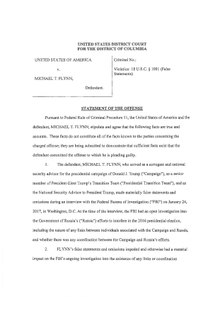
Mr. Watts,
Compassion in the North Korean Event to summit a Mountain?
1. Does the American at-large that belongs to the N.R.A. have any responsibility to the comparison?
2. Did the events of the N.R.A. effect the North Korean leadership?
3. How would the N.R.A. daily happenings effect the North Korean denuclearization?
4. By example: "Do the spree-shootings in the United States effect international decisions (i.e. N. Korea)?
5. How is this Presidency lead when 'Talks' have been made more than evident?
6. Why did the President of 2018 in the United States not immediately board Air Force One for N. Korea?
7. By the approximate 50 Year term with North Korea how has the television broadcasting effected "talks"?
8. Did this Presidency of 2018 fall to task by jerking the Americans attention from the Middle East to quickly?
9. Did the Election Campaign producing this Presidency of 2018 effect North Korea?
10. Currently does the President effect poorly the North Korean "Talks" by firing and threatening to fire the F.B.I. leadership?
a. James Comey https://en.wikipedia.org/wiki/James_Comey
b. Robert Mueller https://en.wikipedia.org/wiki/Robert_Mueller
11. Does this Presidency of 2018 effect the "Talks" with North Korea by firing our Generals?
a. General Michael Flynn
b. General H.R. McMaster
c. General John F. Kelly
12. Was the event horizon United States Marine Corps Lieutenant Colonel Oliver North?
13. Probability factor?
a. Can this Presidency 2018 fire the Agency in whole?
b. Can this Presidency 2018 fire the Armed Forces in whole?
c. Does that in-turn fire every Sheriff, Police and National Guard department, Stations and National Guardsmen?
Sincerely yours,
Karen Placek
4/29/1965
Michael Flynn
From Wikipedia, the free encyclopedia
Michael Thomas Flynn (born December 1958) is a retired
United States Army Lieutenant General who served in the U.S. Army for 33 years, from 1981 until 2014. In January 2017 he briefly served as
National Security Advisor to
U.S. President Donald Trump. In December 2017 he pleaded guilty to one count of lying to the
FBI (a
felony) about contacts he had with the Russian government during
Trump's presidential transition.
Flynn's military career included a key role in shaping U.S.
counterterrorism strategy and dismantling insurgent networks in
Afghanistan and Iraq, and he was given numerous
combat arms, conventional, and
special operations senior intelligence assignments.
[1][2][3] He was appointed by President
Barack Obama as the eighteenth
director of the Defense Intelligence Agency, serving from July 2012 until his forced retirement from the military in August 2014.
[4][5][6] The New York Times
reported on May 18, 2018 that a longtime FBI/CIA informant had met
Flynn at an intelligence seminar in Britain six months earlier and
became alarmed by Flynn's closeness to a Russian woman there; this
concern prompted another individual to alert American authorities that
Flynn may have been compromised by Russian intelligence.
[7]
After leaving the military, he established Flynn Intel Group, which
has provided intelligence services for businesses and governments,
including ones in Turkey.
[8][9]
Flynn briefly served as the
National Security Advisor for President
Donald Trump, from January 20 to February 13, 2017.
[10] He resigned after information surfaced that he had misled Vice President
Mike Pence about the nature and content of his communications with the Russian ambassador to the U.S.,
Sergey Kislyak.
[11][12] Flynn's tenure of just 24 days was the shortest in the office's history.
[13][14]
On April 27, 2017, the Pentagon inspector general announced an
investigation into whether Flynn had accepted money from foreign
governments without the required approval.
[15] Flynn initially refused to hand over
subpoenaed documents to the
Senate Intelligence Committee, pleading the
Fifth Amendment against self-incrimination, but a compromise with the committee was worked out.
[16][17] On December 1, 2017, Flynn appeared in federal court to formalize a deal with Special Counsel
Robert Mueller to plead guilty to a single felony count of "willfully and knowingly"
making "false, fictitious and fraudulent statements" to the FBI.
[18] He confirmed his intention to cooperate with the
Special Counsel's investigation.
Early life
Michael Thomas Flynn was born and raised in
Middletown, Rhode Island,
[2] as one of nine children
[19] to Helen Frances (Andrews), who worked in real estate, and Charles Francis Flynn, a small-town banker.
[20][21][22][23] Both of his parents are of Irish descent.
[24]
Michael Flynn graduated from the
University of Rhode Island with a
Bachelor of Science degree in
management science in 1981 and was a Distinguished Military Graduate of the
Reserve Officers' Training Corps. He also earned a
Master of Business Administration in
Telecommunications from
Golden Gate University, a Master of Military Art and Science from the
United States Army Command and General Staff College, and a
Master of Arts in National Security and Strategic Studies from the
Naval War College.
[6]
Flynn is a graduate of the Military Intelligence Officer Basic Course,
Ranger School, Military Intelligence Officer Advanced Course,
Army Command and General Staff College, the
School of Advanced Military Studies, and
Naval War College.
[6]
Military career
U.S. Army
Flynn was commissioned in the U.S. Army as a second lieutenant in military intelligence in 1981.
[6] His military assignments included multiple tours at
Fort Bragg, North Carolina, with the
82nd Airborne Division,
XVIII Airborne Corps, and Joint Special Operations Command, where he deployed for the
invasion of Grenada and
Operation Uphold Democracy in
Haiti.
[25] He also served with the
25th Infantry Division at
Schofield Barracks,
Hawaii, at the
Joint Readiness Training Center at Fort Polk,
Louisiana, and the
Army Intelligence Center at
Fort Huachuca,
Arizona.
[6]
Flynn served as the assistant chief of staff,
G2, XVIII Airborne Corps at Fort Bragg, North Carolina, from June 2001 and the director of intelligence at the
Joint Task Force 180 in Afghanistan until July 2002. He commanded the
111th Military Intelligence Brigade from June 2002 to June 2004
[6] and was the director of intelligence for
Joint Special Operations Command from July 2004 to June 2007, with service in
Afghanistan (
Operation Enduring Freedom) and the
Iraq War (Operation Iraqi Freedom). He served as the director of intelligence of the
United States Central Command
from June 2007 to July 2008, as the director of intelligence of the
Joint Staff from July 2008 to June 2009, then the director of
intelligence of the
International Security Assistance Force in Afghanistan from June 2009 to October 2010.
[6][26]
Defense Intelligence Agency
Flynn speaks during the change of directorship for the Defense
Intelligence Agency on Joint Base Anacostia-Bolling in Washington, D.C.
In September 2011, Flynn was promoted to Lieutenant General and assigned as
assistant director of national intelligence in the
Office of the Director of National Intelligence. On April 17, 2012, President
Barack Obama nominated Flynn to be the 18th
director of the Defense Intelligence Agency.
[27][28] Flynn took command of the DIA in July 2012.
[29] He simultaneously became commander of the
Joint Functional Component Command for Intelligence, Surveillance and Reconnaissance, and chair of the
Military Intelligence Board.
In October 2012, Flynn announced plans to release his paper
"VISION2020: Accelerating Change Through Integration", a look at changes
he believes are necessary for the DIA in the future.
[30][31]
Retirement from the military
On April 30, 2014, Flynn announced his retirement effective later
that year, about a year earlier than he had been scheduled to leave his
position. He was reportedly effectively forced out of the DIA after
clashing with superiors over his allegedly chaotic management style and
vision for the agency.
[32][33][34][35] In a private e-mail that was leaked online,
Colin Powell said that he had heard in the DIA (apparently from later DIA director
Vincent R. Stewart) that Flynn was fired because he was "abusive with staff, didn't listen, worked against policy, bad management, etc."
[34] According to
The New York Times,
Flynn exhibited a loose relationship with facts, leading his
subordinates to refer to Flynn's repeated dubious assertions as "Flynn
facts".
[36]
According to what Flynn had stated in one final interview as DIA
director, he felt like a lone voice in thinking that the United States
was less safe from the threat of
Islamic terrorism in 2014 than it was prior to the
9/11 attacks; he went on to believe that he was pressed into retirement for questioning the Obama administration's public narrative that
Al Qaeda was close to defeat.
[37] Journalist
Seymour Hersh
wrote that "Flynn confirmed [to Hersh] that his agency had sent a
constant stream of classified warnings ... about the dire consequences
of toppling [Syrian President]
Assad."
Flynn recounted that his agency was producing intelligence reports
indicating that radical Islamists were the main force in the Syrian
insurgency and "that Turkey was looking the other way when it came to
the growth of the
Islamic State
inside Syria". According to Flynn, these reports "got enormous pushback
from the Obama administration," who he felt "did not want to hear the
truth". According to former DIA official
W. Patrick Lang:
"Flynn incurred the wrath of the White House by insisting on telling
the truth about Syria ... they shoved him out. He wouldn't shut up."
[38]
In an interview with Al Jazeera, Flynn criticized the Obama
administration for its delay in supporting the opposition in Syria,
thereby allowing for the growth of
Al-Nusra
and other extremist forces: "when you don't get in and help somebody,
they're gonna find other means to achieve their goals" and that "we
should have done more earlier on in this effort, you know, than we did."
[39]
Flynn retired from the U.S. Army with 33 years of service on August 7, 2014.
[40]
Post-retirement
Consulting firm
Flynn, with his son Michael G. Flynn, ran the
Flynn Intel Group Inc, which provided intelligence services for businesses and governments before closing in 2016.
[41][8] The company was founded in the fall of 2014, and restarted in June 2015 as a
Delaware company.
[41]
Flynn was paid over $65,000 by companies connected to Russia in 2015, including $11,250 from both
Volga-Dnepr Airlines and the U.S. subsidiary of
Kaspersky Lab.
[41][42] Other clients included
Palo Alto Networks,
Francisco Partners, Brainwave Science and
Adobe Systems.
[41]
While working as a consultant Flynn served on the board of several
organizations, including GreenZone Systems, Patriot Capital, Brainwave,
Drone Aviation and OSY Technologies.
[43][41][44] Subsidiaries of the Flynn Intel Group included FIG Cyber Inc, headed by Timothy Newberry, and FIG Aviation.
[43][45]
Foreign agent
In July 2016, Flynn spoke at a meeting of
ACT! for America at a point when the
2016 Turkish coup d'état attempt against
Turkish President
Recep Tayyip Erdoğan
was still underway. He spoke favorably of the coup participants, saying
that Erdoğan had been moving Turkey away from secularism and towards
Islamism, and that participants in the coup wanted Turkey to be and to
be seen as a secular nation—a goal "worth clapping for."
[46]
By the end of September 2016, Flynn's consulting company was hired by
Inovo BV, a company owned by Kamil Ekim Alptekin, the Chair of the
Turkish-American Business Council, which is an arm of the Foreign
Economic Relations Board of Turkey (DEIK).
[47][48][49][50][51]
On November 8 (election day in the United States), an op-ed written by Flynn was published by
The Hill, calling for U.S. backing for Erdoğan's government and criticizing the regime's opponent,
Fethullah Gülen, alleging that Gülen headed a "vast global network" that fitted "the description of a dangerous sleeper terror network".
[52][53][54]
At the time, Flynn did not disclose that his consulting firm had
received funds from a company with ties to the Turkish government.
[55] After Flynn's ties had been disclosed by
The Daily Caller,
Politico, and others, the editor of
The Hill
added a note to Flynn's op-ed, stating that Flynn had failed to
disclose that he had been engaged at the time in "consulting work that
might have aided the government of Turkey," that his firm had received
payments from a company with close ties to the Turkish government, or
that the company had reviewed the draft of the op-ed before it was
submitted to
The Hill.
[52]
On March 8, 2017, Flynn registered with the
Justice Department as a
foreign agent for $530,000 worth of lobbying work before election day.
[56] This work was done on behalf of a Dutch-based company that may have been working for the Turkish government.
[56]
On March 24, 2017, former
Director of the CIA James Woolsey
said that in September 2016 Flynn, while working for the Trump
presidential campaign, had attended a meeting in a New York hotel with
Turkish officials including foreign minister Mevlut Cavusoglu and energy
minister Berat Albayrak, son-in-law of Turkey's President Recep Tayyip
Erdogan, and had discussed abducting
Fethullah Gülen and sending him to Turkey, bypassing the U.S. extradition legal process.
[57]
Flynn sat in on classified national security briefings with
then-candidate Trump at the same time that Flynn was working for foreign
clients, which raises ethical concerns and conflicts of interest.
[58][59]
Flynn was paid at least $5,000 to serve as a consultant to a
U.S.-Russian project to build 40 nuclear reactors across the Middle
East, which Flynn's failure to disclose was flagged by Representatives
Elijah Cummings and
Eliot Engel as a possible violation of federal law.
[60][61]
Attendance at RT gala dinner
On December 10, 2015, Flynn attended a gala dinner in
Moscow in honor of
RT
(formerly "Russia Today"), a Russian government-owned English-language
media outlet, on which he made semi-regular appearances as an analyst
after he retired from U.S. government service.
[62]
Flynn sat next to Russian President
Vladimir Putin at the dinner, leading journalist
Michael Crowley of
Politico
to report that "at a moment of semi-hostility between the U.S. and
Russia, the presence of such an important figure at Putin's table
startled" U.S. officials.
[63][64][42] As part of the festivities, Flynn gave a talk on world affairs for which he was paid at least $45,000.
[62] Flynn defended the RT payment in an interview with
Michael Isikoff.
[64]
On February 1, 2017, the
ranking Democratic members on six House committees sent a letter to Secretary of Defense
James Mattis, requesting a
Department of Defense investigation into Flynn's connection to RT.
[65] The legislators expressed concern that Flynn had violated the
Foreign Emoluments Clause of the
U.S. Constitution by accepting money from RT.
[65]
A 2017 report by the
United States Intelligence Community characterized RT as "The Kremlin’s principal international propaganda outlet" and said that
RT America is set up as an autonomous nonprofit organization "to avoid the
Foreign Agents Registration Act".
[66][67]
As a retired military intelligence officer, Flynn was required to
obtain prior permission from the Defense Department and the State
Department before receiving any money from foreign governments. Flynn
apparently did not seek that approval before the RT speech, and he did
not report the payment when he applied for renewal of his security
clearance two months later.
[62] Glenn A. Fine, the acting
Defense Department Inspector General, has confirmed he is investigating Flynn.
[42]
2016 U.S. presidential election
Flynn at a campaign rally for then-Republican Presidential nominee Donald Trump, in October 2016
Having already been consulted regarding national security by Fiorina as well as other candidates, including
Scott Walker,
Ben Carson,
Ted Cruz, and
Donald Trump,
[68] Flynn was asked in February 2016 to serve as an adviser to the
Trump campaign.
[69]
In July 2016, it was reported he was being considered as Trump's
running mate; Flynn later confirmed that he had submitted
vetting documents to the campaign and, although a registered Democrat, was willing to accept the
Republican vice-presidential nomination if chosen.
[70][71] However, Trump instead selected
Indiana Governor Mike Pence.
As one of the keynote speakers during the first night of the
2016 Republican National Convention, Flynn gave what the
Los Angeles Times
described as a "fiery" speech, in which he stated: "We are tired of
Obama's empty speeches and his misguided rhetoric. This, this has caused
the world to have no respect for America's word, nor does it fear our
might";
[72] he accused Obama of choosing to conceal the actions of
Osama bin Laden and the
Islamic State of Iraq and the Levant.
[73] Flynn went on to criticize
political correctness
and joined the crowd in a chant of "U-S-A! U-S-A!". During the chants
he told those in the audience, "Get fired up! This is about our
country."
[72][74]
During the speech, Flynn launched a blistering attack on Democratic nominee
Hillary Clinton.
He led the crowd in chants of "Lock her up!"; during one of those
chants, he encouraged the crowd to keep it up, saying, "Damn right!
Exactly right! There is nothing wrong with that!"
[37] He called for Clinton to withdraw from the race, saying that "if I did a tenth of what she did, I'd be in jail today."
[75][76] He repeated in subsequent interviews that she should be "locked up".
[68] While campaigning for Trump, Flynn also referred to Clinton as the "enemy camp".
[75] Six days after the speech, Flynn stirred up a controversy by retweeting
anti-Semitic remarks, which he later apologized for and claimed were unintentional.
[77] During the election campaign, Flynn used Twitter to post links to negative stories about Clinton, like the
Pizzagate conspiracy theory.
[78]
Flynn was once opposed to
waterboarding and other extreme interrogation techniques that have now been banned; however, according to an August 2016
Washington Post
article, he said at one point, in the context of Trump's apparent
openness to reinstating such techniques, that "he would be reluctant to
take options off the table."
[75] In May 2016, Flynn was asked by an
Al Jazeera reporter if he would support Trump's stated plan to "take out [the] families"
[79][80] of people suspected of being involved in
terrorism. In response, Flynn stated, "I would have to see the circumstances of that situation."
[75] In an interview with
Al Jazeera,
Flynn criticized the U.S. reliance on drones as a "failed strategy",
stating that "what we have is this continued investment in conflict. The
more weapons we give, the more bombs we drop, that just ... fuels the
conflict."
[81][39]
National Security Advisor
On November 10, 2016, President Obama warned President-elect Trump against hiring Flynn.
[82] During their meeting in the
Oval Office
two days after the election, Obama expressed "profound concerns" about
hiring Flynn to a sensitive, high-level national security post.
[83]
On November 18, 2016, Flynn accepted Trump's offer for the position of
National Security Advisor.
[84] Prior to his appointment, media sources including the
Washington Post and
Associated Press had already criticized his close relations with Russia,
[85][86][63][64] and his promotion of anti-
Clinton conspiracy theories and
fake news during the
2016 presidential campaign.
[78][87]
In December 2016, Flynn met with
Heinz-Christian Strache, leader of the far-right
Freedom Party of Austria (FPA), at
Trump Tower in New York.
[88]
The meeting attracted attention because the FPA was founded by ex-Nazis
in the 1950s, and because Strache had recently signed a cooperation
agreement with Vladimir Putin's ruling
United Russia party. The Trump campaign refused to comment on the meeting.
[88]
On December 29, 2016, Flynn spoke with Russian ambassador
Sergey Kislyak, the same day the Obama administration announced
retaliatory measures in response to the
interference in the 2016 U.S. presidential campaign
by the Russian government. The phone conversation was reportedly viewed
by Obama advisers who had been briefed on its content by the F.B.I.
with suspicion as possibly a secret deal between the incoming team and
Moscow, which could have violated the dormant
Logan Act that bars unauthorized U.S. citizens from negotiating with foreign powers in disputes with the United States.
[89][90][91] The day after reporting by
David Ignatius, Trump's incoming press secretary,
Sean Spicer
said the conversation had occurred on December 28 and thus couldn't
have touched on the retaliation measures or Russia's response; Spicer
later had to correct himself on the date of the conversation.
[92]
On January 4, 2017, Flynn informed
Don McGahn, soon to become the
White House Counsel, that he was under investigation over his work for Turkey.
[93] Ten days before the
inauguration of Donald Trump, Flynn told then-National Security Advisor
Susan Rice not to proceed with a planned
invasion of Raqqa using Kurdish
People's Protection Units.
[94]
Flynn's decision would delay the campaign, which had taken seven months
to plan, several more months, but was consistent with Turkish
objections to working with Kurdish troops.
[95]
Acting Attorney General
Sally Yates, in May 8 testimony before the
Senate Judiciary Committee's
Subcommittee on Crime and Terrorism,
said the FBI interviewed Flynn, on January 24, 2017. Based on the
results of that interview, she made an "urgent" request to meet with
McGahn.
[96] She met with him on January 26 and again on January 27.
[97]
She informed McGahn that Flynn was "compromised" and possibly open to
blackmail by the Russians. Yates told McGahn that Flynn had misled Pence
and other administration officials about the nature of his conversation
with the Russian ambassador.
[98][85][99]
She added that Flynn's "underlying conduct", which she could not
describe due to classification, "was problematic in and of itself,"
saying "(i)t was a whole lot more than one White House official lying to
another."
[97][96] Former
United States Secretary of Defense Robert Gates
called the possibility of Flynn being blackmailed "kind of a stretch,"
while acknowledging that his false statement was "a problem ... that I
would tell the president about."
[100]
On January 22, 2017,
The Wall Street Journal reported that Flynn was under investigation by U.S. counterintelligence agents for his communications with Russian officials.
[101] On February 8, 2017, Flynn flatly denied having spoken to Kislyak in December 2016 about the
sanctions placed on Russia
by the Obama administration; however, the next day, U.S. intelligence
officials shared an account indicating that such discussions did in fact
take place.
[102]
Following this revelation, Flynn's spokesman released a statement that
Flynn "indicated that while he had no recollection of discussing
sanctions, he couldn't be certain that the topic never came up".
[103]
Dismissal and investigation
Michael T. Flynn resignation letter
On February 13, 2017, Flynn resigned as National Security Advisor,
following news reports about his communications with the Russian
ambassador,
Sergey Kislyak and additional reports that he had misled the Vice President about them.
[104] Flynn's 24-day tenure as National Security Advisor was the shortest in the 63-year history of the office.
[14] Those communications he had with the Russian ambassador were
unmasked and leaked to the press.
[105]
Commenting on Flynn′s resignation, on February 14 White House Press
Secretary Sean Spicer stated, "We got to a point not based on a legal
issue, but based on a trust issue, where a level of trust between the
President and General Flynn had eroded to the point where he felt he had
to make a change ... The issue here was that the President got to the
point where General Flynn’s relationship – misleading the Vice President
and others, or the possibility that he had forgotten critical details
of this important conversation had created a critical mass and an
unsustainable situation. That’s why the President decided to ask for his
resignation, and he got it."
[106]
That same day (February 14), President Trump met with FBI Director
James Comey
in the Oval Office and reportedly told him "I hope you can see your way
clear to letting this go, to letting Flynn go" adding "he's a good
guy."
[107]
Comey subsequently testified that, "I had understood the President to
be requesting that we drop any investigation of Flynn in connection with
false statements about his conversations with the Russian ambassador in
December ... I did not understand the president to be talking about the
broader investigation into Russia or possible links to his campaign".
[108]
The propriety, and even the legality, of these words that Trump
reportedly said to Comey about Flynn have become a subject of
considerable public debate.
[109] Several months after dismissing Flynn, Trump also
dismissed Comey, which Comey attributed to the FBI's Russia investigation.
[110]
Flynn had offered to testify to the FBI or the Senate and
House Intelligence committees relating to the Russia probe in exchange for immunity from criminal prosecution.
[111] However, the
Senate Intelligence Committee rejected Flynn's offer for testimony in exchange for immunity.
[112] Flynn initially declined to respond to a
subpoena from the Senate Intelligence Committee, invoking his
Fifth Amendment right against
self-incrimination, but he and the committee later struck a compromise.
[42][17] The
Pentagon inspector general is also investigating whether Flynn accepted money from foreign governments without the required approval.
[15]
On November 5, 2017,
NBC News reported that
Robert Mueller has enough evidence for charges against Flynn and his son; Michael G. Flynn.
[113] On November 10, the
Wall Street Journal reported that Flynn is under investigation by Mueller for allegedly planning a
kidnapping and
extrajudicial rendition of Turkish cleric
Fethullah Gülen to
Turkey.
[114][115] On November 22,
NBC News reported that Michael T. Flynn's business partner
Bijan Kian is a subject of the Mueller probe.
[116] NBC has also reported that a Turkish businessman named
Reza Zarrab,
who was picked up last year by US authorities in Miami on Iranian
sanctions violations and money laundering charges, is offering evidence
against the subject.
[117][118]
On November 23, 2017, it was reported that Flynn‘s lawyers have
notified Trump's legal team they can no longer discuss anything
regarding Mueller’s investigation, suggesting that Flynn may be
cooperating with prosecutors or negotiating a deal.
[119][120][121]
Plea bargain and statement of offense
Flynn statement of offense
On December 1, 2017, special counsel
Robert Mueller agreed to a
plea bargain where Flynn pleaded guilty to "willfully and knowingly"
making "false, fictitious and fraudulent statements"
to the FBI regarding conversations with Russia's ambassador.
Specifically, Flynn is accused of falsely claiming that he had not asked
Russia's ambassador to the United States
Sergey Kislyak
on December 29, 2016, "to refrain from escalating the situation in
response to sanctions that the United States had imposed against Russia
that same day."
[122] Flynn pleaded guilty the same day and acknowledged that he was cooperating with the investigation by Mueller.
[123] Flynn stated;
[124]
It has been extraordinarily painful to endure these many months of
false accusations of "treason" and other outrageous acts....Such false
accusations are contrary to everything I have ever done and stood for.
But I recognize that the actions I acknowledged in court today were
wrong, and, through my faith in God, I am working to set things right.
As part of Flynn's plea negotiations, his son, Michael G. Flynn, is not expected to be charged.
[125] As of January 31, 2018, Flynn had not been sentenced.
[126]
Bloomberg reporter
Eli Lake wrote in an
opinion piece on December 1, 2017, that two former Trump transition team officials provided information indicating that
Jared Kushner
was the senior member of the team described in Flynn's plea documents
as having directed Flynn to contact officials from foreign governments,
including Russia, asking them to delay or vote against a
United Nations resolution on the issue of
Israeli settlements, contrary to the still-incumbent Obama administration's position of support for the resolution.
[127][128] This was also confirmed by other news outlets, who cited multiple sources.
[129][130]
Political views
Flynn is a registered
Democrat, having grown up in a "very strong Democratic family".
[131] However, he was a keynote speaker during the first night of the
2016 Republican National Convention,
[72] and he was a surrogate and top national security adviser for President
Donald Trump.
During a July 10, 2016, interview on ABC News'
This Week, when asked by host
Martha Raddatz about the
issue of abortion, Flynn stated, "women have to be able to choose."
[131][132] The next day, Flynn said on
Fox News that he is a "
pro-life Democrat".
[133]
Flynn has been a board member of
ACT! for America,
[134] and sees the Muslim faith as one of the root causes of Islamist terrorism.
[36] He has described Islam as a
political ideology and a
cancer.
[36][135] He once tweeted that "fear of Muslims is RATIONAL"
[134] and included a video link claiming that Islam wants "80% of people enslaved or exterminated".
[136]
Initially supportive of Trump's proposal to ban Muslims from entering
the US, Flynn later told Al Jazeera that a blanket ban was unworkable
and has called instead for "vetting" of entrants from countries like
Syria.
[134] Flynn has stated the U.S. "should extradite
Fethullah Gülen" to
Turkey and "work constructively with Russia" in Syria.
[38][137] In 2016, he said that he had personally seen photos of signs in the Southwest border area that were in
Arabic to help Muslims entering the United States illegally. An officer of the
National Border Patrol Council responded that the organization was not aware of any such signs.
[138]
Writings
Flynn co-authored a report in January 2010 through the
Center for a New American Security, entitled
Fixing Intel: A Blueprint for Making Intelligence Relevant in Afghanistan.
[139] That report, which became influential,
[140]
argued that U.S. intelligence agencies "must open their doors to anyone
who is willing to exchange information, including Afghans and NGOs
(non-governmental organizations) as well as the US military and its
allies".
[141]
Flynn is also an author of
The Field of Fight: How We Can Win the Global War Against Radical Islam and Its Allies, co-authored with
Michael Ledeen, which was published by
St. Martin's Press in 2016.
[142] In reviewing the book,
Will McCants of the
Brookings Institution described Flynn's worldview as a confused combination of
neoconservatism (an insistence on destroying what he sees as an alliance of tyranny, dictatorships, and radical Islamist regimes) and
realism (support for working with "friendly tyrants"), although he acknowledged that this could be due to the book having two authors.
[143]
Awards and decorations
Lieutenant General Flynn's decorations, medals and badges include:
[6][144]
Other awards and recognitions
H. R. McMaster
From Wikipedia, the free encyclopedia
| H. R. McMaster |
 |
|
| 26th United States National Security Advisor |
In office
February 20, 2017 – April 9, 2018 |
| President |
Donald Trump |
| Deputy |
K. T. McFarland
Dina Powell
Ricky Waddell |
| Preceded by |
Michael Flynn |
| Succeeded by |
John R. Bolton |
| Personal details |
| Born |
Herbert Raymond McMaster
July 24, 1962 (age 55)
Philadelphia, Pennsylvania, U.S. |
| Spouse(s) |
Kathleen Trotter (m. 1985) |
| Children |
3 daughters[1] |
| Education |
United States Military Academy (BS)
University of North Carolina, Chapel Hill (MA, PhD) |
| Military service |
| Nickname(s) |
"The Iconoclast General" |
| Allegiance |
 United States United States |
| Service/branch |
 United States Army United States Army |
| Years of service |
1984–present |
| Rank |
 Lieutenant general Lieutenant general |
| Commands |
Eagle Troop, 2nd Armored Cavalry Regiment
1st Squadron, 4th Cavalry Regiment
3rd Armored Cavalry Regiment
Concept Development and Experimentation Directorate, Army Capabilities Integration Center
Joint Anti-Corruption Task Force (Shafafiyat), International Security Assistance Force
Maneuver Center of Excellence
Army Capabilities Integration Center |
| Battles/wars |
Persian Gulf War
Battle of 73 Easting
Global War on Terrorism
Iraq War
War in Afghanistan |
| Awards |
Army Distinguished Service Medal
Silver Star
Defense Superior Service Medal
Legion of Merit (2)
Bronze Star (2)
Purple Heart
Defense Meritorious Service Medal (2)
Army Meritorious Service Medal (5)
Joint Service Commendation Medal
Army Commendation Medal (4)
Army Achievement Medal (4) |
Herbert Raymond McMaster (born July 24, 1962) is a
United States Army officer. In 2017, he became the 26th
National Security Advisor, serving under President
Donald Trump. He is also known for his roles in the
Gulf War,
Operation Enduring Freedom, and
Operation Iraqi Freedom.
Born in
Philadelphia, McMaster graduated from the
United States Military Academy in 1984, and later earned a
Ph.D. in
American history from the
University of North Carolina at Chapel Hill. His Ph.D.
thesis was critical of American strategy and military leadership during the
Vietnam War and served as the basis for his book,
Dereliction of Duty, which is widely read in the United States military.
During the Gulf War, McMaster served as a
captain in the
2nd Cavalry Regiment, taking part in the
Battle of 73 Easting.
After the Persian Gulf War, McMaster served as a
military history professor at the United States Military Academy from 1994 to 1996, became a research fellow at the
Hoover Institution, a member of the
Council on Foreign Relations and a Consulting Senior Fellow at the
International Institute for Strategic Studies (IISS).
[2] He held a series of staff positions in the
United States Central Command. In 2004, he took command of the
3rd Cavalry Regiment and fought the
Iraqi insurgency in
Tal Afar. He became a top
counter-insurgency adviser to General
David Petraeus before serving as the Director of the
Army Capabilities Integration Center. He also served as the Deputy to the Commander for Planning of the
International Security Assistance Force in
Afghanistan and, in 2012, he became Deputy Commanding General of the
Army Training and Doctrine Command.
In February 2017, McMaster succeeded
Michael Flynn as National Security Advisor. He remains on active duty as a
lieutenant general in the United States Army until later in 2018, when he plans to retire.
[3] McMaster resigned as National Security Advisor on March 22, 2018, effective April 9.
[4][5][6]
Early life
McMaster was born in Philadelphia on July 24, 1962.
[7] His father, Herbert McMaster, was an infantryman who served with the
United States Army in the
Korean War while his mother, Marie C. "Mimi" McMaster (née Curcio),
[8] was a school teacher and administrator.
[9] He has a younger sister, Letitia.
[9] He went to grammar school at Norwood Fontbonne Academy, graduating in 1976; high school at
Valley Forge Military Academy, graduating in 1980. He earned a commission as a second lieutenant upon graduating from the
United States Military Academy at West Point in 1984. McMaster earned a
Master of Arts and
Ph.D. in
American history from the
University of North Carolina at Chapel Hill (UNC). His
thesis was critical of American strategy in the
Vietnam War, which was further detailed in his 1997 book
Dereliction of Duty.
[10]
Author: Dereliction of Duty
Dereliction of Duty: Lyndon Johnson, Robert McNamara, The Joint Chiefs of Staff, and the Lies that Led to Vietnam is a book written by McMaster that explores the military's role in the policies of the
Vietnam War. The book was based on his Ph.D. dissertation at UNC.
[11] It harshly criticized high-ranking officers of that era, arguing that they inadequately challenged
Secretary of Defense Robert McNamara and
President Lyndon B. Johnson
on their Vietnam strategy. The book examines McNamara and Johnson's
staff alongside the Joint Chiefs of Staff and other high-ranking
military officers, and their failure to provide a successful plan of
action either to pacify a
Viet Cong insurgency or to decisively defeat the
North Vietnamese army.
McMaster also details why military actions intended to indicate
"resolve" or to "communicate" ultimately failed when trying to
accomplish sparsely detailed, confusing, and conflicting military
objectives. The book is widely read in
Pentagon circles and included in military reading lists.
[12][13]
Military career
President
Donald Trump, Vice President
Mike Pence, and National Security Adviser Lt. Gen. H.R. McMaster have lunch with service members on July 18, 2017.
His first assignment after commissioning was to the
2nd Armored Division at
Fort Hood, where he served in a variety of
platoon and
company-level leadership assignments with
1st Battalion 66th Armor Regiment. In 1989, McMaster was assigned to the
2nd Armored Cavalry Regiment at
Warner Barracks in
Bamberg, Germany, where he served until 1992, including deployment to
Operation Desert Storm.
During the
Gulf War in 1991 he was a
captain commanding Eagle Troop of the 2nd Armored Cavalry Regiment at the
Battle of 73 Easting.
[14]
During that battle, though significantly outnumbered and encountering
the enemy by surprise as McMaster's lead tank crested a dip in the
terrain, the nine tanks of his
troop destroyed twenty-eight Iraqi
Republican Guard tanks
[15] without loss in twenty-three minutes.
[16]
McMaster was awarded the
Silver Star. The battle features in several books about
Operation Desert Storm and is widely referred to in US Army training exercises. It also receives coverage in
Tom Clancy's 1994 popular non-fiction book
Armored Cav.
[17]
McMaster served as a military history professor at West Point from 1994
to 1996, teaching among other things the battles in which he fought. He
graduated from the
United States Army Command and General Staff College in 1999.
[18]
From 1999 to 2002, McMaster commanded
1st Squadron, 4th Cavalry Regiment, and then took a series of staff positions at
U.S. Central Command (USCENTCOM), including planning and operations roles in Iraq.
In his next job, as
lieutenant colonel and later
colonel, McMaster worked on the staff of USCENTCOM as
executive officer to Deputy Commander
Lieutenant General John Abizaid. When Abizaid received
four-star rank and became Central Command's head, McMaster served as Director, Commander's Advisory Group (CAG), described as the command's
brain trust.
In 2003 McMaster completed an
Army War College research fellowship at
Stanford University's Hoover Institution.
In 2004, he was assigned to command the
3rd Armored Cavalry Regiment
(3rd ACR). Shortly after McMaster took command the regiment deployed
for its second tour in Iraq and was assigned the mission of securing the
city of
Tal Afar. That mission culminated in September with
Operation Restoring Rights and the defeat of the city's insurgent strongholds. President
George W. Bush praised this success, and the
PBS show
Frontline broadcast a documentary in February 2006 featuring interviews with McMaster. CBS'
60 Minutes produced a similar segment in July,
[19] and the operation was the subject of an article in the April 10, 2006, issue of
The New Yorker.
Author
Tim Harford has written that the pioneering tactics employed by 3rd ACR led to the first success in overcoming the
Iraqi insurgency. Prior to 2005, tactics included staying out of dangerous urban areas except on patrols, with US forces returning to their
bases
each night. These patrols had little success in turning back the
insurgency because local Iraqis who feared retaliation would very rarely
assist in identifying them to US forces. McMaster deployed his soldiers
into Tal Afar on a permanent basis, and once the local population grew
confident that they weren't going to withdraw nightly, the citizens
began providing information on the insurgents, enabling US forces to
target and defeat them.
[17][20] After hearing of McMaster's
counter-insurgency success in Tal Afar, Vice President
Dick Cheney
invited the then-colonel to personally brief him on the situation in
Iraq and give an assessment on what changes needed to be made to
American strategy.
[21]
McMaster passed command of the 3rd ACR on June 29, 2006, and joined the
International Institute for Strategic Studies
in London, as a Senior Research Associate tasked to "conduct research
to identify opportunities for improved multi-national cooperation and
political-military integration in the areas of counterinsurgency,
counter-terrorism, and state building", and to devise "better tactics to
battle terrorism."
[22]
From August 2007 to August 2008, McMaster was part of an "elite team of officers advising U.S. commander" General
David Petraeus
on counterinsurgency operations while Petraeus directed revision of the
Army's Counterinsurgency Field Manual during his command of the
Combined Arms Center.
[23] Petraeus and most of his team were stationed in
Fort Leavenworth at the time but McMaster collaborated remotely, according to senior team member
John Nagl.
[17][20]
McMaster as
BCT guest lecturer in September 2009
Based on his date of rank as a colonel, McMaster was considered for promotion to
brigadier general
by annual Department of the Army selection boards in 2006 and 2007 but
was not selected, despite his reputation as one of "the most celebrated
soldiers of the Iraq War."
[24][25][26][27]
Though the Army's rationale for whether a given officer is selected or
not selected is not made public, McMaster's initial non-selection
attracted considerable media attention.
[28][29][30] However, in late 2007,
Secretary of the Army Pete Geren requested General
David Petraeus
to return from Iraq to take charge of the promotion board as a way to
ensure that the best performers in combat received every consideration
for advancement, resulting in McMaster's selection along with other
Colonels who had been identified as innovative thinkers.
[17][31]
The demographics for this board's candidates showed that the
predominant Year Group of colonels selected for promotion was 1982,
[32] and McMaster was the second officer of his 1984 West Point class promoted to the general officer ranks.
[33]
McMaster as commander of the Maneuver Center of Excellence in 2012
In August 2008, McMaster assumed duties as Director, Concept
Development and Experimentation (later renamed Concept Development and
Learning), in the
Army Capabilities Integration Center (ARCIC) at
Fort Monroe,
Virginia, part of
U.S. Army Training and Doctrine Command.
In this position McMaster was involved in preparing doctrine to guide
the Army over the next ten to twenty years. He was promoted on June 29,
2009.
[34]
In July 2010 he was selected to be the J-5, Deputy to the Commander for
Planning, at ISAF (International Security Assistance Forces)
Headquarters in Kabul, Afghanistan.
McMaster was nominated for
major general on January 23, 2012, and selected to be the commander of the Army's Maneuver Center of Excellence at
Fort Benning.
[35] In February 2014,
Defense Secretary Chuck Hagel nominated McMaster for
lieutenant general
and in July 2014, McMaster pinned on his third star when he began his
duties as Deputy Commanding General of the U.S. Army Training and
Doctrine Command and Director of TRADOC's Army Capabilities Integration
Center.
[36]
Army Chief of Staff General
Martin Dempsey remarked in 2011 that McMaster was "probably our best Brigadier General."
[37] McMaster made
Time's
list of the 100 most influential people in the world in April 2014. He
was hailed as "the architect of the future U.S. Army" in the
accompanying piece written by retired Lt. Gen.
David Barno,
who commanded U.S. and allied forces in Afghanistan from 2003 to 2005.
"Major General Herbert Raymond McMaster might be the 21st century Army's
pre-eminent warrior-thinker," Barno wrote, commenting on McMaster's
"impressive command and unconventional exploits in the second Iraq war."
[38]
Barno also stated, "Recently tapped for his third star, H.R. is also
the rarest of soldiers—one who has repeatedly bucked the system and
survived to join its senior ranks."
[39] In 2014, retired Army Gen.
Jack Keane,
a former Army vice chief, commented "It is heartening to see the Army
reward such an extraordinary general officer who is a thought leader and
innovator while also demonstrating sheer brilliance as a wartime
brigade commander."
[40]
National Security Advisor
On February 20, 2017, U.S. President
Donald Trump named McMaster to serve as his
National Security Advisor following the resignation of
Michael T. Flynn on February 13.
[41][42] McMaster indicated that he "intends to remain on active duty while he serves as national security adviser."
[43][44]
Because McMaster intended to remain on active duty, his official
assumption of the National Security Advisor's duties and
responsibilities required a
United States Senate vote;
lieutenant generals and
generals require Senate confirmation of their rank and assignments.
[45]
On March 6, 2017, the Senate Armed Services Committee voted 23–2 to
recommend to the full Senate that McMaster be confirmed for
reappointment at his lieutenant general rank during his service as the
National Security Advisor.
[46]
The committee recommendation was referred to the Senate on March 7, and
the full Senate confirmed McMaster by a vote of 86–10 on March 15,
2017.
[47]
In early August, McMaster was targeted by what some deemed a "smear campaign" after he fired several
National Security Council staff members.
[48][49][50] White House officials and journalists suspected
Steve Bannon of leading these attacks.
[51][52] Attorney
Mike Cernovich, radio host
Alex Jones and
Breitbart News
were among the foremost promoters of the anti-McMaster campaign;
Cernovich's Web site for the campaign also included a cartoon depicting
McMaster, which the ADL labeled
antisemitic.
[53][54] In addition, the
Center for Security Policy criticized McMaster for not being sufficiently
conservative and for not supporting Trump's agenda.
[55][56][57]
The anti-McMaster campaign prompted dismissive responses by
administration officials, and a statement from Trump affirming his
confidence in McMaster.
[58][59]
In February 2018 McMaster said that it is now "incontrovertible"
Russia interfered in the 2016 presidential election. McMaster, who spoke
a day after a federal grand jury indicted more than a dozen Russians in
connection with the interference, was addressing an international
audience at the Munich Security Conference, including several Russian
officials.
[60]
On March 15, 2018, it was reported that President Trump had decided
to dismiss McMaster from his position at a later, unspecified date.
White House Press Secretary Sarah Huckabee Sanders denied the reports in a tweet, claiming nothing had changed at the
National Security Council.
[61]
On March 22, 2018,
[62]
McMaster resigned as National Security Advisor, after sustaining the
ire of conservatives for months and disagreeing with Trump on key
foreign policy strategies, including on the administration's approach
towards
Russia,
North Korea, and
Iran.
[63] He said in a statement that he plans to retire from the military sometime in the coming months.
[3] Trump announced
John Bolton, former
U.S. Ambassador to the United Nations, as McMaster's replacement.
[4]
McMaster's exit closely followed the departures of several other
high-ranking officials in the administration, including Trump's
long-time assistant and
communications director,
Hope Hicks,
national economic advisor Gary Cohn, and
Secretary of State Rex Tillerson. Notably, similarly to Tillerson's dismissal, Trump first announced McMaster's departure from the administration via a public
tweet.
[64][5][6]
Decorations and badges
John F. Kelly
From Wikipedia, the free encyclopedia
John Francis Kelly (born May 11, 1950) is a retired
United States Marine Corps general who is the current
White House Chief of Staff for President
Donald Trump, since July 31, 2017. He had previously served as
Secretary of Homeland Security in the same administration.
Before entering the Trump administration, Kelly had been the commander of
United States Southern Command, the
unified combatant command
responsible for American military operations in Central America, South
America, and the Caribbean. He had previously served as the commanding
general of the
Multi-National Force West in Iraq from February 2008 to February 2009, and as the commander of
Marine Forces Reserve and Marine Forces North in October 2009.
[2] Kelly succeeded General
Douglas M. Fraser as commander of U.S. Southern Command on November 19, 2012
[3] and was in turn succeeded by Navy Admiral
Kurt W. Tidd on January 14, 2016.
Kelly was appointed Secretary of Homeland Security on January 20,
2017, by President Trump. On July 28, 2017, he was appointed to replace
Reince Priebus
as White House Chief of Staff, taking office on July 31, 2017 shortly
after Priebus had officially left his post. At six months, Kelly's term
as Secretary of Homeland Security is the briefest in the office's
relatively short history.
As chief of staff, Kelly is considered to be one of the most restrictionist members of the administration on the issue of
immigration, along with Senior Advisor
Stephen Miller.
[4][5][6]
Early life and education
Kelly was born on May 11, 1950, in
Boston, Massachusetts, the son of Josephine "Honey" (Pedalino) and John F. Kelly. His family was Catholic, his father of
Irish ancestry and his mother of
Italian descent.
[7][8][9][10] His father was a
postal worker in
Brighton.
[11] He grew up in the
Brighton neighborhood of
Boston.
[10] Before he reached the age of 16, he
hitchhiked to
Washington state and rode the trains back, including a
freight-hop from Seattle to Chicago.
[10][12] He then served for one year in the
United States Merchant Marine, where he says "my first time overseas was taking 10,000 tons of beer to
Vietnam".
[12][13]
In 1970, when his mother told him that his draft number was coming up, he enlisted in the
U.S. Marine Corps.
[9][10][12] He served in an infantry company with the
2nd Marine Division at
Camp Lejeune, North Carolina, and was discharged to the inactive reserve as a sergeant in 1972 so that he could attend college.
[9][10][12] He returned to active duty with the Marines in 1975, completed
Officer Candidates School, and was commissioned as a second lieutenant on December 27, 1975.
[9][2] In 1976, he graduated from the
University of Massachusetts Boston and in 1984, he received a Master of Arts degree in
National Security Affairs from the
Georgetown School of Foreign Service.
[9][14] In 1995, Kelly graduated from the
National Defense University in Washington, DC with a Master of Science in Strategic Studies.
Military career
Kelly
returned to the Second Marine Division where he served as a rifle
platoon and weapons platoon commander, company executive officer,
assistant operations officer, and rifle company commander. Sea duty in
Mayport, Florida, followed, at which time he served aboard aircraft carriers
USS Forrestal (CV-59) and
USS Independence (CV-62). In 1980, then-Captain Kelly attended the U.S. Army's Infantry Officer Advanced Course at
Fort Benning, Georgia. After graduation, he was assigned to
Headquarters Marine Corps in
Washington, D.C.,
serving there from 1981 through 1984, as an assignment monitor. Kelly
returned to the Second Marine Division in 1984, to command a rifle
company and weapons company. Promoted to major in 1987, he then served
as a battalion operations officer.
[2]
Kelly's official U.S. Southern Command portrait
In 1987, Kelly transferred to
the Basic School in
Quantico,
Virginia, serving first as the head of the Offensive Tactics Section,
Tactics Group, and later assuming the duties of the Director of the
Infantry Officer Course. After three years of instructing young
officers, he attended the Marine Corps Command and Staff College, and
the School for Advanced Warfare, both located at Quantico.
[2]
Completing duty under instruction and selected for lieutenant colonel, he was assigned as commanding officer,
1st Light Armored Reconnaissance Battalion (1st LAR), 1st Marine Division,
Camp Pendleton,
California. During his tenure, 1st LAR was called in to provide
augmentation support for police in the city of Long Beach, California
during the
Los Angeles riots of 1992. Holding this command position for two years, Kelly returned to the East Coast in 1994, to attend the
National War College in Washington, D.C. He graduated in 1995 and was selected to serve as the
Commandant's
Liaison Officer to the
U.S. House of Representatives, Capitol Hill, where he was promoted to colonel.
[2]
Kelly testifying before the Senate Armed Services Committee
In 1999, Kelly transferred to joint duty and served as the special assistant to the
Supreme Allied Commander, Europe, in
Mons, Belgium.
He returned to the United States in 2001, and was assigned to a third
tour of duty at Camp Lejeune, now as the assistant chief of staff
G-3 with the Second Marine Division. In 2002, Kelly again served with the
1st Marine Division, this time as the assistant division commander. Much of Kelly's two-year assignment was spent deployed in Iraq.
[2] In March 2003, while in
Iraq,
Kelly was promoted to brigadier general, which was the first known
promotion of a Marine Corps colonel in an active combat zone since that
of another First Marine Division assistant division commander,
Chesty Puller, in January 1951.
[15]
In April 2003, Kelly took command of the newly formed
Task Force Tripoli and drove it north from
Baghdad into
Samarra and
Tikrit.
[16] Kelly has stated that during the initial assault on Baghdad he was asked by a reporter for
The Los Angeles Times
if, considering the size of the Iraqi Army and the vast supplies of
tanks, artillery and chemical weapons available to Saddam's forces, he
would ever consider defeat. Kelly's response, as recounted by him at a
2007 San Diego Military Advisory Council networking breakfast, was,
"hell these are Marines. Men like them held
Guadalcanal and took
Iwo Jima, Baghdad ain't shit." [sic]
[17]
Kelly briefing reporters at the Pentagon in Arlington, Virginia
His next assignment was as legislative assistant to the
Commandant of the Marine Corps,
Michael Hagee. In January 2007, Kelly was nominated for major general,
[18][19] and confirmed by the U.S. Senate on September 11, 2007.
[20]
Kelly's next assignment, in July 2007, was as commanding general,
I Marine Expeditionary Force (Forward).
[21] On February 9, 2008 Kelly assumed command of the Multi-National Force–West in Iraq, replacing Major General
Walter E. Gaskin.
[22] After a year in Iraq, Kelly returned to the United States in February 2009.
[23]
Kelly was nominated for lieutenant general on March 9, 2011, and confirmed by the U.S. Senate on March 16, 2011.
[24]
Kelly was the senior military assistant to the
Secretary of Defense
and personally greeted Secretary Leon Panetta at the entrance to the
Pentagon on July 1, 2011, Panetta's first day as secretary.
[25] Kelly was nominated for General on January 31, 2012, and confirmed by the U.S. Senate on July 26, 2012.
[26] He succeeded General
Douglas M. Fraser as commander of U.S. Southern Command on November 19, 2012.
[3][27]
In a 2014 speech regarding the
War on Terror, Kelly said:
If you think this war against our way of life is over because some of
the self-appointed opinion-makers and chattering class grow 'war
weary,' because they want to be out of Iraq or Afghanistan, you are
mistaken. This enemy is dedicated to our destruction. He will fight us
for generations, and the conflict will move through various phases as it
has since 9/11.[28]
Kelly was succeeded as commander by Navy Admiral
Kurt W. Tidd on January 14, 2016.
Secretary of Homeland Security
Kelly is ceremonially sworn in prior to President Trump's speech at DHS
Headquarters on January 25, 2017. Kelly was actually sworn in five days
prior.
On December 7, 2016, then
President-elect Donald Trump nominated Kelly to head the
Department of Homeland Security (DHS), a
cabinet-level position.
[29] People familiar with the transition said that Trump's team was drawn to Kelly because of his southwest border expertise.
[30] On January 20, 2017, Kelly was confirmed as Secretary of Homeland Security by the United States Senate with a vote of 88–11.
[31] On that evening, he was sworn in by
Vice President Mike Pence.
[32]
In an April 2017 speech at
George Washington University,
Kelly said, "If lawmakers do not like the laws they've passed and we
are charged to enforce, then they should have the courage and skill to
change the laws. Otherwise they should shut up and support the men and
women on the front lines."
[33]
Kelly indicated days into the administration his interest in having the U.S.–Mexico border wall completed within two years.
[34] On April 21, 2017, Kelly said the U.S.–Mexico border wall would begin construction "by the end of the summer."
[35]
Two days later, Kelly said he believed "a border wall is essential" as
there were "tremendous threats" such as drugs and individuals coming
into the US.
[36]
On May 2, Kelly stated his surprise in office holders "rejoicing in the
fact that the wall will be slower to be built and, consequently, the
southwest border under less control than it could be."
[37]
In May 2017, Kelly said of terrorism, "It's everywhere. It's
constant. It's nonstop. The good news for us in America is we have
amazing people protecting us every day. But it can happen here almost
anytime."
[38] He said that the threat from terrorism was so severe that some people would "never leave the house" if they knew the truth.
[38] In July, Kelly allegedly blocked Milwaukee County Sheriff
David Clarke from taking a position in the DHS, though it was never confirmed.
[39]
Assessment of tenure
Of his tenure as Secretary of Homeland Security,
USA Today
wrote, "Kelly oversaw some of the most controversial policies of
Trump's agenda, including a travel ban targeting several majority-Muslim
countries, a reduction in refugee admissions and stepped-up
deportations of undocumented immigrants."
[40] According to the
New Yorker, Kelly left the D.H.S. with a
reputation as one of the most aggressive enforcers of immigration law
in recent American history. His record belies the short length of his
tenure. In six months, Kelly eliminated guidelines that governed federal
immigration agents' work; vastly expanded the categories of immigrants
being targeted for deportation; threatened to abandon the Obama-era
program that grants legal status to undocumented immigrants who were
brought to the U.S. as children; and has even broached the idea of
splitting up mothers and children at the border to "deter" people from
coming to the U.S.[41]
The D.H.S. under Kelly "became one of the few branches of the federal
government that has been both willing and able to execute Trump's
policy priorities."
[41] Unlike other agency heads, Kelly did not clash with Trump.
[40]
White House Chief of Staff
Trump appointed Kelly to the post of
White House Chief of Staff on July 28, 2017, replacing
Reince Priebus.
[42] Priebus's ousting and Kelly's appointment followed a chaotic internal power struggle within the White House.
[42] Kelly took office on July 31, 2017.
[43] That same day, with Trump's approval, Kelly removed
Anthony Scaramucci
from his role as communications director, just ten days after
Scaramucci was appointed to that role. Reportedly, Kelly had requested
permission to remove Scaramucci after "Scaramucci had boasted about
reporting directly to the president, not the chief of staff."
[44] On August 18, 2017, Kelly removed
Steve Bannon from his role as White House Chief Strategist, on behalf of President Trump.
[45]
Early into his tenure, media outlets such as
The New York Times,
The Washington Post and FiveThirtyEight speculated that Kelly would bring moderation and discipline to the White House.
[46][47][48] In August 2017, early into Kelly's tenure, the
Washington Post
wrote that Kelly had "left no discernible imprint on the White House's
philosophy" and that it was unclear if he would bring calm and rigor to
the White House.
[49] In a lengthy article on Kelly's tenure, the
New York Times
in October 2017 wrote that "for all of the talk of Mr. Kelly as a
moderating force and the so-called grown-up in the room, it turns out
that he harbors strong feelings on patriotism, national security and
immigration that mirror the hard-line views of his outspoken boss."
[50]
By February 2018, Kelly had emerged as a hardliner on several issues
(immigration, in particular) and been embroiled in a number of
controversies,
[46][51] and there were reports of pressure on Kelly to resign.
[52]
According to several news outlets in early 2018, Kelly's influence in
the White House had been diminished and Trump made several key
decisions without his presence.
[53][54][55]
Controversies
In October 2017, Congresswoman
Frederica Wilson
(D-FL) criticized Trump for his phone call to the widow of a slain U.S.
soldier, saying his remarks had been insensitive. Wilson had been in
the widow's car when Mr. Trump had called her.
[56]
A few days later, Kelly held a press briefing where he defended Trump's
phone call, which he had overheard, saying Trump "expressed his
condolences in the best way that he could." Kelly harshly criticized
Wilson, calling her "the empty barrel that makes the most noise" and
stating that in a 2015 speech Wilson had "stood up" to inappropriately
claim credit for securing federal funding for an FBI building in her
district.
[57][58] Video of her 2015 speech showed his description to be inaccurate.
[59] Later that month, while in an interview with conservative commentator
Laura Ingraham,
Kelly said he stood by his comments on Wilson and would "never"
apologize for his comments. Kelly said he would "talk about before her
comments and at the reception afterwards" as a "package deal", but
refused to elaborate further.
[60][61]
In the same October 2017 interview with Laura Ingraham, Kelly said that "the lack of ability to compromise led to the
Civil War." He also described
Robert E. Lee
as an "honorable man" who "gave up ... his country to fight for his
state," and claimed, "men and women of good faith on both sides made
their stand where their conscience had to make their stand."
[62] Several historians of the Civil War described Kelly's remarks as ignorant, and as a misuse of history reminiscent of
Lost Cause
mythology. They also broadly reject Kelly's remark that a failure to
compromise led to the Civil War, noting that the war was fought over
slavery and that a number of compromises on slavery were made in the
lead-up to the war.
[63] The White House defended Kelly's remarks, citing
non-fiction writer and historian
Shelby Foote.
[64]
On February 6, 2018, Kelly made recorded remarks concerning a discrepancy between how many had enrolled in
DACA
(Deferred Action for Childhood Arrivals) and how many were to be
offered a path to citizenship, by saying "The difference between 690
[thousand] and 1.8 million were the people that some would say were too
afraid to sign up; others would say are too lazy to get off their asses,
but they didn't sign up".
[65]
On February 7, 2018, White House staff secretary
Rob Porter
resigned in the wake of reports that his two ex-wives accused him of
domestic abuse, allegations that Porter said are false and "a
coordinated smear campaign".
[66] One ex-wife had a protective order from 2010 against Porter, and the other had photographic evidence of the alleged abuse.
[66]
The protective order had prevented Porter from obtaining a full
security clearance, though the order's associated ex-wife said Porter's
"integrity and ability to do his job is impeccable".
[66]
According to an unnamed senior administration official, Kelly was aware
of the protective order and the domestic abuse allegations, and had
promoted Porter within the White House.
[66][67]
Approached by media about the allegations, Kelly initially praised
Porter, saying he was a "man of true integrity and honor, and I can't
say enough good things about him. He is a friend, a confidante and a
trusted professional. I am proud to serve alongside him."
[66]
Per an unnamed White House official, Porter resigned over the
objections of Kelly, who had worked closely with Porter since becoming
White House Chief of Staff.
[68]
In a February 8 email to White House staff, Kelly wrote, "While we
are all processing the shocking and troubling allegations made against a
former White House staffer, I want you to know that we all take matters
of domestic violence very seriously. Domestic violence is abhorrent and
has no place in our society".
[69] On February 9, 2018,
The Washington Post
reported that Kelly had instructed senior staff and aides to tell
reporters that Kelly took immediate action to fire Porter upon hearing
that domestic abuse allegations were credible; the
Post noted
this "version of events contradicts both the public record and accounts
from numerous other White House officials in recent days as the Porter
drama unfolded."
[70]
Kelly told reporters on March 2, 2018 that he sought Porter's
resignation immediately after learning of the accusations on February 6
and regretted his handling of Porter's departure.
[71]
Personal life
Kelly has been married to Karen Hernest since 1976. They raised three children together: Robert, John Jr., and Kathleen.
[72]
On November 9, 2010, Kelly's 29-year-old son, First Lieutenant Robert Michael Kelly,
[73] was killed in action when he stepped on a landmine while leading a platoon of Marines on a patrol in
Sangin,
Afghanistan.
The younger Kelly was a former enlisted Marine and was on his third
combat tour, his first combat tour as a U.S. Marine Corps infantry
officer. At the time of his death, Robert Kelly was with
Lima Company, 3rd Battalion, 5th Marines. Robert Kelly's death made John Kelly the highest-ranking American military officer to lose a child in Iraq or Afghanistan.
[74] Kelly's other son is a Marine Corps major.
[75][76][77]
Military awards
Kelly's military decorations and awards:
See also
Oliver North
From Wikipedia, the free encyclopedia
This article is about the American military figure. For the British engineer, see
Oliver Danson North.
(born October 7, 1943) is an American political commentator, television host, military historian, author, and retired
United States Marine Corps Lieutenant Colonel. He was convicted in the
Iran–Contra affair of the late 1980s but his convictions were vacated and reversed, and all charges against him dismissed in 1991.
North is primarily remembered for his term as a
National Security Council staff member during the Iran–Contra affair, a
political scandal of the late 1980s. The scandal involved the illegal sale of weapons to Iran to encourage the release of
U.S. hostages then held in Lebanon. North formulated the second part of the plan, which was to divert proceeds from the arms sales to
support the
Contra rebel groups in Nicaragua, which had been specifically prohibited under the
Boland Amendment. North was granted limited
immunity from prosecution in exchange for testifying before Congress about the scheme.
From 2001 to 2016, North hosted
War Stories with Oliver North on
Fox News.
In May 2018, North was chosen as the next President of the
National Rifle Association.
[1]
Early life
North was born in
San Antonio, Texas, on October 7, 1943, the son of Ann Theresa (née Clancy) and Oliver Clay North, a U.S. Army major.
[2][3] He grew up in
Philmont, New York, and graduated from
Ockawamick Central High School in 1961. He attended the
State University of New York at Brockport for two years.
[4]
While at Brockport, North spent a summer at the
United States Marine Corps Platoon Leaders Class at
Marine Corps Base Quantico in
Virginia, and gained an appointment to the
United States Naval Academy in 1963. He received his commission as
second lieutenant in 1968, having missed a year due to serious back and leg injuries from an
auto accident in which a classmate was killed.
[5] One of North's classmates at the Academy was future
secretary of the Navy and
U.S. senator Jim Webb, whom he beat in a middleweight championship
boxing match at Annapolis.
[6]
(North had shown films of this match to Marine Medical Corps officials
to prove that he had fully recovered from his serious accident and could
endure the rigors of midshipman training.
[5]) Their graduating class included
Dennis C. Blair,
Michael Mullen,
Charles Bolden and
Michael Hagee.
U.S. Marine Corps career
North served as a
platoon commander during the
Vietnam War, where during his
combat service, he was awarded the
Silver Star,
Bronze Star Medal with
Combat V, and two
Purple Heart medals.
[7]
At the time of his being awarded the Silver Star, Second Lieutenant
North was a Platoon Commander leading his Marines in Operation Virginia
Ridge. North led a counter assault against the North Vietnamese Army, as
his platoon took on heavy machine gun fire and rocket propelled
grenades. Throughout the battle, North displayed "courage, dynamic
leadership and unwavering devotion to duty in the face of grave personal
danger".
[8] He then became an instructor at
The Basic School in
Quantico, Virginia.
In 1970, North returned to South Vietnam to testify as a character
witness at the trial of LCpl Randall Herrod, a U.S. Marine formerly
under his command who, along with four others, had been charged with the
murder of sixteen Vietnamese civilians in the village of Son Thang.
[9] (North claims Herrod had previously saved his life.
[10] Herrod and one other were acquitted.
[11]) North was promoted to
captain in 1971 and served as the commanding officer of the U.S. Marine Corps'
Northern Training Area in
Okinawa Prefecture, Japan.
[citation needed]
After his duty in Okinawa, North was assigned for four years to
Marine Corps Headquarters in
Arlington, Virginia. He was then promoted to
major and served two years as the operations officer of
3rd Battalion,
8th Marine Regiment, commanded by then LtCol John Southy Grinalds,
2nd Marine Division in
Camp Lejeune at
Jacksonville, North Carolina. He attended the Command and Staff Course at the
Naval War College in
Newport, Rhode Island, and graduated in 1981.
[citation needed]
North began his assignment to the
National Security Council (NSC) in Washington, DC, where he served as the deputy director for political–military affairs
[12] from 1981 until his reassignment in 1986. In 1983, North received his promotion to
lieutenant colonel,
[13][14] which would be his last.
During his tenure at the NSC, North managed a number of missions. This included leading the hunt for those responsible for the
1983 Beirut barracks bombing that killed 299 American and French military personnel, an effort that saw North arranging a midair interception of an
EgyptAir jet carrying those responsible for the
Achille Lauro hijacking. While also at the NSC, he helped plan the U.S.
invasion of Grenada and the 1986
Bombing of Libya.
[12]
During his trial, North spent his last two years on active duty assigned to
Headquarters Marine Corps in
Arlington, Virginia.
He submitted his request to retire from the Marine Corps effective May
1, 1988, following his indictment for conspiring to defraud the United
States by channeling the profits from US arms sales to the Contra rebels
in Nicaragua. After his trial and his appeal, all charges were
dismissed.
[15]
Military awards
North received the following military awards and decorations:
[7][16][17][18]
Iran–Contra affair
North's mugshot, taken on the day of his arrest
North came into the public spotlight as a result of his participation in the
Iran–Contra affair,
a political scandal during the Reagan administration, in which he
claimed partial responsibility for the sale of weapons through
intermediaries to
Iran, with the profits being channeled to the
Contras
in Nicaragua. It was alleged that he was responsible for the
establishment of a covert network which subsequently funneled those
funds to the Contras. Congress passed the
Boland Amendment (to the House Appropriations Bill of 1982 and following years),
[19]
which prohibited the appropriation of U.S. funds by intelligence
agencies for the support of the Contras. The money was passed through a
shell organization, the
National Endowment for the Preservation of Liberty, to the
Palmer National Bank of Washington, DC, and then to the Contras.
[citation needed]
North solicited $10,000,000 from the Sultan of Brunei, to skirt U.S.
prohibitions on funding the Contras. However, he gave the wrong number
of the Swiss bank account intended to launder the money, and it went
instead to a Swiss businessman. A Senate committee investigating the
transaction tracked it down so it could be returned to Brunei.
[20]
In an August 23, 1986 e-mail to
National Security Advisor John Poindexter, North described a meeting with a representative of Panamanian General
Manuel Noriega:
"You will recall that over the years Manuel Noriega in Panama and I
have developed a fairly good relationship," North writes before
explaining Noriega's proposal. If U.S. officials can "help clean up his
image" and lift the ban on arms sales to the Panamanian Defense Force,
Noriega will "'take care of' the
Sandinista leadership for us."
[21][22]
North told Poindexter that General Noriega could assist with sabotage against the ruling party of Nicaragua, the
Sandinista National Liberation Front. North supposedly suggested that Noriega be paid one million dollars in cash, from
Project Democracy
funds raised from the sale of U.S. arms to Iran—for the Panamanian
leader's help in destroying Nicaraguan economic installations.
[23]
In November 1986, as the sale of weapons was made public, North was dismissed by President
Ronald Reagan. In an interview with
Cigar Aficionado magazine, North said that on February 11, 1987, the FBI detected an attack on North's family
[24] from the Peoples Committee for Libyan Students, a sleeper cell for the
Islamic Jihad, with an order to kill North. His family was moved to
Camp Lejeune in
North Carolina and lived with federal agents until North retired from the Marine Corps the following year.
[25][26]
In July 1987, North was summoned to testify before televised hearings
of a joint congressional committee that was formed to investigate the
Iran–Contra scandal. During the hearings, North admitted that he had
lied to Congress previously, for which, with other actions, he was later
charged. He defended his actions by stating that he believed in the
goal of aiding the Contras, whom he saw as
freedom fighters against the Sandinistas and said that he viewed the Iran–Contra scheme as a "neat idea."
[27] North admitted shredding government documents related to these activities, at
William Casey's suggestion, when the Iran–Contra scandal became public. He also testified that
Robert McFarlane had asked him to alter official records to delete references to direct assistance to the Contras and that he had helped.
[28]
North was tried in 1988. He was indicted on 16 felony counts, and on
May 4, 1989, he was initially convicted of three: accepting an illegal
gratuity, aiding and abetting in the obstruction of a congressional
inquiry, and ordering the destruction of documents through his
secretary,
Fawn Hall. He was sentenced by U.S. District Judge
Gerhard Gesell
on July 5, 1989 to a three-year suspended prison term, two years
probation, $150,000 in fines, and 1,200 hours of community service.
North performed some of his community service within
Potomac Gardens, a public housing project in southeast Washington, DC.
[29] However, on July 20, 1990, with the help of the
American Civil Liberties Union (ACLU),
[30]
North's convictions were vacated, after the appeals court found that
witnesses in his trial might have been impermissibly affected by his
immunized congressional testimony.
[31]
The individual members of the prosecution team had isolated
themselves from news reports and discussion of North's testimony, and
while the defense could show no specific instance in which North's
congressional testimony was used in his trial, the Court of Appeals
ruled that the trial judge had made an insufficient examination of the
issue. Consequently, North's convictions were reversed. After further
hearings on the immunity issue, Judge Gesell dismissed all charges
against North on September 16, 1991.
[32]
Later life and career
Oliver North in April 2002, autographing one of his books for a U.S. Marine Staff Sergeant.
Politics
In the
1994 election, North unsuccessfully ran for the
United States Senate as the
Republican Party candidate in
Virginia. Republican Senator
John Warner of Virginia endorsed
Marshall Coleman, a Republican who ran as an independent, instead of North. North lost, garnering 43 percent of votes, while incumbent
Democrat Charles Robb,
[33] a son-in-law of President
Lyndon B. Johnson, won reelection with 46 percent. Coleman received 11 percent. North's candidacy was documented in the 1996 film
A Perfect Candidate.
[27]
In his failed bid to unseat Robb, North raised $20.3 million in a
single year through nationwide direct-mail solicitations, telemarketing,
fundraising events, and contributions from major donors. About $16
million of that amount was from direct mail alone. This was the biggest
accumulation of direct-mail funds for a statewide campaign to that date,
and it made North the top direct-mail political fundraiser in the
country in 1994.
[34]
Books and media
North has written several best-selling books including
Under Fire,
One More Mission,
War Stories—Operation Iraqi Freedom[35],
Mission Compromised[36],
The Jericho Sanction[37], and
The Assassins[38].
His book
American Heroes was released nationally in the United
States on May 6, 2008. In the book, "North addresses issues of defense
against global terrorism, Jihad, and radical Islam from his firsthand
perspective as a military officer and national security advisor and
current Middle East war correspondent."
[39] He writes a nationally syndicated newspaper column through
Creators Syndicate.
[40]
Oliver North's interview with Marine Maj. Chris E. Phelps,
Iraq, 2005
On November 5, 2013, North's
American Heroes on the Homefront, was released. This is a nonfiction book that gives a firsthand account of the Americans who have volunteered to join the
United States Army. The book was a collection from the dozen years North and the Fox News Channel have traveled the frontlines of the
War on Terror.
During those years North and his team have profiled hundreds of
soldiers and chronicles what it means to be a hero. In the book he
continues the journey by following these soldiers from the battlefield
back to the home front.
[41]
In 1991 North appeared on the first season of
The Jerry Springer Show. From 1995 to 2003, he was host of his own
nationally syndicated radio program on
Radio America known as the
Oliver North Radio Show or
Common Sense Radio. He also served as co-host of
Equal Time on
MSNBC for a couple of years starting in 1999. North was the host of the television show
War Stories with Oliver North from 2001 to 2016, and is a regular commentator on
Hannity, both on the
Fox News Channel.
[42] North appeared as himself on many television shows including the sitcom
Wings in 1991, and three episodes of the TV military drama
JAG in 1995, 1996, and 2002 as "Ollie", a close friend of the deceased father of
Tracey Needham's character
Meg Austin.
[43]
In addition, he regularly speaks at both public and private events. North appears in an episode of
Auction Kings
to have his Marine Corps sword returned after it was lost and
presumably stolen in 1980. North was credited as a military consultant
in the 2012 video game
Call of Duty: Black Ops II and voiced himself in one level of the game. In Season 4, Episode 15
Stanny Slickers II: The Legend of Ollie's Gold of the TV series
American Dad! Stan Smith searches under his house for Oliver North's hidden gold. In 2014 he received story credit for an
episode of the TV series
The Americans where the protagonist Soviet spies infiltrate a Contra training base in the United States.
[44]
Freedom Alliance
In 1990, North founded the Freedom Alliance, a
501(c)(3)
foundation "to advance the American heritage of freedom by honoring and
encouraging military service, defending the sovereignty of the United
States, and promoting a strong national defense." The foundation's
primary activities include providing support for wounded combat soldiers
and providing scholarships for the children of service members killed
in action.
[45]
Beginning in 2003,
Sean Hannity has raised over $10 million for the Freedom Alliance Scholarship Fund through Freedom Concerts and donations from
The Sean Hannity Show and its listeners. The charity has been criticized by conservative blogger
Debbie Schlussel for distributing too little of its funds for charitable purposes.
[46]
Hannity, North, and other charity spokespersons say that all of the net
proceeds from the Freedom Concerts are donated to the fund.
[47]
National Rifle Association
On May 7, 2018, the
National Rifle Association (NRA) announced that North would become the organization's next president within the following weeks.
[1][48]
He will succeed Pete Brownell, the incumbent President. North is a
board member in the NRA and appeared at NRA national conventions in 2007
[49] and 2008.
[50]
Personal life
In 1967, North married Betsy Stuart; they have four children.
[51]
Although raised in the Roman Catholic faith of his mother, North has
long attended Protestant or evangelical services with his wife and
children.
[52] North lived in
McLean, Virginia.
[53]
In popular culture
North was lampooned as "The Mute Marine" during the 1986 season of
Saturday Night Live.
[54]
- In the 2017 film American Made, he was portrayed by Robert Farrior.
- In the 2005 film Lord of War, the character Colonel Oliver Southern is based on Oliver North.
- In the television sitcom American Dad,
the show used Oliver North in an episode where Stan is addicted in
trying to find ‘Ollie Norths’ gold, which is hidden under the Smiths’
home.