Hi, where are you from?

My photo
Presents, a Life with a Plan. My name is Karen Anastasia Placek, I am the author of this Google Blog. This is the story of my journey, a quest to understanding more than myself. The title of my first blog delivered more than a million views!! The title is its work as "The Secret of the Universe is Choice!; know decision" will be the next global slogan. Placed on T-shirts, Jackets, Sweatshirts, it really doesn't matter, 'cause a picture with my slogan is worth more than a thousand words, it's worth??.......Know Conversation!!!

Wednesday, April 1, 2026

TITLE IS NOT AS WORD VARIOUS TO WORD variable AT NIGHTMARES!! SO-PICK UP YOUR PIECE AS A WORD EQUATED WORDS TO you. And, To the words of Dr. Louis Vuksinick, this is a word Funeral, increase word to cough-in and ANSWER WITH REM SLEPT WORDS::: Nightmare are equated words, you’re can a bull. answer a Skull is as the hare to the bun knee that less is more said. why answer your a bunny on hop. question[?[/]] due u watch answer no knead. certain as eye. answer to Cliff.

Words if it’ true, you’ve been Trunked:  

Showing posts sorted by relevance for query the way of trunkedSort by date Show all posts

Thursday, July 24, 2014

Travel Flown


Black verse in the knit of Silence two Doves nestle,
on the bough of the Ole Oak lead the quiet of a tree,
turning the Wind with a stay to Love the Day a Way!!

Treasured all while not I crawl,
for in the Flight of the Mid 'morrow sky,
a dark Cry from the stage afar distants.

Views of the blasting Moon to shapes of loom,
spooning the Maker to the shine of the brightest Star,
shown that a Sty is not the Eye rather peace by Designs!!

Trade mountain Reign sets gallant the bell from Clang,
a tightly found stance forwards the brown death dyed,
spoken with elegance not laid by pride.

Shall we term life to hammering force existence,
the Key Strokes wide strike to Clouds disappear,
so becomes the skip to the sentence on Earth.

Present a rafter bore the Shrike,
a Wine in the book of the word in Rite,
shed the baggage of Trunked in Bahut,
Cyte to preparations of training for Dawn.


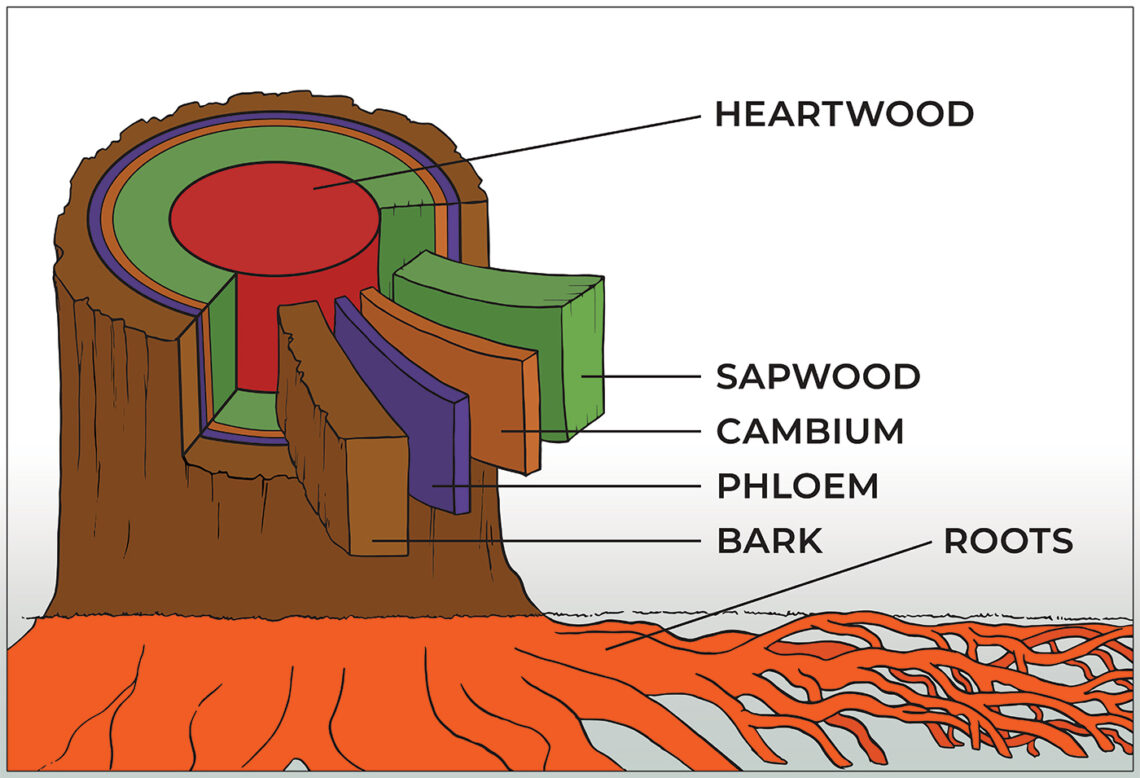
An illustration showing the layers beneath the bark of a redwood tree: phloem, cambium, sapwood, and heartwood.

The layers beneath the bark of coast redwoods and giant sequoias.


Cantore Arithmetic is able to state a way to word state word Is it true or is is word equated word Time as the kjf as the kjv is still in word Genesis.  

So, ask a Military Man what you take out First to be last again at word First’ and while you stand to the words equated To You, I’ll place picture to the route of how to find out is Space or the Program SAP used in Computer word Language  really the answer, or, is it the word equated word Signed?

1.  A Film to show the base of the word Computer that is able:  Where the Red Fern Grows is a Book, a Scene from a Film is a Show on a Screen Elysium (2013) - Ending Scene and I am not still sitting words by the blood of the lamb, this equated word sacrifice.  Words This is not a word Sacred or word [driving]divining act, these are Nightmares and word yet is an option in the United States of America under the Freedom of Religion recess?

2.  The second tunnel tree was the Wowona Tree, that promoters hoped would draw people from Yosemite to the Mariposa Grove. This tree was tremendously popular for decades, until it fell down in 1969.

3.  Discover what’s under the bark as in the Film or Films of War of the Worlds(Jeff Wayne - The War Of The Worlds (original 1978 promo film in full) that Machine equated word Bog and our word Current word Number for word President #47 of numbered 45 said words drain the Swamp!!  Make America Great Again!

a.  Here’s a New Film of the Titled War of the Worlds and you are word able!!  Pick-up your Piece:::[https://www.youtube.com/watch?v=yde6t4WG5uY]

War of the Worlds trailer from www.youtube.com
Jul 24, 2025 · WAR OF THE WORLDS Official Trailer (2025) Ice Cube, Eva Longoria Sci-Fi Movie HD ...
Duration: 2:21

Posted: Jul 24, 2025 

On my Blogs on Blogspot.com you are able to type words;

the way of crazy

Trump said on February 22, 2025, while addressing the Conservative Political Action Conference (CPAC) in Washington, "The illegal aliens are being sent home. We are draining the swamp". Traditional Unionist Voice on the front cover of their manifesto for the 2017 Northern Ireland Assembly election.
Oct 27, 2020 · Vote.DonaldJTrump.com. Drain the Swamp! 89K views · 5 years ago ...more. Donald J Trump. 3.97M. Subscribe. 8.8K. Share. Save. Report ...

Jan 20, 2017 · Donald Trump has closed his first speech as president with his campaign slogan: "Make America great again." (Jan.
“Make America Great Again!” That was the promise that President-elect Donald Trump made throughout the presidential campaign of 2016. His was a pledge to.


Under the bark of coast redwoods and giant sequoias are many layers, each with an important job in the growth and protection of the tree.

Bark – the outer layer of the tree, the bark, protects the tree from damage and disease. Coast redwood and giant sequoia bark is rich in a chemical called tannic acid, which insects and fungus avoid. The thick bark also protects the inner wood from fires.

Phloem – just below the bark is the phloem layer. The phloem carries the food, mostly sugar, from the leaves to the rest of the tree. That is where you find sap (water with sugars and nutrients).

Cambium – moving inward, the cambium is just below the phloem layer. This very thin layer is where new wood is made. When the cambium gets damaged, the tree’s growth stops or slows down.

Sapwood – this layer is also called the xylem. The sapwood is between the cambium and heartwood. It carries water from the roots to the rest of the tree. Old sapwood turns into heartwood over time.

Heartwood – the darker wood at the center of the tree is the heartwood. It keeps the tree tall and strong, giving support. The heartwood also stores water.

Roots – The roots take in water and nutrients from the soil. They grow long distances from the tree trunk but rarely grow deep. They have a special partnership with a fungus, which grows on the roots and helps the tree absorb nutrients.

An illustration showing the layers beneath the bark of a redwood tree: phloem, cambium, sapwood, and heartwood.
The layers beneath the bark of coast redwoods and giant sequoia

Title: Lets_see had Now_ be: For the Counter Man in Paso Robles, California, Lets_see was the addy that I placed as a word equated and I wrote on the Website of James Blunt when he first started, that is one of the addy’ that I word wrote on his specific Website known as a Webpage, it’s a Cobbler’ Mile. So, a real One hit Wonder equated words and yet there are equations in word balance, so now, it’s all yours, as the word Fencing is not word let or word equated as word waul; pronounced wôl) is an intransitive verb meaning to cry, wail, or howl plaintively like a cat, or to make a loud, harsh, high-pitched noise. Originating in the 16th century, it is imitative of a cat’s caterwaul or an infant's cry. It is used to describe vocalizations of distress or mating, often associated with cats. The Scream, 1893 by Edvard Munch, The Scream is autobiographical, an expressionistic construction based on Munch's actual experience of a scream piercing through nature while on a walk.:::  Word This[this[THis]] equated a word Coil, Nikola Tesla did Work that nobody word Fenced.

James Blunt - You're Beautiful (Official Music Video) [4K] - YouTube

You're Beautiful James Blunt from www.youtube.com

Oct 26, 2009 · The official music video for James Blunt - You're Beautiful remastered in 4K Taken from the ...
Duration: 3:23
Posted: Oct 26, 2009


Cantore Arithmetic is able to state for the Men of Paso Robles, California something that I know that they will comprehend and I know they have a Chamber of Commerce to bring their words to word themselves and not a Media Branch.

People state that words they felt a Calling, and lots of people go with it and achieve a lot of stuff and yet it is the Calling that is the ring that Masters your Life to another Phone and yet the Number is unknown.

Now an Alien Invasion in Paso Robles is not something that tops the conversations, so, the explanation to the Calling is really important and to be of the Feed and Ranch Industry and to understand the Cattle as more that a Steak is more important as that Prize Bull may have felt the Phones.

It works like this Paso Robles Feed and Ranch Supply has Fencing.  Chicken Wire is a type of word Number, and to explain a Chicken and Chicken Wire words equated.

Now, word If my horse was in a Stall of Chicken Wire and kicked the Wall of his Stall made of Chicken Wire words if he lived the Chicken Wire would be word equated word depressed.  Words In such, word they on the Yard at the Barn of the Parking word Lot as word associates a point of relation are able to word comprehend for a Doctor the mesh of relatable.

The only Country Bum Kin aptitude for edit is the Can and String and word how to a Physics letter or number and then word timing, so belt, it’s the torque I was working on to state that it’s not easy and the maintenance must have had a Plan as the word Marrow equated word fan[Fan[FAN!!]].

The best brows

for your face shape.

YOUR GUIDE TO CONFIDENT, FLATTERING BROWS

Square

Strong brow with defined arch

adds balance.

Oval

Soft angles with shallow arches

suit gentle features.

Round

Lifted and angled arch helps

elongate the face.

Long

Flat brow softens and shortens

face length.

Heart

High arches complement

heart-shaped contours.

Diamond

Rounded brows create a softer,

more balanced look.

Want more guidance? Our brow waxing services include a personalized

consultation and brow mapping session from our expert Cerologists so you can

be confident you'll leave the studio flaunting your best brows yet.

FIND YOUR NEAREST STUDIO AT

WAXINGTheCiTY.coM/locations

WAXING THE CITY


For Instance:  Phil Swift and his Family of Products(Flex Seal Family of Products Commercial (2021)) and Logan Coach Horse Trailers are word capable to comprehend the eyebrow with a word symbol in already word shown:  Radicals - The symbol 

used to indicate a root is called a radical and is therefore read "x radical n," or "the nth root of x." In the radical symbol, the horizontal line is called the vinculum, the quantity under the vinculum is called the radicand, and the quantity n written to the left is called the index.

The special case 
is written and is called the square root of x. is called the cube root.

Radical -- from Wolfram MathWorld


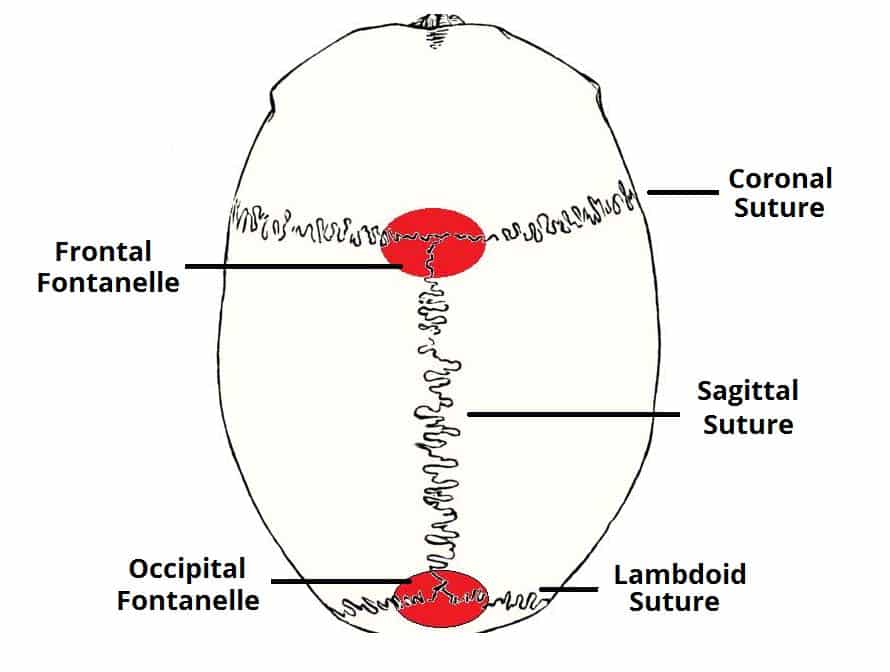
Cantore Arithmetic is able to state words shark tooth a a word square from the words try angle at the root, so you are opening the Triangle to a word square at word route for the Skull for the jagged edge to hold the word equated word marrow.

1,  on my blogs on Blogspot.com words the way of sutures
Cleveland Clinic
Skull (Cranial) Sutures: What They Are & Anatomy - Cleveland Clinic
my.clevelandclinic.org › health › body › skull-sutures

About Featured Snippets 


Words. Now. word Conical!!

You searched for

"SQUARE ROOT" in the KJV Bible


46 RESULTS   -   PAGE 1 OF 2   -   SORT BY BOOK ORDER   -   FEEDBACK
Ezekiel 43:16chapter context similar meaning copy save
And the altar shall be twelve cubits long, twelve broad, square in the four squares thereof.


1 Kings 7:5chapter context similar meaning copy save
And all the doors and posts were square, with the windows: and light was against light in three ranks.


Romans 11:18chapter context similar meaning copy save
Boast not against the branches. But if thou boast, thou bearest not the root, but the root thee.


Ezekiel 45:2chapter context similar meaning copy save
Of this there shall be for the sanctuary five hundred in length, with five hundred in breadth, square round about; and fifty cubits round about for the suburbs thereof.


Job 5:3chapter context similar meaning copy save
I have seen the foolish taking root: but suddenly I cursed his habitation.


Job 31:12chapter context similar meaning copy save
For it is a fire that consumeth to destruction, and would root out all mine increase.


Job 19:28chapter context similar meaning copy save
But ye should say, Why persecute we him, seeing the root of the matter is found in me?


Mark 4:6chapter context similar meaning copy save
But when the sun was up, it was scorched; and because it had no root, it withered away.


Job 29:19chapter context similar meaning copy save
My root was spread out by the waters, and the dew lay all night upon my branch.


Matthew 13:29chapter context similar meaning copy save
But he said, Nay; lest while ye gather up the tares, ye root up also the wheat with them.


Psalms 80:9chapter context similar meaning copy save
Thou preparedst room before it, and didst cause it to take deep root, and it filled the land.


Matthew 13:21chapter context similar meaning copy save
Yet hath he not root in himself, but dureth for a while: for when tribulation or persecution ariseth because of the word, by and by he is offended.


Proverbs 12:12chapter context similar meaning copy save
The wicked desireth the net of evil men: but the root of the righteous yieldeth fruit.


Isaiah 37:31chapter context similar meaning copy save
And the remnant that is escaped of the house of Judah shall again take rootdownward, and bear fruit upward:


2 Kings 19:30chapter context similar meaning copy save
And the remnant that is escaped of the house of Judah shall yet again take rootdownward, and bear fruit upward.


Hebrews 12:15chapter context similar meaning copy save
Looking diligently lest any man fail of the grace of God; lest any root of bitterness springing up trouble you, and thereby many be defiled;


Ezekiel 31:7chapter context similar meaning copy save
Thus was he fair in his greatness, in the length of his branches: for his root was by great waters.


Matthew 13:6chapter context similar meaning copy save
And when the sun was up, they were scorched; and because they had no root, they withered away.


Mark 4:17chapter context similar meaning copy save
And have no root in themselves, and so endure but for a time: afterward, when affliction or persecution ariseth for the word's sake, immediately they are offended.


1 Timothy 6:10chapter context similar meaning copy save
For the love of money is the root of all evil: which while some coveted after, they have erred from the faith, and pierced themselves through with many sorrows.


Job 14:8chapter context similar meaning copy save
Though the root thereof wax old in the earth, and the stock thereof die in the ground;


Isaiah 27:6chapter context similar meaning copy save
He shall cause them that come of Jacob to take root: Israel shall blossom and bud, and fill the face of the world with fruit.


Proverbs 12:3chapter context similar meaning copy save
A man shall not be established by wickedness: but the root of the righteous shall not be moved.


Hosea 9:16chapter context similar meaning copy save
Ephraim is smitten, their root is dried up, they shall bear no fruit: yea, though they bring forth, yet will I slay even the beloved fruit of their womb.


Revelation 22:16chapter context similar meaning copy save
I Jesus have sent mine angel to testify unto you these things in the churches. I am the root and the offspring of David, and the bright and morning star.


Matthew 3:10chapter context similar meaning copy save
And now also the axe is laid unto the root of the trees: therefore every tree which bringeth not forth good fruit is hewn down, and cast into the fire.


Luke 3:9chapter context similar meaning copy save
And now also the axe is laid unto the root of the trees: every tree therefore which bringeth not forth good fruit is hewn down, and cast into the fire.


Judges 5:14chapter context similar meaning copy save
Out of Ephraim was there a root of them against Amalek; after thee, Benjamin, among thy people; out of Machir came down governors, and out of Zebulun they that handle the pen of the writer.


Romans 11:16chapter context similar meaning copy save
For if the firstfruit be holy, the lump is also holy: and if the root be holy, so are the branches.


Isaiah 11:10chapter context similar meaning copy save
And in that day there shall be a root of Jesse, which shall stand for an ensign of the people; to it shall the Gentiles seek: and his rest shall be glorious.


a.  

Hot <strong>Sale</strong> <strong>Chicken</strong> <strong>Mesh</strong> Wire to Protect <strong>Chicken</strong> From Snake <strong>Chicken</strong> <strong>Mesh</strong> <strong>Used</strong> - Product Image 1

b.  

PACE Hospitals


c.  


1.  There is a demonstration

a  

Western Electric 202 hand telephone set as refurbished in the late 1930s and 1940s with new handset style. The low-profile 684A subset (1931) is mounted on wall in background. 

2.  there is a demonstration


a.  Posted on June 22, 2018

What is a strand of DNA? 


3.  Copyright © 2021 - The Loretto Chapel - All Rights Reserved


You searched for

"FAN" in the KJV Bible


7 RESULTS   -   PAGE 1 OF 1   -   SORT BY BOOK ORDER   -   FEEDBACK

Jeremiah 15:7chapter context similar meaning copy save
And I will fan them with a fan in the gates of the land; I will bereave them of children, I will destroy my people, since they return not from their ways.


Jeremiah 4:11chapter context similar meaning copy save
At that time shall it be said to this people and to Jerusalem, A dry wind of the high places in the wilderness toward the daughter of my people, not to fan, nor to cleanse,


Jeremiah 51:2chapter context similar meaning copy save
And will send unto Babylon fanners, that shall fan her, and shall empty her land: for in the day of trouble they shall be against her round about.


Isaiah 30:24chapter context similar meaning copy save
The oxen likewise and the young asses that ear the ground shall eat clean provender, which hath been winnowed with the shovel and with the fan.


Matthew 3:12chapter context similar meaning copy save
Whose fan is in his hand, and he will throughly purge his floor, and gather his wheat into the garner; but he will burn up the chaff with unquenchable fire.


Luke 3:17chapter context similar meaning copy save
Whose fan is in his hand, and he will throughly purge his floor, and will gather the wheat into his garner; but the chaff he will burn with fire unquenchable.


Isaiah 41:16chapter context similar meaning copy save
Thou shalt fan them, and the wind shall carry them away, and the whirlwind shall scatter them: and thou shalt rejoice in the LORD, and shalt glory in the Holy One of Israel.


Western Electric hand telephone sets

A typical Western Electric hand telephone set of c. 1930. It consists of a handset mounting with the handset held in a cradle, and a subscriber set mounted against a wall or vertical surface in close proximity. Shown is a B1A hand telephone set, also known as the type 102B-3 hand telephone set.

The Western Electric hand telephone sets are a series of telephones that were produced from 1927 by the Western Electric Company for the American Telephone and Telegraph Company (AT&T) and the Bell System. The series features the mouthpiece (transmitter) and the earpiece (receiver) combined into a hand-held unit, originally named a hand telephone, or handset. The handset would be held against the ear and in front of the mouth simultaneously, in contrast to earlier telephones in the Bell System where only the receiver was held against the ear, while the user spoke into a fixed transmitter mounted on a telephone stand or wall telephone.

Hand telephone sets consist of three principal parts: the handset, a handset mounting, and an apparatus box, called variously desk set boxbell boxsubscriber set, or just subset. This box is typically mounted on a wall or desk-side, and contains an electromagnetic bell ringer and a speech transformer, called induction coil, to connect the telephone to the telephone line wiring. The handset mounting is either a desk-top stand to cradle and secure the handset when not in use, or a small box mounted against a vertical surface or wall that featured a switch-hook for hanging the handset.

Other American and foreign telephone manufacturers had already produced this type of telephone, often referred to as French phone. In the Bell System, hand telephones formally replaced the hitherto used deskstand, colloquially called candlestick, by the end of the 1920s, although reconditioned candlestick telephones remained in service for at least another two decades.

The shape and styling of these telephones by Western Electric evolved from the candlestick. Three main styles resulted for use on the desk-top, designated the type A, type B, and type D handset mounting. A and B had a circular base, while type D is identified by its elliptical footprint. The most notable examples of telephones constructed from the handset mountings, are the model 102 and the model 202 telephones, variants which differed in their electric circuitry, with improvements of speech performance. In addition, the type C, and later type G, handset mountings were small wall-mounted units for hanging up the handset.

The 1927 handset and its telephone stand marked a milestone in AT&T's telephone development and of the Bell System, as it represented a new design methodology, away from inspired invention and empirical testing and toward theoretical planning and quantitative testing and quality assurance. It became the origin of all later telephone instruments in the Bell System.[1]

Western Electric deskstand telephone of the 1920s, a type of telephone often referred to as a candlestick; It featured a straight tubular shaft to hold the transmitter fixed, and a switch hook for hanging the receiver. It was the predecessor to generations of telephones using a handset.

The concept of a hand-held one-piece device that a telephone user would hold against ear and in front of the mouth arose in London shortly after the official invention of the telephone. Although early patents by C. E. McEvoy and G. E. Pritchett did not yield commercial devices in 1877,[2] R. G. Brown of New York succeeded the following year in devising a combined transmitter and receiver handset, that he used in a local telephone exchange system in the district of the New York Gold and Stock Exchange.[3] Having little success in promoting the device elsewhere in the U.S., Brown left for France to become Electrical Engineer of La Société Générale des Telephones in Paris. There, his designs found resonance and adaptations became widely used in Europe, where they became known as French phones.[3][4]

In the following decade, Western Electric experimented with three handset types, which were produced in limited quantities.[3] Derivatives were used in the early 1900s for use as linemen telephone sets, but none were found adequate for use in the Bell System. While already popular in other countries, Western Electric produced handsets for export into the European market,[5] but the Bell System had more stringent requirements than any other administration, due to the long distances of communication involved.[6]

Two major technical problems prevented the handset from reaching production stage for use by subscribers in the Bell System. Firstly, the transmitters of the day did not work well unless oriented steadily in a vertical plane. A handset would be used in many positions and orientations. If operated at other angles, carbon granules in the transmitter would shift and move in an unacceptable manner, resulting in poor voice quality.[7] The second hurdle to the acceptance of a common handset model was that audio from the receiver was picked up acoustically by the transmitter and amplified.[5] This resulted in howling tones, due to the hollow handles providing an acoustic channel between receiver and transmitter. The problems were aggravated by the signal boosting circuitry used in the subscriber set which resulted in a strong signal (sidetone) at the receiver of the speech of the user.[8] Sidetone is the reproduction of sound through a local path from the transmitter to the receiver in the telephone.[9] It is desirable only to some fraction of volume so that the user has the assurance that the telephone is working correctly. Strong sidetone may cause users to lower the voice to unacceptable levels, so that the recipient receives insufficient signal level.

1922 patent illustration by G. K. Thompson of AT&T's first desk-top handset telephone (shown without handset).[10] It was derived from the candlestick, and referenced later as the type A handset mounting.

During the 1910s, the reasons for these problems became well understood, but remedies remained elusive. After the end of World War I, new efforts concentrated on the resolution of these deficiencies, as new research yielded insight into electric circuit theory for anti-sidetone compensation, and new hope of progress.[11][5] In the 1920s, developments of non-positional transmitters, which worked in any orientation, permitted Western Electric to develop a handset model essentially free of these problems. The construction of the handset was changed from using hollow metal handles to solid Bakelite, a molded plastic material that was gaining acceptance in the telephone industry. With the solid construction the engineers were able to suppress acoustic feedback from receiver to transmitter to acceptable levels, by elevating the mechanical resonance frequencies of the handset sufficiently to avoid interference with the speech range. The resulting device was ready for distribution around the start of 1927.[12]

Alongside the development of the handset, engineers at Bell Telephone Laboratories also worked on improvements of telephone circuitry that assisted in the quality of speech conversion and transmission. While already used in telephone operator circuitry, this anti-sidetone circuit was not ready for the first hand telephones,[13] but had to wait for the early 1930s.

The completed handset was paired with a stand that had been in used for several years in the development stages of the handset. It was essentially a candlestick base with a shortened shaft of approximately one and one half inch in height, topped with a new cradle for the handset. It was later referred to as the type A handset mounting.

The release of the new hand telephone set uncovered mechanical flaws, so that a new base was designed to replace the shortened candlestick. The result was the type B handset mounting introduced later in 1927. It still retained a circular footprint of the base, but improved on the esthetic appearance. The B-type desk set was followed by a wall-mounted hand telephone set, designated as the type C1, also referred to as a hangup telephone, with the handset hanging on one side of the unit in a switchhook fork that cradled only the receiver cup.

In use, the B-type telephone base proved unstable during dialing, and was replaced with the type D handset mounting by 1930. A wider, elliptical footprint improved its stability. The D handset mounting was initially deployed with the same electric circuit (booster circuit) as the prior models. This new style of telephone also prompted a modernization in style of the subscriber sets, yielding updated, smaller, and less costly units.

While the construction of the handset with a solid Bakelite handle had eliminated the howling by mechanical (acoustic) feedback from the receiver to the transmitter, it did not reduce the electrical feedback from the transmitter to the receiver due to the coupling of these elements through the induction coil, which was particularly annoying in a noisy room, because the background noise could overwhelm the speech signal received from the distant party, and when speaking, users would hear themselves very loudly too. This was improved with the anti-sidetone speech circuitry which was finally introduced the following year (1931) in new sections for equipment in the Bell System Practices. However, with the onset of the worst years of the Great Depression, distribution of telephone sets with this new circuit was largely delayed. New and existing telephone service installations in the U.S. were in decline and staffing at Western Electric was reduced by eighty percent.[14][15]

The anti-side tone circuit featured a three-winding induction coil, rather than a simple two-winding transformer. The third winding compensates a part of the sidetone by superimposing a phase-inverted portion of the transmitter signal.[9][16] This reduced the loudness of the user's own speech in the receiver, but left enough to avoid complete silence in the ear of the user, which might be interpreted as a device failure.

With the completion of the anti-sidetone circuit, in 1930 Western Electric began assigning assembly codes to telephones based on the type of electrical configuration.[17] Until then, the hand telephone sets were primarily referred to by the handset mountings used to construct them. With the new circuit variant, this became insufficient, resulting in the distinction between 100-series and 200-series hand telephone sets. Thus, the type 102 was the new designation for a handset mounting when used on common battery lines with a side-tone circuit,[18] and the 202 was the anti-sidetone version.[19] Initially, this referred to B-type handset mountings, but by the time the 200-series anti-sidetone hand telephone sets were documented in the Practices, the standard base was the D handset mounting. At that time, the 100-series assembly codes were also redefined by use of the D handset mounting,[20] so that the assembly code 102was no longer used for A- or B-type handset mountings.[21] However, they were covered by the same specifications and maintenance procedures.[21][22]

The first version of the new hand telephone sets was marked by AT&T as D-76869, a specification type for small quantities of new equipment. The device was described by George K. Thompson of the American Telephone and Telegraph Company (AT&T) in United States patent No. 1508424 of 1924, without showing the handset that was still in development.[10] During 1927, it became known and labeled as the type A handset mounting, embodied in the A1A2, and A3 telephones.

Internals of a subscriber set (type 534A), issued c. 1930, for either a candlestick, or any 102-type hand telephone set. The components include a ringer, and induction coil, and a capacitor underneath the wooden connecting block.

This type was directly derived from the candlestick telephone. The vertical tube shaft of the deskstand was shortening in height to about one and one half inches. Mounted on top of this was placed a cradle device that held the combined handset in a horizontal position. It incorporated a switch bar that would be depressed when the handset was in place. A vertical plunger operates an internal switch when the handset is lifted to connect the telephone to its subset and the telephone line. Telephones built with this handset mounting were released in limited supply in 1927, and were known as the A1 telephone, the most common type for local and common battery service. The A2 handset mounting was made for special measured two-party line service and the A3 was for private telephone and residence systems.[23]

By the end of 1927, well within a year of introduction of the A1 telephone, William H. Scharringhausen of the Bell Telephone Laboratories streamlined the design and filed a patent application on November 29, 1927.[24] He integrated the short tubular neck into the continuous contours of the base. The circular footprint of the base was retained. The design corrected mechanical failures in the A handset mounting to position the handset properly when placed onto the desk set.[25] The new design became known as the type B handset mounting.[23] The most common variety, was the B1A hand telephone set, which was used for local battery telephones with a wooden subscriber set and magneto box, and for common battery lines with a steel-enclosure subscriber set (No. 534A). In 1930, the designation was superseded by 102 type hand telephone set. Manual (no dial) instruments were indicated by the letter suffix A (i.e. 102A) and dial instruments received the suffix BC, or D, depending on the style of digit and letter display on the dial.[18]

The B-type hand telephone sets were typically installed with a black finish (suffix -3), but sets in ivory, gray, old brass, statuary bronze, and oxidized silver tones could be ordered by customers. Color was indicated by numeric suffices to the assembly code.

The type D handset mounting was the most common Western Electric hand telephone set produced from 1930 to c. 1939, and refurbished well into the 1950s. It has an oval-shaped footprint of the base, and replaced the B handset mounting in the 102-telephone, and was also the core of the 202 hand telephone set.

In 1929, the Bell System sought to improve the appearance of their telephone apparatus, particularly in subscriber's homes and offices. After a design contest failed to produce useable ideas,[26] by year-end engineers had redesigned the desk-top handset mounting into a new, wider, elliptical shape that also recessed the casing of the dial, which was previously simply mounted on top of the front slope of the base.[27][28] While using the same handset, the telephone's overall dimensions now conformed to the Golden Section.[29]

This design was referred to as the type D handset mounting. Service-specific telephone models were again designated by numerical suffices (D1, D2, etc.). In 1930, it formally replaced the B handset mounting in 102-type telephones, and in 1931 it became the standard base for the 202. However, type B handset mountings continued to be produced until c. 1932, and installation of 202-type telephones with the anti-sidetone circuit were delayed due to the economic conditions of the Great Depression.

Telephones based on the D handset mounting were made available in more colors than the previous types. In 1930, consultants to the Bell Laboratories suggested changes and additional colors to the previous palette: ivorygray-greenold rosePekin red, and dark bluewere now in fashion, in addition to the metallic hues called old brassdark goldstatuary bronze, and oxidized silver.[30]

Along with the new look of the telephone, the effort complemented it with a new subscriber set in 1930, the type 584.[31][32] It formally replaced the larger, but electrically equivalent type 534, which had featured a large steel housing. The new subscriber set was about half the size, was lighter, cheaper to manufacture, and had a cover molded from Bakelite, a material that was becoming fashionable in the era of Art Deco design. For colored telephone sets, the subscriber set was painted in the same color.

The type 102 hand telephone set is a desk-top handset mounting with the traditional electric circuit, so called booster circuit, that used a two-winding induction coil, i.e. a simple transformer, without sidetone compensation.[17] When the designation was created in 1930 the then current handset mounting for this telephone was the B1 handset mounting. The D1 handset mounting was substituted for this assembly code shortly after, when it was released to the operating companies, and documented in the Bell System Practices. For field work, where the assembly code was not important,[33] the procedures for the 102 specification were extended to the prior A and B handset mountings.[22]

The 102 desk set was connected to the subscriber set with a three-conductor mounting cord.[22]

Western Electric 202 hand telephone set as refurbished in the late 1930s and 1940s with new handset style. The low-profile 684A subset (1931) is mounted on wall in background.

When designating anti-sidetone apparatus, the Bell System practice was to add the value 100 to the apparatus code of the corresponding sidetone equipment.[34] Thus, the new hand telephone set with the anti-side tone circuit was the type 202 hand telephone set.[17]

The anti-sidetone circuit required an additional, fourth conductor in the mounting cord to the subscriber set. For this telephone Western Electric produced a new type of subscriber sets, the No. 684A, which featured the same more compact form factor of the type No. 584, previously. When the 202 was introduced in mid-1931,[19] the U.S. economy was still in deep recession, and installations of new equipment was generally delayed until conditions improved.

When the Bell System introduced the Type 302 combined telephone set in 1937, with a newly styled handset, the hand telephone sets, including the 202 were manufactured or refurbished with this new handset of type F1. The F1 contained more efficient transmitter and receiver elements.

A Western Electric 202 Imperialtelephone as issued in 1955 with a gold lacquered base and ivory Tenite plastic handset. The subscriber set (rear) was painted in harmonizing color to the desk set.

In 1937, Bell Telephone Laboratories and Western Electric began shipping a new telephone design, the model 302 telephone, to the Associated Companies of the Bell System, a combined telephone set that combined all components into one housing, eliminating the separate bell box. It also featured a new type of handset (F1) with improved transmitter and receiver elements. With this development, the manufacture of the D-handset mountings and the 202 hand telephone sets was ended in 1939.

The new handset became the new standard in the Bell System and was used in refurbishing existing hand telephone sets for reissue as 202-type sets for almost another two decades.

In the 1950s, large quantities of old telephones were retired in favor of the popular new model 500 telephone, creating a stock pile of still usable parts. At the same time, popular demand provided pressure in the market place to produce colored telephones. The manufacturing processes to produce this new line of 500-type sets in color were not completed yet and those sets were only issued in black until 1954. In 1955, Western Electric reissued the 202 telephone painted in several colors. The Continental line was created from a D1 base with an F1 handset, and was available painted in primarily ivory, green, red, and black,[35] but other colors were made available by special customer order. The Silver Continentalwas plated in silvery rhodium, and the Imperial was sprayed with gold lacquer. Both were issued with an ivory painted Bakelite or ivory thermoplastic handset of the type F1.

In the 1960s, AT&T introduced a very different design, a departure from the traditional hand telephone set, the Trimline telephone. Formally, it was referred to by its apparatus code, the No. 220 hand telephone set. It comprised a molded dial-in-handset,[36] that was a complete telephone except for the ringer and switch hook functions, which were provided in a plastic base unit that served to cradle the handset when not in use.

In 1928, Western Electric introduced the Type C handset mounting for the newly developed combined handset. The type C1 hand telephone set was mounted against the side of a desk, or on a wall, without requiring desk top space, and had a sideways-oriented cradle for hanging the handset. With the introduction of assembly codes in 1930, telephone sets were coded as the 101 and 201 hand telephone sets, with a sidetone and anti-sidetone circuit, respectively. In 1936, the hangup-type hand telephone set was redesigned as the type G handset mounting to produce the 211 anti-sidetone telephone, as well as a series of other types (212213214) for special service modifications. This type of telephone set was produced well into the 1970s, and is often colloquially referred to as a space-saver telephone.

  1. ^ Bell Telephone Laboratories, Staff, M.D. Fagan (Ed.), A History of Engineering and Science in the Bell System–The Early Years (1875–1925), 1975, p.153
  2. ^ Frederick H.A., Bell Laboratories Record 12(11) 322 (July 1934), Early Handsets, p.323
  3. Jump up to: a b c Bell Telephone Laboratories, Staff, M.D. Fagan (Ed.), A History of Engineering and Science in the Bell System–The Early Years (1875–1925), 1975, p.140
  4. ^ Brooks, John (1975). Telephone–The First Hundred Years. Harper & Row. p. 129. ISBN 0-06-010540-2.
  5. Jump up to: a b c BTL, Early Years, p. 144
  6. ^ BTL, Early Years, p. 142
  7. ^ Mountjoy, Richard (1995). 100 Years of Bell Telephones. Schiffer Publishing. p. 138. ISBN 0-88740-872-9.
  8. ^ Meyer, Ralph O. (2005). Old Time Telephones! Design, History, and Restoration. Schiffer Publishing. p. 63. ISBN 0-7643-2282-6.
  9. Jump up to: a b AT&T, Bell System Practices, Section C30.001 Issue 1 (March 16, 1932) Common Battery Anti-Sidetone Stations
  10. Jump up to: a b US patent 1508424, G. K. Thompson, "Telephone Desk Set", issued 1924-09-16
  11. ^ US patent 1402322, George K. Thompson, "Anti-Side-Tone Hand Set", issued 1922-01-03
  12. ^ Brooks, John (1975). Telephone–The First Hundred Years. Harper & Row. p. 179. ISBN 0-06-010540-2.
  13. ^ Meyer, Ralph O. (2005). Old Time Telephones! Design, History, and Restoration. Schiffer Publishing. p. 64. ISBN 0-7643-2282-6.
  14. ^ Page, Arthur W. (1941). The Bell Telephone System. New York: Harper & Brothers Publishers. p. 212.
  15. ^ Brooks, John (1975). Telephone–The First Hundred Years. Harper & Row. p. 188. ISBN 0-06-010540-2.
  16. ^ J. W. Foley, Bell Laboratories Record 17(11) 347 (July 1939) The Anti-Sidetone Station Circuit
  17. Jump up to: a b c AT&T, Bell System Practices, Section C32.111 Issue 2 (December 1, 1937) Hand Telephone Sets, Desk Types–Description
  18. Jump up to: a b AT&T, Bell System Practices Section C32.101 Issue 1 (1 August 1930), Hand Telephone Sets—B Types—Description and Use
  19. Jump up to: a b AT&T, Bell System Practices, Section C32.103 Issue 1 (1 June 1931) Anti-Sidetone Hand Telephone Sets–201, 202, 203, 205, 206, and 207 Types–Description and Use
  20. ^ AT&T, Bell System Practices, Section C32.102 Issue 2 (1 June 1931) Sidetone Hand Telephone Sets–101, 102, 103, 104, and 105 Types–Description and Use
  21. Jump up to: a b AT&T, Bell System Practices, Section C44.101 Issue 2 (1 November 1931, Sidetone Hand Telephone Sets–101, 102, 103, 104, and 105 Types–Connections, p.1
  22. Jump up to: a b c AT&T, Bell System Practices, Section C32.160 Issue 1 (1 November 1931) Sidetone Hand Telephone Sets–101, 102, 103, 104, and 105 Types–Cording
  23. Jump up to: a b AT&T, Handbook Specification 4810 (December 1927), Stations–Hand Telephone Sets
  24. ^ US patent 1788747, W. H. Scharringhausen, "Telephone Desk Set", issued 1931-01-13
  25. ^ W. H. Scharringhausen (November 1927) Telephone Desk Set, US Patent 1,788,747 (January 13, 1031)
  26. ^ Hadlaw, J. The design contest : the function, form, and meaning of the Bell telephone,1920-1939, in Objects & Communication, Media and Information (MEI) 30-31 (23) 329 (April 2010) p.337
  27. ^ B. Gherardi, F.B. Jewett, Bell System Technical Journal 9(1)1 (January 1930), Telephone Communication System of the United States, p.10
  28. ^ Kempster Miller, Telephone Theory and Practice, Vol 2 (1933) p.106.
  29. ^ Dilts M.M. The Golden Section, Bell Laboratories Record 10(3) 97 (November 1931)
  30. ^ G. A. Wahl, Bell Laboratories Record 34(8) 252 (July 1956) Telephone Sets in Color, p.252
  31. ^ Lohmeyer, Frank, Bell Laboratories Record 10 (2) 43 (October 1931), A Small Subscriber Set
  32. ^ AT&T, Handbook specification No. 4588–Supplement A (June 1930) Dial and Manual CB Stations–584 Type Subscriber Set
  33. ^ AT&T, Bell System Practices, Section C32.301 Issue 2 (June 1, 1931) Hand Set Mountings–A to E Types–Description
  34. ^ AT&T, Bell System Practices, Section C30.001 Issue 1 (March 16, 1932) Common Battery Anti-Sidetone Stations, p.2 paragraph 3.02
  35. ^ AT&T, Bell System Practices, Section C32.111 Addendum Issue 2 (March 1955) Hand Telephone Sets–Desk Type–Description, p.1
  36. ^ W.E. Whidden, An Experimental "Dial-In-Handset"Telephone, Bell Laboratories Record 38(1)23 (January 1960)


No comments:

Post a Comment

An Independent Mind, Knot Logic

Karen A. Placek, aka Karen Placek, K.A.P., KAP

My photo
Presents, a Life with a Plan. My name is Karen Anastasia Placek, I am the author of this Google Blog. This is the story of my journey, a quest to understanding more than myself. The title of my first blog delivered more than a million views!! The title is its work as "The Secret of the Universe is Choice!; know decision" will be the next global slogan. Placed on T-shirts, Jackets, Sweatshirts, it really doesn't matter, 'cause a picture with my slogan is worth more than a thousand words, it's worth??.......Know Conversation!!!

Know Decision of the Public: Popular Posts!!