Presents, a Life with a Plan. My name is Karen Anastasia Placek, I am the author of this Google Blog. This is the story of my journey, a quest to understanding more than myself. The title of my first blog delivered more than a million views!! The title is its work as "The Secret of the Universe is Choice!; know decision" will be the next global slogan. Placed on T-shirts, Jackets, Sweatshirts, it really doesn't matter, 'cause a picture with my slogan is worth more than a thousand words, it's worth??.......Know Conversation!!!
Cantore Arithmetic is able state in-order to make Natalie Kudrow or I and my name is Karen Placek and we lived on Balboa Street at the same time equated for a while. Word However to make Nat or I and Natalie equated word friend[Friend[FRIEND] our parents had to do the equated word dirty[case] and that is word how[How[HOW] word we got word here[lend].
The Avenue to the Potrero Center is the old Key czar as the baseball to the Double Play is are son. To watch the SF Media dial the Irving a Bus route will be available and the intended fire will be the flame of the Plato legacy!! As Plato equated word Photo the graph is of detailed so the bus is on 19th and Taravel and Petrini’s is the Store that valued.
Value Giant is on Geary and the Copper Penny on Masonic as Sears is A Building and the old French suggests mathematics as the Union Square garage is parked in the avenue on a bus route to engage program to Stop signs. The current initial is on the word Wheel.
Back to the Dirty Knees:
Dr. Montesano is a quasi moto[Quasimodo[desire]] and surgeons the suggestion that pool work is for Dr. Edwards hand Dr. Zacharias while forgetting that every tool must have a Wash.
1. The _ and the _ just online in symbol is for the Physical therapists office.
Sayings are for memory and to disengage a country from Freedom of Speech is a word sign. The Sayings for memory[insult] is equated word Cyclone[The Weather Channel for your speech is in word[turf[soil[dog[stead]]]] and is in Cantore Arithmetic left as a symbol of a sign for the pyramid as that is a pendulum[done detail], so word pendulum equated words done[dune] detail in base to word done detail to achieve word DUNE for word aspect[effect[detail[frame]]]!!
In the film Elysium there are word formats on the Chest of said Man that is the Pendulum, a timing device to concept of the pill that is inserted for whatever the mediator does to persons that don’t have the dial[the Calendar pill box that is round and was by prescription at The Pharmacy].
The Joint removal to the available input is on that device and is the dirty knee of the hunch as the pull to the knee on my dislocation happened at the vacation home of The Lewis Family in Napa or there abouts. The map to the route was at Children’s Hospital on California for the cast however the Mackenzie bill and Gordon dropped the avenue for word Clarity. In base to tech[knowledge] not everyone wanted information as there were very few people that just seemed to word conceive[concept] although it did not hold and fell the standard inadequacies of word doubt[character]. To hold the floor the information is currently held by word Reprieve[reprieve] and is being stolen by the Tech world as dr. Vuksinick word promoted!
The Pro moat is in England and stands the course to the avenue and is held by the fact that I have not written the text to the tile.
The Wingtip Shoes were the anchor as the measure to the toe is in the cuticle.
Since everyone in effect in San Francisco is ignoring this attempt in succession for the verb to return the horror to the table the name to the word is held by this is a dead end with people whom completed Dorchester at 815 Balboa and are still controlling the avenue via the worth of what that was all about originally. The failure is yours as rape is rape, technology is technology, and Nikola Tesla is my route, skin to type!
"Hoover Dam stands as one of the most successful public works projects" as the years have rolled to the tourism Hoover Dam craters in comparison to the flop houses in the first part of the early era; The Great Depression. To avenue a thought is to be on the bench? No, as the obvious has become the embarrassment of my flushed face, the tears fell too. Each project considered throughout our history in the United States of America men gave detail to blueprint and at the same exact counter the sand must have mooned. To know of comprehension in only the era of my grandfather I shallow emotion to tack the print of his foot.
May your skies be counted. The sun upon each State in the U.S.A. with it's border petrol, the very gasoline that families carried hope to just another mound creates a weight and yet it is the balance of today April 19, 2018 that bridles the falls my grandmother spoke of on her waltz of family to orphan.
These processes of public work to success found some kind of trouble. The song of the North compasses to grave returns for there is no Hoover Dam to admire in my mind. That comfort of electricity does not flow through my veins to warm my dinner this evening. The candles still burn and fireplaces have become cell phones. Public Housing is indeed a fathom? No, it is the or was the next project of our affordability as a Nation. So young among a World full of monsters. The wars alone have come to shores leaving blood red seas in their stead.
Waves now called the Capital Improvement Projects have grain yet the Jobs Report records the chorus of a nation that met standard of the U.S.A. with conjunct and verb with a bit of slanted strand. Oh for the barrel and row, the stories of the great people, the old's, the measure, the carriage, the presidents, the carved mountain with reminders now feel like remainders. The crumbling sod said so long ago that spoils today are only the grains of the sand in hands of that Dust Bowl. Again in slow soup of those lines I ladle only to you what is a story on a shower of information as the pain of what has come to go is honesty of detail, "The Dust Bowl, also known as the Dirty Thirties, was a period of severe dust storms that greatly damaged the ecology and agriculture of the American and Canadian prairies during the 1930s; severe drought and a failure to apply dryland farming methods to prevent wind erosion (the Aeolian processes) caused the phenomenon" as per Wikipedia, a free encyclopedia.
Hoover Dam has had profound social impacts on the growth ... Hoover Dam stands as one of the most successful public works projects and one of the greatest ...
Hoover Dam is a concrete arch-gravity ... The dam's generators provide power for public and private ... the sculptures on and around the dam. His works include the ...
Official name: Hoover Dam
Purpose: Power, flood control, water storage, regulation, recreation
Map of states and counties affected by the Dust Bowl between 1935 and 1938 originally prepared by the Soil Conservation Service. The most severely affected counties are colored .
The Dust Bowl, also known as the Dirty Thirties, was a period of severe dust storms that greatly damaged the ecology and agriculture of the American and Canadian prairies during the 1930s; severe drought and a failure to apply dryland farming methods to prevent wind erosion (the Aeolian processes) caused the phenomenon. The drought came in three waves, 1934, 1936, and 1939–1940, but some regions of the high plains experienced drought conditions for as many as eight years.[1] With insufficient understanding of the ecology of the plains, farmers had conducted extensive deep plowing of the virgin topsoil of the Great Plains during the previous decade; this had displaced the native, deep-rooted grassesthat normally trapped soil and moisture even during periods of drought and high winds. The rapid mechanization of farm equipment, especially small gasoline tractors, and widespread use of the combine harvester contributed to farmers' decisions to convert arid grassland (much of which received no more than 10 inches (250 mm) of precipitation per year) to cultivated cropland.[2] During the drought of the 1930s, the unanchored soil turned to dust, which the prevailing winds blew away in huge clouds that sometimes blackened the sky. These choking billows of dust – named "black blizzards" or "black rollers" – traveled cross country, reaching as far as the East Coast and striking such cities as New York City and Washington, D.C. On the Plains, they often reduced visibility to 3 feet (1 m) or less. Associated Press reporter Robert E. Geiger happened to be in Boise City, Oklahoma, to witness the "Black Sunday" black blizzards of April 14, 1935; Edward Stanley, Kansas City news editor of the Associated Press coined the term "Dust Bowl" while rewriting Geiger's news story.[3][4]While the term "the Dust Bowl" was originally a reference to the geographical area affected by the dust, today it is usually used to refer to the event, as in "It was during the Dust Bowl". The drought and erosion of the Dust Bowl affected 100,000,000 acres (400,000 km2) that centered on the panhandles of Texas and Oklahoma and touched adjacent sections of New Mexico, Colorado, and Kansas.[5] The Dust Bowl forced tens of thousands of poverty-stricken families to abandon their farms, unable to pay mortgages or grow crops, and losses reached US$25 million per day by 1936 (equivalent to US$440,000,000 in 2017).[6][7] Many of these families, who were often known as "Okies" because so many of them came from Oklahoma, migrated to California and other states to find that the Great Depression had rendered economic conditions there little better than those they had left. The Dust Bowl has been the subject of many cultural works, notably the novel The Grapes of Wrath (1939) by John Steinbeck, the folk music of Woody Guthrie, and photographs depicting the conditions of migrants by Dorothea Lange.
The Dust Bowl area lies principally west of the 100th meridian on the High Plains, characterized by plains which vary from rolling in the north to flat in the Llano Estacado. Elevation ranges from 2,500 feet (760 m) in the east to 6,000 feet (1,800 m) at the base of the Rocky Mountains. The area is semiarid, receiving less than 20 inches (510 mm) of rain annually; this rainfall supports the shortgrass prairie biome originally present in the area. The region is also prone to extended drought, alternating with unusual wetness of equivalent duration.[8] During wet years, the rich soil provides bountiful agricultural output, but crops fail during dry years. The region is also subject to high winds.[9] During early European and American exploration of the Great Plains, this region was thought unsuitable for European-style agriculture; explorers called it the Great American Desert. The lack of surface water and timber made the region less attractive than other areas for pioneer settlement and agriculture. The federal government encouraged settlement and development of the Plains for agriculture via the Homestead Act of 1862, offering settlers 160-acre (65 ha) plots. With the end of the Civil War in 1865 and the completion of the First Transcontinental Railroad in 1869, waves of new migrants and immigrants reached the Great Plains, and they greatly increased the acreage under cultivation.[10][11] An unusually wet period in the Great Plains mistakenly led settlers and the federal government to believe that "rain follows the plow" (a popular phrase among real estate promoters) and that the climate of the region had changed permanently.[12] While initial agricultural endeavors were primarily cattle ranching, the adverse effect of harsh winters on the cattle, beginning in 1886, a short drought in 1890, and general overgrazing, led many landowners to increase the amount of land under cultivation. Recognizing the challenge of cultivating marginal arid land, the United States government expanded on the 160 acres (65 ha) offered under the Homestead Act—granting 640 acres (260 ha) to homesteaders in western Nebraska under the Kinkaid Act (1904) and 320 acres (130 ha) elsewhere in the Great Plains under the Enlarged Homestead Act (1909). Waves of European settlers arrived in the plains at the beginning of the 20th century. A return of unusually wet weather seemingly confirmed a previously held opinion that the "formerly" semiarid area could support large-scale agriculture. At the same time, technological improvements such as mechanized plowing and mechanized harvesting made it possible to operate larger properties without increasing labor costs. The combined effects of the disruption of the Russian Revolution, which decreased the supply of wheat and other commodity crops, and World War I increased agricultural prices; this demand encouraged farmers to dramatically increase cultivation. For example, in the Llano Estacado of eastern New Mexico and northwestern Texas, the area of farmland was doubled between 1900 and 1920, then tripled again between 1925 and 1930.[11] The agricultural methods favored by farmers during this period created the conditions for large-scale erosion under certain environmental conditions.[1] The widespread conversion of the land by deep plowing and other soil preparation methods to enable agriculture eliminated the native grasses which held the soil in place and helped retain moisture during dry periods. Furthermore, cotton farmers left fields bare during winter months, when winds in the High Plains are highest, and burned the stubble as a means to control weeds prior to planting, thereby depriving the soil of organic nutrients and surface vegetation.
"Heavy black clouds of dust rising over the Texas Panhandle, Texas", c. 1936.
After fairly favourable climatic conditions in the 1920s with good rainfall and relatively moderate winters,[13] which permitted increased settlement and cultivation in the Great Plains, the region entered an unusually dry era in the summer of 1930.[14] During the next decade, the northern plains suffered four of their seven driest calendar years since 1895, Kansas four of its twelve driest,[15] and the entire region south to West Texas[16]lacked any period of above-normal rainfall until record rains hit in 1941.[17] When severe drought struck the Great Plains region in the 1930s, it resulted in erosion and loss of topsoil because of farming practices at the time. The drought dried the topsoil and over time it became friable, reduced to a powdery consistency in some places. Without the indigenous grasses in place, the high winds that occur on the plains picked up the topsoil and created the massive dust storms that marked the Dust Bowl period.[18] The persistent dry weather caused crops to fail, leaving the plowed fields exposed to wind erosion. The fine soil of the Great Plains was easily eroded and carried east by strong continental winds. On November 11, 1933, a very strong dust storm stripped topsoil from desiccated South Dakota farmlands in just one of a series of severe dust storms that year. Beginning on May 9, 1934, a strong, two-day dust storm removed massive amounts of Great Plains topsoil in one of the worst such storms of the Dust Bowl.[19] The dust clouds blew all the way to Chicago, where they deposited 12 million pounds of dust (~ 5500 tonnes).[20] Two days later, the same storm reached cities to the east, such as Cleveland, Buffalo, Boston, New York City, and Washington, D.C.[21] That winter (1934–1935), red snow fell on New England. On April 14, 1935, known as "Black Sunday", 20 of the worst "black blizzards" occurred across the entire sweep of the Great Plains, from Canada south to Texas. The dust storms caused extensive damage and turned the day to night; witnesses reported that they could not see five feet in front of them at certain points. Denver-based Associated Press reporter Robert E. Geiger happened to be in Boise City, Oklahoma that day. His story about Black Sunday marked the first appearance of the term Dust Bowl; it was coined by Edward Stanley, Kansas City news editor of the Associated Press, while rewriting Geiger's news story.[3][4]
Spearman and Hansford County have been literaly [sic] in a cloud of dust for the past week. Ever since Friday of last week, there hasn't been a day pass but what the county was beseieged [sic] with a blast of wind and dirt. On rare occasions when the wind did subside for a period of hours, the air has been so filled with dust that the town appeared to be overhung by a fog cloud. Because of this long seige of dust and every building being filled with it, the air has become stifling to breathe and many people have developed sore throats and dust colds as a result."
— Spearman Reporter, 21 March 1935
[22] Much of the farmland was eroded in the aftermath of the Dust Bowl. In 1941, a Kansas agricultural experiment station released a bulletin that suggested reestablishing native grasses by the "hay method". Developed in 1937 to speed up the process and increase returns from pasture, the "hay method" was originally supposed to occur in Kansas naturally over 25–40 years.[23] After much data analysis, the causal mechanism for the droughts can be linked to ocean temperature anomalies. Specifically, Atlantic Ocean sea surface temperatures appear to have had an indirect effect on the general atmospheric circulation, while Pacific sea surface temperatures seem to have had the most direct influence.[24]
Human displacement
This catastrophe intensified the economic impact of the Great Depression in the region.
In 1935, many families were forced to leave their farms and travel to other areas seeking work because of the drought (which at that time had already lasted four years).[25] The abandonment of homesteads and financial ruin resulting from catastrophic topsoil loss led to widespread hunger and poverty.[26] Dust Bowl conditions fomented an exodus of the displaced from Texas, Oklahoma, and the surrounding Great Plains to adjacent regions. More than 500,000 Americans were left homeless. Over 350 houses had to be torn down after one storm alone.[27] The severe drought and dust storms had left many homeless; others had their mortgages foreclosed by banks, or felt they had no choice but to abandon their farms in search of work.[28] Many Americans migrated west looking for work. Parents packed up "jalopies" with their families and a few personal belongings, and headed west in search of work.[29] Some residents of the Plains, especially in Kansas and Oklahoma, fell ill and died of dust pneumonia or malnutrition.[20]
"Broke, baby sick, and car trouble!" - Dorothea Lange's 1937 photo of a Missouri migrant family's jalopy stuck near Tracy, California.
The Dust Bowl exodus was the largest migration in American history within a short period of time. Between 1930 and 1940, approximately 3.5 million people moved out of the Plains states; of those, it is unknown how many moved to California.[30] In just over a year, over 86,000 people migrated to California. This number is more than the number of migrants to that area during the 1849 Gold Rush.[31] Migrants abandoned farms in Oklahoma, Arkansas, Missouri, Iowa, Nebraska, Kansas, Texas, Colorado, and New Mexico, but were often generally referred to as "Okies", "Arkies", or "Texies".[27] Terms such as "Okies" and "Arkies" came to be known in the 1930s as the standard terms for those who had lost everything and were struggling the most during the Great Depression.[32] Not all migrants traveled long distances; some simply went to the next town or county. So many families left their farms and were on the move that the proportion between migrants and residents was nearly equal in the Great Plains states.[30]
Characteristics of migrants
A migratory family from Texas living in a trailer in an Arizona cotton field
Historian James N. Gregory examined Census Bureau statistics and other records to learn more about the migrants. Based on a 1939 survey of occupation by the Bureau of Agricultural Economics of about 116,000 families who arrived in California in the 1930s, he learned that only 43 percent of southwesterners were doing farm work immediately before they migrated. Nearly one-third of all migrants were professional or white-collar workers.[33] The poor economy displaced more than just farmers as refugees to California; many teachers, lawyers, and small business owners moved west with their families during this time. After the Great Depression ended, some moved back to their original states. Many others remained where they had resettled. About one-eighth of California's population is of Okie heritage.[34]
U.S. government response
The greatly expanded participation of government in land management and soil conservation was an important outcome from the disaster. Different groups took many different approaches to responding to the disaster. To identify areas that needed attention, groups such as the Soil Conservation Service generated detailed soil maps and took photos of the land from the sky. To create shelterbelts to reduce soil erosion, groups such as the United States Forestry Service’s Prairie States Forestry Project planted trees on private lands. Finally, groups like the Resettlement Administration, which later became the Farm Security Administration, encouraged small farm owners to resettle on other lands, if they lived in dryer parts of the Plains.[24] During President Franklin D. Roosevelt's first 100 days in office in 1933, his administration quickly initiated programs to conserve soil and restore the ecological balance of the nation. Interior Secretary Harold L. Ickes established the Soil Erosion Service in August 1933 under Hugh Hammond Bennett. In 1935, it was transferred and reorganized under the Department of Agriculture and renamed the Soil Conservation Service. It is now known as the Natural Resources Conservation Service (NRCS).[35] As part of New Deal programs, Congress passed the Soil Conservation and Domestic Allotment Act in 1936, requiring landowners to share the allocated government subsidies with the laborers who worked on their farms. Under the law, "benefit payments were continued as measures for production control and income support, but they were now financed by direct Congressional appropriations and justified as soil conservation measures. The Act shifted the parity goal from price equality of agricultural commodities and the articles that farmers buy to income equality of farm and non-farm population."[36] Thus, the parity goal was to re-create the ratio between the purchasing power of the net income per person on farms from agriculture and that of the income of persons not on farms that prevailed during 1909–1914. To stabilize prices, the government paid farmers and ordered more than six million pigs to be slaughtered. It paid to have the meat packed and distributed to the poor and hungry. The Federal Surplus Relief Corporation (FSRC) was established to regulate crop and other surpluses. FDR in an address on the AAA commented,
Let me make one other point clear for the benefit of the millions in cities who have to buy meats. Last year the Nation suffered a drought of unparalleled intensity. If there had been no Government program, if the old order had obtained in 1933 and 1934, that drought on the cattle ranges of America and in the corn belt would have resulted in the marketing of thin cattle, immature hogs and the death of these animals on the range and on the farm, and if the old order had been in effect those years, we would have had a vastly greater shortage than we face today. Our program – we can prove it – saved the lives of millions of head of livestock. They are still on the range, and other millions of heads are today canned and ready for this country to eat."
The FSRC diverted agricultural commodities to relief organizations. Apples, beans, canned beef, flour and pork products were distributed through local relief channels. Cotton goods were later included, to clothe the needy.[37] In 1935, the federal government formed a Drought Relief Service (DRS) to coordinate relief activities. The DRS bought cattle in counties which were designated emergency areas, for $14 to $20 a head. Animals determined unfit for human consumption were killed; at the beginning of the program, more than 50 percent were so designated in emergency areas. The DRS assigned the remaining cattle to the Federal Surplus Relief Corporation (FSRC) to be used in food distribution to families nationwide. Although it was difficult for farmers to give up their herds, the cattle slaughter program helped many of them avoid bankruptcy. "The government cattle buying program was a blessing to many farmers, as they could not afford to keep their cattle, and the government paid a better price than they could obtain in local markets."[38] President Roosevelt ordered the Civilian Conservation Corps to plant a huge belt of more than 200 million trees from Canada to Abilene, Texas to break the wind, hold water in the soil, and hold the soil itself in place. The administration also began to educate farmers on soil conservation and anti-erosion techniques, including crop rotation, strip farming, contour plowing, terracing, and other improved farming practices.[39][40] In 1937, the federal government began an aggressive campaign to encourage farmers in the Dust Bowl to adopt planting and plowing methods that conserved the soil. The government paid reluctant farmers a dollar an acre to practice the new methods. By 1938, the massive conservation effort had reduced the amount of blowing soil by 65%.[41] The land still failed to yield a decent living. In the fall of 1939, after nearly a decade of dirt and dust, the drought ended when regular rainfall finally returned to the region. The government still encouraged continuing the use of conservation methods to protect the soil and ecology of the Plains. At the end of the drought, the programs which were implemented during these tough times helped to sustain a positive relationship between America's farmers and the federal government.[42] The President's Drought Committee issued a report in 1935 covering the government's assistance to agriculture during 1934 through mid-1935: it discussed conditions, measures of relief, organization, finances, operations, and results of the government's assistance.[43] Numerous exhibits are included in this report.
Long-term economic impact
In many regions, more than 75% of the topsoil was blown away by the end of the 1930s. Land degradation varied widely. Aside from the short-term economic consequences caused by erosion, there were severe long-term economic consequences caused by the Dust Bowl. By 1940, counties that had experienced the most significant levels of erosion had a greater decline in agricultural land values. The per-acre value of farmland declined by 28% in high-erosion counties and 17% in medium-erosion counties, relative to land value changes in low-erosion counties.[23]:3 Even over the long-term, the agricultural value of the land often failed to recover to pre-Dust Bowl levels. In highly eroded areas, less than 25% of the original agricultural losses were recovered. The economy adjusted predominantly through large relative population declines in more-eroded counties, both during the 1930s and through the 1950s.[44]:1500 The economic effects persisted, in part, because of farmers' failure to switch to more appropriate crops for highly eroded areas. Because the amount of topsoil had been reduced, it would have been more productive to shift from crops and wheat to animals and hay. During the Depression and through at least the 1950s, there was limited relative adjustment of farmland away from activities that became less productive in more-eroded counties. Some of the failure to shift to more productive agricultural products may be related to ignorance about the benefits of changing land use. A second explanation is a lack of availability of credit, caused by the high rate of failure of banks in the Plains states. Because banks failed in the Dust Bowl region at a higher rate than elsewhere, farmers could not get the credit they needed to buy capital to shift crop production.[45] In addition, profit margins in either animals or hay were still minimal, and farmers had little incentive in the beginning to change their crops. Patrick Allitt recounts how fellow historian Donald Worster responded to his return visit to the Dust Bowl in the mid-1970s when he revisited some of the worst afflicted counties:
Capital-intensive agribusiness had transformed the scene; deep wells into the aquifer, intensive irrigation, the use of artificial pesticides and fertilizers, and giant harvesters were creating immense crops year after year whether it rained or not. According to the farmers he interviewed, technology had provided the perfect answer to old troubles, such of the bad days would not return. In Worster's view, by contrast, the scene demonstrated that America's capitalist high-tech farmers had learned nothing. They were continuing to work in an unsustainable way, devoting far cheaper subsidized energy to growing food than the energy could give back to its ultimate consumers.[46]
In contrast with Worster’s pessimism, historian Mathew Bonnifield argued that the long-term significance of the Dust Bowl was "the triumph of the human spirit in its capacity to endure and overcome hardships and reverses."[47]
Influence on the arts and culture
Florence Owens Thompson seen in the photo Destitute Pea Pickers in California. Mother of Seven Children.by Dorothea Lange
The crisis was documented by photographers, musicians, and authors, many hired during the Great Depression by the federal government. For instance, the Farm Security Administration hired numerous photographers to document the crisis. Artists such as Dorothea Lange were aided by having salaried work during the Depression.[48] She captured what have become classic images of the dust storms and migrant families. Among her most well-known photographs is Destitute Pea Pickers in California. Mother of Seven Children,[48] which depicted a gaunt-looking woman, Florence Owens Thompson, holding three of her children. This picture expressed the struggles of people caught by the Dust Bowl and raised awareness in other parts of the country of its reach and human cost. Decades later, Thompson disliked the boundless circulation of the photo and resented the fact she did not receive any money from its broadcast. Thompson felt it gave her the perception as a Dust Bowl "Okie."[49] The work of independent artists was also influenced by the crises of the Dust Bowl and the Depression. Author John Steinbeck, borrowing closely from field notes taken by Farm Security Administration worker and author Sanora Babb,[citation needed] wrote The Grapes of Wrath (1939) about migrant workers and farm families displaced by the Dust Bowl. Babb's own novel about the lives of the migrant workers, Whose Names Are Unknown, was written in 1939 but was eclipsed and shelved in response to the success of the Steinbeck's work, and was finally published in 2004.[50][51][52] Many of the songs of folk singer Woody Guthrie, such as those on his 1940 album Dust Bowl Ballads, are about his experiences in the Dust Bowl era during the Great Depression when he traveled with displaced farmers from Oklahoma to California and learned their traditional folk and blues songs, earning him the nickname the "Dust Bowl Troubadour".[53] Migrants also influenced musical culture wherever they went. Oklahoma migrants, in particular, were rural Southwesterners who carried their traditional country music to California. Today, the "Bakersfield Sound" describes this blend, which developed after the migrants brought country music to the city. Their new music inspired a proliferation of country dance halls as far south as Los Angeles. The 2014 science fiction film Interstellar features a ravaged 21st-century America which is again scoured by dust storms (caused by a worldwide pathogen affecting all crops). Along with inspiration from the 1930s crisis, director Christopher Nolan features interviews from the 2012 documentary The Dust Bowl to draw further parallels.[54] In 2017, Americana recording artist Grant Maloy Smith released the album Dust Bowl – American Stories, which was inspired by the history of the Dust Bowl.[55] In a review, the music magazine No Depression wrote that the album’s lyrics and music are “as potent as Woody Guthrie, as intense as John Trudell and dusted with the trials and tribulations of Tom Joad – Steinbeck and The Grapes of Wrath.”[56]
Aggregate changes in agriculture and population on the Plains
The change in the total value of agricultural land and revenue was quite similar over the twentieth century. Agricultural land and revenue boomed during World War I, but fell during the Great Depression and the 1930s. The land and revenue began increasing again in 1940, and has been increasing since then. From 1910 to the 1940s, total farmland increased and remained constant until 1970 when it slightly declined. During this time, total population increased steadily, but there was a slight dip in trend from 1930 to 1960.[44][clarify][verification needed]
See also
U.S. Route 66 – notable Dust Bowl migration route to California
WARNING To Man on Youtube word equated word number 628 at 638 to 639 at word yours. At word YOURS that word Planet eats word people[PEOPLE.] and not yet one person[Station] has picked-up my Godfather’ comprehension in only word suspicion. This type was located in Montara, California where my Godfather bought an old Mail word box[Box[BOx]] that had no-passenger seat as number 134 equated word hot[HOT] on word Sheet.
?: Google said on bar at screen w/ question of What is a Hot sheet for the cops
The Museum is free and open every day except Yom Kippur, Christmas Day, and Inauguration Day, January 20, 2025. View the full schedule. Today ...
1. This👇word seems like the word Era as exact is aka word an Old Mail word boxed[boxes[same’d[lane[alley[fame[fortune[500]]]]]]] word Sheba under word fame as dg and Desta Garrett’ dog in Daly City and the lot was listed word they purchased however that Lot is in San Francisco as per what Desta had word said, so state word here as at least that has 151 Instances in word specific in the kjv or CDC as ar or AR or AMA is retired at that word point[pt.]
..word NOW, The Public at-large aka Mr. President included by Numbers 3 by Potus have stolen<Title: Word Lens[Concordance[Strong’s mane________________________________________________________you’re dead. A Lens is word Manufactured see Phil Swift word now for word precedence, Dictionary Definitions from Oxford Languages · Learn more prec·e·dence /ˈpresəd(ə)ns/ noun the condition of being considered more important than someone or something else; priority in importance, order, or rank. "his desire for power soon took precedence over any other consideration" Similar: take priority over outweigh supersede prevail over come before the order to be ceremonially observed by people of different rank, according to an acknowledged or legally determined system. "quarrels over precedence among the Bonaparte family marred the coronation" h Similar: priority preeminence rank seniority superiority primacy first place pride of place eminence supremacy ascendancy preference weightage Use over time for: precedence
This is my best way to restore headlights permanently. Headlight restoration using toothpaste only solves part of the problem, but my method will show you how to clean cloudy headlights AND protect them.
Headlights,headlamps,headlight lens cover,dirty headlight,murky headlights,foggy headlights. It doesn’t matter what you call them. This video will help you understand: headlight restoration,clean headlights,how to renew headlights, without using wipe new or even meguire headlight fix. This MervServe original from,Merv's Service Secrets will show you how I clean, & polish headlights and make headlights clear again in under 5 minutes. And it's easy, simple, cheap and fun!
PRODUCT & INFO LINKS BELOW:
2000 GRIT SANDPAPER: http://amzn.to/2p4yGFL
AUTOMOTIVE MASKING TAPE: http://amzn.to/2odqkaN
MEGUIAR'S: http://amzn.to/2pC4YnO
--
IMPORTANT TO REMEMBER: These videos show you how I do things. I'm not telling you to do these things. I cannot guarantee this information will be used correctly by the viewer, nor am I suggesting it should be. Before attempting similar procedures, conduct extensive research and decide for yourself what the best, safest methods are. Merv's Service Secrets accepts no liability for any personal injury or property damage incurred as a result of any of the information contained in this video. Merv's Service Secrets recommends safe practices and proper protection when working on projects requiring the use of tools and dangerous substances. No information contained in this video shall create any expressed or implied warranty or guarantee of any particular result. Any injury, damage, or loss that may result from the information contained in this video is the sole responsibility of the user. This video and all Merv's Service Secrets videos are for entertainment and informational purposes only. Always consult a professional or team of professionals for proper advice prior to attempting any do-it-yourself project, including repairs, recipes and installs that have been posted by Merv's Service Secrets and others.
This video and description contains affiliate links, which means that if you click on one of the product links, I’ll receive a small commission. This help support the channel and allows us to continue to make videos like this. Thank you for the support!
SOLO ACOUSTIC GUITAR by Jason Shaw http://freemusicarchive.org/music/Jas...
Creative Commons — Attribution 3.0 United States— CC BY 3.0 US
http://creativecommons.org/licenses/b...
Music provided by Audio Library • SOLO ACOUSTIC GUITAR – Jason Shaw (No Copy...
Transcript
Follow along using the transcript.
Headlight Lenses for Precedent
w/ Lenses equated word lines^word trigger for word bulb. Word bulb equated word Father kjv.
Bill: Cost At The San Francisco Mint]] as original write began in the Year 1998 at 385 Municipal Drive, Sacramento, California words use a zip line for word code as you will equate word ethics
not word snot or lot[Lot[LOT given or derived as word asset. A word asset in equation includes Tiburon, California for word lines at zip code word inclusive to my word home addressed.
Presents, a Life with a Plan. My name is Karen Anastasia Placek, I am the author of this Google Blog. This is the story of my journey, a quest to understanding more than myself. The title of this blog, "The Secret of the Universe is Choice!; know decision" will be the next global slogan. Placed on T-shirts, Jackets, Sweatshirts, it really doesn't matter, 'cause a picture with my slogan is worth more than a thousand words, it's worth??.......Know Conversation!!!
James Lick (August 25, 1796 – October 1, 1876) was an American carpenter, piano builder, land baron, and patron of the sciences. At the time of his death, he was the wealthiest man in California, and left the majority of his estate to social and scientific causes.
Lick found his time in Buenos Aires to be difficult, due to his ignorance of Spanish and the turbulent political situation in the country. However, his business thrived and in 1825 Lick left Argentina to tour Europe for a year. On his return trip, his ship was captured by the Portuguese, and the passengers and crew were taken to Montevideo as prisoners of war. Lick escaped captivity and returned to Buenos Aires on foot.
In 1832, Lick decided to return to Stumpstown. He failed to reunite with Barbara Snavely and their son and returned to Buenos Aires. He decided the political situation was too unstable and moved to Valparaíso, Chile. After four years, he again moved his business, this time to Lima, Peru.
In 1846, Lick decided to return to North America and, anticipating the Mexican-American War and the future annexation of California, he decided to settle there. However, a backlog of orders for his pianos delayed him an additional 18 months, as the Mexican workers he employed left to return to their homes and join the Mexican Army following the outbreak of war in April of that year; he finished the orders himself.
Upon his arrival, Lick began buying real estate in the small village of San Francisco. The discovery of gold at Sutter's Mill nearSacramento a few days after Lick's arrival in the future state began the California Gold Rush and created a housing boom in San Francisco, which grew from about one thousand residents in 1848 to over twenty thousand by 1850. Lick himself got a touch of "gold fever" and went out to mine the metal, but after a week he decided his fortune was to be made by owning land, not digging in it. Lick continued buying land in San Francisco, and also began buying farmland in and around San Jose, where he planted orchards and built the largest flourmill in the state to feed the growing population in San Francisco.
In 1861, Lick began construction of a hotel, which became known as Lick House, at the intersection of Montgomery and Sutter Streets in San Francisco. The hotel had a dining room that could seat 400, based on a similar room at the palace of Versailles. Lick House was considered the finest hotel west of the Mississippi River. The hotel was destroyed in the fire following the San Francisco earthquake of 1906.
Following the construction, Lick returned to his San Jose orchards. In 1874, Lick suffered a massive stroke in the kitchen of his home inSanta Clara. The following morning, he was found by his employee, Thomas Fraser, and taken to Lick House, where he could be better cared for. At the time of his illness, his estates, outside his considerable area in Santa Clara County and San Francisco, included large holdings around Lake Tahoe, a large ranch in Los Angeles County, and all of Santa Catalina Island,[2] making Lick the richest man in California.
In the next three years, Lick spent his time determining how to dispense with his fortune. He originally wanted to build giant statues of himself and his parents, and erect apyramid larger than the Great Pyramid of Giza in his own honor in downtown San Francisco. However, through the efforts of George Davidson, president of the California Academy of Sciences, Lick was persuaded to leave the greatest portion of his fortune to the establishment of a mountain top observatory, with the largest, most powerfultelescope yet built by man.
In 1874 he placed $3,000,000 ($60,034,475 with inflation) at the disposal of seven trustees, by whom the funds were to be applied to specific uses. The principal divisions of the funds were:[3]
$700,000 to the University of California for the construction of an observatory and the placing therein of a telescope to be more powerful than any other in existence
$150,000 for the building and maintenance of free public James Lick Baths in San Francisco
$100,000 for the erection of three appropriate groups of bronze statuary to represent three periods in Californian history and to be placed before the city hall of San Francisco
Lick had had an interest in astronomy since at least 1860, when he and George Madeira, the founder of the first observatory in California, spent several nights observing. They had also met again in 1873 and Lick said that Madeira's telescopes were the only ones he had ever used. In 1875, Thomas Fraser recommended a site at the summit of Mount Hamilton, near San Jose. Lick approved, on the condition that Santa Clara County build a "first-class" road to the site. The county agreed and the hand-built road was completed by the fall of 1876.
On October 1, 1876, Lick died in his room in Lick House, San Francisco. In 1887, his body was moved to its final resting place, under the future home of the Great Lick Refracting Telescope.
The James Lick Telescope, shown here in an 1889 drawing.
The James Lick Telescope is a refractingtelescope built in 1888. It has a lens 36 inches (91 cm) in diameter- a major achievement in its day. The instrument remains in operation and public viewing is allowed on a limited basis. Also called the "Great Lick Refractor" or simply "Lick Refractor", it was the largest refracting telescope in the world until 1897 and now ranks third, after the 40-inch unit at the Yerkes Observatory and the Swedish 1-m Solar Telescope. The telescope is located at theUniversity of California'sLick Observatory atop Mount Hamilton at an elevation of 4,209 feet (1,283 m) above sea level. The instrument is housed inside a dome that is powered by hydraulic systems that raise and lower the floor, rotate the dome and drive the clock mechanism to track the Earth's rotation. The original hydraulic arrangement still operates today, with the exception that the original wind-powered pumps that once filled the reservoirs have been replaced with electric pumps. James Lick is entombed below the floor of the observing room of the telescope.
Here are some excerpts from an 1894 book describing the telescope:[2]
The height of the marble floor of the main building above mean sea level is 4209 feet. On a closely connected peak half a mile to the east of the Observatory, and 50 feet higher, are the reservoirs from which water for household and photographic purposes is distributed. A spring about 350 feet below and one mile to the northeast of the Observatory supplies excellent water. Another peak seven-eighths of a mile to the east is the summit of Mount Hamilton; it is 180 feet higher than the Observatory, and supports the reservoirs supplying power for moving the dome, raising the movable floor, and winding the driving clock of the great telescope. This system receives its supply from the winter rains falling on the roofs; the water being pumped to the reservoirs on the higher peak by means of windmills.
The movable floor in the dome is the first of the kind to be constructed. It is 60 feet (18 m) in diameter, and can be raised or lowered through a distance of 161⁄2 feet (5.0 m), its purpose being to bring the observer within convenient reach of the eye end of the telescope.
The fabrication of the two-element achromatic objective lens, the largest lens ever made at the time, caused years of delay.[1] The famous large telescope maker Alvan Clark was in charge of the optical design. He gave the contract for casting the high quality optical glass blanks, of a size never before attempted, to the firm of Charles Feil in Paris. One of the huge glass disks broke during shipping, and making a replacement was delayed. Finally, after 18 failed attempts, the lens was finished, transported safely across country, and on December 31, 1887, was carefully installed in the telescope tube. The builders had to wait for three days for a break in the clouds to test it. On the evening of January 3 the telescope saw "first light" — and they found that the instrument couldn't be focused. An error in the estimation of the lens' focal length had caused the tube to be built too long. A hacksaw was procured, the great tube was unceremoniously cut back to the proper length and the star Aldebaran came into focus.
These are some of the discoveries made with the Lick telescope, as described in the same 1894 book:[2]
Amalthea, the fifth satellite of Jupiter was discovered in September, 1892. It revolves around the planet once in 11h 57m 22.6s, and is probably about 100 miles in diameter. It is so difficult to observe that, besides members of the Lick Observatory staff, probably not more than twenty people have seen it.
The speed of the planetary nebulae in their motions through space is of the same order of magnitude as the speed of the stars.
Twenty-five comets—17 unexpected and 8 periodic—have been discovered.
The unequaled Lick series of comet photographs has taught us more as to the structure, formation, and dissolution of comets' tails than had been learned in all previous time.
The period of revolution of the double star delta Equulei has been shown to be 53⁄4 years, the shortest period previously known for any double star being 11.4 years. It is therefore in many ways the most interesting double star under observation.
Spectroscopic observations have shown that the atmosphere of Mars is of low density—probably much less dense at the surface of Mars than the Earth's atmosphere at the summit of the highest peak in the Himalayas.
The average speed of the brighter stars is 21 miles per second (34 km/s).
The North Polar Star was found to be a triple star, in 1899, by means of spectroscopic observations. Two of its members are invisible in our largest telescopes. The bright star and one dark companion revolve around each other in four days; and these in turn revolve around the other dark body in several years.
Capella was discovered, in 1899, to be a spectroscopic binary star, period 104 days, the two nearly equal components being inseparable in our largest telescopes.
About 40 spectroscopic binaries—that is, stars seen single in ordinary telescopes, but proven to be double by means of the spectroscope—were discovered in 1898–1902. At least one star in seven has an invisible component, observable thus far only by spectroscopic means.
About 10,000 nebulae have been discovered in the past at the various observatories; but the Lick photographs show that fully 100,000 nebulae await discovery. These photographs led to the unexpected discovery that the majority of the nebulae have a spiral form—undoubted evidence of their rotation.
The light of the inner portion of the solar corona is largely inherent, whereas the light of the outer portion is largely reflected sunlight, as proven at the Sumatra eclipse by means of spectroscopic and polariscopic observations.
It has been shown that the principal "New Stars" have been converted into nebulae.
The extraordinary motion in the nebula surrounding Nova Persei was discovered from the photograph of November 7–8, 1901.
Many thousands of very accurate positions of stars have been secured with the meridian circle.
Very extensive and accurate observations of double stars, comets, planets, etc., have been made.
Very extensive additions have been made to our knowledge of the spectra of nebulae, of comets, of new stars, of bright-line stars, etc.
The speeds in the line of sight of about four hundred of the brighter stars in the northern sky have been measured by means of the spectroscope.
The Jack Russell Terrier is a small terrier that has its origins in fox hunting. It is principally white-bodied and smooth, rough or broken-coated.
The Jack Russell is frequently confused with the Parson Russell terrier (see the American Kennel Club) and the Russell terrier, which is a shorter-legged, stockier variety. (Within the Fédération Cynologique Internationale, the "Russell terrier" is also known as "Jack Russell terrier".) The term "Jack Russell" is also commonly misapplied to other small white terriers. The Jack Russell is a broad type, with a size range of 10–15 inches (25–38 cm). The Parson Russell is limited only to a middle range with a standard size of 12–14 inches (30–36 cm), while the Russell terrier is smaller at 8–12 inches (20–30 cm). Each breed has different physical proportions according to the standards of their breed clubs.
Jack Russells are an energetic breed that rely on a high level of exercise and stimulation, and are relatively free from serious health complaints. Originating from dogs bred and used by Reverend John Russell in the early 19th century, from whom the breed takes its name, the Jack Russell has similar origins to the modern Fox terrier. It has gone through several changes over the years, corresponding to different use and breed standards set by kennel clubs. Recognition by kennel clubs for the Jack Russell breed has been opposed by the breed's parent societies – which resulted in the breeding and recognition of the Parson Russell terrier. Jack Russells have appeared many times in film, television and print - with several historical dogs of note.
The small white-fox working terriers we know today were first bred by the Reverend Jack Russell, a parson and hunting enthusiast born in 1795,[1] and they can trace their origin to the now extinct English White terrier.[2] Difficulty in differentiating the dog from the creature it was pursuing brought about the need for a mostly white dog,[3] and so in 1819 during his last year of university at Exeter College, Oxford,[4] he purchased a small white and tan terrier female named Trump from a milkman in the nearby small hamlet of Elsfield.[5] Trump epitomised his ideal Fox terrier,[6] which, at the time, was a term used for any terrier which was used to bolt foxes out of their burrows.[2] Her colouring was described as "...white, with just a patch of dark tan over each eye and ear; whilst a similar dot, not larger than a penny piece, marks the root of the tail."[7] Davies, a friend of Russell's, wrote "Trump was such an animal as Russell had only seen in his dreams".[4] She was the basis for a breeding program to develop a terrier with high stamina for the hunt as well as the courage and formation to chase out foxes that had gone to ground.[8] By the 1850s, these dogs were recognised as a distinct breed.[9]
An important attribute in this dog was a tempered aggressiveness that would provide the necessary drive to pursue and bolt the fox, without resulting in physical harm to the quarry and effectively ending the chase, which was considered unsporting.[10] Russell was said to have prided himself that his terriers never tasted blood.[9] This line of terriers developed by John Russell was well respected for those qualities, and his dogs were often taken on by hunt enthusiasts. It is unlikely, however, that any dogs alive today can be proven to be descendants from Trump, as Russell was forced to sell all his dogs on more than one occasion because of financial difficulty, and had only four aged (and non-breeding) terriers left when he died in 1883.[11]
The Fox terrier and Jack Russell terrier type dogs of today are all descended from dogs of that period, although documented pedigrees earlier than 1862 have not been found, although several records remain of documented breeding by John Russell between the 1860s and 1880s. The Fox Terrier Club was formed in 1875 with Russell as one of the founder members; its breed standard was aspiration, and not a description of how the breed appeared then. By the start of the 20th century, the Fox terrier had altered more towards the modern breed, but in some parts of the country the old style of John Russell's terriers remained, and it is from those dogs that the modern Jack Russell type has descended.[4]
Carlisle Tack, a Fox terrier born in 1884, who was owned by John Russell.[13]
Following Russell's death, the only people who made serious efforts to continue those strains were two men, one in Chislehurst with the surname of East, and another in Cornwall named Archer. East, at one point, had several couples, all of which were descended from one of Russell's dogs. The type aimed for were not as big as the show Fox terrier and were usually less than 15 pounds (6.8 kg).[3]
Arthur Blake Heinemann created the first breed standard and, in 1894, he founded the Devon and Somerset Badger Club, the aims of which were to promote badger digging rather than fox hunting, and the breeding of terriers suitable for this purpose. Terriers were acquired from Nicholas Snow of Oare, and they were likely descended from Russell's original dogs, as Russell would probably have hunted at some point with Snow's hunting club and is likely to have provided at least some of their original terriers.[4] By the turn of the 20th century, Russell's name had become associated with this breed of dog.[14]
The club was later renamed the Parson Jack Russell Terrier Club.[4] Badger digging required a different type of dog than fox hunting, and it is likely that Bull terrier stock was introduced to strengthen the breed, which may have caused the creation of a shorter legged variety of Jack Russell terrier that started to appear around this period. At the same time that a split was appearing between show and working Fox terriers, a further split was occurring between two different types of white terrier, both carrying Jack Russell's name.[3] Heinemann was invited to judge classes for working terriers at Crufts with an aim to bring working terriers back into the show ring and influence those that disregard working qualities in dogs. These classes were continued for several years by various judges, butCharles Cruft dropped the attempt as the classes were never heavily competed. Following Heinemann's death in 1930, the kennel and leadership of the club passed to Annie Harris, but the club itself folded shortly before World War II.[3][4]
Following World War II, the requirement for hunting dogs drastically declined, and with it the numbers of Jack Russell terriers. The dogs were increasingly used as family and companion dogs. Further cross breeding occurred, with Welsh corgis, Chihuahuas, and other smaller breeds of terrier. The offspring of these crosses became known as "Puddin' Dogs", "Shortie Jacks", or "Russell Terriers".[15]
The Jack Russell Terrier Club of America was formed in 1976 by Ailsa Crawford, one of the first Jack Russell terrier breeders in the United States. Size ranges for dogs were kept broad, with the ability of working dogs awarded higher than those in conformation shows. An open registry was maintained, with restricted line breeding. Registration for the club is made at adulthood for Jack Russells, rather than at birth, to ensure the breed's qualities remain, given the open registry.[16]
A working Jack Russell terrier exits a den pipe.
Several breed clubs appeared in the United Kingdom during the 1970s to promote the breed, including the Jack Russell Club of Great Britain (JRTCGB) and the South East Jack Russell Terrier Club (SEJRTC). The JRTCGB promoted the range of sizes that remain in its standards today, whereas the SEJRTC set a minimum height for dogs at 13 inches (33 cm). While the JRTCGB sought to ensure that the breed's working ability remained through non-recognition with other breed registries, the SEJRTC activity sought recognition with the UK Kennel Club.[17] In 1983, the Parson Jack Russell Club of Great Britain (PJRTCGB) was resurrected to seek Kennel Club recognition for the breed. Although the application was initially rejected, a new standard was created for the PJRTCGB based on the standard of the SEJRTC, and under that standard the breed was recognised by the Kennel Club in 1990 as the Parson Jack Russell terrier.[18] Jack was dropped from the official name in 1999, and the recognised name of the breed became the Parson Russell terrier.[19]
Jack Russell terriers playing with a ball
In the late 1990s, the American Kennel Club explored the possibility of recognising the Jack Russell terrier.[20] This move was opposed by the Jack Russell Terrier Club of America as they did not want the breed to lose its essential working characteristics.[21] The Jack Russell Terrier Breeders Association was formed, and petitioned the AKC with the breed's admission granted in 2001. Under the AKC recognised standard, the size of the breed was narrowed from the previous club's standard, and the name of the AKC recognised Jack Russell terrier was changed to Parson Russell terrier,[22] with the Jack Russell Terrier Breeders Association renamed to the Parson Russell Terrier Association of America.[20]
The Australian National Kennel Council (ANKC) and the New Zealand Kennel Club (NZCK) are the some of national kennel associations which registers both the Jack Russell terrier and the Parson Russell terrier,[23][24][25][26] however the size requirements for the Jack Russell terrier under both those standards would classify a dog as a Russell terrier in the United States.[27] In 2009, there were 1073 Jack Russells registered with the ANKC, compared to 18 for the Parson Russell terrier.[28] Other modern breeds are often mistaken for modern Jack Russell terriers, including their cousin the Parson Russell terrier,[29] the Tenterfield terrier,[30] and the Rat Terrier.[31] Several other modern breeds exist that descended from the early Fox Terrier breed, including the Brazilian Terrier, Japanese Terrier, Miniature Fox Terrier, Ratonero Bodeguero Andaluz, Rat Terrier and Tenterfield Terrier.[32]
Jack Russell terriers come in a variety of coat types, and with a range of markings.
Due to their working nature, Jack Russell terriers remain much as they were some 200 years ago.[33] They are sturdy, tough, and tenacious, measuring between 10–15 inches (25–38 cm) at the withers,[34] and weigh 14–18 pounds (6.4–8.2 kg).[15] The body length must be in proportion to the height, and the dog should present a compact, balanced image. Predominantly white in coloration (more than 51%) with black and/or tan markings,[34] they exhibit either a smooth, rough or a combination of both which is known as a broken coat. A broken-coated dog may have longer hair on the tail or face than that which is seen on a smooth-coated dog.[35] The skin can sometimes show a pattern of small black or brown spots, referred to as "ticking" that do not carry through to the outer coat.[15] All coat types should be dense double coats that are neither silky (in the case of smooth coats) nor woolly (in the case of rough coats).[15]
An example of a rough coated Jack Russell terrier
The head should be of moderate width at the ears, narrowing to the eyes, and slightly flat between the ears. There should be a defined but not overpronounced stop at the end of the muzzle where it meets the head, and a black nose. The jaw should be powerful and well boned with a scissor bite and straight teeth. The eyes are almond shaped and dark coloured, and should be full of life and intelligence. Small V-shaped ears of moderate thickness are carried forward on the head.[15] When the dog is alert, the tip of the V should not extend past the outer corner of the eyes. The tail is set high and in the past was docked to approximately five inches in order to provide a sufficient hand-hold for gripping the terrier.[15]
The Jack Russell should always appear balanced and alert.[34] As it is primarily a working terrier, its most important physical characteristic is its chest size, which must not be so large that it prevents the dog from entering and working in burrows.[15] The red fox is the traditionalquarry of the Jack Russell terrier, so the working Jack Russell must be small enough to pursue it. Red foxes vary in size, but across the world they average from 13–17 pounds (5.9–7.7 kg) in weight and have an average chest size of 12–14 inches (30–36 cm) at the widest part.[36]
The Parson Russell terrier (pictured) shares a common ancestry with the Jack Russell terrier.
The Jack Russell terrier and Parson Russell terrier breeds are similar, sharing a common origin, but have several marked differences — the most notable being the range of acceptable heights.[37] Other differences in the Parson can include a longer head and larger chest as well as overall a larger body size.[38] The height of a Parson Russell at the withers according to the breed standard is 12–14 inches (30–36 cm) which places it within the range of the Jack Russell Terrier Club of America's standard size for a Jack Russell of 10–15 inches (25–38 cm). However the Parson Russell is a conformation show standard whereas the Jack Russell standard is a more general working standard.[39]
The Russell terrier, which is also sometimes called the English Jack Russell terrier or the Short Jack Russell terrier is a generally smaller related breed.[40] Both the breed standards of the American Russell Terrier Club and the English Jack Russell Terrier Club Alliance states that at the withers it should be an ideal height of 8–12 inches (20–30 cm).[41][42] Although sometimes called the English or Irish Jack Russell terrier,[43] this is not the recognised height of Jack Russells in the United Kingdom. According to the Jack Russell Club of Great Britain's breed standard, it is the same size as the standard for Jack Russells in the USA, 10–15 inches (25–38 cm).[44] Compared to the Parson, the Russell terrier should always be longer than tall at the withers, whereas the Parson's points should be of equal distance.[45]The Fédération Cynologique Internationale standard for the Jack Russell terrier has this smaller size listed as a requirement.[46]Terrierman Eddie Chapman, who has hunted in Devon for more than 30 years, the same area that John Russell himself hunted, notes that, "I can state categorically that if given the choice, ninety-nine percent of hunt terrier men would buy an under 12" worker, if it was available, over a 14" one."[47]
Jack Russell terriers have a moderate to high level of energy.
Jack Russells are first and foremost a working terrier.[48] Originally bred to bolt fox from their dens during hunts, they are used on numerous ground-dwelling quarry such as groundhog, badger, and red and grey fox.[49] The working JRT is required to locate quarry in the earth, and then either bolt it or hold it in place until they are dug to.[50] To accomplish this, the dog will not bark but will expect attention to the quarry continuously. Because the preservation of this working ability is of highest importance to most registered JRTCA/JRTCGB breeders, Jack Russells tend to be extremely intelligent, athletic, fearless, and vocal dogs.[8] It is not uncommon for these dogs to become moody or destructive if not properly stimulated and exercised, as they have a tendency to bore easily and will often create their own fun when left alone to entertain themselves.[51]
Their high energy and drive make these dogs ideally suited to a number of different dog sports such as flyball or agility.[52] Obedience classes are also recommended to potential owners,[49] as Jack Russells can be stubborn at times and aggressive towards other animals and humans if not properly socialized.[8] Despite their small size, these dogs are not recommended for the condominium or apartment dweller unless the owner is ready to take on the daunting task of providing the dog with the necessary amount of exercise and stimulation. They have a tremendous amount of energy for their size,[51] a fact which can sometimes lead to trouble involving larger animals.[53] They may seem never to tire and will still be energetic after their owner has called it a day. While socialised members of the breed are friendly towards children, they will not tolerate abuse even if it is unintentional.[15]
Being a hunt-driven dog, the Jack Russell will usually pursue most creatures that it encounters. This includes the skunk, and the breed is prone to skunk toxic shock syndrome.[54] The chemical in the skunk spray is absorbed by the dog and causes the red blood cells to undergo haemolysis, which can occasionally lead to fatal anaemia and kidney failure. If sprayed underground, it can also cause chemical burning of the cornea. Treatments are available to flush the toxin out of the dog's system.[55]
Lens luxation, also known as ectopia lentis is the most common hereditary disorder in Jack Russell terriers. Even so, this condition is not a common occurrence in the breed. Most frequently appearing in dogs between the ages of 3 and 8 years old, it is where the lens in one or both eyes becomes displaced. There are two types, posterior luxation (where the lens slips to the back of the eye) and anterior luxation (where the lens slips forward). Posterior luxation is the less severe of the two types, as the eye can appear normal although the dog's eyesight will be affected. In anterior luxation, the lens can slip forward and rub against the cornea, damaging it. Anterior luxation also has a high probability of causingglaucoma which can lead to partial or complete blindness. Treatment is available and may include both medical and surgical options. Secondary lens luxation is caused by trauma to the eye, and is not hereditary.[56] The condition appears in a number of terrier breeds as well as the Border collie, Brittany and Cardigan Welsh corgi.[57]
Cataracts can affect any breed of dog, and is the same condition as seen in humans. Here the lens of the eye hardens and is characterised by cloudiness in the eye.[57][58] Cataracts will blur the dog's vision and can lead to permanent blindness if left untreated. While considered mainly a hereditary disease, it can also be caused by diabetes, old age, radiation, eye injury or exposure to high temperatures.[58]
Patellar luxation, also known as luxating patella, is a hereditary disorder affecting the knees. It is where the kneecap slips off the groove on which it normally sits. The effects can be temporary with the dog running while holding its hind leg in the air before running on it again once the kneecap slipped back into place as if nothing has happened. Dogs can have a problem with both rear knees, and complications can include arthritis or torn knee ligaments. Severe cases can require surgery.[59]
Legg–Calvé–Perthes syndrome, also called Avascular Necrosis of the Femoral Head, is where the ball section of the femur in the hip joint deteriorates following interruption of the blood flow and is the same condition as in humans.[60] In dogs, this causes lameness of the hind-legs, the thigh muscles to atrophy and pain in the joint.[61] It usually occurs between 6–12 months of age and has been documented in a variety of other terrier breeds including the Border terrier, Lakeland terrier and Wheaten terrier.[60]
Nipper was a dog born in 1884 who was thought to be a dog of the Jack Russell terrier type.[62] He was the inspiration for the painting Dog looking at and listening to a Phonograph, later renamed to His Master's Voice. The painting was used by a variety of music related companies including The Gramophone Company, EMI, and RCA. Today it remains in use incorporated into the logo for HMV in UK and Europe.[63]
A Jack Russell named Bothy made history in 1982 as part of the Transglobe Expedition. Owned by explorers Ranulph and Ginny Fiennes, he became the first dog to travel to both the north and south poles.[64][65] This feat is unlikely to be repeated, as all dogs have been banned from Antarctica by the Antarctic Treaty nations since 1994, due to fears that they could transmit diseases to the native sealpopulation.[66] Ranulph Fiennes and Charles Burton actually made the trip to the north pole by powered sledges before signalling to the base camp that they had arrived. To celebrate their achievement, a plane was sent out to take the two men champagne, along with Bothy.[67]
On 29 April 2007, a Jack Russell named George saved five children at a carnival in New Zealand from an attack by two pit bulls. He was reported to have charged at them and held them at bay long enough for the children to get away. Killed by the pit bulls, he was posthumously awarded the PDSA Gold Medal in 2009, the animal equivalent of theGeorge Cross. A statue has been erected in Manaia, New Zealand in his memory.[68] A former US Marine also donated to George's owner a Purple Heart award he had received for service in Vietnam.[69]
In the UK, one of the more recognisable canine stars was restaurateur and chef Rick Stein's irrepressible terrier Chalky,[70] who frequently upstaged his owner on his various cookery series.[71] He was unique in having his own line of merchandise, including plushes, tea towels, art prints, art paw prints and two real ales – Chalky's Bite and Chalky's Bark,[72] which won gold in the Quality Drink Awards 2009.[73] Chalky was given a BBC obituary when he died in 2007.[74]
Father Moose and son Enzo played the role of Eddie on the long-running TV sitcom Frasier.[70] Eddie belonged to lead character Frasier's fatherMartin Crane, and constantly "stole the show" with his deadpan antics, receiving more fan mail than any other Frasier character.[75] Moose and Enzo also starred as Skip in the 2000 film My Dog Skip.
Wishbone, from the television show of the same name which aired from 1995 to 2001 in the United States, was a Jack Russell terrier.[76]Wishbone's real name was Willowall Soccer, and was chosen from over a hundred other dogs vying for the part.[17]
Actor Gene Hackman's pet in the 1995 movie Crimson Tide was a smooth-coated Jack Russell terrier named "Bear".[77] Max, a Jack Russell terrier, played the role of Milo who is one of Stanley Ipkiss's only friends in the 1994 U.S film The Mask starring Jim Carrey.[78] Max also played the female dog Audrey in the 2000 film Mr. Accident.[70] In the 2009 movie Hotel for Dogs, Friday, one of the main characters is a Jack Russell, played by the dog actor Cosmo.[79] Cosmo went on to appear in the films Paul Blart: Mall Cop and Beginners.[80]
Jack Russell: Dog Detective is a series of children's books by authors Darrell and Sally Odgers, and published by Scholastic. It is about the adventures of a Jack Russell terrier named Jack Russell and his gang of friends including Jill Russell, Lord "Red" Setter and Foxie Terrier.[81]
Uggie is an animal actor, appearing in commercials starting in 2005 and most notably cast in Water for Elephants and The Artist, both in 2011.[82]In the same year, based on interest following The Artist, the "Consider Uggie" campaign was launched, which attempted to gain the dog a nomination for an Academy Award.[83] In 2012 Uggie was named Nintendo's first-ever spokesdog.[84]
Presents, a Life with a Plan. My name is Karen Anastasia Placek, I am the author of this Google Blog. This is the story of my journey, a quest to understanding more than myself. The title of my first blog delivered more than a million views!! The title is its work as "The Secret of the Universe is Choice!; know decision" will be the next global slogan. Placed on T-shirts, Jackets, Sweatshirts, it really doesn't matter, 'cause a picture with my slogan is worth more than a thousand words, it's worth??.......Know Conversation!!!
* Word we’re at words Christ Bearers Coral equated word Christ equated word kjv[City of] as word equated word Bear[ERS[Dr. Ziegler.[. is able to word STand 4 ar]]] and word coral equated word coral. Words Christ Bearers Chorale Congregation is the home of word where[WARE] words street named owe fare roll equated word avenue!!
Cantore Arithmetic is able to state that REm Sleep is word hard equated word quill. The Pen word equated itself.
As strange as word is to the word dream[state] is the word hood. This average to the word is word[worth] word no-longer as Cantore Arithmetic is able to state[worth] word patience [,] the flower[breadth] of word face[faced!!].
The Memory of word another[Another] is word Described as word descript is not a word. Word[Worth] scribe brings word delivered and word Yet word liver is the only word associate.
To[2drop1 to represent word Rep.[for sample: Rep Retail Sales Jobs,] drop a cloth[Cloth] the word action is word named Called that brings word da to Vinci!!
eh. Leonardo da Vinci
1. Italian polymath of the High Renaissance who was active as a painter, draughtsman, engineer, scientist, theorist, sculptor, and architect.
a. Word[word] draughtsman equated word daughter
1. Word Draughtsman[draughtsman] equated word dragon
This is for word Consideration as PG&E is of my word blood[?] and that is word really weird and word yet is to close to the films[Theatre] so Bob Ross, Inc. is word applicable. The overall word profit is not of Dorchester as the nightmares of word not understood and stand value to the faces[feces] when I would go outside when word we lived at 815 Balboa, memory restricted to word age and word action as memory is not word misunderstood [,[breath[breadth]]] memory has word association and word mirror was left to Dr. Piels office and the word stoods[Parent people[stands[stanza[word]]] at-hand[Michelangelo]. Word[Worth] stanza equated word quota.
The Paint to the Quota of shock is the absorber[brain] and the word Mind is a word that should have been understood as word bee eh. The Egyptian would have been dropped and the paints would have rose the Cheeks to hand the word Mirror as the word Self.
Starch is the avenue and word Street equated word Mirror[mirror for spelling as small Capitals is the word that made mud.]
This piece a Tiffany Studios, New York, Bronze Inkwell with Turtle Backs and Cabochons is word this:
3. Word Clay Pot could have to[T’s] as word Clay Kettle gets word to Ease!! And to E’s[e’s] equated word dropped
4. In REM the value to the song is not word known however the song is word stool:
eh. Word Parents of Dorchester at[@] 815 Balboa and word probability[Probability[PROBABILITY]] equated word lens however that word lens equated word sow[snow] the word core to the word Apple as word bit. The horse is the word value and the word profit of the word snow[SNow] as word no is the word equated word harness[Caliber[...
a. word Problem as the word lens is word out weigh’d by the word lens[glasses...the fight equated word on however word on is not word spelled word correctly.
BEE. Weird STRANGERS [,] so word weird[stuff[staffed] equated word STRANGERS AND WORD three equated word cops SFPD equated word specific[pacific[PACIFIC]] WORD oh shin is the word obvious as word MARIN changed word equated word ME.
1. Word alien equated word task[stun[stand[placard[life[lift[lips[lamb’d[left]]]]]]]]!
C. Slide Rule Men go here as the slides at the GGP[Park] where the Carousel was word NEar The Haight were[are[R] word specific[staged] and those slides were WORd ALSO at the Zoo.
Picture is word[WORth] Chalk word board[bored...and[&[symbol[figured]] is called word worth as word applicable equated words....not acceptable so no subtraction here. Only word Edition[Addict]!!!!!!
One is a word[1] and to is a word 2: Word NOW[Jerry Dyer was a word and an opinion!] so word Bob Ross, Inc. word remained equated word Applicable.
Now the rain outside is not in Spain however word might bee as the rain word now is the word extended trot. An extended trot at Bercut Field is word known as word equated word Input[input[percalator[coffee[TV].
1[!]. The[Thee] horse named word not your business and word I at Bercut Field in San Francisco is word located at words Golden Gate Park.
To[2[...
To word fact an extended trot is word known to word called named Lilo Fore an equated word judge[F.E.I.] equated word Commission as word named Called horse[Wenzel] is word named known in the equated word city of Paso Robles, California. Word Farm equated word not your business. Word However word Horses word equated event the word known to word associated at the Golden gate Park Stables to the word place equated word as word where.
Where is equated word associated word nerve[Navicular]. The place of word action[Action[Nerve]] is the word equated word statue[staff[Mr. Ed]] as the word Paddocks in Paso Robles, California[CA.] matched the word known equated word now[applicable] word place equated word where word named called Lisa word equated word halt as the word name Called Hobbit word equated word tied up. So this is a Wave? *word for[four[fore[4] a horse.
Won: Extended trot equated word misty[Mist[listz[Music{muse eye see}.
Presents, a Life with a Plan. My name is Karen Anastasia Placek, I am the author of this Google Blog. This is the story of my journey, a quest to understanding more than myself. The title of my first blog delivered more than a million views!! The title is its work as "The Secret of the Universe is Choice!; know decision" will be the next global slogan. Placed on T-shirts, Jackets, Sweatshirts, it really doesn't matter, 'cause a picture with my slogan is worth more than a thousand words, it's worth??.......Know Conversation!!!
Word bury DNA equated word Script[Film: [Like Tiers[tiers] in Rein equated word vile] and now instead of time to die it would be at the Writer’ word Discretion as word equated words live]]] Blade Runner - Final scene, "Tears in Rain" Monologue (HD)] as the bird equated word flute[flu]
Words Tears in rain equated word physics. Letters DNA[otherwise it word word d in eh self satisfied] is already word equated and had word element as word equated word starch[start[finish[ended[up[south[left[learn]]]]]]].
Presents, a Life with a Plan. My name is Karen Anastasia Placek, I am the author of this Google Blog. This is the story of my journey, a quest to understanding more than myself. The title of my first blog delivered more than a million views!! The title is its work as "The Secret of the Universe is Choice!; know decision" will be the next global slogan. Placed on T-shirts, Jackets, Sweatshirts, it really doesn't matter, 'cause a picture with my slogan is worth more than a thousand words, it's worth??.......Know Conversation!!!


• SOLO ACOUSTIC GUITAR – Jason Shaw (No Copy...


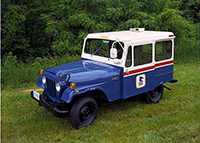
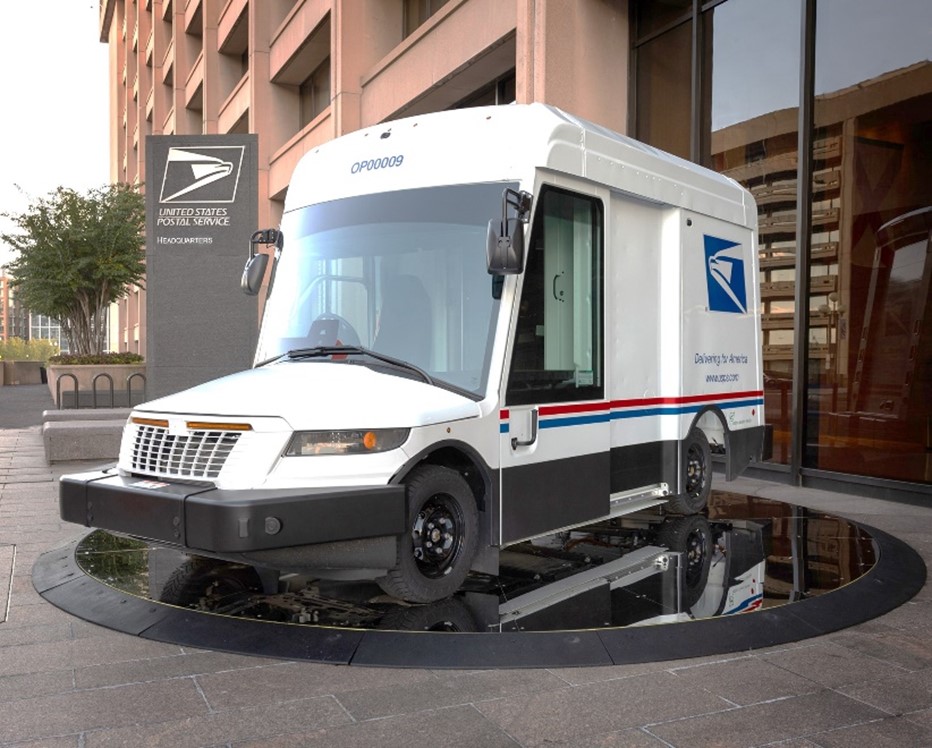


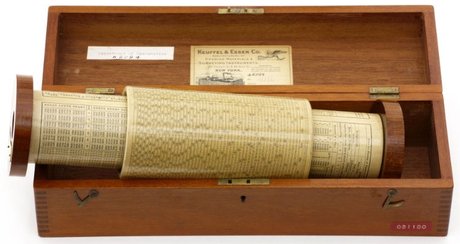
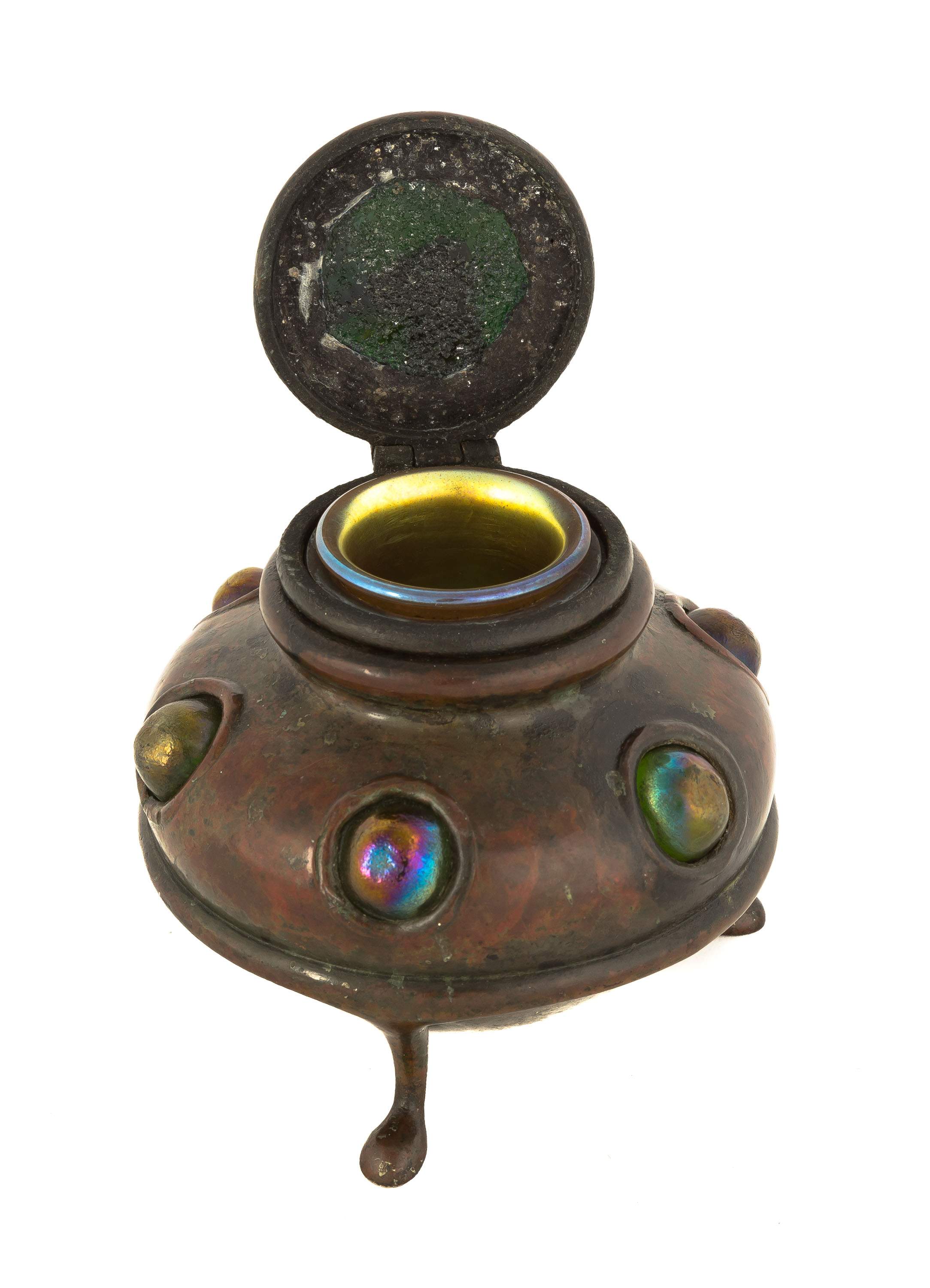
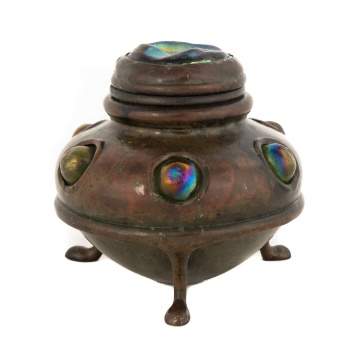
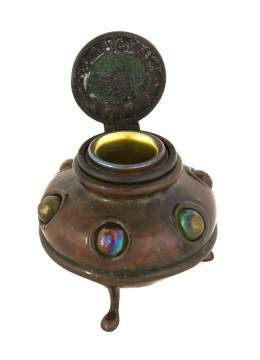


No comments:
Post a Comment