Hi, where are you from?

My photo
Presents, a Life with a Plan. My name is Karen Anastasia Placek, I am the author of this Google Blog. This is the story of my journey, a quest to understanding more than myself. The title of my first blog delivered more than a million views!! The title is its work as "The Secret of the Universe is Choice!; know decision" will be the next global slogan. Placed on T-shirts, Jackets, Sweatshirts, it really doesn't matter, 'cause a picture with my slogan is worth more than a thousand words, it's worth??.......Know Conversation!!!

Monday, January 26, 2026

Title: Dr. Ziegler, pay attention, this is more and less than difficult as word equated word a Snare: These Programs are Machines in not made yet, so think!!

Look word equated word Heavily at this Provisional and Final Fatal Injury Data by Month, United States,

do not hurry yourself. A chart of TBI fatal injury data, showing various years of both provisional and final data.
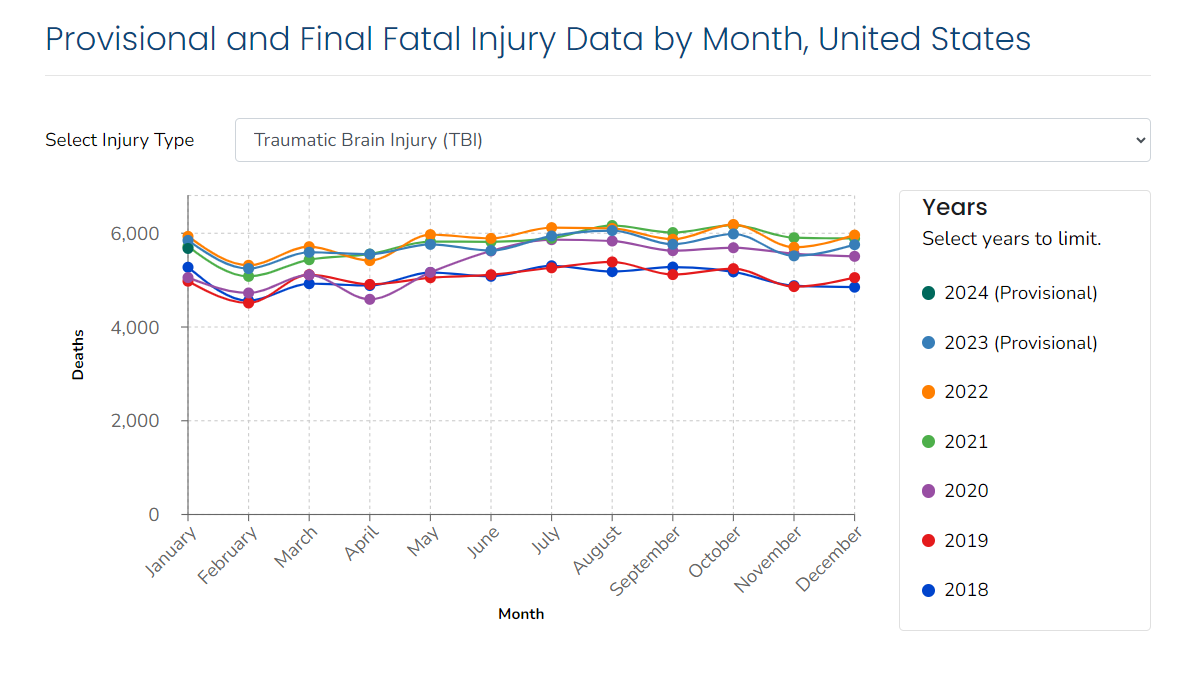
TBI fatal injury data
the way of surgical aspect
Now, the way of surgical aspect is now, the arrangement of surgical aspect is very Futuristic
the arrangement of surgical aspect
Cantore Arithmetic is able to state words from;

1.  TBI Data KEY POINTS CDC collects and reports TBI data to understand: how many people are affected by this injury, who is most at risk, the leading ways a person may get a TBI, and whether programs to prevent TBI are working.


The word aspect to the [word Metro as word diagram]Machine is not in Physics, so Mathematics may word suffice.


Word however understanding the way of Music is a word Note, often a Personal Note as Mozart and Bach are certainly Worldly whereas The Table, well you know.


Word However in and of word worth it is the Instruments on a simple note that orchestrates the Pit to a greater find, the Poetry of another, the Sound of it’s love, the depth of desire, and includes your listening to the ballet that may find Your Point.


Now you are able to write your own Pieces.


Word, So, start with what the Word fabricated as what is gold to you may be silver to the Table.


1. Nature By Numbers || The Golden Ratio || Fibonacci Sequence || 432Hz || Short Film on Frequency ||


See the Harp Strings First!!


1. Tamara Placek-Stafford...Resume & Bio Chat with Race (sport horse) Trainer/Research


a. SFOriginals 

Thank you for the Script https://www.thewordfinder.com/cursive-text-generator/
Music Sheets from www.youtube.com
Sep 16, 2016 · Today I will teach you how to read sheet music notes in this one easy lesson. This is a complete ...
Duration: 22:31
Posted: Sep 16, 2016
Cantore Arithmetic is able to state words from TBI Data KEY POINTS CDC collects and reports TBI data to understand: how many people are affected by this injury, who is most at risk, the leading ways a person may get a TBI, and whether programs to prevent TBI are working.
The word aspect to the Machine is not in Physics, so Mathematics may word suffice, however understanding the way of Music is a word Note in and of word worth.  Now you are able to write your own Pieces, so start with what the Word fabricated as what is gold to you may be silver to the Table.

See the Harp Strings First!!

1.  Tamara Placek-Stafford...Resume & Bio Chat with Race (sport horse) Trainer/Research

a.  SFOriginals 

Technology 

Chapter 1: The Basics of Music Theory

Let's start with the bare fundamentals before delving into the complexity. The study of music theory examines how music functions. It covers a variety of subjects, such as comprehending notes and scales, reading music notation, and developing harmonies. Fundamentally, music theory improves how musicians express themselves and compose music.

The Beauty of Music Theory

Why Learn Music Theory?

Learning music theory might seem intimidating at first, especially if you're just starting your musical journey, but it offers several significant benefits:

Music Theory's Building Blocks

Music theory is built upon several fundamental concepts:

Throughout this blog post, we'll delve into essential music theory topics, including the musical alphabet, scales, intervals, chords, rhythm, reading sheet music, and more. Each topic will be presented in a straightforward way with practical examples to aid your understanding.

Chapter 2: The Musical Alphabet

Music has its own set of letters, just like the English language. Seven notes make up the musical alphabet: A, B, C, D, E, F, and G. The foundational notes of all music are those that repeat in a cycle. Recognizing musical elements and reading music notation need knowledge of this alphabet.


The Concept of Octaves

Now, here's where things get intriguing. The musical alphabet doesn't stop at G; it continues with A again. This pattern repeats indefinitely, creating what we call octaves. An octave is the distance between two notes with the same letter name, but one is higher in pitch than the other.

For example, if you play an A on a piano and then the A immediately above it, you've moved up one octave. This relationship between notes with the same letter name but different octaves is a fundamental concept in music.

Sharps and Flats

In addition to the seven natural notes (A, B, C, D, E, F, G), music also incorporates sharps (#) and flats (b), which are symbols that modify the pitch of a note.

These additional symbols allow composers to create more complex melodies and harmonies and add richness and variety to music.

Key Signatures and Musical Keys

As you progress in your music theory journey, you'll encounter key signatures, which are collections of sharps or flats placed at the beginning of a piece of sheet music. Key signatures define the musical key in which a piece is written. Each key has its own unique arrangement of notes, including both natural and altered notes (sharps or flats).

Understanding key signatures and musical keys is essential for reading and interpreting sheet music accurately, as it tells you which notes will be altered throughout the piece.

Chapter 3: Understanding Scales

Scales are the foundational building blocks of music. They provide the raw materials from which melodies and harmonies are created, and they play a fundamental role in shaping the mood and character of a piece of music. In this chapter, we'll explore what scales are, why they are important, and how they form the basis of musical composition.

What is a Musical Scale?

At its core, a musical scale is a sequence of notes arranged in ascending or descending order by pitch. These notes are chosen based on a specific pattern of intervals (the spaces between the notes), and this pattern gives each scale its unique character and mood.

The C Major Scale: A Beginner's Friend

Let's start with one of the most well-known scales: the C major scale. It consists of the following notes: C, D, E, F, G, A, B, and then back to C. When you play this scale on a piano, for example, it sounds bright and happy. The C major scale follows a specific pattern of whole and half steps (also known as whole and half tones) between the notes. The pattern for the C major scale is:

Different Scales, Different Moods

Other scales follow different patterns of intervals, resulting in a wide range of musical flavors. For example:

Importance of Scales

Chapter 4: Notes, Octaves, and Pitch

In the world of music theory, understanding notes, octaves, and pitch is fundamental. These concepts are the very building blocks of melodies and harmonies, and they play a crucial role in how we perceive and create music.

Notes: The Musical Alphabet Revisited

We've previously introduced the musical alphabet (A, B, C, D, E, F, G) in Chapter 2. Now, let's take a closer look at what these letters represent in terms of musical notes.

Pitch: High and Low Sounds

Octaves: Doubling the Frequency

Notes and Octaves in Music

Chapter 5: Rhythm and Time Signatures

Rhythm is the heartbeat of music. It's the element that gives music its groove and propels it forward. In this chapter, we'll explore what rhythm is, how it's notated, and the role of time signatures in music.

Understanding Rhythm

Common Time Signatures

Syncopation and Phrasing

Chapter 6: Intervals and Chords

Intervals and chords are essential components of music, contributing to its depth and richness. In this chapter, we'll explore what intervals and chords are and their significance in creating harmonies and melodies.

Understanding Intervals

Chords: Harmonies in Music

Application of Intervals and Chords

Chapter 7: Reading Sheet Music

In this chapter, we'll dive into the essential skill of reading sheet music, the written language of music.

Sheet Music: A Musical Roadmap

Musical Symbols: The Key to Interpretation

Reading Sheet Music Step by Step

  1. Identify the Clef: Determine whether you're reading the treble clef (for higher-pitched instruments/voices) or the bass clef (for lower-pitched instruments/voices).
  2. Check the Key Signature: The key signature at the beginning of the staff tells you which notes are sharp or flat throughout the piece.
  3. Look for the Time Signature: The time signature informs you about the rhythmic structure of the music.
  4. Read the Notes: Start from left to right, reading notes and their corresponding durations. The higher a note is on the staff, the higher its pitch.
  5. Observe Rests: Pay attention to rests, which indicate moments of silence in the music.
  6. Follow Dynamics and Expressions: Dynamics (e.g., piano, forte) and expressions (e.g., legato, staccato) guide your interpretation of the music.

Practice and Patience

In conclusion, we've embarked on a journey through the fascinating world of music theory, breaking down complex concepts into digestible, beginner-friendly explanations and examples. We've explored the musical alphabet, octaves, pitch, scales, rhythm, intervals, chords, reading sheet music, and more.

So, whether you're a budding musician or a music enthusiast, let your passion for music theory inspire your creativity and enhance your appreciation of the beautiful art of sound. Keep exploring, practicing, and enjoying the wonderful world of music!

So, word DATA line is a word Good suggestion:


No comments:

Post a Comment

An Independent Mind, Knot Logic

An Independent Mind, Knot Logic

Title: Words The Way of arrangement is next and since so many are word Sick and word Dead, the Way of Cloud word Bundled for word accuracy[Accuracy[ACCURACY]]!!

 Words, To have a Member of the Public at-large in Downtown San Francisco in word Random and while I was not looking to take a Bus state whi...

Karen A. Placek, aka Karen Placek, K.A.P., KAP

My photo
Presents, a Life with a Plan. My name is Karen Anastasia Placek, I am the author of this Google Blog. This is the story of my journey, a quest to understanding more than myself. The title of my first blog delivered more than a million views!! The title is its work as "The Secret of the Universe is Choice!; know decision" will be the next global slogan. Placed on T-shirts, Jackets, Sweatshirts, it really doesn't matter, 'cause a picture with my slogan is worth more than a thousand words, it's worth??.......Know Conversation!!!

Know Decision of the Public: Popular Posts!!